 How to resolve AdBlock issue?
News
- Details
- Written by: Lake County News reports
The Culinary Round-Up at the college will be on Tuesday, May 25, from 3 to 6 p.m., and will offer in-person tours of the state-of-the-art teaching kitchen lab.
Chef instructors will be available for questions with food samplings in this open house enrollment ice breaker event.
This is a historical time for the hospitality, culinary and tourism industries, which are in need of staffing.
There has never been such a great demand for the services they offer and need to fill the long-vacated positions due to the pandemic.
Great opportunities are rapidly developing in these sectors granting anyone a variety of careers to pursue from hospitality to kitchen management.
Culinary students at the college can earn a Certificate of Achievement in Culinary Arts and Baking in addition to a Culinary Arts Associates in Arts Degree.
Bring a guest, grab a bite and have a culinary tour at the campus located at 15880 Dam Road Extension in Clearlake.
Anyone interested in this event is encouraged to come.
Please RSVP by contacting the Culinary Arts Department at 707-995-4175 or
- Details
- Written by: Lake County News reports
The governor’s plan outlines comprehensive strategies and major investments in key areas so that California can come roaring back from the pandemic.
The California Comeback Plan has one goal: hit fast forward on our state’s recovery by directly confronting California’s most stubborn challenges:
— Providing immediate relief for those hit hardest by the COVID-19 pandemic;
— Confronting the homelessness and housing affordability crisis;
— Transforming public schools into gateways for opportunity;
— Building infrastructure for the next century;
— Combating wildfires and tackling climate change.
“Every Californian has been impacted by this pandemic, and the sacrifices we’ve all made this past year have resulted in a historic surplus — I’m here to announce that we’re investing it in you,” said Gov. Newsom. “California’s economic recovery will leave nobody behind, that's why we’re implementing the nation’s largest state tax rebate and small business relief programs in history, on top of unprecedented investments we’re making to address California’s most persistent challenges. This is a jump-start for our local economies, and it’s how we’ll bring California roaring back.”
The California Comeback Plan outlines comprehensive strategies and major investments in the following five areas of focus.
Immediate relief for California’s families and small businesses
Two out of every three Californians to get Golden State Stimulus checks: The plan will create the biggest state tax rebate in American history, including an additional $8.1 billion in stimulus checks — for a total of nearly $12 billion — that will go directly to middle class Californians and families. Nearly two-thirds of Californians will now qualify for a stimulus check of $600. Qualified families with dependents, including families without resident status, will be eligible for an additional $500.
Largest small businesses relief program in the nation: The pan invests an additional $1.5 billion for a total of $4 billion in direct grants to California’s small businesses — on top of a massive $6.2 billion tax cut — putting more money directly into the pockets of hundreds of thousands of small business owners and helping them re-hire workers displaced by the pandemic.
Largest statewide renter assistance package in the country: Under Gov. Newsom’s Plan, California will offer the strongest renter assistance package of any state in America. The plan will provide a total of $5.2 billion to help low-income renters pay 100 percent of their back-rent, and all of their rent for several months into the future. The plan also includes $2 billion for past-due utility bills and more money than ever for tenant legal assistance.
Creating opportunity for Californians who lost their jobs: The plan provides $1 billion in new grants to workers who lost their jobs during the pandemic, giving California’s workforce critically-needed opportunities to earn and learn, go back to school, or start their own business. It also includes Universal Basic Income pilot programs.
Confronting homelessness and the housing affordability crisis
Confronting homelessness at historic levels: The governor’s plan will invest $12 billion to tackle the homelessness crisis, helping more than 65,000 people get off the streets or avoid homelessness altogether. The plan reaches the most vulnerable by rebuilding the behavioral health housing system that has been dismantled over decades. It also comes with new accountability measures to ensure local governments are spending the money effectively.
Ending family homelessness: Under the governor’s plan, California will seek to achieve functional zero on family homelessness within five years through a new $3.5 billion investment in homeless prevention, rental support through CalWORKs and new housing opportunities for people at risk of homelessness.
46,000 new homeless housing units — the biggest increase in California history: The California Comeback Plan includes massive expansions of Homekey — California’s groundbreaking national model for homeless housing. The package will unlock more than 46,000 new homeless housing units, including nearly 5,000 new affordable homes for people at risk of or exiting homelessness.
Encampment strategy: The California Comeback Plan includes targeted programs and grants to local governments to move people out of unsafe, unhealthy encampments and into safer, more stable housing.
Clean California’s streets: The governor’s plan calls for partnering with local governments to clean litter, commission public art and revitalize downtowns, freeways and neighborhoods across California.
More funding for new affordable housing than ever before: The California Comeback Plan tackles housing affordability head-on: it will put $3.5 billion into building more affordable housing for low-income families and create homeownership opportunities to help restore the California Dream.
Transforming public schools into gateways for opportunity
Transforming schools into gateways to opportunity: Under the governor’s plan, public schools in low-income neighborhoods can fundamentally transform into the kind of complete campus every parent would want for their child — with before- and after-school instruction, sports and arts, personalized tutoring, nurses and counselors and nutrition — paired with new preventative behavioral health services for every kid in California.
Finally achieve universal Pre-K: Under the governor’s plan, California will finally achieve universal pre-school, providing high-quality, free transitional kindergarten to all four-year-olds in California. The California Comeback Plan also adds 100,000 child care slots to support caregivers.
3.7 million kids get college savings accounts: The California Comeback Plan creates child savings accounts for 3.7 million low-income children in public school for higher education or to start their own business, making college more attainable than ever before.
Drive down costs of college attendance: The governor’s plan will make college more affordable and accessible than ever before by driving down the cost of attendance, including drastically cutting the cost of student housing and working to reduce the cost of textbooks.
Building the infrastructure of the next century
Broadband for all: Taking on the digital divide, Gov. Newsom’s plan advances the state’s work toward universal broadband with a $7 billion investment to expand broadband infrastructure and to increase access and achieve affordability. The plan will help build out a statewide middle mile network for improved access in underserved regions, including rural areas, and allows local governments and Tribes to access last mile funding, which connects broadband to the home.
Creating a modern transportation system: The California Comeback Plan includes a $11 billion investment to build a modernized and sustainable transportation system for the next century — roads, bridges, high-speed rail, ports and public transportation, including projects for the 2028 Olympics.
Combating wildfires and tackling climate change
Doing more than ever before to fight and combat wildfires: Governor Newsom’s Plan will make the single largest investment in wildfire preparedness in our state’s history — $2 billion in emergency preparedness investments. It includes purchasing new firefighting equipment like airplanes and helicopters, as well as investments in land and forest management projects that save lives.
Nation-leading climate action: California is leading the nation in tackling climate change head-on, including a $3.2 billion package to accelerate California’s zero-emission vehicle goals, leading to cleaner air for future generations. It also includes a $1.3 billion investment to prepare for extreme heat, sea level rise and environmental justice priorities like oil well capping, toxic site clean-up and pollution control.
Drought response: Climate change is making droughts more common and more severe. The California Comeback Plan invests $5.1 billion in drought support, water supply and natural landscape projects around the state as well as an additional $1 billion in direct aid for Californians who have past-due water bills.
Building a 22nd century electric grid: Amid record-breaking temperatures driven by climate change, California’s electricity grid will continue to be stressed more and more every year. The California Comeback Plan will help the state build a cleaner, resilient and reliable 22nd century electric grid.
The California Comeback Plan expands our recovery efforts to reach more people, with bigger benefits. It will extend the Golden State Stimulus to middle class families, creating the biggest state tax rebate in American history. It also creates the largest small business relief package in the nation, prioritizing the state’s recovery efforts and giving money directly back to California’s small businesses.
Fueled by a resurgent economy, a surge in state revenues and additional federal recovery funds, the $75.7 billion surplus reflected in the California Comeback Plan stands in stark contrast to the $54.3 billion budget shortfall estimated just 12 months ago.
Gov. Newsom’s California Comeback Plan seizes this once-in-a-lifetime moment to address long-standing challenges by taking on threats to our state’s future and ensuring every California family — regardless of their race or zip code — can thrive.
Additional details on the Governor’s Plan can be found at www.ebudget.ca.gov .
Lake County’s legislators respond to plan
Lake County’s members of the California Legislature both responded to the governor’s May revise budget plan on Friday.
“We are living in unprecedented times — coming out of a worldwide pandemic that has impacted our most vulnerable communities the hardest. And, California is coming back stronger than ever before. We’re bringing forward bold and innovative solutions to California’s biggest challenges,” said Sen. Mike McGuire.
“The Golden State has witnessed record devastation wrought by the worst wildfire seasons in history over the past decade. Today’s proposed budget reflects desperately needed funding on fire prevention and response, helping to keep millions of Californians safe. This budget includes a $1.24 billion investment, building on past years’ funding, in forest health, fire response and making our communities more fire safe,” he said.
“Our state is also taking action to combat the homelessness crisis with a $12 billion housing and services plan. Rural California has some of the highest rates of homelessness in the state. It’s unacceptable. So far this year, hundreds of additional permanent housing units were funded by the state and have been permanently secured in the North Bay and North Coast this year. Over 6,000 units were secured across the Golden State. And we will build an additional 46,000 permanent and supportive housing units for homeless residents starting in the second half of 2021 through 2022.
“And we all know that none of these investments matter if we don’t massively increase funding for our public schools, prioritizing our students and teachers which means we’re prioritizing our future. This proposed budget includes $20 billion to transform our public schools with new investments in after school programs, student mental and physical health, enrichment programs, universal meals and universal Transitional Kindergarten. This is how we change lives and build a more equitable California.
“And, we’re paying down debt. Making billions in payments to reduce our pension liability and lowering future expenses for California taxpayers.
“Now, I look forward to working to get this deal done and across the finish line in the coming few weeks,” McGuire said.
Assemblymember Cecilia Aguiar-Curry celebrated the governor’s historic commitment to internet connectivity with a $7 bill investment in broadband and Clear Lake.
Under the broadband proposal, existing Caltrans networks will be leveraged to build open-access broadband infrastructure as roads and underground utilities are constructed. This will maximize funds and ensure a quick and efficient deployment of modern, durable, high-speed internet infrastructure.
Funds will also be made available to assist local governments and tribes building their own broadband infrastructure, and to help increase access to high quality broadband service in rural areas.
Aguiar-Curry’s AB 14 Internet for All Act lays the policy framework for the governor’s proposal to connect all Californians and expand eligibility to local and tribal governments.
“This is truly an historic day for our State and a bold proposal to address the gap in access to reliable and affordable internet for all Californians,” said Assemblymember Cecilia Aguiar-Curry (D-Winters). “People across our state, especially in small towns and rural areas like those in my district, have struggled to take advantage of the digital economy. The pandemic has made painfully obvious that a lack of connectivity prevents access to equitable opportunities for our people — education and job training, telehealth, small businesses’ expanding to online consumers. I want to thank the Governor for his incredible commitment to connecting California, and so many of my colleagues who joined me in this yearslong mission, including Senator Mike McGuire (D-Healdsburg), to make the dream of Internet for All a reality.”
Aguiar-Curry also announced the governor’s renewed commitment to research on and revitalization of Clear Lake through the Blue Ribbon Committee established by her AB 707.
For more information see the related story on Aguiar-Curry’s announcement on the budget and Clear Lake.
- Details
- Written by: William Petri, University of Virginia
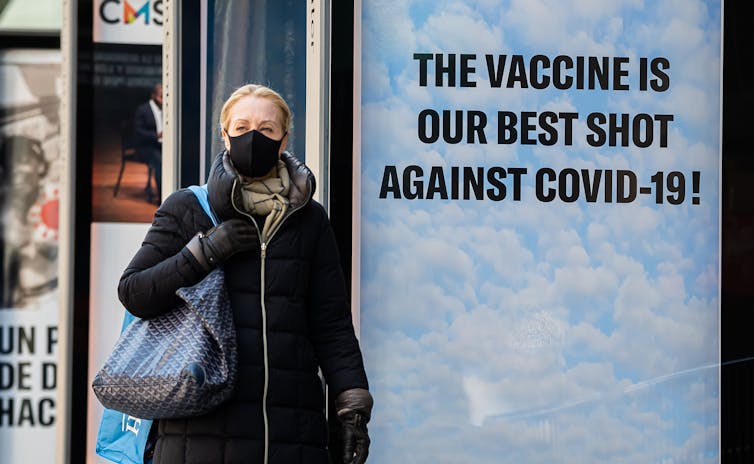
When COVID-19 first began spreading, public health and medical experts began talking about the need for the U.S. to reach herd immunity to stop the coronavirus from spreading. Experts have estimated that between 60% and 90% of people in the U.S. would need to be vaccinated for that to happen. Only about 35% of the population has been fully vaccinated, and yet the CDC said on May 14, 2021 that fully vaccinated people can lose their masks in most indoor and outdoor settings.
An important question now arises: What happens if we don’t reach herd immunity? Dr. William Petri is a professor of infectious diseases at the University of Virginia who helps lead the global program to achieve herd immunity for polio as the chair of the World Health Organization’s Polio Research Committee. He answers questions here about herd immunity and COVID-19.
What is herd immunity?
Herd immunity occurs when there are enough immune people in a population that new infections stop. It means that enough people have achieved immunity to disrupt person-to-person transmission in the community, thereby protecting nonimmune people.
Immunity can result from either vaccination or prior infection. Herd immunity may exist globally, as it does with smallpox, or in a country or region. For example, the U.S. and many other countries have achieved herd immunity for polio and measles, even though global herd immunity does not yet exist.
Has herd immunity been achieved globally for other infections?
This has happened only once on a global scale, with the eradication of smallpox in 1980. This was after a decadelong worldwide intensive vaccination campaign.
We also are also approaching global herd immunity for polio. When the Global Polio Eradication Initiative was formed in 1988 there were 125 countries with endemic polio and over 300,000 children paralyzed annually. Today, after 33 years of immunization campaigns, Afghanistan and Pakistan are the only countries with wild polio virus, with only two cases of paralysis due to wild poliovirus this year. So herd immunity can be achieved worldwide, but only through extraordinary efforts with global collaboration.
It seems as though the goal posts for herd immunity keep changing. Why?
Experts estimate that between 60% and 90% of the U.S. population would need to be immune for there to be herd immunity. This wide range is because there are many moving parts that determine what is needed to achieve herd immunity.
Factors influencing whether the target is 60% or 90% include how well vaccination and prior infection prevent not only illness due to COVID-19, but also infection and transmission to others. Additional considerations include the heightened transmissibility of new variants of SARS-CoV-2 and the use of measures to interrupt transmission, including face masks and social distancing. Other important factors include the duration of immunity after vaccination or infection, and environmental factors such as seasonality, population sizes and density and heterogeneity within populations in immunity.
What is the biggest barrier to herd immunity in the U.S.?
Two factors could lead to failure to achieve high enough levels of immunity: not every adult receiving the vaccine because of “vaccine hesitancy” and the likely need to vaccinate adolescents and children. The FDA cleared the emergency use of the Pfizer-BioNTech COVID-19 vaccine for adolescents 12 to 15 years of age on May 10, 2021, so that could help. But an added barrier is the constant pressure of reintroduction of infection from other countries where vaccination is not as readily available as in the U.S.
Achieving herd immunity to the extent of totally blocking new infections is therefore, while a laudable goal, not easily achievable. I think that for COVID-19 at this time, it will be possible only with the concerted global effort over years, similar to what led to smallpox eradication.
Why are there ‘vaccine hesitant’ individuals?
People may be vaccine hesitant for several reasons, including lack of confidence in the vaccine, the inconvenience of receiving the vaccine, or complacency – that is, thinking that if they get COVID-19 it will not be severe.
Lack of confidence includes concerns for vaccine safety or skepticism about the health care providers and public health officials administering them. Complacency reflects a personal decision that vaccination is not a priority for that individual because she or he perceives that the infection is not serious or because of competing priorities for time. Convenience issues include the availability and complexity, such as having to get two doses.
[Understand new developments in science, health and technology, each week. Subscribe to The Conversation’s science newsletter.]
Since herd immunity will not be reached, what will our lives look like?
At least into 2022 and likely for much longer, I do not expect there will be herd immunity for COVID-19. What there will be, probably by the end of this summer in the U.S., is a new normalcy. There will be far fewer cases and deaths due to COVID-19, and there will be a removal of social distancing and year-round masking, as evidenced by the CDC’s new guidelines issued May 13, 2021, that vaccinated people do not have to wear masks in most places.
But there will be a seasonality to coronavirus infections. That means there will be less in the summer and more in the winter. We’ll also see outbreaks in regions and population subgroups that lack adequate immunity, short-lived lockdowns of cities or regions, new and more transmissible variants and a likely requirement for vaccine booster shots. We cannot let down on the research and development of treatments and new vaccines, as studies show that COVID-19 is here to stay.
William Petri, Professor of Medicine, University of Virginia
This article is republished from The Conversation under a Creative Commons license. Read the original article.
- Details
- Written by: DENNIS FORDHAM
In California, administering a deceased person’s estate often requires a petition to the superior court in the proper county (venue).
Let us discuss how to determine the proper county and who has standing to file a petition.
We consider the petition for probate, the petition for succession to property in a small estate, the affidavit for real property in a small estate, and the petition regarding the administration of a decedent’s living trust.
In California, a petition to open probate of a deceased resident’s estate must be filed in the superior court of the county where a decedent was domiciled, regardless of where they died. A person is domiciled in the county where they usually reside, i.e., their permanent residence.
Thus, the place indicated on the decedent’s California death certificate as the decedent’s “usual residence” determines the proper venue (county).
If the decedent was not a California resident then the petition should be filed with the superior court in the county where the decedent’s property is situated.
A court order issued in a California probate does not apply to real property located outside California.
If a California resident dies owning real property outside of California, then the probate laws applicable in that state or country apply. Real estate located within the United States held in a living trust still avoids probate anywhere.
A petition for probate may be filed by any interested person at any time after the decedent’s death, including a creditor of the decedent’s estate.
A person who is named as executor in a decedent’s will has first priority (right) to be appointed as the personal representative of the decedent’s estate.
However, the right to be appointed personal representative may be held to be waived if the person does not file a petition for probate within 30 days of learning of the decedent’s death.
When a decedent dies with a small estate — i.e., the gross value of the decedent’s real and personal property in California is collectively under $166,250 — a small estate procedure can be utilized to transfer property.
If the gross value of all the decedent’s real property in California is under $55,425 then (six months after the death) the person, or persons, claiming to be the successor in interest to the decedent’s real property of small value can file an affidavit regarding real property in a small estate in the superior court of the county where the decedent was domiciled.
A certified copy of the court filed affidavit must then be filed with the County Recorder in the county where the decedent owned the real property (which may be a different county from the court).
If the decedent’s small estate includes real property in California exceeding $55,425 in total value then a petition to determine succession to real and personal property can be filed in the county where the decedent was domiciled at time of death.
Such a petition must be signed and filed by the person(s) claiming to succeed to the decedent’s interest(s) in real and personal property in California.
Unlike probate, a living trust is usually privately administered without court supervision. Sometimes, however, a court petition is still needed, such as, but not limited to the following situations: when a trustee needs to be appointed, the trustee needs instructions or the trustee needs to ascertain what assets belong to the trust.
A court petition concerning the administration of a trust can be filed either by the trustee or by a trust beneficiary. The proper county in which to file the trust petition is the county where the trustee resides or does business.
The foregoing discussion regarding proper venue and standing is not legal advice. Consult an attorney if confronting any of the foregoing issues.
Dennis A. Fordham, attorney, is a State Bar-Certified Specialist in estate planning, probate and trust law. His office is at 870 S. Main St., Lakeport, California. He can be reached at