 How to resolve AdBlock issue?
News
- Details
- Written by: Elizabeth Larson
Forecasters said a surge on “monsoonal moisture” will bring shower chances and a few isolated thunderstorms to the region.
Exact details on shower and isolated thunderstorm coverage and timing remain highly uncertain, the agency said late Sunday.
The potential for lightning raises concerns about the potential for fire starts considering how dry vegetation is across Northern California.
Any isolated thunderstorms this week are expected to also carry some small amounts of rainfall, the National Weather Service reported.
The specific Lake County forecast anticipates chances of showers and thunderstorms late Monday night, with light winds.
Temperatures this week also are expected to climb into the high 90s during the day, with nighttime temperatures in the high 60s.
Visit www.weather.gov/eka for more specific forecast information.
Email Elizabeth Larson at
- Details
- Written by: Elizabeth Larson
The following cats at the shelter have been cleared for adoption.
Call Lake County Animal Care and Control at 707-263-0278 or visit the shelter online at http://www.co.lake.ca.us/Government/Directory/Animal_Care_And_Control.htm for information on visiting or adopting.

Domestic short hair kittens
This litter of domestic short hair kittens includes one male and five females.
They are in cat room kennel No. A1, ID Nos. LCAC-A-1172, 1173, 1174, 1175, 1176 and 1178.
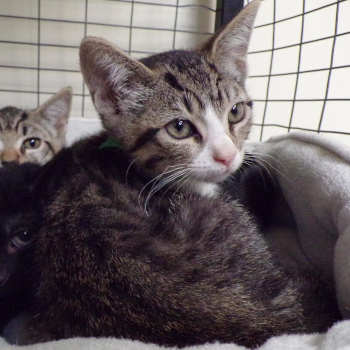
Male domestic shorthair kitten
This male domestic short hair kitten has a gray tabby coat.
He is in cat room kennel No. 11c, ID No. LCAC-A-1144.

Female domestic shorthair kitten
This female domestic short hair kitten has a black coat.
She is in cat room kennel No. 11d, ID No. LCAC-A-1145.
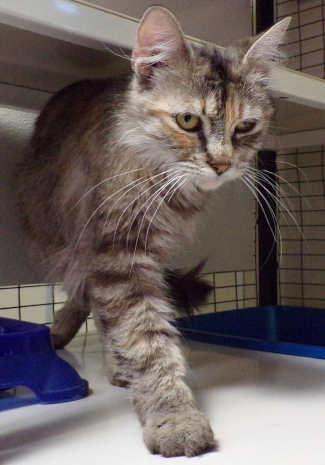
Domestic medium hair cat
This 3-year-old female domestic medium hair cat has a brown tabby coat.
She is in cat room kennel No. 58, ID No. LCAC-A-1029.
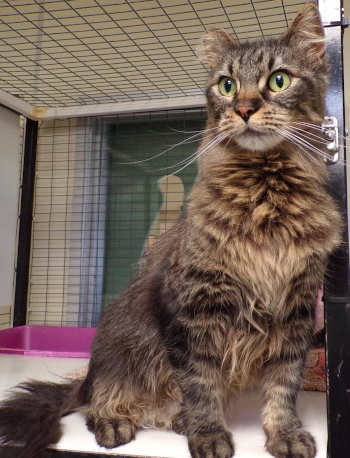
‘Furball’
“Furball” is a 6-year-old female domestic longhair cat with a brown tabby coat.
She is in cat room kennel No. 84, ID No. LCAC-A-969.
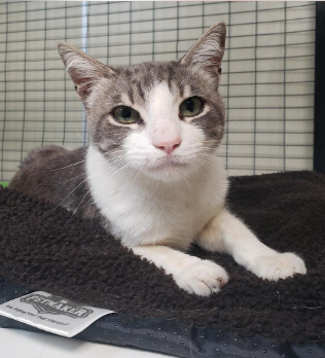
Male domestic shorthair
This male domestic shorthair has a gray and white coat.
He is 1-year-old and weighs nearly 6 pounds.
He is in cat room kennel No. 120, ID No. LCAC-A-874.
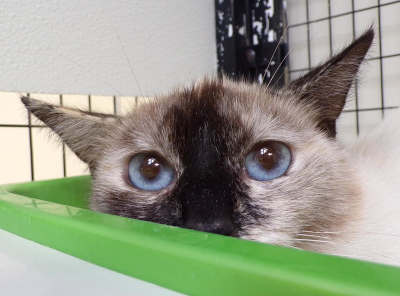
Female domestic shorthair
This 2-year-old female domestic shorthair cat has a white coat and blue eyes.
She is in cat room kennel No. C123, ID No. LCAC-A-1152.

Male domestic shorthair kitten
This male domestic shorthair kitten has a black coat.
He is in cat room kennel No. 150, ID No. LCAC-A-1165.

Male domestic shorthair kitten
This male domestic shorthair kitten has a gray tabby coat.
He is in cat room kennel No. 172, ID No. LCAC-A-1345.
Email Elizabeth Larson at
- Details
- Written by: Angela De Palma-Dow
Dear Lady of the Lake,
We are in a drought and I am worried about the impact of this drought on the Lake County economy and the ecosystems of Clear Lake. What should we expect with the current drought when it comes to boating, fishing, and drinking water from Clear Lake? Is there really anything we can do?
— Distressed about drought in Nice
Dear Distressed,
Well I am glad you are paying attention and acknowledging that things in the lake are interconnected. That really is step one. I also am guessing, because you are worried about the drought situation, that you are doing everything you can to conserve as much water as possible, especially living in Nice where residents are reliant on drinking water from Clear Lake. I am also very happy that you acknowledged some of the immediate problems we are facing.
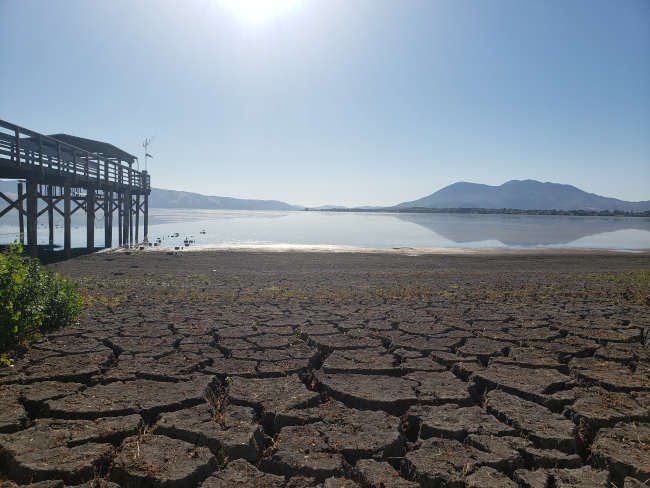
Yes, we are in a drought that will extend into the fall of this year and we have to consider that it might extend into next year too. While we don’t know the future, we can prepare for it, both logistically and mentally.
While other reservoirs around the state are already getting too low for boater access, Clear Lake has several accessible ramps that will probably stay open in some capacity for about another month into the summer.
This has been good news for our local economy because we have and are able to accommodate boaters, fishers and water enthusiasts that have not been able to get access to other lake locations around the northern part of that state.
Boating access
There are ideas about extending city or county ramps if the water gets too low to launch a boat. While that concept is simple in theory, the practicalities of executing projects like that are very complex, especially within the designated “lakebed” zone of the lake.
Ramp work that will include grading, concrete or gravel placement, is fairly large-scale construction that requires surveying, engineering designs, environmental plans, permitting, contracting and materials.
The environmental impact plans are most essential as these projects could negatively impact lake health. This is especially true for sensitive fish species like our endemic Clear Lake Hitch (Lavinia exilicauda chi) and other sensitive fish species.
For any lake grading and construction project to move forward, it has to satisfy requirements from both the County of Lake Water Resources Department (Shoreline Ordinance Ch. 23) and the California Department Fish and Wildlife.
Most of these rules outline the type of work allowed and the time of year when work within the lake would have minimal impact on aquatic wildlife.
For lake projects, the project planning and permitting process is lengthy and the review and approval process takes time to complete.
When you think about it, we wouldn’t want it any other way because these restrictions are really the only safeguards put in place to protect fish and wildlife habitat and shoreline properties on the lake. It’s also one of the controls in place for improving Clear Lake water quality — which I think we all agree is important and worthy of protection.
It’s unclear if drought ramp work would be allowed even if the lakebed at the end of the ramp is dry, but it’s safe to say that the ramps might go dry before work could actually begin, especially because no public ramp project permits have yet submitted to the county’s Lakebed Management (at the time of this article going to press).
It’s also important to consider the cost and effort to construct these projects when they might be underwater in a mere three to five months. It’s a hard decision and decision makers have to decide if it’s the best use of taxpayer money.
There are many pros and cons to consider. Meanwhile, people can access the lake with kayaks, canoes, hand launch with trolling motors, and folks can enjoy shore fishing or wading, which is easier of course in rocky areas like Nice then muddy areas like the southern shore in the Upper Arm.
Drinking water
Drinking water is a little more difficult to both describe and address when it comes to drought, mostly because the eventual severity of this current drought is very uncertain at this time.
One thing to realize is that recent declarations of emergency and a top-down focus both at the state and local level provide for resources and emergency measures should a drinking water emergency occur due to water shortages.
Basically, the state has allocated funds and resources to help prepare and plan for impacts from drought in preparation, much like is done for wildfires both in planning and response.
Public and private treatment operators can — and have — extended their intake lines to get better access to cooler water as the shoreline recedes.
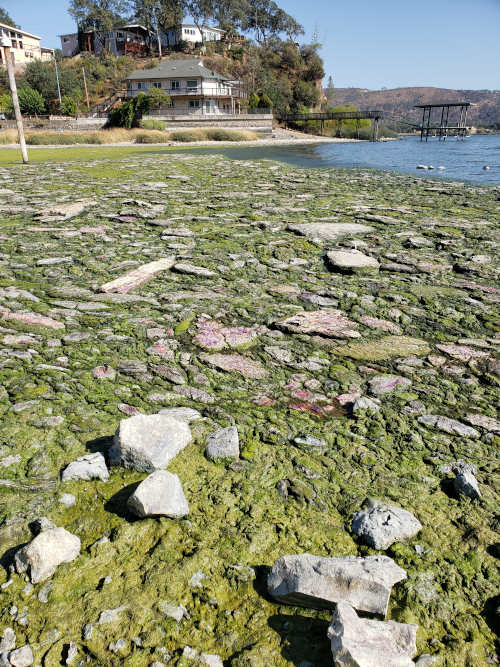
Clear Lake is a very large lake and while the quantity issue is important to consider, the more likely scenario is that accumulation of algae and cyanobacteria during low lake levels will have the most concerning impact on drinking water treatment consistency, capability and cost.
Think of Clear Lake like a very old aquarium that hasn’t had a water change or refill in 15 months and is now sitting in a sunny window all summer. The pumps get clogged with algae and the glass sides will get green. This is the same thing that is happening to our drinking water infrastructure like the pipes and screens that run along the bottom of the lake.
The best thing we can do, if we get our water from Clear Lake, is to fully utilize and preserve every single drop that comes out of our tap. We all need to maximize what we have and help to ease the burden on the treatment process. We might not run out of water, but the more water that is used, the more that needs to be treated and that will coincide with an increase in effort and cost.
The treatment process makes drinking water safe and clean, the majority of Clear Lake systems are in the top treatment tiers when it comes to the category or grade of systems available for treating drinking water.
Another thing to consider and be aware of, is that starting this year, the public and private drinking water purveyors on the lake are required, by state order, to monitor their finished water at the tap for microcystin cyanotoxins concentrations (I know that is a mouthful!).
Microcystins are the specific toxins produced by the most common cyanobacteria or blue green algae found in Clear Lake called microcystis. Any toxin triggers above an established threshold (0.3 ug/L) require continued monitoring and immediate response action.
Response actions can include switching to an intertie (alternate source or intake) if available, using reserve tanks or backup, or incorporating additional filtering and treatment methods.
In previous years, drinking water purveyors and companies could monitor the cyanotoxins at the finished tap water end on a volunteer basis and as far as I know from communications with Kennedy Environmental LLC (the locally-owned company that has done the testing at the taps for many years) there were never any finished tap water samples that resulted in an exceedance of the health hazard trigger for toxins in the drinking water.
This year, under state-mandated monitoring, there have also been no exceedances at the tap water end for the public and private purveyors on the lake who are monitoring.
To me, this indicates that the treatment systems are dependable and are working exactly the way they are supposed to, even during the extreme bloom conditions that have been occurring in the lake so far this year.
The end result is most important. We do have safe and clean drinking water, which is pretty miraculous when you look at the water in the lake right now and compare that to the finished, treated product that comes out of your tap.
It must be noted that some smells and colors are normal, as the physical and chemical process for treatment can sometimes leave residues. Water treatment operators and staff work very hard and most of them live in their own service area, and their family, just like yours, also relies on safe and clean water.
You can access your public or private system monitoring data, as well as other system information at the CA Drinking Water Watch website.
The cyanobacteria monitoring results are not yet available on this site, as that order is fairly new. However, this website also includes information like the system details, facilities, monitoring results and schedules, violations or enforcement actions, and copies of consumer confidence reports.
This resource is provided by the Drinking Water Division of California and provides information for all state-regulated systems, not just those with intakes on Clear Lake.
Since you live in Nice, you can go to the site and search for “Nice Mutual Water Co.” in Lake County. I can see that they serve a population of 2,731 and have about 1,000 service connections. I can also see from the “monitoring” menu that they monitor the water at their intake site, in the lake, and the finished water once treated.
The homepage also has a map feature, in case you don’t know what system you are a part of or you are interested in drinking water in another county or city.
This is a great resource to have access to if you wish to be more informed about your drinking water — wherever it comes from.
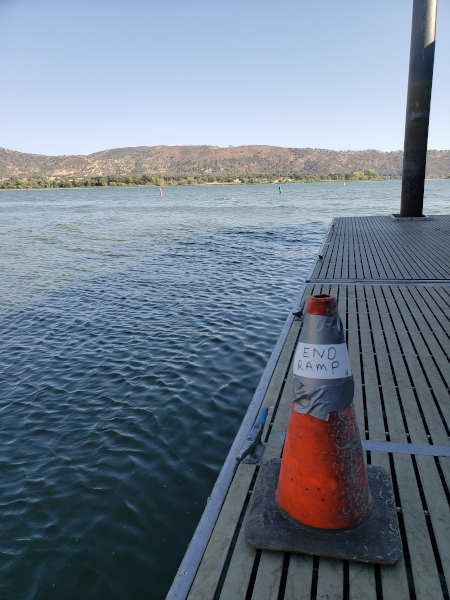
While so far things seem relatively stable right now, we should prepare for a point in the season when we will see an interaction of quantity (low lake levels) and quality (extremely severe blooms of algae and cyanobacteria) impacting drinking water systems. We as consumers and water users might have to significantly increase our water conservation efforts.
The dedicated staff operating these systems around the lake are learning more about their systems and how to improve their treatment and delivery every day. They are watching that Rumsey gauge, monitoring the lake level, planning and installing extended lines and double checking filters, sampling and analyzing pH and other indicators, calibrating fluorometers, and testing equipment. And they are sharing data and information with each other.
In a 2018 article in the Journal of Water Resources Planning and Management, J. Lund referred to one of the lessons learned from the previous 2012-2016 drought, in that it “... brought innovations and improvements in water management, some of which will better prepare California for future droughts.”
I believe that this lesson still applies, but unlike wildfires that occur every year, droughts appear on more variable and patchy time lines, allowing us to “forget” what it was like during the last drought and “forgive” what we need to do to cope and survive during the next one.
Unlike wildfires, we have more scientific “premonition” that a drought is coming, from reduced winter precipitation, low snowpack, low moisture snowpack, and increases in air temperatures.
For this year, while we can predict best and worst case scenarios for lake levels (Calculated predictions by County Water Resources Department can be found at their website and Facebook page @lakecountywater) which range from -1.98 to -4.0, respectively, by Nov 1, 2021, on the Rumsey stage, we just don’t know if enough rain will fall this coming winter.
And that uncertainty, and what we can do to plan and prepare should that scenario come to pass, is really, a completely different and new discussion — one I am hoping we don’t need to have come winter.
Sincerely,
Lady of the Lake
If you want more information about the impact of Drought on California Aquatic ecosystems, I suggest you follow the California Water Blog https://californiawaterblog.com/ and sign up for new posts to be sent directly to your email.
Please note that I referred to “public and private” drinking water systems on Clear Lake. This does not apply to small systems (private small systems with less than 14 connections). These types of small systems are not regulated by the State or the County. Safe operation, maintenance, and monitoring of these small systems is provided by the homeowner. An informational brochure for small systems is available here in English and Spanish. If you have questions about your small drinking water system or your single intake system you can reach out to Big Valley EPA and Cal-WATCH as they currently have some monitoring and guidance resources that might be helpful. Check out that project page here.
Angela De Palma-Dow is a limnologist (limnology = study of fresh inland waters) who lives and works in Lake County. She has a Masters of Science from Michigan State University. She is a Certified Lake Manager from the North American Lake Management Society, or NALMS, and she is the current president/chair of the California chapter of the Society for Freshwater Science. She can be reached at
- Details
- Written by: Gabriele Wulf, University of Nevada, Las Vegas
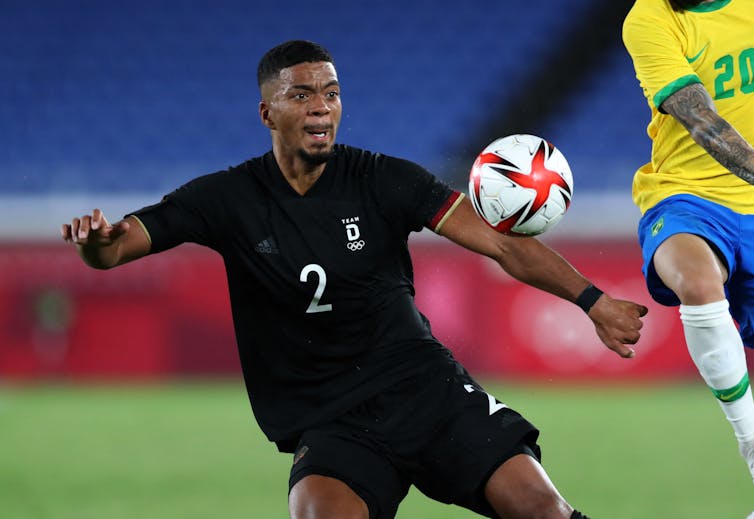
How do you get to the Olympics? Practice, practice, practice … but also know what to concentrate on during the heat of competition.
How fast someone runs, swims or rows; how high or long they jump; how accurately they hit a target; how well they balance; or how much weight they can lift depends to a significant extent on where they focus their attention.
I’m a sport scientist who for decades has studied how people learn motor skills. In the late 1990s I began examining how a performer’s focus of attention influences learning.
Research suggests that what an athlete concentrates on can be the difference between winning the gold and not even making the team. What might be surprising is that shifting your focus from within yourself – what’s going on in your body – to what’s out there – what you’re trying to accomplish – is a winning strategy.
An athlete’s brain is busy
Consider what the brain needs to do to organize complex movements.
It must coordinate the contractions of the necessary muscles – ensuring that they happen at the right time, for the proper duration, and with the required intensity. It also must inhibit other muscles, basically telling those not involved in the movement to stay on the sidelines for the moment.
Temporary task-specific connections among relevant brain networks are a precondition for smooth, efficient and precise movements. The functional connectivity of certain brain areas and the suppression of other areas enable an athlete to produce elegant jump shots, tennis strokes, golf swings or tumbling routines.
Learning to produce effective brain activation patterns is a long-term process, of course. Achieving a skill level at which performance is consistently accurate, automatic, fluent and economical requires considerable practice. Athletes hone their skills over many years or even decades.
Nevertheless, at the moment they perform, their focus of attention plays a critical role. If athletes have the wrong focus, their performance will suffer.

Where to target your focus
Based on the findings of numerous studies, it’s clear athletes should never concentrate on their own movements – what movement scientists call an internal focus of attention.
This might seem contradictory to the way many people learn a new sport. After all, those who instruct others in the process of acquiring movement skills typically refer to body movements. Think of a coach telling a young basketball player to flick her wrist while shooting the ball, or a golf coach telling a player to focus on his hip rotation. Consequently, athletes think about how to move their body parts, particularly in the early stages of learning.
But surveys have found that even experienced athletes often focus internally. Especially when they’re under pressure – as they would be during competition – they tend to concentrate on their movements. Often, the result is that they “choke.”
Instead, for optimal performance, the focus should be on the movement goal. This is called an external focus of attention.
It can mean concentrating on a target to be hit, such as the corner of a goal, a golf hole, a bull’s-eye or a catcher’s mitt. It can also be the intended motion or trajectory of an implement such as a javelin, discus or barbell; the desired spin of a ball; the force exerted against an apparatus or piece of equipment, the floor or an opponent; the water being pushed back in swimming or rowing; or the finish line in a race.
What it is not is the hand releasing the object or pulling the water back, the muscles producing the force, or the speed of leg movements.
More efficient to focus on what than how
Focusing on the intended outcome of your actions, rather than your body movements, reveals the body’s remarkable capability to produce effective and efficient movements. Even movement form or technique often improves immediately when a person switches from an internal to an external focus of attention. The body does what it has to do to complete the action – unless you interfere via conscious attempts to control your movements.
Researchers have noted the effects of an external focus on many aspects of performance: improved movement accuracy, enhanced balance, greater maximum forces, higher speed and better endurance.
With an external focus, movements are more efficient. Because brain and muscle activity are optimized, the resulting movements are produced with less energy. This is seen, for example, in reduced oxygen uptake or lower heart rates for the same physical work when performers adopt an external focus.
Researchers have quantified just how much of an edge this focus shift can provide to athletes. With an external focus:
- The same swimmers swam 1.4% faster over the length of a 25-yard pool.
- Resistance-trained individuals produced 9% greater maximal forces, or were able to complete 11.4% more repetitions with the same weight.
- Boxers punched 4% faster and 5% more forcefully.
- Runners needed 9.5% less oxygen for the same running speed and distance.
- Kayakers completed a 100-meter wildwater sprint 4.3% (or 1.3 seconds) faster.
Considering that races are often won or lost by very small margins, sometimes in the range of hundredths of a second, an athlete’s focus of attention can determine whether or not they win a medal.

Plenty of benefits beyond Olympic stadium
While most people will never be Olympians, an external focus provides benefits regardless of the performer’s level of expertise, age or (dis)ability, or the type of skill.
[Over 100,000 readers rely on The Conversation’s newsletter to understand the world. Sign up today.]
Whether you are learning to play a musical instrument or are an experienced musician, an external focus will result in better performance. Whether you are an older adult with Parkinson’s disease or a young healthy adult, your balance will be enhanced by an external focus. Whether you are unimpaired or had a stroke, you will perform activities of daily living more effectively with an external focus.
It turns out your body can more masterfully execute the actions you desire if you’re able to move your conscious focus from what your body is doing and instead think about what you want to accomplish.
Gabriele Wulf, Distinguished Professor, Department of Kinesiology and Nutrition Sciences, University of Nevada, Las Vegas
This article is republished from The Conversation under a Creative Commons license. Read the original article.