 How to resolve AdBlock issue?
News
- Details
- Written by: Peter C. Mancall, USC Dornsife College of Letters, Arts and Sciences
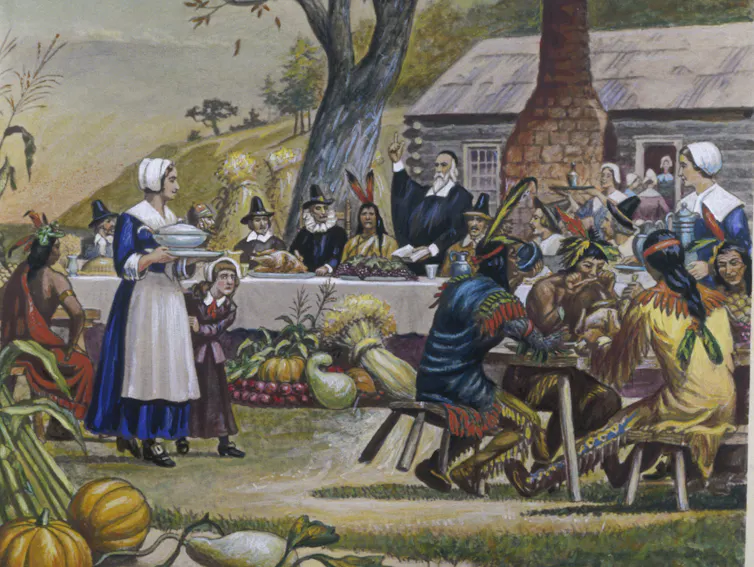
This year marks the 400th anniversary of the first Thanksgiving in New England. Remembered and retold as an allegory for perseverance and cooperation, the story of that first Thanksgiving has become an important part of how Americans think about the founding of their country.
But what happened four months later, starting in March 1622 about 600 miles south of Plymouth, is, I believe, far more reflective of the country’s origins – a story not of peaceful coexistence but of distrust, displacement and repression.
As a scholar of colonial New England and Virginia, I have often wondered why Americans tend to pay so much less attention to other English migrants of the same era.
The conquest and colonization of New England mattered, of course. But the Pilgrims’ experience in the early 1620s tells us less about the colonial era than events along Chesapeake Bay, where the English had established Jamestown in 1607.
A compelling origin story
The Pilgrims etched their place in the nation’s history long ago as plucky survivors who persevered despite difficult conditions. Ill-prepared for the New England winter of 1620 to 1621, they benefited when a terrible epidemic raged among the Indigenous peoples of the region from 1616 to 1619, which reduced competition for resources.
Having endured a winter in which perhaps one-half of the migrants succumbed, the survivors welcomed the fall harvest of 1621. They survived because local Wampanoags had taught them how to grow corn, the most important crop in much of eastern North America. That November, the Pilgrims and Wampanoags shared a three-day feast.
This was the event that now marks the first American day of Thanksgiving, even though many Indigenous peoples had long had rituals that included giving thanks and other European settlers had previously declared similar days of thanks – including one in Florida in 1565 and another along the Maine coast in 1607.
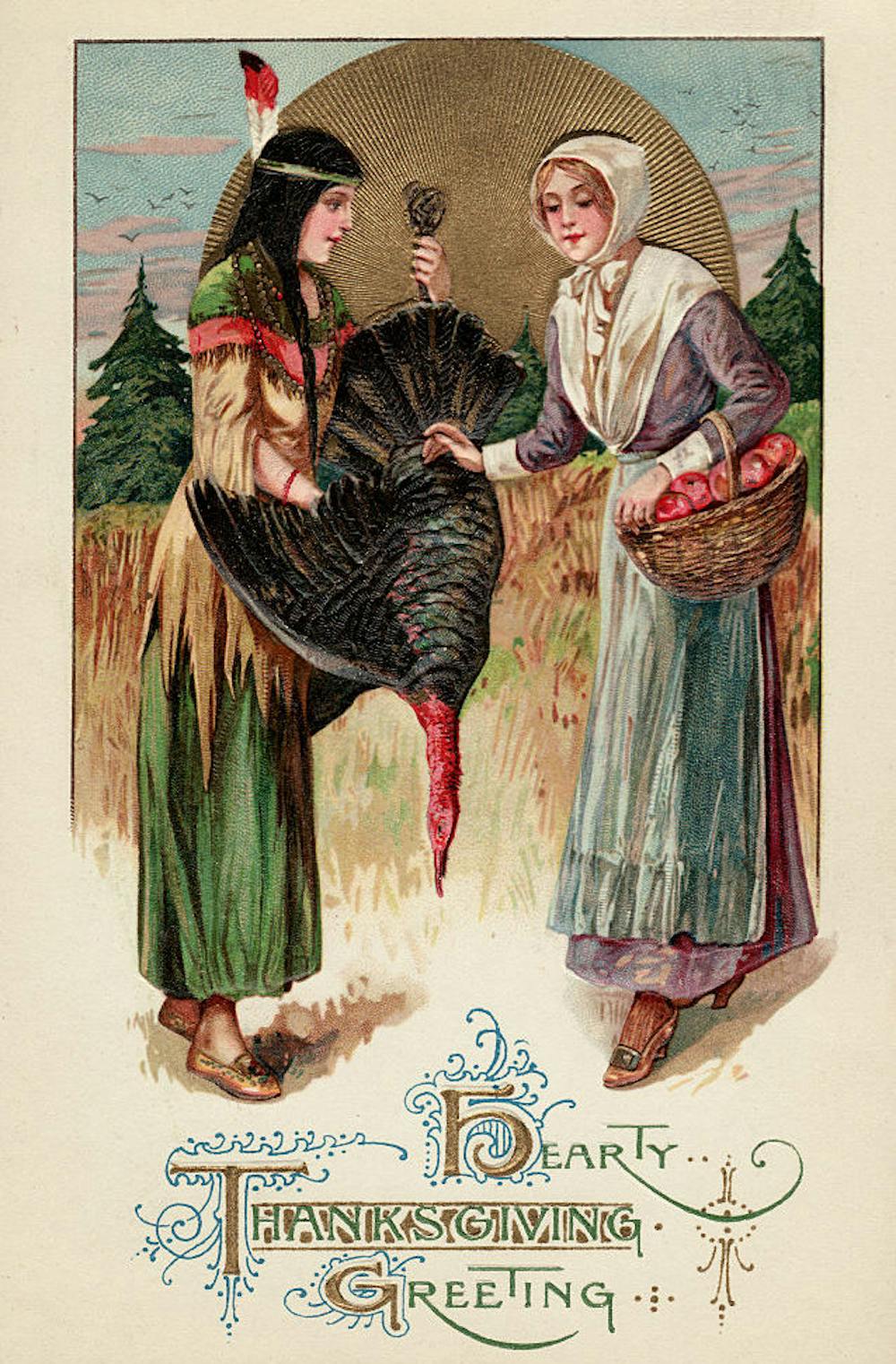
In 1623, Pilgrims in Plymouth declared a day to thank their God for bringing rain when it looked like their corn crop might wither in a brutal drought. They likely celebrated it in late July. In 1777, in the midst of the Revolutionary War, the members of the Continental Congress declared a day of Thanksgiving for Dec. 18. The Pilgrims didn’t even get a mention.
In the 19th century, however, annual Thanksgiving holidays became linked to New England, largely as a result of campaigns to make the Plymouth experience one of the nation’s origin stories. Promoters of this narrative identified the Mayflower Compact as the starting point for representative government and praised the religious freedom they saw in New England – at least for Americans of European ancestry.
For most of the last century, U.S. Presidents have mentioned the Pilgrims in their annual proclamation, helping to solidify the link between the holiday and those immigrants.
In Virginia, a tenuous peace shatters
But the events in Plymouth in 1621 that came to be enshrined in the national narrative were not typical.
A more revealing incident took place in Virginia in 1622.
Since 1607, English migrants had maintained a small community in Jamestown, where colonists struggled mightily to survive. Unable to figure out how to find fresh water, they drank from the James River, even during the summer months when the water level dropped and turned the river into a swamp. The bacteria they consumed from doing so caused typhoid fever and dysentery.
Despite a death rate that reached 50% in some years, the English decided to stay. Their investment paid off in the mid-1610s when an enterprising colonist named John Rolfe planted West Indian tobacco seeds in the region’s fertile soil. The industry soon boomed.
But economic success did not mean the colony would thrive. Initial English survival in Virginia depended on the good graces of the local Indigenous population. By 1607, Wahunsonacock, the leader of an alliance of Natives called Tsenacomoco, had spent a generation forming a confederation of roughly 30 distinct communities along tributaries of Chesapeake Bay. The English called him Powhatan and labeled his followers the Powhatans.
Wahunsonacock could have likely prevented the English from establishing their community at Jamestown; after all, the Powhatans controlled most of the resources in the region. In 1608, when the newcomers were near starvation, the Powhatans provided them with food. Wahunsonacock also spared Captain John Smith’s life after his people captured the Englishman.
Wahunsonacock’s actions revealed his strategic thinking. Rather than see the newcomers as all-powerful, he likely believed the English would become a subordinate community under his control. After a war from 1609 to 1614 between English and Powhatans, Wahunsonacock and his allies agreed to peace and coexistence.
Wahunsonacock died in 1618. Soon after his passing, Opechancanough, likely one of Wahunsonacock’s brothers, emerged as a leader of the Powhatans. Unlike his predecessor, Opechancanough viewed the English with suspicion, especially when they pushed on to Powhatan lands to expand their tobacco fields.
By spring 1622, Opechancanough had had enough. On March 22, he and his allies launched a surprise attack. By day’s end, they had killed 347 of the English. They might have killed more except that one Powhatan who had converted to Christianity had warned some of the English, which gave them the time to escape.
Within months, news of the violence spread in England. Edward Waterhouse, the colony’s secretary, detailed the “barbarous Massacre” in a short pamphlet. A few years later, an engraver in Frankfurt captured Europeans’ fears of Native Americans in a haunting illustration for a translation of Waterhouse’s book.

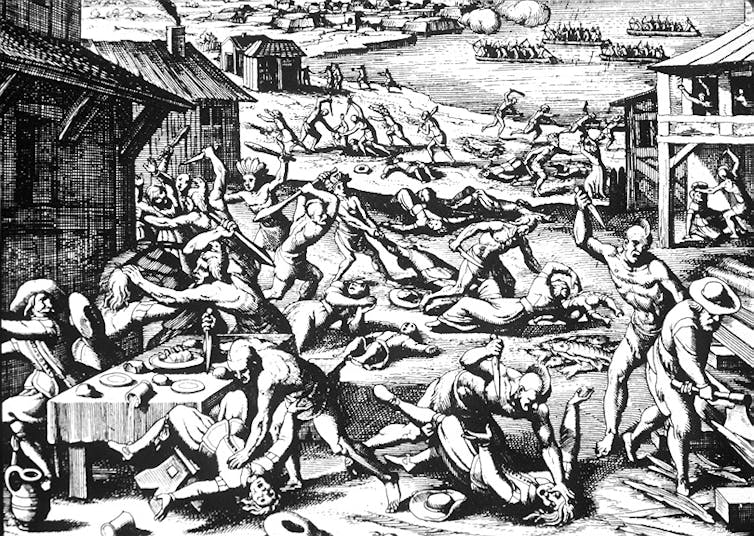
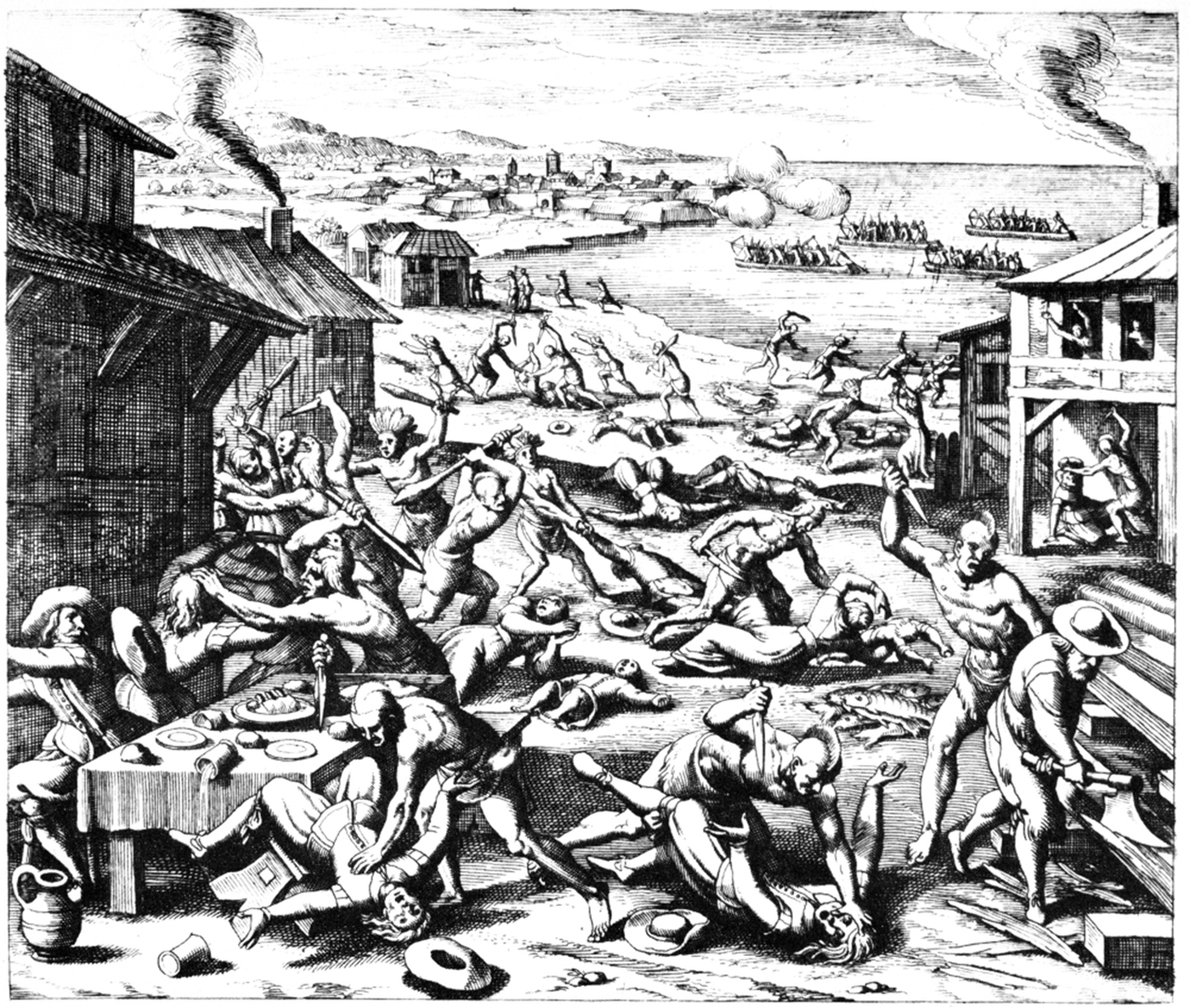
Waterhouse wrote of those who died “under the bloudy and barbarous hands of that perfidious and inhumane people.” He reported that the victors had desecrated English corpses. He called them “savages” and resorted to common European descriptions of “wyld Naked Natives.” He vowed revenge.
Over the next decade, English soldiers launched a brutal war against the Powhatans, repeatedly burning the Powhatans’ fields at harvest time in an effort to starve them and drive them away.
Conflict over cooperation
The Powhatans’ orchestrated attack anticipated other Indigenous rebellions against aggressive European colonizers in 17th-century North America.
The English response, too, fit a pattern: Any sign of resistance by “pagans,” as Waterhouse labeled the Powhatans, needed to be suppressed to advance Europeans’ desire to convert Native Americans to Christianity, claim Indigenous lands, and satisfy European customers clamoring for goods produced in America.
It was this dynamic – not the one of fellowship found in Plymouth in 1621 – that would go on to define the relationship between Native Americans and European settlers for over two centuries.
Before the end of the century, violence erupted in New England too, erasing the positive legacy of the feast of 1621. By 1675, simmering tensions exploded in a war that stretched across the region. On a per capita basis, it was among the deadliest conflicts in American history.
[Get the best of The Conversation, every weekend. Sign up for our weekly newsletter.]
In 1970, an Aquinnah Wampanoag elder named Wamsutta, on the occasion of the 350th anniversary of the arrival of the Mayflower, pointed to generations of violence against Native communities and dispossession. Ever since that day, many Indigenous Americans have observed a National Day of Mourning instead of Thanksgiving.
Today’s Thanksgiving – with school kids’ construction paper turkeys and narrative of camaraderie and cooperation between the colonists and Indigenous Americans – obscures the more tragic legacy of the early 17th century.
Peter C. Mancall, Andrew W. Mellon Professor of the Humanities, USC Dornsife College of Letters, Arts and Sciences
This article is republished from The Conversation under a Creative Commons license. Read the original article.
- Details
- Written by: CALIFORNIA DEPARTMENT OF FISH AND WILDLIFE
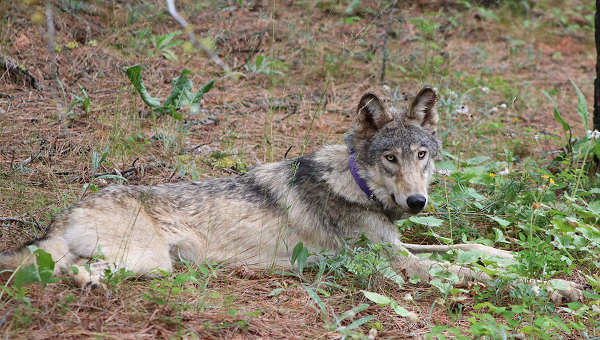
State officials said a gray wolf that traveled from northern Oregon to Kern County has been found dead, with the cause of death believed to be trauma from being struck by a vehicle.
On Nov. 10, the wolf known as OR93 was found dead near Interstate 5 near the town of Lebec, the California Department of Fish and Wildlife reported.
Following a full investigation and necropsy, CDFW said it has determined that the wolf died from trauma consistent with vehicular strike and does not suspect foul play.
On the afternoon of Nov. 10, the Oregon Department of Fish and Wildlife received a phone call from a truck driver who witnessed the deceased wolf along a dirt trail near a frontage road running parallel to I-5.
A CDFW warden responded to the scene to collect the carcass, which was quickly identified as OR93 because of its collar.
The carcass was transported to the Wildlife Health Laboratory in Rancho Cordova, where a complete necropsy was performed.
The wolf had significant tissue trauma to the left rear leg and a dislocated knee as well as soft tissue trauma to the abdomen. The injuries were deemed to be caused by a vehicle strike.
Young gray wolves can disperse very long distances from their natal area and OR93 is no exception.
Before his demise, he was documented traveling the farthest south in California since wolves returned to the state, which is historically wolf habitat.
The last documented wolf that far south was captured in San Bernardino County in 1922.
OR93 was a male wolf born in 2019. He dispersed from the White River pack in northern Oregon.
When his collar was providing information, he was tracked entering Modoc County on Jan. 30. After briefly returning to Oregon, he reentered Modoc County on Feb. 4.
On Feb. 24, he entered Alpine County after passing through portions of Lassen, Plumas, Sierra, Nevada, Placer, El Dorado, Amador and Calaveras counties.
On Feb. 25, he entered Mono County. In mid-March, he was in western Tuolumne County. By late March he was in Fresno County, and then entered San Benito County after crossing Highway 99 and Interstate 5.
He was in Monterey County on April 1 and his last collar transmission was from San Luis Obispo County on April 5.
Through April 5 he had traveled at least 935 air miles in California, a minimum average of 16 air miles per day.
CDFW said the public should be aware that the wolf population continues to grow in California and to know the difference between wolves and coyotes.
Though gray wolves are generally much bigger than coyotes, they can sometimes be misidentified.
CDFW encouraged the public to review this wolf identification page which provides tips for differentiating between wolves, coyotes and dogs.
Gray wolves are listed as endangered pursuant to California’s Endangered Species Act, or CESA.
It is unlawful to harass, harm, pursue, hunt, shoot, wound, kill, trap or capture gray wolves. Anyone who believes they have seen a wolf in California can report it to CDFW here.
Gray wolves pose very little safety risk to humans. CDFW is working to monitor and conserve California’s small wolf population and is collaborating with livestock producers and diverse stakeholders to minimize wolf-livestock conflicts.
Gray wolf management in California is guided by CESA as well as CDFW’s Conservation Plan for Gray Wolves in California, finalized in 2016.
More information is available on CDFW’s wolf webpage.
- Details
- Written by: Elizabeth Larson
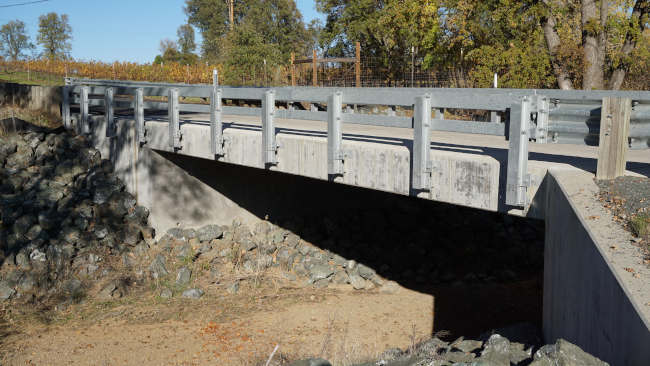
LAKE COUNTY, Calif. — Congressman Mike Thompson and Lake County government and education leaders gathered on Monday to discuss the anticipated benefits on the local level of the federal infrastructure bill, which will devote billions to upgrades of roads and bridges, and expansion of broadband.
Thompson and Congressman John Garamendi — who both represent portions of Lake County — voted for the Infrastructure Investment and Jobs Act on Nov. 5, calling it a “once-in-a-generation investment” in America’s infrastructure and economy.
President Joe Biden signed the $1 trillion bill into law on Nov. 15.
The bill includes $550 billion in new spending and $450 billion for existing surface transportation programs.
California is expected to receive $25.3 billion for highways, $4.2 billion for bridges, $9.45 billion for transit, $3.5 billion for clean drinking water, $1.5 billion for airports, $384 million for electric vehicle charging stations and $100 million for broadband.
Officials have not yet given a timeline for when the funding will start to roll out.
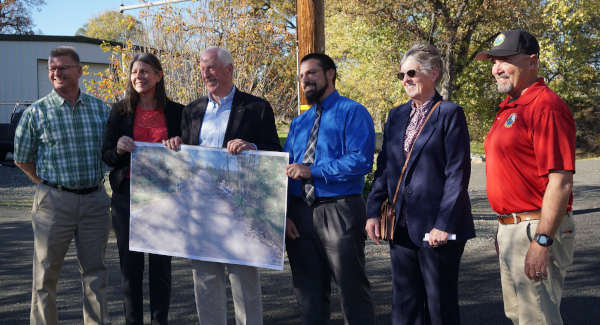
On Monday afternoon, Thompson gathered with supervisors Bruno Sabatier and Tina Scott, County Administrative Officer Carol Huchingson, Lake County Superintendent of Schools Brock Falkenberg and Lake County Public Works Director Scott De Leon at the Ackley bridge over Manning Creek at 3828 Ackley Road to discuss the infrastructure bill and its anticipated benefits for Lake County.
Thompson said the bill will be important for the country, the state and Lake County.
He pointed out that infrastructure doesn’t just improve facilities but stimulates the economy and puts money into jobs.
Thompson highlighted the $4.2 billion for bridge funding included in the bill, something he’s heard about from all of the counties in his district. He emphasized the importance of bridges in the overall infrastructure plan and the fact that every county in the district has bridges that need to be updated.
He also noted the $100 million to go to broadband. During the pandemic, broadband has been crucial to offering better access to health care and to helping students. One of the original COVID-19 relief bills was a Thompson bill that expanded telemedicine to those on Medicare.
“The infrastructure bill is exciting,” said Sabatier. “There are so many needs here in Lake County.”
One of those he highlighted is broadband. Lake County is the first county in California to have a master broadband plan and so is ready to move forward with projects and seek the necessary funding, he said.
Sabatier said broadband energizes the economy, and he also highlighted its impact on education and public safety. “Broadband is the key to all of these things.”
Also on Monday, State Sen. Mike McGuire and Assemblymember Cecilia Aguiar-Curry announced details of the “Middle-Mile Project” that will deploy 80 miles of high speed internet fiber in Lake County along Highways 20, 175 and 29 in Lake County.
Scott said she was excited about broadband’s expansion as well as the Full Circle Project. Thompson succeeded in getting $320,000 for that effluent pipeline’s preliminary design report update included in a federal funding package earlier this year.
“It’s truly a time of extraordinary opportunity for Lake County,” said Huchingson. “I’ve never seen anything like what we’re about to undertake in all of my years with the county.”
Huchingson praised Thompson for his work on behalf of Lake County.
She noted the value of the infrastructure bill as well as the help the county received from the American Rescue Plan Act.
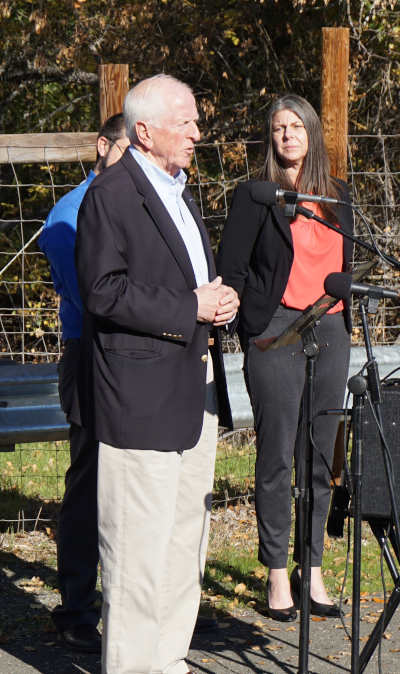
Falkenberg said the promise in the bill is that everyone in the United States should have access to broadband. “Broadband really has become a basic utility.”
He added, “We knew well before COVID that broadband or the lack of broadband was impacting our children’s education.”
Falkenberg said the pandemic has highlighted the extreme need and discrimination against rural areas when it comes to getting that service due to cost.
Lake County Public Works Director Scott De Leon showed a picture of the Ackley bridge before it was replaced. It had collapsing railings and the road asphalt was in disrepair.
The original bridge was constructed of timber in 1961. De Leon said it wasn’t designed to be used for 55 years.
By the time it was rebuilt in 2015, De Leon said the bridge had rotted at its outer edges and had been reduced to one lane because it couldn’t carry traffic loads.
The bridge replacement’s total cost was about $1 million and came from the federal Highway Bridge Program, De Leon said.
He said there is no local-level funding available for such projects and that the bridge wouldn’t have been replaced without the federal funds.
The infrastructure bill devotes $450 billion for existing surface transportation programs. It’s so far not been reported how the Highway Bridge Program may be funded through the bill.
The road and bridge on Monday looked far different from they did in the picture De Leon showed. In addition to the new bridge, he said his crews chip sealed the road this summer. He’s hopeful there will be more money available for other chip seal projects, as there was an earmark for chip sealing in the bill.
De Leon said there are 122 bridges in Lake County. Because the Highway Bridge Program has certain requirements, the county had just under two dozen of the local bridges going through that program at one time.
He said about half a dozen bridges in Lake County have been rebuilt due to the Highway Bridge Program, with the others in various phases of design.
As for shovel-ready projects, De Leon said the county has a pedestrian project in Kelseyville and two bridges ready to go and waiting on funding. They also have plans ready to reconstruct the intersection of the Nice-Lucerne Cutoff with Highway 29 and Lakeshore Boulevard.
Looking over the bridge after the event, De Leon said it was built to the high standards set by the American Association of State Highway and Transportation Officials, which is a nonprofit, nonpartisan association representing highway and transportation departments in the 50 states, the District of Columbia and Puerto Rico.
“This bridge isn’t going anywhere,” he said.
Email Elizabeth Larson at
- Details
- Written by: KEVIN MCELRATH
State funding of preschool programs surpassed $9 billion in the District of Columbia and the 44 states that funded preschools in the 2019-20 school year and policymakers are increasingly focusing on early childhood education, including the current administration’s proposed initiative of universal preschool for 3- and 4-year-olds.
These initiatives may facilitate more preschool enrollment, which research links to improved academic and behavioral outcomes for children later in life.
So, how has U.S. enrollment in preschool programs changed in recent years?
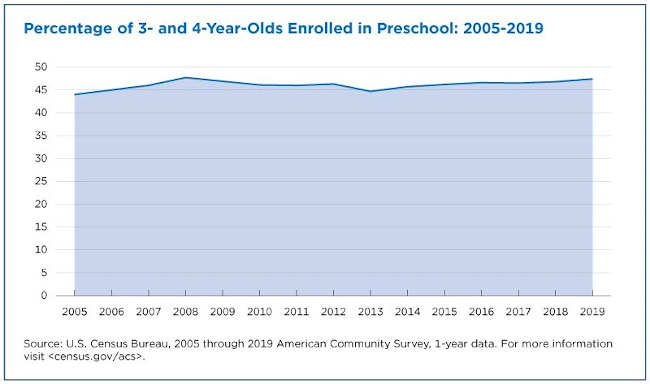
U.S. Census Bureau analysis of data from the American Community Survey (ACS) from 2005 to 2019 shows the percentage of children ages 3 and 4 enrolled in preschool overall went up during that period.
This period of analysis ended before the COVID-19 pandemic hit the U.S. so does not reflect its impact on preschool enrollment.
The proportion of 3- and 4-year-olds enrolled in preschool increased from 2005 to 2008 by 3.4 percentage points to 47.4% (Figure 1) but after that declined until 2013.
While other factors may have been at play, the global recession most likely contributed to this downward trend as many parents were out of work and may have been unable to afford preschool.
However, as noted, preschool enrollment started to inch up again in 2013 and has resumed its upward trend.
Changes in types of preschools
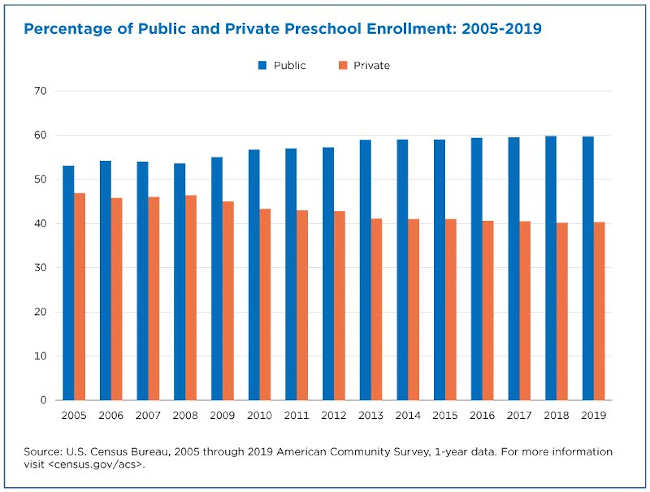
Along with the overall growth in enrollment, 2005 to 2019 saw a major shift in the type of preschools parents chose: Public schools became much more prominent.
From 2005-2019, the percentage of preschool enrollees attending public school increased by 6.6 percentage points, to 59.7% (Figure 2).
Differences by state
In 2019, preschool enrollment was highest in the Northeast, with most states in the region enrolling 54% or more of their 3- and 4-year-olds.
However, other states, including Illinois and Mississippi, also had high levels of preschool enrollment. And more than 80% of 3- and 4-year-olds in the District of Columbia, which implemented an expansive universal preschool program in 2008, were enrolled in preschool in 2019.
Although the geographic pattern of growth in preschool enrollment was not confined to a certain region or state, the Northeast and West can be characterized as high-growth areas.
New England states started with a high level of preschool enrollment in 2005 but other places, such as Nevada and Washington, expanded their preschool enrollment from relatively low initial levels.
The ACS data show that preschool enrollment changed across the United States from 2005 to 2019 and a larger share of children were enrolled in preschool by the end of the study period.
Federal and state governments can use this ACS data to explore changes in preschool enrollment as they consider early education policies.
The Census Bureau is studying geographic and demographic factors that may help explain why some children are enrolled in preschool and others are not.
Enrollment during the pandemic
Recently released 2020 data from another survey, the Current Population Survey (CPS), showed declines in preschool enrollment during the COVID-19 pandemic.
According to CPS data, the percentage of kids ages 3 and 4 enrolled in school fell from 54% in 2019 to 40% in 2020, the first time since 1996 that fewer than half of the children in this age group were enrolled. Nursery school enrollment fell by 25% (from 4.7 million to 3.5 million).
Future data releases will tell us if preschool enrollment rebounds after the pandemic.
See the 2020 CPS school enrollment tables for more information on enrollment during the pandemic in 2020.
Kevin Mcelrath is a survey statistician in the Census Bureau’s Social, Economic and Housing Statistics Division.