 How to resolve AdBlock issue?
News
- Details
- Written by: Elizabeth Larson
The City of Clearlake Animal Association also is seeking fosters for the animals waiting to be adopted.
Call the Clearlake Animal Control shelter at 707-273-9440, or email
Visit Clearlake Animal Control on Facebook or on the city’s website.
The newest dogs are listed at the top of the following list.

‘Andy’
“Andy” is a male American pit bull mix with a short gray and white coat.
He is dog No. 48995415.

‘Arnold’
“Arnold” is a male American Staffordshire terrier mix with a short brindle coat with white markings.
He is dog No. 49029348.

‘Bear’
“Bear” is a male Labrador retriever-American pit bull mix with a short charcoal and fawn coat.
He has been neutered.
He is dog No. 48443153.
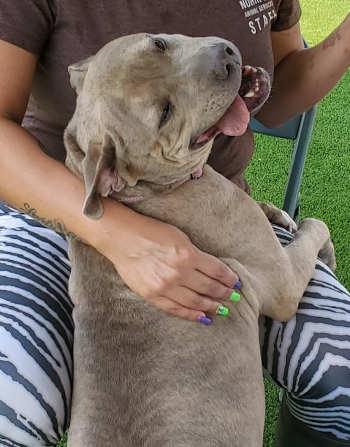
‘Bella’
“Bella” is a female American pit bull mix with a short gray brindle coat.
She has been spayed.
She is dog No. 48448381.
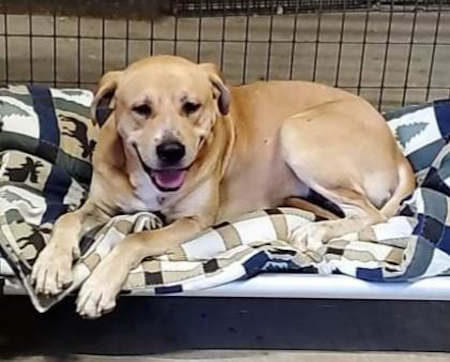
‘Levi’
“Levi” is a male golden retriever-Labrador retriever mix.
He has a short golden coat.
He is dog No. 48975687.

‘Luscious’
“Luscious” is a male pit bull terrier mix with a short gray coat.
He has been neutered.
He is dog No. 48757611.
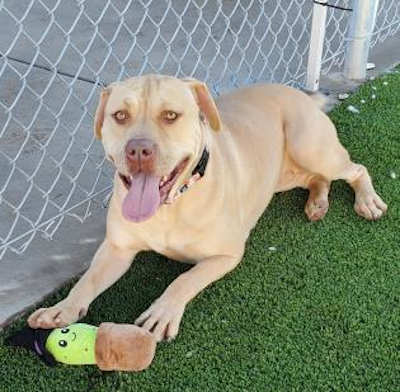
‘Maria’
“Maria” is a female Shar-Pei mix with a short tan coat.
She is dog No. 49047315.

‘Mitzi’
“Mitzi” is a female Australian cattle dog mix with a medium-length black and white coat.
She has been spayed.
She is dog No. 48443306.

‘Nala’
“Nala” is a 1-year-old female German shepherd mix.
She has a medium-length black and tan coat.
She is dog No. 48289638.

‘Sassy’
“Sassy” is a female American pit bull mix with a short black coat.
She has been spayed.
She is dog No. 48443128.

‘Tanisha’
“Tanisha” is a female Australian cattle dog mix with a short red and white coat.
She has been spayed.
She is dog No. 48443302.

‘Terry’
“Terry” is a male shepherd mix with a short brindle coat.
He is dog No. 48443693.

‘Turk’
“Turk” is a male chocolate Labrador retriever mix.
He is dog No. 48911836.
Email Elizabeth Larson at
- Details
- Written by: Andrew Kolodny, Brandeis University
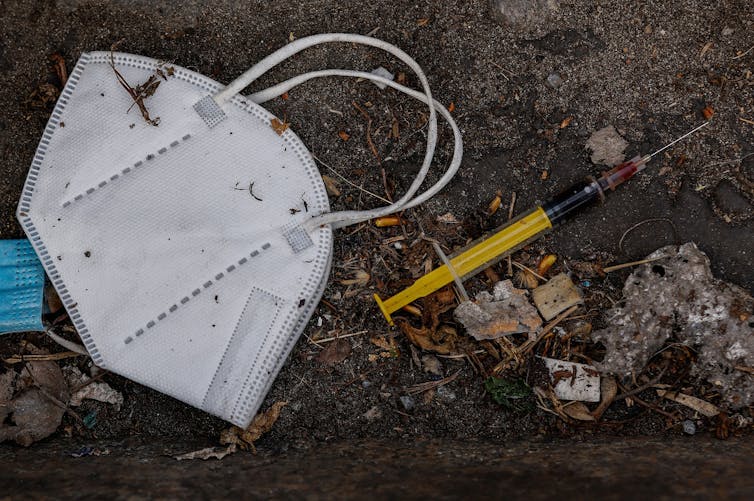
For the past 20 years, I have been engaged in efforts to end the opioid epidemic, as a public health official, researcher and clinician. And for every one of those years I have looked on as the number of deaths from drug overdoses has set a new record high.
Yet even knowing that trend I was surprised by the latest tally from the CDC showing that for the first time ever, the number of Americans who fatally overdosed over the course of a year surpassed 100,000. In a 12-month period ending at the end of April 2021, some 100,306 died in the U.S., up 28.5% over the same period a year earlier.
The soaring death toll has been fueled by a much more dangerous black market opioid supply. Illicitly synthesized fentanyl – a potent and inexpensive opioid that has driven the rise in overdoses since it emerged in 2014 – is increasingly replacing heroin. Fentanyl and fentanyl analogs were responsible for almost two-thirds of the overdose deaths recorded in the 12 months period ending in April 2021.
It is especially tragic that these deaths are mainly occurring in people with a disease – opioid addiction – that is both preventable and treatable. Most heroin users want to avoid fentanyl. But increasingly, the heroin they seek is mixed with fentanyl or what they purchase is just fentanyl without any heroin in the mix.
While the spread of fentanyl is the primary cause of the spike in overdose deaths, the coronavirus pandemic also made the crisis worse.
The geographical distribution of opioid deaths makes it clear that there has been a change during the pandemic months.
Before the COVID-19 health crisis, the skyrocketing increase in fentanyl-related overdose deaths in America was mainly affecting the eastern half of the U.S., and hit especially hard in urban areas like Washington, D.C., Baltimore, Philadelphia and New York City. A possible reason behind this was that in the eastern half of the U.S., heroin has mainly been available in powder form rather than the black tar heroin more common in the West. It is easier to mix fentanyl with powdered heroin.
COVID-19 resulted in less cross-national traffic, which made it harder to smuggle illegal drugs across borders. Border restrictions make it harder to move bulkier drugs, resulting in smugglers’ increased reliance on fentanyl – which is more potent and easier to transport in small quantities and as pills, making it easier to traffic by mail. This may have helped fentanyl spread to areas that escaped the earlier surge in fentanyl deaths.
Opioid-addicted individuals seeking prescription opioids instead of heroin have also been affected, because counterfeit pills made with fentanyl have become more common. This may explain why public health officials in Seattle and elsewhere are reporting many fatalities resulting from use of counterfeit pills.
Another factor that may have contributed to the soaring death toll is that the pandemic made it harder for those dependent on opioids to get in-person treatment.
More than anything else, what drives opioid-addicted individuals to continue using is that without opioids they will experience severe symptoms of withdrawal. Treatment, especially with buprenorphine and methadone, has to be easy to access or addicted individuals will continue using heroin, prescription opioids or illict fentanyl to stave off withdrawal. Some treatment centers innovated in the face of lockdowns, for example, by allowing more patients to take methadone unsupervised at home, but this may not have been enough to offset the disruption to treatment services.
And maintaining access to treatment is crucial to avoid relapse, especially during the pandemic. Research has shown that social isolation and stress – which became more common during the pandemic – increase the chances of a relapse in someone in recovery.
In the past, one slip might not be the end of the world for someone in recovery. But given the extraordinarily dangerous black market opioid supply, any slip can result in death.
[You’re smart and curious about the world. So are The Conversation’s authors and editors. You can read us daily by subscribing to our newsletter.]
Andrew Kolodny, Co-Director of Opioid Policy Research, Brandeis University
This article is republished from The Conversation under a Creative Commons license. Read the original article.
- Details
- Written by: Elizabeth Larson
During the Nov. 16 board meeting, Supervisor Moke Simon — who along with Supervisor EJ Crandell is a member of a Lake County tribe — presented the Native American Heritage Month proclamation.
The proclamation notes that Lake County has been home to people for greater than 12,000 years, “and the richly diverse cultures of the seven Tribal Nations indigenous to Lake County, Middletown Rancheria of Pomo Indians of California, Koi Nation of Northern California, Big Valley Band of Pomo Indians, Scotts Valley Band of Pomo Indians, Habematolel Pomo of Upper Lake, Robinson Rancheria of Pomo Indians of California and Elem Indian Colony, have informed every aspect of our community’s history.”
It also acknowledges, “Policies and practices of the United States and earlier colonial governments deprived Indigenous People in the State of California and Lake County, specifically, of land-holdings, liberty, even life, itself.”
On Aug. 3, 1990, President George H.W. Bush declared the month of November as National American Indian Heritage Month, with the event now commonly referred to as Native American Heritage Month.
The proclamation explained that the bill establishing Native American Heritage Month in 1990 “represented a major step in the establishment of this celebration which began in 1976 when a Cherokee/Osage Indian named Jerry C. Elliott-High Eagle authored Native American Awareness Week legislation,” which was the first historical week of recognition in the nation for Indigenous peoples.
President Ronald Reagan proclaimed Nov. 23 to 30, 1986, as “American Indian Week,” and President Barack Obama made a Presidential Proclamation on Oct. 31 of each year that each respective November would be National Native American Heritage Month, the proclamation said.
The proclamation also affirmed Lake County's commitment to protecting the sovereign rights of Indigenous tribal organizations and institutions to strengthen their own communities,” and encouraged citizens to join in recognizing the accomplishments and contributions Native Americans have made to Lake County and to salute “those who have sought to honor the important role of Tribal leadership in our County’s past, present and future.”
Three days later, on Nov. 19, Gov. Gavin Newsom issued a proclamation declaring November as Native American Heritage Month in California.
“During Native American Heritage Month, we honor and celebrate the perseverance, rich diversity and excellence of all Native Americans — from the first peoples of this place to those from across the Nation who now call California home,” said Gov. Newsom. “I encourage everyone in our state to learn more about the people who first called this nation home, in the spirit of growth, healing and hope for a better future.”
Last week, the California State Archives announced a new educational resource created in partnership with the California Indian Museum and Cultural Center in honor of Native American Heritage Month, Identity and Stereotypes: Why Do Representations Matter?, now available on its website.
Officials said that, through a series of activities centered on issues of Native American stereotypes and representations in historical and current mass media, the resource invites high school students to think critically about widespread, problematic representations of Indigenous peoples.
They can also listen to contemporary Indigenous perspectives and consider solutions moving forward.
Email Elizabeth Larson at
- Details
- Written by: LAKE COUNTY NEWS REPORTS
The group will host the dinner and celebration from 10 a.m. to 2 p.m. Saturday, Dec. 11, at the Burns Valley School.
For the past 27 years, the Rotary Club of Clearlake has prepared a complete and healthy warm meal, plus dessert, for all who have attended, and also had Santa on hand to meet with the children.
In 2019, 1,300 people enjoyed the club’s Christmas dinner.
This year, due to COVID-19 health guidelines, the celebration will be enjoyed in a new, safe format.
Volunteers will prepare, package and hand deliver meals. Most attendees will receive takeout meals via the option to drive up in their vehicles. There will be a walk up option for those who require it. Parking will be very limited.
Meals will be provided while food supplies last or until 2 p.m., whichever comes first.
The club offered its gratitude to Foods, Etc. for contributing all the food and packaging supplies for our event this year.
The Meals on Wheels program delivers meals to 200 registered recipients in the Clearlake area. All food and packaging supplies for 200 meals will be provided to the Meals on Wheels program as part of the celebration.
The Meals on Wheels team will deliver the meals to the recipients on Dec. 11. This extra warm meal of ham and all the fixings, along with pumpkin pie, is a special holiday treat.
Historically, Santa Claus and his elves have visited with about 600 children, taking the time to ask each child about their special Christmas wish. Children also received a souvenir photo with Santa, a toy, and a candy cane to take home with them.
This year Santa will be on a fire engine to wave hello. Elves will hand out toys and candy canes to cars as they proceed down the event route.
Traditionally, the Rotary Warm for the Winter event featuring All Things Warm has happened simultaneously with the celebration event.
Due to countywide health restrictions related to COVID-19, the club reported that it is unable to offer the Warm for the Winter program this year.
Dr. Paula Dhanda and Worldwide Healing Hands volunteers will be returning this year to hand out health items.
“The Rotary Club of Clearlake loves and appreciates the community we serve. Although it looks and feels a little different this year, we are extremely excited and happy that we are still able to bring this event to you, our community,” the club said in a statement. “Keep an eye out for more information as we continue to work toward a healthier and happier community!”