 How to resolve AdBlock issue?
News
- Details
- Written by: Wendelin Hume, University of North Dakota
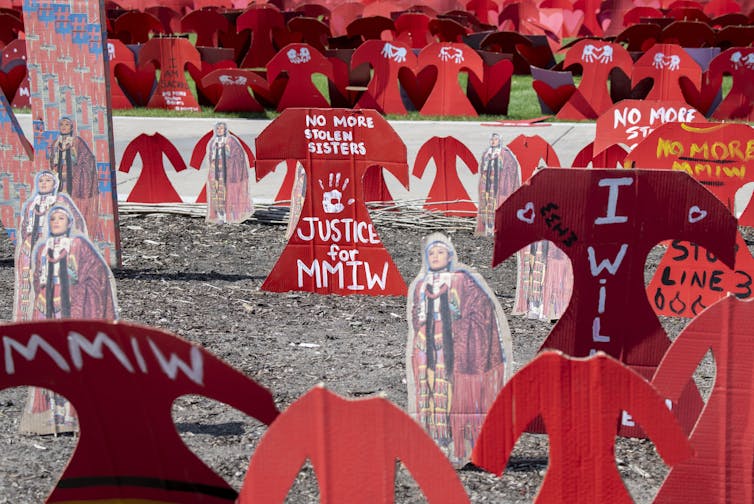
No one knows just how many Indigenous girls or women go missing each year.
There are estimates. In 2019, 8,162 Indigenous youth and 2,285 Indigenous adults were reported missing to the National Crime Information Center, or NCIC, out of a total of 609,275 cases. But crimes against Native individuals often go unreported, and with American Indian and Alaskan Native cases, race is sometimes ignored or misclassified as white.
The Centers for Disease Control and Prevention estimate that Native American women are murdered at a rate three times that of white American women.
I almost became part of statistics like these. As a child, I was attacked by a person who targeted and typically killed isolated rural children. I know firsthand that the threat of being attacked and “disappearing” is real. And as a scholar who studies tribal justice and has tried to draw attention to the problem of missing and murdered Indigenous people, I find the lack of reliable data particularly frustrating. It is hard to call media attention to the seriousness of an issue that cannot be clearly measured.
Furthermore, as the recent case of Gabby Petito demonstrates, U.S. media tends to provide more compassionate coverage when the victim is a young white female – a phenomenon former PBS anchor Gwen Ifill called “missing white woman syndrome.”
So how can researchers and Native communities convince the media to pay attention to missing Indigenous people? And how can they convince authorities to investigate these cases?
Scarcity of reliable data
The Missing and Murdered Indigenous Women movement started in Canada with the first official gathering in 2015. MMIW is a loose coalition of groups throughout Canada and the U.S. that seeks to draw attention to the disproportionate violence experienced by Indigenous women.
Since databases often list more missing Native American males than females, the MMIW movement is now typically referred to as the Missing and Murdered Indigenous People (MMIP) movement. Beginning in 2021, May 5 is now recognized in the U.S. as Missing and Murdered Indigenous Persons Awareness Day.
After suffering massive historical trauma, including through forced relocation and forced assimilation, many Indigenous people do not trust authorities. As a result, they do not report the crimes that are taking place. Crimes that do not get reported typically do not get counted.
Problems of jurisdictional authority further complicate the issue of poor data. Even if a Native family decides to report a loved one missing, do they report it to federal, state, tribal or local authorities? Since tribal communities are often treated as sovereign nations, state or local authorities might not take action on the case. However, tribal authorities may lack the resources required for a missing person investigation. And, since the missing person is typically not somewhere on the reservation, tribal authorities may lack legal authority to conduct an off-reservation investigation or to arrest non-tribal individuals.
Finally, even if a missing person report does make its way to a law enforcement agency that can handle the case, if the missing person is a child, law enforcement agents can use their discretion to declare the person a runaway. If a child is officially classified as a runaway, there is no amber alert and typically no media coverage. The crucial window of time to locate the victim immediately following the crime is often lost.
Historic and contemporary disregard
Missing person cases involving people of color in the U.S. are less likely to be solved than cases involving white victims.
U.S. attorneys declined to prosecute two-thirds of the Indian country sexual abuse and related cases referred to them between 2005 and 2009. This was partially due to jurisdictional disagreements between the FBI and the Bureau of Indian Affairs, and perhaps difficulty in obtaining evidence in violent crime cases as well as a perceived lack of victim credibility due to the interracial nature of many of the crimes. The fact that many crimes in Native communities are not even investigated makes that ratio even more striking.
I believe there are many factors, both historical and current, for the lack of attention paid by police and media to missing Indigenous people.
Historically, Indigenous people, like many people of color, were not thought of as fully human by the white colonizers. Tribal people were considered to be animalistic and heathen, and Indigenous women were, and still are, thought to be sexually promiscuous.
This feeling of superiority over another race led to a willingness by the colonizers to kill Indigenous people, force them into slavery, remove them from desired lands and later place their children in boarding schools where they were stripped of their language and culture and sometimes died.
In an 1886 speech, Theodore Roosevelt, who would go on to become U.S. president, said, “I don’t go so far as to think that the only good Indians are the dead Indians, but I believe nine out of every 10 are.” This historic dehumanization of Indigenous people is still evident today in violence against Native American people.
Native Americans, both male or female, are more than twice as likely to be victims of violent crime than the general population. Native Americans between the ages of 18 and 24 have the highest per capita rate of violent crime of any racial or age group in the U.S.
The majority of violence experienced by Native Americans is committed by someone of another race. This interracial violence rate is much higher for Native Americans (70%) than for white (38%) or Black victims (30%). Also, about 90% of Native American rape victims have assailants of another race – typically white.
According to CDC data, Native Americans are also more likely to be killed by U.S. police than any other ethnic group group – and twice as likely as white Americans.
Search for justice
Grassroots Native-led efforts, particularly over the past five or six years, are starting to bring national attention to the issues of crime and violence that affect Indigenous people.
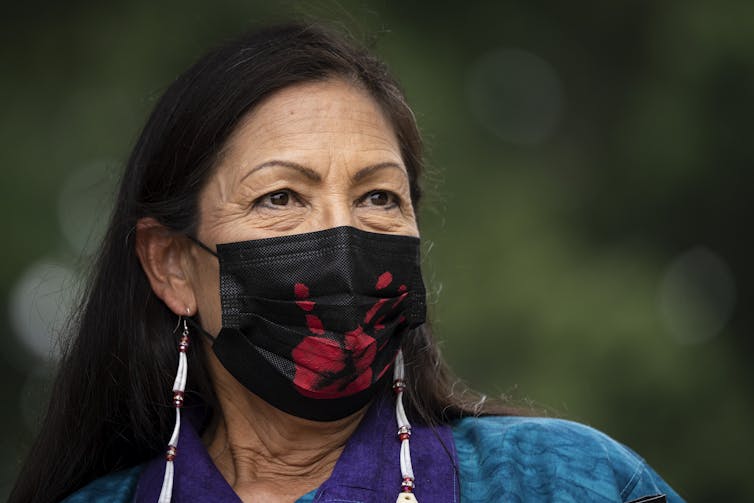
In 2019, the Trump administration formed the Task Force on Missing and Murdered American Indians and Alaska Natives, which became known as Operation Lady Justice. In April 2021, Secretary of the Interior Deb Haaland, a member of the Pueblo of Laguna, created a Missing and Murdered Unit within the Bureau of Indian Affairs to improve collaborative efforts among law enforcement agencies. Previously, as a Representative from New Mexico, she sponsored the Not Invisible Act in 2019 to improve intergovernmental coordination and consult with tribes to establish best practices to lessen the number of missing Indigenous people.
And in October 2021, President Joe Biden proclaimed Oct. 11 to be Indigenous People’s Day, a day to acknowledge the atrocities of the colonizers while also recognizing ongoing contributions of Native people.
While thousands of unsolved cases of missing and murdered Native Americans await justice, perhaps now there will be understanding and a commitment to address this ongoing tragedy.
[3 media outlets, 1 religion newsletter. Get stories from The Conversation, AP and RNS.]
Wendelin Hume, Associate Professor of Criminal Justice, University of North Dakota
This article is republished from The Conversation under a Creative Commons license. Read the original article.
- Details
- Written by: Elizabeth Larson
Call Lake County Animal Care and Control at 707-263-0278 or visit the shelter online at http://www.co.lake.ca.us/Government/Directory/Animal_Care_And_Control.htm for information on visiting or adopting.
The following cats at the shelter have been cleared for adoption.

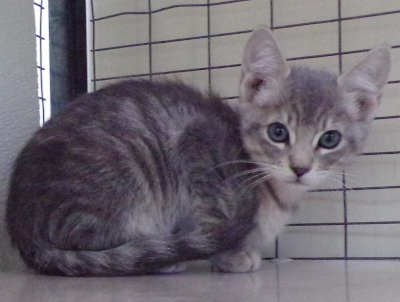
Domestic shorthair kitten
This female domestic shorthair kitten has a gray tabby coat.
She is in cat room kennel No. 6a, ID No. LCAC-A-2133.
Domestic shorthair kitten
This female domestic shorthair kitten has a gray tabby coat.
She is in cat room kennel No. 6b, ID No. LCAC-A-2134.
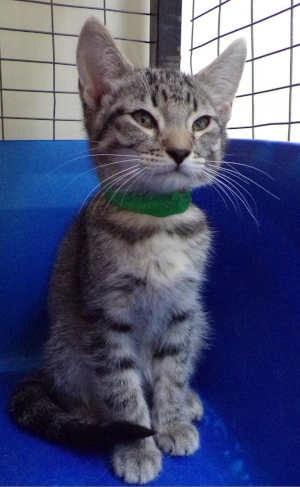
Domestic shorthair kitten
This female domestic shorthair kitten has a gray tabby coat.
She is in cat room kennel No. 6c, ID No. LCAC-A-2135.
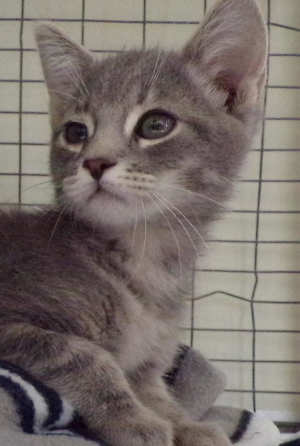
Domestic shorthair kitten
This female domestic shorthair kitten has a gray tabby coat.
She is in cat room kennel No. 6d, ID No. LCAC-A-2136.
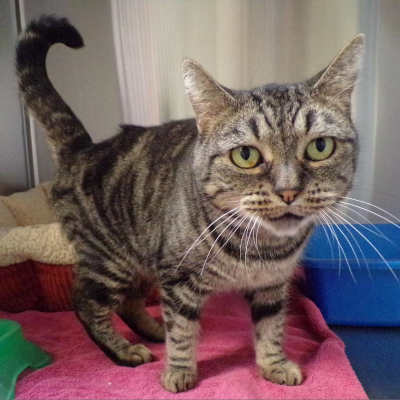
Female domestic shorthair
This 2-year-old female domestic shorthair has a gray tabby coat.
She is in cat room C No. 53, ID No. LCAC-A-2139.
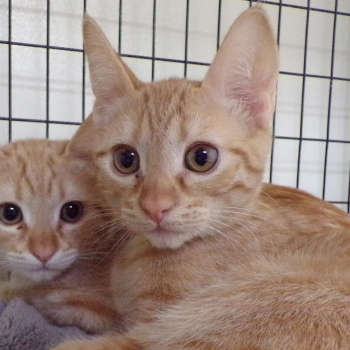
Male domestic shorthair kitten
This male domestic shorthair kitten has an orange tabby coat.
He is in cat room kennel No. 96a, ID No. LCAC-A-1871.
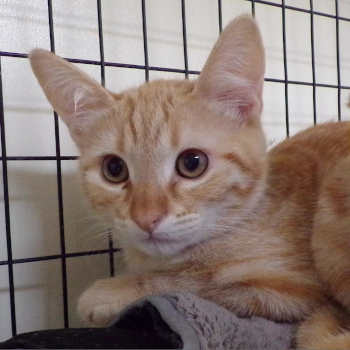
Male domestic shorthair kitten
This male domestic shorthair kitten has an orange tabby coat.
He is in cat room kennel No. 96c, ID No. LCAC-A-1873.

Female domestic shorthair kitten
This female domestic shorthair kitten has an orange tabby coat.
She is in cat room kennel No. 96d, ID No. LCAC-A-1874.
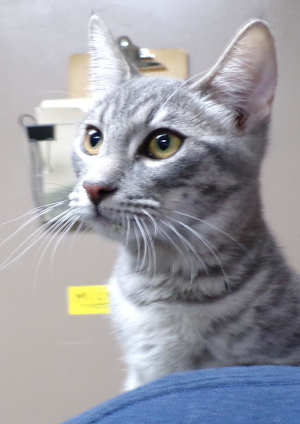
Female domestic shorthair kitten
This female domestic shorthair kitten has a gray tabby coat.
She is in cat room kennel No. 101a, ID No. LCAC-A-1945.
Email Elizabeth Larson at
- Details
- Written by: ESTHER OERTEL
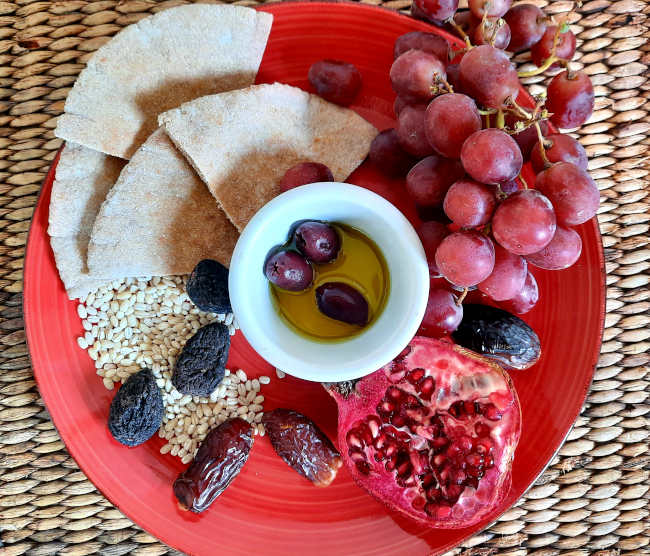
Today marks the first day of Hanukkah, and in its honor, we’re going to explore the complex food culture of Israel.
We’ll also hear from a few folks who’ve got local as well as Israeli connections to get their take on the food there.
Israeli cuisine is influenced by a plethora of factors — immigration from other countries, other Mediterranean and Middle Eastern cuisines, various styles of Jewish cooking, the tradition of keeping kosher, food customs associated with Shabbat (the weekly seventh day of rest), year-round Jewish holidays, regionally available foods and world trends from chefs trained abroad.
Because of the great diversity present in Israeli food culture, it might be helpful to think of it as a patchwork of different cuisines, rather than a cohesive whole.
As Jews returned to Israel from the Diaspora, their scattering throughout the world, they brought with them foods and recipes from an astounding number of countries. In particular, the Mizrahi, Sephardic and Ashkenazi styles of cooking are prevalent throughout Israel.
Mizrahi Jewish cuisine has roots in the Middle East, North Africa, Asia and Arab countries. Flatbreads, lentils, chickpeas and rice are staples of this cuisine, and spices popular in the Middle East are favored, among them cumin, coriander, cinnamon, black pepper, sesame seeds and spice blends such as za’atar.
Sephardi Jews are the Jews of Spain and Portugal. When they were expelled from those countries in the 15th century, many settled in North Africa — Tunisia, Libya, Morocco and Egypt — as well as in Greece, Turkey, the Balkans, Lebanon, Syria and the Holy Land. Their cuisine has been influenced by these many countries.
It emphasizes salads, stuffed vegetables and vine leaves, olive oil, lemon, lentils, dried fruits, herbs such as cilantro and parsley, saffron, nuts, chickpeas, and a variety of spices, including cumin, turmeric, cardamom and cinnamon.
Because of similar influences, Mizrahi and Sephardim cuisine overlap and share many dishes in common.
Ashkenazi Jewish cuisine developed among Jews throughout Europe, particularly Eastern and Central Europe. The Jewish dishes that we’re familiar with in this country — things like latkes (the potato pancakes made during Hanukkah), challah (braided bread), matzo ball soup, strudel, and Jewish deli staples — are of Ashkenazi origin.
The cuisine is based on ingredients available to the historically poor Ashkenazi community of Europe. At one time they were forbidden to grow crops, so the food is less vegetable focused than Mizrahi or Sephardic cuisine.
Baked goods, potatoes, cabbage, beets, chicken, fish and less expensive cuts of beef such as brisket are featured. Due to the lack of availability of the olive oil used in traditional Jewish cooking, fat rendered from chicken skin, known as schmaltz, was used in many dishes.
Another factor adding to the diversity of Israel’s food is that the area that is modern-day Israel has been inhabited, conquered and fought over by countless peoples in its long history. It’s been a melting pot of world influence in times both ancient and modern.
Thanks to the Biblical and archaeological records that provide insight, many of Israel’s culinary traditions can be traced back to the time of the kings of ancient Israel, more than 3,000 years ago.
The ancient Israelites ate foods based on what’s known as the “seven species,” two grains and five fruits. These are mentioned in the Hebrew Bible (Deuteronomy 8:8) as being special products of the Land of Israel. They are wheat, barley, grapes, olives, pomegranates, dates, and figs. All retain an important place in Israeli cuisine today.
Arab foods, as well as foods from other Middle Eastern and Mediterranean countries, have been adopted and adapted by Israel. While the nation doesn’t have a food that can be considered a national dish (or even a distinct national cuisine), there are some foods that can be considered Israeli staples, and such regional influence can be seen in them. Below are a favored few.
Hummus, a dish that likely originated in ancient Egypt, is a smooth, silky paste made from chickpeas, tahini, lemon juice, cumin and salt. Sometimes olive oil is added. Hummus recipes vary from region to region. Jerusalem hummus, for example, is served with spicy ground beef and pine nuts.
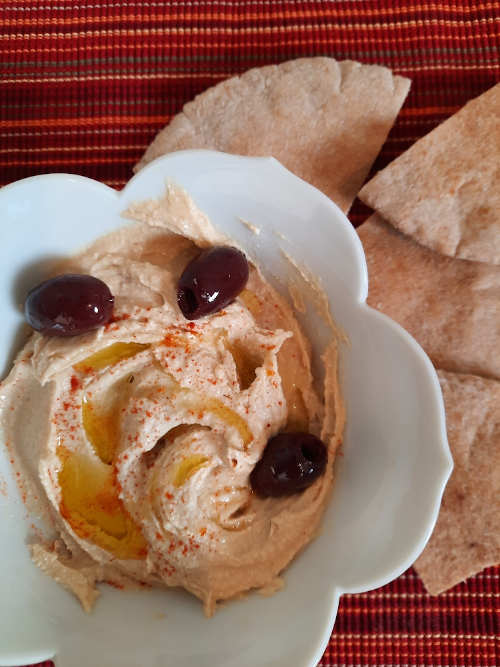
Falafel is a popular street food and considered by some to be Israel’s unofficial national dish. Made from ground chickpeas rolled into balls and deep fried, falafel is often served in pita bread, or along with hummus or an Israeli salad.
Also a popular street food, shawarma is meat cooked on a spit and served with toppings in a pita. Toppings can include hummus, pickles, grilled hot peppers, pickled mangoes, olives, fried eggplant and even French fries.
Shakshuka is a bright and bold North African dish that’s become a quintessential part of breakfast or lunch in Israel. Eggs are cooked on a bed of tomato sauce spiced with paprika, cumin, and cayenne pepper and topped with fresh herbs when it comes out of the oven. It’s served in the pan it’s baked in.
An Israeli salad is made with finely chopped tomatoes and cucumbers and dressed in olive oil, lemon juice, salt, and pepper. Diced bell peppers, grated carrots, finely shredded cabbage or lettuce, sliced radish or fennel, chives, chopped parsley, and spices like mint, za’atar or sumac can be added for variety.
And finally, an “Israeli breakfast” is a common offering in hostels and hotels, however humble, and consists of a panoply of foods eaten there at breakfast, often including omelets, an Israeli salad, cheeses, olives, breads and pastries, labneh (thick yogurt), fruit and shakshuka.
I had the privilege of speaking with several former residents of Israel to learn about the food memories they hold and their personal Israeli food favorites.
Lisa Kaplan, executive director of the Middletown Art Center, moved to Israel with her family when she was 11 and lived there for 23 years. Her mother, a Palestinian Jew from Jerusalem, is from a family which has been rooted in the region since the 1700s.
Though it was mostly American or Ashkenazi food eaten in her family, her heart beats for the traditional Middle Eastern foods in Israel. It’s the hummus, lentils, rice, fresh salads and street food from the open-air markets that she craves.
A favorite of hers is kibbeh, ground lamb inside a bulgur coating (in form a bit like a corn dog, Kaplan said), which she got from the open-air market three blocks from her home. She visited there every Friday to buy vegetables.
A Moroccan friend in Israel taught her to make mejadra, a lentil and rice dish with onions and spiced with coriander and cumin. It’s still a favorite of hers and she makes it at home.
The foods and smells of the open-air markets in Israel influence the way she cooks here. She loves the way Middle Eastern flavors like lemon, garlic, olive oil, cumin and Baharat, a spice blend, tingle the palate and energize her.
If you ever get the chance to taste the hummus that Kaplan makes, do. It’s a labor of love and, from what I hear, tastes pretty darn good!
If you’ve been to a recent farm-to-table dinner at the Peace and Plenty saffron farm in Kelseyville, you’ve tasted Chef Arnon Oren’s food.
Melinda Price of Peace and Plenty Farm tells me that it’s been fun working with Chef Oren to create menus using their saffron and seasonal produce. Saffron was used in nearly every course of their last dinner (even in the ice cream, which is hugely popular). There’ll be further collaborations for dinners next year.
Oren was born in Israel and raised in a small town near the Sea of Galilee. His mother was an agricultural instructor, so, not surprisingly, their property included an abundant garden and was full of fruit trees.
This bounty — as Oren says, the original flavors of Israel — has influenced the flavor profile of his cooking. He believes in using the best ingredients possible and letting them shine.
Scents often evoke memories, and for Chef Oren, it’s the smell of fig leaves that takes him back to Israel, where he remembers plucking fresh figs from the trees of his childhood home.
He especially enjoyed Israel during Jewish holidays, which take place throughout the year, every couple of months or so, when everything seemed more pronounced. As is customary, his mother made jelly doughnuts during Hanukkah, and Oren laughed as he recalled their irregular shapes, unlike the perfect bakery versions.
Bourekas, fried pastries filled with cheese, are his go-to street food in Israel, and cardamom is a fondly remembered spice. His culinary creations often include cardamom — he uses it in sweet and savory applications, from chocolate cake to chicken.
His recipe for sweetened labneh with cardamom is offered for us today. Labneh is a Lebanese cream cheese that can be used as an accompaniment to sweet or savory foods.
Jivan Dicovsky, a Lake County life coach, was born in Israel and raised in Tel Aviv, one of its most populous cities. His family’s roots are in Western Europe and their style of eating reflected that; however, he grew to love Israeli food with Middle Eastern roots.
He began cooking after his divorce, including Israeli foods like hummus, falafel, and various soups and stews. He cooks almost exclusively Middle Eastern foods, though his favorite cold weather food to make is traditional Jewish chicken soup.
I also had the chance to chat with my youngest son, Billy Oertel, who visited Israel while he was in college. He found the mix of foods interesting, from Middle Eastern fare to Eastern European blintzes or pierogies.
He found it surprisingly easy to eat as a vegetarian there; there was always something meat-free on offer. The falafel was his favorite dish. He said it was the best he’s eaten, and though he’s been trying, he hasn’t found anything to match it here.
I especially wish to thank these folks for sharing their memories and thoughts with me.
To find out more about the Middletown Art Center, visit their website at www.middletownartcenter.org. For Chef Arnon Oren, who’s available to cater events in Lake County, visit www.anaviv.com, and for coaching by Jivan Dicovsky, see www.theartoffallingapart.life.
Chef Arnon’s Sweetened Cardamom Labneh with Fresh Fruit
1 quart whole milk yogurt
10 pods of green cardamom or 1 teaspoon cardamom powder
Zest from 1 lemon
2-4 tablespoons sugar
Fruit of your choice
Over a strainer that is over a bowl, pour the yogurt into a clean cloth towel.
Tie the cloth and hang it over a bowl in a sink at room temperature overnight. (Do not refrigerate.) You can also leave it in the strainer, although it is best to hang.
The next day, place the strained yogurt into a clean bowl. This is your Labneh. Save the liquid from the yogurt.
Grind the cardamom if you are using pods and sift it into the labneh. Otherwise, add the cardamom powder.
Add the sugar, lemon zest and mix well. You can add back some of the liquid if the labneh is too thick.
Serve with fruit of your choice and enjoy!
Recipe by Arnon Oren.
Esther Oertel is a writer and passionate home cook from a family of chefs. She grew up in a restaurant, where she began creating recipes from a young age. She’s taught culinary classes in a variety of venues in Lake County and previously wrote “The Veggie Girl” column for Lake County News. Most recently she’s taught culinary classes at Sur La Table in Santa Rosa. She lives in Middletown, California.
- Details
- Written by: Mike Geniella
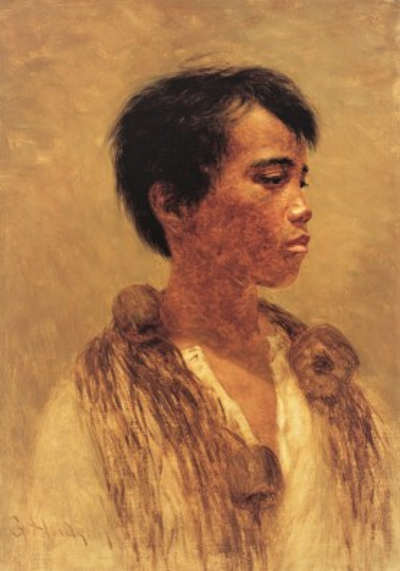
NORTH COAST, Calif. — A prized collection of artist Grace Hudson’s paintings are returning home to Mendocino County in a unique agreement reached with the Palm Springs Art Museum in Southern California.
The pact provides for the direct gift of 16 Hudson artworks to the Grace Hudson Museum in Ukiah, and a long-term loan of two other oil paintings.
Hudson was known for her work focusing on the region’s Pomo Indians, completing several hundred portraits of them.
The Palm Springs collection includes two oil paintings Hudson did in 1901 during a transformative sojourn in Hawaii. Her work from that period is rare.
Also in the gifted collection are five sepia portraits (bitumen on canvas) of local Pomo elders in the 19th and early 20th centuries, and oil paintings that depict a sweat lodge, hop fields and an Ukiah Valley landscape with the subtle presence of a figure carrying wood in a Pomo burden basket.
There are two unfinished portraits, “Indian Girl” and “Head of Indian Girl,” that Grace Hudson Museum staff believes will be useful for research purposes. Lastly, there are two small landscapes of historic Todd Grove, and the old Fish Hatchery that once existed along Gibson Creek on Ukiah’s west side.
Costs associated with the transfer of the paintings were underwritten by a grant from the Miner Anderson Family Foundation in San Francisco.
Author/filmmaker Robert Mailer Anderson has deep ties to Mendocino County, where he graduated from Anderson Valley High School. An uncle, Bruce Anderson, is editor/publisher of the Anderson Valley Advertiser.
Norma Person, a Sonoma County philanthropist and widow of former newspaper publisher Evert Person, pledged her support if needed for the transfer agreement with the Palm Springs Museum in addition to making a generous contribution to help ease pandemic related financial losses at the Hudson.
The Persons to date are the single largest financial contributors to the Grace Hudson Museum.
“We are happy to help return this special collection to Mendocino County,” said Robert Mailer Anderson. Palm Springs Art Museum staff contacted the Grace Hudson Museum about the possibility of gifting the collection last May.
Rather than sell the individual Hudson art works to collectors on the open market, senior staff at the Palm Springs museum decided that gifting the artwork to the Grace Hudson Museum would be the best outcome for the public, scholars, and art historians.
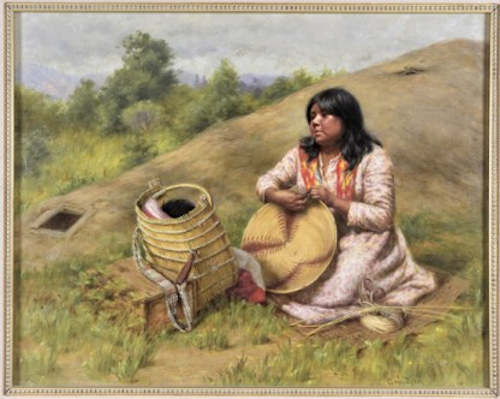
“Palm Springs believed that by keeping the paintings in the public trust rather than selling them to private collectors was the right thing to do,” said Grace Hudson Museum Director David Burton.
The Miner Anderson Family Foundation awarded a $40,000 grant to the Grace Hudson Museum to cover the expected transfer costs of the Palm Springs collection. Sotheby’s estimated the collection could bring up to $200,000 if auctioned.
The Palm Springs Art Museum is shifting emphasis to modern and contemporary art, leading to its decision to gift the Hudson work. The museum in the early 2000s decided to move away from an art mission first defined in the 1930s. For decades the Palm Springs museum focused on natural history, the surrounding Cahuilla Indian culture, and later fine art.
Senior Palm Springs staff realized as the museum’s new direction evolves that the important Hudson collection would mostly likely remain in storage, and out of view of the public.
During the discussion between the two museums, Palm Springs staff asked the Grace Hudson Museum to pay all transfer-related costs associated with the gift of the paintings.
Director Burton said he, current curator Alyssa Boge, retired museum director Sherrie Smith-Ferri, and former curator Karen Holmes reviewed the collection, and evaluated its potential importance.
Burton traveled to Palm Springs to personally view the paintings and he found them to be in “good or excellent condition.”
“We concluded the Palm Springs collection would significantly expand and enhance what we do here,” said Burton.
The Ukiah museum is the single largest repository of artist Hudson’s work and is known nationally for the breadth of its collection of Hudson paintings and Pomo artifacts collected by the artist and her husband, Dr. John Hudson, a noted ethnologist.
How the Palm Springs collection of Hudson paintings was assembled is a study in art history.
Eleven Hudson paintings were donated to Palm Springs by C. Frederick Faude, a wealthy fine arts and antiques dealer who had showrooms in San Francisco and Sausalito.
At the time, Faude’s collection of Hudson paintings was considered one of the country’s largest. Faude also was a benefactor of the Asian Art Museum in San Francisco, where a gallery is named in his honor.
Faude and his partner, San Francisco restaurateur Louis Foerster, lived in San Anselmo in Marin County where they donated fourteen acres of land for a public park that is named in his honor.
Three of the Hudson paintings coming to Ukiah were gifted to the Palm Springs museum by a trust established by the late actor and artist George Montgomery. Another Hudson painting was given by a trust of actor William Holden.
The newly acquired paintings from Palm Springs are to arrive at the Grace Hudson Museum in Ukiah in early January. Museum Director Burton said they will be the centerpieces of a new exhibit highlighting recent acquisitions, scheduled to open in February.
Mike Geniella is an endowment board member of the Grace Hudson Museum in Ukiah.