 How to resolve AdBlock issue?
News
- Details
- Written by: Elizabeth Larson
LAKE COUNTY, Calif. — Authorities have arrested a man who they say is a person of interest in the August disappearance of a Lucerne resident.
The Lake County Sheriff’s Office said Nova Maye Deperno, 26, a Lake County resident, was arrested in Occidental in Sonoma County on Thursday evening.
He’s believed to be connected to the disappearance of Ronald James Meluso.
Meluso, 63, was reported as missing to the sheriff’s office on Aug. 22, four days after he was last heard from, authorities said.
Meluso is believed to be a victim of foul play, the sheriff’s office said.
Authorities were seeking Deperno for assault with a deadly weapon, vandalism and brandishing a firearm, and he was considered armed and dangerous.
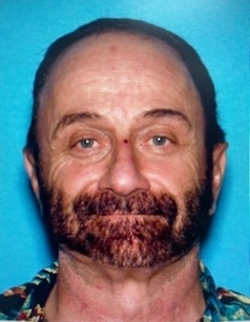
At 5 p.m. Thursday the Lake County Sheriff’s Major Crimes Unit Detectives developed information that led to the location of Nova Deperno at a residence in the 14000 block of Occidental Road.
The Sonoma County Sheriff's Office SWAT team assisted the Lake County Sheriff's Office with taking Deperno into custody.
Deperno fled from the residence, and after a two-hour search, he was found by the Sonoma County Sheriff's Office helicopter, Henry-1, hiding under a tree canopy, officials said.
Deperno was booked into the Sonoma County Jail where he’s being held on $635,000 bail.
Jail records said he is due to appear in court in Sonoma County on Tuesday afternoon.
The investigation is ongoing. Anyone who has information regarding Meluso’s whereabouts to contact Det. Jeff Mora of the Lake County Sheriff’s Office at 707-262-4224 or by email at
Email Elizabeth Larson at
- Details
- Written by: First 5 Lake County
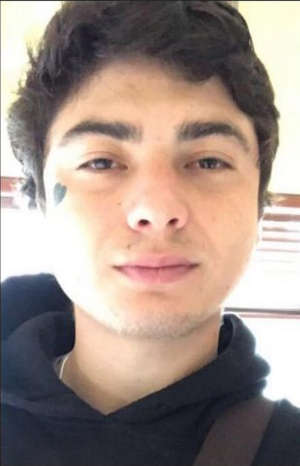
Bond comes to Lake County after working at First 5 Mendocino County for nearly five years as the public relations manager.
“I truly believe that the work First 5’s across the state do has immense positive impact for families with young children and am humbled to be able to continue this great work here in Lake County. If we as a community can set our families up for success, then we are truly succeeding as a community,” said Bond.
“While I am not new to the First 5 world and work, I am new to the work being done here in Lake County,” Bond said. “I am excited to see the progress that has already been made and look forward to collaborating with partners and our community in the days ahead for the good of young children and families.”
Bond holds a bachelor’s degree in psychology from the University of California, Davis, and has previous experience working in group homes for children with severe mental and behavioral health disabilities. She also has worked as an education supervisor for Six Flags Discovery Kingdom.
“My experience at the group home showed a light on the negative impacts of adverse childhood experiences, while my work at Six Flags highlighted the other side of the spectrum where positive, enriching experiences abounded,” Bond said. “We need to remember and consider that children and families come from all walks of life, and it is our responsibility to provide them with the resources necessary and to meet them where they are at. First 5’s upstream work helps prevent or at least provide a path of hope in the face of adversity, and is critical to this balance.”
More information about First 5 Lake, its investments and priorities can be found at www.firstfivelake.org.
Using funds derived from California Proposition 10’s voter-mandated tax on tobacco products, the First 5 Lake County Commission funds programs and services that benefit the health and development of young children and educate parents, grandparents, caregivers and teachers about the critical role they play during a child’s first five years.
Since its inception in 2000, First 5 Lake has supported thousands of families with programs and services designed to help Lake County children grow up healthy and ready to succeed in school and life.
The First 5 Lake commissioners are:
• Chair: Tina Scott, Lake County District 4 supervisor.
• Vice Chair: Carly Swatosh-Sherman, Lake County Office of Education, education specialist.
• Lake County Superintendent of Schools Brock Falkenberg.
• Lake County Social Services Director Crystal Markytan.
• Lake County Health Services Director Jonathan Portney.
• Allison Panella, mother of children under age 5.
• Fawn Rave, education director, Robinson Rancheria.
• Tarin Benson, coordinator of Student Services for Konocti Unified School District.
• Justin Gaddy, father of a child under age 5.
- Details
- Written by: DENNIS FORDHAM
Administration of a decedent’s estate may involve investment accounts (with stocks and bonds) held in the decedent’s name or trust.
The investment accounts may be at a bank or a brokerage. A person administering a probate (i.e a personal representative) or trust estate (i.e., a successor trustee) will want to (1) obtain information regarding decedent’s account; (2) retitle decedent’s account; (3) close decedent’s account; and (4) liquidate or transfer assets in-kind.
Such work may involve the so-called “back office” of a bank or brokerage; if the decedent’s accounts were held by a financial adviser, however, the financial adviser is the “go to” person for dealing with the company back office.
The first step is to contact the correct back office department involved with handling a decedent’s account, sometimes called, “the estates department.” The customer service number and email can be found on a financial statement but also by searching online.
Unfortunately calls too often involve long on-hold waiting periods, especially on Mondays and Tuesdays.
The purpose of the initial call is to introduce oneself, to advise that the account holder is deceased, and to ask about the company’s procedures for transferring the account (i.e., what documents are required in order to gain control over the account, and how to provide them).
The bank or brokerage will then assign a case reference number to be used on all future communications.
Sometimes a specific representative may be assigned. If a specific representative is assigned you will want that person’s telephone and email.
If no employee is assigned then you will need to communicate with the correct back-office department and will need to communicate every time a document is submitted to request someone to process the documents. Otherwise, the documents may simply go ignored without you knowing this is even happening.
Some of the necessary documentation is either produced or in the possession of the attorney who is assisting with administering the estate. That is, the account holder’s certified death certificate, the client’s fiduciary authority over the account (e.g., court certified letters of administration or a trustee’s certification of trust), and a letter of authorization signed by the client to allow the bank or brokerage company to communicate with the attorney and staff.
Other blank document forms are provided by the bank or brokerage for completion and signature. This includes a new brokerage account application and certain additional disclosure documents.
After reading the company’s application and supporting documents, questions may arise regarding how to complete the forms, how to submit the forms, and how to follow up on the processing. This communication can sometimes be accomplished by email or online chat (website) with a representative.
Next is returning the signed and completed documents. Certain documents — such as the certified death certificate — must be returned by USPS (mail) or courier delivery.
Other documents can be sent by scan and email, facsimile, or through a secure electronic portal. Confirmation that the documents are received should be obtained.
After submission, a long period of waiting occurs. Follow up by email avoids being kept on hold. Often emails are not answered for days, however, and so require follow-up emails or a telephone call to get a reply.
Typically the first review of the documents results in a request for further redoing the documents to correct errors and in a request for additional documents.
The foregoing drawn out and tedious process is usually done by an attorney or a financial adviser, or both, working with the financial company’s back office.
The foregoing is not legal advice. Consult an attorney if confronting these issues.
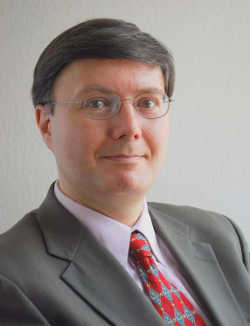
Dennis A. Fordham, attorney, is a State Bar-Certified Specialist in estate planning, probate and trust law. His office is at 870 S. Main St., Lakeport, Calif. He can be reached at
- Details
- Written by: Richard Huskey, University of California, Davis

New years often come with new resolutions. Get back in shape. Read more. Make more time for friends and family. My list of resolutions might not look quite the same as yours, but each of our resolutions represents a plan for something new, or at least a little bit different. As you craft your 2022 resolutions, I hope that you will add one that is also on my list: feel more flow.
Psychologist Mihály Csíkszentmihályi’s research on flow started in the 1970s. He has called it the “secret to happiness.” Flow is a state of “optimal experience” that each of us can incorporate into our everyday lives. One characterized by immense joy that makes a life worth living.
In the years since, researchers have gained a vast store of knowledge about what it is like to be in flow and how experiencing it is important for our overall mental health and well-being. In short, we are completely absorbed in a highly rewarding activity – and not in our inner monologues – when we feel flow.
I am an assistant professor of communication and cognitive science, and I have been studying flow for the last 10 years. My research lab investigates what is happening in our brains when people experience flow. Our goal is to better understand how the experience happens and to make it easier for people to feel flow and its benefits.

What it is like to be in flow?
People often say flow is like “being in the zone.” Psychologists Jeanne Nakamura and Csíkszentmihályi describe it as something more. When people feel flow, they are in a state of intense concentration. Their thoughts are focused on an experience rather than on themselves. They lose a sense of time and feel as if there is a merging of their actions and their awareness. That they have control over the situation. That the experience is not physically or mentally taxing.
Most importantly, flow is what researchers call an autotelic experience. Autotelic derives from two Greek words: autos (self) and telos (end or goal). Autotelic experiences are things that are worth doing in and of themselves. Researchers sometimes call these intrinsically rewarding experiences. Flow experiences are intrinsically rewarding.
What causes flow?
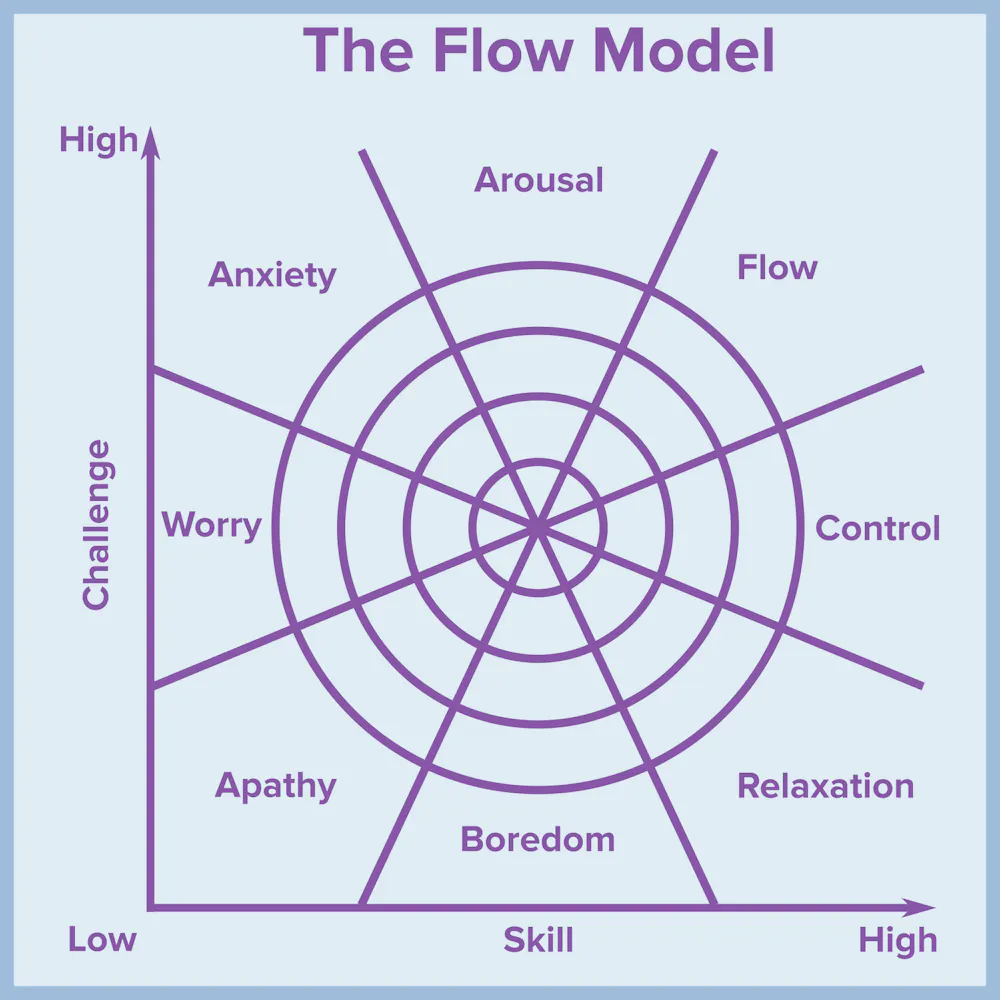
Flow occurs when a task’s challenge is balanced with one’s skill. In fact, both the task challenge and skill level have to be high. I often tell my students that they will not feel flow when they are doing the dishes. Most people are highly skilled dishwashers, and washing dishes is not a very challenging task.
So when do people experience flow? Csíkszentmihályi’s research in the 1970s focused on people doing tasks they enjoyed. He studied swimmers, music composers, chess players, dancers, mountain climbers and other athletes. He went on to study how people can find flow in more everyday experiences. I am an avid snowboarder, and I regularly feel flow on the mountain. Other people feel it by practicing yoga – not me, unfortunately! – by riding their bike, cooking or going for a run. So long as that task’s challenge is high, and so are your skills, you should be able to achieve flow.
Researchers also know that people can experience flow by using interactive media, like playing a video game. In fact, Csíkszentmihályi said that “games are obvious flow activities, and play is the flow experience par excellence.” Video game developers are very familiar with the idea, and they think hard about how to design games so that players feel flow.
Why is it good to feel flow?
Earlier I said that Csíkszentmihályi called flow “the secret to happiness.” Why is that? For one thing, the experience can help people pursue their long-term goals. This is because research shows that taking a break to do something fun can help enhance one’s self-control, goal pursuit and well-being.
So next time you are feeling like a guilty couch potato for playing a video game, remind yourself that you are actually doing something that can help set you up for long-term success and well-being. Importantly, quality – and not necessarily quantity – matters. Research shows that spending a lot of time playing video games only has a very small influence on your overall well-being. Focus on finding games that help you feel flow, rather than on spending more time playing games.
A recent study also shows that flow helps people stay resilient in the face of adversity. Part of this is because flow can help refocus thoughts away from something stressful to something enjoyable. In fact, studies have shown that experiencing flow can help guard against depression and burnout.
Research also shows that people who experienced stronger feelings of flow had better well-being during the COVID-19 quarantine compared to people who had weaker experiences. This might be because feeling flow helped distract them from worrying.
What is your brain doing during flow?
Researchers have been studying flow for nearly 50 years, but only recently have they begun to decipher what is going on in the brain during flow. One of my colleagues, media neuroscientist René Weber, has proposed that flow is associated with a specific brain-network configuration.
Supporting Weber’s hypothesis, studies show that the experience is associated with activity in brain structures implicated in feeling reward and pursuing our goals. This may be one reason why flow feels so enjoyable and why people are so focused on tasks that make them feel flow. Research also shows that flow is associated with decreased activity in brain structures implicated in self-focus. This may help explain why feeling flow can help distract people from worry.
[Get the best of The Conversation, every weekend. Sign up for our weekly newsletter.]
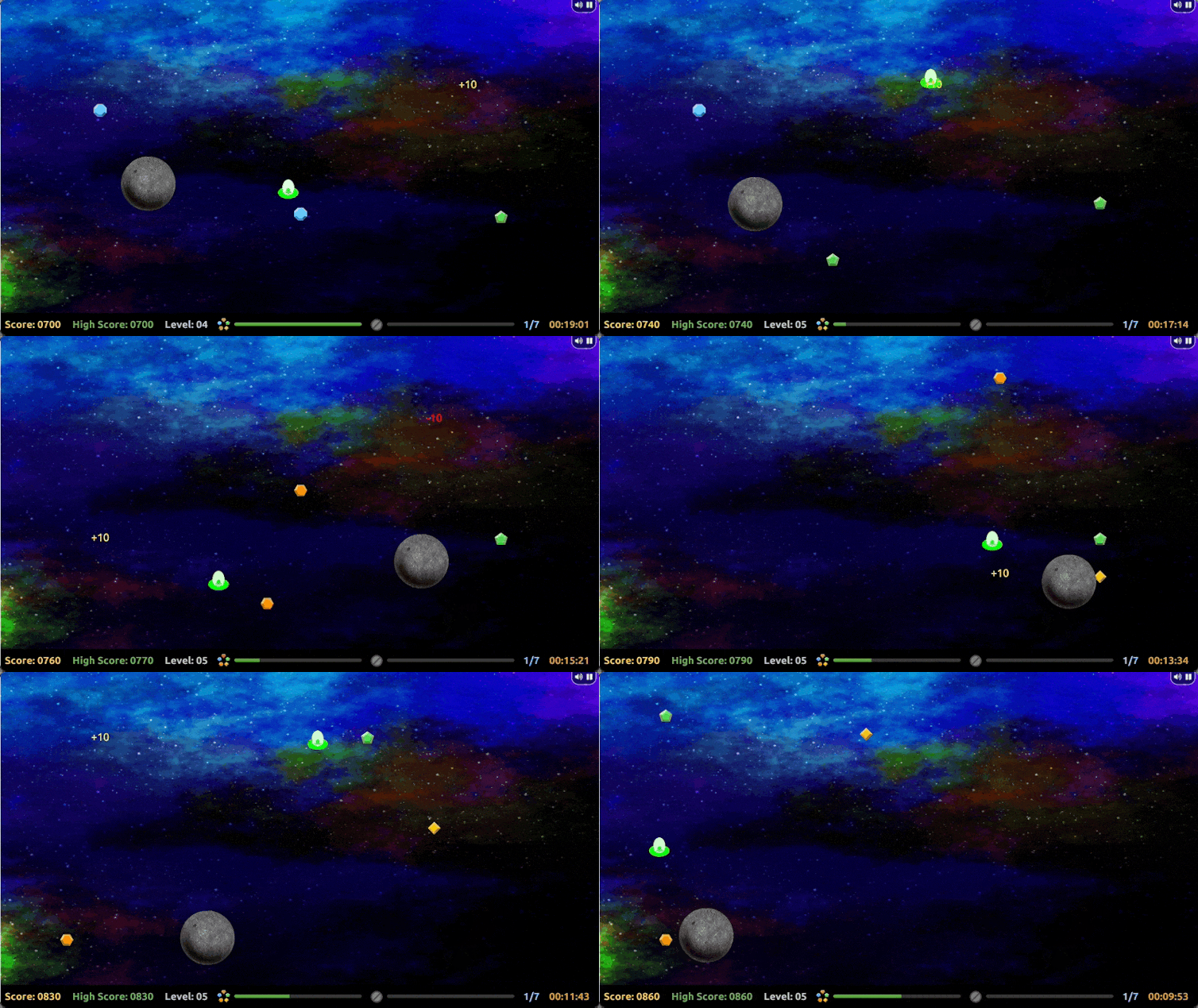
Weber, Jacob Fisher and I have developed a video game called Asteroid Impact to help us better study flow. In my own research, I have participants play Asteroid Impact while having their brain scanned. My work has shown that flow is associated with a specific brain network configuration that has low energy requirements. This may help explain why we do not experience flow as being physically or mentally demanding. I have also shown that, instead of maintaining one stable network configuration, the brain actually changes its network configuration during flow. This is important because rapid brain network reconfiguration helps people adapt to difficult tasks.
What more can the brain tell us?
Right now, researchers do not know how brain responses associated with flow contribute to well-being. With very few exceptions, there is almost no research on how brain responses actually cause flow. Every neuroscience study I described earlier was correlational, not causal. Said differently, we can conclude that these brain responses are associated with flow. We cannot conclude that these brain responses cause flow.
Researchers think the connection between flow and well-being has something to do with three things: suppressing brain activation in structures associated with thinking about ourselves, dampening activation in structures associated with negative thoughts, and increasing activation in reward-processing regions.
I’d argue that testing this hypothesis is vital. Medical professionals have started to use video games in clinical applications to help treat attention-deficit/hyperactivity disorder, or ADHD. Maybe one day a clinician will be able to help prescribe a Food and Drug Adminstration-approved video game to help bolster someone’s resilience or help them fight off depression.
That is probably several years into the future, if it is even possible at all. Right now, I hope that you will resolve to find more flow in your everyday life. You may find that this helps you achieve your other resolutions, too.
Richard Huskey, Assistant Professor of Communication and Cognitive Science, University of California, Davis
This article is republished from The Conversation under a Creative Commons license. Read the original article.