 How to resolve AdBlock issue?
News
- Details
- Written by: LAKE COUNTY NEWS REPORTS
The founding members of the Vaccine Work Group include Sen. Dr. Richard Pan, Sen. Scott Wiener, Sen. Josh Newman, Assemblymember Akilah Weber, MD, Assemblymember Buffy Wicks, Assemblymember Cecilia Aguiar-Curry — who represents Lake County — and Assemblymember Evan Low.
“Vaccines protect not only individuals but also whole communities when almost everyone is vaccinated at schools, workplaces and businesses, and safe and effective COVID-19 vaccines have already prevented the deaths of hundreds of thousands of Americans,” said Pan (D-Sacramento). “Public safety is a paramount duty of government, and I am proud to join a talented group of legislators in the pro-science Vaccine Work Group who want to end this disastrous pandemic and protect Californians from death and disability by preventable diseases.”
The Vaccine Work Group is examining data, hearing from experts, and engaging stakeholders to determine the best approaches to promote vaccines that have been proven to reduce serious illness, hospitalization and death from COVID-19.
“Science has saved millions of Americans from needless disease, disability, and even death, from smallpox through the COVID pandemic,” said Aguiar-Curry (D-Winters). “There is no excuse to allow people to live at risk when our health systems can protect them. My colleagues and I will rely on science to show us the way to a healthier future for every Californian and visitor to our great state.”
“The current COVID-19 pandemic has brought devastating effects to every city, county and area of California,” said Assemblymember Dr. Akilah Weber (D-San Diego). “Our objectives are clear — we are prioritizing the health and safety of all Californians. I am looking forward to crafting legislation with my colleagues that acts to protect all populations across the state.”
“Vaccines represent the archetype of public health — a social compact, and a belief in doing our part to protect each other and the communities we love,” said Assemblymember Buffy Wicks (D-Oakland). “Getting our vaccination rates up is our best chance of preventing more death and disability across California, and I’m so proud to unite with this group of legislators to advance data-driven policies that will save lives and protect the people we serve.”
“Vaccines are miracles of science — one of the gifts of modern life. I’m energized to be a member of the vaccine working group and to fight alongside my colleagues against the misinformation and extremism that have kept so many from getting vaccinated. Vaccines have saved countless lives during the COVID-19 pandemic — just as they have for horrific diseases like smallpox, polio, and measles — and we need to continue ramping up vaccinations and boosters across California. The Vaccine Work Group will help California get there,” said Sen. Scott Wiener (D-San Francisco).
“The world is suffering from all of the impacts of COVID-19 and Californians are suffering along with everyone else,” said Sen. Josh Newman (D-Fullerton). “We would like to return to our pre-pandemic lives as soon as possible and that will require immunization for everyone. We know that the vaccines are effective, so the challenge now is to educate people to ignore all of the deadly misinformation being served to them daily. It’s an honor to work alongside this group of legislators whose focus is the health and safety of every person in this state.”
Catherine Flores Martin, California Immunization Coalition executive director, said the group’s formation is critical “because we must not lose sight of our fundamental belief in science and facts when forming and implementing public health policies.”
- Details
- Written by: Kara Manke
BERKELEY, Calif. — Clearing California’s forests of dense overgrowth is a critical first step for curbing catastrophic wildfire in the state. But forest restoration — whether through prescribed burning or thinning – comes at a high price: Not only are these treatments costly, but cutting down or burning vegetation can release stored carbon dioxide, accelerating the impacts of climate change.
A new analysis by researchers at the University of California, Berkeley, provides a roadmap for how the state can effectively reduce wildfire risk through forest thinning while continuing to limit its carbon emissions.
By creating a market for small diameter trees and other woody biomass — particularly by encouraging the use of long-lived “innovative wood products,” such as oriented strand board — the state can both create an economic incentive for effective forest management and prevent the carbon stored in this vegetation from entering the atmosphere.
“It's hard to manage our forests without releasing carbon,” said study first author Bodie Cabiyo, a Ph.D. candidate in UC Berkeley’s Energy and Resources Group. “But if we're really efficient and careful about how we are using the wood and invest in innovative wood products that can use waste wood, then we can achieve both net carbon benefits and wildfire mitigation benefits in California.”
In 2018, former California Gov. Jerry Brown committed the state to achieving full carbon neutrality by the year 2045, a goal that will require both reducing emissions and investing in carbon sinks, such as forests, that can remove existing carbon from the atmosphere. Two years later, California and the U.S. Forest Service jointly committed to managing a total of 1 million acres of state forest land annually through thinning, prescribed burning and industrial harvesting — treatments that could send some of that carbon back into the air.
“A lot of people are pointing towards forests as a source of sucking carbon out of the air and not adding carbon to the atmosphere,” Cabiyo said. “And while the goal to manage a million acres per year is fantastic and absolutely necessary, the reality is that a million acres per year will cost a lot of money to manage, and it's still unclear where that money is going to come from.”
While data is limited on exactly how much of the state’s forests are currently managed, the researchers estimate that it is currently much less than the 1 million acre-a-year target. Their analysis shows that, with the right set of policies and incentives, the use of innovative wood products could provide both the state and private landowners with necessary funding to expand forest thinning treatments while still limiting carbon emissions.
“California has been on the forefront of both climate change mitigation and adaptation,” said study senior author Daniel Sanchez, an assistant cooperative extension specialist in UC Berkeley’s Department of Environmental Science, Policy, and Management. “We hope our study helps align these two goals, showing how the state can meet both its emissions reduction goals and reduce wildfire hazard, while providing a framework for managing temperate forests across the world while trying to meet the needs of a changing climate.”
Burn piles the size of school buses
To create forests that are more resilient to severe wildfire, forest managers usually focus on removing smaller trees and underbrush, leaving many of the larger and more fire-resistant trees in place. However, while larger trees can be harvested and sold to sawmills as timber, the smaller wood residues produced by forest thinning have little market value in California and are often burned or left to decay.
“If you drive through these forest treatment projects, you'll see massive burn piles that can be over 20 feet tall — the size of multiple school buses — and they're just sitting there waiting to be combusted,” Cabiyo said. “That's a lot of carbon that is going to go back into the atmosphere.”
Small trees and woody residues aren’t useless, however. Industries in other parts of the world, including the southeastern U.S., create engineered lumber by mixing wood residues with adhesives and then compressing them into large sheets. This engineered lumber is strong enough for construction, and many houses in California are already built with imported engineered wood, Sanchez said.
Woody residues can also be converted in biofuel plants to create electricity or liquid fuels, and if these plants are outfitted with carbon capture technology, this energy can be produced while removing carbon dioxide from the atmosphere.
“When it comes to carbon storage or sequestration, some people focus only on what’s in the forest,” Sanchez said. “We wanted to assess the carbon emissions associated with the whole life cycle of these new products.”
The study calculated future carbon emissions under both a business-as-usual scenario, assuming limited forest management, and a scenario in which the state has created a market for wood residues. To make the comparison, the researchers conducted a cradle-to-grave analysis, looking at the carbon emissions associated with every single life stage of a product — from the moment the wood is harvested until the end of the product’s life.
By investing in local industries that create innovative wood products or that convert biomass into biofuels using carbon capture technology, the state could create a market for wood residues that does not add significant carbon emissions, the study found. The study also proposes a model scenario in which the state incentivizes the use of engineered wood in the construction of multi-unit affordable housing.
“If California starts doing thinning treatments at a large scale, then we're going to be producing a lot more lumber and wood residues, and where that material goes is a question,” Cabiyo said. “We found that using that new material for building affordable housing could produce massive carbon benefits, largely because those buildings otherwise would be built with steel and cement, which have significant carbon emissions associated with them.”
Thinning treatments also reduce the risk of severe wildfires that can incinerate millions of acres of vegetation at once and kill even large trees, helping California’s forests maintain their long-term ability to store carbon. Study co-author Brandon Collins, a research scientist with Berkeley Forests and with the U.S. Forest Service, points out that these treatments have also been shown to provide numerous ecological benefits, including increased water availability and habitat diversity.
“Creating a market for forest biomass produced by forest thinning could reduce wildfire hazard, prevent air pollution from smoke, and potentially displace fossil fuels and increase water availability,” Collins said. “We need to deal with this small diameter biomass, and there is a solution if we could just find a way to connect the dots politically and economically.”
Additional co-authors of the study include Jeremy S. Fried of the U.S. Forest Service and William Stewart and Jun Wong of UC Berkeley. This research was supported in part by a National Science Foundation Graduate Research Fellowship and the Conservation 2.0 Program.
Kara Manke writes for the UC Berkeley News Center.
- Details
- Written by: Elizabeth Larson
With one board member, Gilbert Rangel, absent, the board deadlocked on the resolution with a 2-2 vote and it therefore died, said Board Chair Rick Winer.
In August, the California Department of Public Health issued a new public health order requiring all school staff to either show proof of full vaccination or be tested at least once per week.
In October, Gov. Gavin Newsom announced his plans to add the COVID-19 vaccine to the list of vaccinations required to attend school in-person when the vaccine receives full approval from the Food and Drug Administration for middle and high school grades, making California the first state in the nation to take such action.
Since then, only one other state — Louisiana — has announced similar plans for student vaccinations.
California’s mandate is not yet in place due to the pending FDA approval but Newsom’s office said it was expected to apply to grades seven to 12 starting on July 1, 2022.
However, with that mandate on the horizon, beginning in December, several Lake County school boards began to consider resolutions asking the state not to enforce vaccine mandates for students and staff.
The resolutions were all essentially identical, except for dates, district names and resolution numbers.
Approving resolutions so far have been Konocti Unified, Lakeport Unified and Lucerne Elementary.
On Tuesday night, Middletown Unified also approved its version of the resolution in a 3-2 vote, with board members Annette Lee and Larry Allen voting against it. The district had originally considered that resolution in December but took no action.
Upper Lake Unified has not considered the resolution, which Superintendent Giovanni Annous confirmed to Lake County News.
Winer said during Tuesday night’s meeting that the resolution language was given to the districts by Lake County Superintendent of Schools Brock Falkenberg.
Kelseyville Unified modified its version the most of any district, adding language stating that the district would “continue to partner with public health agencies to provide education material and offer vaccination opportunities for school-age children and employees; however, the governing board respectfully asks that the California Legislature not mandate the COVID-19 vaccine for students and staff of TK-12 grade Local Education Agencies.”
It also pledged that the district would petition the state that the COVID-19 vaccine not be a condition of enrollment for students or employment for staff.
The resolution came to the board in the midst of a shutdown of schools due to lack of staffing, which later in the meeting Board member Natalie Higley called ironic.
Superintendent Dave McQueen said they literally do not have enough staff at each school site due to staff needing to follow quarantine and exposure guidelines set down by the California Department of Public Health and Cal/OSHA.
McQueen said they’re hoping to be able to start fresh with school openings on Monday, Jan. 24.
Public members debate vaccine safety
Originally, the resolution was to be discussed at the end of the meeting, but Winer asked to have the agenda order changed to accommodate the community members who had come to hear the discussion.
Before the board discussed the matter, Winer welcomed public comment.
Four people spoke on the matter, with one person supporting vaccinations and three others raising questions.
Teacher Kerry Smith told the board, “Vaccines are what we need to keep our schools open,” to keep children, families and community safe, and to move from a pandemic to an endemic virus. She questioned why the district wouldn’t use data in looking for the best ways to protect its staff and students.
She said she spoke to Dr. Marlene Quilala, a local pediatrician, who gave her passionate support to vaccinating children. Quilala said she has seen zero adverse reactions among her pediatric patients.
“This should not be cafeteria science,” where you pick and choose, said Smith. “This is a public health issue and we are a public school.”
On the other side was business owner Karl Kohlruss who, based on his experience in trading biotech stocks for 30 years, said he didn’t think enough time or study had been done on the COVID-19 vaccine.
He said he has health issues, but he’s more frightened of the vaccine than the virus.
Kohlruss said the decision should be put into the hands of parents.
Board chair: Resolution will do nothing
Following a brief amount of public comment, Winer said he wanted to address the resolution itself, explaining that the district didn’t write it. The resolution came from Falkenberg, with Winer adding that he didn’t know why.
Going over the language, Winer noted, “It doesn’t say that we’re going to act as a district. We can’t do that.”
He said people think the district board has far more power than it does. “This is our public health mandate. We don’t have a choice.”
If the resolution were approved, Winer continued, “What’s going to happen tomorrow? Nothing. What’s going to happen in two months? The same thing, nothing. We don’t control this. We must follow the mandates, right or wrong.”
Board member Mary Beth Mosko asked him if he saw it as an opportunity for them to stand up. He said it was symbolic at best.
Winer said he believes the Legislature ultimately will mandate the vaccines, although not right away, and that the issue was making people very emotional.
“The bottom line is, where do you stand? I stand for the kids. I stand for safety of the staff. I stand for getting information out that’s accurate,” said Winer.
Explaining that the district, with 2,000 students, didn’t have clout to impact the state’s decision, Winer said whether a mandate will go into effect will be decided in courtrooms, not boardrooms.
In the meantime, he said the issue has become something that’s time-consuming and divisive. “I just can’t support this resolution,” he said, adding he doesn’t think it’s in the best interest of staff.
Mosko agreed in some aspects that the board didn’t have the power to dictate whether the Legislature goes through with mandating the vaccine, but she said it was important for people involved in education who believe this is not in students’ best interest to speak up against the vaccine mandates.
She said they weren’t speaking up against all vaccines, just the vaccine for COVID-19, which she claimed has no long-term safety data and that it hasn’t been used on children for that long.
“I think that argument might have worked, like, a year ago, but at this point, we’ve been using it on children for quite awhile,” said Higley.
Winer said he remembered growing up with children with limbs withered by polio. Mosko said improperly made polio vaccines had caused 20,000 children to contract the disease. Higley responded that the issues with the polio vaccine led to changes in how vaccines were handled so they are safer.
Mosko’s statement was an apparent reference to the 1955 “Cutter incident,” in which 200,000 polio vaccine doses manufactured by Berkeley-based Cutter Laboratories were given to children in five Western states. The Journal of the Royal Society of Medicine said the defective doses “caused 40,000 cases of polio, leaving 200 children with varying degrees of paralysis and killing 10.”
Higley said it’s very clear the board didn’t have control over the matter and that “some of us would like to make this into a political statement to gain points with our followers on the internet.”
“No,” replied Mosko.
Higley said it’s a political issue that has no real relevance to the running of the school district.
Mosko said it’s not political for her and she is prepared to pull her son from school if the vaccine mandate goes into effect. Higley responded that, luckily, the district has a fantastic home schooling program.
Mosko then read sections of the 2005 Declaration on Bioethics and Human Rights by the United Nations. One passage states, “The interests and welfare of the individual should have priority over the sole interest of science or society.” The other passage she read said, “No individual or group should be discriminated against or stigmatized on any grounds, in violation of human dignity, human rights and fundamental freedoms.
She suggested they could table the resolution. Winer said absolutely not. Higley also said no.
Mosko said there are letters circulating to the Legislature and the governor that are being signed by school boards.
Winer said he encouraged them to take action but just because they are taking action doesn’t mean this board would. “This is going to be decided in the courts.”
He said he’s spoken to the district’s insurance carriers. “If we do not follow the mandates, we are not covered.” And if the district has a fatality and is negligent, it’s on its own.
Board member Allison Panella said if the district doesn’t follow mandates, it loses funding. It can’t decide not to follow state law.
Mosko said it’s important to stand up as a group and say that Kelseyville is taking action like Lakeport and Upper Lake. Higley pointed out that Upper Lake hasn’t accepted such a resolution.
Winer then asked when the Lake County Board of Education — whose superintendent circulated the resolution — would have the matter on its own agenda.
Panella said she believes in science and choice. Mosko said she didn’t think the science was settled.
Winer reminded everyone that the options today that the courts said districts must offer are to be vaccinated or tested.
Higley pointed out that the district is now shut down because it doesn’t have enough staff who can work due to a good portion of them and students testing positive for COVID-19. “The irony is unreal here.”
Mosko said the irony is the vaccine hasn’t stopped it. Higley said she keeps hearing that, pointing out that there isn’t herd immunity. “The vaccinated people aren't the ones dying.”
Mosko replied that children aren’t dying. “They are now,” said Higley.
In response, Mosko said less than 900 children have died of pediatric COVID.
“So 900 children isn’t a big deal?” Higley asked.
Mosko said any death of a child is tragic but it’s 900 children out of 73.1 million children.
“Not a great way to frame that, I don’t think,” said Higley, adding that it’s not an appropriate argument and not something the board has control over.
“It is frankly ridiculous that it keeps getting brought up and to the board, specifically, it seems, just to generate an argument, which clearly I’ll give you if you want it. But it’s pointless. There’s other things we have to worry about. We have a school site safety plan on here that we should really be spending time on. And instead we’re spending it on this,” said Higley.
Winer then switched gears to laud district staff. “The people that are working in this district, in my view, are heroes — our teaching staff, our classified staff, our administration,” he said, noting they’re working under extremely difficult conditions that he, as a longtime educator, would find difficult to work under.
He then offered the resolution.
Higley and Winer voted no, Panella and Mosko voted yes. With Rangel absent, the vote deadlocked at 2-2, and Winer explained that the resolution failed due to the lack of a majority.
“We will not rehear this,” Winer said after the vote.
Email Elizabeth Larson at
- Details
- Written by: LAKE COUNTY LIBRARY
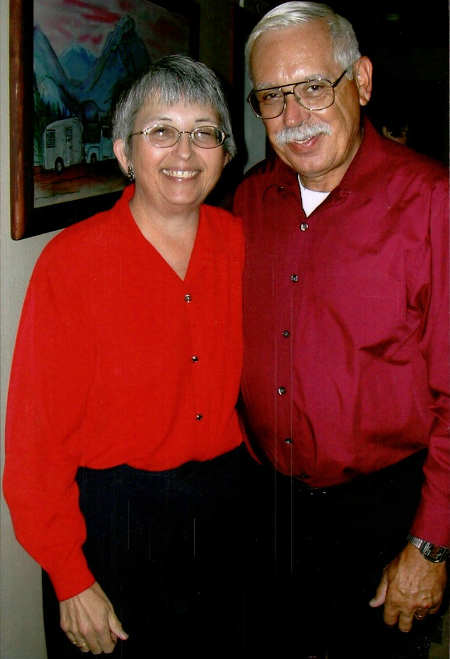
LAKE COUNTY, Calif. — A longtime library staffer is retiring.
Jan Cook started at the library in 1989 as a Library Page, reshelving returned library books.
She describes getting that first interview near her birthday over 32 years ago.
“I got a wonderful birthday gift — a job interview, which led to getting my first job with Lake County Library. I think of it as a gift that keeps on giving, for more than 30 years. Working for the library has been a good thing,” she said.
Cook came to love her job over the years until her recent retirement this December. Jan was an exemplary employee, working on many different projects over her tenure.
While she started at the Lakeport Library, she worked at other libraries in the County Library system as well. For six years, starting in 1992, she was the sole employee at the Upper Lake Library.
In 1998, she began full-time at the Lakeport Library as a library technician. A few years later she worked on the changeover from manual circulation with paper cards to digital circulation when Lake County joined with Sonoma and Mendocino County to share a computerized system.
Over her many years with the library Cook was a resource to the community, with her exceptional knowledge of Lake County history. She assisted many residents with historical and genealogical research. She worked on Interlibrary Loan, finding books outside of the library system.
Cook was also instrumental in bringing the California State Library funded ZipBooks program to Lake County.
Through the ZipBooks program, library patrons request books that the library does not own. The library then orders the book and has it shipped directly to the patron’s home. When the patron returns the book to the library it is added to the collection for others to enjoy.
The library recently resumed accepting ZipBook requests through their website after obtaining funding from the State Library.
Cook also wrote many press releases promoting library services and events with the community. Her articles about the library were featured regularly in local news outlets.
“No matter what Jan was working on, her devotion to providing the best library service possible was always evident,” said library director Christopher Veach, “Jan has earned her retirement many times over and will be sorely missed.”
Cook will be at the Lakeport Library from 11 a.m. to 1 p.m. on Wednesday, Jan. 26, to say farewell to her library friends.
All are welcome to come and wish Cook well on her life in retirement. Light refreshments will be available.
Visit the Lake County Library Website at http://library.lakecountyca.gov.