 How to resolve AdBlock issue?
News
- Details
- Written by: Elizabeth Larson
On Friday, the Bureau of Land Management said it has denied the application for the Walker Ridge Wind Energy Project.
The agency said the denial was based on potential resource conflicts and the inadequacy of the information provided to the BLM to address these conflicts and to move forward with the environmental review.
“Given the application denial, the BLM will not be preparing an environmental impact statement or potential land use amendment for this project,” the agency said in the Friday announcement.
Bob Schneider, a member of the Protect Walker Ridge Alliance and an author who has written a book about the Berryessa Snow Mountain National Monument, has lobbied against the project for years.
“I am so pleased that the Bureau of Land Management has denied Colusa LLC and Algonquin a wind development permit,” he said in an email to Lake County News. “With passage of Congressman John Garamendi’s Berryessa Snow Mountain National Monument Expansion Act (H.R. 6366) this threat of industrial scale development on Condor Ridge will be gone. The wind is marginal and the environmental and social costs are large.”
Colusa Wind LLC proposed the Type III wind energy project in June 2018.
Colusa Wind, a company that state corporation records showed had a San Diego address, was reported to be managed by Liberty Power, which was owned by Canada-based Algonquin, a company on both the New York and Toronto stock exchanges.
The project would have included up to 42 wind turbines generating 144 megawatts on approximately 2,272 acres of BLM-managed public land along Walker Ridge, within the Indian Valley Management Area in Lake and Colusa counties.
The BLM held a public meeting on the project in Clearlake Oaks in July 2019.
The project raised many concerns for the safety of wildlife, the impact on the environment — including soil moving and traffic in an area known for serpentine soils — and the impact of dozens of windmills that would have measured up to 676 feet tall and been visible for miles across Lake County and into neighboring counties.
By the spring of 2020, the BLM told Lake County News that its process to review the project had stopped. At that time, it needed wind surveys and data before it could move forward with consideration, including releasing a public review of the draft project and listing a reasonable management alternative.
Then, in July, Congressman John Garamendi, who represents a portion of Lake County that includes the Walker Ridge area, released a discussion draft of the Berryessa Snow Mountain National Monument Expansion Act, which proposes to add the 4,000-acre Walker Ridge tract to the monument.
In January, Garamendi and Congressman Mike Thompson, Lake County’s other member of the House of Representatives, formally introduced the bill in Congress.
The act also changes the name of the entire ridgeline in Lake and Colusa counties from “Walker Ridge” to “Condor Ridge — which means “Molok Luyuk” in the Patwin language.
Then, the BLM announced its decision this week.
“Molok Luyuk or Condor Ridge, also known as Walker Ridge is a special and spiritual place that tells a story of plate tectonics, diversity of plants and animals, Native American habitation over thousands of years,” said Schneider.
Schneider said the area’s ridge road is accessible and from the ridge one can see from Mount Diablo to Mount Shasta and from the Sierra crest to Mount Konocti.
“I hope that we can plan and build a small accessible site with a boardwalk, platform, and interpretive kiosk in order that all might know and enjoy this place,” Schneider said.
This was not the first wind energy project in the Walker Ridge area, but it is expected to be the last if the expansion bill becomes law.
In 2010, AltaGas Income Trust, based in Calgary, Alberta, submitted a proposal to the BLM for a 60- to 70-megawatt clean energy wind generation project with 29 turbines to be located within a 8,157-acre area leased by the BLM to the company.
The review process for that project — which the BLM said was in a slightly different area that Colusa Wind’s project — came to an end in 2013.
Schneider said there is still a possibility that Colusa Wind could appeal the BLM’s decision, adding he hopes they won’t.
Email Elizabeth Larson at
- Details
- Written by: GOVERNOR’S OFFICE
The remaining provisions include maintaining California’s nation-leading testing and vaccination programs and protecting hospital and health facility capacity, key components of the state’s SMARTER Plan to guide California’s evolving pandemic response with a focus on continued readiness, awareness and flexibility.
“California’s early and decisive measures to combat COVID-19 have saved countless lives throughout the pandemic, and as the recent Omicron surge made clear, we must remain prepared to quickly and effectively respond to changing conditions in real time,” said Gov. Newsom. “As we move the state’s recovery forward, we’ll continue to focus on scaling back provisions while maintaining essential testing, vaccination and health care system supports that ensure California has the needed tools and flexibility to strategically adapt our response for what lies ahead.”
Before Friday’s action, only 15% of COVID executive actions remained in effect, in keeping with the process the governor established in June 2021 to scale back provisions as they cease to be necessary.
Under the order signed by the governor on Friday, 19 of the remaining provisions are terminated immediately, with an additional 18 to be lifted on March 31 and 15 to expire on June 30 to ensure that impacted individuals and entities have time to prepare for the changes.
As part of the state’s SMARTER Plan, the governor will continue this focus on lifting additional provisions as they are no longer needed for the ongoing pandemic response.
“California’s health care delivery system remains deeply strained because of the pandemic,” Carmela Coyle, president and CEO of the California Hospital Association, said Friday. “Hospital capacity is still stretched beyond normal as people who delayed needed care are now being seen and 20% of health care workers have left the field. Today's extension of certain key, temporary flexibilities means that hospitals can continue to use things like tents to receive and triage patients and retain out-of-state health care personnel to maximize care capacity throughout the state."
Seventeen of the executive actions still in effect remain critical to bolstering the state’s COVID-19 testing and vaccination programs and preventing potential strain on the health care delivery system, including:
• COVID testing: Four provisions provide flexibility critical to support the state’s testing program, which under the SMARTER Plan will need to continue being able to process at least 500,000 tests per day. For example, through executive action the governor has waived a provision that would require a health care professional to review each test result before it was released electronically to patients, and expanded scopes of practice for pharmacists and pharmacy technicians to conduct COVID tests.
• Vaccinations and boosters: Two provisions provide critical flexibility to support the state’s vaccination and booster programs, which under the SMARTER Plan will need to continue being able to distribute at least 200,000 doses per day. This includes waiving licensing requirements temporarily to enable pharmacists and pharmacy technicians to administer COVID vaccines and waiving requirements so that the state can offer mobile vaccine clinics.
• Protecting hospital capacity and vulnerable populations: There are 11 provisions that are necessary to protect both capacity in our health care delivery system and vulnerable populations, particularly during COVID surges. This includes provisions allowing health care workers from out of state to provide services in California and enabling the Department of Developmental Services to provide remote and expanded nonresidential services for more clients.
“Telehealth services have been an important component of care during the pandemic, enabling patient access to safe nonemergency medical appointments,” said California Medical Association President Robert E. Wailes, M.D. “Extending the executive order ensures patients can continue to access expedited health care services by aligning California and federal telehealth policy while we continue to navigate.”
The other 13 remaining provisions ensure COVID workplace safety standards remain aligned with the most current public health guidance and evidence, and provide important flexibility to state and local agencies to administer the emergency response while the state of emergency remains open.
“Skilled nursing facilities in California are in the midst of the worst workforce shortage in their history,” said California Association of Health Facilities President and CEO Craig Corbett. “The governor’s actions today to continue some flexibilities should help the sector continue to provide quality care to patients and residents.”
Newsom also signed a proclamation terminating 12 open states of emergency related to various fires, heat waves and other incidents dating back to 2015.
Last week Newsom unveiled the SMARTER Plan, which outlines the state’s strategic approach to managing the next phase of the pandemic with core pillars and preparedness metrics based on proven strategies used to successfully slow the spread of the virus and protect Californians.
Last year’s budget appropriated $1.7 billion to combat COVID-19 in fiscal year 2021-22. Now, Gov. Newsom’s $3.2 billion COVID-19 Emergency Response Package, including $1.9 billion in early action funding that has already been approved, will help bolster the state’s ongoing vaccination and testing efforts, support workers, strengthen the health care system and combat misinformation.
- Details
- Written by: California Insurance Commissioner’s Office
Under the proposed regulations, which could be in effect by this summer, insurance companies would be required to factor consumers’ and businesses’ wildfire safety actions into their pricing of residential and commercial coverage.
The new regulations also will provide consumers with transparency about their “wildfire risk score” that insurance companies assign to properties.
These regulations address complaints Commissioner Lara heard from many consumers and businesses across the state that insurance companies are unwilling to account for steps taken to harden their properties and communities against wildfire, lowering their risk of loss and damage.
“With more Californians rolling up their sleeves and reaching into their own pockets to protect their homes and businesses, insurance pricing must reflect their efforts,” said Lara. “Holding insurance companies accountable for accurately rating wildfire risk in the premiums they charge Californians will help save lives and reduce losses. My new regulations will help encourage a competitive insurance market for all by putting safety first and driving down costs for consumers.”
The announced regulations incorporate the new “Safer from Wildfires” framework, a list of achievable, expert-endorsed actions that will help save lives and reduce risk for property owners.
Commissioner Lara unveiled the Safer from Wildfires framework with state emergency leaders on Feb. 14, marking the first time that state agencies have been brought together to identify a common insurance framework of mitigation actions for existing homes and businesses.
By requiring insurance companies to utilize the Safer from Wildfires framework in their pricing for insurance, Commissioner Lara said he is sending a strong signal to consumers about the need to better prepare for extreme wildfires — which will lead to a more competitive market for all California residents and businesses.
Specifically, the regulations will require insurance companies to comply with Proposition 103, passed by voters in 1988 to give the insurance commissioner authority to approve rates set by insurance companies, by incorporating the new framework in “wildfire risk scores” that insurance companies commonly use to rate individual and commercial properties.
In community meetings and town halls that Commissioner Lara held across California before the pandemic and in his virtual investigatory wildfire hearing in October 2020, consumers described taking action to protect their homes — often at the cost of thousands of dollars out of pocket — while many insurance companies simply declined to recognize the value of these actions.
Still other insurance companies assigned opaque wildfire risk scores to increase the price of insurance for a given property.
Consumers rarely know their property’s wildfire risk scores let alone how to improve them, even though these scores are a critical factor in many insurance companies’ decisions about how much to charge for insurance.
These regulations will help Commissioner Lara increase consumer discounts that insurance companies offer for safer homes and businesses, which has been a major focus of his comprehensive strategy to reduce the growing threat of wildfires.
Currently, 17 insurance companies representing 40% of the insurance marketplace have answered Commissioner Lara’s call to offer discounts, up from just 7% of the market when Commissioner Lara took office three years ago, demonstrating expanding options for consumers. View the list of insurance companies currently offering discounts at the Department of Insurance website.
These regulations also increase transparency by providing an opportunity for consumers and businesses to review their property’s risk score or other factors used in pricing for accuracy based on mitigation work they have undertaken. Consumers and businesses will be able to appeal scores or other factors insurance companies use to assess wildfire risk.
Fire chiefs and consumer advocates joined Commissioner Lara in calling for increased wildfire safety efforts.
"By rewarding homeowners and businesses for the wildfire safety actions they take, these regulations will be a huge assist to our efforts to prevent the severe loss of life and property from wildfires like we saw in the devastating Thomas Fire and debris flow that followed," said Montecito Fire Chief Kevin Taylor, who testified at the investigatory hearing the Department of Insurance held in October 2020. "I am glad to see the state supporting local communities like ours with wildfire safety programs like this."
“This is the most significant, concrete step forward on wildfire safety that brings all of the pieces together to help Californians maintain and obtain high quality insurance at a reasonable cost,” said Novato Fire District Chief Bill Tyler, who also testified at the investigatory hearing. “This helps people take back control over their risk by having insurance companies recognize their efforts.”
“Now that experts concur and the Safer from Wildfires framework has been established, we need regulations to ensure that consistent and clear rewards will be in place to incentivize and accomplish wildfire risk reduction at the parcel and community level,” said Amy Bach, United Policyholders’ executive director and architect of the Wildfire Risk Reduction and Asset Protection working group that contributed to the Safer from Wildfires framework. “United Policyholders commends Commissioner Lara for this important progress.”
"California's farmers, ranchers and agriculture communities are very appreciative of Commissioner Lara's work to create an insurance framework we can all use to make our businesses safer from wildfires," said Jamie Johansson, president of the California Farm Bureau Federation. "By pricing insurance to recognize farmers' wildfire safety efforts, these regulations will help drive insurance companies to better support our agriculture sector, which is not only critical to our state but to our entire country."
The Department of Insurance invites the public to testify on the new regulations at a hearing on April 13 or in writing.
- Details
- Written by: Sarah J. Morath, Wake Forest University
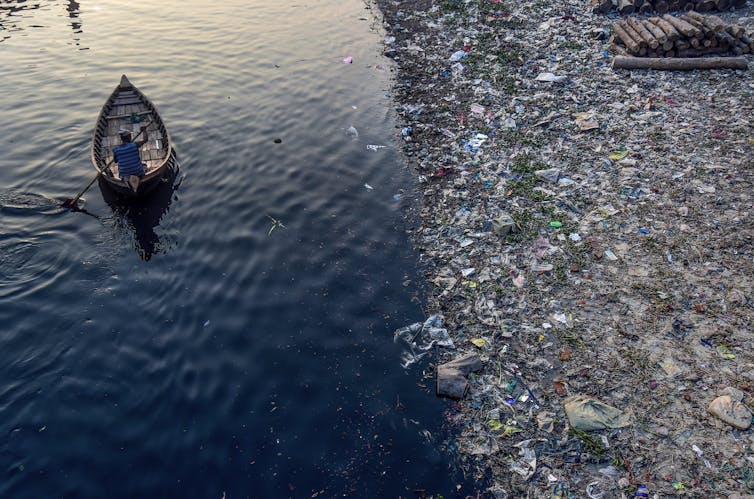
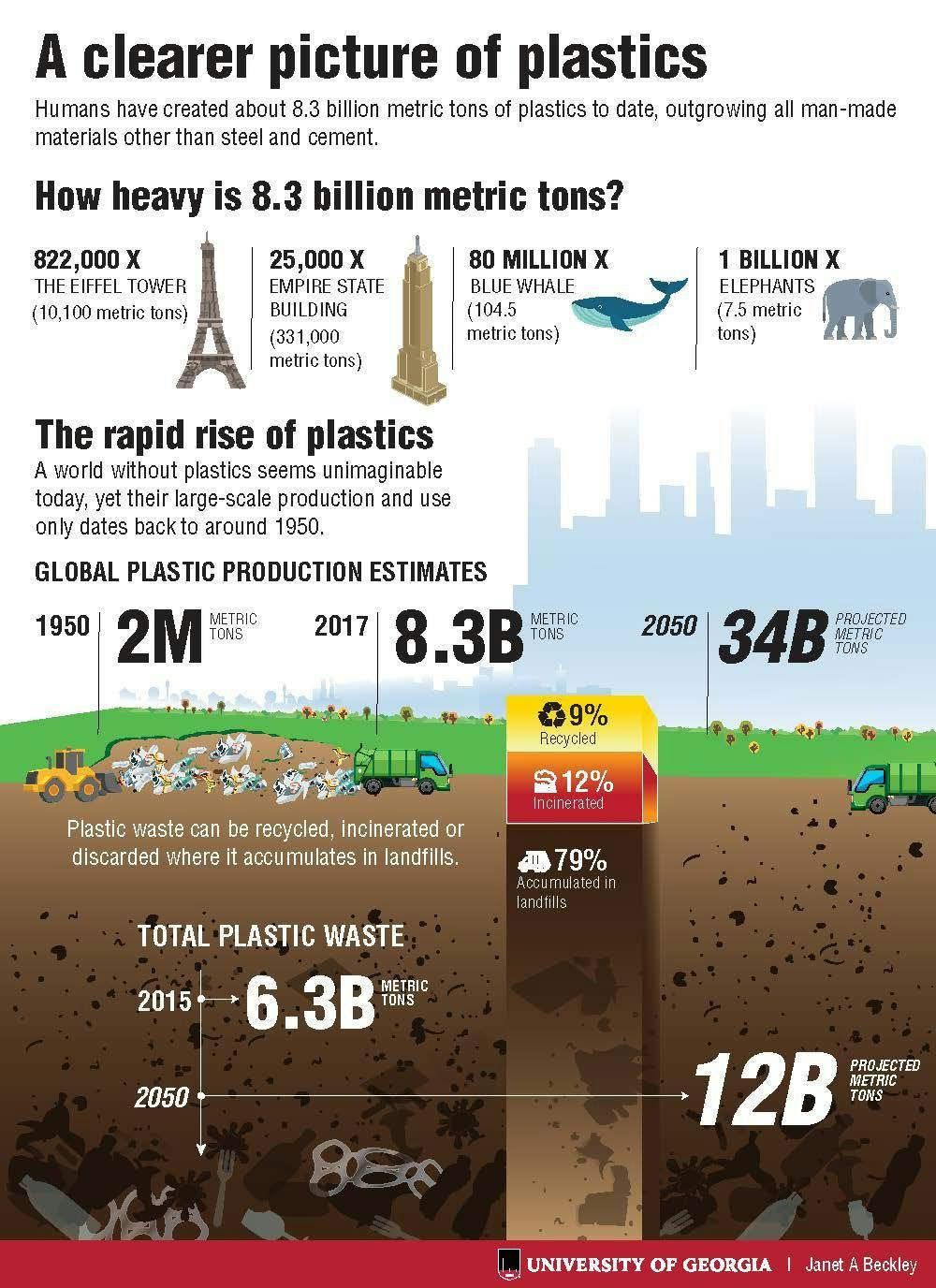
Plastic pollution is accumulating worldwide, on land and in the oceans. According to one widely cited estimate, by 2025, 100 million to 250 million metric tons of plastic waste could enter the ocean each year. Another study commissioned by the World Economic Forum projects that without changes to current practices, there may be more plastic by weight than fish in the ocean by 2050.
On Feb. 28, 2022, a meeting of the United Nations Environment Assembly will open in Nairobi, Kenya. At that meeting, representatives from 193 countries are expected to consider a resolution that would launch negotiations on a legally binding global treaty to reduce plastic pollution. “[N]o country can adequately address the various aspects of this challenge alone,” the draft resolution states.
I am a legal scholar and have studied questions related to food, animal welfare and environmental law. My forthcoming book, “Our Plastic Problem and How to Solve It,” explores legislation and policies to address this global “wicked problem.”
I believe plastic pollution requires a local, national and global response. While acting together on a world scale will be challenging, lessons from some other environmental treaties suggest features that can improve an agreement’s chances of success.
A pervasive problem
Scientists have discovered plastic in some of the most remote parts of the globe, from polar ice to Texas-sized gyres in the middle of the ocean. Plastic can enter the environment from a myriad of sources, ranging from laundry wastewater to illegal dumping, waste incineration and accidental spills.
Plastic never completely degrades. Instead, it breaks down into tiny particles and fibers that are easily ingested by fish, birds and land animals. Larger plastic pieces can transport invasive species and accumulate in freshwater and coastal environments, altering ecosystem functions.
A 2021 report by the National Academies of Sciences, Engineering and Medicine on ocean plastic pollution concluded that “[w]ithout modifications to current practices … plastics will continue to accumulate in the environment, particularly the ocean, with adverse consequences for ecosystems and society.”
National policies are not enough
To address this problem, the U.S. has focused on waste management and recycling rather than regulating plastic producers and businesses that use plastic in their products. Failing to address the sources means that policies have limited impact. That’s especially true since the U.S. generates 37.5 million tons of plastic yearly, but only recycles about 9% of it.
Some countries, such as France and Kenya, have banned single-use plastics. Others, like Germany, have mandated plastic bottle deposit schemes. Canada has classified manufactured plastic items as toxic, which gives its national government broad power to regulate them.
In my view, however, these efforts too will fall short if countries producing and using the most plastic do not adopt policies across its life cycle.
Growing consensus
Plastic pollution crosses boundaries, so countries need to work together to curb it. But existing treaties such as the 1989 Basel Convention, which governs international shipment of hazardous wastes, and the 1982 U.N. Convention on the Law of the Sea offer little leverage, for several reasons.
First, these treaties were not designed specifically to address plastic. Second, the largest plastic polluters – notably, the U.S. – have not joined these agreements. Alternative international approaches such as the Ocean Plastics Charter, which encourages governments and global and regional businesses to design plastic products for reuse and recycling, are voluntary and nonbinding.
Fortunately, many world and business leaders now support a uniform, standardized and coordinated global approach to managing and eliminating plastic waste in the form of a treaty.
The American Chemistry Council, an industry trade group, supports an agreement that will accelerate a transition to a more circular economy that promotes waste reduction and reuse by focusing on waste collection, product design and recycling technology. America’s Plastic Makers and the International Council of Chemical Associations have also made public statements supporting a global agreement to establish “a targeted goal to ensure access to proper waste management and eliminate leakage of plastic into the ocean.”
However, these organizations maintain that plastic products can help reduce energy use and greenhouse gas emissions – for example, by enabling automakers to build lighter cars – and are likely to oppose an agreement that limits plastic production. As I see it, this makes leadership and action by governments critical.
The Biden administration also has stated its support for a treaty and is sending Secretary of State Antony Blinken to the Nairobi meeting. On Feb. 11, 2022, the White House released a joint statement with France that expressed support for negotiating “a global agreement to address the full life cycle of plastics and promote a circular economy.”
Early treaty drafts outline two competing approaches. One seeks to reduce plastic throughout its life cycle, from production to disposal, a strategy that would probably include methods such as banning or phasing out single-use plastic products.
A contrasting approach focuses on eliminating plastic waste through innovation and design – for example, by spending more on waste collection, recycling and development of environmentally benign plastics.
Elements of an effective treaty
Countries have come together to solve environmental problems before. The global community has successfully addressed acid rain, stratospheric ozone depletion and mercury contamination through international treaties. These agreements, which include the U.S., offer strategies for a plastics treaty.
The Montreal Protocol, for example, required countries to report their production and consumption of ozone-depleting substances so that countries could hold each other accountable. As part of the Convention on Long-range Air Pollution, countries agreed to reduce sulfur dioxide emissions, but were allowed to select the method that worked best for them. For the U.S., that involved a system of buying and selling emission allowances that became part of the Clean Air Act Amendments of 1990.
Based on these precedents, I see plastic as a good candidate for an international treaty. Like ozone, sulfur and mercury, plastic comes from specific, identifiable human activities that occur across the globe. Many countries contribute, so the problem is transboundary in nature.
In addition to providing a framework for keeping plastic out of the ocean, I believe a plastic pollution treaty should include reduction targets for both producing less plastic and generating less waste that are specific, measurable and achievable. The treaty should be binding but flexible, allowing countries to meet these targets as they choose.
In my view, negotiations should consider the interests of those who experience the disproportionate impacts of plastic, as well as those who make a living off recycling waste as part of the informal economy. Finally, an international treaty should promote collaboration and sharing of data, resources and best practices.
Since plastic pollution doesn’t stay in one place, all nations will benefit from finding ways to curb it.
[Over 140,000 readers rely on The Conversation’s newsletters to understand the world. Sign up today.]
Sarah J. Morath, Associate Professor of Legal Writing, Wake Forest University
This article is republished from The Conversation under a Creative Commons license. Read the original article.