 How to resolve AdBlock issue?
News
- Details
- Written by: Elizabeth Larson
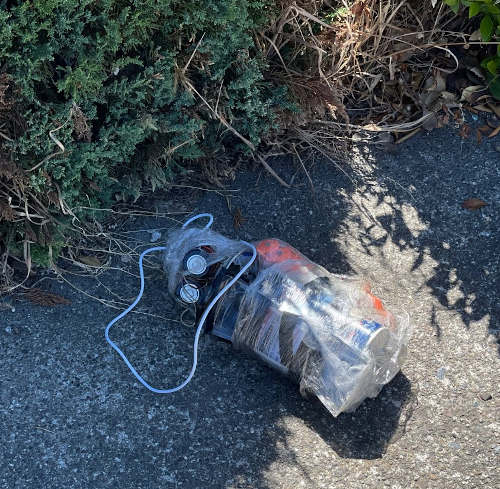
LAKE COUNTY, Calif. — Police have arrested a Lakeport man in connection to a suspicious device found at a city church on Sunday.
The Lakeport Police Department said Kayden Daniel Collins, 27, was arrested on Sunday afternoon.
Investigators developed information that led them to conclude Collins was involved in placing the device on the grounds of St. John’s Episcopal Church at 1190 N. Forbes St.
Lakeport Police previously arrested Collins on June 7 at his home at 1201 N. Forbes St. — just across the street from the church — as the result of an investigation into passing counterfeit US currency at county businesses.
Lakeport Police Chief Brad Rasmussen told Lake County News that the device found Sunday was rendered safe by the Napa County’s Sheriff’s bomb squad and it was able to be preserved for the ongoing investigation.
Rasmussen said the object was found on the Forbes Street edge of the church grounds, on the sidewalk.
“Church was just getting out when it was located,” Rasmussen said.
The Rev. Ed Howell, dean of the Episcopal Diocese of Northern California’s Russian River Deanery, which includes St. John’s in Lakeport, told Lake County News that he had been able to speak to two church members on Sunday after the device was discovered, including the man who found it.
He said after discovering it, church members left the grounds — some of them leaving their cars — in order to clear the area. Howell said they indicated they were fine after the day’s events.
The device’s discovery led to police calling for evacuation of an area around the church, including road closures, that was in effect for more than three and a half-hours on Sunday afternoon.
Authorities issued an alert on the device’s discovery shortly after noon on Sunday. Just before 3:45 p.m. police reported that the device was rendered safe by the Napa County Sheriff’s bomb squad, the evacuation order was lifted and the impacted roads were reopened.
Rasmussen said the bomb squad X-rayed and examined the device, then a bomb technician was able to render it safe without moving it from the church grounds.
“We did confirm that it did have a power source, shrapnel and accelerants in it,” Rasmussen said.
However, he added, “I can’t stay for certain at this point whether or not it would have exploded.”
After it was disabled, the bomb squad turned the device over to Lakeport Police for an evidence examination. “It’ll be examined by the crime lab,” Rasmussen said.
Rasmussen said the investigation is ongoing, with police continuing to follow up on leads.
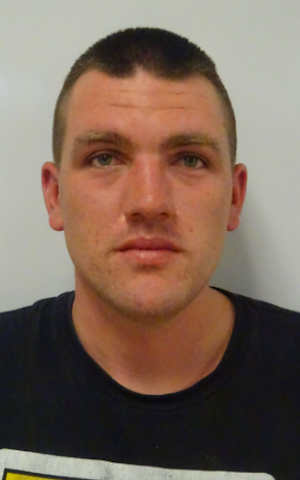
Collins was booked into the Lake County Jail on a misdemeanor count of obstructing or resisting a peace officer and a felony count of possession of a destructive device, with bail set at $10,000. He remained in custody early Monday.
Booking records show he is scheduled to appear in Lake County Superior Court on Tuesday.
So far, Rasmussen said there are no ideas about the motivation for placing the device at the church.
However, he said there are no indications that it’s in any way a result of the Friday action by the U.S. Supreme Court to overturn Roe v Wade.
“Today I have no knowledge that this has any connection to that,” he said.
Rasmussen said he was in contact on Friday with Clearlake Police Chief Andrew White and Sheriff Brian Martin as they were aware that the Department of Homeland Security had issued an alert to law enforcement and first responders that day warning of the potential for violence in the wake of the ruling.
“We had no information that there was any concern locally,” said Rasmussen, explaining that he, Martin and White had a plan to reach out to the Roman Catholic Churches if necessary.
They also were in contact with the Federal Bureau of Investigation on Friday and he spoke to the FBI’s resident agency supervisor on Sunday as he was working the case involving the suspicious device.
Howell also told Lake County News that St. John’s had not received any threats.
In addition to Lakeport Police and the Napa County Sheriff’s Bomb Squad, assisting agencies in the response to the Sunday incident included Lakeport Public Works, Lakeport Fire Protection District, Northshore Fire Protection District Response Support Team, the Lake County Sheriff’s Office and Lake County Office of Emergency Services.
Email Elizabeth Larson at
- Details
- Written by: Elizabeth Larson
The board will meet beginning at 9 a.m. Tuesday, June 28, in the board chambers on the first floor of the Lake County Courthouse, 255 N. Forbes St., Lakeport.
The meeting can be watched live on Channel 8, online at https://countyoflake.legistar.com/Calendar.aspx and on the county’s Facebook page. Accompanying board documents, the agenda and archived board meeting videos also are available at that link.
To participate in real-time, join the Zoom meeting by clicking this link.
The meeting ID is 929 0032 5984, pass code 788029. The meeting also can be accessed via one tap mobile at +16699006833,,92900325984#,,,,*788029#.
All interested members of the public that do not have internet access or a Mediacom cable subscription are encouraged to call 669-900-6833, and enter the Zoom meeting ID and pass code information above.
To submit a written comment on any agenda item visit https://countyoflake.legistar.com/Calendar.aspx and click on the eComment feature linked to
the meeting date. If a comment is submitted after the meeting begins, it may not be read during the meeting but will become a part of the record.
At 9:08 a.m., the board will present a proclamation designating the month of June 2022 as Elder and Adult Dependent Abuse Awareness Month and hear a presentation of changes to the state reporting law related to elder abuse.
In an untimed item, the board will consider a resolution authorizing the application for the permanent local housing allocation program for the Collier Avenue apartment project in Nice, which will house Behavioral Health Services clients with mental health issues.
On the consent agenda, the board will consider approving a $29,000 contract with Mosaic Public Partners for the recruitment of a new Public Health officer in the wake of Dr. Erik McLaughlin’s resignation last week.
The full agenda follows.
CONSENT AGENDA
5.1: (a) Approve side letter to Lake County Employee Association, or LCEA, retroactive to the start date for the Oct. 21, 2021 to June 30, 2025 memorandum of understanding, Section 5.1 through 5.1.9 covering group insurance for LCEA and authorize the chair to sign; (b) approve side letter to Lake County Sheriff's Management Association, or LCSMA, retroactive to the start date for the Oct. 21, 2021 to June 30, 2025 MOU, Section 5.1 through 5.1.9 covering Group Insurance for LCSMA and authorize the chair to sign; (c) approve side letter to Lake County Deputy District Attorney’s Association, or LCDDA, retroactive to the start date for the Oct. 21, 2021 to June 30, 2025 MOU, Section 5.1 through 5.5 covering group insurance for LCDDA and authorize the chair to sign; (d) approve side letter to Lake County Correctional Officer’s Association, or LCCOA, retroactive to the start date for the Oct. 21, 2021 to June 30, 2025 MOU, Section 5.1 through 5.6.10 covering group insurance for LCCOA and authorize the chair to sign; (e) Approve side letter to Lake County Safety Employees Association, or LCSEA, retroactive to the star.
5.2: a) Waive the formal bidding process, pursuant to Lake County Policy and Procedures, Section 4, Consultation Selection, Subsection 4.1.4; and b) approve agreement for recruitment services for Lake County Public Health officer between county of Lake and Mosaic Public Partners in the amount not to exceed $29,000, and authorize the chair to sign.
5.3: Sitting as the Lake County Air Quality Management District Board of Directors, approve Carl Moyer Program project funding approval for Middletown Unified School District, and authorize the air pollution control officer to sign the agreement.
5.4: a) Approve grant agreement between Lake County Animal Care and Control and Best Friends Animal Society in the amount of $10,000 and authorize the Animal Care and Control Director to sign; and b) adopt resolution to appropriate unanticipated revenue in Budget Unit 2811.
5.5: Approve agreement between county of Lake and Manzanita House for adult residential support services and specialty mental health services in the amount of $495,000 for FYs 2022-23, 2023-24, and 2024-25 and authorize the board chair to sign.
5.6: Approve agreement between county of Lake and Willow Glen Care Center for adult residential support services and specialty mental health services in the amount of $985,500 for FYs 2022-23, 2023-24, and 2024-25 and authorize the board chair to sign.
5.7: Approve Board of Supervisors minutes June 7, 2022.
5.8: Approve resolution of the City Council of the city of Clearlake calling for and providing for and giving notice of the general municipal election to be held in the city of Clearlake, county of Lake, state of California, on the 8th day of November, 2022 for the purpose of electing two city council members and a city treasurer, each to hold a term of four years, or until their successors are elected and qualified, and requesting approval of the Lake County Board of Supervisors for election services to be provided by the county elections department.
5.9: Approve contract renewal between the county of Lake Health Services and Trina Maia for physical therapy services in support of the California Children’s Services Program and the Medical Therapy Program for a term starting July 1, 2022, through June 30, 2023, and a maximum amount of $126,720; and authorize the board chair to sign.
5.10: Approve contract renewal between the county of Lake Health Services and Sheila McCarthy for occupational therapy services in support of the California Children’s Services Program and the Medical Therapy Program for a term starting July 1, 2022 through June 30, 2023 and a maximum amount of $45,408; and authorize the board chair to sign.
5.11: Adopt resolution to name a certain existing unnamed road in the Lower Lake area.
5.12: a) Approve agreement between the county of Lake and Helico Sonoma Helicopters for Fiscal Year 2022/23 in the amount of $50,000 and authorize the chairman to sign.
5.13: a) Waive the formal bidding process, per Ordinance #2406, Purchasing Code 38.1, as this is an annual contract for services that have not increased more than the consumer price index; and b) approve agreement between the county of Lake and A&P Helicopters for fiscal year 2022/23 in the amount of $75,000 and authorize the chairman to sign.
5.14: Adopt resolution amending Resolution 2021-115 to amend the adopted budget for FY 2021-22 by appropriating unanticipated revenue in the sheriff/coroner budget 2201.
5.15: Adopt proclamation for designating the month of June 2022 as Elder and Adult Dependent Abuse Awareness Month in Lake County.
5.16: a) Approve purchase of mandated client services described as after care services with evolve youth services and authorize director of Social Services or her designee to issue a purchase order in an amount not to exceed $40,860.
5.17: Adopt resolution authorizing the transfer of APN: 030-083-360, from Cobb Area County Water District to the county of Lake and authorize the chair of the Board of Supervisors to sign the certificate of acceptance and record the deed.
TIMED ITEMS
9:05 a.m.: Pet of the Week.
6.3, 9:08 a.m.: a) Presentation of proclamation designating the month of June 2022 as Elder and Adult Dependent Abuse Awareness Month in Lake County; and b) presentation of changes to the state reporting law related to elder abuse.
UNTIMED ITEMS
7.2: Consideration of resolution of the Lake County Board of Supervisors authorizing the application for the permanent local housing allocation program for the Collier Avenue apartment project.
7.3: Consideration of Accela agreement extension and true point permitting software.
7.4: Consideration of proposed findings of fact and decision in the appeal of WeGrow LLC.(AB 22-01).
7.5: Consideration of resolution authorizing the Public Services director to execute documents with the California Department of Transportation for the Clean California Local Grant Program.
CLOSED SESSION
8.1: Public employee evaluation: Public Works/Water Resources Director Scott De Leon.
8.2: Public employee evaluation: Behavioral Health Director Todd Metcalf.
Email Elizabeth Larson at
- Details
- Written by: Edward Lempinen
But a new study co-authored by UC Berkeley political scientist David Broockman found that brief, cross-partisan conversations about sensitive political topics have scant power to narrow partisan divisions.
Conversation about neutral topics can create some goodwill, the authors found, but even there, the effect doesn’t last.
“There’s an assumption that these conversations will have positive consequences for democracy,” Broockman said. “Under this assumption, someone might say, ‘I’ve gotten to know the other side, and I like them more, and so now I’m more OK with my representative working with a representative from the other side, and I’m less likely to vote for a politician in my party who’s going to try to disenfranchise the other side.’
“Basically, though, we didn’t find any of that,” he added. “Simply liking the other side’s voters more doesn’t appear to affect your political behavior.”
The new research was released Wednesday, June 22, in the journal Science Advances. It was co-authored by Broockman and Erik Santoro, a Ph.D. student in social psychology at Stanford University.
Broockman’s recent research has focused closely on the dynamics of political division and the role of communication in nurturing more constructive engagement.
His work has found that political advocates going door to door to promote a cause can have a significant, long-lasting persuasive impact by listening effectively and by talking about people’s life experiences.
Earlier this year, he reported that conservative Fox News viewers who spent a month tuning to CNN instead experienced a broad shift in their political opinions — until they returned to watching Fox.
Another paper co-authored by Broockman, forthcoming in the American Journal of Political Science, finds that reducing the hostilities associated with political polarization might not, in fact, improve the health of democracy.
Intriguing insights on what works — and what doesn’t work
Alarmed by the increasingly vicious divide in the American electorate, a growing legion of organizations in the U.S. is working to bring right and left together for discussion and deliberation.
For example, BridgeUSA, a 6-year-old nonprofit with close ties to Berkeley, is working on university and high school campuses to encourage discussion that transcends partisan rancor to focus on defining challenges and solutions.
Broockman, in an interview, stressed that his latest research doesn’t contradict those efforts. Rather, he said, it’s essential to study what kind of engagement works to ease polarization — and how to make positive results deeper and more long-lasting.
The research detailed in Science Advances covers two experiments. In one, the authors paired up hundreds of Republicans and Democrats for brief, one-on-one discussions about a topic that usually isn’t controversial: What makes a perfect day?
Those conversations produced large reductions in polarization, Broockman and Santoro found. But within three months, the reductions had all but disappeared.
In the second experiment, the researchers repeated the first experiment, but also brought Republicans and Democrats together for one-on-one discussions that focused on potentially tense political topics.
They were split into two groups — in one, pairs of Democrats and Republicans were assigned to talk about why they identify with their own parties, and in the other, they were assigned to discuss why they dislike each other’s party.
These conversations had virtually no effect on reducing polarization.
Still, the study produced some intriguing insights about how we can all get along. Among those assigned to talk about what they liked about their own parties, the research subjects felt their discussion partners weren’t really listening to them. Those conversations typically lasted about 13.5 minutes.
But those assigned to discuss what they disliked about the opposing political party seemed to have an easier time. Their conversations lasted much longer — nearly 18 minutes, typically.
While the chats didn’t change political opinions, those individuals were more likely afterward to say that cross-partisan conversations were important. The study even found signals of hope that suggested very slight reductions in polarization and increases in warmth toward people in the opposing party.
“People tend to think their own party is OK, but they don't love their own party,” Broockman explained. “Their feelings are lukewarm. And so when someone else says, ‘Here’s what I don't like about your party,’ most people will agree and say, ‘Yeah, my party isn’t perfect.’”
As it turns out, real life is more civil than Facebook
That points to another insight from the study. With participants’ consent, all of the conversations were recorded, and Broockman said he was struck by the consistently civil tone he saw in the transcripts.
“None of the conversations that I looked at devolved into the kind of arguments that you would see on Facebook,” he said. “Our research participants didn't leave hating each other more. In some ways, this is maybe better than people would have expected.
“When we think about the other side, we tend to think about the people who show up on social media saying the most extreme things in the most uncivil way. But that really is not how the average person interacts when they're actually talking face-to-face.”
Such insights — modest, but encouraging — suggest that further research could shed light on a recipe for political discussions that might reduce polarization and produce other democracy-enhancing effects.
For example, Broockman said it might be interesting to see what would happen if the person-to-person engagements were more extensive, longer-term discussions and not just one-offs.
If researchers could find a way to reduce polarization through one-on-one engagements, he said, they could then study the interventions that could help to sustain and build on that trust.
But ultimately, Broockman advised, we probably should let common sense temper our optimism. Democracy is difficult; conflict and polarization are features, not bugs, of the system.
“Democracy exists to manage the inevitable differences of opinion that exist in any society,” he said. “The differences of opinion are not themselves necessarily a problem. But people do need to be able to discuss them.”
Edward Lempinen writes for the UC Berkeley News Center.
- Details
- Written by: Elizabeth Larson
Call Lake County Animal Care and Control at 707-263-0278 or visit the shelter online at http://www.co.lake.ca.us/Government/Directory/Animal_Care_And_Control.htm for information on visiting or adopting.
The following cats at the shelter have been cleared for adoption.

Domestic shorthair kitten
This female domestic shorthair kitten has an all-black coat.
She is in cat room kennel No. 84a, ID No. LCAC-A-3614.

Domestic shorthair kitten
This female domestic shorthair kitten has an all-black coat.
She is in cat room kennel No. 84b, ID No. LCAC-A-3615.

Domestic shorthair kitten
This male domestic shorthair kitten has an all-black coat.
He is in cat room kennel No. 84c, ID No. LCAC-A-3616.
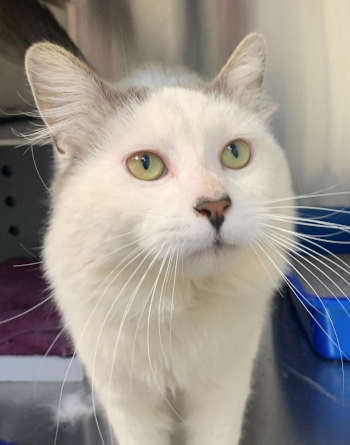
Male domestic longhair cat
This 2-year-old male domestic longhair cat has a white coat with gray markings.
He is in cat room kennel No. 129, ID No. LCAC-A-3529.
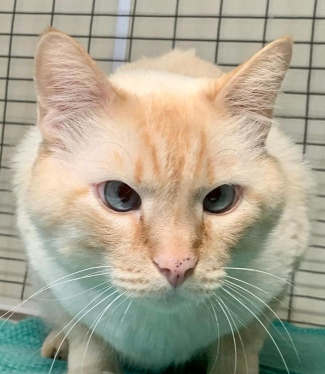
‘Flynn’
“Flynn” is a 9-year-old male Siamese mix with a medium-length coat.
He is in cat room kennel No. 146, ID No. LCAC-A-3460.
Email Elizabeth Larson at