 How to resolve AdBlock issue?
News
- Details
- Written by: Kevin Trenberth, University of Auckland
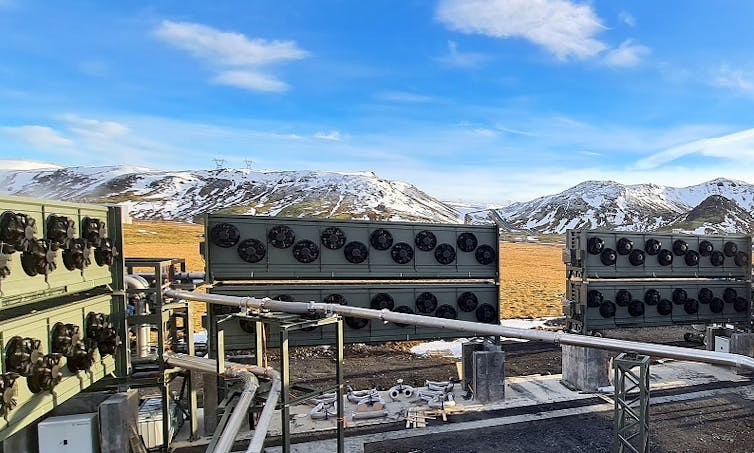
When politicians talk about reaching “net zero” emissions, they’re often counting on trees or technology that can pull carbon dioxide out of the air. What they don’t mention is just how much these proposals or geoengineering would cost to allow the world to continue burning fossil fuels.
There are many proposals for removing carbon dioxide, but most make differences only at the edges, and carbon dioxide concentrations in the atmosphere have continued to increase relentlessly, even through the pandemic.
I’ve been working on climate change for over four decades. Let’s take a minute to come to grips with some of the rhetoric around climate change and clear the air, so to speak.
What’s causing climate change?
As has been well established now for several decades, the global climate is changing, and that change is caused by human activities.
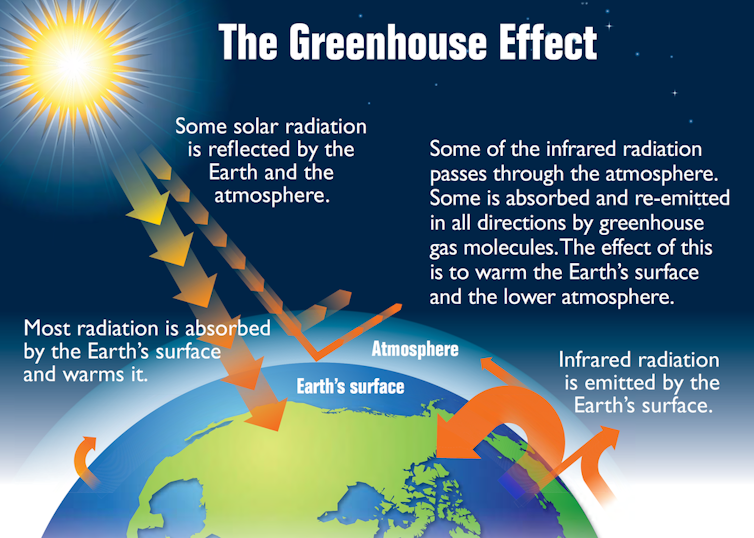
When fossil fuels are burned for energy or used in transportation, they release carbon dioxide – a greenhouse gas that is the main cause of global heating. Carbon dioxide stays in the atmosphere for centuries. As more carbon dioxide is added, its increasing concentration acts like a blanket, trapping energy near Earth’s surface that would otherwise escape into space.
When the amount of energy arriving from the Sun exceeds the amount of energy radiating back into space, the climate heats up. Some of that energy increases temperatures, and some increases evaporation and fuels storms and rains.

Because of these changes in atmospheric composition, the planet has warmed by an estimated 1.1 degrees Celsius (2 F) since about 1880 and is well on the way to 1.5 C (2.7 F), which was highlighted as a goal not to be crossed if possible by the Paris Agreement. With the global heating and gradual increases in temperature have come increases in all kinds of weather and climate extremes, from flooding to drought and heat waves, that cause huge damage, disruption and loss of life.
Studies shows that global carbon dioxide emissions will need to reach net-zero carbon emissions by midcentury to have a chance of limiting warming to even 2 C (3.6 F).
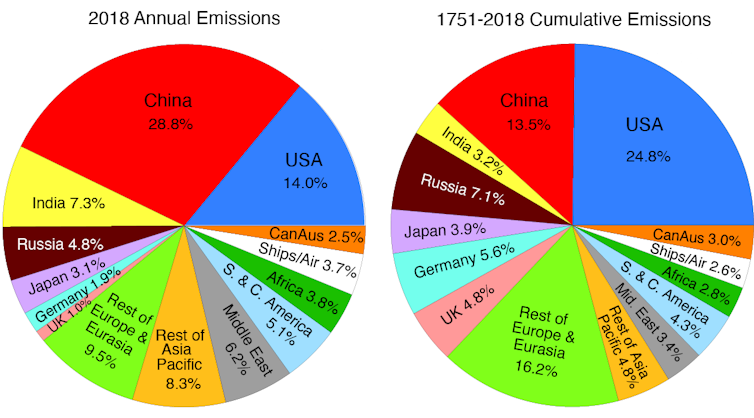
Currently, the main source of carbon dioxide is China. But accumulated emissions matter most, and the United States leads, closely followed by Europe, China and others.
What works to slow climate change?
Modern society needs energy, but it does not have to be from fossil fuels.
Studies show that the most effective way to address the climate change problem is to decarbonize the economies of the world’s nations. This means sharply increasing use of renewable energy – solar and wind cost less than new fossil fuel plants in much of the world today – and the use of electric vehicles.
Unfortunately, this changeover to renewables has been slow, due in large part to the the huge and expensive infrastructure related to fossil fuels, along with the vast amount of dollars that can buy influence with politicians.
What doesn’t work?
Instead of drastically cutting emissions, companies and politicians have grasped at alternatives. These include geoengineering; carbon capture and storage, including “direct air capture”; and planting trees.
Here’s the issue:
Geoengineering often means “solar radiation management,” which aims to emulate a volcano and add particulates to the stratosphere to reflect incoming solar radiation back to space and produce a cooling. It might partially work, but it could have concerning side effects.
The global warming problem is not sunshine, but rather that infrared radiation emitted from Earth is being trapped by greenhouse gases. Between the incoming solar and outgoing radiation is the whole weather and climate system and the hydrological cycle. Sudden changes in these particles or poor distribution could have dramatic effects.
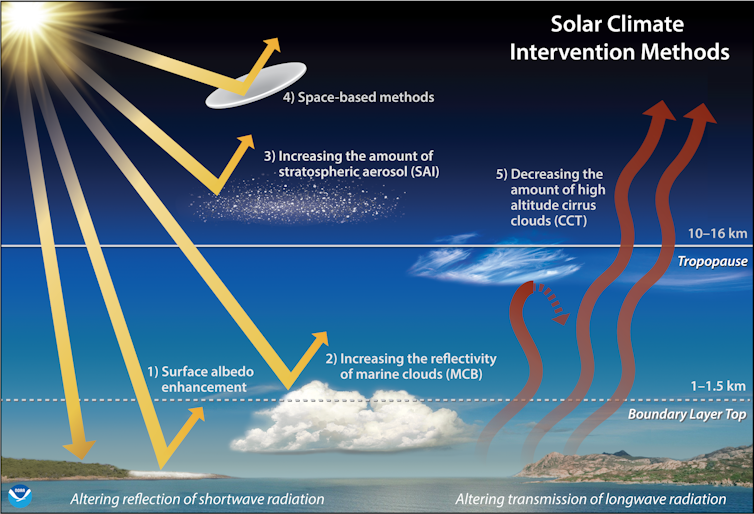
The last major volcanic eruption, of Mt. Pinatubo in 1991, sent enough sulfur dioxide and particulates into the stratosphere that it produced modest cooling, but it also caused a loss of precipitation over land. It cooled the land more than the ocean so that monsoon rains moved offshore, and longer term it slowed the water cycle.
Carbon capture and storage has been researched and tried for well over a decade but has sizable costs. Only about a dozen industrial plants in the U.S. currently capture their carbon emissions, and most of it is used to enhance drilling for oil.
Direct air capture – technology that can pull carbon dioxide out of the air – is being developed in several places. It uses a lot of energy, though, and while that could potentially be dealt with by using renewable energy, it’s still energy intensive.
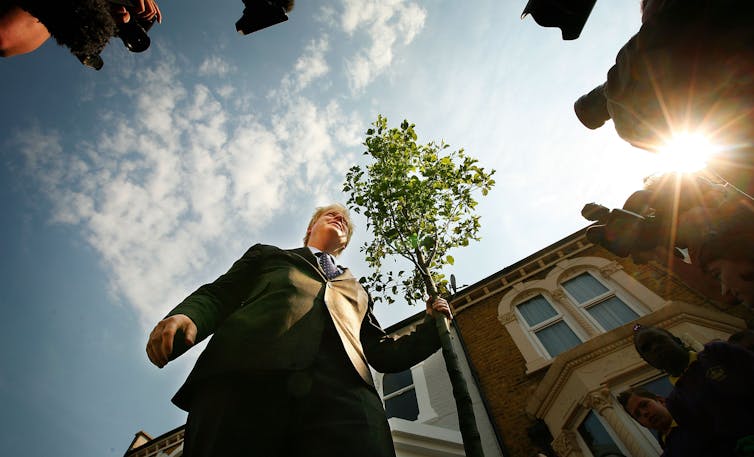
Planting trees is often embraced as a solution for offsetting corporate greenhouse gas emissions. Trees and vegetation take up carbon dioxide though photosynthesis and produce wood and other plant material. It’s relatively cheap.
But trees aren’t permanent. Leaves, twigs and dead trees decay. Forests burn. Recent studies show that the risks to trees from stress, wildfires, drought and insects as temperatures rise will also be larger than expected.
How much does all this cost?
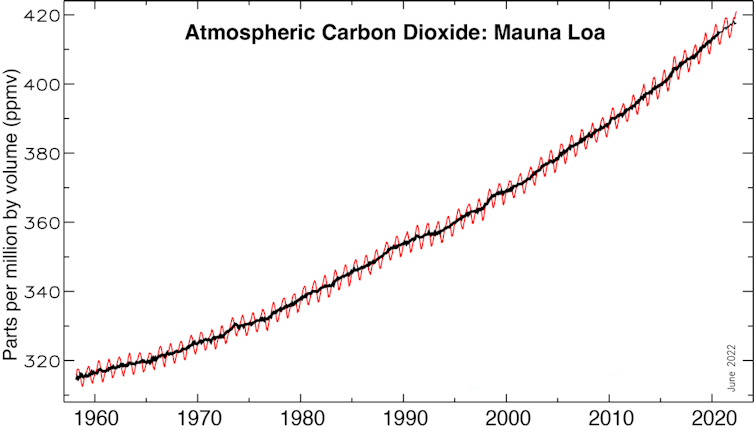
Scientists have been measuring carbon dioxide at Mauna Loa, Hawaii, since 1958 and elsewhere. The average annual increase in carbon dioxide concentration has accelerated, from about 1 part per million by volume per year in the 1960s to 1.5 in the 1990s, to 2.5 in recent years since 2010.
This relentless increase, through the pandemic and in spite of efforts in many countries to cut emissions, shows how enormous the problem is.
Usually carbon removal is discussed in terms of mass, measured in megatons – millions of metric tons – of carbon dioxide per year, not in parts per million of volume. The mass of the atmosphere is about 5.5x10¹⁵ metric tons, but as carbon dioxide (molecular weight 42) is heavier than air (molecular weight about 29), 1 part per million by volume of carbon dioxide is about 7.8 billion metric tons.
According to the World Resources Institute, the range of costs for direct air capture vary between US$250 and $600 per metric ton of carbon dioxide removed today, depending on the technology, energy source and scale of deployment. Even if costs fell to $100 per metric ton, the cost of reducing the atmospheric concentrations of carbon dioxide by 1 part per million is around $780 billion.
Keep in mind that the carbon dioxide concentration in the atmosphere has risen from about 280 parts per million before the industrial era to around 420 today, and it is currently rising at more than 2 parts per million per year.
Tree restoration on one-third to two-thirds of suitable acres is estimated to be able to remove about 7.4 gigatons of carbon dioxide by 2050 without displacing agricultural land, by WRI’s calculations. That would be more than any other pathway. This might sound like a lot, but 7 gigatons of carbon dioxide is 7 billion metric tons, and so this is less than 1 part per million by volume. The cost is estimated to be up to $50 per metric ton. So even with trees, the cost to remove 1 part per million by volume could be as much as $390 billion.
Geoengineering is also expensive.
So for hundreds of billions of dollars, the best prospect with these strategies is a tiny dent of 1 part per million by volume in the carbon dioxide concentration.
This arithmetic highlights the tremendous need to cut emissions. There is no viable workaround.
Kevin Trenberth, Distinguished Scholar, NCAR; Affiliated Faculty, University of Auckland
This article is republished from The Conversation under a Creative Commons license. Read the original article.
- Details
- Written by: Elizabeth Larson
In a written statement released to Lake County News on Wednesday evening, Sutter Health said it does not currently have inpatient obstetric service capabilities.
“While we anticipate the situation will be resolved within a week, we are also actively working with community resources to help patients access appropriate care and to facilitate transfers to other hospitals as necessary. Other hospital services, including emergency services, remain open and ready to care for the community,” the statement said.
Sutter Health media relations manager Monique Binkley Smith told Lake County News that the hospital has been on “diversion” since 4 p.m. Tuesday.
Binkley Smith said Sutter was in the process of notifying patients of the situation.
The closure of Sutter Lakeside’s Birth Center leaves only Adventist Health Clear Lake as an available option in Lake County for deliveries.
On Wednesday, the Mother-Wise — The Village Facebook page posted a message stating that the group had been notified by Sutter Lakeside staff that morning that the birth center had closed due to no provider availability.
The group said the hospital reported it would be diverting patients to other hospitals until 7 a.m. Wednesday, July 27.
Hospitals where patients are being diverted included Adventist Health Clare Lake, Kaiser Santa Rosa, Queen of the Valley in Napa and Santa Rosa Memorial Hospital, the group reported.
Expecting parents are urged to contact their obstetricians’ offices to get additional information.
Email Elizabeth Larson at
- Details
- Written by: LAKE COUNTY NEWS REPORTS
The crash, which occurred just before 1 a.m. Wednesday, claimed the life of 43-year-old Clearlake resident James Torrey Jr., according to the Clearlake Police Department.
Police identified the driver in the crash as James Nielsen, 27.
The agency said that at approximately 1 a.m. Clearlake Police officers responded to Highway 53 just north of Dam Road for a report of a traffic collision involving a vehicle and a pedestrian.
Upon arrival, officers found the collision involved a Toyota Tacoma occupied by one person, later identified as Nielsen, and Torrey, the pedestrian.
Torrey sustained major injuries and was pronounced deceased at the scene, while Nielsen sustained minor injuries, police said.
As a result of the investigation and based upon probable cause, officers arrested Nielsen on suspicion of driving under the influence of alcohol and vehicular manslaughter.
He was booked into the Lake County Jail and released later on Wednesday, according to jail records.
A portion of Highway 53 was closed until just after 6:30 a.m. Wednesday as the investigation took place.
Police ask anyone who witnessed the crash to contact Det. Trevor Franklin by email at
- Details
- Written by: Anderson Marsh Interpretive Association
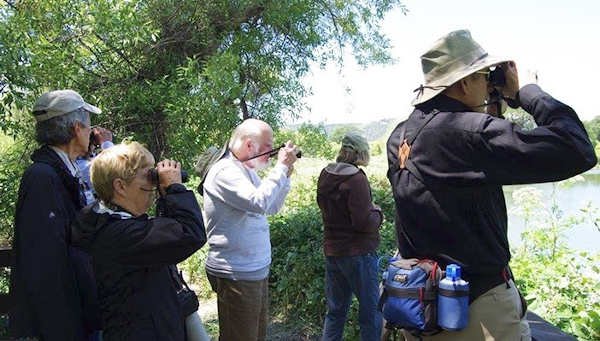
LOWER LAKE, Calif. — Anderson Marsh Interpretive Association, or AMIA, has received a $9,220 “Parks Improvement” grant from California State Parks Foundation to hold special twice-monthly "senior days" at the park over a four-month period in the spring of 2023.
Seniors who sign up for the special program will be bused at no cost from Lake County senior centers to attend a day at the park.
Each day will include two educational programs and a free picnic lunch.
“The idea of this project is to make it easy for seniors to feel welcomed at the park, to have some fun outdoors and to learn about Anderson Marsh State Historic Park,” said Henry Bornstein, AMIA grant coordinator. “The park is an important part of what Lake County has to offer its residents and may have been overlooked by seniors who may not have felt comfortable visiting the park on their own.”
“The special programs will be educational, but will also be fun,” said Roberta Lyons, AMIA president. “Seniors attending the special days at the park will learn about the long history of the Indigenous Peoples who lived on the land now known as Anderson Marsh State Historic Park and the history of the Europeans who more recently lived on this land. They also will be able to experience the rich natural history, plant habitats, and wildlife found in the park.”
“AMIA is grateful for the financial support of California State Parks Foundation that will allow this project to get started,” said Bornstein. “After this pilot project is completed, we hope to find funding to continue the program and to expand it to create an ongoing program supporting the ability of Lake County seniors to visit the park and experience the benefits of being outdoors in nature.”
AMIA is a nonprofit association cooperating with State Parks to support and promote educational and interpretive activities at Anderson Marsh State Historic Park.
For information about Anderson Marsh State Historic Park or AMIA, please visit www.andersonmarsh.org or contact AMIA at either