 How to resolve AdBlock issue?
News
- Details
- Written by: GOVERNOR’S OFFICE
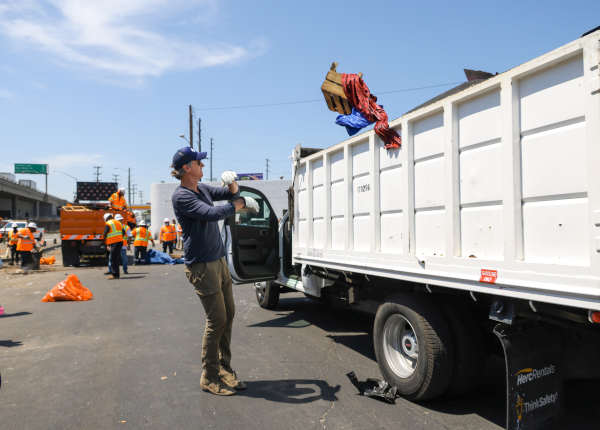
In September 2021, Gov. Gavin Newsom announced the state had prioritized 100 high-profile encampment sites on state land to clear.
One year later, California has cleared an average of 100 encampments per month with a total of 1,262 cleared sites, removing 1,213 tons of trash — enough to fill 22 Olympic-size swimming pools.
To highlight the successful state efforts, Gov. Newsom joined Caltrans cleanup efforts at an encampment on I-10 in Los Angeles Thursday. During his administration, the governor has helped clean up several encampments across the state.
“Leaving people on the streets and our highways is dangerous and inhumane. It’s unacceptable,” said Gov. Newsom. “California is investing billions of dollars to house thousands of people and clean up our communities and streets. Our efforts are a model for the nation, and more importantly, we’re getting people off the streets and into the housing and services they deserve.”
Newsom’s office said that when he became governor, California lacked money, coordination and accountability in tackling the state’s homelessness crisis.
Three years later, Newsom’s office said the state has become a national leader, investing $14.7 billion towards homelessness with a coordinated statewide approach focusing on encampment resolution and housing through the Homekey program.
California has provided housing or shelter to more than 67,000 people since the beginning of the pandemic and 55,000 housing units have been or are in the process of being deployed.
The budget Gov. Newsom signed earlier this year includes $700 million for encampment resolution grants with $350 million earmarked for assisting those living on state right-of-way property.
Some of the 1,262 encampments closed by Caltrans during the past 12 months include:
Bay Area – In May, Caltrans closed an encampment along State Route 77 near the High Street offramp in Oakland, collecting 1,600 cubic yards of trash, the most of any single encampment in the state. Throughout the nine Bay Area counties, Caltrans closed 283 encampments and collected more than 14,668 cubic yards of trash.
Los Angeles – In April, Caltrans closed an encampment along Interstate 105 near the Central Avenue offramp, collecting 1,250 cubic yards of trash, the most of any single encampment in Southern California. Caltrans closed 321 encampments and collected more than 33,546 cubic yards of trash throughout Los Angeles and Ventura counties.
San Diego – Caltrans closed 281 encampments and collected more than 2,678 cubic yards of trash throughout San Diego and Imperial counties.
Central Coast – Caltrans closed 161 encampments and collected more than 6,672 cubic yards of trash throughout Santa Barbara, San Luis Obispo, Monterey, San Benito and Santa Cruz counties. This includes an encampment the department closed along Highway 1 near the Ocean Street onramp in Santa Cruz from which Caltrans collected more than 1,000 cubic yards of trash.
Sacramento and the Central Valley – Caltrans closed 121 encampments and collected more than 11,192 cubic yards of trash throughout the Central Valley between Butte County in the north and Kern County to the south. This includes 40 encampments in Sacramento County in which the department collected a total of more than 3,078 cubic yards of trash.
North Coast – Caltrans closed 56 encampments and collected more than 1,176 cubic yards of trash throughout Del Norte, Humboldt, Mendocino and Lake counties.
Orange County – Caltrans closed 22 encampments and collected more than 1,721 cubic yards of trash.
- Details
- Written by: Elizabeth Larson
The City of Clearlake Animal Association also is seeking fosters for the animals waiting to be adopted.
Call the Clearlake Animal Control shelter at 707-273-9440, or email
Visit Clearlake Animal Control on Facebook or on the city’s website.
The following dogs are available for adoption. New additions are at the top.
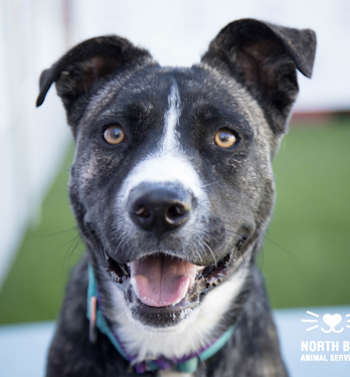
‘Sparkles’
“Sparkles” is a female terrier mix with a short brindle coat.
Shehas been spayed.
She is dog No. 50592729.

‘Andy’
“Andy” is a male American pit bull mix with a short gray and white coat.
He is dog No. 48995415.

‘Bear’
“Bear” is a male Labrador retriever-American pit bull mix with a short charcoal and fawn coat.
He has been neutered.
He is dog No. 48443153.
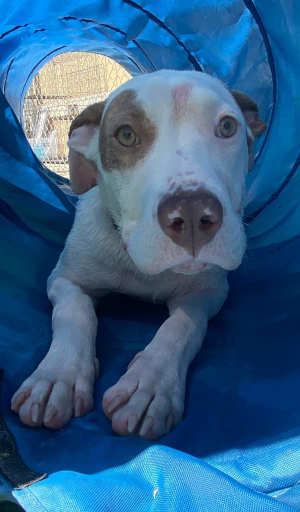
‘Betsy’
“Betsy” is a female American pit bull mix with a short white coat.
She has been spayed.
She is dog No. 50236145.
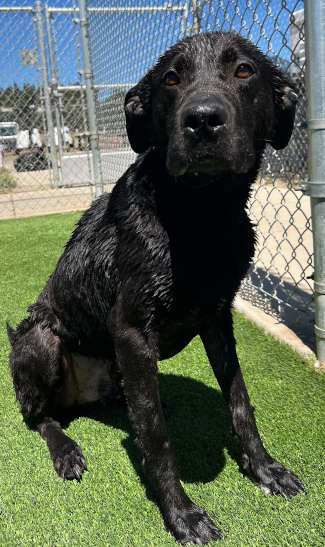
‘Bluey’
“Bluey” is a male retriever mix with a short black coat.
He has been neutered.
He is dog No. 50552999.
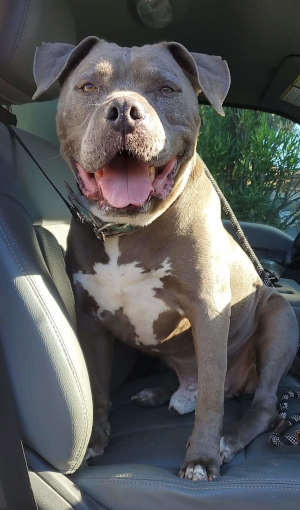
‘Big Phil’
“Big Phil” is a 13-year-old male American pit bull terrier mix with a blue coat.
He has been neutered.
He is dog No. 49951647.

‘Colt’
“Colt” is a male Rhodesian Ridgeback mix with a short rust and black coat.
He has been neutered.
He is dog No. 49812106.

‘Groucho’
“Groucho” is a male Chihuahua-miniature pinscher mix with a short tricolor coat.
He has been neutered.
He is dog No. 49651597.

‘Hakuna’
“Hakuna” is a male shepherd mix with a tan coat.
He has been neutered.
He is dog No. 50176912.

‘Kubota’
“Kubota” is a male German shepherd mix with a short tan and black coat.
He has been neutered.
Kubota is dog No. 50184421.
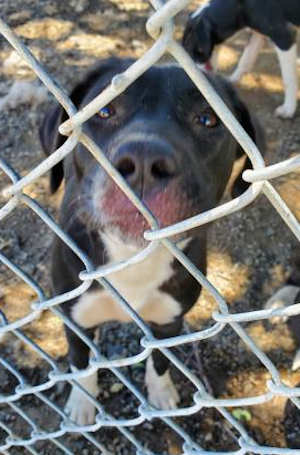
‘Luna’
“Luna” is an 8-month-old Labrador retriever-terrier mix with a black and white coat.
She is dog No. 50339254.

‘Mamba’
“Mamba” is a male Siberian husky mix with a gray and cream-colored coat.
He has been neutered.
He is dog No. 49520569.

‘Matata’
“Matata” is male shepherd mix with a tan coat.
He has been neutered.
He is dog No. 50176912.

‘Newman’
“Newman” is a 1-year-old male American pit bull terrier mix with a black and white coat.
He has been neutered.
Newman is dog No. 49057809.

‘Sadie’
“Sadie” is a female German shepherd mix with a black and tan coat.
She has been spayed.
She is dog No. 49802563.

‘Terry’
“Terry” is a handsome male shepherd mix with a short brindle coat.
He gets along with other dogs, including small ones, and enjoys toys. He also likes water, playing fetch and keep away.
Staff said he is now getting some training to help him build confidence.
He is dog No. 48443693.

‘Tiramisu’
“Tiramisu” is a female Alaskan husky mix with a short brown and cream coat.
She is dog No. 49652833.
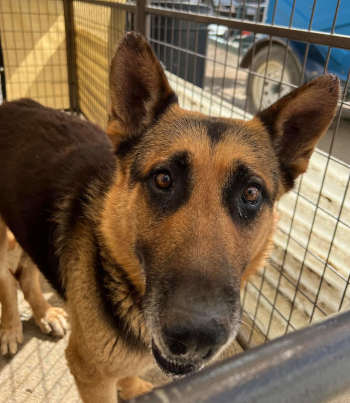
‘Willie’
“Willie” is a male German shepherd mix with a black and tan coat.
He has been neutered.
He is dog No. 50596003.
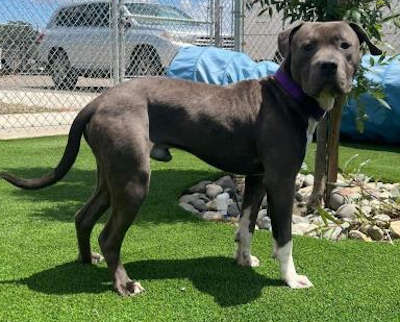
‘Ziggy’
“Ziggy” is a male American pit bull terrier mix with a short gray and white coat.
He has been neutered.
Ziggy is dog No. 50146247
Email Elizabeth Larson at
- Details
- Written by: California Attorney General’s Office
The reports provide policymakers, researchers, law enforcement, and members of the public with vital statewide information on criminal justice statistics in California to support informed policy choices based on data and analysis and help protect the safety and well-being of all Californians.
While the reports are typically published in July, the recent overhaul of the state’s electronic reporting systems, as required by a federal directive to strengthen data collection capabilities nationwide, impacted data collection efforts and the timing of this year’s release of the reports.
Once fully implemented for the hundreds of reporting agencies across the state, California’s new data collection system, which was certified by the Federal Bureau of Investigation earlier this year, will significantly improve the quality and depth of the criminal justice statistical information available to all Californians, officials said.
“Good data is a cornerstone of good public policy,” said Attorney General Bonta, encouraging partners across California to read the reports released by his office.
“While crime rates remain significantly below their historical highs, property and violent crimes continue to have devastating consequences for communities across the state. Gun violence in particular remains a consistent and growing threat. In fact, in 2021, nearly three-fourths of all homicides in California involved a firearm,” he said.
Bonta added, “As we confront these ongoing challenges, we must have accountability and appropriate consequences for those who break the law. Accurate statistics and the data in the annual crime reports are a critical part of calibrating our response, ensuring policymakers and law enforcement are able to make informed decisions. At the California Department of Justice, we’re using every tool we have to prevent violence and combat crime in all its forms. Whether it’s successfully securing federal certification of our data systems or taking guns out of the hands of dangerous individuals, my office remains committed to doing our part to support safety and security for all Californians.”
Each year, the California Department of Justice, or CADOJ, publishes annual reports on various criminal justice statistics in California.
While law enforcement agencies across the state are in the process of transitioning to the new data collection system known as the California Incident-Based Reporting System, or CIBRS, the format of the information made available in this year’s reports remains consistent with previous years.
The ongoing transition to incident-based reporting will ultimately enable law enforcement agencies to collect more in-depth information about specific incidents than previously available in the legacy system that had been in use for decades.
For instance, under the legacy system, statistical data was typically collected using the “Hierarchy Rule,” i.e., only the most serious offense within a criminal incident is counted for statistical purposes.
As a result, if a robbery and a homicide occurred in the same incident, the legacy system only counts the homicide for statistical reporting purposes.
Through CIBRS, policymakers, law enforcement and members of the public will eventually have more detailed information, context, and specificity about crime in the state.
Law enforcement agencies across California are currently in the process of transitioning to CIBRS.
To date, more than 300 reporting agencies have completed the transition and are in the process of becoming certified by CADOJ.
However, there are currently several hundred agencies remaining and CADOJ continues to work with agencies across the state during this ongoing transition.
In the interim, in order to help ensure the annual criminal justice reports remain complete and accurate to the fullest extent possible, CADOJ continues to accept data in both the legacy and CIBRS formats.
The information made available in this year’s reports is a combination of data collected under both reporting methods. The attorney general encourages researchers, academics, and all members of the public to analyze the data and use it to help inform public discourse on the state’s criminal justice system.
Key findings from each of the four reports released today and a brief description of their contents are available below:
Homicide in California 2021 provides information about the crime of homicide, including demographic data of victims, persons arrested for homicide, persons sentenced to death, peace officers feloniously killed in the line of duty, and justifiable homicides. Some of the key findings include:
• The total number of reported homicides in the state increased 7.2% year-to-year from 2,202 in 2020 to 2,361 in 2021, remaining significantly below California’s historical high of 4,095 homicides in 1993;
• In 2021, 75% of homicides, where the weapon was identified, involved a firearm. Firearms continue to be the most common weapon used in homicides;
• Among California’s counties with populations of 100,000 or more, Kern (13.7), Merced (9.5), and Tulare (8.8) were the counties that experienced the highest homicide rates and Placer (1), San Luis Obispo (0.7), and Marin (0.4) experienced the lowest homicide rates. Napa and Shasta counties reported they had zero homicides;
• Among homicides where the victim’s relationship to the suspect was identified, females (35.6%) were more likely than males (6.4%) to be killed by their spouse, parent, or child; and
There was a 2.9% decrease in homicide arrests from 1,597 in 2020 to 1,550 in 2021, remaining above the 10-year average of 1,478.2 homicide arrests per year.
Crime in California 2021 presents statewide statistics for reported crimes, arrests, dispositions of adult felony arrests, adult probation, criminal justice personnel, civilians’ complaints against peace officers, domestic violence-related calls for assistance, anti-reproductive-rights crimes, and law enforcement officers killed or assaulted.
Some of the key findings include:
• The violent crime rate — i.e., the number of violent crimes per 100,000 people — increased 6.7% from 437 in 2020 to 466.2 in 2021, remaining significantly below California’s historical high of 1,103.9 in 1992;
• The property crime rate increased 3% from 2,114.4 in 2020 to 2,178.4 in 2021, remaining near last year’s historical low and significantly below California’s historical high of 6,880.6 in 1980;
The total arrest rate decreased 7.3% from 2,812.3 in 2020 to 2,606.3 in 2021, continuing an ongoing year-to-year downward trend that began in 2004 when the total arrest rate was 5,385.5;
• In 2021, the total number of adults on active probation reached its lowest level since 1980 at 151,414; and
• The total number of full-time criminal justice personnel — including law enforcement, prosecutors, investigators, public defenders, and probation officers — decreased 2.7% from 153,883 in 2020 to 149,688 in 2021, falling slightly below the 10-year average of 151,909.8.
Use of Force Incident Reporting 2021 presents a summary overview of use of force and discharge-of-firearm incidents involving a peace officer, as defined in California Government Code section 12525.2.
Some of the key findings include:
• In 2021, there were 628 incidents that involved the use of force resulting in serious bodily injury or death of a civilian or officer, or the discharge of a firearm.
Of those incidents:
• 47.8% occurred during a call for service;
• 19.7% occurred while either a crime was in progress or while officers were investigating suspicious persons or circumstances; and
• 15.4% resulted from a vehicle, bike, or pedestrian stop;
In 2021, 660 civilians were involved in incidents that involved the discharge of a firearm or use of force resulting in serious bodily injury or death.
Of those civilians:
• 50.6% were Hispanic;
• 25.5% were white; and
• 16.7% were Black; and
In 2021, 1,462 officers were involved in incidents that involved the discharge of a firearm or use of force resulting in serious bodily injury or death.
Of those officers:
• 83.8% were not injured;
• 15.9% were injured; and
• 0.3% died.
Juvenile Justice in California 2021 provides insight into the juvenile justice process by reporting the number of arrests, referrals to probation departments, petitions filed, and dispositions for juveniles tried in juvenile and adult courts.
Some of the key findings include:
• Of the 31,370 referrals of juveniles to probation, 92.5% were referred by law enforcement;
• Of the 19,355 juvenile arrests:
• 47.2% were for a felony offense;
• 46.5% were for a misdemeanor offense; and
• 6.3% were for a status offense;
Of those same juveniles:
• 77.2% were referred to probation;
• 16% were counseled and released; and
• 6.8% were turned over to another agency;
• Of the 17,413 juvenile cases that were formally handled by a juvenile court, 55.3% resulted in juveniles being made wards of the court; and
• Of the 52 juvenile cases tried in adult court, 67.3% resulted in a conviction.
The Homicide in California report is available here. The Crime in California report is available here.
The Use of Force Incident Reporting report is available here.
The Juvenile Justice in California report is available here.
The underlying data associated with the annual reports is available on OpenJustice here.
- Details
- Written by: DENNIS FORDHAM

Administering a decedent’s probate or trust estate can involve unforeseen challenges.
Let us consider two probate scenarios where title to real property that belonged to the decedent was nonetheless titled outside of the decedent’s name and presented a challenge as to how to title the real property into the estate.
Also, let us consider a trust administration scenario where title was left out of the trust.
Consider a probate where the decedent, years prior to his death, was supposed to receive title from his then wife to all real property belonging to them as joint tenants as part of their divorce agreement.
The wife signed an interspousal deed to real property in Lake County that she believed transferred all the property to her husband.
Years later, during the probate, she learned that the mobile home on the real property and the adjoining five acres parcel were not included on the interspousal deed.
Here a possible solution is to petition the court, under section 850 of the Probate Code, for an order to reform the deed to include the adjoining five acres.
Reformation is an allowed equitable (fairness) approach to the problem that applies when there is a written agreement that does not properly express the prior mutual agreement between the parties.
In this case, the both spouses agreed that all real properties would go to the husband, but the interspousal deed itself excluded the adjoining five acres and the mobile home.
With the surviving ex-spouse’s written declaration it made sense to file an 850 petition to reform the old interspousal deed to include the missing assets.
Next, consider a probate where the decedent co-owned a lot with two other deceased owners of record.
The probate estate could not sell the property without either unifying all ownership in the probate estate itself or without the other deceased co-owner’s heirs getting on title to the real property and participating in the sale as co-owners.
Fortunately, the successors in interest to the other deceased owners were agreeable to assign their inheritance rights to the personal representative of the probate estate.
With the assignments and declaration by surviving heirs confirming that neither deceased co-owner’s estate was probated it becomes possible to use an 850 petition by the personal representative for an order that the property belongs to the probate estate based on the assignments and the circumstances.
As illustrated, section 850 of the Probate Code provides a useful procedural remedy for a personal representative of a decedent’s estate to pursue claims to assets that are either possessed or titled in the name of someone else.
Without the cooperation of that “someone else” or the successors in interest, the section 850 petition will likely result in controversy and possibly even litigation. With the cooperation, however, a section 850 petition can provide a useful remedy to solve knotty problems.
Lastly, consider a decedent who died with a trust while owning real property outside the trust. If there is a good argument that the decedent intended the property to have been transferred to the trust but failed to do so, then an 850 petition pursuant to the case of Estate of Heggstad, 16 Cal. App. 4th, 943 (1993) case may be the solution.
For example, if the decedent took title out of the trust as part of a refinancing then there would be a clear argument that the failure to retitle the house back into the trust was unintentional.
The foregoing is a brief discussion of a much wider and more complex subject. It is not legal advice and does not substitute for consultation with an attorney before proceeding.
Dennis A. Fordham, attorney, is a State Bar-Certified Specialist in estate planning, probate and trust law. His office is at 870 S. Main St., Lakeport, Calif. He can be reached at