 How to resolve AdBlock issue?
News
- Details
- Written by: David Battisti, University of Washington

As global temperatures rise, people in the tropics, including places like India and Africa’s Sahel region, will likely face dangerously hot conditions almost daily by the end of the century – even as the world reduces its greenhouse gas emissions, a new study shows.
The mid-latitudes, including the U.S., will also face increasing risks. There, the number of dangerously hot days, marked by temperatures and humidity high enough to cause heat exhaustion, is projected to double by the 2050s and continue to rise.
In the study, scientists looked at population growth, economic development patterns, energy choices and climate models to project how heat index levels – the combination of heat and humidity – will change over time. We asked University of Washington atmospheric scientist David Battisti, a co-author of the study, published Aug. 25, 2022, to explain the findings and what they mean for humans around the world.
What does the new study tell us about heat waves in the future, and importantly the impact on people?
There are two sources of uncertainty when it comes to future temperature. One is how much carbon dioxide humans are going to emit – that depends on things like population, energy choices and how much the economy grows. The other is how much warming those greenhouse gas emissions will cause.
In both, scientists have a really good sense of the likelihood of various scenarios. For this study, we combined those estimates to get a likelihood in the future of having dangerous and life-threatening temperatures.
We looked at what these “dangerously high” and “extremely dangerous” levels on the heat index would mean for daily life in both the tropics and in the mid-latitudes.
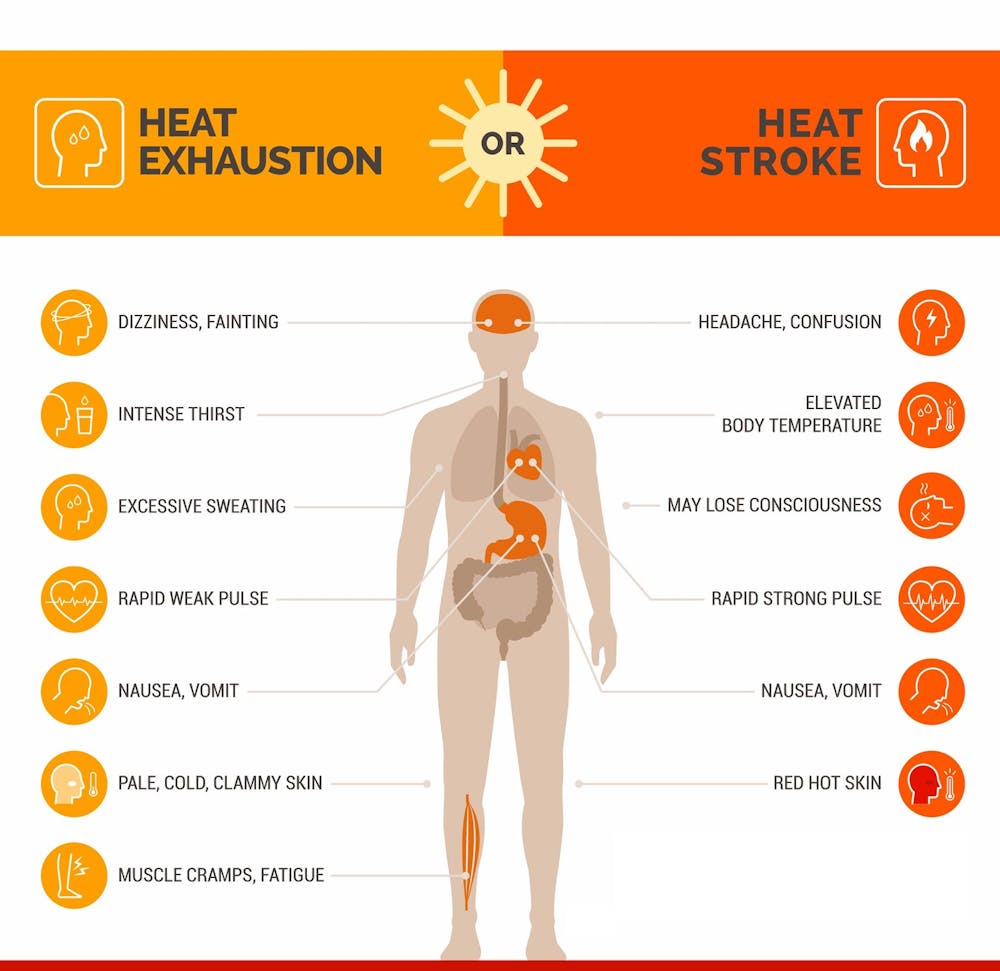
“Dangerous” in this case refers to the likelihood of heat exhaustion. Heat exhaustion won’t kill you if you’re able to stop and slow down – it’s characterized by fatigue, nausea, a slowed heartbeat, possibly fainting. But you really can’t work under these conditions.
The heat index indicates when a person is likely to reach that threshold. The National Weather Service defines “dangerous” as a heat index of 103 F (39.4 C), and “extremely dangerous” as 125 F (51.7 C). If a person gets to “extremely dangerous” temperatures, that can lead to heat stroke. At that level, you have a few hours to get medical attention to cool your body down, or you die.
“Extremely dangerous” heat index conditions are almost unheard of today. They happen in a few locations near the Gulf of Oman, for example, for maybe a few days in a decade.
But the odds of the number of “dangerous” days are increasing as the planet warms. We’ll likely have about the same weather variability as today, but it’s all happening on top of a higher average temperature. So, the likelihood of extremely hot conditions increases.
What does your study show for each region?
In the mid-latitudes by 2050, we’ll see the number of dangerous heat days double in the most likely future scenario – even under modest greenhouse gas emissions that would meet the Paris climate agreement target of keeping warming under 2 C (3.6 F).
In the Southeastern U.S., the most likely scenario is that people will experience a month or two of dangerous heat days every year. The same is likely in parts of China, where some regions have been sweating through a summer 2022 heat wave for over two straight months.
We found that by the end of the century, most places in the mid-latitudes will see a three- to tenfold increase in the number of dangerous days.
In the tropics, such as parts of India, the heat index right now can exceed the dangerous level for a few weeks a year. It’s been like that for the past 20 to 30 years. By 2050, those conditions are likely to occur over several months each year, we found. And by the end of the century, many places will see those conditions most of the year.
What that means in practice is if you’re a rich country like the U.S., most people can afford or find air conditioning. But if you’re in the tropics, where about half the world’s population lives and poverty is higher, the heat is a more serious problem for a good part of the year. And a large percentage of people there work outside in agriculture.
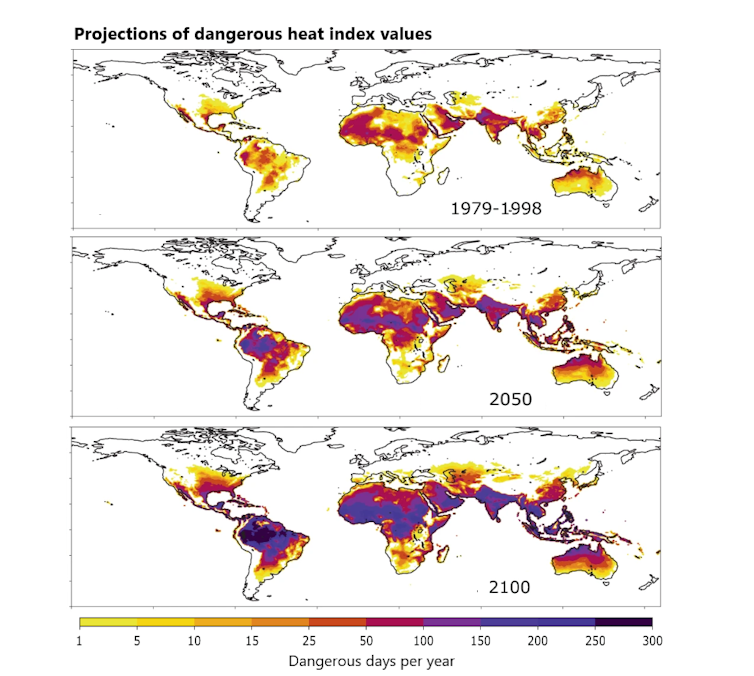
As we get toward the end of the century, we’ll start exceeding “extremely dangerous” conditions in several places, primarily in the tropics.
Northern India could see over a month per year in extremely dangerous conditions. Africa’s Sahel region, where poverty is widespread, could see a few weeks of extremely dangerous conditions per year.
Can humans adapt to what sounds like a dystopian future?
If you’re a rich country, you can build cooling facilities and generate electricity to run air conditioners – hopefully they won’t be powered with fossil fuels, which would further warm the planet.
If you’re a developing country, a very large fraction of people work outdoors in agriculture to earn money to buy food. There, if you think about it, there aren’t a lot of options.
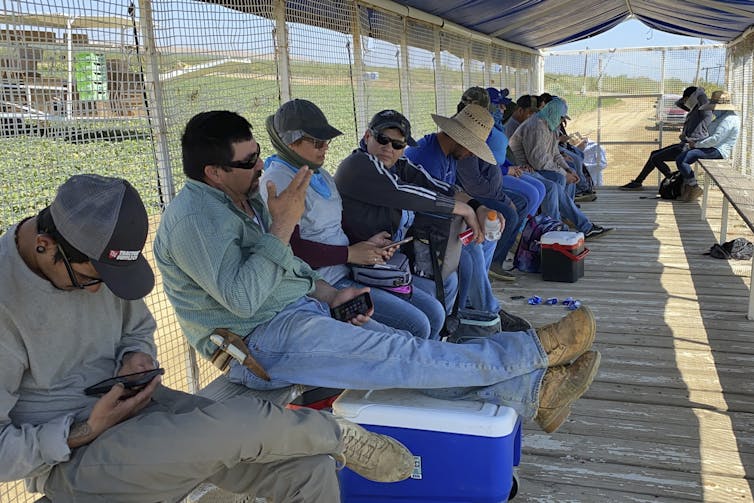
Migrant workers in the U.S. also face more difficult conditions. A farm might be able to provide cooling facilities, but farmers’ margins are pretty small and migrant workers are often paid by volume, so when they aren’t picking, they aren’t paid.
Eventually, conditions will get to the point that more workers are overheating and dying.
The heat will be a problem for crops, too. We expect most of the major grains to be less productive in the future because of heat stress. In the mid-latitudes right now, we’re close to optimal temperatures for growing grains. But as temperatures increase, grain yield goes down. In the tropics, that could be anywhere between a 10% to 15% reduction per degree Celsius increase. That’s a pretty big hit.
What can be done to avoid these risks?
Part of our work in this study was determining the odds that the world will actually meet the Paris agreement. We found that to be around 0.1%. Basically, it’s not going to happen.
By the end of the century, we found the most likely scenario is that the planet will see 5.4 F (3 C) of warming globally compared to pre-industrial times. Land warms faster than ocean, so that translates to about a 7 F (3.9 C) increase for places where we live, work and play – and you can get a sense of the future.
The faster renewable energy comes online and fossil fuel use is shut down, the better the chances of avoiding that.
David Battisti, Professor of Atmospheric Sciences, University of Washington
This article is republished from The Conversation under a Creative Commons license. Read the original article.
- Details
- Written by: Elizabeth Larson
Call Lake County Animal Care and Control at 707-263-0278 or visit the shelter online at http://www.co.lake.ca.us/Government/Directory/Animal_Care_And_Control.htm for information on visiting or adopting.
The following cats at the shelter have been cleared for adoption.

Female gray tabby
This 2-year-old female gray tabby has a short coat with white markings.
Shelter staff said she is an adult cat with some playful kitten tendencies when toys are brought out. “She has a sweet little meow and likes to have playful chats with you.”
She is in cat room kennel No. 28, ID No. LCAC-A-3661.

Female domestic shorthair cat
This 2-year-old female domestic shorthair cat has an all-black coat.
Shelter staff said she is a “master greeter.”
“She is very talkative and likes softs pets down her back. She is uncomfortable when being picked up, but is more than happy to come to you, especially for pets,” and has a “chill” attitude, the shelter reported.
She is in cat room kennel No. 32, ID No. LCAC-A-3887.
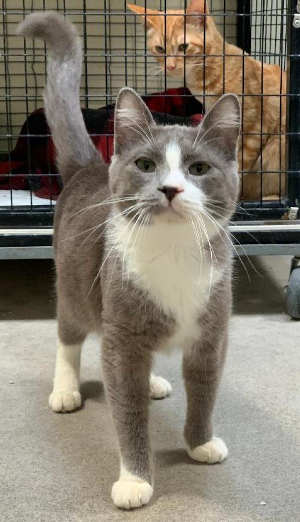
Male domestic medium hair cat
This 2-year-old male domestic medium hair cat has a gray coat with white markings.
Staff said he is a sweet and talkative fellow who would be a great couch buddy.
He’s in cat room kennel No. 33, ID No. LCAC-A-3828.

‘Willow’
“Willow” is a female domestic shorthair cat with a gray and white coat.
She is in cat room kennel No. 47, ID No. LCAC-A-3762.

Male domestic shorthair kitten
This 4-month-old male domestic shorthair kitten has an all-black coat.
Shelter staff said he is a unique kitten, who is very sweet and playful despite having a limb deformity.
“He can run around and play with all the other kittens and he loves toys and adventure. He will need to be indoor only so he can live his life worry free,” the shelter reported.
He is in cat room kennel No. 62a, ID No. LCAC-A-3877.

Male domestic shorthair kitten
This 4-month-old male domestic shorthair kitten has a white coat with gray markings and blue eyes.
He is a very sweet and curious kitten who likes to run around the room and find all of the hidden toys.
He is in cat room kennel No. 62b, ID No. LCAC-A-3879.
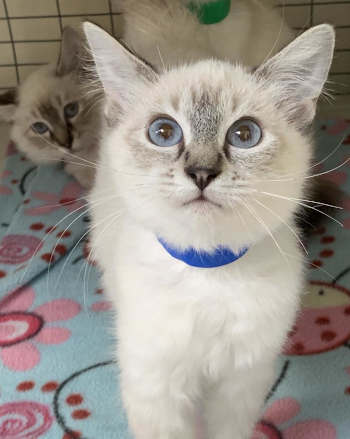
Female domestic shorthair kitten
This 3-month-old female domestic shorthair kitten has a white coat with gray markings and blue eyes.
She is reported to be very interested in toys and exploring. “She loves to show off her beautiful coat and eyes, as well as her awesome purring skills,” shelter staff said.
She is in cat room kennel No. 78a, ID No. LCAC-A-3888.

Female domestic shorthair kitten
This 3-month-old female domestic shorthair kitten has a white coat with gray markings and blue eyes.
“This little kitten is shy at first, but does warm up and enjoys chin scratches. She enjoys watching the action from a nice comfy chair instead of being right in the middle of it,” shelter staff said.
She is in cat room kennel No. 78b, ID No. LCAC-A-3890.

Female domestic medium hair kitten
This 3-month-old female domestic medium hair kitten has a white coat with gray markings and blue eyes.
“She is sweet and quiet. She enjoys toys and gentle pets as well as curling up on a fluffy bed,” shelter staff said.
She is in cat room kennel No. 78c, ID No. LCAC-A-3889.

Domestic shorthair kitten
This handsome male domestic shorthair kitten is waiting to meet his new family.
He has an all-black coat.
He is reported to be mellow, with a gentle personality.
He is in cat room kennel No. 84c, ID No. LCAC-A-3616.

Female domestic shorthair kitten
This female domestic shorthair kitten has a gray coat with white markings.
Shelter staff said she came to them with an injury to one of her eyes and needed to have the eye removed, but that has only made her more eager for head bonks.
“She has the cutest little meow and is a running shelter champion for the ‘best biscuit maker,’” the staff said.
She would be best as an indoor-only cat.
She is in cat room kennel No. 107, ID No. LCAC-A-3842.

‘Olive’
“Olive” is a female domestic medium hair kitten with a black coat.
She is in cat room kennel No. A117, ID No. LCAC-A-3742.
Email Elizabeth Larson at
- Details
- Written by: LAKE COUNTY NEWS REPORTS

LAKEPORT, Calif. — In its ongoing effort to support patients fighting breast cancer, Sponsoring Survivorship will hold its annual walk and run fundraiser on Saturday, Oct. 1.
The 26th annual event will once again be held in downtown Lakeport.
Morning registration takes place from 7 to 8:30 a.m. at the Silveira Community Center, 500 N. Main St. The registration fee is $25.
The event starts at 9 a.m., rain or shine.
Online registration is available now through Sept. 23 at the organization's website.
The Oct. 1 run and walk will be a family event, featuring raffle prizes, refreshments and a free logo T-shirt for each participant.
Founded in 1996, Sponsoring Survivorship has assisted local women and men with some of the costs associated with their struggle against breast cancer.
At the same time, they have offered support and friendship to cancer patients in what can be a lonely journey.
Sponsoring Survivorship was honored to receive a donation from The Green Heron at Concert in the Park on Friday, Aug. 19.
The Green Heron is selling hats and giving Sponsoring Survivorship a $5 donation for each hat purchased.
Sponsoring Survivorship also is holding a yard sale fundraiser on Saturday, Sept. 3, from 8 a.m. to noon at Lakeport Christian Center, 455 S. Forbes St. A lot of treasures await visitors. Preregistration for the annual run and walk also will be available.
The group offered special thanks to all business and community sponsors. Donations are gratefully accepted. Nonprofit ID: 45-3321877.
For more info visit www.sponsoringsurvivorship.com, or contact Julie Kelley at 707-972-0286 or Brandi Cubbage at 432-614-7707.
- Details
- Written by: California Governor's Office of Emergency Services
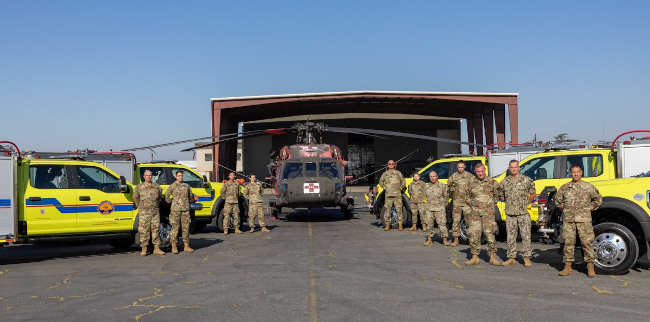
MATHER, Calif. — Highlighting the state’s commitment to innovative solutions to tackle climate-induced natural disasters, the California Governor's Office of Emergency Services and the California Military Department have announced the creation of the first all-hazards military fire engine strike team.
Known as Team Blaze, it will be operated by the State Guard of the Military Department.
Cal OES is assigning a Type VI strike team of wildland-style fire engines to the State Military Department to enhance California's Fire and Rescue Mutual Aid fleet.
Each with a capacity to carry a four-person crew, these engines are in addition to the military department’s existing Task Force Rattlesnake hand crew program consisting of soldiers and airmen.
Since the start of operations in 2019, Task Force Rattlesnake has cut, cleared and treated at-risk wildfire project areas in central and northern parts of California.
"We have always valued the California Military Departments partnership during times of need, especially during wildfires or other natural disasters. These new engines will not only add to their capabilities, but also help augment our state's wildfire and rescue resources more broadly," said Cal OES Director Mark Ghilarducci.
The States Military Department maintains a firefighting program at their military bases, with trained personnel providing fire fighting prevention, mitigation and protection services to California and military bases and camps.
"We are proud to collaborate with Cal OES to ensure there's another fleet of fire engines and expert staff at the ready. This Strike Team builds upon the state's response efforts during times of need," said California Military Department Major General Matthew P. Beevers.
From responding to wildfires in rural settings, to protecting structures in urban areas and performing urban search and rescue operations, these engines are outfitted to support a variety of emergency situations.
For example, type VI engines can carry a four-person crew, get into tight areas, carry 300 gallons of water and quickly attack fires.
These engines add to the already robust California Fire and Rescue Mutual Aid System fleet of more than 270 fire engines across 60 local partners statewide that can respond to incidents of all types.
Cal OES facilitates the California Fire and Rescue Mutual Aid System, which currently moves local government resources across the state in support of all-risk emergency response on behalf of local, state, and federal government fire organizations.
Cal OES assigns local government fire agencies with fire apparatus to maintain surge capacity during day-to-day duties and major events/emergencies.
- Child poverty estimates point to a record low in 2021 – here’s how it could have been even lower
- Helping Paws: Shepherds, huskies and Great Pyrenees
- Space News: NASA’s Artemis 1 mission to the Moon sets the stage for routine space exploration beyond Earth’s orbit – here’s what to expect and why it’s important