 How to resolve AdBlock issue?
News
- Details
- Written by: CALIFORNIA HIGHWAY PATROL
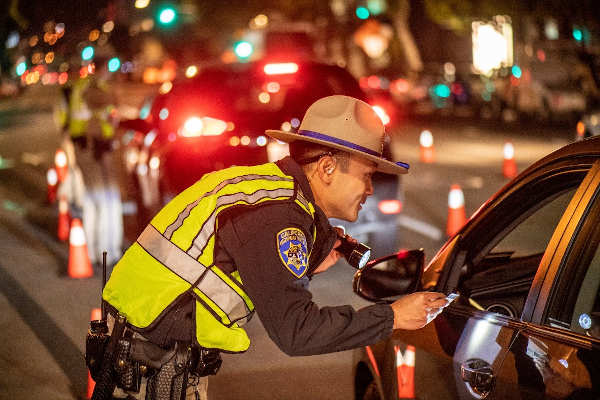
LAKE COUNTY, Calif. — Labor Day weekend is quickly approaching, and many Californians are preparing to close out the summer with a holiday gathering or road trip.
The California Highway Patrol said it wants to ensure everyone reaches their destination safely and will implement a maximum enforcement period, or MEP, in anticipation of the increased traffic that often accompanies a holiday weekend.
The CHP’s Labor Day MEP begins at 6:01 p.m. on Friday, Sept. 2, and continues through 11:59 p.m. on Monday, Sept. 5.
In addition to assisting motorists and looking for traffic violations throughout the holiday weekend, CHP officers will be paying close attention to those who are suspected of driving under the influence, or DUI, of drugs and/or alcohol.
The CHP reminds those who travel during Labor Day weekend to buckle up, drive at a safe speed, and never drive impaired.
Forty-three people were killed in vehicle crashes on California roadways during the holiday weekend in 2021.
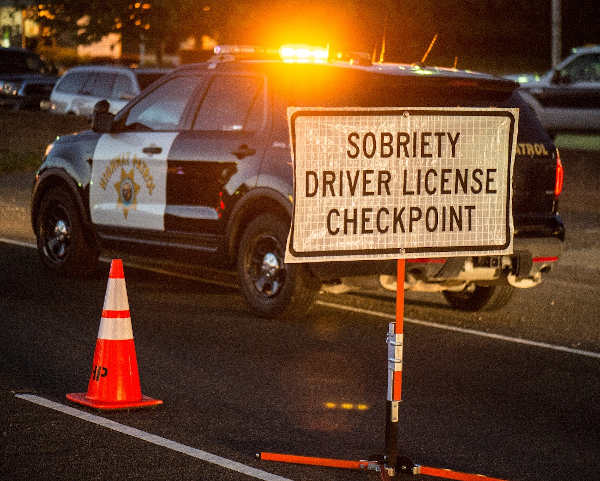
Additionally, CHP officers made 985 DUI arrests and issued more than 6,000 speeding citations throughout the state during last year’s Labor Day weekend.
The CHP urges people to avoid being arrested for DUI and becoming a statistic.
Designate a driver or use a ride-share service, and always wear your seat belt.
“Alcohol-and drug-impaired driving continues to be a leading cause of traffic fatalities and injuries in California, and the moment an impaired driver gets behind the wheel, they put themselves and every other person on the road in great danger,” said CHP Commissioner Amanda Ray. “The CHP is committed to enforcement and non-enforcement strategies, including education and community engagement, to ensure the highest level of safety for everyone traveling throughout California during the holiday.”
If you see or suspect an impaired driver, call 9-1-1 immediately. Be prepared to provide the dispatcher a description of the vehicle, the license plate number, location, and direction of travel. Your phone call may save someone’s life.
The CHP’s MEP coincides with the National Highway Traffic Safety Administration’s ongoing impaired driving national enforcement campaign, “Drive Sober or Get Pulled Over,” which continues through Sept. 5.
- Details
- Written by: Andrew Stokes, Boston University; Dielle Lundberg, Boston University; Elizabeth Wrigley-Field, University of Minnesota, and Rafeya Raquib, Boston University

More than 450 people are dying of COVID-19 in the U.S. each day as of late August 2022.
When COVID-19 vaccines first became available, public officials, community organizations and policymakers mobilized to get shots into arms. These efforts included significant investments in making vaccines accessible to Black, Hispanic, American Indian and Alaska Native populations. These groups experienced exceptionally high COVID-19 death rates early in the pandemic and had low initial vaccine rates.
The efforts worked. As of August 2022, vaccination rates for the primary series – or required initial doses of COVID-19 vaccines – for Black and Hispanic people exceeded those of white Americans.
But boosters are a different story. Comparable booster vaccine promotion efforts have been lacking. Confusion in the public health messaging surrounding boosters and limited federal funding for rolling out vaccination campaigns have resulted in slow booster uptake across the country.
As a result, divides have once again emerged. A recent study of COVID-19 booster rates found that 45% of white adults and 52% of Asian American adults had received boosters by January 2022. But only 29% of Black adults and 31% of adults who reported another racial or ethnic identity, such as American Indian, Alaska Native, Native Hawaiian, Pacific Islander or multiracial, were boosted.
As of late August 2022, the U.S. Centers for Disease Control and Prevention reported that 36.3% of white adults in the U.S. 50 years or older and eligible for a second booster shot had received one. This is compared to only 28.4% for the Black population, 31.3% for American Indian or Alaska Native populations, and 25.1% for the Hispanic population.
New boosters aimed at the currently dominant omicron subvariant are expected to become available in early September 2022. But the benefits of this new booster will be limited if it is not widely used.
Booster rates predict mortality rates across counties
We are a team of population health researchers at Boston University and the University of Minnesota. We have been tracking COVID-19 mortality rates since the beginning of the pandemic. Our team uses demographic methods to identify social and structural factors that influence health and contribute to evidence-based reforms of public health and health care systems.
Vaccine studies suggest that adults age 50 and older who receive a booster shot have 90% lower death rates from COVID-19 than those who receive only the initial vaccine regimen. But the extent to which boosters have translated into health gains at the population level remains unclear.
Preliminary analyses by our team indicate that people in the U.S. living in counties with low booster uptake are dying from COVID-19 at higher rates than people living in counties with high booster uptake. In particular, in comparing the counties in the bottom 10% of booster rates with those in the top 10%, the COVID-19 death rates for residents of the bottom 10% of counties were 64% higher. Our analysis applies to the period from January to June 2022. It also adjusts for residents’ ages.
This difference in death rates may in part reflect the fact that counties with greater booster protection also tend to have higher rates of primary-series vaccination. Nonetheless, these findings suggest that at the population level, booster rates are now a key factor behind COVID-19 deaths.
A prior study found that vaccination strategies that target high-risk geographical areas save more lives than strategies based on age alone. Thus, the evidence suggests that limited federal funding for COVID-19 booster promotion should be sent to geographical areas that are currently reporting high rates of COVID-19 deaths.
Learning from the community
An effective booster campaign could build on lessons learned from prior vaccination campaigns. Specifically, this involves bringing vaccines directly to people. From the earliest days of vaccine distribution during the pandemic, partnerships with faith-based organizations, housing communities and trusted community organizations have been successful in reaching populations with low vaccination rates.
Other strategies to make boosters more accessible include increasing access to vaccine centers via public transit and outside of typical working hours. In rural areas, evidence-based strategies to promote vaccination include education of community ambassadors, use of social media and operation of mobile vaccination sites.
In the absence of federal funding, community efforts have aimed to make boosters more accessible. A New Yorker documentary filmed in 2021 explored the challenges that one rural community in Alabama – Panola – has faced with vaccination. It highlights community leader Dorothy Oliver as she promotes vaccination with little to no support from the government. Her efforts included door-to-door campaigns, discussions with residents about their fears and concerns and coordination of vaccination logistics, including scheduling and transport.
In a similar way, Minneapolis’ Seward Vaccine Equity Project increased booster shots among East African immigrant families by having volunteers call members of their own communities and offer them a booster appointment and a ride. The volunteers were also available to answer residents’ questions and address any concerns. Successful efforts like those could be carried out by health departments on a much wider scale.
Andrew Stokes, Assistant Professor of Global Health, Boston University; Dielle Lundberg, Research Fellow in Global Health, Boston University; Elizabeth Wrigley-Field, Assistant Professor of Sociology, University of Minnesota, and Rafeya Raquib, Research Fellow in Global Health, Boston University
This article is republished from The Conversation under a Creative Commons license. Read the original article.
- Details
- Written by: Elizabeth Larson
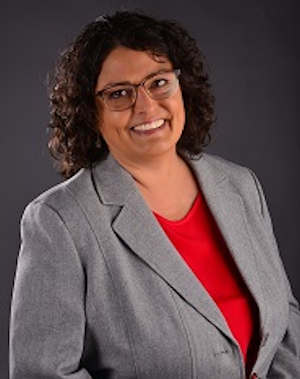
LAKE COUNTY, Calif. — The Board of Supervisors has hired the county’s next Community Development director, who announced she has resigned her position on the Lakeport City Council.
The supervisors emerged from closed session shortly after 4:30 p.m. Tuesday to appoint Mireya Turner permanent director of the County’s Community Development Department, effective immediately.
“I am honored and thrilled by the Board’s vote of confidence in appointing me permanent Director,” Turner said in a joint statement released by the county of Lake and the city of Lakeport. “We have an excellent team of qualified and professional staff, and it will be a privilege to continue leading this great group. Lake County residents deserve the best possible public service, and our Department will continue to strive to fulfill that mandate. I am committed to promoting responsible development, and creatively working with people looking to invest in Lake County.”
Turner, who holds a Master of Public Administration degree, has held several jobs with the county of Lake, first in the County Administrative Office and later for five years with the Community Development Department as a planner.
She went on to work in planning with the city of Ukiah for three years before returning to the Lake County Community Development as its deputy director in July, working alongside then-Director Mary Darby.
Then, on Aug. 16, the board appointed her interim Community Development director. That followed the departure of Darby, who had held the job for less than a year.
Darby had given her resignation in July, anticipating that she would remain with the county until Nov. 4. However, on Aug. 12 Darby abruptly left.
“Ms. Turner understands the unique needs of Lake County, and has the experience and technical knowledge to help us move forward,” said Board of Supervisors Chair Eddie Crandell in the city and county’s joint statement. “Making her appointment as Director permanent will help bring stability and continued growth to a critical County Department. Our board truly looks forward to an enduring and effective partnership with Ms. Turner and her team!”
The Community Development Department, critical to building and development in the unincorporated county, has struggled with keeping leadership over the past several years.
Turner’s is the seventh appointment the board has made to head the department since the start of 2016.
At the same time as she accepted the new job, Turner, now in her second term on the Lakeport City Council, decided to step down from her council role, effective on Tuesday, Aug. 30.
“Serving as Community Development director will require a greater commitment of time and attention than any of my previous roles,” said Turner. “The authority vested in this position could present possible conflicts with my elected position; so to avoid that, I must step down from the City Council. It has been a great honor to work with all of my colleagues on the Council, and the tremendous City of Lakeport staff, and I look forward to further opportunities to collaborate in my new role.”
In the joint statement, Lakeport City Manager Kevin Ingram lauded Turner for her accomplishments as a council member, “and Lakeport is a better place to live, work and invest as a result of her contributions.”
He added, “We will miss her insights as part of our council, and could not be more excited to see her work positively affect the lives of every Lake County resident.”
In her council role, Turner has served as a liaison to the Lakeport Fire Protection District, Lakefront Park Advisory Ad-Hoc Committee, Clean Water Program Committee and the Lakeport Unified School District. She also was one of the city's voting delegates to the League of California Cities, Redwood Empire Division, and served on the Community Economic Development Committee for the National League of Cities, according to the city of Lakeport.
Turner, who this year has served as mayor pro tempore, filed this summer to run for a third term in November. She and council colleague, Stacey Mattina, were the only filers for the two available seats.
Ingram told Lake County News on Wednesday that city staff is working on an agenda item for the Lakeport City Council’s Sept. 6 agenda to review the various options that exist for finding Turner’s successor.
“There appears to be quite a bit of nuance to work through given that Mireya’s name will likely appear on the ballot in November,” Ingram said. “Her resignation was effective immediately but if she still ends up getting elected in November she will likely need to formally decline her re-election once certified.”
Besides Turner’s seat, the city is facing the potential for another vacancy on the council should Councilman Michael Green be selected to succeed Tina Scott on the Board of Supervisors.
Green told Lake County News that he is applying to Gov. Gavin Newsom’s office for the District 4 supervisorial seat. That’s a job for which Turner also was believed to be a potential candidate, but which she is precluded from holding while a county department head.
Email Elizabeth Larson at
- Details
- Written by: Elizabeth Larson
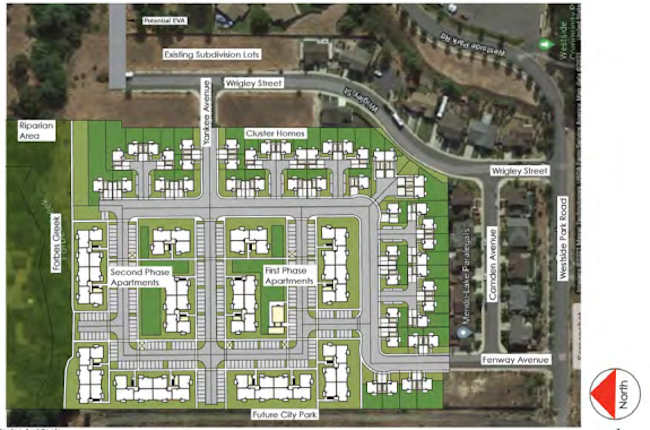
LAKE COUNTY, Calif. — The Lakeport Planning Commission has approved the next steps for a residential housing project projected to bring 176 new dwelling units — both apartments and smaller single-family homes — to the city.
The commission unanimously approved Waterstone Residential’s application for a zone change, tentative subdivision map, environmental review and general plan amendment for 128 apartment units and 48 cluster homes on a 15-acre site at 1310 Craig Ave. during its Aug. 10 meeting.
The project next heads to the Lakeport City Council on Sept. 6, when the council will consider the commission’s recommendation to approve the general plan amendment and zone change, Community Development Director Jenni Byers told Lake County News.
Byers said the zone change — from R-1, low-density residential, to R-3, high-density
residential with the planned development combining district — is an ordinance requiring a first and second reading by the council.
In 2005 the city approved a 96-lot residential subdivision at the site, which includes the Parkside Subdivision next to Westside Community Park, built by Schellinger Brothers.
Peter Schellinger of Santa Rosa, whose father and uncle are the Schellinger Brothers, is the project applicant and owner of the new project.
He told the commission during the meeting that 31 lots were part of the overall project’s first phase. Of those lots, 17 homes were built. That property still belongs to his father and uncle, and there are plans to build on the remaining undeveloped lots over the next three to five years.
At a later date, Byers said the Planning Commission will be requested to review a tentative
map that would create 51 parcels — one for open space, two parcels for multifamily housing, and 48 lots for cluster homes — for the property.
Byers explained that cluster homes are “starter homes,” a missing middle housing type of around 1,300 square feet, with one- and two-car garages. Such homes are meant to encourage a creative use of land, she said.
Of the 128 apartment units, Byers said half will be two bedrooms, the other half will be three bedrooms.
Schellinger introduced Jon Worden, the architect for the original Parkside Subdivision who is designing the new project. Schellinger said he wanted Worden to take a new look at the 15-acre building site and re-imagine it for what they believe to be the market now.
The market turned dramatically up here in 2008. “As a result, the demand just hasn’t been there to build out the original concept,” Schellinger said.
Demand has started to come back based on sales in phase one, but the pricing isn’t there to support additional infrastructure. So Schellinger said they looked at ways to spread cost around while integrating multiple housing types.
Worden presented a virtual tour of the project to the commission, showing a birdseye view of the apartment design, with two story stacked flats and internal stairs, and cottage houses clustered around T-shaped auto courts, each with private yards and front porches. Around the perimeter would be a large landscape butter.
Schellinger said the vision for the cottages is to reach the missing middle housing market. He said there are certain down payment assistance programs from the state that open up the number of buyers who can qualify for the homes.
Staff received three letters from neighbors opposing the project, with those individuals among eight neighbors who also spoke against the project to the commission.
Concerns included roads and traffic, the quality of the new homes compared to the quality of the existing ones — which sell quickly when they come on the market — as well as impacts on the neighborhood, drainage, the existing subdivision’s lighting issues, how subsidized housing would equate to putting a slum in the area, fire danger and impacts on current homeowners’ equity.
Commission Chair Mark Mitchell, who is himself a contractor and homebuilder, said he had just finished his last rebuild in the town of Paradise, which was destroyed in the November 2018 Camp fire.
He said he can’t build houses in Lake County today for what they’re worth, but that he can go to Santa Rosa, build a house and sell it for a profit. In Lake County, he would be $100,000 in the hole.
That’s why, Mitchell explained, houses aren’t being built in Lake County. It has nothing to do with house values, but because the construction cost has gone up three times since 2008.
“We will catch up eventually. We’re starting to get there,” he said.
Still, homes in Santa Rosa will sell for $300,000 more than homes in Lake County. “It’s a bad place for us to be in,” Mitchell said.
He added, “Projects like this don’t come along very often. We need the homes.”
Mitchell also said, “You can’t say no to every project.”
Commissioner Nathan Maxman said he’s checked out cluster home communities in places such as Ukiah. He said he couldn’t see why they shouldn’t approve the plan, noting that the community needs housing.
Commissioner Scott Barnett pointed out that under the current zoning, the builder could put up 64 additional homes.
In three separate motions, the commission approved a mitigated negative declaration, and voted to recommend the Lakeport City Council approve a general plan amendment and zone change approval. The votes were 3-0. Commissioners Kurt Combs and Jeff Warrenburg were absent.
Also at the meeting, the commission approved an application from BND Holdings for an architectural and design review that would allow a 3,599 square foot commercial metal building for storage/distribution to be located on property owned by Maryann Spinali of Lakeport at 2225 and 2232 Specht Court, a block from S. Main Street and near the former Kmart site.
The building will consist of a 2,722 square foot warehouse space, and an 877 square foot office space.
Email Elizabeth Larson at