 How to resolve AdBlock issue?
News
- Details
- Written by: By Laura Kurtzman
Melamine and cyanuric acid were found in nearly all study participants’ samples, but the highest levels were found in women of color and those with greater exposure to tobacco. Four aromatic amines that are commonly used in products containing dyes and pigments were also found in nearly all pregnant participants.
The highest levels of melamine and cyanuric acid were found in women of color and those with greater exposure to tobacco.
People can be exposed to melamine and aromatic amines in a variety of ways: through the air they breathe, by eating contaminated food or ingesting household dust, as well as from drinking water or by using products that contain plastic, dyes, and pigments.
“These chemicals are of serious concern due to their links to cancer and developmental toxicity, yet they are not routinely monitored in the United States,” said Tracey J. Woodruff, PhD, a professor of Obstetrics, Gynecology and Reproductive Medicine who directs the UCSF Program on Reproductive Health and the Environment, and is the co-senior author of the study published August 30, 2022, in Chemosphere.
Melamine and its major byproduct, cyanuric acid, are each high production chemicals that exceed 100 million pounds per year in this country alone. When exposure to these chemicals happens together, they can be more toxic than either one alone. Melamine is found in dishware, plastics, flooring, kitchen counters, and pesticides; cyanuric acid is used as a disinfectant, plastic stabilizer, and cleaning solvent in swimming pools; aromatic amines are found in hair dye, mascara, tattoo ink, paint, tobacco smoke, and diesel exhaust.
When exposure to these chemicals happens together, they can be more toxic than either one alone.
Melamine, found in:
• Dishware;
• Plastics;
• Flooring;
• Kitchen counters;
• Pesticides.
Cyanuric acid, used as:
• Disinfectant;
• Plastic stabilizer;
• Cleaning solvent in swimming pools.
Aromatic amines, found in:
• Hair dye;
• Mascara;
• Tattoo ink;
• Paint;
• Tobacco smoke;
• Diesel exhaust.
Melamine was recognized as a kidney toxicant after baby formula and pet food poisoning incidents in 2004, 2007, and 2008 that caused several deaths as well as kidney stones and urinary tract obstruction in some people. Additional animal experiments suggest melamine reduces brain function.
For their study, researchers measured 45 chemicals associated with cancer and other risks using new methods to capture chemicals or chemical traces in urine samples from a small but diverse group of 171 women who are part of the National Institutes of Health’s Environmental influences on Child Health Outcomes (ECHO) Program. The study period covered 2008 to 2020.
These chemicals are of serious concern due to their links to cancer and developmental toxicity, yet they are not routinely monitored in the United States.
The 171 women came from California, Georgia, Illinois, New Hampshire, New York, and Puerto Rico. About one-third (34%) were white, 40% were Latina, 20% were Black, 4% were Asians, and the remaining 3% were from other or multiple racial groups. Prior studies on melamine were conducted among pregnant women in Asian countries or limited to non-pregnant people in the U.S.
“It’s disconcerting that we continue to find higher levels of many of these harmful chemicals in people of color,” said study co-senior author Jessie Buckley, PhD, an associate professor at Johns Hopkins Bloomberg School of Public Health.
For example, levels of 3,4-dichloroaniline (a chemical used in the production of dyes and pesticides) were more than 100% higher among Black and Hispanic women compared to white women.
“Our findings raise concerns for the health of pregnant women and fetuses, since some of these chemicals are known carcinogens and potential developmental toxicants,” said Giehae Choi, postdoctoral fellow at Johns Hopkins Bloomberg School of Public Health and first author of the study. “Regulatory action is clearly needed to limit exposure.”
- Details
- Written by: Lake County Chapter of California Women for Agriculture
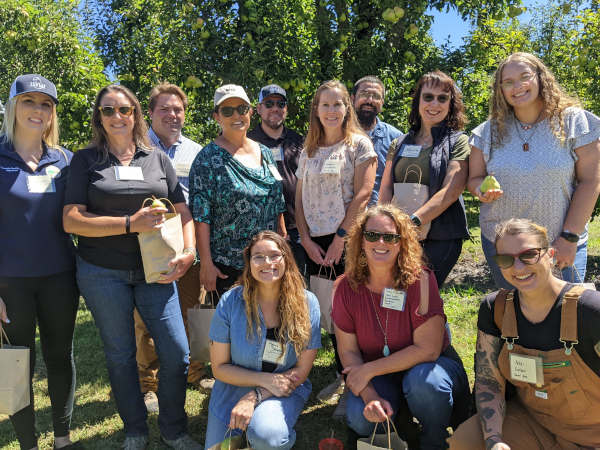
LAKE COUNTY, Calif. – The Lake County Chapter of California Women for Agriculture, or CWA, is pleased to announce its 2022 AgVenture class.
Twelve community leaders from a range of positions were selected to participate in this, the eleventh offering of this popular program, which returns after a two-year hiatus due to the COVID-19 pandemic.
Members of the 2022 class include: Lake County District 3 Supervisor Eddie Crandell; Lake County District 2 Supervisor Bruno Sabatier; Lake County Community Development Director Mireya Turner; Lake County Agricultural Commissioner Katherine VanDerWall; Lakeport Chief Building Official Bethany Moss; Lake County Deputy Water Resources Director Marina Deligiannis; Lake County Vector Control Technician Sandi Courcier; Lake County Chamber of Commerce Executive Director Laura McAndrews Sammel; Lake County Farm Bureau Executive Director Rebecca Harper; Clear Lake Environmental Research Center Fire and Forestry Program Manager Tracy Cline; Bella Vista Farming Company Assistant Manager Will Weiss; and Lake County Record-Bee Reporter Nikki Carboni.
AgVenture is an innovative concept in agricultural education designed for non-farming community leaders and others who wish to understand the vital role that agriculture plays in Lake County’s economy.
AgVenture sessions cover topics including labor, history, marketing, water and land use, regulations, pest management and sustainability.
On August 12, AgVenture class members embarked on the first of four sessions as they learned about the pear industry including tours of Henderson/Panella pear orchard and Scully Packing Company pear shed.
Three subsequent classes will provide insight into the winegrape industry on Sept. 9, walnuts and livestock on Oct. 7, and olives, biotechnology and farm labor on Nov. 4.
Class members will be given tours of an olive mill, a walnut orchard, a livestock operation, a commercial vineyard operation and a commercial winery.
Started by Lake County CWA in 2010, AgVenture is designed to give participants a broad yet locally oriented understanding of the agricultural industry.
The AgVenture program Steering Committee, all CWA members, are Rebecca Harper, Colleen Rentsch, Toni Scully, Debra Sommerfield, Katherine VanDerWall and Sharron Zoller.
California Women for Agriculture was founded in 1975 and is the most active, all-volunteer agricultural organization in the state, with 20 chapters and more than 1,300 members comprising farmers, ranchers, bankers, lawyers, accountants, marketing professionals, support services, consumers, and the vast stakeholders of the agriculture industry.
CWA promotes leadership within local communities, advocacy on key local, state and federal issues, public service and outreach, agriculture literacy in our schools, and promotional initiatives to preserve and educate those living in our increasingly urbanized California landscape. CWA advocates for the economic sustainability of the diverse California agriculture community so future generations can continue to produce a healthy diverse food supply.
For more information or to become a member, please visit www.lakecountycwa.org.
- Details
- Written by: Elizabeth Larson
MATH will meet at 7 p.m. Thursday, Sept. 8, in the Middletown Community Meeting Room/Library at 21256 Washington St., Middletown. The meeting is open to the public.
To join the meeting via Zoom click on this link; the meeting ID is 659 964 1209. Call in at 669-900-6833.
At 7:05 p.m., Chief Paul Duncan of Cal Fire is scheduled to speak, followed by Pacific Gas and Electric representative Melinda Rivera.
At 8:05 p.m., Supervisor Moke Simon is scheduled to give his monthly report.
The MATH Board includes Chair Monica Rosenthal, Vice Chair Ken Gonzalez, Secretary Todd Fiora, Rosemary Córdova and Bill Waite.
MATH — established by resolution of the Lake County Board of Supervisors on Dec. 12, 2006 — is a municipal advisory council serving the residents of Anderson Springs, Cobb, Coyote Valley (including Hidden Valley Lake), Long Valley and Middletown.
For more information email
Email Elizabeth Larson at
- Details
- Written by: Lake County News reports
The meeting will begin at 4 p.m. at the Moose Lodge, located at 15900 Moose Lodge Lane in Clearlake Oaks.
The meeting can be attended in person or via Zoom; the meeting ID is 935 8339 6020, the pass code is 448228.
The guest speaker at Wednesday’s meeting will be Carter Jessop of the US Environmental Protection Agency, who will give the latest news on the Sulphur Bank Mine Superfund Site.
The EPA is due to release a proposed plan for cleanup of the on-land portion of the mine site this fall, with a public comment process to follow.
They also will hear the monthly updates on Spring Valley, commercial cannabis cultivation, the consolidated lighting district in Clearlake Oaks, the Lake County geothermal project watchlist, the Northshore Fire Protection District, the John T. Klaus 1994 Trust’s land donation for a new Clearlake Oaks park and get a report from Supervisor EJ Crandell.
ERTH’s members are Denise Loustalot, Jim Burton, Tony Morris and Pamela Kicenski.
For more information visit the group’s Facebook page.
- Temporary emergency power generators used for first time to support statewide energy grid during heat wave
- The most energy efficient investments you can make – and how the new Inflation Reduction Act could help
- Lakeport City Council to consider filling vacant seat, hold hearing on new residential project