 How to resolve AdBlock issue?
News
- Details
- Written by: Elizabeth Larson
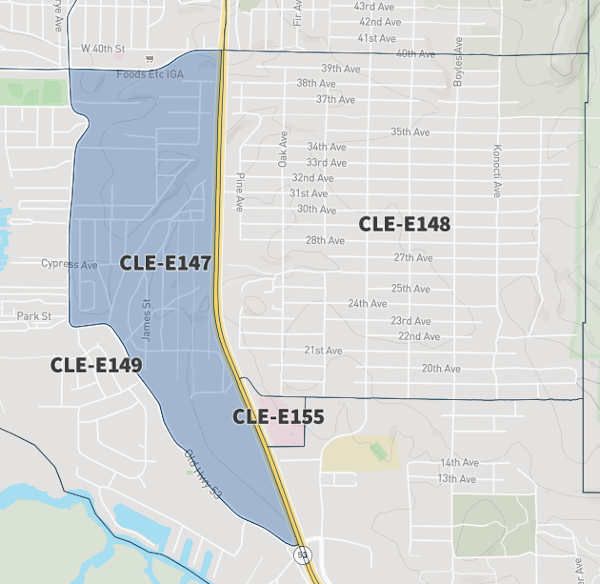
The third Zonehaven update showing that zone CLE-E148 was no longer under evacuation and zone CLE-E147 has been reduced to an evacuation advisory. By 10:30 p.m., this last evacuation advisory was lifted. Courtesy image.
This story is being updated on a rolling basis.
LAKE COUNTY, Calif. — A structure fire that’s moved into vegetation has prompted evacuations in a portion of the city of Clearlake.
The Tana fire was first reported shortly before 4 p.m. in the area of Crawford and Tana avenues.
Shortly after 4 p.m., the Clearlake Police Department reported that an immediate evacuation has been called for all residences in the area of Crawford and Tana avenues due to the fire.
Minutes later, fire radio traffic indicated a total of three structures were on fire and the fire had jumped to the west side of Highway 53, where a 100 foot by 100 foot spot was burning in the area of Pine and 31st avenues.
Power lines were reported to be down in the area, and at around 4:15 p.m. incident command reported that all power lines had been deenergized.
Before 4:20 p.m., another structure was reported to be on fire in the area of Utah and Armijo avenues.
Cal Fire sent a full wildland dispatch to join local fire agencies, with Copter 104 and air attack arriving on scene shortly before 4:30 p.m. At that time they indicated the spot fire on the west side of the highway had been mitigated.
At that time, more air tankers were en route and expected to arrive shortly, based on radio traffic. Not long afterward, tankers were reported to be at scene, making drops.
As of 4:45 p.m., evacuation orders were in effect for Zonehaven zone CLE-E147 on the west side of Highway 53, and CLE-D148, the area which covers the Avenues. Information on the evacuation zones is available at Zonehaven.
Law enforcement was reporting over the radio that many residents are refusing to leave their homes.
Incident command has requested an immediate need for engines to respond to 30th and Pine avenues for structure protection.
With a fire reported in Laytonville and a structure fire in Calistoga, Cal Fire dispatched asked for the release of some of the units. Tankers were diverted to Laytonville shortly after 5 p.m.
Just after 6 p.m., the Clearlake Police Department updated the evacuation map to show that Zonehaven zone CLE-E147 remained under an evaluation order, while CLE-E148 had been reduced to an advisory evacuation.
At 6:20 p.m., police said Highway 53 from 18th Avenue to 40th Avenue had reopened.
The Cal Fire battalion chief on scene reported that the fire was contained at 6:25 p.m.
As of 7:20 p.m., police said zone CLE-E148 is no longer under evacuation and residents can return home. Zone CLE-E147 has been reduced to an evacuation advisory.
The Clearlake Police said just after 10:30 p.m. that all evacuation advisories and orders were lifted, and that Crawford Avenue north of Utah Street will remain closed to traffic.
More information will be added to this story as it becomes available.
Email Elizabeth Larson at
- Details
- Written by: Elizabeth Larson
LAKE COUNTY, Calif. — A proposal for new homes and apartments near Westside Community Park will advance to a public hearing before the Lakeport City Council later this month.
In a unanimous vote at its Tuesday night meeting, the council approved introducing the Waterstone Residential housing project’s zone change ordinance and scheduled a public hearing for Sept. 20 for the ordinance and adoption of the mitigated negative declaration and general plan amendment for the proposed project.
The Lakeport Planning Commission discussed the project at its Aug. 10 meeting and recommended the council’s approval of it.
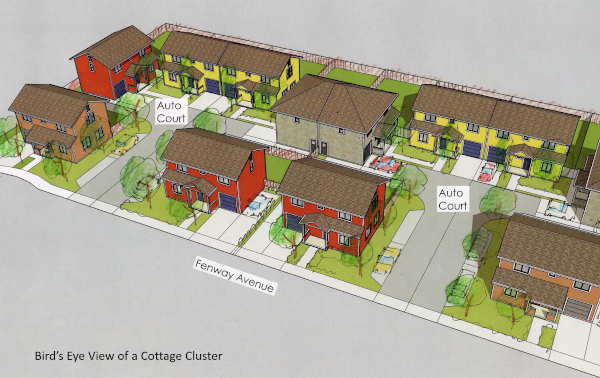
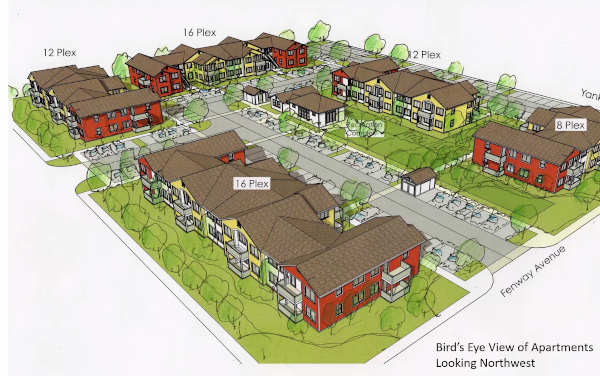
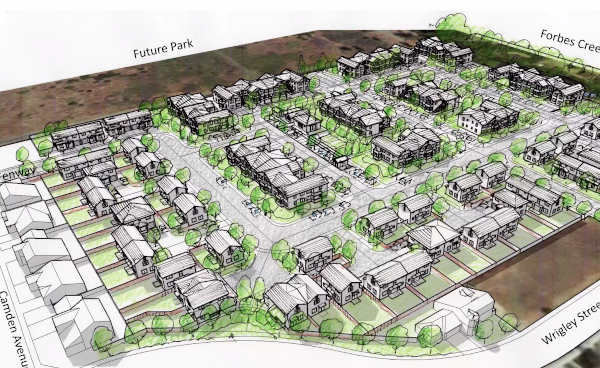
Waterstone Residential, owned by Peter Schellinger, is proposing the Parkside Residential Project, which will include 128 new apartment units and 48 cluster homes on the 15.16-acre property at 1310 Craig Ave.
Schellinger said the apartments will have solar power as part of his aim for them to be net zero. The homes will be plumbed for solar.
The project is on a portion of the Schellinger Subdivision, a 96-lot single-family residential subdivision approved in 2005 that included three phases. Peter Schellinger is the nephew and son of the original developers, Schellinger Brothers.
The first phase consisted of 31 lots, of which 17 were constructed and 14 remain vacant, with the Schellingers still hoping to develop them.
Community Development Director Jenni Byers said the project’s second and third phases did not submit for a final map and were never developed, and so the tentative vesting map has now expired.
Byers said that zoning allows the property to be developed with 19 units per acre, or up to 292 total units. However, she said Waterstone is proposing a density of 11 units per acre.
She said that due to legislative changes, the city is being robbed of its ability to approve some projects. The developer could put a home, an accessory unit and a junior accessory unit all on one parcel due to recent laws, which amounts to a triplex. As such, 195 units could be built with no review at all.
Byers said she is concerned about legislation to hold local governments to doing their job and allowing for more home building. She said she wanted to show the tremendous pressure the state is putting on cities and jurisdictions.
Lake County has lost 10% of its housing to wildfires in recent years, and due to the Mendocino Complex — which led to the evacuation of the entire city of Lakeport in the summer of 2018 — Byers said staff and the council understand the fire threat.
The project was shared earlier this year with then-Lakeport Fire Chief Jeff Thomas and he had no issues with layout. Thomas, who attended via Zoom, said in a message that Cal Fire did not respond to a request for comment on the project.
Comments submitted ahead of the meeting included a letter from Kim Costa, representing a group of Parkside Subdivision residents, and one from Dennis Rollins, chair of the Westside Community Park Committee, asking that park mitigation fees charged for the project be allocated directly to the paving at the park’s parking lot.
City acknowledges impacts, sees opportunities
Peter Schellinger said his uncle had been working for years to develop the second and third phases of the original development after the Great Recession, but the cost of infrastructure prevented it.
He said he founded Waterstone with one of the larger homebuilders in the country. He wants to create a mixture of housing types to create a better community and reduce the cost per unit so it would become more economically feasible to proceed with projects on land that was undevelopable in current form.
Schellinger hired the original architect of the Parkside Subdivision, Jon Worden, in order to keep a similar character in building design, and resemble what was built in phase one.
The cluster homes, at around 1,200 square feet, are considered a midlevel housing option, with Schellinger estimating home prices of about $400,000 per home.
“We are excited to present this tonight and hope we’ll get your support,” Schellinger said.
City Manager Kevin Ingram said staff wouldn’t argue that the project didn’t represent an impact on the existing neighborhood.
Over the last several years, the city has worked actively with the prior developer to get that existing development up and off the ground. “We need housing in Lakeport but unfortunately the economy was just not allowing that previous development to play out,” said Ingram, attributing it to the escalating costs of construction.
Ingram said the city appreciated the opportunity to work with Schellinger’s team to come up with a model to get more housing in play. They’ve pressed a number of developers for more starter home models and Ingram said Schellinger’s property offers a great opportunity to the city.
He said the existing land use designations at the site allow for the density that’s being proposed. What it doesn’t allow for is the apartment type design, which was what was spurring Schellinger’s request of the council.
With traffic being a big concern for residents, Ingram said it would be warranted for the city to see how traffic is functioning at the project site.
Ingram said the city wanted to hear from the public, noting that staff can see it from the 40,000 foot level, but it’s good to hear from the neighbors.
“It’s my opinion that this is a good project that requires the council’s attention,” he said.
Opponents raise water, traffic concerts
The council heard from several community members who chiefly challenged the project on the grounds of fire safety, water supply and traffic.
Sky Hoyt, who does not live in the subdivision, raised concerns about water supply and suggested that tertiary water treatment is needed in the city.
Costa said the neighbors are trying to educate themselves and understand the state’s housing mandates. She said they are trying to be reasonable in their thinking, and wanted the city to be mindful of the neighborhood already there.
For her, safety was a big issue, including ingress and egress, and traffic. She suggested a medium housing option was necessary.
Her attorney, Andre Ross, suggested to the council that there are health, safety and welfare issues that need to be looked at closely before project approval, adding he believed the developer was abandoning the original subdivision. He said the developer should be put on a slower track.
Schellinger said he appreciated engaging with the community. Referring to the larger density that the current zoning allows, he explained, “We’re not doing that. I don’t think you want that. That's not a really cohesive development scheme.”
He said a lot of work went into the plan, and with it a lot of sensitivity. Schellinger said he doesn’t blame residents for being disappointed, as there is a lot of disappointment around the original project not working. But he believes the new plan is a good one.
Referring to the 14 single family home lots still undeveloped in the first phase, he said his uncle would not have endorsed this new development plan knowing he was going to hold those 14 lots to develop someday.
Byers said people have an incorrect idea of what affordable housing means. Schellinger is going for a grant for the neighborhood’s streets system, she said, not to make it low income.
During her life, she said she’s needed every type of housing that the development offers, from the time she was a single mom in college who needed affordable housing, to later graduating and making enough to buy a house and now moving into something smaller.
Schellinger said the cluster homes will be eligible for a down payment assistance program through Cal Home; qualifying applicants can make up to 120% of the average median income.
Lakeport has the ability to access that program. “We’re really excited about that,” he said, explaining those homes make up the “missing middle” in the housing market that not many people have been able to figure out and address.
He said they are not talking about homeless housing, which is a different development concept altogether, with completely different financing, requiring a huge subsidy and an ongoing fund for the services.
The people who will live in the new development aren’t homeless, they’re productive and contributing to society, he said.
Councilman Michael Green said that while he was on the Lakeport Planning Commission, he never had a project anywhere close to Schellinger’s come before him.
He said Schellinger is bringing in a different type of housing configuration. Acknowledging there are water supply problems, Green said shutting down this project isn’t the thing to ask, it’s to have the city stop allowing hookups.
Green and other council members thanked both Schellinger and those who spoke against the project for their input.
Mayor Stacey Mattina said it’s reasonable for the neighbors to be disappointed. She loves the Parkside neighborhood and its homes, and had been looking forward to seeing it finished.
“All these years have passed and we still have nothing,” she said.
Green moved to introduce the project and set it for a second reading, with Councilman Kenny Parlet seconding and the council approving the motion 4-0.
Email Elizabeth Larson at
- Details
- Written by: Lake County News reports
The town hall will take place from 5:30 to 7 p.m. Monday, Sept. 12.
The event can be accessed through this link; by phone at 669-900-6833, conference ID 859 7981 8979; or through PG&E’s website, www.pge.com/webinars.
PG&E said its regional team will discuss its local approach to improving customer service and safety, and introduce local leadership teams, including Regional Vice President Ron Richardson.
Last year, PG&E began transitioning to a Regional Service Model by grouping together counties with similar characteristics into five separate regions. For the North Coast, the counties are Humboldt, Lake, Marin, Mendocino, Napa, Siskiyou, Sonoma, Trinity.
The company said this approach is bringing it closer to its customers and helping address issues more efficiently and effectively at the local level.
During the town hall, PG&E experts will provide a brief presentation, after which participants will have the opportunity to ask questions.
Participants will be able to hear about recent work; learn about wildfire prevention efforts, including safety outages; prepare for wildfire season with safety updates; and provide feedback and ask questions of the local leadership team.
Closed captioning will be available in English, Spanish and Chinese and dial-in numbers will be available for those who aren’t able to join online.
For the full webinar events schedule, additional information on how to join and recordings and presentation materials from past events, visit www.pge.com/webs.
More information and resources to help you and your family prepare for and stay safe in the event of an emergency can be found at www.safetyactioncenter.pge.com/.
- Details
- Written by: Paul Chinowsky, University of Colorado Boulder

The 1960s and 1970s were a golden age of infrastructure development in the U.S., with the expansion of the interstate system and widespread construction of new water treatment, wastewater and flood control systems reflecting national priorities in public health and national defense. But infrastructure requires maintenance, and, eventually, it has to be replaced.
That hasn’t been happening in many parts of the country. Increasingly, extreme heat and storms are putting roads, bridges, water systems and other infrastructure under stress.
Two recent examples – an intense heat wave that pushed California’s power grid to its limits in September 2022, and the failure of the water system in Jackson, Mississippi, amid flooding in August – show how a growing maintenance backlog and increasing climate change are turning the 2020s and 2030s into a golden age of infrastructure failure.
I am a civil engineer whose work focuses on the impacts of climate change on infrastructure. Often, low-income communities and communities of color like Jackson see the least investment in infrastructure replacements and repairs.
Crumbling bridge and water systems
The United States is consistently falling short on funding infrastructure maintenance. A report by former Federal Reserve Board Chairman Paul Volcker’s Volcker Alliance in 2019 estimated the U.S. has a US$1 trillion backlog of needed repairs.
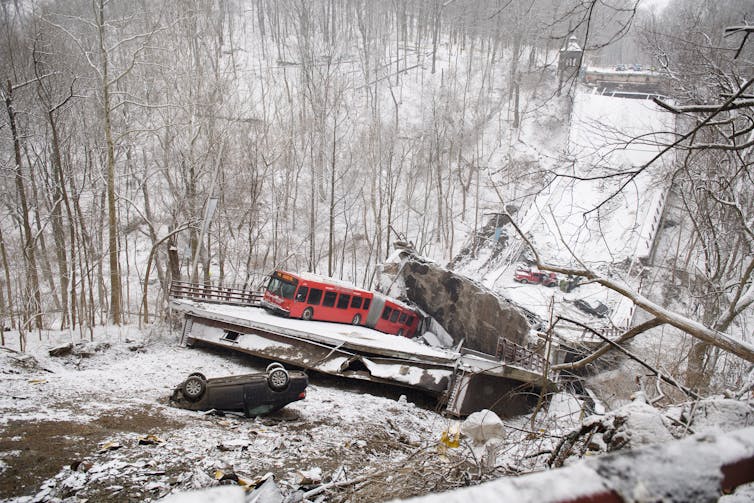
Over 220,000 bridges across the country – about 33% of the total – require rehabilitation or replacement.
A water main break now occurs somewhere in the U.S. every two minutes, and an estimated 6 million gallons of treated water are lost each day. This is happening at the same time the western United States is implementing water restrictions amid the driest 20-year span in 1,200 years. Similarly, drinking water distribution in the United States relies on over 2 million miles of pipes that have limited life spans.
The underlying issue for infrastructure failure is age, resulting in the failure of critical parts such as pumps and motors.
Aging systems have been blamed for failures of the water system in Jackson, wastewater treatment plants in Baltimore that leaked dangerous amounts of sewage into the Chesapeake Bay and dam failures in Michigan that have resulted in widespread damage and evacuations.
Inequality in investment
Compounding the problem of age is the lack of funds to modernize critical systems and perform essential maintenance. Fixing that will require systemic change.
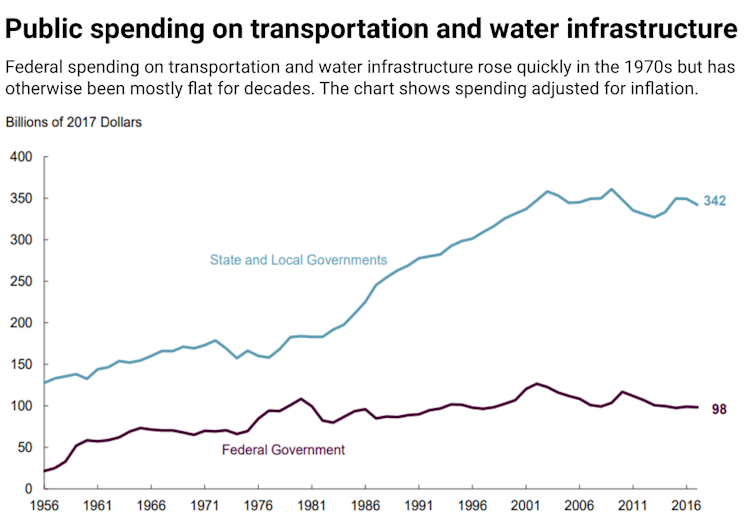
Infrastructure is primarily a city and county responsibility financed through local taxes. However, these entities are also dependent on state and federal funds. As populations increase and development expands, local governments have cumulatively had to double their infrastructure spending since the 1950s, while federal sources remained mostly flat.
Inequity often underlies the growing need for investment in low-income U.S. communities.
Over 2 million people in the United States lack access to safe drinking water and basic sanitation. The greatest predictor of those who lack this access is race: 5.8% of Native American households lack access, while only 0.3% of white households lack access. In terms of sanitation, studies in predominantly African American counties have found disproportionate impacts from nonworking sewage systems.
Jackson, a majority-Black state capital, has dealt with water system breakdowns for years and has repeatedly requested infrastructure funding from the state to upgrade its struggling water treatment plants.
Climate change exacerbates the risk
The consequences of inadequate maintenance are compounded by climate change, which is accelerating infrastructure failure with increased flooding, extreme heat and growing storm intensity.
Much of the world’s infrastructure was designed for an environment that no longer exists. The historic precipitation levels, temperature profiles, extreme weather events and storm surge levels those systems were designed and built to handle are now exceeded on a regular basis.
Unprecedented rainfall in the California desert in 2015 tore apart a bridge over Interstate 10, one of the state’s most important east-west routes. Temperatures near 120 degrees Fahrenheit (49 C) forced the Phoenix airport to cancel flights in 2017 out of concern the planes might not be able to safely take off.
A heat wave in the Pacific Northwest in 2020 buckled roads and melted streetcar cables in Portland. Amtrak slowed its train speeds in the Northeast in July 2022 out of concern that a heat wave would cause the overhead wires to expand and sag and rails to potentially buckle.

Power outages during California’s September 2022 heat wave are another potentially life-threatening infrastructure problem.
The rising costs of delayed repairs
My research with colleagues shows that the vulnerability of the national transportation system, energy distribution system, water treatment facilities and coastal infrastructure will significantly increase over the next decade due to climate change.
We estimate that rail infrastructure faces additional repair costs of $5 billion to $10 billion annually by 2050, while road repairs due to temperature increases could reach a cumulative $200 billion to $300 billion by the end of the century. Similarly, water utilities are facing the possibility of a trillion-dollar price tag by 2050.
After studying the issue of climate change impacts on infrastructure for two decades, with climate projections getting worse, not better, I believe addressing the multiple challenges to the nation’s infrastructure requires systemic change.
Two items are at the top of the list: national prioritization and funding.
Prioritizing the infrastructure challenge is essential to bring government responsibilities into the national conversation. Most local jurisdictions simply can’t afford to absorb the cost of needed infrastructure. The recent infrastructure bill and the Inflation Reduction Act are starting points, but they still fall short of fixing the long-term issue.
Without systemic change, Jackson, Mississippi, will be just the start of an escalating trend.
Paul Chinowsky, Professor of Civil Engineering, University of Colorado Boulder
This article is republished from The Conversation under a Creative Commons license. Read the original article.