 How to resolve AdBlock issue?
News
- Details
- Written by: Chris Impey, University of Arizona

Astronomers now routinely discover planets orbiting stars outside of the solar system – they’re called exoplanets. But in summer 2022, teams working on NASA’s Transiting Exoplanet Survey Satellite found a few particularly interesting planets orbiting in the habitable zones of their parent stars.
One planet is 30% larger than Earth and orbits its star in less than three days. The other is 70% larger than the Earth and might host a deep ocean. These two exoplanets are super-Earths – more massive than the Earth but smaller than ice giants like Uranus and Neptune.
I’m a professor of astronomy who studies galactic cores, distant galaxies, astrobiology and exoplanets. I closely follow the search for planets that might host life.
Earth is still the only place in the universe scientists know to be home to life. It would seem logical to focus the search for life on Earth clones – planets with properties close to Earth’s. But research has shown that the best chance astronomers have of finding life on another planet is likely to be on a super-Earth similar to the ones found recently.


Common and easy to find
Most super-Earths orbit cool dwarf stars, which are lower in mass and live much longer than the Sun. There are hundreds of cool dwarf stars for every star like the Sun, and scientists have found super-Earths orbiting 40% of cool dwarfs they have looked at. Using that number, astronomers estimate that there are tens of billions of super-Earths in habitable zones where liquid water can exist in the Milky Way alone. Since all life on Earth uses water, water is thought to be critical for habitability.
Based on current projections, about a third of all exoplanets are super-Earths, making them the most common type of exoplanet in the Milky Way. The nearest is only six light-years away from Earth. You might even say that our solar system is unusual since it does not have a planet with a mass between that of Earth and Neptune.
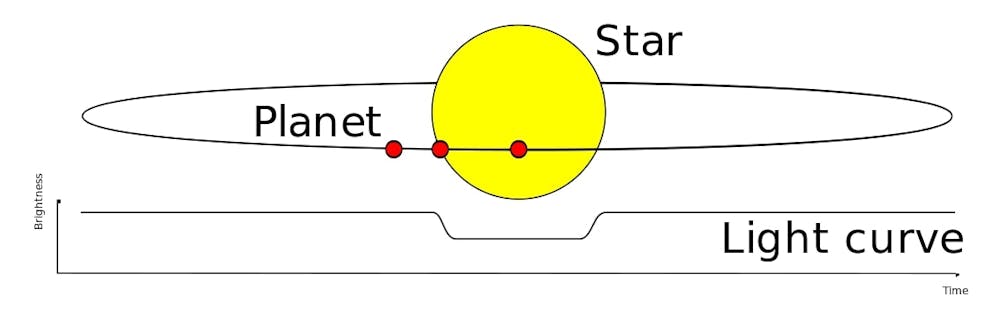

Another reason super-Earths are ideal targets in the search for life is that they’re much easier to detect and study than Earth-sized planets. There are two methods astronomers use to detect exoplanets. One looks for the gravitational effect of a planet on its parent star and the other looks for brief dimming of a star’s light as the planet passes in front of it. Both of these detection methods are easier with a bigger planet.
Super-Earths are super habitable
Over 300 years ago, German philosopher Gottfried Wilhelm Leibniz argued that Earth was the “best of all possible worlds.” Leibniz’s argument was meant to address the question of why evil exists, but modern astrobiologists have explored a similar question by asking what makes a planet hospitable to life. It turns out that Earth is not the best of all possible worlds.
Due to Earth’s tectonic activity and changes in the brightness of the Sun, the climate has veered over time from ocean-boiling hot to planetwide, deep-freeze cold. Earth has been uninhabitable for humans and other larger creatures for most of its 4.5-billion-year history. Simulations suggest the long-term habitability of Earth was not inevitable, but was a matter of chance. Humans are literally lucky to be alive.
Researchers have come up with a list of the attributes that make a planet very conducive to life. Larger planets are more likely to be geologically active, a feature that scientists think would promote biological evolution. So the most habitable planet would have roughly twice the mass of the Earth and be between 20% and 30% larger by volume. It would also have oceans that are shallow enough for light to stimulate life all the way to the seafloor and an average temperature of 77 degrees Fahrenheit (25 degrees Celsius). It would have an atmosphere thicker than the Earth’s that would act as an insulating blanket. Finally, such a planet would orbit a star older than the Sun to give life longer to develop, and it would have a strong magnetic field that protects against cosmic radiation. Scientists think that these attributes combined will make a planet super habitable.
By definition, super-Earths have many of the attributes of a super habitable planet. To date, astronomers have discovered two dozen super-Earth exoplanets that are, if not the best of all possible worlds, theoretically more habitable than Earth.
Recently, there’s been an exciting addition to the inventory of habitable planets. Astronomers have started discovering exoplanets that have been ejected from their star systems, and there could be billions of them roaming the Milky Way. If a super-Earth is ejected from its star system and has a dense atmosphere and watery surface, it could sustain life for tens of billions of years, far longer than life on Earth could persist before the Sun dies.

Detecting life on super-Earths
To detect life on distant exoplanets, astronomers will look for biosignatures, byproducts of biology that are detectable in a planet’s atmosphere.
NASA’s James Webb Space Telescope was designed before astronomers had discovered exoplanets, so the telescope is not optimized for exoplanet research. But it is able to do some of this science and is scheduled to target two potentially habitable super-Earths in its first year of operations. Another set of super-Earths with massive oceans discovered in the past few years, as well as the planets discovered this summer, are also compelling targets for James Webb.
But the best chances for finding signs of life in exoplanet atmospheres will come with the next generation of giant, ground-based telescopes: the 39-meter Extremely Large Telescope, the Thirty Meter Telescope and the 24.5-meter Giant Magellan Telescope. These telescopes are all under construction and set to start collecting data by the end of the decade.
Astronomers know that the ingredients for life are out there, but habitable does not mean inhabited. Until researchers find evidence of life elsewhere, it’s possible that life on Earth was a unique accident. While there are many reasons why a habitable world would not have signs of life, if, over the coming years, astronomers look at these super habitable super-Earths and find nothing, humanity may be forced to conclude that the universe is a lonely place.
Chris Impey, University Distinguished Professor of Astronomy, University of Arizona
This article is republished from The Conversation under a Creative Commons license. Read the original article.
- Details
- Written by: LAKE COUNTY NEWS REPORTS
On Friday evening, the Lake County Health Services Department reported that it had received confirmation that a case of monkeypox infection was identified in Lake County earlier in the day.
“Given the positive test result, Health Services is conducting an extensive contact investigation and working to prevent additional cases,” the agency said in its Friday report.
The individual affected is an adult Lake County resident who had recently traveled and later became aware of their exposure, officials said.
Health Services said the person is symptomatic and recovering and isolating at home; there is no evidence of community spread in Lake County at this time.
“The risk to the public posed by monkeypox is relatively low, but we are taking every reasonable
action, including proactive measures to mitigate further spread,” said Lake County’s Health Services Director Jonathan Portney in a written statement. “We are diligently working to facilitate vaccine allocations for people at highest risk, understanding the vaccine is currently in extremely limited supply.”
This is the first monkeypox case the county of Lake has confirmed. The state dashboard also has not previously indicated a confirmed case.
As of Friday, the California Department of Public Health reported there were 4,886 confirmed monkeypox cases in the state. Of those, 190 have been hospitalized.
Among Lake’s neighboring counties, there were eight cases each in Napa and Yolo, and 43 in Sonoma. No numbers were reported for Colusa, Glenn or Mendocino counties.
Monkeypox is rarely fatal. Symptoms are similar to those of smallpox, but milder and typically Include fever, chills, swollen lymph nodes, exhaustion, muscle aches and backache, headache, respiratory symptoms (e.g. sore throat, nasal congestion, or cough), and a rash that can look like pimples or blisters that appears on the face, inside the mouth and on other parts of the body, like the hands, feet, chest, genitals or anus.
Sometimes, people only experience a rash which can initially look like pimples or blisters and may be painful or itchy. The rash goes through different stages and often resolves in two to four weeks on its own.
Officials said there are treatments available if needed, but they usually are not necessary.
People with monkeypox are infectious and should isolate until the rash resolves.
There are steps people can take to protect themselves from monkeypox, including asking intimate and other sexual partners about symptoms, avoiding skin-to-skin or prolonged face-to-face contact with anyone who has symptoms, practicing safer sex (such as reducing the number of sexual partners), keeping hands clean and maintaining respiratory etiquette.
People with symptoms should call their healthcare provider to determine the need for testing.
Visit the Public Health website for up-to-date facts on monkeypox, information to limit risk of exposure and to avoid misinformation.
- Details
- Written by: CALTRANS

Gov. Gavin Newsom’s Clean California initiative hit a major milestone of removing one million cubic yards of litter from the state’s roadsides since the program’s inception less than 15 months ago.
That’s more than 16,700 tons of litter — enough to build two stacks of trash from the Earth’s surface to beyond the International Space Station, 250 miles in orbit.
“California is the most beautiful place in the world, and we need to do more to keep our communities clean and safe,” said Gov. Newsom. “With an investment of over $1 billion, Clean California projects are cleaning up our neighborhoods and enriching our public spaces by removing litter and debris from our roadsides throughout our state.”
Clean California is a sweeping $1.1 billion, multiyear clean-up effort led by Caltrans to remove trash, create thousands of jobs, and engage communities to transform public spaces.
Since Clean California launched in July 2021, Caltrans has removed 300 percent more litter from the state highway system compared to 2020 and hired 759 new team members, including maintenance workers who collect litter and remove graffiti.
“Removing 1 million cubic yards of trash from our roadways is a very big step toward fulfilling Governor Newsom’s vision for Clean California. I salute the many communities joining this effort to make our state cleaner, safer and more beautiful,” said Caltrans Director Tony Tavares.
Along with roadside cleanup efforts, Caltrans has held 180 free Dump Day events statewide to allow Californians to safely dispose of bulk items, collecting more than 18,000 tires and 5,000 mattresses.
Clean California also offers a $250 monthly volunteer incentive stipend through the Adopt-A-Highway program, increasing highway adoptions by nearly 1,000. These highway adopters have collected 3,000 cubic yards of trash during the past 15 months.
Clean California grants have funded 231 projects to revitalize and beautify underserved communities, some of which are already complete and now sources of community pride. The recently enacted state budget includes $100 million to fund another round of Clean California local grant projects.
For more information on how to transform your community and become a part of Clean California, visit CleanCA.com.
- Details
- Written by: Elizabeth Larson
The City of Clearlake Animal Association also is seeking fosters for the animals waiting to be adopted.
Call the Clearlake Animal Control shelter at 707-273-9440, or email
Visit Clearlake Animal Control on Facebook or on the city’s website.
The following dogs are available for adoption. New additions are at the top.

‘Mikey’
“Mikey” is a male German shepherd mix with a short brown and tan coat.
He has been neutered.
He is dog No. 51012855.

‘Andy’
“Andy” is a male American pit bull mix with a short gray and white coat.
He is dog No. 48995415.

‘Babs’
“Babs” is a female Labrador retriever mix with a short black coat.
She has been spayed.
She is dog No. 49505856.

‘Bear’
“Bear” is a male Labrador retriever-American pit bull mix with a short charcoal and fawn coat.
He has been neutered.
He is dog No. 48443153.

‘Big Phil’
“Big Phil” is a 13-year-old male American pit bull terrier mix with a blue coat.
He has been neutered.
He is dog No. 49951647.

‘Buster’
“Buster” is a male pit bull mix with a short tan coat.
He has been neutered.
He is dog No. 50762164.

‘Foxie’
“Foxie” is a female German shepherd with a red, black and white coat.
She has been spayed.
She is dog No. 49702845.

‘Hakuna’
“Hakuna” is a male shepherd mix with a tan coat.
He has been neutered.
He is dog No. 50176912.

‘Hondo’
“Hondo” is a male Alaskan husky mix with a buff coat.
He has been neutered.
He’s dog No. 50227693.

‘Keilani’
“Keilani” is a 3-year-old female German shepherd mix with a black and tan coat.
She has been spayed and she is house trained.
She is dog No. 50427566.

‘Luciano’
“Luciano” is a male Siberian husky mix with a short black and white coat.
He has been neutered.
He is dog No. 50596272.

‘Mamba’
“Mamba” is a male Siberian husky mix with a gray and cream-colored coat.
He has been neutered.
He is dog No. 49520569.

‘Matata’
“Matata” is male shepherd mix with a tan coat.
He has been neutered.
He is dog No. 50176912.

‘Sadie’
“Sadie” is a female German shepherd mix with a black and tan coat.
She has been spayed.
She is dog No. 49802563.

‘Snowball’
“Snowball is a 1 and a half year old male American Staffordshire terrier mix with a short white coat.
He has been neutered.
He is dog No. 49159168.

‘Teddy’
“Teddy” is a male retriever mix with a cream-colored coat.
He has been neutered.
He is dog No. 49583194.

‘Terry’
“Terry” is a handsome male shepherd mix with a short brindle coat.
He gets along with other dogs, including small ones, and enjoys toys. He also likes water, playing fetch and keep away.
Staff said he is now getting some training to help him build confidence.
He is dog No. 48443693.

‘Willie’
“Willie” is a male German shepherd mix with a black and tan coat.
He has been neutered.
He is dog No. 50596003.
Email Elizabeth Larson at