 How to resolve AdBlock issue?
News
- Details
- Written by: Elizabeth Larson

KELSEYVILLE, Calif. — After two years of cancellations due to COVID-19, the Kelseyville Pear Festival returned on Saturday in its full form, to the delight of thousands of attendees.
The 28th annual event saw downtown filled with people from all over Lake County and beyond all day Saturday, which was graced with warm, sunny weather.
The day started off with the parade winding its way through town, filled with bubbles, tractors, classic cars and cheer squad members.
The festival was packed with music, food — much of it focused on the pear, from ice cream to pies and other treats — and vendors.
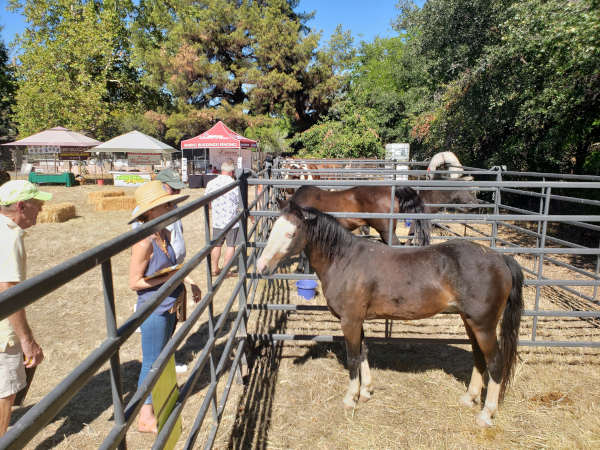
The Horse Faire also was part of this year’s festival, with horses and ponies getting their own corner of the event.
The day’s mood was upbeat, and visitors at the event and later on social media lauded organizers for putting on another great festival.
Email Elizabeth Larson at


- Details
- Written by: Lakeport Police Department

LAKEPORT, Calif. — The Lakeport Police Department is hosting the National Night Out Against Crime in Library Park on Tuesday, Oct. 4, from 4:30 to 7:30 p.m.
This is a community building partnership meant to bring police and other government agencies together under positive circumstances.
“Together we can reduce crime and build a stronger community,” the Lakeport Police Department said in a statement.
This event is being sponsored by local citizens and businesses and many of local partner agencies will be present with booths providing important public information and resources.
Those agencies include Health Services, Animal Care Services, Probation, Social Services, Service Dogs, Highway Patrol, school district and educational services, victim services, city services, Coast Guard Auxiliary, Family Resources, Main Street Association, Red Cross, community emergency response, Girl Scouts and senior services.
The Lakeport Kiwanis will be serving hot dogs, water, and movie theater popcorn. The Kelseyville Girl Scout Troop will be serving lemonade. There also will be snow cones.
There will be numerous games for children to play during the event as well as raffle prizes for both children and adults. The prizes will include gift certificates and merchandise from local businesses, new bicycles, fishing gear, housewares and sporting goods.
All adults and children attending will be given two general prize raffle tickets with opportunities to earn more by adults visiting all booths and completing a bingo card and by children for participating in games.
Children can also receive a free ice cream or doughnut card by meeting a police officer. Safety Pup, Chipper and McGruff the Crime Dog will also be interacting with the community. Face Painting by Chayo will be doing face painting for kids.
Everything at this event is free of charge.
The Lakeport Police Department invites the community to enjoy a fun evening, to get to know your neighbors and surroundings and build relationships with your local public service agencies.
Complete details including names of participating agencies and sponsors as well as prize details will be posted on the event’s Facebook page.
- Details
- Written by: Elizabeth Larson
Dogs available for adoption this week include mixes of Australian cattle dog, Doberman pinscher, Dogo Argentino, German shepherd, Great Pyrenees, hound, husky, pit bull, Rottweiler, shepherd and treeing walker coonhound.
Dogs that are adopted from Lake County Animal Care and Control are either neutered or spayed, microchipped and, if old enough, given a rabies shot and county license before being released to their new owner. License fees do not apply to residents of the cities of Lakeport or Clearlake.
The following dogs at the Lake County Animal Care and Control shelter have been cleared for adoption.
Call Lake County Animal Care and Control at 707-263-0278 or visit the shelter online for information on visiting or adopting.

‘Harley’
“Harley” is a 6-month-old female German Shepherd puppy with a black and tan coat.
She is in kennel No. 4, ID No. LCAC-A-4024.

Male border collie
This 2-year-old male border collie has a black and white coat.
He is in kennel No. 8, ID No. LCAC-A-3995.

Female treeing walker coonhound-Doberman pinscher puppy
This 2-month-old female treeing walker coonhound-Doberman pinscher has a short tan coat.
She is in kennel No. 16a, ID No. LCAC-A-3924.

Female treeing walker coonhound-Doberman pinscher puppy
This 2-month-old female treeing walker coonhound-Doberman pinscher has a short tan coat.
She is in kennel No. 16d, ID No. LCAC-A-3927.

Male treeing walker coonhound-Doberman pinscher puppy
This 2-month-old male treeing walker coonhound-Doberman pinscher has a short tricolor coat.
He is in kennel No. 17a, ID No. LCAC-A-3921.

Male treeing walker coonhound-Doberman pinscher puppy
This 2-month-old male treeing walker coonhound-Doberman pinscher has a short tan and white coat.
He is in kennel No. 17b, ID No. LCAC-A-3922.

Male Rottweiler-Australian cattle dog cross
This 5-year-old male Rottweiler-Australian cattle dog cross has a short tricolor coat.
He is in kennel No. 18, ID No. LCAC-A-3942.

Female treeing walker coonhound
This young female treeing walker coonhound has a short black brindle coat.
She is in kennel No. 22, ID No. LCAC-A-3776.

‘Tracy’
“Tracy” is a 2-year-old female Dogo Argentino with a short white coat.
She is in kennel No. 23, ID No. LCAC-A-3952.

Female German shepherd
This 1-year-old female German shepherd has a short black and tan coat.
She is in kennel No. 24, ID No. LCAC-A-3780.

Male German shepherd
This 2-year-old male German shepherd has a black and tan coat.
Shelter staff called him a “handsome sweet dude who is motivated by treats and does well walking on a leash.
He is in kennel No. 25, ID No. LCAC-A-3870.
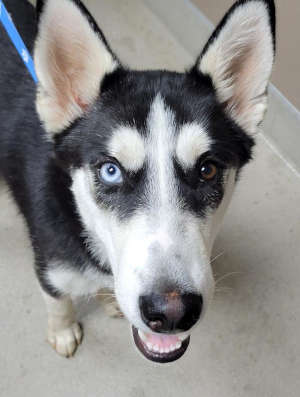
Female husky
This 1-year-old female husky has a cream and black coat.
She is in kennel No. 27, ID No. LCAC-A-3893.

‘Poppy’
“Poppy” is a 4-month-old female Great Pyrenees with a short white and gray coat.
She is in kennel No. 30, ID No. LCAC-A-3790.

Male German shepherd
This 1-year-old male German shepherd has a black and tan coat.
He is in kennel No. 31, ID No. LCAC-A-3930.
Email Elizabeth Larson at
- Details
- Written by: Gökçin Çınar, University of Michigan
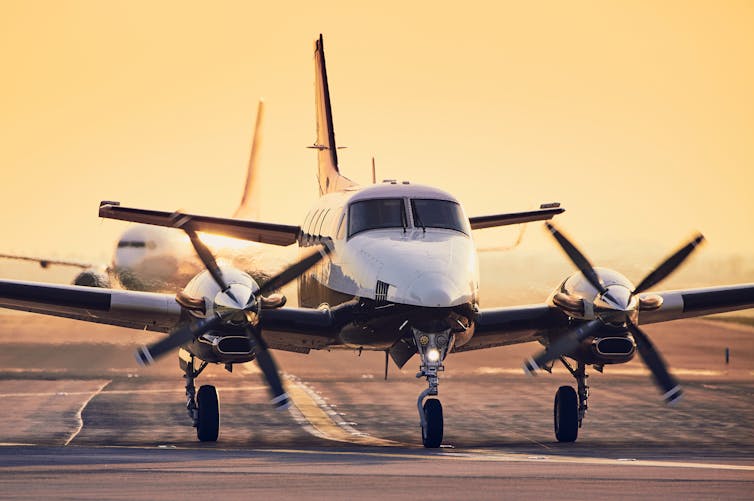
Electric planes might seem futuristic, but they aren’t that far off, at least for short hops.
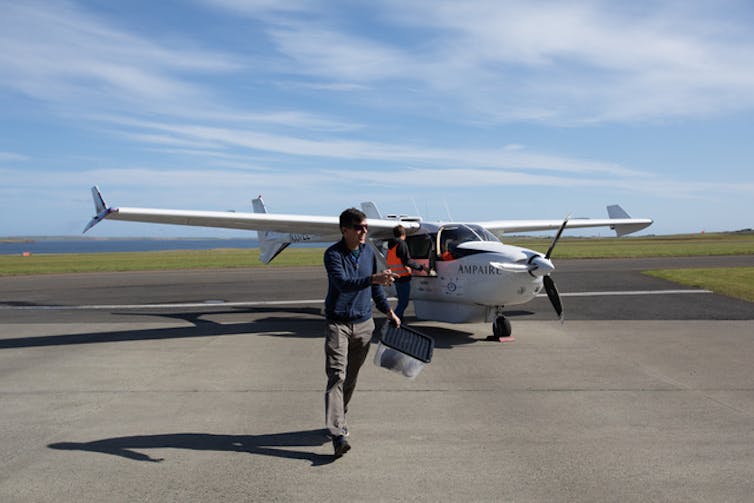
Two-seater Velis Electros are already quietly buzzing around Europe, electric sea planes are being tested in British Columbia, and larger planes are coming. Air Canada announced on Sept. 15, 2022, that it would buy 30 electric-hybrid regional aircraft from Sweden’s Heart Aerospace, which expects to have its 30-seat plane in service by 2028. Analysts at the U.S. National Renewable Energy Lab note that the first hybrid electric 50- to 70-seat commuter plane could be ready not long after that. In the 2030s, they say, electric aviation could really take off.
That matters for managing climate change. About 3% of global emissions come from aviation today, and with more passengers and flights expected as the population expands, aviation could be producing three to five times more carbon dioxide emissions by 2050 than it did before the COVID-19 pandemic.
Aerospace engineer and assistant professor Gökçin Çınar develops sustainable aviation concepts, including hybrid-electric planes and hydrogen fuel alternatives, at the University of Michigan. We asked her about the key ways to cut aviation emissions today and where technologies like electrification and hydrogen are headed.
Why is aviation so difficult to electrify?
Aircraft are some of the most complex vehicles out there, but the biggest problem for electrifying them is the battery weight.
If you tried to fully electrify a 737 with today’s batteries, you would have to take out all the passengers and cargo and fill that space with batteries just to fly for under an hour.
Jet fuel can hold about 50 times more energy compared to batteries per unit mass. So, you can have 1 pound of jet fuel or 50 pounds of batteries. To close that gap, we need to either make lithium-ion batteries lighter or develop new batteries that hold more energy. New batteries are being developed, but they aren’t yet ready for aircraft.

An electric alternative is hybrids.
Even though we might not be able to fully electrify a 737, we can get some fuel burn benefits from batteries in the larger jets by using hybrid propulsion systems. We are trying to make that happen in the short term, with a 2030-2035 target for smaller regional planes. The less fuel burned during flight, the fewer greenhouse gas emissions.
How does hybrid aviation work to cut emissions?
Hybrid electric aircraft are similar to hybrid electric cars in that they use a combination of batteries and aviation fuels. The problem is that no other industry has the weight limitations that we do in the aerospace industry.
That’s why we have to be very smart about how and how much we are hybridizing the propulsion system.
Using batteries as a power assist during takeoff and climb are very promising options. Taxiing to the runway using just electric power could also save a significant amount of fuel and reduce the local emissions at airports. There is a sweet spot between the added weight of the battery and how much electricity you can use to get net fuel benefits. This optimization problem is at the center of my research.
Hybrids would still burn fuel during flight, but it could be considerably less than just relying entirely on jet fuel.
I see hybridization as a mid-term option for larger jets, but a near-term solution for regional aircraft.
For 2030 to 2035, we’re focused on hybrid turboprops, typically regional aircraft with 50-80 passengers or used for freight. These hybrids could cut fuel use by about 10%.
With electric hybrids, airlines could also make more use of regional airports, reducing congestion and time larger planes spend idling on the runway.
What do you expect to see in the near term from sustainable aviation?
Shorter term we’ll see more use of sustainable aviation fuels, or SAF. With today’s engines, you can dump sustainable aviation fuel into the same fuel tank and burn it. Fuels made from corn, oilseeds, algae and other fats are already being used.
Sustainable aviation fuels can reduce an aircraft’s net carbon dioxide emissions by around 80%, but supply is limited, and using more biomass for fuel could compete with food production and lead to deforestation.
A second option is using synthetic sustainable aviation fuels, which involves capturing carbon from the air or other industrial processes and synthesizing it with hydrogen. But that’s a complex and costly process and does not have a high production scale yet.
Airlines can also optimize their operations in the short term, such as route planning to avoid flying nearly empty planes. That can also reduce emissions.
Is hydrogen an option for aviation?
Hydrogen fuel has been around a very long time, and when it’s green hydrogen – produced with water and electrolysis powered by renewable energy – it doesn’t produce carbon dioxide. It can also hold more energy per unit of mass than batteries.
There are two ways to use hydrogen in an airplane: either in place of regular jet fuel in an engine, or combined with oxygen to power hydrogen fuel cells, which then generate electricity to power the aircraft.
The problem is volume – hydrogen gas takes up a lot of space. That’s why engineers are looking at methods like keeping it very cool so it can be stored as liquid until it’s burned as a gas. It still takes up more space than jet fuel, and the storage tanks are heavy, so how to store, handle or distribute it on aircraft is still being worked out.
Airbus is doing a lot of research on hydrogen combustion using modified gas turbine engines with an A380 platform, and aiming to have mature technology by 2025. Australia’s Rex airline expects to start testing a 34-seat, hydrogen-electric airplane for short hops in the next few years.
Due to the variety of options, I see hydrogen as one of the key technologies for sustainable aviation.
Will these technologies be able to meet the aviation industry’s goals for reducing emissions?
The problem with aviation emissions isn’t their current levels – it’s the fear that their emissions will increase rapidly as demand increases. By 2050, we could see three to five times more carbon dioxide emissions from aviation than before the pandemic.
The International Civil Aviation Organization, a United Nations agency, generally defines the industry’s goals, looking at what’s feasible and how aviation can push the boundaries.
Its long-term goal is to cut net carbon dioxide emissions 50% by 2050 compared with 2005 levels. Getting there will require a mix of different technologies and optimization. I don’t know if we’re going to be able to reach it by 2050, but I believe we must do everything we can to make future aviation environmentally sustainable.
Gökçin Çınar, Assistant Professor of Aerospace Engineering, University of Michigan
This article is republished from The Conversation under a Creative Commons license. Read the original article.