 How to resolve AdBlock issue?
News
- Details
- Written by: Ramona L. Pérez, San Diego State University
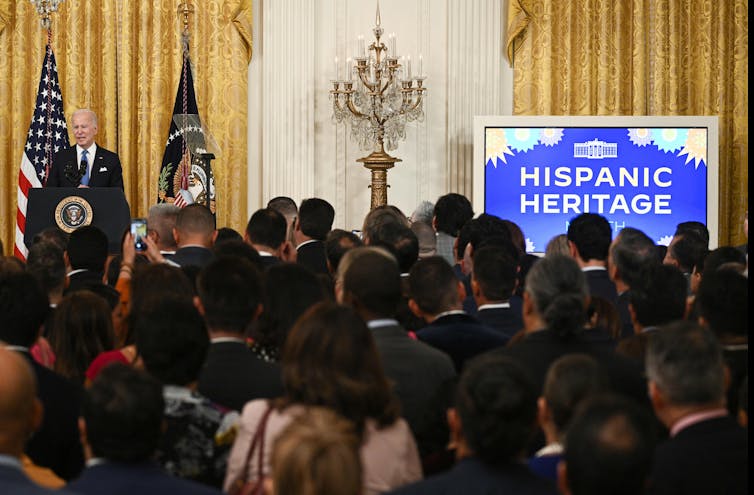
As I opened a recent email from my local grocery store chain advertising Hispanic Heritage Month – it runs from Sept. 15 to Oct. 15 each year – I was surprised to see it highlighting recipes from four distinct regions: Mexico, Central America, the Caribbean and South America.
The advertisement rightly noted that while corn and beans have framed much of what in the United States is considered “Hispanic” foods, Latin America has a much greater diversity of foods. Its cuisine, which began long before the Spanish or other colonizers came to the Americas, continues to flourish.
While many of us Latine – an alternative term for Latinos or Latinx that I prefer – embrace our European heritage, we also embrace our Indigenous and African heritage.
In recent decades, many Latin American nations have officially recognized their Indigenous and Afro-descendent populations as distinct groups with unique histories, cultures, foods and languages.
Countries across the Americas, including the United States, have revised their census questions to better understand their populations, enabling them to create more inclusive policies that actually address people’s needs – and to recognize the too-often hidden achievements of these groups.
Census changes in Latin America
Some Latin American countries, such as Peru, have counted their Indigenous population for over a century. But with the exception of Brazil and Cuba, Latin American countries generally excluded race on their national census, allowing economic and social inequalities to flourish undocumented.
The effort to better capture both Indigenous and Afro-descendant populations in Latin America began around the turn of the 21st century.
Uruguay, a small and prosperous South American country, long portrayed itself as white and European despite being home to Afro-Uruguayans descended from enslaved Africans. In 1996, under pressure from Afro-descendent activists, it added race to its national household survey. That census had census workers identify the respondents’ race and found the country to be 6% Afro-descended and revealed stunning racial disparities in education, income and employment. When in 2006 Uruguayan census-takers began asking residents to state their own racial identity, the Afro-descended population jumped to 10%. This data shift had important implications when Uruguay implemented race-based affirmative action a few years later.
In Mexico, where Indigenous identity had previously been linked only to speakers of one of the country’s 68 Indigenous languages, the census was changed in 2020 to ask if respondents self-identified as Indigenous or belonged to a community that identified as Indigenous. The result was an increase of 7.1 million people to 23.2 million who identified as Indigenous. The same change targeting the Afro-Mexican population identified a previously unrecognized population of 2.5 million.
‘Some other race’
The U.S. added a question about Hispanic descent to the 1970 census long form, and to the short form in 1980. The question asked, “Is this person of Hispanic/Spanish descent?” If the answer was Yes, these were following options: Mexican or Mexican-American or Chicano; Puerto Rican; Cuban; Other Spanish/Hispanic.
In subsequent decades, small changes were made such, as including the word “Latino” and allowing those who choose “other” in the national origin category to write in a response, with suggestions of “Argentinian, Colombian, Dominican, Salvadoran, Spaniard, and so on.” In 2020, the census allowed respondents to identify as “multiracial.”


The U.S. Census Bureau argues that its categories now adequately capture the heritage of the 62.6 million Hispanics that flourish in the U.S. “because all detailed Hispanic origin groups are included in the newly combined code list.”
In fact, however, if your heritage stems from one of the hundreds of Indigenous or Afro-descended groups in Latin America, these identities remain outside of the way the U.S. captures race among the Hispanic populations. That may explain why, according to the Census Bureau “the vast majority (94%) of responses to the race question that are classified as Some Other Race are from people of Hispanic or Latino origin.”
Overgeneralized and under-recognized
When the fixed categories of a census erase the diversity of a population, the gross miscalculations that result may harm a country’s ability to appropriately respond to the needs of its people.
For example, the overgeneralizing of U.S. Hispanics hurts the quality of American education and health care when these institutions assume that Latin American heritage communities speak Spanish. In addition to Indigenous languages, Latino Afro-descendant populations may not speak Spanish but rather may speak French or Haitian Creole, Portuguese or an Indigenous language. If they are from the Miskito Coast of Nicaragua, they may speak an English Creole.
These language differences reflect unique cultures and histories that relate to how people engage with doctors, teachers, politicians and much more.
Failing to recognize the diversity of Hispanics also creates frequent election surprises in the U.S. For example, pollsters got the Latino vote all wrong in 2020 by lumping together 32 million people with diverse political opinions and national origins as “Latino.” Democrats arguably made the same mistake in 2018.
In overgeneralizing Hispanics, the U.S may also overlook – to its own detriment – the knowledge and experience of a culturally unique people who bring with them alternative understandings of the world, some of which I’ve studied as an anthropologist focused on food security, migration and health in Latin America. These include agricultural practices that can aid American farmers in responding to the global climate crisis and Mesoamerican strategies for health based on communal care and traditional remedies.
A growing community with more to offer
Despite its limitations, U.S. census data clearly shows that the Hispanic population continues to grow. While the overall U.S. population increased 7% between 2010 and 2020, the Hispanic population expanded by 23%. Today, 1 in every 5 people in the U.S. identifies with Hispanic or Latino heritage.
This growth is particularly notable in the South – in states like Georgia and North Carolina – and in rural areas. The Hispanic population has become a demographic lifeline for parts of small-town America that experienced significant population loss in the late 20th century.
Hispanic communities have also reinvigorated urban neighborhoods as they open small businesses.
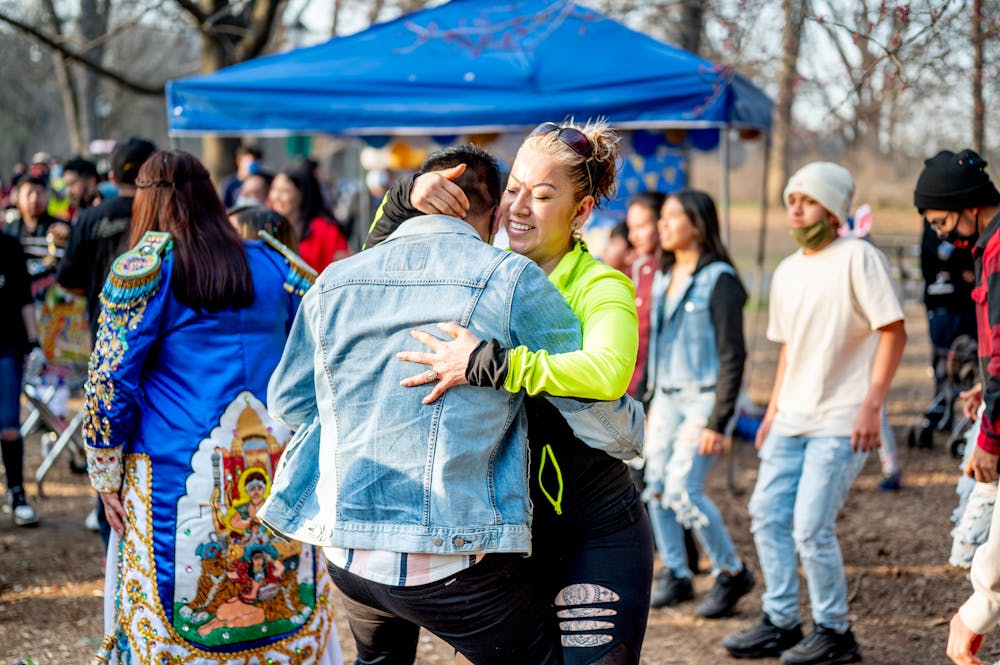
Rebuilding cities, stabilizing rural counties, expanding local economies – these are among the group contributions made by the community of Americans celebrated each year during Hispanic Heritage Month.
The better we understand the nuances of this large population, the better we will understand who we are as a nation – and benefit more fully from our diversity.
Ramona L. Pérez, Professor of Anthropology, San Diego State University
This article is republished from The Conversation under a Creative Commons license. Read the original article.
- Details
- Written by: Elizabeth Larson
The City of Clearlake Animal Association also is seeking fosters for the animals waiting to be adopted.
Call the Clearlake Animal Control shelter at 707-273-9440, or email
Visit Clearlake Animal Control on Facebook or on the city’s website.
The following dogs are available for adoption. New additions are at the top.
‘Aoki’
“Aoki” is a male Siberian husky mix with a white coat.
He has been neutered.
He is dog No. 50905477.

‘Baby’
“Baby” is a female American pit bull mix with a white coat.
She has been spayed.
She is dog No. 50933640.

‘Eros’
“Eros” is a male Rottweiler mix with a short black and tan coat.
He has been neutered.
He is dog No. 50754504.

‘Goliath’
“Goliah” is a male Rottweiler mix with a short black and tan coat.
He is dog No. 50754509.

‘Little Boy’
“Little Boy” is a male American pit bull terrier mix with a short tan coat.
He has been neutered.
He is dog No. 50075256.

‘Maya’
“Maya” is a female German shepherd with a black and tan coat.
She has been spayed.
She is dog No. 50428151.
‘Zeda’
“Zeda” is a female Labrador retriever mix.
She has been spayed.
She is dog No. 51108916.

‘Andy’
“Andy” is a male American pit bull mix with a short gray and white coat.
He is dog No. 48995415.

‘Babs’
“Babs” is a female Labrador retriever mix with a short black coat.
She has been spayed.
She is dog No. 49505856.

‘Bear’
“Bear” is a male Labrador retriever-American pit bull mix with a short charcoal and fawn coat.
He has been neutered.
He is dog No. 48443153.

‘Big Phil’
“Big Phil” is a 13-year-old male American pit bull terrier mix with a blue coat.
He has been neutered.
He is dog No. 49951647.

‘Buster’
“Buster” is a male pit bull mix with a short tan coat.
He has been neutered.
He is dog No. 50762164.

‘Foxie’
“Foxie” is a female German shepherd with a red, black and white coat.
She has been spayed.
She is dog No. 49702845.

‘Hakuna’
“Hakuna” is a male shepherd mix with a tan coat.
He has been neutered.
He is dog No. 50176912.

‘Hondo’
“Hondo” is a male Alaskan husky mix with a buff coat.
He has been neutered.
He’s dog No. 50227693.

‘Keilani’
“Keilani” is a 3-year-old female German shepherd mix with a black and tan coat.
She has been spayed and she is house trained.
She is dog No. 50427566.

‘Luciano’
“Luciano” is a male Siberian husky mix with a short black and white coat.
He has been neutered.
He is dog No. 50596272.

‘Mamba’
“Mamba” is a male Siberian husky mix with a gray and cream-colored coat.
He has been neutered.
He is dog No. 49520569.

‘Matata’
“Matata” is male shepherd mix with a tan coat.
He has been neutered.
He is dog No. 50176912.

‘Mikey’
“Mikey” is a male German shepherd mix with a short brown and tan coat.
He has been neutered.
He is dog No. 51012855.

‘Sadie’
“Sadie” is a female German shepherd mix with a black and tan coat.
She has been spayed.
She is dog No. 49802563.

‘Snowball’
“Snowball is a 1 and a half year old male American Staffordshire terrier mix with a short white coat.
He has been neutered.
He is dog No. 49159168.

‘Terry’
“Terry” is a handsome male shepherd mix with a short brindle coat.
He gets along with other dogs, including small ones, and enjoys toys. He also likes water, playing fetch and keep away.
Staff said he is now getting some training to help him build confidence.
He is dog No. 48443693.

‘Willie’
“Willie” is a male German shepherd mix with a black and tan coat.
He has been neutered.
He is dog No. 50596003.
Email Elizabeth Larson at
- Details
- Written by: DENNIS FORDHAM

Marriage confers important rights and obligations on spouses. One of the rights is that of the surviving spouse’s rights in the deceased spouse’s estate.
In California, couples prior to marriage and during marriage can agree that the surviving spouse waive certain inheritance rights in a deceased spouse’s estate (Probate Code sections 141-147).
Upon divorce, a surviving ex-spouse is presumed by California law to have predeceased the former spouse for purposes of inheritance rights.
A waiver in advance of a spouse’s death of surviving spouse’s rights in the deceased spouse’s estate could be agreed-upon by married persons who are dissolving their marriage or who are in (or going into) second marriages and want to protect their own children’s inheritances.
Section 141 of the Probate Code states ten different ten important rights in the deceased spouse’s estate that a surviving spouse may waive, either in whole or in part.
Such spousal rights include the important right to inherit as an heir by intestate succession (if the deceased spouse had no will); the right to inherit as a beneficiary under the deceased spouse’s will executed before the waiver; the right to reside in a probate homestead; the right to a Family allowance for the surviving spouse to live; the right to take the statutory share of an omitted spouse when the deceased spouse’s will does not acknowledge the surviving spouse; and the right to be appointed as the personal representative of the decedent’s estate.
To be valid the waiver must be in writing and be signed by the surviving spouse. The waiver can either be created by an express waiver of “all rights” (such as in a pre or post marital agreement) or by a complete property settlement entered into after or in anticipation of separation or dissolution or annulment of marriage (section 145 Probate Code).
In Brendon Welch, et. al., v. Freeman H. Welch (Second Appellate District, B311507) the court enforced a waiver in marital property agreement that was reached in a mediation conference within a dissolution court proceeding.
Before the court ordered distribution of the property, the family court lost its jurisdiction when the wife died. However, the probate court found that because there was a complete settlement in anticipation of dissolution of marriage the spousal waiver in the agreement was enforceable.
A signed waiver is enforceable against the surviving spouse if the surviving spouse both received fair and reasonable disclosure of the property and financial obligations of the deceased spouse (unless waived after advice of the surviving spouse’s independent counsel) and the surviving spouse was represented by independent counsel. This is to be completely fair to the surviving spouse.
An otherwise unenforceable waiver may sometimes still be enforceable at the discretion of a court. That is, if the court finds that the waiver was fair and reasonable to the surviving spouse’s rights at the time it was signed. Or, if the court finds that the surviving spouse knew (or reasonably should have known) about the property and financial obligations of the deceased spouse; provided, however, that the deceased spouse did not violate his or her spousal duty of the utmost fair dealing with the surviving spouse.
Still, a court in exercising its discretion whether to enforce a waiver, under the exception, must also consider all relevant facts and circumstances surrounding the original signing of the waiver and determine if it would be unconscionable at time of its enforcement.
If it would now be unconscionable at time of enforcement then the court has the following options: Not to the enforce the waiver; not to enforce the unconscionable part of the surviving spouse’s waiver; or partially not enforce the unconscionable part and so avoid the unconscionable result.
The foregoing discussion shows how estate planning and family law intersect at the planning crossroads regarding the surviving spouse’s rights in the deceased spouse’s estate.
The foregoing discussion is not legal advice. Consult a qualified attorney if engaged in such planning.
Dennis A. Fordham, attorney, is a State Bar-Certified Specialist in estate planning, probate and trust law. His office is at 870 S. Main St., Lakeport, Calif. He can be reached at
- Details
- Written by: Preston Dyches
What's up for October? Evenings with giants, Mars changes course, and meteors from Orion.
Giant planets Jupiter and Saturn are visible throughout the night in October. Early in the evening, you'll find them to the southeast, moving slowly westward with the stars over the course of the night. They form a triangle with bright star Fomalhaut.
When observing this trio, note how the planets shine with a steady light, while the star twinkles. This can be an easy way to know if what you're looking at is a planet or a star.
Mars has been steadily working its way toward the east all year like it usually does, relative to the background stars. But at the end of October, Mars halts this apparent motion, and then appears to reverse course.
Over the next three months, from November to late January, Mars moves toward the west each night. Then near the end of January, it reverses direction again, and continues its eastward journey.
This is what's called the retrograde motion of Mars. It happens about every two years, and it really threw early observers for a loop. That Mars appears to change its direction is an illusion caused by the motions of our planet in its orbit passing by the Red Planet in its orbit.
See, Earth and Mars are on these roughly circular paths around the Sun, like cars on a racetrack, and Earth is on the inner, faster track. About every 26 months, we overtake Mars, which is moving slower in its orbit.
During that period when we're passing Mars, and before we round the bend in our orbit to pull away from it, we see Mars in retrograde, appearing to change direction, even though it's still moving forward in its orbit.
So take note of Mars over the next few months, as it appears to reverse course. Note how its position changes with respect to Betelgeuse, Aldebaran and the Pleiades over the weeks, and you'll be witnessing what was once a source of intense curiosity for astronomers, but which we now know is just a sign of two planets passing in the night.
The Orionid meteor shower is active throughout October and November, and peaks on the night of Oct. 20. It's a moderate shower, usually producing 10-20 meteors per hour at its peak, under clear, dark skies. This year, the Moon will be about 20% full on the peak nights. So it will interfere a bit when it rises a couple of hours before dawn, but shouldn't totally spoil the viewing.
The shower's name comes from the fact that you can trace the paths of its meteors back to an area on the sky near Orion. These meteors are fragments of dust left behind by Comet Halley in a trail that extends along its orbit. They tend to be bright and fast moving, and they often leave persistent trails that can glow in the sky for a few seconds after they streak by.
No special equipment is needed to observe meteor showers. Just make sure you're warm enough, and viewing from a safe, dark spot away from bright lights. Then all you have to do is look up and enjoy the show.
Preston Dyches works for NASA's Jet Propulsion Laboratory.