 How to resolve AdBlock issue?
News
- Details
- Written by: LAKE COUNTY NEWS REPORTS
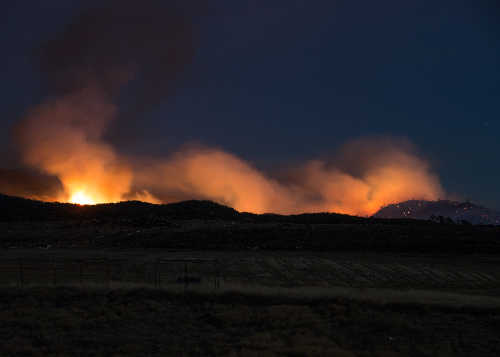
LAKE COUNTY, Calif. — Pointing to damaging arson fires in Lake County and other parts of the state, Senate Majority Leader Mike McGuire has introduced a new bill to give prosecutors the ability to pursue tougher sentences for cases of aggravated arson.
On Wednesday, McGuire introduced Senate Bill 281.
In a statement on the bill, McGuire’s office noted, “The alarm couldn’t be louder. Our state is facing unprecedented, destructive wildfires — 14 of the largest 20 wildfires in California history have occurred just in the last decade.”
McGuire said megafires have threatened the way of life for millions of Californians. Some of these horribly destructive wildfires have been set by arsonists.
That’s why he announced the introduction of SB 281, which is meant to extend California's law that throws the book at individuals who are convicted of aggravated arson.
This is an issue that McGuire has championed for years, because some of California’s most destructive wildfires and commercial fires have been started by arsonists.
Among those fires was the 2016 Clayton fire that burned tens of thousands of acres near Lower Lake and destroyed 300 structures, including 189 homes. In September 2019, Clearlake resident Damin Anthony Pashilk was sentenced to more than 15 years in state prison for setting that fire.
McGuire also pointed to the July 2021 fire set by Clearlake Oaks resident Tori Elizabeth Brannon that destroyed or damaged 11 buildings in Clearlake Oaks.
Other arson fires McGuire referenced were the massive five-alarm fire that destroyed a Home Depot in San Jose, causing more than $17 million in damages and the Hopkins fire in Mendocino County that destroyed 30 homes and burned 257 acres.
“An aggravated arson charge is reserved for the worst of the worst — the most heinous arsonists who exhibit specific intent to inflict damage and destruction in our communities or who are a continuing threat to society. We need to ensure this groundbreaking public safety law remains in place and we’ll be fighting to get this bill passed working alongside first responders and district attorneys from across the Golden State,” McGuire said.
There are three possible ways to be convicted of aggravated arson: Any prior arson convictions within the last 10 years; damage or destruction of five or more inhabited structures; or damage and other losses and fire suppression costs in excess of $8.3 million.
“This legislation will provide district attorneys across California with the tools needed to properly punish repeat criminals who wreak havoc in our communities through death and destruction,” said Sonoma County District Attorney Carla Rodriguez. “Aggravated arson affects the well-being of all Californians and should be addressed accordingly. We look forward to working with Sen. McGuire to see SB 281 across the finish line."
- Details
- Written by: LAKE COUNTY NEWS REPORTS
NORTHERN CALIFORNIA — The impact of the series of atmospheric rivers that hit California in late December and early January is showing up in the state’s strong snowpack.
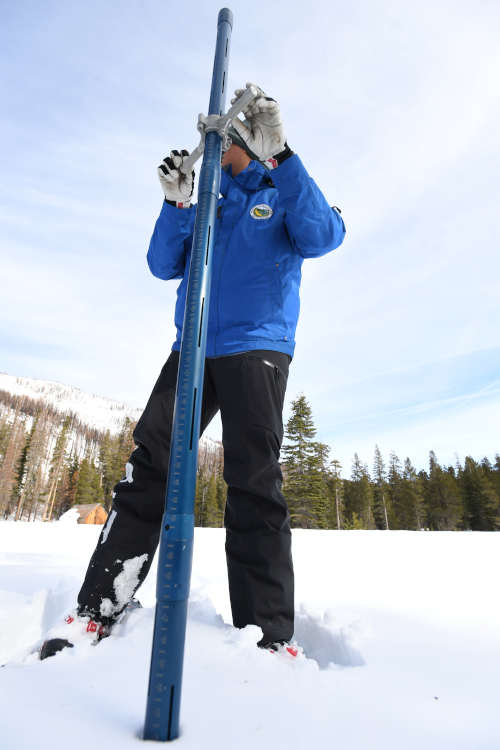
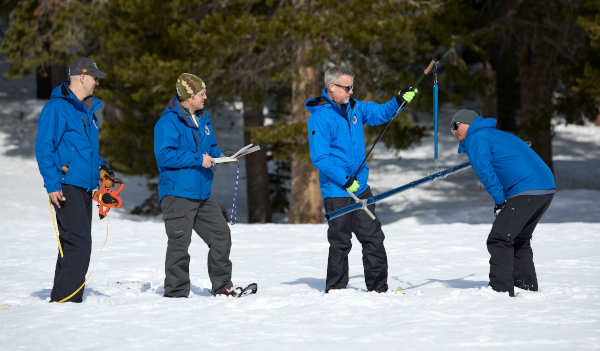
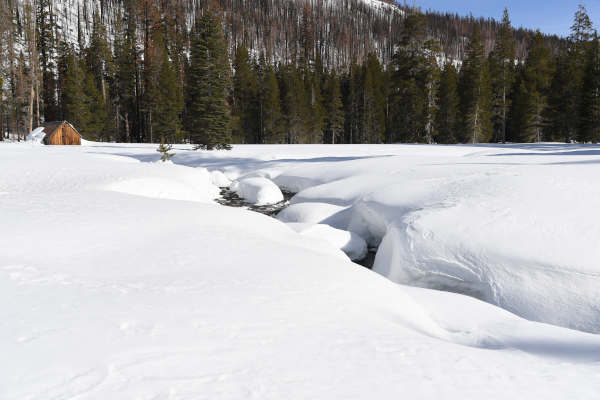
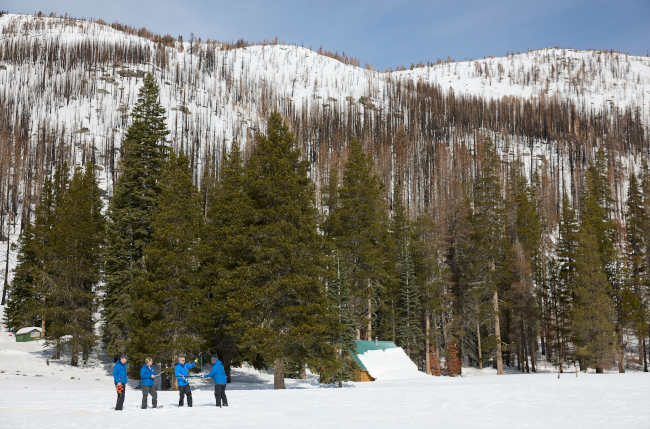
The Department of Water Resources, or DWR, on Wednesday conducted the second snow survey of the season at Phillips Station.
The manual survey recorded 85.5 inches of snow depth and a snow water equivalent of 33.5 inches, which is 193% of average for this location on Feb. 1.
The snow water equivalent measures the amount of water contained in the snowpack and is a key component of DWR’s water supply forecast.
Statewide, the snowpack is 205% of average for this date.
Two months remain until April 1, when the state snowpack usually peaks.
The snowpack received a significant boost from one of the wettest three-week periods on record in California, following the driest three-year period on record.
California also experienced above-average precipitation in December just months after one of the hottest heat waves in state history in September.
“California has always experienced some degree of swings between wet and dry, but the past few months have demonstrated how much more extreme those swings are becoming,” said DWR Director Karla Nemeth on Wednesday. “California is preparing for more intense and dangerous climate swings by bolstering both drought and flood preparation. While today’s results are good news for water supplies, we know from experience how quickly snowpack can disappear if dry conditions return in the months ahead.”
DWR’s electronic readings from 130 snow sensors placed throughout the state indicate the statewide snowpack’s snow water equivalent is 33.7 inches, or 205% of average for this date.
While those results are currently outpacing the record 1982-83 season, two months still remain.
Every day it does not rain or snow, the conditions are drying. If California returns to dry conditions and the next two months lack additional precipitation, like what the state experienced last season, a significant snowpack early in the winter can quickly disappear.
Periodic rain and snow over the next several months will be key to get the biggest water supply benefit from the state’s snowpack without posing additional flood risks.
“Large snow totals like today are a welcome sight but also present new challenges for water managers as they walk the fine line between water supply and flood control,” said DWR’s Snow Surveys and Water Supply Forecasting Unit Manager Sean de Guzman. “As we move into the snowmelt season in the spring, water managers will work to manage flood risk and optimize the snowpack’s water supply benefits during peak demands in the summer.”
On average, the Sierra snowpack supplies about 30% of California’s water needs and is an important factor in determining how DWR manages the state’s water resources.
Its natural ability to store water is why the Sierra snowpack is often referred to as California's “frozen reservoir.”
DWR is currently conducting Airborne Snow Observatory, or ASO, survey flights to collect more information on the snowpack accumulated by these powerful storms.
Data from these flights, which use LiDAR and spectrometer technology to measure snowpack across broad swathes of key watersheds, will be used by DWR to get an accurate account of California’s snowpack and its water content and will increase the accuracy of water supply runoff forecasts.
Since the storms California experienced in January saw variable snow elevations, this data, combined with snow course and snow sensor data, will help DWR understand how snow has been distributed across the Sierra Nevada.
These new data tools align with Gov. Gavin Newsom’s “California’s Water Supply Strategy: Adapting to a Hotter, Drier Future” which calls for modernizing how the state manages water.
The tools will also help inform flood management decisions, which will be increasingly important as California swings between extreme drought and flood.
The recently adopted 2022 Update to the Central Valley Flood Protection Plan emphasizes the importance of flood management and the need to adapt California’s flood infrastructure to a rapidly changing climate.
As the state prepares for a hotter, drier future, Californians should continue to use water wisely so that we can have both a thriving economy, community, and environment.
DWR encourages Californians to visit SaveOurWater.com for water saving tips and information.
As more swings between wet and dry conditions continue in the future, the public education campaign promotes making water conservation a way of life year-round.
DWR conducts five media-oriented snow surveys at Phillips Station each winter near the first of each month, January through April and, if necessary, May.
The next survey is tentatively scheduled for March 1.
- Details
- Written by: LAKE COUNTY NEWS REPORTS
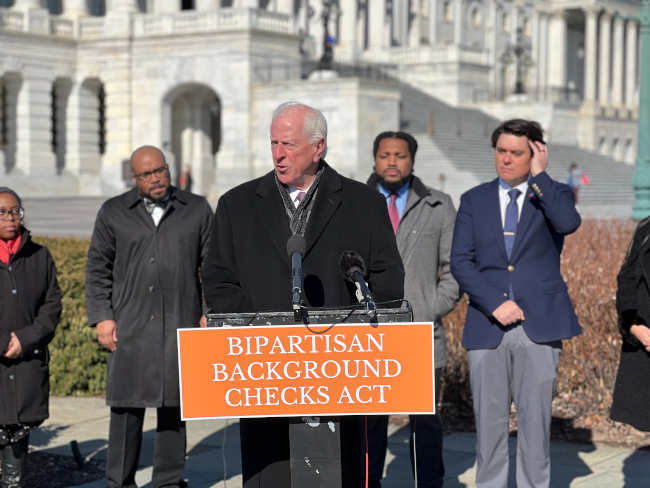
On Wednesday, Chairman of the House Gun Violence Prevention Task Force Rep. Mike Thompson (D-CA-04) and Rep. Brian Fitzpatrick (R-PA-01) reintroduced the Bipartisan Background Checks Act (formerly known as H.R. 8).
“Last year, we passed the most significant gun violence prevention legislation in three decades in the wake of the tragedy in Uvalde, Texas. The Bipartisan Safer Communities Act will help save lives and is a strong step in the right direction — but we know it’s just the first step,” said Thompson.
“The Bipartisan Background Checks Act is common sense gun violence prevention legislation that will do the most important thing gun violence prevention legislation can do: save lives. By keeping weapons out of the hands of dangerous individuals, we can help keep our communities safe and reduce the threat of gun violence. I am incredibly proud to work with Rep. Brian Fitzpatrick who has been a tremendous partner on this legislation, and I look forward to a continued partnership to secure passage of this bill and deliver reforms that the majority of Americans support,” Thompson said.
“Our communities will be safer with the expansion of background checks for firearm sales under this bill,” said Fitzpatrick. “Background checks are a simple preventive measure that are proven to help our law enforcement keep guns out of the hands of criminals. This bipartisan legislation will prevent felons, domestic abusers, and dangerously mentally ill citizens from obtaining a firearm, while protecting the constitutional rights of law-abiding Americans. I’m proud to support these common-sense reforms.”
“Background checks are the foundation of any common-sense approach to preventing gun violence, which is why more than 90 percent of Americans support them,” said John Feinblatt, president of Everytown for Gun Safety. “Everytown applauds this bipartisan group of lawmakers for championing a crucial and common-sense step to keep guns out of dangerous hands.”
Former Congresswoman Gabrielle Giffords said, “Universal background checks will save lives and the majority of Americans support this important, foundational legislation. I applaud Representatives Brian Fitzpatrick and Mike Thompson for demonstrating the courage to act by introducing this vital bill. Earlier this month, the CDC released new data showing that more Americans than ever are dying from gun violence: in 2021, nearly 50,000 lives were lost. We urge the House to do the right thing and take up the Bipartisan Background Checks Act of 2023.”
“The Brady Background Checks system, established over 25 years ago, has prevented over four million prohibited gun purchases and has saved countless lives, but there is still much work to be done. Today, approximately 1 in every 5 gun sales is completed without a background check. The passage of this legislation would expand background checks to virtually all firearm purchases, ensuring that guns are kept out of the dangerous hands of prohibited buyers. We urge the full Congress to pass this lifesaving legislation as quickly as possible and send it to President Biden’s desk for signature. The time is now to take action on gun violence and make our communities safer, and we will continue to fight for common sense solutions to end this epidemic,” said Kris Brown, president of Brady.
The majority of the American public has supported laws requiring background checks on all firearm purchases, with polling data consistently showing that more than 90% of both gun owners and non-gun owners support this provision, including 72% of members of the National Rifle Association.
Chairman Thompson has introduced background check legislation every Congress since the 2012 Sandy Hook Elementary shooting which killed 20 children and six adult staff members.
The Bipartisan Background Checks Act was first introduced in the 116th Congress by Rep. Thompson and was passed in the House by a vote of 240-190, and again passed in the 117th Congress and passed the House by a vote of 227-203.
The bill languished in the Senate due to the filibuster.
Thompson represents California’s Fourth Congressional District, which includes all or part of Lake, Napa, Solano, Sonoma and Yolo counties. He is a senior member of the House Committee on Ways and Means. Rep. Thompson is Chairman of the House Gun Violence Prevention Task Force. He is also co-chair of the bipartisan, bicameral Congressional Wine Caucus and a member of the fiscally-conservative Blue Dog Coalition.
- Details
- Written by: Stephan Weiler, Colorado State University and Tessa Conroy, University of Wisconsin-Madison
When the Federal Reserve convenes at the end of January 2023 to set interest rates, it will be guided by one key bit of data: the U.S. inflation rate. The problem is, that stat ignores a sizable chunk of the country – rural America.
Currently sitting at 6.5%, the rate of inflation is still high, even though it has fallen back slightly from the end of 2022.
The overall inflation rate, along with core inflation – which strips out highly volatile food and energy costs – is seen as key to knowing whether the economy is heating up too fast, and guided the Fed as it imposed several large 0.75 percentage point interest rate increases in 2022. The hope is that raising the benchmark rate, which in turn increases the costs of taking out a bank loan or mortgage, for example, will help reduce inflation back to the Fed target of around 2%.
But the main indicator of inflation, the consumer price index, is compiled by looking at the changes in price specifically urban Americans pay for a set basket of goods. Those living in rural America are not surveyed.
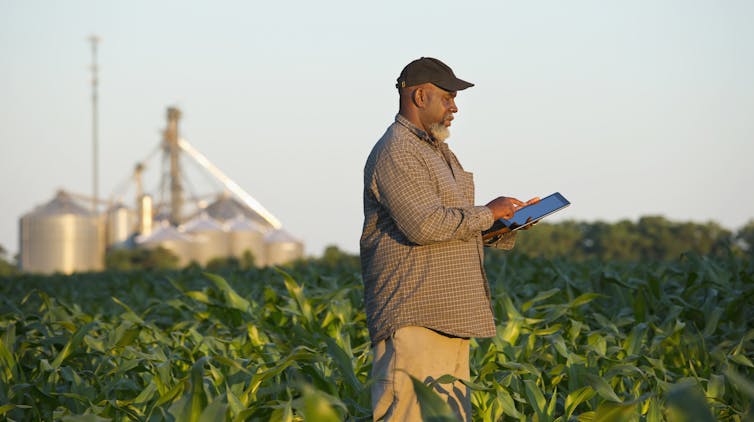
As economists who study rural America, we believe this poses a problem: People living outside America’s cities represent 14% of the U.S. population, or around 46 million people. They are likely to face different financial pressures and have different consumption habits than urbanites.
The fact that the Bureau of Labor Statistics surveys only urban populations for the consumer price index makes assessing rural inflation much more difficult – it may even be masking a rural-urban inflation gap.
To assess if such a gap exists, one needs to turn to other pricing data and qualitative analyses to build a picture of price growth in nonurban areas. We did this by focusing on four critical goods and services in which rural and urban price effects may be significantly different. What we found was rural areas may indeed be suffering more from inflation than urban areas, creating an underappreciated gap.
1. The cost of running a car in the country
Higher costs related to cars and gas can contribute to a urban-rural inflation gap, severely eating into any discretionary income for families outside urban areas, a 2022 report found.
This is likely related to there being considerable differences in vehicle purchases, ownership and lengths of commutes between urban and rural Americans.
Car ownership is integral to rural life, essential for getting from place to place, whereas urban residents can more easily choose cheaper options like public transit, walking or bicycling. This has several implications for expenses in rural areas.
Rural residents spend more on car purchases out of necessity. They are also more likely to own a used car. During the first year of the COVID-19 pandemic, there was a huge increase in used car prices as a result of a lack of new vehicles due to supply chain constraints. These price increases likely affected remote areas disproportionately.
Rural Americans tend to drive farther as part of their day-to-day activities. Because of greater levels of isolation, rural workers are often required to make longer commutes and drive farther for child care, with the proportion of those traveling 50 miles (80 kilometers) or more for work having increased over the past few years. In upper Midwest states as of 2018, nearly 25% of workers in the most remote rural counties commute 50 miles (80 kilometers) or more, compared with just over 10% or workers in urban counties.
Longer journeys mean cars and trucks will wear out more quickly. As a result, rural residents have to devote more money to repairing and replacing cars and trucks – so any jump in automotive inflation will hit them harder.
Though fuel costs can be volatile, periods of high energy prices – such as the one the U.S. experienced through much of 2022 – are likely to disproportionately affect rural residents given the necessity and greater distances of driving. Anecdotal evidence also suggests gas prices can be higher in rural communities than in urban areas.
2. Rising cost of eating at home – and traveling for groceries
As eating away from home becomes more expensive, many households may choose to eat in more often to cut costs. But rural residents already spend a larger amount on eating at home – likely due in part to the slimmer choices available for eating out.
This means they have less flexibility as food costs rise, particularly when it comes to essential grocery items for home preparation. And with the annual inflation of the price of groceries outpacing the cost eating out – 11.8% versus 8.3% – dining at home becomes comparably more expensive.
Rural Americans also do more driving to get groceries – the median rural household travels 3.11 miles (5 kilometers) to go to the nearest grocery store, compared with 0.69 miles (1.1 kilometers) for city dwellers. This creates higher costs to feed a rural family and again more vehicle depreciation.
Rural grocery stores are also dwindling in number, with dollar stores taking their place. As a result, fresh food in particular can be scarce and expensive, which leads to a more limited and unhealthy diet. And with food-at-home prices rising faster than prices at restaurants, the tendency of rural residents to eat more at home will see their costs rising faster.
3. The cost of growing old and ill outside cities
Demographically, rural counties trend older – part of the effect of younger residents migrating to cities and college towns for either work or educational reasons. And older people spend more on health insurance and medical services. Medical services overall have been rising in cost too, so those older populations will be spending more for vital doctors visits.
Again with health, any increase in gas prices will disproportionately hit rural communities more because of the extra travel needed to get even primary care. On average, rural Americans travel 5 more miles (8 kilometers) to get to the nearest hospital than those living in cities. And specialists may be hundreds of miles away.
4. Cheaper home costs, but heating and cooling can be expensive
Rural Americans aren’t always the losers when it comes to the inflation gap. One item in rural areas that favors them is housing.
Outside cities, housing costs are generally lower, because of more limited demand. More rural Americans own their homes than city dwellers. Since owning a home is generally cheaper than renting during a time of rising housing costs, this helps insulate homeowners from inflation, especially as housing prices soared in 2021.
But even renters in rural America spend proportionately less. With housing making up around a third of the consumer price index, these cost advantages work in favor of rural residents.
However, poorer-quality housing leaves rural homeowners and renters vulnerable to rising heating and cooling costs, as well as additional maintenance costs.
Inflation – a disproportionate burden
While there is no conclusive official quantitative data that shows an urban-rural inflation gap, a review of rural life and consumption habits suggests that rural Americans suffer more as the cost of living goes up.
Indeed, rural inflation may be more pernicious than urban inflation, with price increases likely lingering longer than in cities.
Stephan Weiler, Professor of Economics, Colorado State University and Tessa Conroy, Economic Development Specialist, University of Wisconsin-Madison
This article is republished from The Conversation under a Creative Commons license. Read the original article.