 How to resolve AdBlock issue?
News
- Details
- Written by: NATIONAL OCEANIC AND ATMOSPHERIC ADMINISTRATION
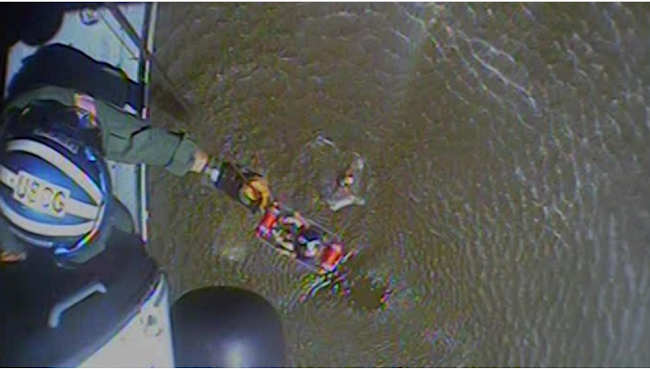
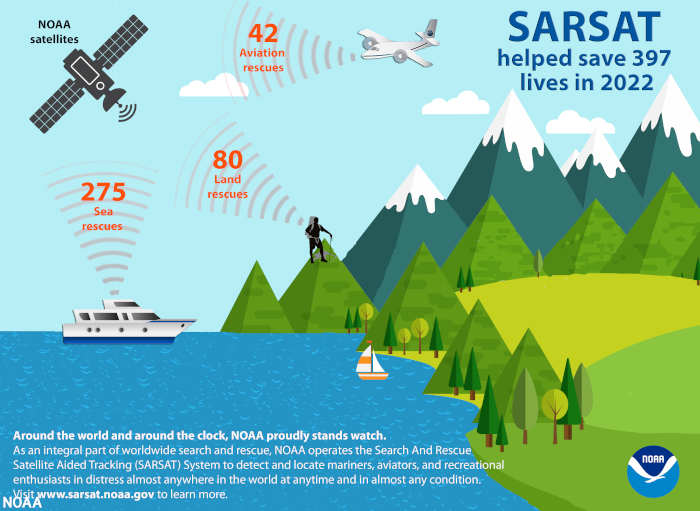
NOAA satellites, which are crucial in weather and climate forecasts, helped rescue 397 people from potentially life-threatening situations throughout the U.S. and its surrounding waters in 2022.
NOAA’s polar-orbiting and geostationary satellites are part of the global Search and Rescue Satellite Aided Tracking system, or COSPAS-SARSAT, which uses a network of U.S. and international spacecraft to detect and locate distress signals sent from emergency beacons from aircraft, boats and handheld personal locator beacons, or PLBs, anywhere in the world.
Of the 397 U.S. rescues last year, 275 were water rescues, 42 were from downed aircraft and 80 were on land involving PLBs. Florida had the most SARSAT rescues with 106, followed by Alaska with 56 and Utah with 20.
Since its start in 1982, COSPAS-SARSAT has been credited with supporting more than 50,000 rescues worldwide, including more than 10,100 in the U.S. and its surrounding waters.
When a NOAA satellite pinpoints the location of a distress signal in the U.S., the information is relayed to the SARSAT Mission Control Center at NOAA’s Satellite Operations Facility in Suitland, Maryland. From there, the information is sent quickly to Rescue Coordination Centers, operated either by the U.S. Air Force for land rescues, or the U.S. Coast Guard for water rescues. NOAA also supports rescues globally by relaying distress signal information to international SARSAT partners.
“The value of NOAA satellites goes well beyond forecasting,” said Steve Volz, Ph.D., assistant administrator for NOAA’s Satellite and Information Service. "The life-saving ability of SARSAT is a credit to the teamwork with the U.S. Coast Guard, the U.S. Air Force NASA and our international partners.”
Here’s a look at three of the most notable events from 2022:
• On June 10, a group of 17 hikers were hoisted to safety after they were stranded on a ridge in Sandthrax Canyon, Utah. The Air Force Rescue Coordination Center received the alert from a PLB and notified the Garfield County Sheriff’s Office, which launched a Utah Department of Public Safety helicopter to the coordinates where the distressed hikers were located.
• On Nov. 20, seven people were rescued from a commercial plane after it was forced to land on a frozen lake near Bethel, Alaska, as a result of engine failure. The Alaska Rescue Coordination Center, which obtained the coordinates of the downed plane, alerted another aircraft company, which made the rescue.
• On Aug. 5, a U.S. Coast Guard helicopter pulled a sailor to safety from his capsized boat off the coast of New Smyrna Beach, Florida. The sailor grabbed the life raft and activated his beacon before his boat sank.
By law, beacon owners are required to register their devices online with NOAA. Registration information helps provide better and faster assistance to people in distress, reduces false alarms and may also indicate what type of help is needed.
“In keeping with its mission, the SARSAT Program truly takes the ‘search’ out of search and rescue,” Volz added.
- Details
- Written by: Elizabeth Larson
Dogs available for adoption this week include mixes of Akita, American blue heeler, German shepherd, hound, husky, Labrador retriever, pit bull, shepherd and terrier.
Dogs that are adopted from Lake County Animal Care and Control are either neutered or spayed, microchipped and, if old enough, given a rabies shot and county license before being released to their new owner. License fees do not apply to residents of the cities of Lakeport or Clearlake.
The following dogs at the Lake County Animal Care and Control shelter have been cleared for adoption.
Call Lake County Animal Care and Control at 707-263-0278 or visit the shelter online for information on visiting or adopting.
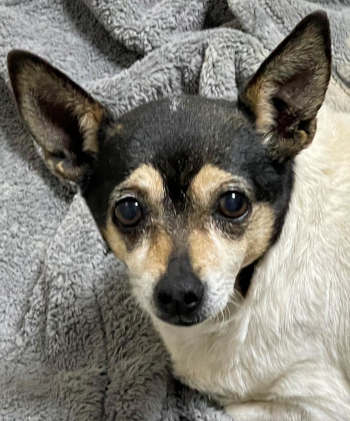
‘Boopie’
“Boopie” is a 12-year-old female Chihuahua-terrier mix with a short tricolor coat.
She is in kennel No. 18a, ID No. LCAC-A-4643.
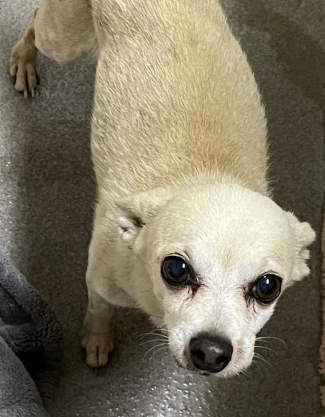
‘Jay’
“Jay” is a 12-year-old male Chihuahua-terrier with a short white coat.
He is in kennel No. 18b, ID No. LCAC-A-4644.
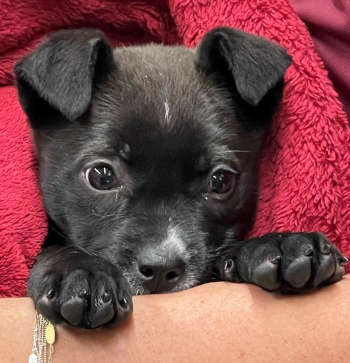
Lab-pit bull mix puppy
This female Labrador retriever-pit bull mix puppy has a short black coat with white markings.
She is in kennel No. 2, ID No. LCAC-A-4451.
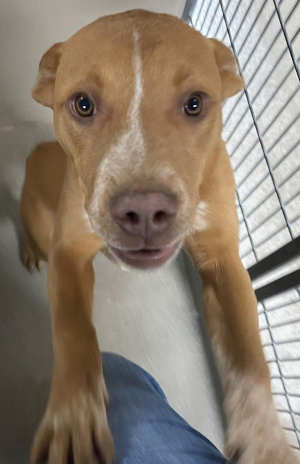
American blue heeler-hound
This 5-month-old female American blue heeler-hound has a short brown and white coat.
She is in kennel No. 5, ID No. LCAC-A-4521.
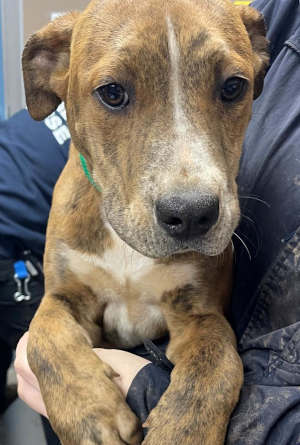
American blue heeler-hound
This 5-month-old female American blue heeler-hound has a short brown and white coat.
She is in kennel No. 6, ID No. LCAC-A-4524.
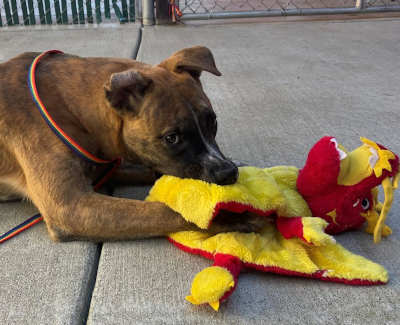
Male American blue heeler-hound
This 5-month-old male American blue heeler-hound has a short brown coat.
He is in kennel No. 9b, ID No. LCAC-A-4523.
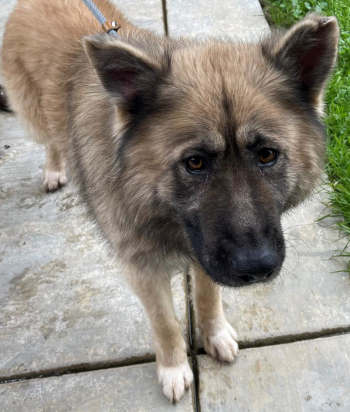
Male Akita-shepherd mix
This 2-year-old male Akita-shepherd mix has a long brown coat.
He is in kennel No. 12, ID No. LCAC-A-4539.
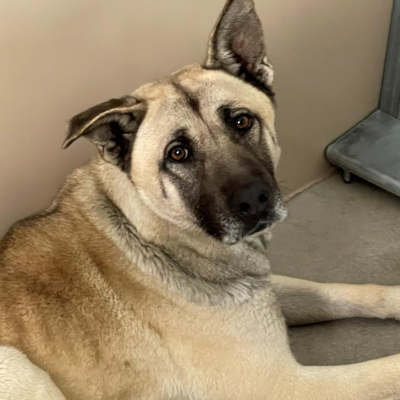
Male Akita-shepherd
This 2-year-old male Akita-shepherd has a short fawn-colored coat.
He is in kennel No. 13, ID No. LCAC-A-4538.
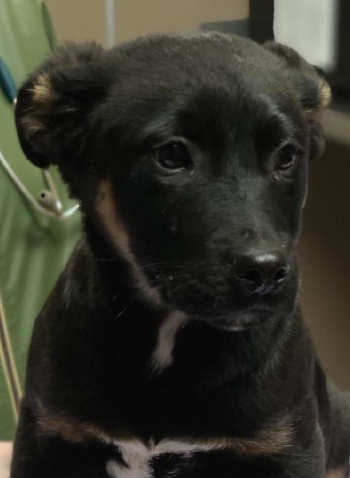
Male terrier
This 6-month-old male terrier has a short black coat.
He is in kennel No. 14, ID No. LCAC-A-4596.
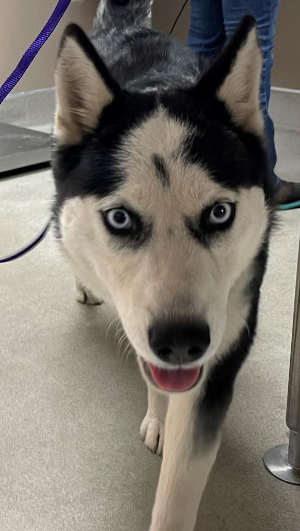
Female husky
This 1-year-old female husky has a black and white coat.
She is in kennel No. 16, ID No. LCAC-A-4562.
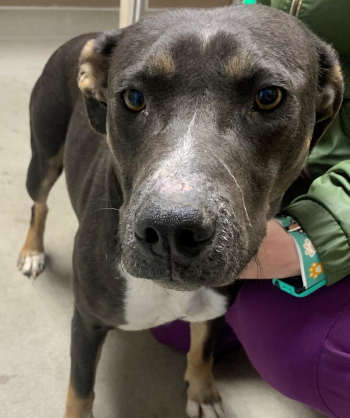
Female pit bull-Labrador retriever mix
This female pit bull-Labrador retriever mix has a short tricolor coat.
She is in kennel No. 17, ID No. LCAC-A-4692.
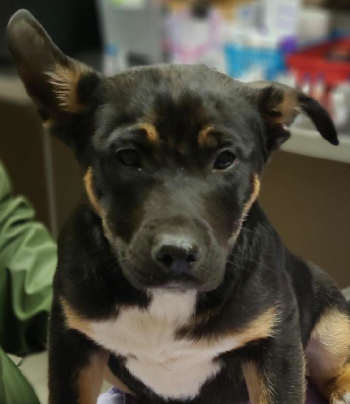
Female shepherd-pit bull mix
This 2-month-old female shepherd-pit bull mix has a short tricolor coat.
She is in kennel No. 24a, ID No. LCAC-A-4693.
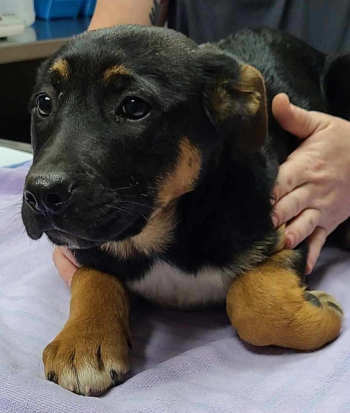
Female shepherd-pit bull mix
This 2-month-old female shepherd-pit bull mix has a short tricolor coat.
She is in kennel No. 24b, ID No. LCAC-A-4694.
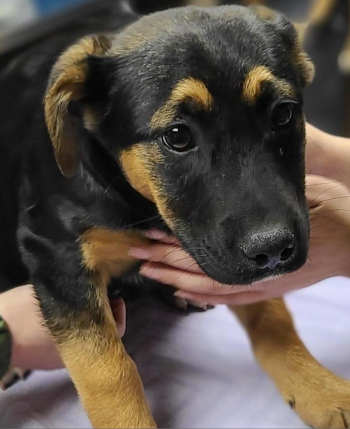
Female shepherd-pit bull mix
This 2-month-old female shepherd-pit bull mix has a short tricolor coat.
She is in kennel No. 24c, ID No. LCAC-A-4695.
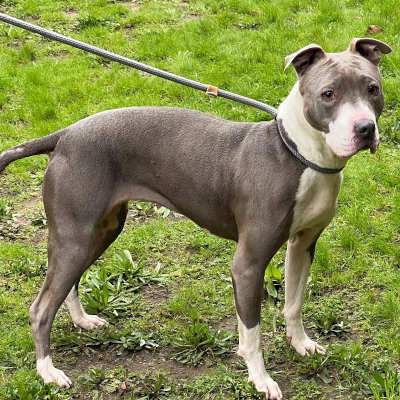
‘Frankie’
“Frankie” is a 7-year-old male pit bull terrier with a short gray and white coat.
He is in kennel No. 27, ID No. LCAC-A-4551.
Male shepherd-pit bull mix
This 2-month-old male shepherd-pit bull mix has a short tricolor coat.
He is in kennel No. 28a, ID No. LCAC-A-4696.
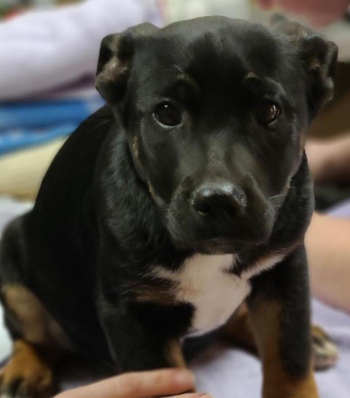
Male shepherd-pit bull mix
This 2-month-old male shepherd-pit bull mix has a short tricolor coat.
He is in kennel No. 28b, ID No. LCAC-A-4697.
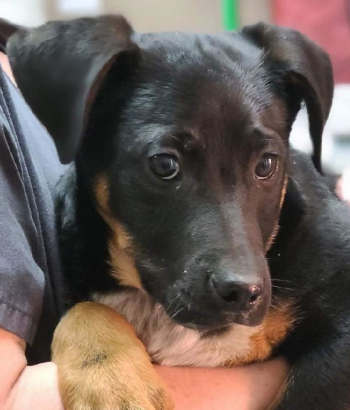
Male shepherd-pit bull mix
This 2-month-old male shepherd-pit bull mix has a short tricolor coat.
He is in kennel No. 28c, ID No. LCAC-A-4698.
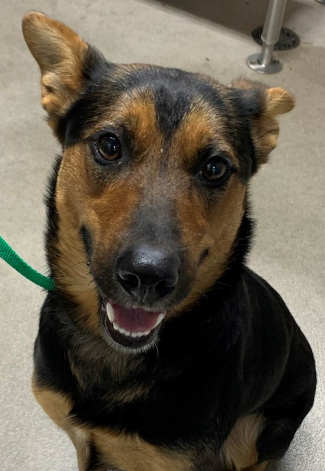
Female German shepherd
This 1-year-old female German shepherd has a black and tan coat.
She is in kennel No. 30, ID No. LCAC-A-4486.
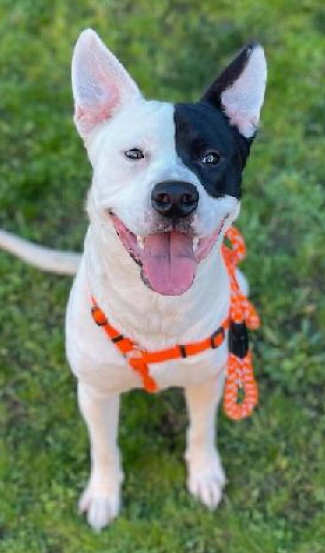
‘Diesel’
“Diesel” is a 2-year-old male pit bull terrier with a short white coat with black markings.
He’s in kennel No. 31, ID No. LCAC-A-4549.
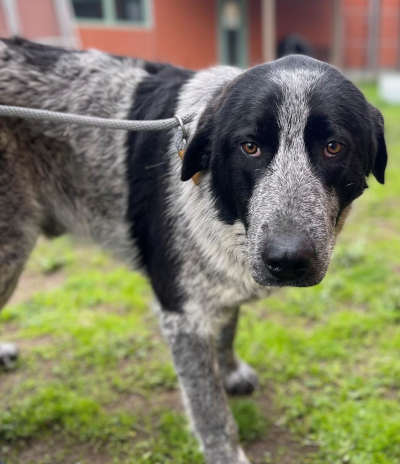
Male Newfoundland
This 1-year-old male Newfoundland has a short black and white coat.
He is in kennel No. 33, ID No. LCAC-A-4540.
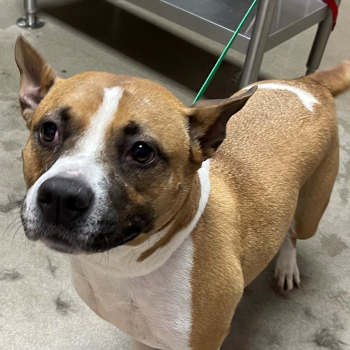
Female pit bull terrier mix
This 2-year-old female pit bull terrier mix has a short brown and white coat.
She is in kennel No. 34, ID No. LCAC-A-4599.
Email Elizabeth Larson at
- Details
- Written by: Preston Dyches
What's Up for February? The brightest planets converge, the constellation Auriga, and two star clusters you might want to get Sirius about.
All month – Jupiter and Venus are visible in the west after sunset. The two planets appear closer together each evening, as they head for a conjunction on March 1.
February 5 – Full moon.
Feb. 20 – New moon.
Feb. 22 – The crescent Moon sits just a degree apart from Jupiter in the western sky, with Venus hanging beneath them.
Feb. 27 – Find the Moon and Mars high in the southwest after sunset, where they will appear less than a degree apart.
All month – Locate the charioteer constellation, Auriga, by finding your way to its brightest star Capella. From Orion, look northward twice Orion's height to find Capella. [see sky chart in the video]
All month – Use the brightest star in the sky, Sirius, in order to find your way to two easy-to-locate star clusters, M41 and M47, using binoculars.
All month long, you'll notice the two brightest planets in the sky, Jupiter and Venus, appear closer together each evening. Find them in the west in the hour or so after sundown.
On Feb. 22, the crescent Moon sits just a degree apart from Jupiter, with Venus hanging beneath them. The two planets then continue to get closer in the sky over the following week, culminating in a close conjunction on March 1.
Another nice pairing takes place on Feb. 27, when the Moon and Mars will appear less than a degree apart. You'll find them high in the southwest after sunset.
The constellation Auriga makes for a worthy target to pick out in the February sky. Auriga represents an ancient chariot driver, and it's often depicted as an entire person, but given the outline, you might prefer to think of it as one of a chariot's wheels.
The brightest star in Auriga is Capella. Now, in Latin, Capella is a word for a female goat, and in addition to Capella, there are three little stars nearby, known as "the kids" – as in the name for baby goats, which is pretty fun.
Opposite Capella toward the south is the bright star Elnath. Technically it’s part of Taurus next door, but it helps define the roughly circular shape of Auriga.
Auriga appears high in the western sky on February evenings, and it's relatively easy to find, thanks to Capella and Elnath. From Orion, look northward twice the height of Orion, to find Capella. Then spot Elnath on Auriga's opposite side and from there it’s pretty easy to identify the other stars that round out the shape of the charioteer constellation.
All month long, observers with access to a good pair of binoculars or a small telescope can hunt for two easy star clusters using the brightest star in the sky as a guidepost. They're two open star clusters, M41 and M47. They're called "open" because their stars are close together in space, but in sort of a diffuse structure.
To find them, start with brilliant Sirius, which is easy to pick out toward the south in the winter night sky. M41 lies just 4 degrees south of Sirius, and should be visible in the same field of view in binoculars, where it appears as sort of a faint patch of light. It's about as wide on the sky as the full moon, though in actual extent it's about 25 light years across and is located about 2,300 light years away from us.
To find M47, you can also start at Sirius and work your way over toward the east about 12 degrees, and then a couple of degrees to the south north. It's about the same size on the sky as M41, but just a little brighter. M47 lies about 1,600 light years away and occupies a volume of space about 12 light years across.
Our own Sun is thought to have formed as part of a cluster like these. So finding them in the February sky can be a pretty neat way to connect with our own cosmic origins.
Stay up to date with all of NASA's missions to explore the solar system and beyond at nasa.gov.
Preston Dyches works for NASA's Jet Propulsion Laboratory.
- Details
- Written by: LAKE COUNTY NEWS REPORTS
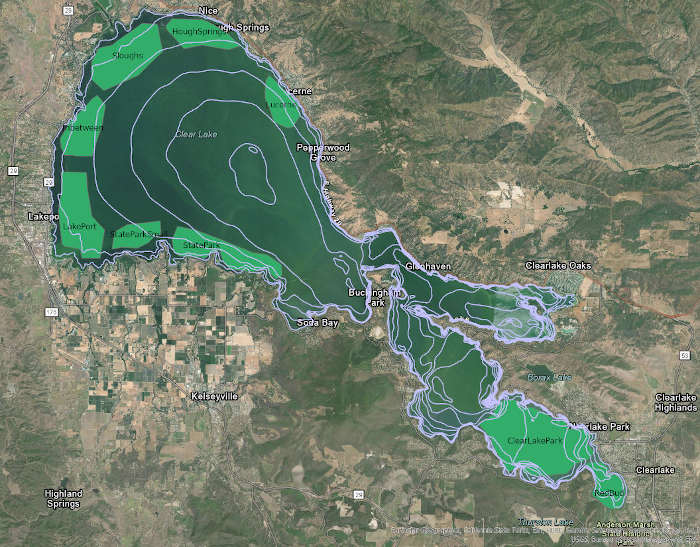
LAKE COUNTY, Calif. — Officials are urging boaters to use caution over the coming week and a half as a seine net fishing project for common carp and goldfish management takes place on Clear Lake.
Robinson Rancheria has received California Department of Fish and Wildlife funding to complete a feasibility study on carp and goldfish removal.
Fishing boats with 1,000-foot seine nets will be deployed throughout identified locations around Clear Lake — shown in the map above — to support future capture and removal of carp and goldfish.
The study began Friday and will continue through Feb. 13.
Multiple deployments will be conducted in areas throughout Clear Lake where radio tagged carp have been detected.
All areas where net deployment and successful capture is documented will be mapped as future potential netting areas for carp and goldfish removal.
Partners involved in the CDFW-funded feasibility study include the project contractor, WSB; CDFW; Big Valley Rancheria; and the Lake County Water Resources Department.
The Lake County Sheriff’s Marine Patrol has been notified and made aware of the feasibility study and identified locations.
Read more about the project in this December 2022 Lady of the Lake column.
For questions or comments regarding the Clear Lake Common Carp and Goldfish Management Project, please contact Karola Kennedy, Robinson Rancheria EPA director, at
For more information on carp management, visit this website.