 How to resolve AdBlock issue?
News
- Details
- Written by: LAKE COUNTY NEWS REPORTS

LAKE COUNTY, Calif. — Mark your calendar — the Lake County Weed Management Area has announced its annual invasive weeds tours.
For 2023, they will offer two tours on consecutive days: the first, showcasing weeds that affect Clear Lake and efforts to restore tules along the shoreline; the second, featuring weeds of grasslands and oak woodlands and restoration of native wildflowers at the McLaughlin Reserve.
Both great tours are free.
The public is welcome and encouraged to join one or both.
The first tour will take place from 9 a.m. to noon on Thursday, May 11, at Clark’s Island in Clearlake Oaks.
Join staff from the Lake County Water Resources Department and Resource Conservation District as they dive into the world of aquatic plants and wetland weeds of Clear Lake and Lake County.
Aquatic and wetland plant specimens and examples will be presented to facilitate hands-on learning and education.
They also will learn about recent invasive plant management efforts at Clark’s Island and the successful tule replanting effort that has been ongoing for the past two years.
This effort has been led by Lake County Watershed Protection District, Tribal EcoRestoration Alliance and tribal partners at Big Valley Band of Pomo Indians and Robinson Rancheria. Outreach materials and display tables will be available.
Attendees are asked to park on the west side of Clark’s Island, by the Adobe sign; extra parking is available along the north side of the channel, adjacent to PowerMart.
Then, on Friday, May 12, from 9 a.m. to noon, learn about weeds and wildflowers at the McLaughlin Reserve.
Join staff from the University of California McLaughlin Reserve to learn how invasive plants, especially annual grasses, have reduced native wildflower displays in Lake County.
Participants will view areas of the reserve where wildflowers have been restored by removing invasive species.
They will discuss the use of prescribed fire, cattle grazing, herbicides, mowing and hand pulling as tools to control weeds and restore wildflowers.
Robust wildflower displays are expected in May this year, so bring your cameras.
The group will meet at the McLaughlin Reserve Headquarters at 26775 Morgan Valley Road, then carpool for the field tour, which will involve walking about a quarter mile on gentle terrain.
For both tours, please bring hats, sunscreen, lunch or a snack, drinking water, and your questions about plants and the lake.
Please wear sturdy shoes free of seeds and mud, and bring gloves if you want some hands-on weed removal experience.
This event is sponsored by the Lake County Department of Agriculture and the Lake County Resource Conservation District. No reservations are required.
Please contact the Agriculture Department at 707-263-0217 if you have any questions.

- Details
- Written by: LAKE COUNTY NEWS REPORTS
The virtual town hall will take place beginning at 6:30 p.m. Tuesday, May 2.
Sen. Mike McGuire will host the town hall, with guests Cal Fire Northern California Region Chief Jake Hess and Marin County Fire Chief Jason Weber.
This important conversation will cover how the state is responding in this era of megafires, what type of expanded resources are available this summer and fall to protect our communities and what people can do to better prepare themselves for wildfire season.
Watch the Town Hall live here, on Facebook, or dial in to listen by phone at 1-669-900-6833 and enter the Webinar ID, 854 0548 1929.
To ask a question during the town hall, RSVP here.
- Details
- Written by: LAKE COUNTY NEWS REPORTS
The text of the proclamation follows.
California’s public libraries provide tens of thousands of public programs each year, including early learning for infants and toddlers, meals for children, literacy tutoring, services for jobseekers, and more. They house technology labs, makerspaces, Wi-Fi hotspots, career centers, and community gardens.
Librarians and library staff play a critical role in connecting community members to these services and resources, including teens and seniors, veterans, people new to the United States, and unhoused individuals.
Libraries build community resilience, supporting Californians every day and in times of need. During the pandemic, California libraries continued to provide vital services – online, on the phone, and in person – including curbside pick-up and home deliveries. They provide comfort and shelter during emergencies like earthquakes and fires.
Across the nation, libraries – and librarians – are facing censorship and attacks for championing diversity, inclusion, and equity. The American Library Association reports that school and library book challenges are at record highs, with most targeting works by LGBTQ+ writers and writers of color. It is more important than ever that we expand equitable access to California’s public libraries and defend their essential role in protecting intellectual freedom.
The value of a library is inestimable – it goes beyond the building, beyond the books. Their value lies in the possibilities they offer: in the doors to knowledge and to imagination they offer our kids; in the comfort they provide; and in the support they share freely.
Libraries are the heart of our communities. They provide Californians of all ages and all backgrounds with the resources they need to succeed and thrive. During National Library Week, we celebrate the countless ways that libraries enrich our communities. Let us reaffirm our commitment to protecting our libraries and support efforts to provide inclusive spaces for learning and empowerment for all.
NOW THEREFORE I, GAVIN NEWSOM, Governor of the State of California, do hereby proclaim April 23-29, 2023, as "California Library Week."
GAVIN NEWSOM
Governor of California
ATTEST:
SHIRLEY N. WEBER, Ph.D.
Secretary of State
- Details
- Written by: Brian Gendreau, University of Florida

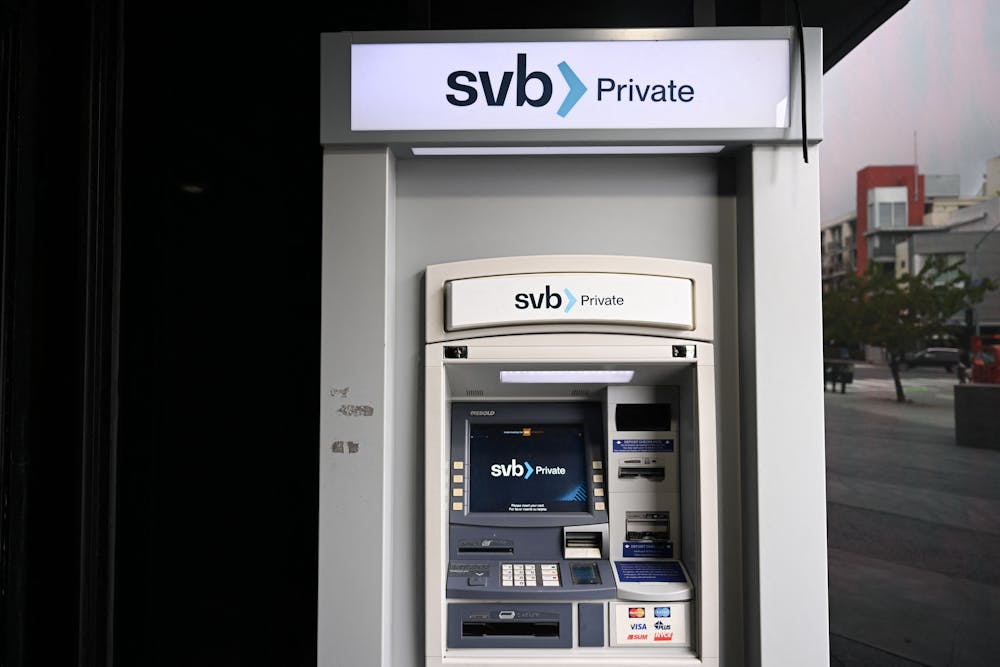
The abrupt failures of Silicon Valley Bank and Signature Bank and subsequent concerns about the stability of other banks have reignited a fierce debate among lawmakers, the financial industry, the Biden administration and former government officials about an array of banking reforms and regulatory changes.
The ideas floated within a month of Silicon Valley Bank’s collapse on March 10, 2023, range from calls to tweak banking regulations to a major overhaul of the government’s oversight of the banking system.
I’m a finance professor who previously worked for two major banks and was an economist at the Federal Reserve. Based on what I’ve learned from the banking crises that have occurred in the past 40 years, I’d put all the banking reform proposals under consideration into five categories.
1. Stronger supervision
Silicon Valley Bank reportedly ignored six separate warnings from the Federal Reserve Bank of San Francisco that it had too little cash on hand and was engaging in risky practices. So calls for stronger bank supervision and regulation should come as no surprise.
Any such reforms would at least, in part, reverse changes from a law Congress passed in 2018 that loosened some banking regulations.
Previously, the government had to pay especially close attention to banks with at least US$50 billion in assets. Among other things, it needed to subject them to stress tests – in which the authorities assess whether banks have the ability to respond to hypothetical economic shocks – by having enough cash on hand to meet relatively strict capital requirements.
The 2018 law raised the cutoff for what counts as a “systemically important” bank to $250 billion in assets, thus allowing many banks, including SVB, to avoid these more stringent regulations.
The White House has already called for new rules similar to what’s listed above for mid-sized banks — those with $100 billion to $250 billion in assets. SVB, which had about $210 billion in assets, fell in this category before its demise.
Sen. Elizabeth Warren of Massachusetts and Rep. Katie Porter of California have introduced legislation in the Senate and the House of Representatives that would simply repeal the 2018 law, returning the threshold to $50 billion.
Major banking trade groups, such as the Bank Policy Institute, which advocates on behalf of its large-bank members, have argued that the 2018 law was not a major factor in the failures of SVB and Signature Bank.
2. Higher deposit insurance threshold
The role that deposit insurance plays in staving off and alleviating banking crises could also change.
The Federal Deposit Insurance Corp. was only supposed to insure accounts of up to $100,000 during the 2008 financial crisis. But instead, it covered nearly all depositors, uninsured as well as insured, in most bank failures that occurred at that time.
The government subsequently raised that limit to $250,000 in October 2008. But the FDIC once again broke with its official mandate when it protected depositors from losses in excess of that ceiling during the March 2023 bank failures.
Some lawmakers have suggested raising the $250,000 cap on deposit insurance.
Rep. Maxine Waters, the highest-ranking Democrat on the House Financial Services Committee, says she supports that step. And Warren has suggested that she might support new limits that are in the millions of dollars rather than the hundreds of thousands.
“Is it $2 million? Is it $5 million? Is it 10 million?” she said in a television interview.
But those lawmakers have so far stopped short of calling for the FDIC to commit to always fully covering all losses among customers who experience losses when bank failures cause their deposits to vanish – rather than doing so on a case by case basis.
FDIC Chair Martin J. Gruenberg told the Senate Banking Committee during a recent hearing that the insurer plans to release its own proposals on May 1.
3. ‘Modified deposit payoff’
Other proposals go further.
For example, William Isaac, who chaired the FDIC from 1978 to 1986, is calling for the government to insure all non-interest-bearing checking accounts, regardless of size. But he also has a recommendation that might potentially discipline banks that run into trouble.
Isaac distinguishes between deposits that are essentially investments, such as certificates of deposit that people use for long-term savings purposes, and, say, a checking account a customer maintains primarily for basic transactions.
Investors with large sums of money held in CDs are generally wealthy individuals who can either assess financial risks on their own or with input from a paid adviser. People with CDs also have an incentive to leave them with the bank, because withdrawing the money tied up in them before maturity can mean paying a penalty or forfeiting the high interest rates that make them attractive investments.
Isaac also advocates returning to the way uninsured deposits – currently, those above the $250,000 mark – were treated in the 1980s. He calls this the “modified deposit payoff” model.
In resolving a bank failure, the FDIC would cover the full cost of compensating customers with uninsured deposits that don’t pay any interest, yet give uninsured depositors certificates worth 80% of their uninsured funds.
If the government were to recover at least 80% of its cost of covering the uninsured deposits, often by selling failed banks to financial institutions, investors with large deposits at a failed bank would get paid more, Isaac explained in a Wall Street Journal op-ed.
“This reform would protect business accounts that are essential to keeping the economy moving and would reduce substantially the risk of panics,” he wrote.
4. ‘Ring-fencing’
The most comprehensive proposals that call for restructuring the banking system would use what’s known as a “ring fence” model.
Ring-fencing segregates a portion of bank assets and liabilities from the rest. The United Kingdom already follows this approach.
Since 2019, British banks have had to segregate their retail banking activities from their presumably riskier investment banking and international lending.
The most radical of these proposals would lodge all insured deposits in “narrow banks” which would be allowed to hold only cash and U.S. Treasury securities.
All bank lending activity would occur outside of narrow banks, perhaps in finance companylike firms funded with uninsured borrowing and capital instruments such as stocks and bonds.
Economist Robert Litan wrote a book about narrow-banking in the 1980s, but the idea can be traced back to Milton Friedman – the late University of Chicago economist and Nobel Prize winner.
Banks are typically required to set aside a portion of their deposits as reserves held either as cash or deposits at their local Federal Reserve bank. However, the Fed reduced that share to zero in March 2020 – effectively eliminating the requirement altogether.
Some experts question whether ring-fencing, by preventing the transfer of capital among bank subdivisions, might make banks less flexible in responding to financial shocks – and therefore riskier.
Critics of the narrow-bank model point out that this approach would drastically reduce the amount of money banks could lend. As a result, systemic risks would shift from real banks into “shadow banks” – securities firms, hedge funds and other credit intermediaries that face less regulation and supervision. Shadow banks contributed to the 2007-2009 global financial crisis, according to the International Monetary Fund.
5. Compensation clawbacks
At the heart of the debate about banking reform is “moral hazard.” That’s a concept regarding how insurance can create an incentive to take bigger risks when people, institutions and even countries realize they won’t bear the full cost of that risk.
One way to reduce risks in this context is to make bank executives bear some of the costs when the banks they run fail.
A bipartisan group of senators have introduced a bill to do just that. It would require regulators to claw back compensation, including the bonuses and stock awards paid to bank executives in the five years preceding a failure.
In my view, it’s too early to tell whether policymakers will make minor adjustments or opt for more significant reforms.
One thing that I hope all policymakers will keep in mind is that there are trade-offs between the financial stability of banks and market discipline. Offering too much government support – such as insuring all liabilities in the event of a bank failure – creates incentives for banks and their customers to ignore risks or to engage in risky behavior.
This article was updated to clarify Robert Litan’s contributions to the debate over banking reform.
Brian Gendreau, Director, Latin American Business Environment program, University of Florida
This article is republished from The Conversation under a Creative Commons license. Read the original article.