 How to resolve AdBlock issue?
News
- Details
- Written by: NATIONAL AERONAUTICS AND SPACE ADMINISTRATION
Astronomers using data from NASA’s Chandra X-ray Observatory and other telescopes have identified a new threat to life on planets like Earth: a phase during which intense X-rays from exploded stars can affect planets over 100 light-years away. This result, as outlined in our latest press release, has implications for the study of exoplanets and their habitability.
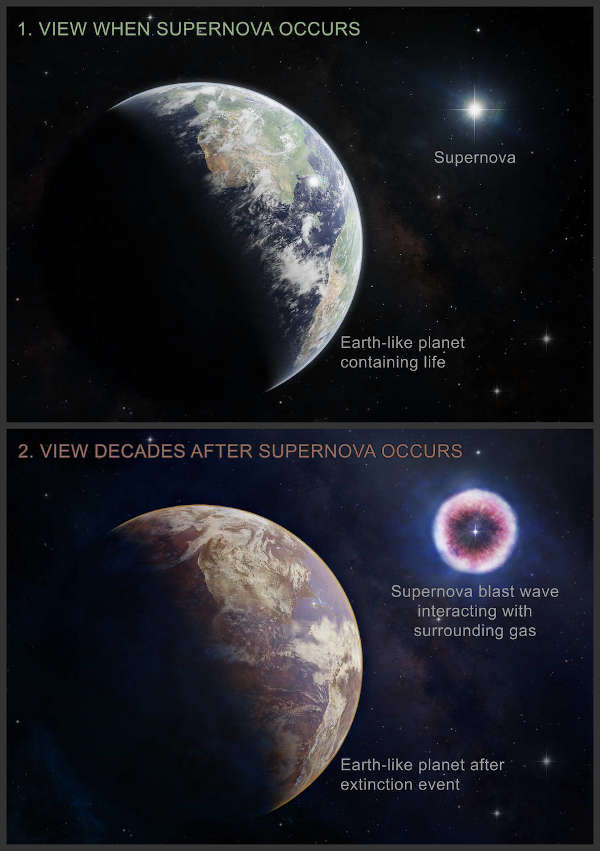
This newly found threat comes from a supernova’s blast wave striking dense gas surrounding the exploded star, as depicted in the upper right of our artist’s impression.
When this impact occurs it can produce a large dose of X-rays that reaches an Earth-like planet (shown in the lower left, illuminated by its host star out of view to the right) months to years after the explosion and may last for decades. Such intense exposure may trigger an extinction event on the planet.
A new study reporting this threat is based on X-ray observations of 31 supernovae and their aftermath — mostly from NASA’s Chandra X-ray Observatory, Swift and NuSTAR missions, and ESA’s XMM-Newton — show that planets can be subjected to lethal doses of radiation located as much as about 160 light-years away. Four of the supernovae in the study (SN 1979C, SN 1987A, SN 2010jl, and SN 1994I) are shown in composite images containing Chandra data in the supplemental image.
Prior to this, most research on the effects of supernova explosions had focused on the danger from two periods: the intense radiation produced by a supernova in the days and months after the explosion, and the energetic particles that arrive hundreds to thousands of years afterward.
If a torrent of X-rays sweeps over a nearby planet, the radiation could severely alter the planet's atmospheric chemistry. For an Earth-like planet, this process could wipe out a significant portion of ozone, which ultimately protects life from the dangerous ultraviolet radiation of its host star. It could also lead to the demise of a wide range of organisms, especially marine ones at the foundation of the food chain, leading to an extinction event.
After years of lethal X-ray exposure from the supernova’s interaction, and the impact of ultraviolet radiation from an Earth-like planet’s host star, a large amount of nitrogen dioxide may be produced, causing a brown haze in the atmosphere, as shown in the illustration. A “de-greening” of land masses could also occur because of damage to plants.
A separate artist’s impression (panel #1) depicts the same Earth-like planet as having been abundant with life at the time of the nearby supernova, years before most of the X-ray’s impacts are felt (panel #2).
Among the four supernovae in the set of images, SN 2010jl has produced the most X-rays. The authors estimate it to have delivered a lethal dose of X-rays for Earth-like planets less than about 100 light-years away.
There is strong evidence — including the detection in different locations around the globe of a radioactive type of iron — that supernovae occurred close to Earth between about 2 million and 8 million years ago. Researchers estimate these supernovae were between about 65 and 500 light-years away from Earth.
Although the Earth and the Solar System are currently in a safe space in terms of potential supernova explosions, many other planets in the Milky Way are not. These high-energy events would effectively shrink the areas within the Milky Way galaxy, known as the Galactic Habitable Zone, where conditions would be conducive for life as we know it.
Because the X-ray observations of supernovae are sparse, particularly of the variety that strongly interact with their surroundings, the authors urge follow-up observations of interacting supernovae for months and years after the explosion.
The paper describing this result appears in the April 20, 2023 issue of The Astrophysical Journal, and is available here. The other authors of the paper are Ian Brunton, Connor O’Mahoney, and Brian Fields (University of Illinois at Urbana-Champaign), Adrian Melott (University of Kansas), and Brian Thomas (Washburn University in Kansas).
NASA's Marshall Space Flight Center manages the Chandra program. The Smithsonian Astrophysical Observatory's Chandra X-ray Center controls science operations from Cambridge, Massachusetts, and flight operations from Burlington, Massachusetts.
- Details
- Written by: LAKE COUNTY NEWS REPORTS
The gala promises to be a memorable day of festivities, community engagement and fundraising for student scholarships.
The celebration will be held on the Stadium Field at the Ukiah Campus on Hensley Creek Road from 1 to 5 p.m., starting with appetizer and wine tastes from more than two dozen restaurants and wineries.
From 1 to 3 p.m. guests can enjoy Tsar Nicoulai caviar paired with Roederer Estate sparkling, then try some Big Earl’s BBQ and Ukiah Brewing Company beer, along with samples from Oco Time, Patrona, Little River Inn, Ramen Cubed, Wholly Bowl and more.
In addition to the wide selection of wine, including Coro blends, Navarro Vineyards, Husch, Barra and Philo Ridge, Black Oak Coffee will present a coffee station and Kemmy’s Pies will bring delicious dessert.
At 3 p.m. Sen. Mike McGuire and Assemblymember Jim Wood will present a California Legislature Resolution which resolves that “they direct special public attention to Mendocino College on the celebration of its 50th anniversary, point with great pride Mendocino College Foundation to the outstanding opportunities it has provided to students over the years, and extend sincere best wishes for its continued success in the future.”
Following this presentation guests will be treated to a meal prepared by Mendocino College Culinary Arts students under the direction of Chef and CAM Instructor Nicholas Petti.
"We are thrilled to bring back the Mendocino College Foundation Gala to celebrate the 50th anniversary of Mendocino College," said Dr. Tim Karas, president of Mendocino College. "This event is not only a time to honor our past and present achievements, but also an opportunity to raise funds that will directly impact our students' lives by providing scholarships and resources that support their educational and career journeys."
Sen. Mike McGuire will be the event emcee, with local auctioneer Rachel Britten presenting an exciting array of live auction items. These include a private party for 30 people via the Skunk Train from Fort Bragg to Glen Blair junction, which has been gorgeously outfitted with a pavilion, bar and fire pit to enjoy food, drinks and games among the towering redwoods.
Gala guests can also bid on a two-night stay for eight people at the Beehive House at Leonard Lake, with brunch catered by Schats and a custom tasting of distilled spirits by Tamar Distillery. There is a three-night getaway to the exclusive Palisades Tahoe resort; an Anderson Valley Pinot Noir Festival package with stay on the Coast; and a one-of-a-kind pass good for two tickets to all Mendocino College Theater, Dance, Ukiah Symphony and Ukiah Community Concert Association performances during the 2023-24 season.
Presented by State Farm agent Jay Epstein, the Mendocino College Foundation Gala is a signature event that has been a beloved tradition in the community for many years.
“I have heard from so many people who are excited that the Gala is returning for the first time in five years,” says Foundation Executive Director Julie McGovern. “It brings together supporters, alumni, faculty, staff, and friends of Mendocino College for celebration and philanthropy, all in support of student success.”
She continued, “This year's Gala holds special significance as it commemorates the 50th anniversary of Mendocino College, a milestone that highlights the college's rich history and commitment to serving the community.”
Saturday, May 13, also marks the opening of the 50th Anniversary exhibit at the College Art Gallery which will look back through the five decades of Mendocino College’s transformation from trailers at the Fairgrounds in 1973 to the vibrant, 127-acre campus of today with its state-of-the art facilities including a new Library Learning Center, Center for Visual and Performing Arts, Science Complex, Physical Education Complex, Child Development Lab, Vocational/Technical Building, Agricultural Headhouse and Gardens, as well as classrooms, a cafe and grounds.
In addition to celebrating the college's milestone anniversary, the gala will serve as a fundraiser for the Mendocino College Foundation, which provides vital support to students through scholarships, grants, and other programs such as campus food pantries and the popular Adopt A Fifth Grader program.
Proceeds from the gala will directly benefit students pursuing higher education and career and technical training at Mendocino College, helping to make education more accessible and affordable for the local community.
"The Mendocino College Foundation is honored to host this special 50th anniversary gala," said Linda Chapman, president of the Mendocino College Foundation. “And we are excited to launch our Fund the Future Campaign, which builds on the more than $3 million that the Foundation has dispersed in scholarships since 1984. We are looking ahead to the next 50 years and the many ways we can support our community college students, who are the lifeblood of our local workforce and the future of our communities.”
This support would not be possible without outside funding. McGovern added, "We are grateful for the continued support of our generous donors, sponsors, and community partners who make it possible for us to provide scholarships and resources that transform the lives of our students. The recipients are our future nurses, auto mechanics, small business owners and child care workers who want to live and learn and work right here at home. They need our support now so that they may contribute to the health and vibrancy of our community for years to come."
Tickets are $100 with tables of ten discounted at $900 and are available for purchase through the Mendocino College Foundation website. For more information about the Mendocino College Foundation contact the office at 707-467-1018 or email
Gala sponsors include Jay Epstein, Adventist Health, NC Financial Group, Savings Bank of Mendocino County, NCRM, Keenan & Associates, Main Street Research, LACO Associates, MCHC Health Centers, JK Architecture & Engineering, Mendo Mill, Khoury Dentistry, Vocality Credit Union, Harvest Market, CWDL, Law Offices of Caren Callahan, Mendocino Forest Products, Solid Waste of Willits, Granite Construction, Thurston Auto Group, Volz Co., TLCD Architecture, Dunn Right Painting, Blue Zones Project, Selzer Realty, Friedman’s Home Improvement and LCW Leibert Cassidy Whitmore.
- Details
- Written by: LAKE COUNTY NEWS REPORTS
This traveling exhibit from the Smithsonian Institution's National Museum of American History explores the little-known story of the Bracero Program, which brought millions of Mexican guest workers to the United States to help fill the labor shortage during World War II and beyond.
“Bittersweet Harvest” features photographs, artifacts and oral histories that provide insight into the experiences of the Bracero workers and their families.
The exhibit examines the program's impact on agriculture, labor and immigration policies, as well as on the lives of the workers themselves.
“The Bracero Program played a significant role in the history of agriculture and immigration in our country, and we are honored to be able to share this story with our community,” museum officials said in a written statement.
The Museums of Lake County California will host the exhibit from May through August 2023.
In conjunction with the exhibit, they are seeking local residents who have personal connections to the Bracero Program as part of the ongoing Oral History project.
“Bittersweet Harvest: The Bracero Program, 1942-1964” was organized by the Smithsonian Institution Traveling Exhibition Service and the National Museum of American History, in collaboration with the Bracero History Archive and the Institute of Oral History at the University of Texas at El Paso.
The exhibition was made possible through the support of the Smithsonian Latino Center.
Admission to the exhibit is free, but donations to support the Museums of Lake County California are welcome.
For more information about the exhibit and related programs, visit the museum's Facebook page at www.facebook.com/MuseumsOfLakeCountyCa.
- Details
- Written by: Mohammad Reza Alizadeh, Massachusetts Institute of Technology (MIT) and Mojtaba Sadegh, Boise State University
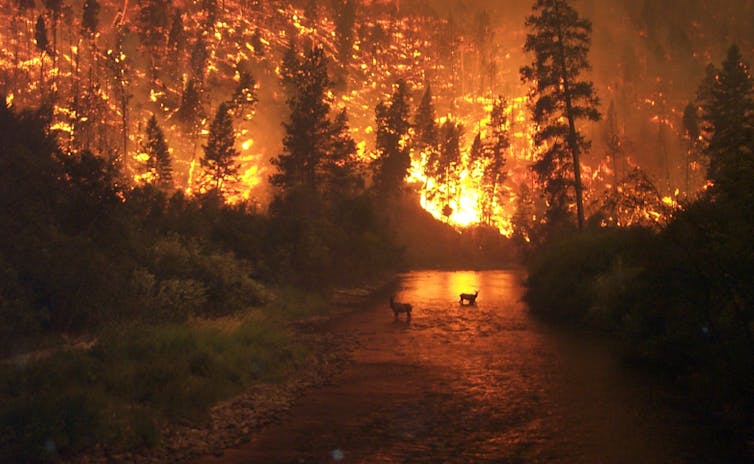

As wildfire risk rises in the West, wildland firefighters and officials are keeping a closer eye on the high mountains – regions once considered too wet to burn.
The growing fire risk in these areas became startling clear in 2020, when Colorado’s East Troublesome Fire burned up and over the Continental Divide to become the state’s second-largest fire on record. The following year, California’s Dixie Fire became the first on record to burn across the Sierra Nevada’s crest and start down the other side.
We study wildfire behavior as climate scientists and engineers. In a new study, we show that fire risk has intensified in every region across the West over the past four decades, but the sharpest upward trends are in the high elevations.
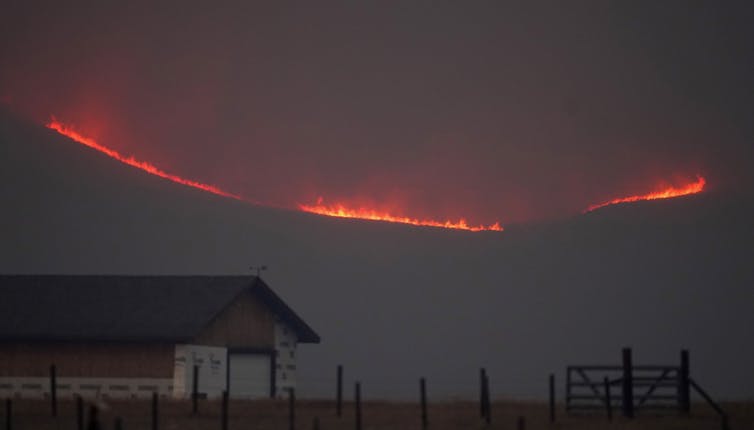
High mountain fires can create a cascade of risks for local ecosystems and for millions of people living farther down the mountains.
Since cooler, wetter high mountain landscapes rarely burn, vegetation and dead wood can build up, so highland fires tend to be intense and uncontrollable. They can affect everything from water quality and the timing of meltwater that communities and farmers rely on, to erosion that can bring debris and mud flows. Ultimately, they can change the hydrology, ecology and geomorphology of the highlands, with complex feedback loops that can transform mountain landscapes and endanger human safety.
Four decades of rising fire risk
Historically, higher moisture levels and cooler temperatures created a flammability barrier in the highlands. This enabled fire managers to leave fires that move away from human settlements and up mountains to run their course without interference. Fire would hit the flammability barrier and burn out.
However, our findings show that’s no longer reliable as the climate warms.
We analyzed fire danger trends in different elevation bands of the Western U.S. mountains from 1979 to 2020. Fire danger describes conditions that reflect the potential for a fire to ignite and spread.
Over that 42-year period, rising temperatures and drying trends increased the number of critical fire danger days in every region in the U.S. West. But in the highlands, certain environmental processes, such as earlier snowmelt that allowed the earth to heat up and become drier, intensified the fire danger faster than anywhere else. It was particularly stark in high-elevation forests from about 8,200 to 9,800 feet (2,500-3,000 meters) in elevation, just above the elevation of Aspen, Colorado.
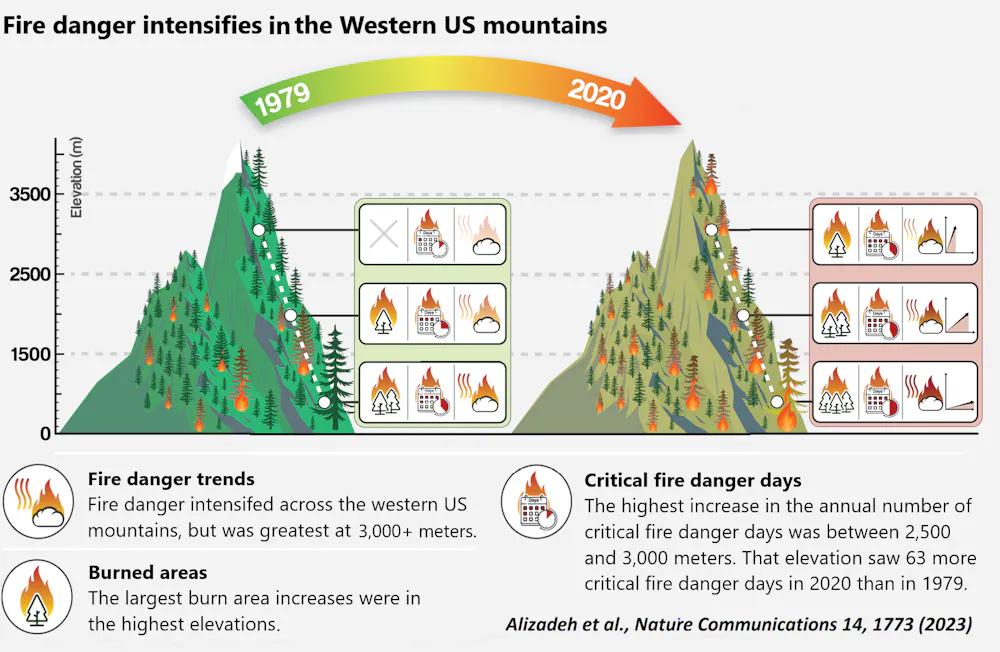
We found that the high-elevation band had gained on average 63 critical fire danger days a year by 2020 compared with 1979. That included 22 days outside the traditional warm season of May to September. In previous research, we found that high-elevation fires had been advancing upslope in the West at about 25 feet (7.6 meters) per year.
Cascading risks for humans downstream
Mountains are water towers of the world, providing 70% of the runoff that cities across the West rely on. They support millions of people who live downstream.
High-elevation fires can have a significant impact on snow accumulation and meltwater, even long after they have burned out.
For example, fires remove vegetation cover and tree canopies, which can shorten the amount of time the snowpack stays frozen before melting. Soot from fires also darkens the snow surface, increasing its ability to absorb the Sun’s energy, which facilitates melting. Similarly, darkened land surface increases the absorption of solar radiation and heightens soil temperature after fires.
The result of these changes can be spring flooding, and less water later in the summer when communities downstream are counting on it.
Fire-driven tree loss also removes anchor points for the snowpack, increasing the frequency and severity of avalanches.
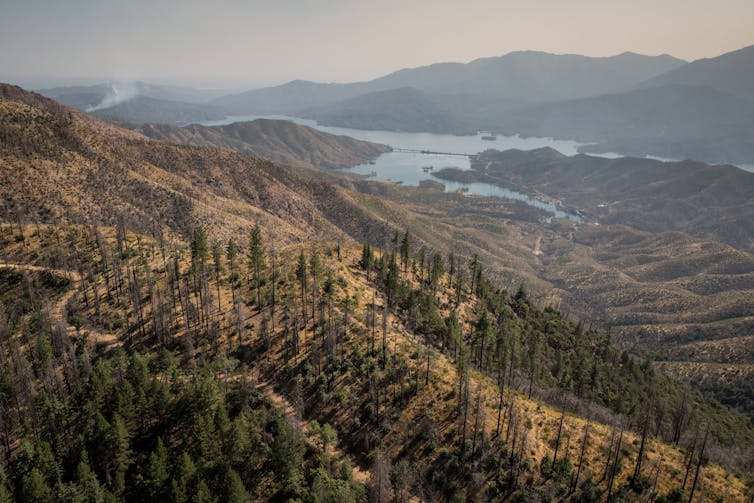
Frequent fires in high-elevation areas can also have a significant impact on the sediment dynamics of mountain streams. The loss of tree canopy means rainfall hits the ground at a higher velocity, increasing the potential for erosion. This can trigger mudslides and increase the amount of sediment sent downstream, which in turn can affect water quality and aquatic habitats.
Erosion linked to runoff after fire damage can also deepen streams to the point that excess water from storms can’t spread in high-elevation meadows and recharge the groundwater; instead, they route the water quickly downstream and cause flooding.
Hazards for climate-stressed species and ecosystems
The highlands generally have long fire return intervals, burning once every several decades if not centuries. Since they don’t burn often, their ecosystems aren’t as fire-adapted as lower-elevation forests, so they may not recover as efficiently or survive repeated fires.
Studies show that more frequent fires could change the type of trees that grow in the highlands or even convert them to shrubs or grasses.
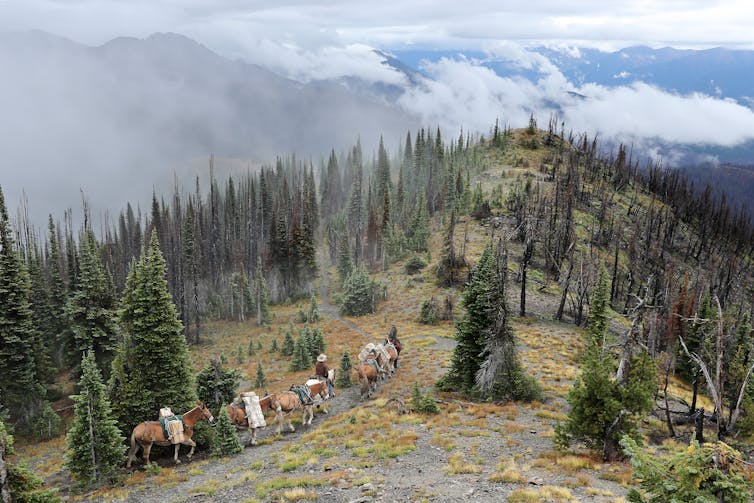
Wet mountain areas, with their cooler temperatures and higher precipitation, are often peppered with hot spots of biodiversity and provide refuges to various species from the warming climate. If these areas lose their tree canopies, species with small ranges that depend on cold-water mountain streams can face existential risks as more energy from the Sun heats up stream water in the absence of tree shading.
While the risk is rising fastest in the high mountains, most of the West is now at increasing risk of fires. With continuing greenhouse gas emissions fueling global warming, this trend of worsening fire danger is expected to intensify further, straining firefighting resources as crews battle more blazes.
Mohammad Reza Alizadeh, Postdoctoral Researcher in Environmental Engineering, Massachusetts Institute of Technology (MIT) and Mojtaba Sadegh, Assistant Professor of Civil Engineering, Boise State University
This article is republished from The Conversation under a Creative Commons license. Read the original article.