 How to resolve AdBlock issue?
News
- Details
- Written by: Elizabeth Larson
The California Employment Development Department’s latest report on joblessness showed that Lake County’s March unemployment rate was 6.3%, down from 6.4% in February but up from the rate reported in March 2022, 5.2%.
At the same time, the statewide rate remained at 4.4%, compared to 4.5% in March 2022.
Despite there being no change in the state rate, the Employment Development Department said the state’s employers added 8,700 nonfarm payroll jobs in March.
California payroll jobs totaled 19,371,100 in March 2023, up 32,700 from February 2023 and up 151,200 from March of last year, the report said.
The Employment Development Department said that since the current economic expansion began in April 2020, California has gained 3,049,800 jobs, which works out to a monthly average of 84,717 jobs gained over that time.
The Bureau of Labor Statistics reported that the nationwide unemployment rate in March was 3.5%, down from 3.6% in February, which was the same rate in March of 2022.
Lake County trends
With the weather turning warmer and crops growing, Lake County’s workforce showed an increase of 22.7% in total farm jobs — which equates to 200 jobs — which also is a 13.7% year-over increase, a trend also seen statewide.
For total nonfarm jobs, there was a 0.4% increase in March over February, but it was down by 1.7% in a year-over comparison.
Employment subcategories showing gains included financial activities, 3.3%; government, 2.1%; personal and professional services, 1.4%; and private education and health services, 0.4%.
Losses were reported in other services, -1.9%; leisure and hospitality, -1.7%; goods producing, -0.9%; and trade, transportation and utilities, -0.3%.
Lake County’s unemployment rate last month earned it the No. 35 ranking statewide among the state’s 58 counties.
San Mateo had California’s lowest unemployment rate, 1.9%. On the other end of the spectrum, Colusa County had the highest, 19.2%.
In addition to Colusa, Lake’s other neighboring county jobless rates and ranks were: Glenn, 7.1%, No. 43; Mendocino, 5.3%, No. 27; Napa and Sonoma, tied at 3.6%, No. 7; and Yolo, 5.1%, No. 26.
Statewide picture
The report showed that the number of jobs in the agriculture industry statewide increased from February by 10,500 to a total of 434,900 jobs in March.
The agricultural industry had 17,000 more farm jobs in March 2023 than it did in March a year ago, the Employment Development Department said.
The report showed that the number of Californians employed in March was 18,511,400, an increase of 14,700 persons from February’s total of 18,496,700 and also up 128,600 from the employment total in March.
At the same time, the report showed the number of unemployed Californians was 859,600 in March, an increase of 17,900 over the month and also up 22,500 in comparison to March 2022.
Total nonfarm jobs in California’s 11 major industries totaled 17,967,800 in March — a net gain of 8,700 from February. This followed a downward revised (-10,500) month-over gain of 21,800 jobs in February, the report said.
In a year-over comparison, total nonfarm jobs increased by 432,100 — a 2.5% increase — from March 2022 to March 2023 compared to the U.S. annual gain of 4,145,000 jobs, a 2.7% increase.
Six of California’s 11 industry sectors gained jobs in March with private education and health services (+7,000) leading the way with notable gains in offices of dentists, home health care services and hospitals, the Employment Development Department said.
Government (+6,900) enjoyed the second-strongest month-over gain as jobs were added in all three of its sub sectors with the strongest gains coming in local government education, according to the report.
Construction, which lost 8,200 jobs, suffered the largest reduction in month-over employment with much of its losses coming in the specialty trade contractors and construction of buildings subsectors, the report said.
The state said additional losses came in the highway, street, and bridge construction and residential building construction, among others.
Extreme weather and flooding likely played a role in the sector’s month-over decline as atmospheric rivers hit California during the survey week, the Employment Development Department said.
In related data that figures into the state’s unemployment rate, the Employment Development Department said there were 414,119 people certifying for Unemployment Insurance benefits during the March 2023 sample week. That compares to 380,768 people in February and 398,638 people in March 2022.
Concurrently, the agency reported that 46,792 initial claims were processed in the March 2023 sample week, which was a month-over increase of 6,209 claims from February and also a year-over increase of 7,607 claims from March 2022.
Email Elizabeth Larson at
- Details
- Written by: LAKE COUNTY NEWS REPORTS
The grant will facilitate purchase of a vehicle to provide unhoused Probation Department clients access to all services, including remote court appearances, probation programs, check-ins with their officers, and access to service providers and partner agencies.
The Probation team will use this tool to reduce technical violations and decrease recidivism.
“Currently, approximately 25% of those on high-risk probation in Lake County are unhoused,” said Chief Probation Officer Wendy Mondfrans. “The mobile service center will allow us to more effectively work with partners to meet the needs of those we serve, and help them successfully complete probation. This will support critical public safety priorities, while ensuring more equitable access to available supports.”
Funding for the mobile service center stems from Assembly Bill 178, which established a competitive grant program to allow county probation departments to purchase vehicles and telecommunications and other associated equipment to assist those on probation, with particular emphasis on supporting unhoused individuals struggling to meet probation requirements.
“We are very excited to better serve people on probation and Lake County’s communities with our mobile service center, and grateful for the state of California’s support,” said Mondfrans.
Questions can be directed to the Probation Department at 707-262-4285.
- Details
- Written by: LAKE COUNTY NEWS REPORTS
One hunter-harvested mule deer, a buck from El Dorado County, was confirmed to be infected with SARS-CoV-2.
The deer was harvested in 2021 and sampled by the California Department of Fish and Wildlife, or CDFW, for chronic wasting disease surveillance.
It was negative for chronic wasting disease, or CWD, and did not show any outward signs of illness.
In California, SARS-CoV-2 has been confirmed in pets and zoo animals, but never in free-ranging wildlife.
Following reports of SARS-CoV-2 detections in free-ranging white-tailed deer and mule deer in other states and Canadian provinces, CDFW tested archived deer samples for SARS-CoV-2.
The samples consisted of lymph nodes collected as part of CDFW’s CWD surveillance efforts. CWD has never been detected in California’s deer or elk populations.
CDFW submitted archived samples from 170 black-tailed and mule deer collected in 2020 and 209 black-tailed and mule deer collected in 2021.
Initial testing for SARS-CoV-2 was conducted at the California Animal Health and Food Safety Laboratory at UC Davis, and confirmatory testing was conducted by the U.S. Department of Agriculture Animal and Plant Health Inspection Services National Veterinary Services Laboratories in Ames, Iowa.
“Others have shown that deer can be infected with SARS-CoV-2 and that they can pass it to other deer but do not get sick,” said Dr. Brandon Munk, senior wildlife veterinarian with CDFW. “We do not see SARS-CoV-2 as a threat to our deer populations but we continue to work with partners to better understand what, if any, significance SARS-CoV-2 infections in wildlife may pose to wildlife and people. This is certainly another reminder not to intentionally feed deer. Artificially congregating deer increases the likelihood of spreading disease and may be a source of SARS-CoV-2 exposure for deer.”
There is no evidence that people can contract COVID-19 by eating meat from an infected animal. Nonetheless, hunters are encouraged to take appropriate precautions when handling and dressing game and practice good food hygiene when processing their animals.
The Centers for Disease Control and Prevention states that although people can spread SARS-CoV-2 to animals, especially during close contact, the risk of animals spreading SARS-CoV-2 to people is considered low.
The Association of Fish and Wildlife Agencies developed guidance pertaining to SARS-CoV-2 in white-tailed deer.
USDA Animal and Plant Health Inspection Services, or APHIS, reports confirmed cases of SARS-CoV-2 in animals across the United States.
Since 2021, APHIS has been monitoring SARS-CoV-2 infections in free-ranging deer.
CDFW is collaborating with USDA APHIS and others to sample and test more California deer for SARS-CoV-2.
- Details
- Written by: Karen D. Holl, University of California, Santa Cruz and Pedro Brancalion, Universidade de São Paulo
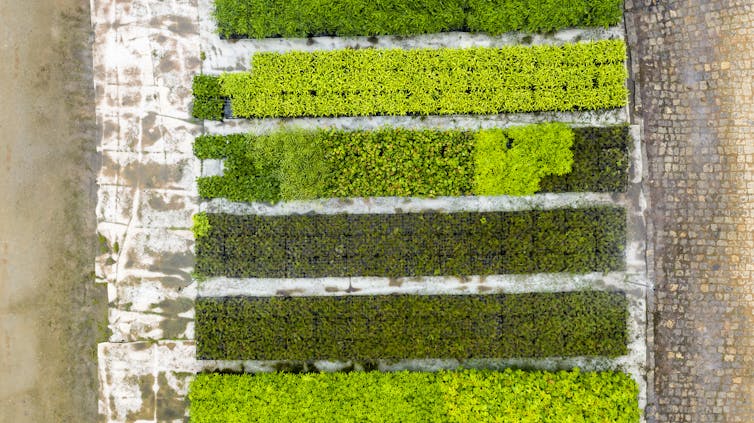
For 151 years, Americans have marked Arbor Day on the last Friday in April by planting trees. Now business leaders, politicians, YouTubers and celebrities are calling for the planting of millions, billions or even trillions of trees to slow climate change.
As ecologists who study forest restoration, we know that trees store carbon, provide habitat for animals and plants, prevent erosion and create shade in cities. But as we have explained elsewhere in detail, planting trees is not a silver bullet for solving complex environmental and social problems. And for trees to produce benefits, they need to be planted correctly – which often is not the case.
Tree-planting is not a panacea
It is impossible for humanity to plant its way out of climate change, as some advocates have suggested, although trees are one part of the solution. Scientific assessments show that avoiding the worst consequences of climate change will require governments, businesses and individuals around the globe to make rapid and drastic efforts to reduce greenhouse gas emissions.
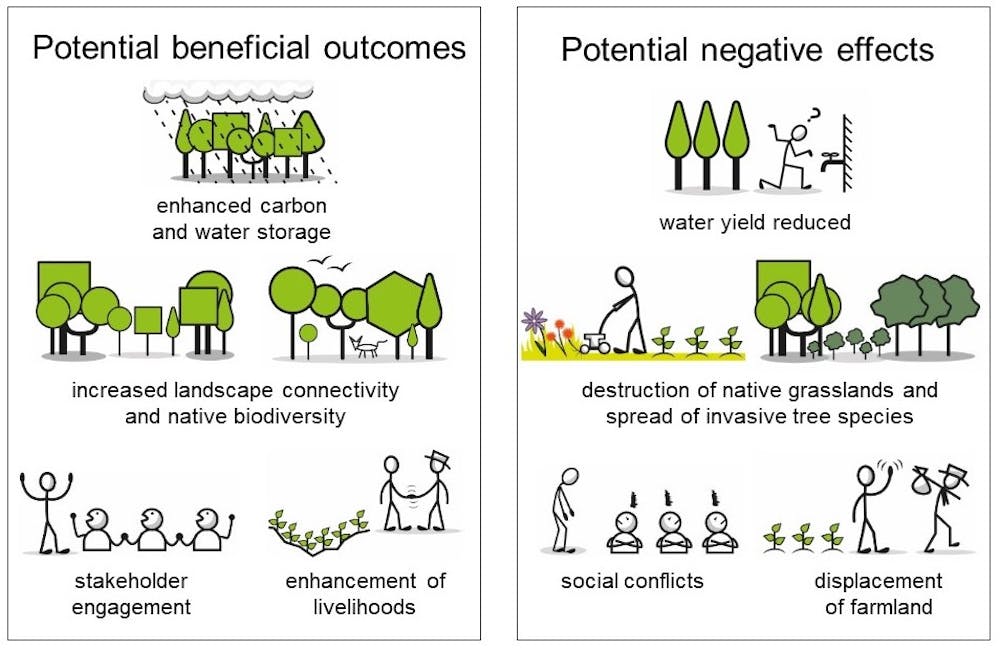
Moreover, planting trees in the wrong place can have unintended consequences. For example, planting trees into native grasslands, such as North American prairies or African savannas, can damage these valuable ecosystems.
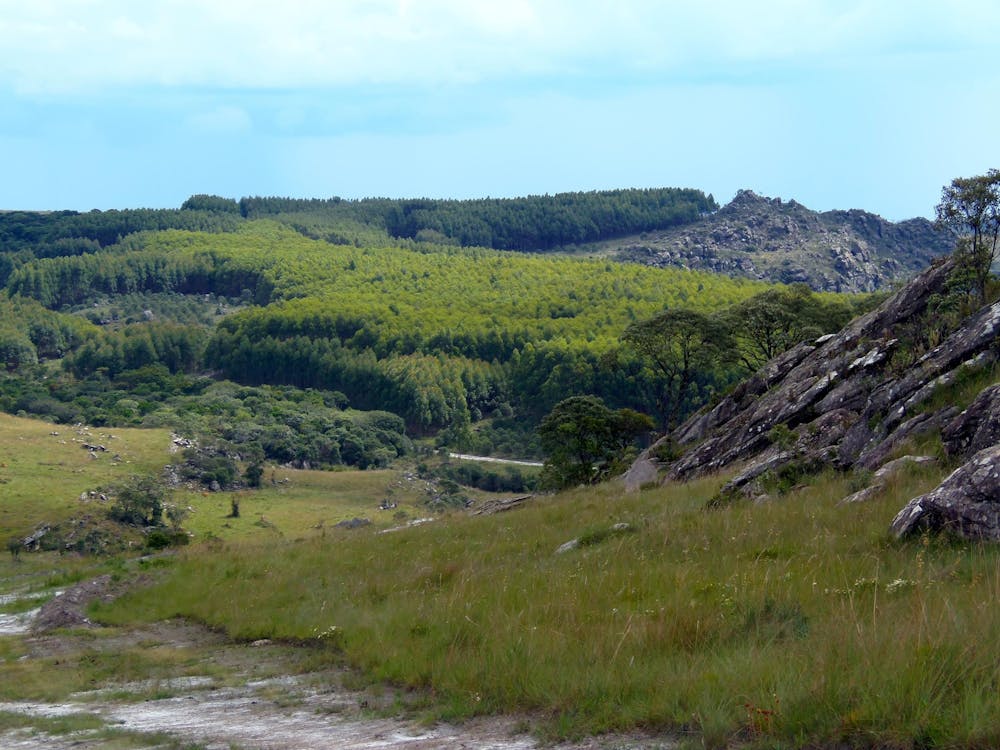
Planting fast-growing, nonnative trees in arid areas may also reduce water supplies. And some top-down tree-planting programs implemented by international organizations or national governments displace farmers and lead them to clear forests elsewhere.
Large-scale tree-planting initiatives have failed in locations from Sri Lanka to Turkey to Canada. In some places, the tree species were not well suited to local soil and climate conditions. Elsewhere, the trees were not watered or fertilized. In some cases local people removed trees that were planted on their land without permission. And when trees die or are cut down, any carbon they have taken up returns to the atmosphere, negating benefits from planting them.
Focus on growing trees
We think it’s time to change the narrative from tree-planting to tree-growing. Most tree-planting efforts focus on digging a hole and putting a seedling in the ground, but the work doesn’t stop there. And tree-planting diverts attention from promoting natural forest regrowth.
To achieve benefits from tree-planting, the trees need to grow for a decade or more. Unfortunately, evidence suggests that reforested areas are often recleared within a decade or two. We recommend that tree-growing efforts set targets for the area of forest restored after 10, 20 or 50 years, rather than focusing on numbers of seedlings planted.
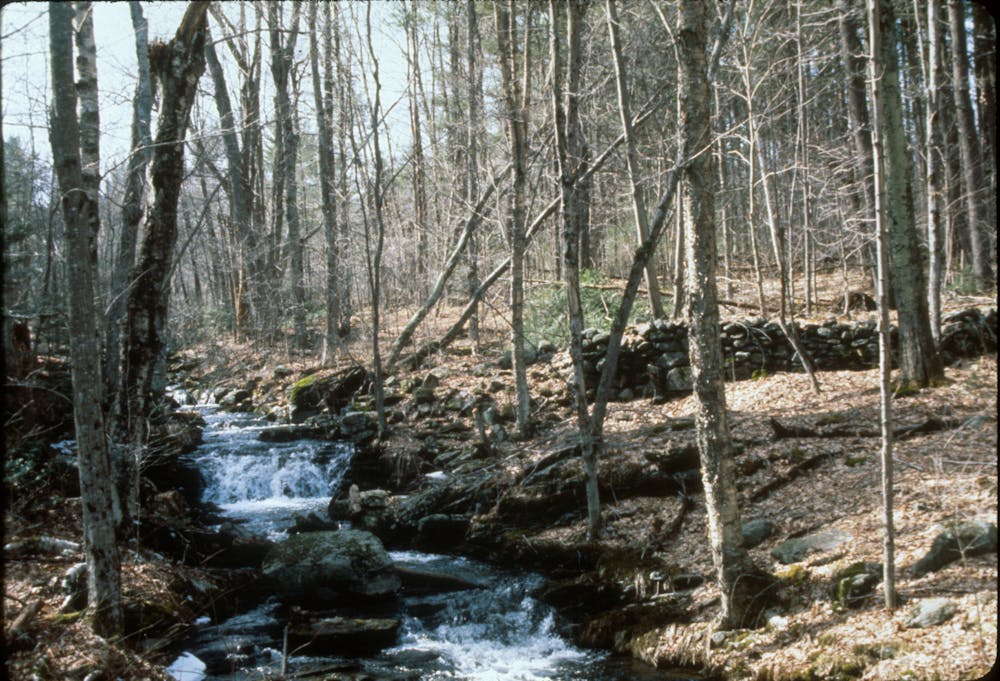
And it may not even be necessary to actively plant trees. For example, much of the eastern U.S. was logged in the 18th and 19th centuries. But for the past century, where nature has been left to take its course, large areas of forests have regrown without people’s planting trees.

Helping tree-growing campaigns succeed
Tree-growing is expected to receive unprecedented financial, political and societal support in the coming years as part of the U.N. Decade on Ecosystem Restoration and ambitious initiatives such as the Bonn Challenge and World Economic Forum 1t.org campaign to conserve, restore and grow 1 trillion trees. It would be an enormous waste to squander this unique opportunity.
Here are key guidelines that we and others have proposed to improve the outcomes of tree-planting campaigns.
Keep existing forests standing. Global Forest Watch, an online platform that monitors forests around the world, estimates that the Earth lost an area of rainforest the size of New Mexico in 2020. It is much more effective to prevent clearing of existing forests than to try to put them back together again. And existing forests provide benefits now, rather than decades into the future after trees mature.
Protecting existing forests often requires providing alternative income for people who maintain trees on their land rather than logging them or growing crops. It also is important to strengthen enforcement of protected areas, and to promote supply chains for timber and agricultural products that do not involve forest-clearing.
Include nearby communities in tree-growing projects. International organizations and national governments fund many tree-growing projects, but their goals may be quite different from those of local residents who are actually growing the trees on their land. Study after study has shown that involving local farmers and communities in the process, from planning through monitoring, is key to tree-growing success.
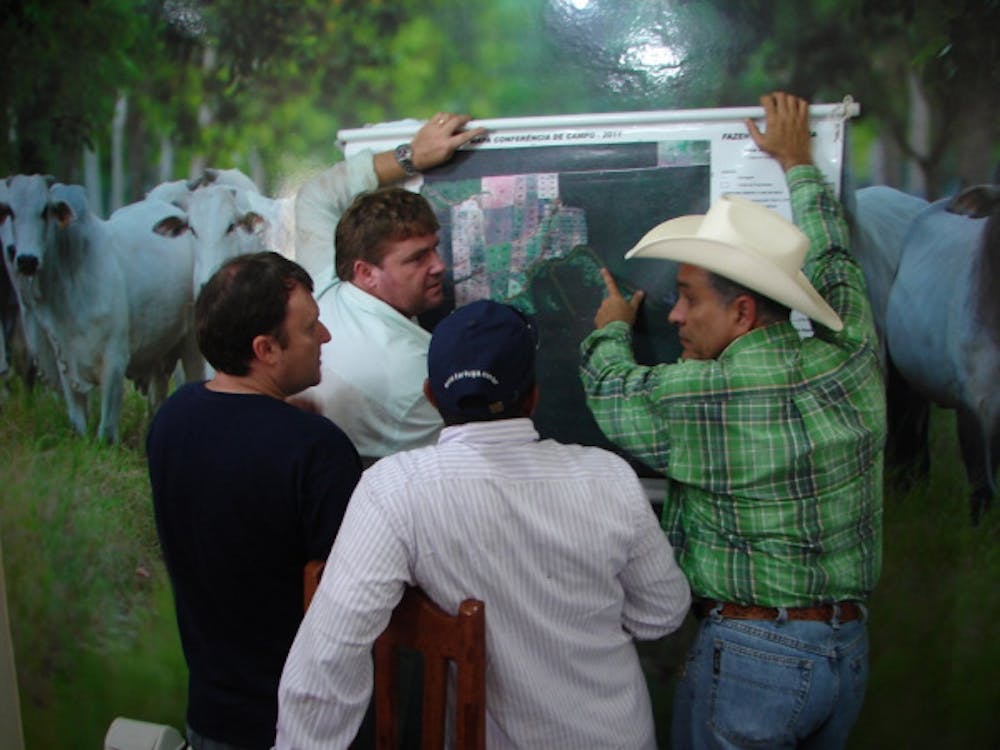
Start with careful planning. Which species are most likely to grow well given local site conditions? Which species will best achieve the project’s goals? And who will take care of the trees after they are planted?
It is important to plant in areas where trees have grown historically, and to consider whether future climatic conditions are likely to support trees. Planting in areas that are less productive for agriculture reduces the risk that the land will be recleared or existing forests will be cut down to compensate for lost productive areas.
Plan for the long term. Most tree seedlings need care to survive and grow. This may include multiyear commitments to water, fertilize, weed and protect them from grazing or fire and monitor whether the venture achieves its goals.
We recently published a list of questions that all tree-growing organizations should answer and that funders should ask before pulling out their wallets. They include questions about whether the initial drivers of deforestation have been addressed, how the project will be maintained and monitored over time, and how local stakeholders will be involved and benefit from the project. It’s also important to look at the outcomes of prior tree-growing projects overseen by the organization.
Organizations that follow best practices are much more likely to grow trees successfully over the long term. Planting seedlings is just the first step.
This is an update of an article originally published on April 27, 2021.
Karen D. Holl, Professor of Restoration Ecology, University of California, Santa Cruz and Pedro Brancalion, Professor of Forest Restoration, Universidade de São Paulo
This article is republished from The Conversation under a Creative Commons license. Read the original article.