 How to resolve AdBlock issue?
News
- Details
- Written by: Elizabeth Larson
Thad Owens, who has served as the district superintendent for 18 months, is being assigned to another job for the remainder of the school year.
On Wednesday evening, the district’s board emerged from the latest of 19 closed session discussions and evaluations regarding his performance since his hire in March 2022 to announce the change in leadership. Seven of those closed sessions have happened since Aug. 9.
The board went into closed session just after 4 p.m. Wednesday.
When it convened in open session at 6 p.m., Board President Larry Allen reported that the board had taken action.
“The board moved to mutually agree with the superintendent to end his existing contract with the MUSD Board and move forward appointing him as administrator on special assignment for the duration of the 23-24 school year,” said Allen.
The vote was unanimous, Allen said.
The board also voted unanimously to appoint David Miller as interim superintendent with an intent to publish and ratify a contract with him in their next open session.
Owens was not seated at the board table as he has been in previous meetings.
This will be the third time that Miller has been appointed as an interim superintendent at district.
He is one of six people who have held the job either on a permanent or interim basis since the board released Superintendent Catherine Stone from employment in 2019.
She was followed by Heather Rantala, the then-chief business officer who acted as superintendent before the first of Miller’s interim appointments.
Miller held the position until Michael Cox was hired. Cox stayed in the job for 15 months; during his tenure, he was the subject of 10 closed session performance evaluations or discussions.
Cox was succeeded by Tim Gill, who served from October 2021 to March 2022. The board then temporarily appointed Chief Business Officer Julie Alves before Owens was hired at the start of March 2022.
At the end of Wednesday’s meeting, Board member Annette Lee asked for the request for proposals for the superintendent search to be on the board’s next meeting agenda.
Owens, a Montana native and a veteran of the U.S. Army, taught for 10 years in grades sixth through 12, and has been an elementary, middle, high school and alternative education principal.
He has been employed by Middletown Unified in the past as the Middletown High School assistant principal, Middletown High School athletic director, Middletown Middle School principal and Minnie Cannon Elementary principal.
Owens also worked as director of alternative education for Konocti Unified School District.
Email Elizabeth Larson at
- Details
- Written by: LAKE COUNTY NEWS REPORTS
In response to this alarming news, Families Against Fentanyl, a nonprofit dedicated to raising awareness of the dangers of illicit fentanyl, is calling for President Joe Biden to establish a White House Task Force dedicated to the nation’s illicit fentanyl and overdose crisis.
The CDC estimates that more than 111,000 Americans died from a drug overdose in the 12-month period ending in April — and more than 77,000 of those deaths involved fentanyl and other synthetic opioids other than methadone.
“This is alarming news and it should serve as a wake-up call to our leaders in Washington that more must be done — fast! We are calling on President Biden to immediately convene a White House task force dedicated to the overdose and fentanyl crisis that is taking so many American lives,” said Families Against Fentanyl founder Jim Rauh, who lost his son to illicit fentanyl poisoning in 2015.
“For thousands of families across this country, this is a matter of life or death. We need someone in the West Wing who is accountable directly to the President for leading the government’s response to this crisis. We need regular public briefings and real-time data. Americans deserve to know what is being done to save lives, and what is being done to uncover and stop the international manufacturers and traffickers of illicit fentanyl. This is the number one killer of our nation’s young adults. It is killing more and more children each year. There is nothing more valuable than our people. From one father to another, I’m urging President Biden to establish a White House task force immediately and demand emergency action," added Rauh.
In December 2021, Families Against Fentanyl released its groundbreaking finding that fentanyl was the No. 1 cause of death among Americans ages 18 to 45.
Fentanyl continues to be the No. 1 cause of death of Americans 18 to 45 and the new data from the CDC show deaths are continuing to increase.
Families Against Fentanyl has brought together thousands of families and bipartisan leaders calling for innovative action to stop drug-related deaths and save other families from the nightmare of losing a loved one to fentanyl poisoning.
More than 78,000 people have signed on to FAF’s petition calling for the US to designate illicit fentanyl as a weapon of mass destruction.
Bipartisan leaders including former Homeland Security Secretary Tom Ridge and former CIA Director John Brennan joined with Families Against Fentanyl to warn of the threat posed by illicit fentanyl and urged President Biden to designate illicit fentanyl and its analogues as weapons of mass destruction.
Families Against Fentanyl is a nonprofit organization dedicated to raising awareness of the illicit fentanyl crisis and advocating for federal action.
The organization was founded by James Rauh of Akron, Ohio after his son was killed by fentanyl poisoning in 2015.
Families Against Fentanyl has become a leading voice for fentanyl awareness, bringing together thousands of families and producing research cited by leaders across the United States and around the world.
- Details
- Written by: GOVERNOR’S OFFICE
The bills dedicate billions of dollars to new behavioral health housing, create new accountability and transparency, and provide much needed funding for key behavioral health infrastructure and workforce across the state.
With the passage of these two bills, California voters will now have the opportunity in March 2024 to vote to modernize the mental health system.
These reforms re-focus billions of dollars in existing funds to prioritize Californians with the deepest needs, living in encampments, or suffering the worst substance use issues.
The bond also will provide funding to build new behavioral health beds and housing, helping treat more than 100,000 people every year.
“I was deeply moved by the personal stories that so many legislators have shared, showing how many of us have been touched by the mental health crisis. I want to thank the Legislature, Democrats and Republicans alike, who voted in favor of these critical reforms — particularly Sen. Eggman, Assemblymembers Irwin and Wood, and a special thank you to Mayor Steinberg,” Gov. Gavin Newsom said. “These measures represent a key part of the solution to our homelessness crisis, and improving mental health for kids and families. Now, it will be up to voters to ratify the most significant changes to California’s mental health system in more than 50 years.”
Senate Bill 326 (Eggman, D-Stockton) modernizes the Mental Health Services Act to address today’s behavioral health system and demand for services.
These reforms expand services to include treatment for those with substance use disorders, prioritize care for those with the most serious mental illness, provide ongoing resources for housing and workforce, and continue investments in prevention, early intervention, and innovative pilot programs.
This bill reforms our system of care to prioritize what Californians need today with new and increased accountability for real results for all families and communities.
Assembly Bill 531 (Irwin, D-Thousand Oaks) includes a $6.38 billion general obligation bond to build 10,000 new treatment beds and supportive housing units to help serve more than 100,000 people annually.
This investment would be the single largest expansion of California’s behavioral health treatment and residential settings in the state’s history, creating new, dedicated housing for people experiencing or at risk of homelessness who have behavioral health needs, with a dedicated investment to serve veterans.
These settings will provide Californians experiencing behavioral health conditions a place to stay while safely stabilizing, healing and receiving ongoing support.
Included in the bond is a $1 billion set aside specifically for veterans’ housing.
Thursday’s final votes come after months of engagement with stakeholders across the state: people and families with lived experience, health care professionals, children and youth groups, veterans organizations, schools and school administrators, businesses, labor leaders, mental health and equity advocates, first responders, and local officials.
These conversations strengthened Gov. Newsom’s proposed transformation, bringing more organizations on board with supporting this historic and much needed modernization.
Newsom has until Oct. 14 to take action on the legislation. Once signed by the governor, this modernization of the state’s mental health services system and accompanying bond will head to Californians voters for approval.
Senate Bill 326 and Assembly Bill 531 will appear jointly on the March 2024 ballot as Proposition 1.
“I am so grateful for the support of my Senate and Assembly colleagues in approving SB 326 and AB 531 and for the leadership and effort Gov. Newsom has demonstrated on reforming our behavioral health care system,” said Sen. Susan Eggman, the author of SB 326 and Senate Health Committee chair.
“Together these bills provide a critically needed overhaul to the landmark Mental Health Services Act and infuse desperately needed resources into our behavioral health care continuum,” Eggman said. “The governor made a commitment to get this done this year and today the Governor and the Legislature delivered on that commitment. We have a behavioral health crisis playing out on our streets. With this package, Californians now will have the chance to voice their support for a new direction with a vote for safer communities and a more coherent, functional and humane approach to community-based behavioral health care.”
“Getting veterans experiencing homelessness off the streets has long been a priority for California, but getting some of our most vulnerable veterans into needed treatment for behavioral health challenges will be transformative,” said Assemblymember Jacqui Irwin, author of AB 531.
“One of the only groups that has seen a recent significant decline in percent of homelessness are veterans, thanks primarily to the very successful Veterans Housing and Homeless Prevention program,” Irwin said. “By placing a renewed focus on existing programs like Homekey and the Behavioral Health Continuum Infrastructure program, AB 531 and SB 326 will provide housing and treatment services to veterans that focus on serious mental illness and substance use disorders. Funding and expanding this program is the right thing to do, and I look forward to working with the governor and veterans organizations to put these important advances before the voters.”
“Change is hard, but it is inevitable. The behavioral health challenges we faced 20 years ago are not the same ones we face today,” said Assembly Health Committee Chair Jim Wood. “Despite the passionate efforts of our dedicated public health, mental health and social services partners – we need to adapt. The tragic reality is playing out every day on our streets, in our schools, in rural communities and our largest cities – out in the open and behind closed doors. Senator Eggman and Governor Newsom have ensured that SB 326 addresses our changing world and pays heed to both the housing and behavioral health services that too many Californians desperately need.”
“Nearly 20 years ago, I authored proposition 63, California’s Mental Health Services Act, to help address the most serious consequences of untreated mental illness,” said Sacramento Mayor Darrell Steinberg, the original MHSA author.
“It has done much good but can do so much more. Simply put, more of these precious resources need to be spent on a uniform set of services and strategies that address the immense suffering of people living with mental Illness who are also homeless, in and out of the criminal justice system, and having little or no chance of living full and productive lives. Thank you to Governor Newsom and Senator Eggman for championing these reforms and to the Legislature for acting quickly to place them on the 2024 ballot,” Steinberg said.
“From a diverse coalition of statewide advocacy groups and business and labor leaders to mayors and county leaders and children’s groups, people and organizations reacted positively to this historic and transformative modernization proposal throughout the legislative process,” the Governor’s Office said.
- Details
- Written by: Harold Tobin, University of Washington

Almost like aftershocks, questions about earthquake prediction tend to follow disasters like the one that occurred Sept. 8, 2023, in Morocco. Could advance notice have prevented some of the devastation? Unfortunately, useful predictions are still in the realm of science fiction.
University of Washington professor of seismology and geohazards Harold Tobin heads the Pacific Northwest Seismic Network. He explains the differences between predicting and forecasting earthquakes, as well as early warning systems that are currently in place in some areas.
Can scientists predict a particular earthquake?
In short, no. Science has not yet found a way to make actionable earthquake predictions. A useful prediction would specify a time, a place and a magnitude – and all of these would need to be fairly specific, with enough advance notice to be worthwhile.
For example, if I predict that California will have an earthquake in 2023, that would certainly come true, but it’s not useful because California has many small earthquakes every day. Or imagine I predict a magnitude 8 or greater earthquake will strike in the Pacific Northwest. That is almost certainly true but doesn’t specify when, so it’s not helpful new information.
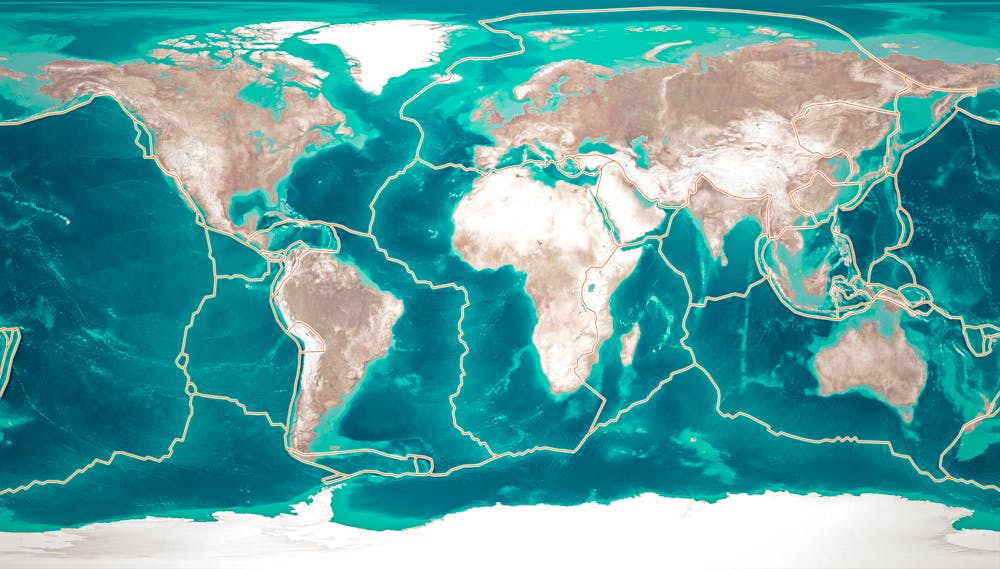
Earthquakes happen because the slow and steady motions of tectonic plates cause stresses to build up along faults in the Earth’s crust. Faults are not really lines, but planes extending down miles into the ground. Friction due to the enormous pressure from the weight of all the overlying rock holds these cracks together.
An earthquake starts in some small spot on the fault where the stress overcomes the friction. The two sides slip past each other, with the rupture spreading out at a mile or two per second. The grinding of the two sides against each other on the fault plane sends out waves of motion of the rock in every direction. Like the ripples in a pond after you drop in a stone, it’s those waves that make the ground shake and cause damage.
Most earthquakes strike without warning because the faults are stuck – locked up and stationary despite the strain of the moving plates around them, and therefore silent until that rupture begins. Seismologists have not yet found any reliable signal to measure before that initial break.
What about the likelihood of a quake in one area?
On the other hand, earthquake science today has come a long way in what I’ll call forecasting as opposed to prediction.
Seismologists can measure the movement of the plates with millimeter-scale precision using GPS technology and other means, and detect the places where stress is building up. Scientists know about the recorded history of past earthquakes and can even infer farther back in time using the methods of paleoseismology: the geologically preserved evidence of past quakes.
Putting all this information together allows us to recognize areas where conditions are ripe for a fault to break. These forecasts are expressed as the likelihood of an earthquake of a given size or greater in a region over a period of decades into the future. For example, the U.S. Geological Survey estimates the odds of a magnitude 6.7 or greater quake in the San Francisco Bay Area over the next 30 years is 72%.
Are there any hints a quake could be coming?
Only about 1 in 20 damaging earthquakes have foreshocks – smaller quakes that precede a larger one in the same place. By definition they aren’t foreshocks, though, until a bigger one follows. The inability to recognize whether an earthquake in isolation is a foreshock is a big part of why useful prediction still eludes us.
However, in the past decade or so, there have been a number of massive earthquakes of magnitude 8 or more, including the 2011 magnitude 9.0 Tohoku earthquake and tsunami in Japan and a 2014 magnitude 8.1 in Chile. Interestingly, a larger fraction of those very biggest earthquakes seem to have exhibited some precursory events, either in the form of a series of foreshocks detected by seismometers or sped-up movements of the nearby Earth’s crust detected by GPS stations, called “slow slip events” by earthquake scientists.
These observations suggest perhaps there really are precursory signals for at least some huge quakes. Maybe the sheer size of the ensuing quake made otherwise imperceptible changes in the region of the fault prior to the main event more detectable. We don’t know, because so few of these greater than magnitude 8 earthquakes happen. Scientists don’t have a lot of examples to go on that would let us test hypotheses with statistical methods.
In fact, while earthquake scientists all agree that we can’t predict quakes today, there are now essentially two camps: In one view, earthquakes are the result of complex cascades of tiny effects – a sensitive chain reaction of sorts that starts with the proverbial butterfly wing flapping deep within a fault – so they’re inherently unpredictable and will always remain so. On the other hand, some geophysicists believe we may one day unlock the key to prediction, if we can just find the right signals to measure and gain enough experience.
How do early warning systems work?
One real breakthrough today is that scientists have developed earthquake early warning systems like the USGS ShakeAlert now operating in California, Oregon and Washington state. These systems can send out an alert to residents’ mobile devices and to operators of critical machinery, including utilities, hospitals, trains and so on, providing warning of anywhere from a few seconds to more than a minute before shaking begins.

This sounds like earthquake prediction, but it is not. Earthquake early warning relies on networks of seismometers that detect the very beginning of an earthquake on a fault and automatically calculate its location and magnitude before the damaging waves have spread very far. The sensing, calculating and data transfer all happen near the speed of light, while the seismic waves move more slowly. That time difference is what allows early warning.
For example, if an earthquake begins off the coast of Washington state beneath the ocean, coastal stations can detect it, and cities like Portland and Seattle could get tens of seconds of warning time. People may well get enough time to take a life safety action like “Drop, Cover and Hold On” – as long as they are sufficiently far away from the fault itself.
What complications would predicting bring?
While earthquake prediction has often been referred to as the “holy grail” of seismology, it actually would present some real dilemmas if ever developed.
First of all, earthquakes are so infrequent that any early methods will inevitably be of uncertain accuracy. In the face of that uncertainty, who will make the call to take a major action, such as evacuating an entire city or region? How long should people stay away if a quake doesn’t materialize? How many times before it’s a boy-who-cried-wolf situation and the public stops heeding the orders? How do officials balance the known risks from the chaos of mass evacuation against the risk from the shaking itself? The idea that prediction technology will emerge fully formed and reliable is a mirage.
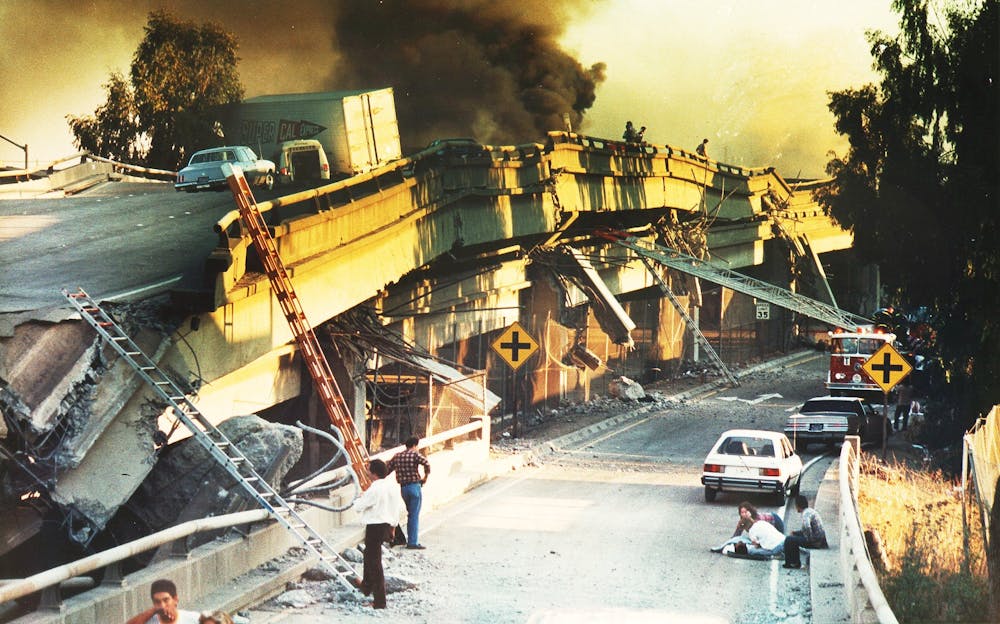
It is often said in the field of seismology that earthquakes don’t kill people, buildings do. Scientists are already good enough today at forecasting earthquake hazards that the best course of action is to redouble efforts to construct or retrofit buildings, bridges and other infrastructure so they’re safe and resilient in the event of ground shaking in any area known to be at risk from large future quakes. These precautions will pay off in lives and property saved far more than a hoped-for means of earthquake prediction, at least for the foreseeable future.
This is an updated version of an article originally published on Feb. 15, 2023.
Harold Tobin, Professor of Seismology and Geohazards, University of Washington
This article is republished from The Conversation under a Creative Commons license. Read the original article.