 How to resolve AdBlock issue?
News
- Details
- Written by: Elizabeth Larson
Dogs available for adoption this week include mixes of Belgian malinois, border collie, boxer, Cardigan Welsh corgi, German shepherd, Great Pyrenees, hound, pit bull, Siberian husky, schnauzer, shepherd and Yorkshire terrier.
Dogs that are adopted from Lake County Animal Care and Control are either neutered or spayed, microchipped and, if old enough, given a rabies shot and county license before being released to their new owner. License fees do not apply to residents of the cities of Lakeport or Clearlake.
The following dogs at the Lake County Animal Care and Control shelter have been cleared for adoption.
Call Lake County Animal Care and Control at 707-263-0278 or visit the shelter online for information on visiting or adopting.

‘Faith’
“Faith” is a 2-month-old female husky puppy with a gray and white coat.
She is in foster care, ID No. LCAC-A-5648.
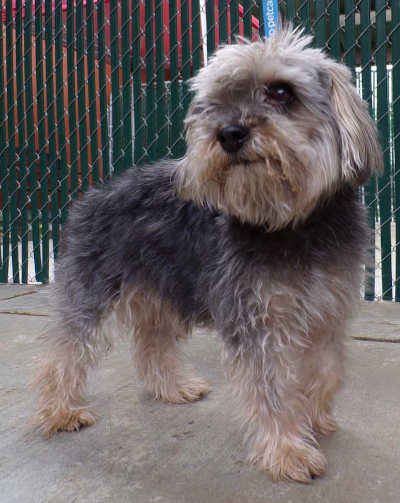
‘Teddy’
“Teddy” is a 12-year-old male Yorkshire terrier-schnauzer mix with a tricolor coat.
He is in kennel No. 2, ID No. LCAC-A-1896.

Male Great Pyrenees
This 1 and a half year old male Great Pyrenees has a white coat.
He is in kennel No. 3, ID No. LCAC-A-5469.

Boxer-pit bull puppy
This 2-month-old male boxer-pit bull puppy has a short tan coat with black and white markings.
He is in kennel No. 5a, ID No. LCAC-A-5806.

Boxer-pit bull puppy
This 2-month-old male boxer-pit bull puppy has a short tan coat with black and white markings.
He is in kennel No. 5b, ID No. LCAC-A-5807.
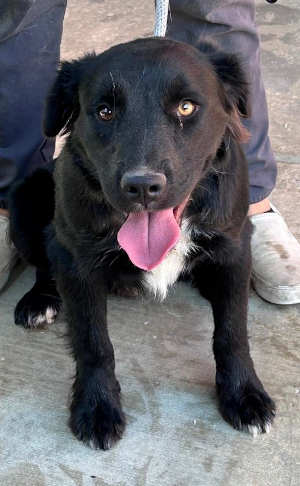
Male border collie
This 1-year-old male border collie has a black and white coat.
He is in kennel No. 9, ID No. LCAC-A-5643.

Male pit bull terrier-hound puppy
This 6-month-old male pit bull terrier-hound puppy has a black coat with white markings.
He is in kennel No. 12, ID No. LCAC-A-5834.
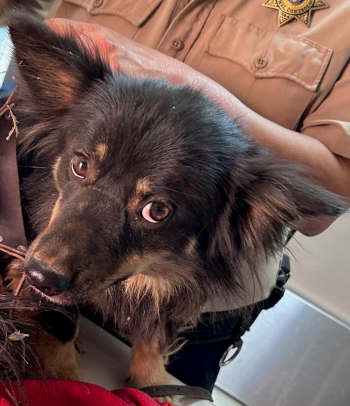
Cardigan Welsh corgi
This 1-year-old male Cardigan Welsh corgi has a brown and tan coat.
He is in kennel No. 14, ID No. LCAC-A-5882.

Hound-pit bull terrier
This 6-month-old male hound-pit bull terrier puppy has a black coat with white and tan markings.
He is in kennel No. 15a, ID No. LCAC-A-5831.

Hound-pit bull terrier
This 6-month-old male hound-pit bull terrier puppy has a white coat with gray markings.
He is in kennel No. 15b, ID No. LCAC-A-5832.
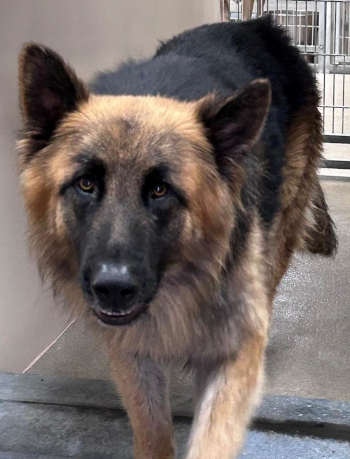
Male German shepherd
This 5-year-old male German shepherd has a long black and tan coat.
He is in kennel No. 17, ID No. LCAC-A-5875.
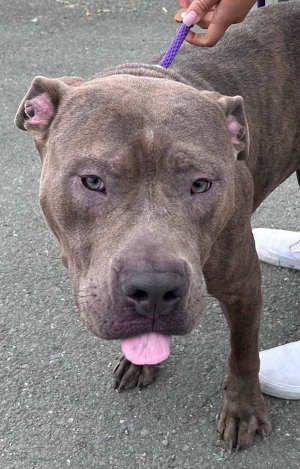
Male pit bull terrier
This 3-year-old male pit bull terrier has a short brown coat.
He is in kennel No. 18, ID No. LCAC-A-5835.

Male pit bull
This 1-year-old male pit bull has a short brindle coat.
He is in kennel No. 21, ID No. LCAC-A-5616.

Male shepherd
This 2-year-old male shepherd has a black and tan coat.
He is in kennel No. 22, ID No. LCAC-A-5423.
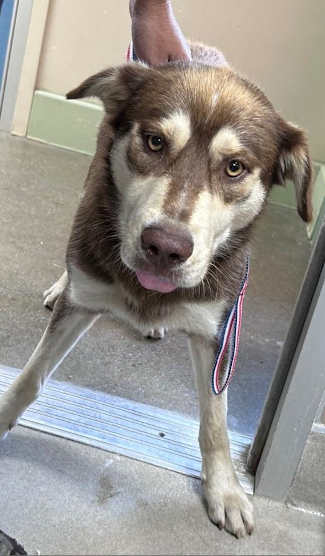
Male Siberian husky
This 4-year-old male Siberian husky has a brown and tan coat.
He is in kennel No. 24, ID No. LCAC-A-5891.
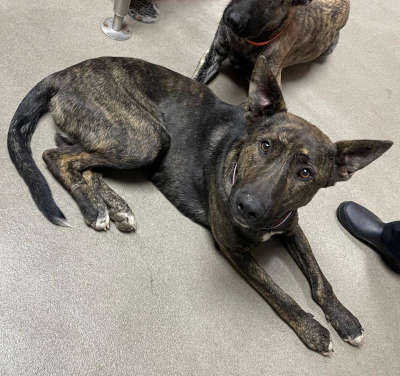
Male shepherd
This 1 and a half year old male shepherd has a short tricolor coat.
He is in kennel No. 26, ID No. LCAC-A-5424.
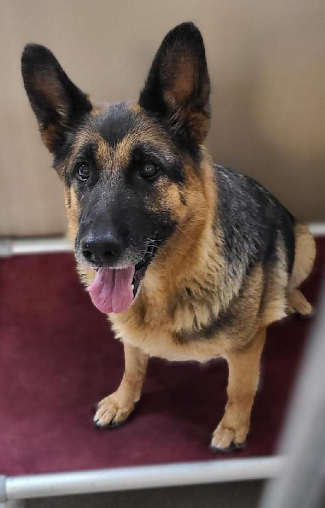
Female German shepherd
This 7-year-old female German shepherd has a black and tan coat.
She is in kennel No. 30, ID No. LCAC-A-5629.

‘Chikis’
“Chikis” is a 5-year-old female boxer with a short brown coat.
She is in kennel No. 32, ID No. LCAC-A-3672.
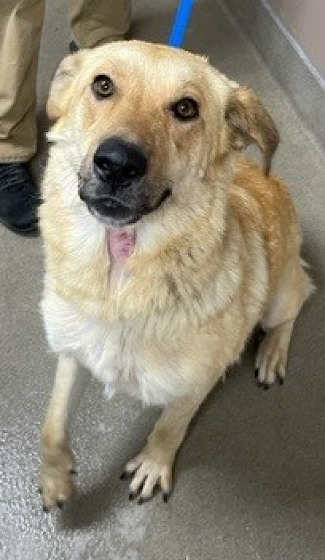
‘Nana’
“Nana” is a 2-year-old female shepherd mix with a short yellow coat.
She is in kennel No. 33, ID No. LCAC-A-5277.

‘Xina’
“Xina” is a 3-year-old female Belgian malinois with a brown and black coat.
She is in kennel No. 34, ID No. LCAC-A-462.
Email Elizabeth Larson at
- Details
- Written by: LAKE COUNTY NEWS REPORTS
The Lake County Registrar of Voters office encourages Lake County residents to make sure they are registered to vote or update their voter registration information.
Eligible residents can register to vote online at https://registertovote.ca.gov/ or at the Lake County Registrar of Voters office at 325 N. Forbes St. in Lakeport.
Voter registration forms are also available at all Lake County libraries and post offices.
If you require a voter registration form be mailed to you, call the Registrar of Voters Office at 707-263-2372.
Eligible students, ages 16 and 17, can be civically engaged by preregistering to vote.
If students preregister to vote, they will automatically become voters when they turn 18 years old.
National Voter Registration Day efforts are designed to ensure every eligible voter has the opportunity to register to vote or update their voter registration information in order to be prepared for future elections.
For additional information, call the Registrar of Voters Office at 707-263-2372.
- Details
- Written by: Jaclyn Champagne, University of Arizona

As people, we are all shaped by the neighborhoods we grew up in, whether it was a bustling urban center or the quiet countryside. Objects in distant outer space are no different.
As an astronomer at the University of Arizona, I like to think of myself as a cosmic historian, tracking how supermassive black holes grew up.
Like you, every supermassive black hole lives in a home – its host galaxy – and a neighborhood – its local group of other galaxies. A supermassive black hole grows by consuming gas already inside its host galaxy, sometimes reaching a billion times heavier than our Sun.
Theoretical physics predicts that black holes should take billions of years to grow into quasars, which are extra bright and powerful objects powered by black holes. Yet astronomers know that many quasars have formed in only a few hundred million years.
I’m fascinated by this peculiar problem of faster-than-expected black hole growth and am working to solve it by zooming out and examining the space around these black holes. Maybe the most massive quasars are city slickers, forming in hubs of tens or hundreds of other galaxies. Or maybe quasars can grow to huge proportions even in the most desolate regions of the universe.
Galaxy protoclusters
The largest object that can form in the universe is a galaxy cluster, containing hundreds of galaxies pulled by gravity to a common center. Before these grouped galaxies collapse into a single object, astronomers call them protoclusters. In these dense galaxy neighborhoods, astronomers see colliding galaxies, growing black holes and great swarms of gas that will eventually become the next generation of stars.
These protocluster structures grow much faster than we thought, too, so we have a second cosmic problem to solve – how do quasars and protoclusters evolve so quickly? Are they connected?
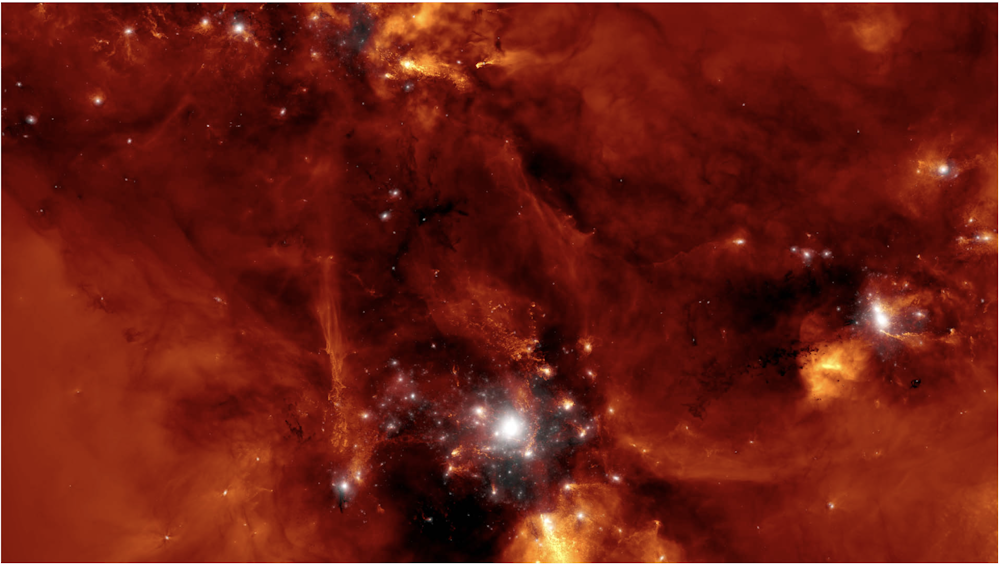
To look at protoclusters, astronomers ideally obtain images, which show the galaxy’s shape, size and color, and a spectrum, which shows the galaxy’s distance from Earth through specific wavelengths of light, for each galaxy in the protocluster.
With telescopes like the James Webb Space Telescope, astronomers can see galaxies and black holes as they were billions of years ago, since the light emitted from distant objects must travel billions of light-years to reach its detectors. We can then look at protoclusters’ and quasars’ baby pictures to see how they evolved at early times.
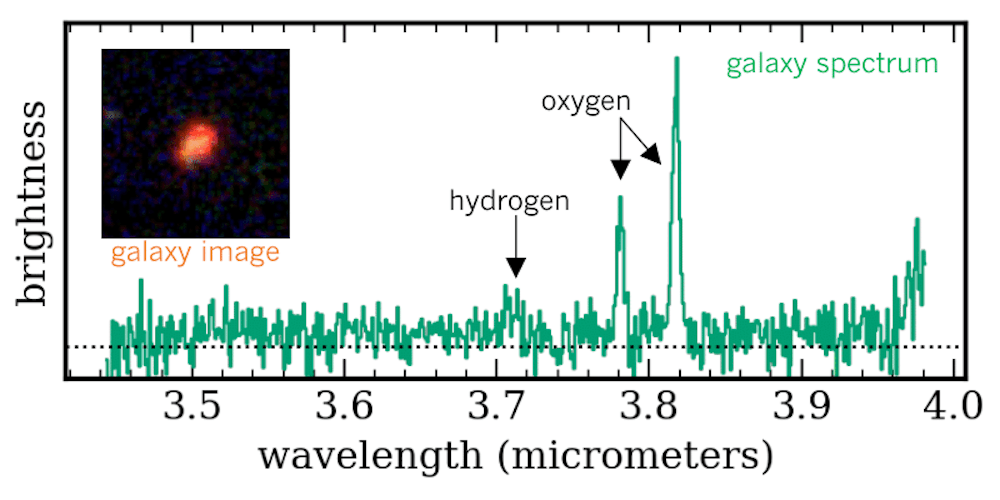
It is only after looking at spectra that astronomers determine whether the galaxies and quasars are actually close together in three-dimensional space. But getting spectra for every galaxy one at a time can take many more hours than any astronomer has, and images can show galaxies that look closer together than they actually are.
So, for a long time, it was only a prediction that massive quasars might be evolving at the centers of vast galactic cities.
An unprecedented view of quasar environments
Now, Webb has completely revolutionized the search for galaxy neighborhoods because of an instrument called a wide-field slitless spectrograph.
This instrument takes spectra of every galaxy in its field of view simultaneously so astronomers can map out an entire cosmic city at once. It encodes the critical information about galaxies’ 3D locations by capturing the light emitted from gas at specific wavelengths – and in only a few hours of observing time.
The first Webb projects are hoping to look at quasar environments focused on a period about 800 million years after the Big Bang. This time period is a sweet spot in which astronomers can view these monster quasars and their neighbors using the light emitted by hydrogen and oxygen. The wavelengths of these light features show where the objects emitting them are along our line of sight, allowing astronomers to complete the census of where galaxies live relative to bright quasars.
One such ongoing project is led by the ASPIRE team at the University of Arizona’s Steward Observatory. In an early paper, they found a protocluster around an extremely bright quasar and confirmed it with 12 galaxies’ spectra.
Another study detected over a hundred galaxies, looking toward the single most luminous quasar known in the early universe. Twenty-four of those galaxies were close to the quasar or in its neighborhood.
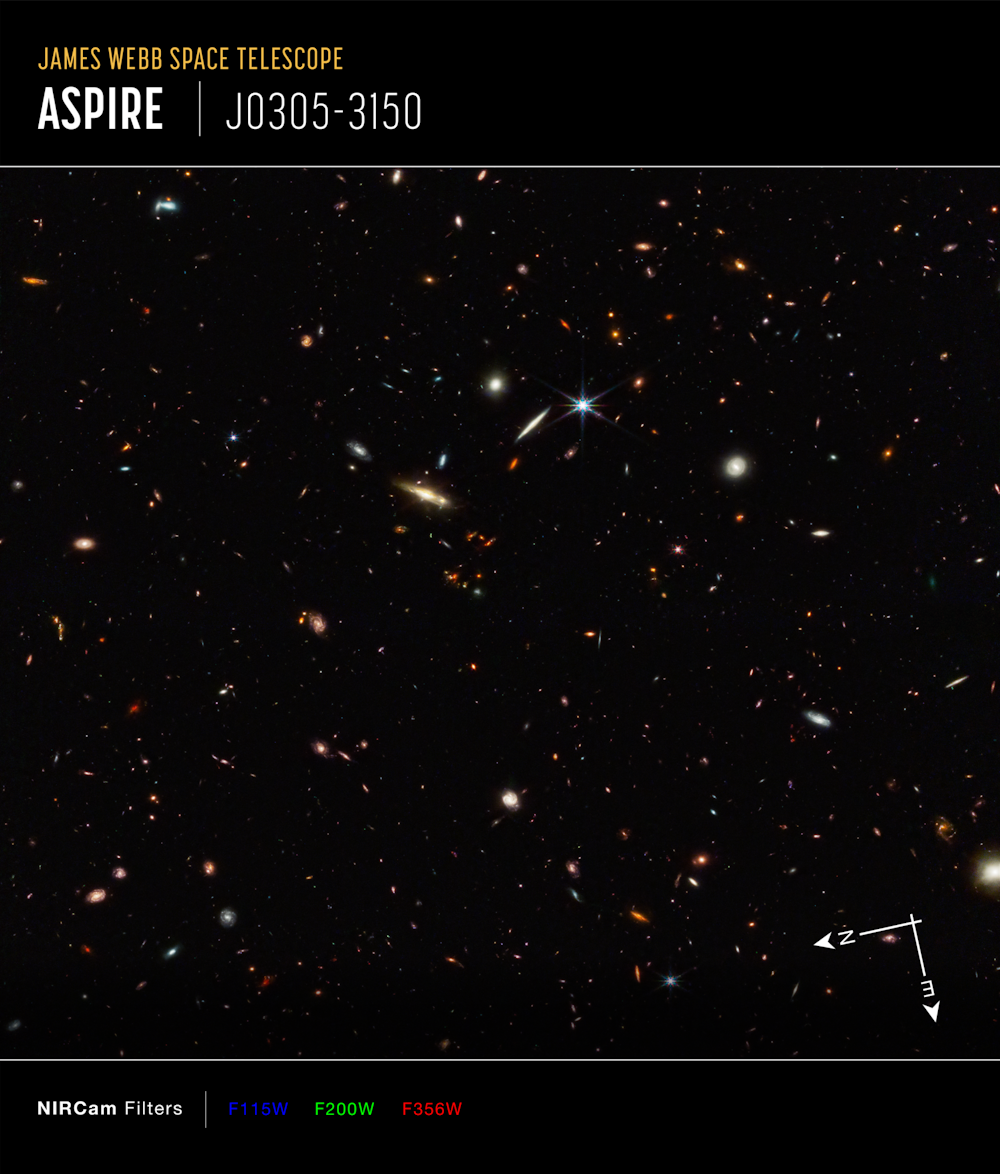
In ongoing work, my team is learning more details about mini galaxy cities like these. We want to figure out if individual galaxies show high rates of new star formation, if they contain large masses of old stars or if they are merging with one another. All these metrics would indicate that these galaxies are still actively evolving but had already formed millions of years before we observed them.
Once my team has a list of the properties of the galaxies in an area, we’ll compare these properties with a control sample of random galaxies in the universe, far away from any quasar. If these metrics are different enough from the control, we’ll have good evidence that quasars do grow up in special neighborhoods – ones developing much faster than the more sparse regions of the universe.
While astronomers still need more than a handful of quasars to prove this hypothesis on a larger scale, Webb has already opened a window into a bright future of discovery in glorious, high-resolution detail.
Jaclyn Champagne, JASPER Postdoctoral Researcher, University of Arizona
This article is republished from The Conversation under a Creative Commons license. Read the original article.
- Details
- Written by: BUREAU OF LAND MANAGEMENT
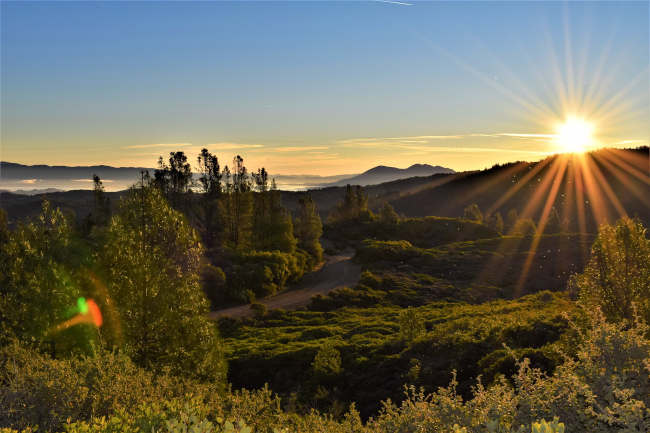
NORTH COAST, Calif. — The Bureau of Land Management is inviting the public to roll up their sleeves and come out on Saturday, Sept. 23, from 9 a.m. to noon, to help beautify the Westside Staging Area at South Cow Mountain for the 30th annual National Public Lands Day.
Participants are encouraged to bring water, hats, sunscreen, gloves and sturdy work boots.
Volunteers are needed to help repair the loading ramp, clean the parking area of sediment runoff, remove damaged signs and paint bathrooms.
“Public land visitors who give back by pitching in during National Public Lands Days are a huge help in keeping our recreation areas clean and safe year after year,” said Ukiah Field Manager Nicholas Lavrov. “Volunteers make a big difference in helping the BLM offer the best recreation opportunity possible.”
South Cow Mountain Off-highway Vehicle Management Area is a favorite recreation area consisting of approximately 23,000 acres of public lands for off-highway vehicle use.
Event volunteers will receive a free tee-shirt and lunch will be provided. After lunch, there will be opportunities to explore South Cow Mountain with fellow enthusiasts and BLM staff.
Feel free to bring out an off-highway vehicle and safety gear.
For more information about National Public Lands Day, visit the National Environmental Education Foundation website.
For more information about the event, please reach out to Ukiah Assistant Field Manager Shane Garside at 707-468-4081,