 How to resolve AdBlock issue?
News
- Details
- Written by: Latisha Nixon-Jones, Jacksonville University

As questions loom over the Federal Emergency Management Agency’s ability to fund disaster recovery efforts, people whose homes were damaged or destroyed by recent wildfires and storms are trying to make their way through the difficult process of securing financial aid.
Residents in communities hit by Hurricane Idalia, the Maui fires or other recent disasters have a long, tough journey ahead. Early estimates suggest Idalia caused US$12 billion to $20 billion in losses, primarily in property damage, acccording to Moody’s Analytics. And rebuilding Lahaina, Hawaii, has been forecast at over $5.5 billion.
How well the initial disaster response meets residents’ needs has far-reaching consequences for community resilience, especially for vulnerable residents, as we saw after Hurricanes Katrina and Maria.
I am a law professor who focuses on disaster recovery and preparedness and has created several legal clinics to assist survivors. Here’s what anyone facing losses after a federally declared disaster needs to know.
Declaring a disaster
The road to recovery starts with state and federal governments identifying damages – both property damage and economic damage. These assessments will shape the scope of federal assistance and how resources are allocated for each community and survivor. The level of damage will determine whether the president approves a major disaster declaration or simply an emergency declaration.
FEMA created a survey tool, released in May 2023, to make these assessments more consistent. It is now used by officials to collect information about damage to residences, whether owners or renters live there, and the amount of insurance coverage, among other details. That information is then used to determine the extent of the disaster, its impact on infrastructure and the type of aid needed in the request for a federal disaster declaration.
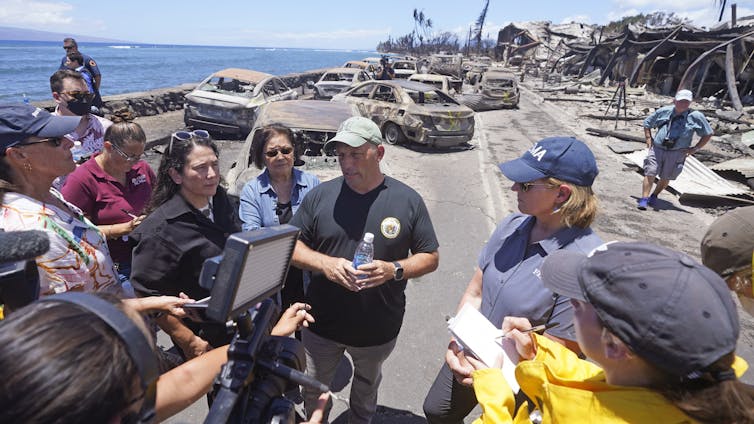
Once the federal government issues an emergency or major disaster declaration, individuals can apply for disaster recovery funding.
Documenting the damage
Step 2 is determining individual damages.
Amid the grief and the rush to find temporary housing and rebuild lives, it can be hard to focus on meticulously documenting what was lost and dealing with insurance. But federal aid has relatively short deadlines – people have 30 days from the formal disaster declaration to apply for disaster unemployment assistance and 60 days for individual and household assistance, such as aid for housing, though that deadline is often extended.
As soon as possible, disaster survivors should take photos of the damage and record every affected area of their property. That includes capturing details of damage to structures, personal belongings, vehicles and any medical equipment. This documentation will help provide the evidence for insurance claims, requests for government assistance and potential tax savings.
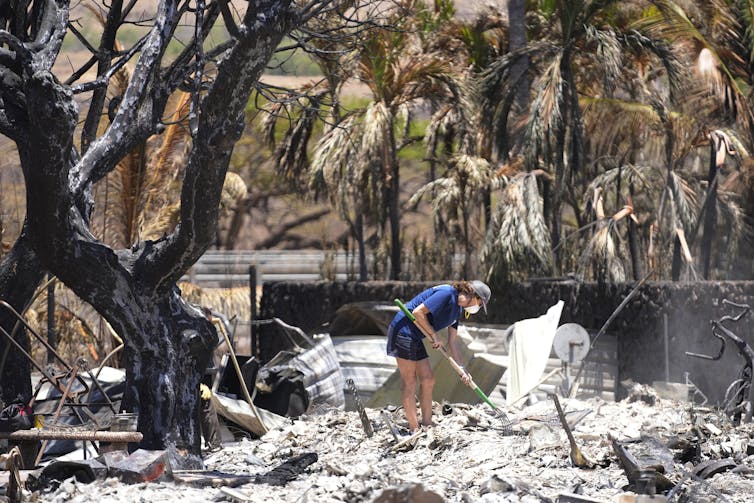
The Internal Revenue Service has a helpful guide for reconstructing records after catastrophic disasters that destroy everything. Government agencies can recover lost driving records, mortgage records, wills and vehicle sales records. Most of the costs for these searches can be waived after a disaster.
There are other sources, too. Title companies, property tax assessors and real estate brokers will have many documents related to a home’s value and possibly photos. Insurance policies typically list major assets. Credit card companies may have statements showing major purchases. Mobile phones, friends and social media accounts may have more photos of the property.
Keeping records such as repair invoices, receipts, leases, canceled checks and money orders can also help provide an overview of the losses. FEMA recently amended its policy to also allow affidavits to prove ownership of homes passed down through generations, known as heirship property.
Finding disaster aid
People generally have four options for aid: insurance coverage, FEMA benefits, community or nonprofit funding, and private funding, including loans. Navigating this complex landscape can be hard.
Start with your insurance – homeowners insurance, renters insurance and insurance for vehicles, as well as medical, dental and health. Disaster survivors must apply for their relevant insurance payouts before FEMA will pay benefits. President Joe Biden made an exception to this rule to offer a one-time $700 payment for Maui residents to assist with critical needs, including shelter and transportation.
In cases where insurance coverage is denied or the person doesn’t have insurance, FEMA can become a lifeline.
FEMA’s Individual Assistance program offers benefits that include coverage for temporary lodging, home repair, transportation and medical needs. The agency provides up to $41,000 for housing assistance after emergencies or disaster declarations. FEMA’s disaster relief fund is close to depleted, however, after several multibillion-dollar disasters. Without additional funding from Congress soon, FEMA Administrator Deanne Criswell said some recovery funding may be delayed to the next fiscal year, which starts in October.
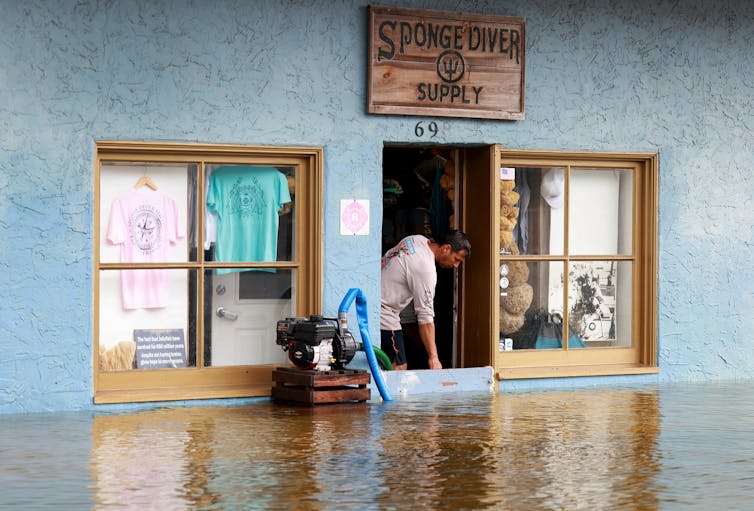
To cover the costs that go beyond FEMA’s limits, survivors may need to secure private loans or disaster loans, such as Small Business Administration disaster loans, to bridge the gap. Homeowners can apply for SBA loans to replace or repair their primary residence or personal property, including cars, furniture and other items. Additionally, SBA loans can also cover business losses.
For those unwilling or unable to resort to loans, state and local governments often create housing recovery centers using Community Development Block Grants. These grants can help survivors reestablish housing, but the funding also takes much longer to arrive. A CBDG grant in Baton Rouge provided funding for rebuilding housing and to mitigate future flood damage in housing and rental programs after the area flooded in 2016.
Community partnerships are crucial
Amid the complexities of disaster recovery, the importance of community planning and collaboration cannot be overstated.
A coordinated approach that involves local governments, relief organizations and community leaders serves as a catalyst for effective recovery and also makes it easier to identify vulnerable populations and ensure the equitable distribution of resources so no one is left behind.
Communities often set up centers where residents can find and speak to advisers from insurance companies, FEMA and other sources of support. These disaster recovery centers can be the cornerstone for long-term recovery groups that help a community both recover and build resilience.
Five years after Hurricane Maria, community groups were still on the ground in Puerto Rico providing aid and resources to the local community. Ten years after Hurricane Katrina, local housing groups were still providing support to New Orleans residents, especially those employed in the hospitality industry.
In the midst of this formidable journey to recovery, the indomitable spirit of communities banding together, combined with the concerted efforts of government agencies and organizations, can be uplifting. Each step forward represents a collective stride toward healing, renewal and a future marked by greater unity.
This articled was updated Sept. 1, 2023, with early damage estimates.
Latisha Nixon-Jones, Associate Professor of Law, Jacksonville University
This article is republished from The Conversation under a Creative Commons license. Read the original article.
- Details
- Written by: LAKE COUNTY NEWS REPORTS
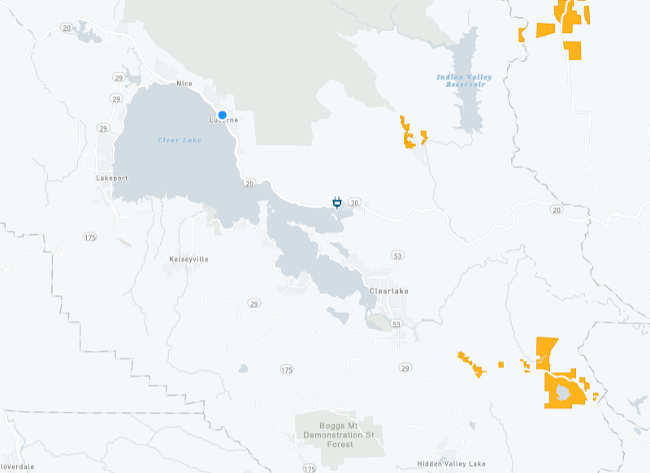
LAKE COUNTY, Calif. — In response to a weather forecast that includes high winds midweek, a public safety power shut-off may begin on Wednesday evening, with a small number of Lake County residents to be impacted.
Pacific Gas and Electric said Tuesday that its meteorologists and operations professionals, working with weather agencies, are monitoring a potential dry, northerly windstorm forecast to start Wednesday evening, extending into Thursday morning, which is why the company is considering implementing the public safety power shut-off, or PSPS.
The PSPS, which may start at 6 p.m. Wednesday, would potentially impact 4,200 customers in portions of eight counties and two tribal communities, including seven customers in Napa County and 186 customers in Lake County.
The company’s mapping for the proposed PSPS shows a small number of Lake County residents would be impacted near Indian Valley Reservoir, along with a larger group east of Lower Lake in a remote area along Morgan Valley Road, close to the Colusa, Napa and Yolo county lines.
Because of the wind storm, PG&E said it has begun sending advanced notifications to customers — via text, email and automated phone call — in targeted areas where PG&E may implement the PSPS to reduce the risk of ignitions from energized power lines.
Predictive Services Northern Operations, a federal forecasting agency, is also forecasting high fire potential risk Wednesday into Thursday for northerly wind gusts up to 40 miles per hour.
The Sacramento National Weather Service Office stated northerly winds develop Wednesday into Thursday with gusts of 30 to 35 miles per hour bringing enhanced fire weather concerns for portions of the Sacramento Valley.
The potential shut-off is currently expected to affect approximately 4,200 customers across the following counties and tribal communities:
Butte County: 435 customers, 36 Medical Baseline customers.
Colusa County: 484 customers, 37 Medical Baseline customers.
Glenn County: 349 customers, 18 Medical Baseline customers.
Lake County: 186 customers, 20 Medical Baseline customers.
Napa County: 7 customers, 0 Medical Baseline customers.
Shasta County: 1,558 customers, 131 Medical Baseline customers.
Tehama County: 1,117 customers, 124 Medical Baseline customers.
Yolo County: 10 customers, 0 Medical Baseline customers.
Grindstone Rancheria: 48 customers, 4 Medical Baseline customers.
Pit River tribes: 8 customers, 0 Medical Baseline customers.
Customers can look up their address online to find out if their location is being monitored for the potential safety shut-off at www.pge.com/pspsupdates.
- Details
- Written by: LAKE COUNTY NEWS REPORTS
McGuire, who is now the Senate president designee, introduced Senate Bill 281 to institute greater consequences for aggravated arson cases.
McGuire’s office cited the fact that California is facing unprecedented, destructive wildfires, with 14 of the largest 20 wildfires in California history having occurred just in the last decade.
Some incredibly destructive wildfires have been set by arsonists including the 2016 Clayton fire in Lake County, which destroyed 188 homes, and the Esperanza fire, which claimed the lives of five firefighters in Southern California.
SB 281 will throw the book at individuals who are convicted of aggravated arson.
This is an issue that McGuire has championed for years.
The bill passed both the Senate and the Assembly and it’s now headed to the governor’s desk.
“An aggravated arson charge is reserved for the worst of the worst — the most heinous arsonists who exhibit specific intent to inflict damage and destruction in our communities or who are a continuing threat to society. We need to ensure this groundbreaking public safety measure is signed into law and we’ll be fighting alongside first responders and District Attorneys from across the Golden State to get this job done,” McGuire said.
Oct. 14 is the last day for Newsom to sign bills from this legislative session.
- Details
- Written by: Elizabeth Larson
The council will meet at 9 a.m. Thursday, Sept. 21, in the council chambers at Clearlake City Hall, 14050 Olympic Drive.
The meeting will be broadcast live on the city's YouTube channel or the Lake County PEGTV YouTube Channel. Community members also can participate via Zoom or can attend in person.
The webinar ID is 869 9816 7652.
One tap mobile is available at +16694449171,,86998167652# or join by phone at 669 444 9171 or 720 707 2699.
The agenda can be found here.
Comments and questions can be submitted in writing for City Council consideration by sending them to City Clerk Melissa Swanson at
To give the council adequate time to review your questions and comments, please submit your written comments before 4 p.m. Thursday, Sept. 21.
On the agenda are two items of business.
The first is the award of the contract for the Burns Valley Light Pole Installation Project.
The council is being asked to approve the $43,594 contract and authorize City Manager Alan Flora to approve up to 10% for additional unforeseen contract amendments.
The second item of business is staff requested authorization of an amendment of contract with Northwest Construction for the Old Highway 53 Drainage Improvement Project. The amendment is in the amount of $25,500.
Email Elizabeth Larson at