 How to resolve AdBlock issue?
News
- Details
- Written by: LAKE COUNTY NEWS REPORTS
This special event will take place at the beautiful Boatique Winery in Kelseyville on Thursday, Nov. 2, at 5 p.m.
All proceeds raised at the event will help support Adventist Health Clear Lake’s efforts to bring the latest cardiac technology to Lake County.
Enjoy a fabulous dinner, music and live auction, while supporting a great cause. Individual tickets are available for $125 each, which includes dinner. Sponsorship opportunities start at $2,500 and go up from there.
Sponsorship packages all include reserved tables, recognition in event marketing and materials and much more.
To become a sponsor or to purchase tickets, visit adventisthealthclearlake.org/benefitshow.
To learn more about Every Beat Counts, contact Faith Hornby, philanthropy manager, at 707-995-5749.
- Details
- Written by: F. Chris Curran, University of Florida
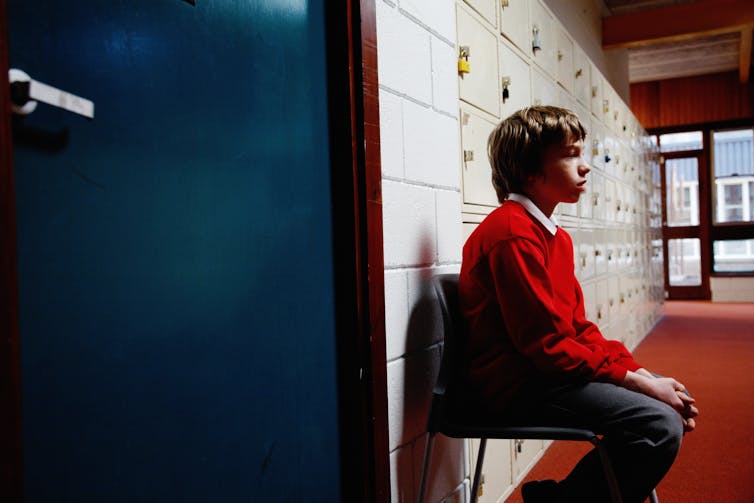
The 2022-23 school year was a particularly violent year for educators.
In Florida, a high school student beat a paraprofessional unconscious. A 15-year-old in Georgia left her teacher with difficulty walking. And a group of students in Texas sent their assistant principal to the hospital after an assault.
Recent headlines suggest the 2023-24 school year may not be much different.
Such violence at school disrupts teaching and learning and has elicited calls to reform school discipline policies.
As a policy researcher who studies school safety and discipline, I have seen two camps form with polarized and politicized views on school discipline. On the one side are those who seek more restorative responses to misconduct that emphasize building relationships with students and discipline policies that keep kids in school. On the other are calls for greater use of exclusionary and punitive practices like suspension.
In my view, making schools safe requires school leaders not to get caught up in this either/or debate. Instead, I believe it requires recognizing a shared goal of safe schools and the need for a comprehensive approach to achieving it.
Behavior and the pandemic
Recent reports suggest these high-profile incidents of violence in schools are part of a general increase in student misconduct over the past couple of years. This contrasts with a decline over the prior decades.
For example, the National Center for Education Statistics found that 84% of public school leaders felt the pandemic negatively affected student behavior. Another survey found two out of three teachers and leaders perceived more student misbehavior in 2021 than in 2019.
Studies have shown that students who feel unsafe going to school have worse attendance rates than those attending schools with less violence and misbehavior. They also score lower on standardized tests, particularly when classroom instruction is disrupted.
What’s more, teachers who experience threats or physical violence from students are more likely to leave their positions, according to a study I co-authored in 2017.
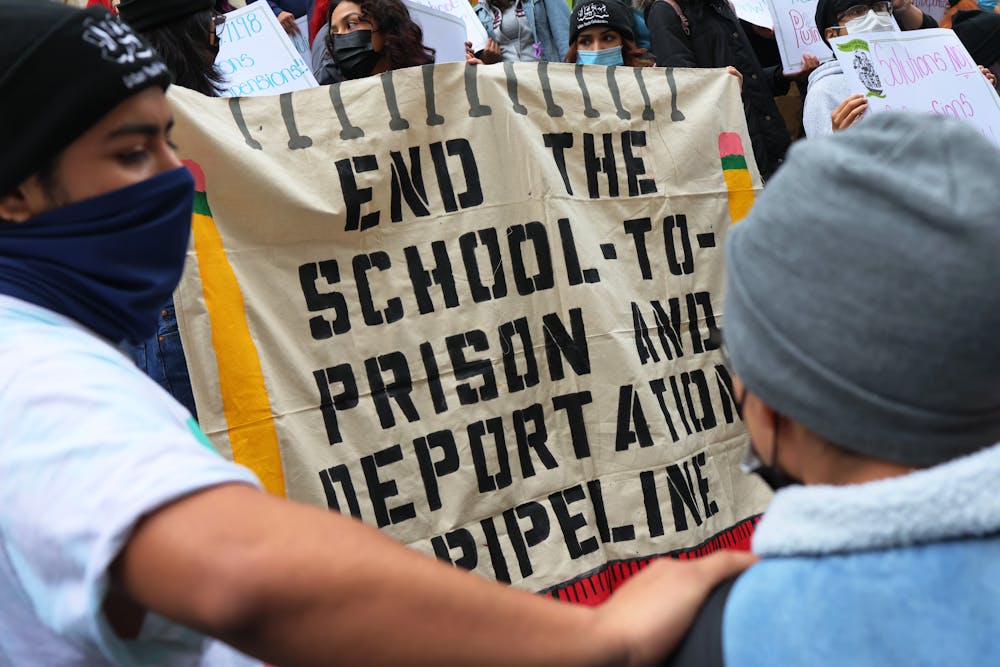
Restorative justice experiences backlash
Over the past couple of decades, states and school districts nationwide have adopted school discipline reforms that prioritize relationships between peers and with teachers, positive incentives for good behavior and prevention of misconduct.
These policies, often implemented as part of restorative justice initiatives, focus on building community and a positive school climate instead of removing kids from school.
But as school violence persists, these restorative justice reforms are being called into question.
In Nevada, teachers union representatives from the Clark County Education Association sought to revise laws to immediately remove students for violence against school staff. The state legislature there passed legislation scaling back restorative justice and making it easier to suspend students. In San Diego, the superintendent promised to revisit restorative discipline policies after parent complaints about student safety. Policy advocates have claimed discipline reform has contributed to school shootings.
While restorative practices and other positive interventions can improve student outcomes, prior research has found many of these less punitive disciplinary reforms to be poorly implemented or less effective than hoped.
In some cases, this has meant students have been allowed to stay in school despite posing a threat to the safety of others.
Suspensions and expulsions aren’t the solution
The limitations of restorative practices have resulted in calls for a return to greater use of suspensions and other punitive discipline. In one of the most high-profile displays, a Florida sheriff announced in front of a jail plans for a return to more punitive discipline, suggesting a need for more use of detentions and suspensions. He lamented that students were no longer afraid of suspensions or having “the cheeks of their a– torn off for not doing right in class.”
In some cases, removing students who are disruptive to the classroom has had positive effects on other students’ achievement. But exclusionary school discipline like suspension and expulsion can have their own unintended consequences on students. For example, suspensions are related to lower academic test scores for those suspended as well as increased delinquency, such as criminal activity and arrest.
Additionally, schools suspend a disproportionately high number of kids who aren’t white – particularly Black students. In addition, males and students with disabilities are more likely to be suspended.
Ultimately, there is little evidence that suspensions and expulsions improve behavior. In fact, a recent national survey found that only 13% of principals agreed that suspensions reduce future misbehavior.
A path forward
Proponents of progressive discipline reform and those advocating for “get-tough,” exclusionary policies share a desire for safe schools. The sheriff speaking in front of the jail as well as his critics both want to prevent kids from ending up incarcerated.
How do policymakers and educators see past these divides to achieve safer schools?
First, it may help to acknowledge that effective school discipline policies can include both restorative and exclusionary practices. It is true that there is a need to reduce the disproportionate use of suspension for minor offenses. But it is also true that students who pose an immediate danger to others may need to be temporarily removed to settings where they can receive additional support.
Next, schools can focus on strengthening their school climate through excellent instruction and positive relationships between students and teachers. Welcoming schools where students are engaged in learning may preempt many behavioral situations.
Finally, policymakers can recognize that school safety is affected by the experiences of students outside of school. Addressing the trauma, violence and social disruptions experienced in homes and neighborhoods through broader public policy holds potential to improve safety inside schools.
All of this takes resources and support for schools, educators and students. I believe these are resources well spent, though, to achieve the shared goal of school safety.
F. Chris Curran, Associate Professor of Educational Leadership and Policy, University of Florida
This article is republished from The Conversation under a Creative Commons license. Read the original article.
- Details
- Written by: DENNIS FORDHAM
When a decedent’s assets are administered in a probate or trust administration, the personal representative administering the probate or the trustee administering the trust estate have legal responsibilities to creditors of the decedent’s estate.
In probate, the personal representative has a duty to send a notice of probate administration and a creditor claim form to all known and reasonably ascertainable creditors during the first four months of the probate (Probate Code sections 9050-9054).
Paying creditors precedes distributions to beneficiaries; with the important exceptions such as the family allowance and probate homestead protecting the decedent’s surviving spouse and minor children (Probate Code sections 6500-6600).
Creditors must first file a creditor’s claim both with the probate court and with the personal representative not later than one year from the deceased debtor’s date of death (California Code Civil Procedure 366.2).
When necessary, a creditor may commence probate to file their timely creditor’s claim. Creditor claims that are received after one year of the decedent’s death are generally speaking time barred.
In California, a decedent’s revocable living trust is liable for the claims of the deceased settlor’s creditors and expenses of administration in a probate estate to the extent that the assets inside the probate estate are insufficient to pay such claims and expenses (Probate Code section 19001).
Thus, if a creditor claim is approved but there are insufficient assets in the decedent’s probate estate (e.g., a “dry probate’ opened to file a timely creditor’s claim) then the creditor may pursue satisfaction from the trust estate.
Unlike a probate proceeding, a trust administration requires the trustee to administer the deceased settlor’s trust estate, according to the trust’s own terms, for the benefit of the beneficiaries (Probate Code section 16000). Thus, the trustee must follow what the trust says about paying debts.
Does it say that the trustee “may” pay all just debts”, in which case the trustee has discretion to pay just debts, or does the trust say that the trustee “shall” (i.e., must) pay all just debts of the deceased settlor, in which case the trustee has no discretion but to pay debts.
Nonetheless, unless the trust requires that the deceased settlor’s debts be paid, a trustee of a decedent’s revocable living trust has no affirmative duty in California state law to administer the trust estate for the benefit of the deceased settlor’s own creditors (Arluk Med. Ctr. Indus. Group, Inc. v Dobler (2004) 116 CA4th 1324).
Unless otherwise provided in the trust, the trustee does not have to withhold distributions to beneficiaries pending resolution of a creditor’s claim. However, a trustee may still be sued by a known creditor if the trustee distributes assets that leaves the trust unable to pay the decedent’s creditors’ approved claims in the probate action.
Accordingly, where no probate is opened, a trustee may choose either to open a probate or to use the optional trust creditor claims procedure, akin to opening a probate (Probate Code sections 19000-19400). A trustee should always proceed cautiously with the specific advice of counsel.
A creditor whose timely filed creditor claim is approved in a probate proceedings still has a legal right to pursue satisfaction of the claim from trust beneficiaries who received a distribution, but only to the extent of that beneficiary’s share of the total trust distributions (Probate Code sections 19400-19402). Whether a creditor would actually do so depends on whether the effort is likely to be worth the costs.
Other assets of a decedent may pass outside of any probate or trust administration such as assets that go to surviving joint tenants, to surviving death beneficiaries on transfer on death or pay on death accounts, or by way of a small estate affidavit procedure that does not require any notice to creditors.
However, the beneficiaries who receive assets subject to a small estate affidavit do take subject to the possibility that the creditors may open a probate and seek to recover such assets from the beneficiaries to include in the probate estate and become subject to creditor claims.
Handling creditor claims can be fraught with peril. The foregoing overview is not legal advice. Consult a qualified attorney for fact specific legal guidance.
Dennis A. Fordham, Attorney, is a State Bar-Certified Specialist in estate planning, probate and trust law. His office is at 870 S. Main St., Lakeport, Calif. He can be reached at
- Details
- Written by: Chris Impey, University of Arizona
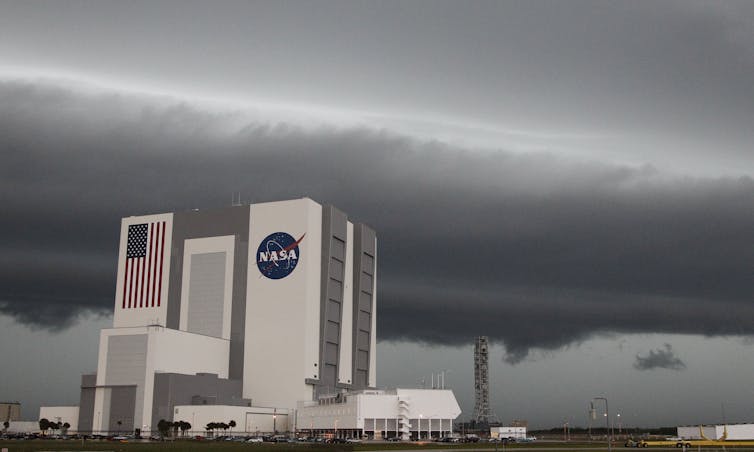
NASA’s independent study team released its highly anticipated report on UFOs on Sept. 14, 2023.
In part to move beyond the stigma often attached to UFOs, where military pilots fear ridicule or job sanctions if they report them, UFOs are now characterized by the U.S. government as UAPs, or unidentified anomalous phenomena.
Bottom line: The study team found no evidence that reported UAP observations are extraterrestrial.
I’m a professor of astronomy who has written extensively on astrobiology and the scientists who search for life in the universe. I have long been skeptical of the claim that UFOs represent visits by aliens to Earth.
From sensationalism to science
During a press briefing, NASA Administrator Bill Nelson noted that NASA has scientific programs to search for traces of life on Mars and the imprints of biology in the atmospheres of exoplanets. He said he wanted to shift the UAP conversation from sensationalism to one of science.
With this statement, Nelson was alluding to some of the more outlandish claims about UAPs and UFOs. At a congressional hearing in July, former Pentagon intelligence officer David Grusch testified that the American government has been hiding evidence of crashed UAPs and alien biological specimens. Sean Kirkpatrick, head of the Pentagon office charged with investigating UAPs, has denied these claims.
And the same week NASA’s report came out, Mexican lawmakers were shown by journalist Jaime Maussan two tiny, 1,000-year-old bodies that he claimed were the remains of “non-human” beings. Scientists have called this claim fraudulent and say the mummies may have been looted from gravesites in Peru.
Conclusions from the report
The NASA study team report sheds little light on whether some UAPs are extraterrestrial. In his comments, the chair of the study team, astronomer David Spergel stated that the team had seen “no evidence to suggest that UAPs are extraterrestrial in origin.”
Of the more than 800 unclassified sightings collected by the Department of Defense’s All-domain Anomaly Resolution Office and reported at the NASA panel’s first public meeting back in May 2023, only “a small handful cannot be immediately identified as known human-made or natural phenomena,” according to the report.
Many of the recent sightings can be attributed to weather balloons and airborne clutter. Historically, most UFOs are astronomical objects such as meteors, fireballs and the planet Venus.
Some sightings represent surveillance operations by foreign powers, which is why the U.S. military considers this a national security issue.
The report does offer recommendations to NASA on how to move these investigations forward.
Most of the UAP data considered by the study team comes from U.S. military aircraft. Analysis of this data is “hampered by poor sensor calibration, the lack of multiple measurements, the lack of sensor metadata, and the lack of baseline data.” The ideal set of measurements would include optical imaging, infrared imaging, and radar data, but very few reports have all these.
The NASA study team described in the report the types of data that can shed more light on UAPs. The authors note the importance of reducing the stigma that can cause both military and commercial pilots to feel that they cannot freely report sightings. The stigma stems from decades of conspiracy theories tied to UFOs.
The NASA study team suggests gathering sightings by commercial pilots using the Federal Aviation Administration and combining these with classified sightings not included in the report. Team members did not have security clearance, so they could look only at the subset of military sightings that were unclassified. At the moment, there is no anonymous nationwide UAP reporting mechanism for commercial pilots.
With access to these classified sightings and a structured mechanism for commercial pilots to report sightings, the All-domain Anomaly Resolution Office – the military office charged with leading the analysis effort – could have the most data.
NASA also announced the appointment of a new director of research on UAPs. This position will oversee the creation of a database with resources to evaluate UAP sightings.
Looking for a needle in a haystack
Parts of the briefing resembled a primer on the scientific method. Using analogies, officials described the analysis process as looking for a needle in a haystack, or separating the wheat from the chaff. The officials said they needed a consistent and rigorous methodology for characterizing sightings, as a way of homing in on something truly anomalous.
Spergel said the study team’s goal was to characterize the hay – or the mundane phenomena – and subtract it to find the needle, or the potentially exciting discovery. He noted that artificial intelligence can help researchers comb through massive datasets to find rare, anomalous phenomena. AI is already being used this way in many areas of astronomy research.
The speakers noted the importance of transparency. Transparency is important because UFOs have long been associated with conspiracy theories and government cover-ups. Similarly, much of the discussion during the congressional UAP hearing in July focused on a need for transparency. All scientific data that NASA gathers is made public on various websites, and officials said they intend to do the same with the nonclassified UAP data.
At the beginning of the briefing, Nelson gave his opinion that there were perhaps a trillion instances of life beyond Earth. So, it’s plausible that there is intelligent life out there. But the report says that when it comes to UAPs, extraterrestrial life must be the hypothesis of last resort. It quotes Thomas Jefferson: “Extraordinary claims require extraordinary evidence.” That evidence does not yet exist.
Chris Impey, University Distinguished Professor of Astronomy, University of Arizona
This article is republished from The Conversation under a Creative Commons license. Read the original article.