 How to resolve AdBlock issue?
News
- Details
- Written by: GOVERNOR’S OFFICE
As part of the Governor’s Real Public Safety Plan, the CHP is increasing its law enforcement presence in key retail districts across California and its Organized Retail Crime Task Force, or ORCTF, is increasing enforcement efforts through proactive and confidential law enforcement operations with allied agencies through the holidays — keeping more shoppers, merchants, and retail districts safe.
“When criminals run out of stores with stolen goods, they need to be arrested and escorted directly into jail cells. Leveraging hundreds of millions of dollars in law enforcement investments, the California Highway Patrol — working with allied agencies — is increasing enforcement efforts and conducting and supporting covert and confidential takedowns to stop these criminals in their tracks during the holiday season, and year-round,” said Gov. Newsom.
“The men and women of the California Highway Patrol are working around the clock to keep shoppers, merchants, and retail districts safe this holiday season — and year-round,” said CHP Commissioner Sean Duryee. “Much of our task force’s success can be attributed to the strong working relationships we have with our law enforcement partners throughout the state and the rapport we have cultivated with the retail industry. Working together with our partners, and utilizing the CHP’s extensive statewide resources, we are cracking down and stopping unacceptable criminal activity.”
Some of the $350,000 worth of evidence that CHP seized in a single recent investigation The additional law enforcement presence across California is an effort to keep shoppers and merchants safe while catching retail criminals in the act.
To help reduce the amount of retail crime that occurs during the holiday shopping season, the CHP’s ORCTF regional teams in Southern California, the Bay Area, the San Joaquin Valley and Sacramento will be collaborating with retailers, loss prevention, and local law enforcement agencies.
Additionally, several proactive and confidential law enforcement operations are planned with allied agencies throughout the state and investigators are aggressively investigating and taking down known boosters and fencing operations linked to organized retail crime.
Since the inception of the ORCTF in 2019, the CHP has been involved in nearly 2,200 investigations that have led to the arrests of more than 1,500 suspects and the recovery of nearly 420,000 items of stolen retail merchandise valued at more than $33 million.
Building on these successful efforts, Gov. Newsom announced earlier this year that the state awarded the largest-ever single investment to combat organized retail crime in California history — sending over $267 million to 55 cities and counties to increase arrests and prosecutions for organized retail crime.
Public safety funding in California is at an all-time high. Building on investments to improve officer retention and well-being and the Governor’s Real Public Safety Plan — which focuses on strengthening local law enforcement response, ensuring perpetrators are held accountable, and getting guns and drugs off our streets — California’s 2023-24 budget includes more than $800 million in funding to support multiple programs to improve public safety and crack down on retail crime.
- Details
- Written by: Jay L. Zagorsky, Boston University and H. Sami Karaca, Boston University

As the U.S. holiday travel season picks up, many people are noticing that their frequent flyer benefits aren’t going as far as they used to.
In September 2023, Delta Air Lines revamped its frequent flyer program to make it tougher to earn status — a tiered system offering travel privileges based on the reward points earned — only to partially reverse course a month later and make it easier. American Airlines also made big changes to its loyalty scheme in 2022 and minor changes in spring 2023. And British Airways recently announced that it is adjusting the way it awards points for travel.
We are business school professors who study rewards programs. Many people think flying is a miserable experience, and having status sometimes makes flights better. So it’s only fair that frequent flyers are asking why it’s seemingly harder to obtain such status.
Why miles are a multibillion-dollar business
One big idea to understand is that airlines don’t earn very much money, if any at all, from ticket sales. This is mainly due to the highly competitive and capital-intensive structure of the airline industry, which often leads to reduced profit margins. Instead, they make their profits from bag fees, ticket change fees and — importantly — frequent flyer programs.
On many airlines, there are two ways to earn status. One is to fly a lot. But that means spending time in crowded airports. The other way is to spend a lot of money using a rewards credit card.
Frequent flyer programs, coupled with rewards credit cards, are very profitable for airlines. For example, Delta’s latest annual report shows last year that the company earned US$5.7 billion from selling credit card miles. Given Delta only made $3.6 billion in profits, this frequent flyer program clearly boosts the bottom line.
Designing the optimal rewards program
Many types of businesses, not just airlines, offer rewards programs. From a company’s perspective, a well-designed loyalty program should cost little or nothing, give customers great value and prevent them from using a competitor.
Frequent flyer programs fit this bill: Giving some passengers the ability to board early or access to a lounge costs airlines almost nothing, but many customers desire it. Plus, the chase for status or free flights locks people into using only one airline.
Much of the appeal of status programs comes from their exclusivity. This leaves airlines with a problem: where to set the bar. A low bar means nearly everyone gains status. But customers get no value being allowed to board first if almost everyone on the plane can also do it, and airport lounges aren’t a haven when travelers can’t find empty seats. At the same time, setting the bar too high results in empty lounges and unhappy customers.
Striking the right balance is tough, since the number of flyers is constantly changing due to economic conditions. When the economy is doing well, people want to travel. This gives airlines an incentive to tighten frequent flyer rules. When the economy is doing poorly, people stay home and airlines relax their rules.
For example, at the height of the COVID-19 pandemic, few people flew, so airlines made it easy to earn or keep status. Today, with the economy doing better and flying back to pre-pandemic levels, airlines are making it much tougher.
Many airlines are switching from a frequent flyer status model based on miles traveled to one based on dollars spent. This move aligns with the main design principle of these programs: The benefits a company gives to customers must mirror the value it gets from them.
Who pays for all those rewards, anyway?
Rewards programs are very profitable for airlines and their credit card partners. But for cardholders, the value proposition is less clear. These cards promise “free” rewards, but don’t actually deliver anything for free.
First, rewards cards often come with an annual fee. Fees typically range from around $100 per year for a simple airlines reward card to $600 for a card that gives lounge access. Second, since many people don’t pay off their credit card balance each month, these card companies make billions of dollars charging people interest.
Credit card companies also charge merchants roughly 2.5% every time a customer swipes a reward card — what’s known as the interchange fee. The more generous the card, the higher the fee merchants have to pay. In general, when sellers encounter many consumers using reward cards, they raise prices to offset the additional cost.
What do all these fees mean for the typical flyer? People who pay off their reward card balances in full every month get roughly back the extra amount they pay in fees and charges. People who don’t pay off their balances, or who use debit cards or cash, pay more so that reward card holders get “free” travel. The result is that poorer and less financially savvy people end up subsidizing the flights of richer people.
A boom time for airlines, less so for passengers
Since the deregulation of air travel in the 1970s, airlines have gone through boom and bust cycles. Right now, it’s a boom for airlines and a bust for people looking for frequent flyer status. There’s no reason for airlines to be as rewarding today as they were in the past. Planes are full of people willing to pay with money. Sometime in the future, however, it will reverse, and it will be a boom time for flyers looking for status when planes begin having empty capacity.
In the meantime, what should you do? Our general advice is that if you are going to use a reward card, choose a card that gives cash back, not one that gives airplane miles. Good old cash is far more useful than miles. Miles can be devalued by an airline at any moment. Plus, even the most elite status doesn’t help much when your plane is delayed — and that’s happening more and more these days.
Jay L. Zagorsky, Clinical Associate Professor of Markets, Public Policy and Law, Boston University and H. Sami Karaca, Professor of Business Analytics, Boston University
This article is republished from The Conversation under a Creative Commons license. Read the original article.
- Details
- Written by: Elizabeth Larson
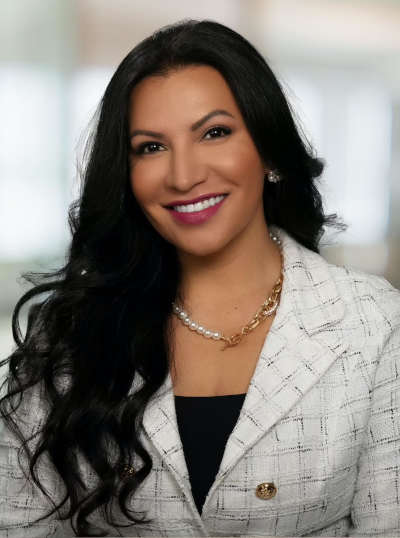
On Tuesday, Chancellor Shouan Pan announced the decision to begin contract negotiations with Dr. Lizette Navarette to become Woodland Community College’s next president.
Chancellor Pan plans to place the employment agreement on the agenda for public review and approval consideration by the governing board at its next regular meeting, which is scheduled for Dec. 14.
Yuba Community College District includes both Yuba Community College and Woodland Community College, the latter of which includes the Lake County Campus in Clearlake.
On Tuesday, Lake County News was unable to reach Navarette through the California Community College Chancellor’s Office, where she currently works.
The Full-time Faculty Association of Yuba Community College District, or FAYCCD, extended a warm welcome to Dr. Navarette as she steps into the president position at Woodland Community College, said union President Georgie O'Keefe.
“As we embark on this new chapter for WCC, FAYCCD is eager to work with Dr. Navarette to help rebuild trust and morale at WCC and also throughout the district. Once again, we express our warmest welcome to our new WCC president and eagerly await the opportunity to meet and engage in fruitful discussions,” O’Keefe said.
The Yuba Community College District conducted a nationwide search that resulted in 36 applicants for the Woodland College president’s job, Dr. Pan said in an Oct. 23 listening session with staff and local leaders.
At that time, Pan emphasized his belief in the importance of selecting a new Woodland Community College president as part of addressing concerns at the Lake County Campus.
The 36 original applicants were narrowed to 11 semifinalists who were interviewed in late October. Navarette was one of four finalists the district announced earlier this month.
District officials said three “outstanding” final candidates interviewed for the job on Nov. 14, the same day that they were featured in public forums.
Navarette currently serves as executive vice chancellor at the California Community College Chancellor’s Office, where she leads the Office of Institutional Supports and Success which includes college finance, facilities planning, institutional effectiveness and government relations, according to a biography released by the college district.
Her responsibilities include formulating policies that determine the distribution of over $13 billion in local assistance and capital outlay funds to the state’s 73 community college districts, professional development which advances student success, and coordinating state and federal matters for the system.
Other previous positions held by Navarette include California Community College’s vice chancellor of College Finance and Facilities Planning — she was the first woman to hold that position — and vice president of the Community College League of California, as well as associate director of regional relations for the University of California, Riverside, and as the youth and education coordinator for the city of Riverside.
A first-generation college graduate, Navarette holds a bachelor’s degree in political science and international relations from UC Riverside, a master’s degree in public administration from the University of La Verne, and a doctorate in education from UC Davis.
In 2021, Dr. Navarette earned the United Nations Global Education for All award for her research on working adult learners.
Importance of the new president
Navarette’s selection followed by less than two weeks a Yuba Community College District Board meeting in Clearlake during which former students and faculty, as well as Lake County leaders, told the board they needed to give the Lake County Campus the resources it deserves in order to save it.
At that Nov. 9 meeting, community members blamed the campus’ decline on the decision in the 2016-2017 academic year to align the Lake County Campus with Woodland Community College, the administration of which they said has been squeezing the campus through attrition of staff and cutting of student resources.
“Woodland should not decide what is good for Lake County. Period,” Clearlake City Councilman Slooten told the board, one of two dozen speakers who championed the campus at the meeting.
Following the meeting, Dr. Pan told Lake County News that the district board had heard community members’ concerns.
“The Board and I are focusing on shoring up college and campus leadership, including hiring the permanent president for Woodland Community College and later the permanent vice president, and dean for the Lake County Campus,” Pan said in an email. “Having the right leadership matters to the future of the college and the Colusa Center and the LCC.”
At that point, Pan said they were at “the last step of hiring the permanent College president.”
He said realigning the Lake County Campus is not under consideration. “One of the top priorities for the new president is to understand the issues and challenges related to LCC and to develop a plan to address them, including a review of the resource allocation.”
Navarette will be key not just to working with the Lake County Campus but also to addressing the issues that have arisen with the district’s full-time faculty.
FAYCCD said its members have worked without a contract since July 1, 2022, and are no closer to a contract now.
“The District has made it clear verbally and in writing that it does not view full-time faculty as a fiscal priority,” O’Keefe said in a memo sent to full-time staff on Nov. 8.
On Nov. 17, union members voted to develop a work to rule plan and then enact it in the near future.
As O’Keefe explained, “Work-to-rule is a lawful job action where employees do exactly what is stated in the written rules, procedures, and the contract—nothing more, no free labor—to help demonstrate the value of their contributions and the necessity for fair compensation. This is an appropriate and effective strategy in those cases where employers provide unfair and unreasonable compensation offers. Through work to-rule, we demonstrate to management just how important our work is, and how much overwork we do—including the work before our day even begins.
Navarette is on track to begin the president’s job in early 2024, which is the timeline Pan had reported at the Oct. 23 meeting.
The district board also appointed Patricia Barba as the Lake County Campus’ interim dean at its Nov. 9 meeting.
Email Elizabeth Larson at
- Details
- Written by: Lake County News reports
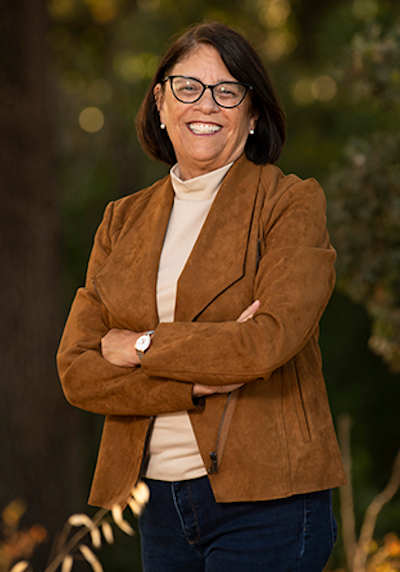
On Tuesday, California State Assembly Speaker Robert Rivas (AD-29) appointed Assemblymember Cecilia Aguiar-Curry (AD-4) to the post of Assembly majority leader.
Aguiar-Curry’s district includes Lake County.
“I am proud that Speaker Rivas has honored me with this appointment,” said Aguiar-Curry (D-Winters). “I share the speaker’s commitment to collaboration with all of our colleagues in the Assembly, and our partners in the Senate and the Newsom Administration. I stand ready to support him, work for all Californians, and fight for the values of our Assembly Democratic Caucus in this new role.”
“The majority leader works closely with the speaker and speaker pro tempore to expedite proceedings and build agreement across our historically large caucus,” Speaker Rivas said. “Cecilia is a trusted friend and colleague who I’m proud to have worked with closely in the past, and has my full confidence for the work ahead. I thank Assemblymember Bryan for his exceptional work during my transition into the office of Speaker, and look forward to continuing our collaborative work for many years to come.”
Aguiar-Curry has served as the speaker pro tempore since July 2023, and in the State Assembly since December 2016. She also serves as vice chair of the Legislative Women’s Caucus.
She has been an accomplished legislative advocate for women and children, California’s working families, local governments, agriculture and its employees, small cities and rural communities, and access to health care, education and economic opportunity for all Californians.
Aguiar-Curry represents the Fourth Assembly District, which includes all of Lake, Colusa, Napa, and Yolo counties, and part of Sonoma County.