How to resolve AdBlock issue?
Refresh this page
How to resolve AdBlock issue?
Refresh this page
Lake County News,California
  • Home
    • Registration Form
  • News
    • Education
    • Veterans
    • Community
      • Obituaries
      • Letters
      • Commentary
    • Police Logs
    • Business
    • Recreation
    • Health
    • Religion
    • Legals
    • Arts & Life
    • Regional
  • Calendar
  • Contact us
    • FAQs
    • Phones, E-Mail
    • Subscribe
  • Advertise Here
  • Login
How to resolve AdBlock issue?
Refresh this page

News

Police arrest drunk driver, bystander after Wednesday DUI crash

Details
Written by: LAKE COUNTY NEWS REPORTS
Published: 28 November 2025
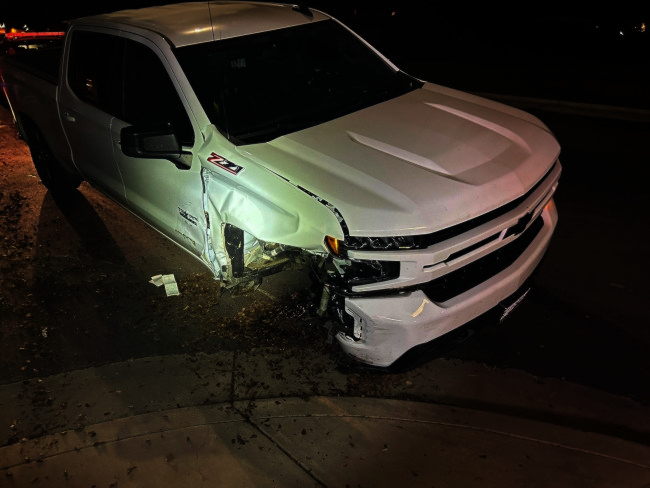
A parked vehicle was hit on Wednesday, Nov. 26, 2025, by a suspected drunken driver in Lakeport, California. Photo courtesy of the Lakeport Police Department.


LAKEPORT, Calif. — The Lakeport Police Department said it arrested a driver involved in a suspected drunk driving crash and an intoxicated bystander who kept interfering with an officer following a crash on Wednesday evening.

At approximately 5:39 p.m. Wednesday, Lakeport Police officers were dispatched to a traffic collision involving a parked vehicle in the area of S. Main Street and Oak Knoll Avenue.

While they were responding, the officers were advised that one of the vehicles had possibly fled the area, police said.

An officer arrived on scene, and the owner of the parked vehicle that was hit advised the officer that the other vehicle did not flee the scene but was two blocks north of the accident with their emergency flashers on. 

The report said the officer located the vehicle, a Chevrolet Silverado, and contacted the driver. While speaking with the driver, the officer observed signs and symptoms of intoxication. 

While the officer was speaking with the suspected DUI driver, a second uninvolved male approached the officer and driver and began to obstruct the officer's investigation. 

The male was slurring his words, and the officer could smell an overwhelming odor of alcohol coming from his breath. The male was asked to leave the scene and advised that he could continue observing from a safe distance, but that he was not to continue obstructing the investigation. 

Police said the male refused to leave after several warnings. He then walked away and approached the officer again and refused to leave, at which point the officer attempted to detain the male in handcuffs. 

The male resisted arrest, prompting a code three — lights and sirens — response from a second responding officer. The man was taken into custody shortly after and charged with resisting/obstructing law enforcement in their official duties and drunk/disorderly in public.

Following that arrest, the officer continued his DUI investigation, and after conducting field sobriety tests, the driver of the vehicle was arrested for driving under the influence of alcohol. 

Upon receiving a breath sample from the driver, it was found that the driver's blood alcohol content was almost three times the legal limit. 

Both the driver of the vehicle and the bystander were transported to the Lake County Jail, where they were booked, police said.


A Chevy Silverado was involved in a suspected DUI crash on Wednesday, Nov. 26, 2025, in Lakeport, California. Photo courtesy of the Lakeport Police Department.

Clearlake Animal Control: ‘Onyx’ and the dogs

Details
Written by: Elizabeth Larson
Published: 28 November 2025
“Onyx.” Photo courtesy of Clearlake Animal Control.


CLEARLAKE, Calif. — Clearlake Animal Control has dozens of dogs ready for new homes.

The shelter has 50 adoptable dogs listed on its website.

This week’s dogs include “Onyx,” a 1-year-old female mixed-breed dog with a black and white coat. 
 
The shelter is located at 6820 Old Highway 53. It’s open from 9 a.m. to 6 p.m. Tuesday through Saturday. 

For more information, call the shelter at 707-762-6227, email This email address is being protected from spambots. You need JavaScript enabled to view it. or visit Clearlake’s adoptable dogs here.

This week’s adoptable dogs are featured below.

Email Elizabeth Larson at This email address is being protected from spambots. You need JavaScript enabled to view it.. Follow her on Twitter, @ERLarson, and on Bluesky, @erlarson.bsky.social. Find Lake County News on the following platforms: Facebook, @LakeCoNews; X, @LakeCoNews; Threads, @lakeconews, and on Bluesky, @lakeconews.bsky.social. 

Trump’s proposed cuts to work study threaten to upend a widely supported program that helps students offset college costs

Details
Written by: Samantha Hicks, Coastal Carolina University and Amanda Craddock, Coastal Carolina University
Published: 28 November 2025

Work-study students often still have unmet financial needs, even after their 15- to 20-hour-per-week jobs fill in some of the gaps. champpix/iStock/Getty Images Plus

Work study works, doesn’t it?

Federal work study is a government program that gives colleges and universities approximately US$1 billion in subsidies each year to help pay students who work part-time jobs on and off campus. This program supports nearly 700,000 college students per year and is often an essential way students pay their expenses and remain in school.

The program has generally garnered broad bipartisan support since its creation in 1964.

Now, the Trump administration is proposing to cut $980 million from work-study programs. The government appropriated $1.2 billion to work study from October 2023 through September 2024.

The government typically subsidizes as much as 75% of a student’s work-study earnings, though that amount can vary. Colleges and universities make up the rest.

With no federal budget passed for fiscal year 2026 – meaning Oct. 1, 2025, through September 2026 – the future of work-study funding remains uncertain.

In May 2025, Russell Vought, director of the White House’s Office of Management and Budget, called work study a “poorly targeted program” that is a “handout to woke universities.”

As college enrollment experts with over 40 years of combined financial aid and admissions experience, we have seen how work study creates opportunities for both students and universities. We have also seen the need to change some parts of work study in order to maintain the program’s value in a shifting higher education landscape.

Work study’s roots

Congress established the Federal Work-Study Program in 1964 as part of the Economic Opportunity Act, which created programs to help poor Americans by providing more education and job-training opportunities.

Work study was one way to help colleges and universities create part-time jobs for poor students to work their way through college.

Today, part-time and full-time undergraduate students who have applied for federal financial aid and have unmet financial needs can apply for work-study jobs. Students in these positions typically work as research assistants, campus tour guides, tutors and more.

Students earn at least federal minimum wage – currently $7.25 an hour – in these part-time jobs, which typically take up 10 to 15 hours per week.

In 2022, the National Center for Education Statistics reported that 40% of full-time and 74% of part-time undergraduate students were also employed in both work-study and non-work-study jobs.

A person leans against a calculator that has a black graduation cap on top in a graphic image.
The federal government typically allocates more than $1 billion for the Federal Work-Study Program, covering about 75% of student workers’ wages. Nuthawut Somsuk/iStock/Getty Images Plus

How work study helps students

Financial aid plays a critical role in a student’s ability to enroll in college, stay in school and graduate.

Cost and lack of financial aid are the most significant barriers to higher education enrollment, according to 2024 findings by the National Association of Student Financial Aid Administrators.

When students drop out of college because of cost, the consequences are significant both for the students and for the institutions they leave behind.

One other key factor in student retention is the sense of belonging. Research shows that students who feel connected to their campus communities are more likely to succeed in staying in school. We have found that work study also helps foster a student’s sense of belonging.

Work-study programs can also help students stay in school by offering them valuable career experience, often aligned with their academic interests.

Points of contention

Financial aid and enrollment professionals agree that work study helps students who need financial aid.

Still, some researchers have criticized the program for not meeting its intended purpose. For example, some nonpartisan research groups and think tanks have noted that the average amount a student earns from work study each year – approximately $2,300 – only covers a fraction of rising tuition costs.

Another issue is which students get to do work study. The government gives work-study money directly to institutions, not students. As universities and colleges have broad flexibility over the program, research has suggested that in some cases, lower-income students are actually less likely than higher-income students to receive a work-study job.

Other researchers criticize the lack of evidence showing work study is effective at helping students stay in school, graduate or pay their daily costs.

A final factor that prompts criticism is that full-time students who hold jobs often struggle to balance juggling work, school and other important parts of their lives.

Areas for possible change

Many students who are eligible for work study don’t know that they are eligible – or don’t know how to get campus jobs. There is no standard practice of how institutions award work study to students.

At some schools, the number of work-study jobs may be limited. If a student does not get a job, the school can reallocate the federal money to a different student.

Another option is for schools to carry over any unused money to students in the next academic year – though that doesn’t mean the same students will automatically get the money.

We think that schools can clear up this confusion about who receives federal work-study opportunities.

We also think that schools should explore how they are ensuring that eligible students receive work-study jobs.

Universities and colleges could also benefit from more proactively promoting work-study opportunities. For example, the University of Miami’s First Hires program educates students about work study, provides personalized outreach and supports career readiness through resume development and interview preparation.

Finally, colleges and universities could evaluate how work-study jobs align with students’ academic and career goals.

By creating clerical and professional roles within academic departments, schools can offer students relevant work experience that makes it easier for them to find work after graduation.

In an era of heightened scrutiny on student outcomes, reduced public funding and growing skepticism about the value of a four-year degree, we believe that universities could benefit from reimagining their financial aid strategies – especially work study.The Conversation

Samantha Hicks, Assistant Vice President of Financial Aid and Scholarships, Coastal Carolina University and Amanda Craddock, Vice President for Enrollment Management, Coastal Carolina University

This article is republished from The Conversation under a Creative Commons license. Read the original article.
Tribal teachers, UCCE advisors open doors for next Native scientists

Details
Written by: Michael Hsu
Published: 27 November 2025
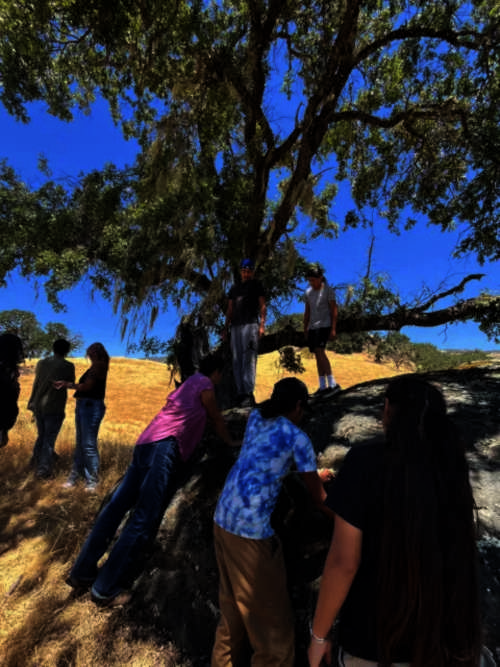
Tribal youth participants visit a Pomo archeological site and explore the Hopland Research and Extension Center landscape previously and currently tended by the Shóqowa peoples. Photo by Ally Sung-Jereczek.


Marie Alvarez, a 20-year-old member of the Scotts Valley Band of Pomo Indians, did not previously consider herself a “scientist.” She didn’t consider science to be one of her strong suits. And she never thought about pursuing environmental sciences in college.

But one day her spiritual advisor explained the connection between the natural sciences and the ecological knowledge of her heritage.

“She told me that we’re already scientists; we already connect to the land and know what the plants do and how they change with the seasons,” Alvarez said. “So we’re already kind of scientists, in some way.”

Introducing Native young people to STEM — Science, Technology, Engineering and Mathematics — and potential careers was just one goal of the Scotts Valley Tribal Youth Exchange program held this July at the University of California Hopland Research and Extension Center.

The center in Mendocino County is located on the ancestral territory of the Shóqowa People, also known as the Hopland Band of Pomo Indians. But for almost all the Native participants, the program represented their first chance to visit those lands.

“We gave them a broad overview of what the university has to offer, but it was also about their connection with the land and having time to explore the area and reconnect,” said Ally Sung-Jereczek, a program organizer and UC Cooperative Extension fire advisor and tribal land stewardship liaison for Lake and Mendocino counties. “I know a lot of the students were really thankful to be there.”

Twenty-five young people — members of the Scotts Valley tribe (with a few from the Hopland Band) ranging in age from 10 to 25 — gathered for the two-day program. 

Blending presentations by UCCE advisors and other UC personnel with talks by teachers and practitioners of traditional ecological knowledge, the program highlighted STEM fields and resources to pursue further studies.

“I feel like it couldn’t have gone any better,” said Patty Franklin, the Scotts Valley tribal member and Environmental Protection Agency director who helped organize the event. “I felt like the kids were really inspired; I heard good feedback from the youth that they liked the presenters and were interested in certain areas of study.”

The entire program came together quickly after a serendipitous meeting in March.

During an event hosted by the Robinson Rancheria of Pomo Indians, Franklin met Sung-Jereczek and her colleague Laura Garza, UCCE water resources management advisor for Lake and Mendocino counties.

Franklin mentioned she wanted to put together a program to provide tribal youth more exposure to STEM careers and the possibilities of higher education. She had funds from a California Department of Fish and Wildlife grant through the Tribal Youth Initiative program of the U.S. Department of the Interior Bureau of Indian Affairs, as well as support from the First Nations Development Institute and the Elevate Youth program of the California Department of Health Care Services.

Coincidentally, as both advisors were just hired in 2024, Sung-Jereczek and Garza happened to be seeking opportunities to introduce themselves — and Cooperative Extension — to tribes in the region.

“It was really eye-opening that very few people from the tribes in the area knew what UCCE is,” Garza said. “This collaboration, the first of its kind with the Scotts Valley tribe, introduced the advisors to them and all the resources that are available.”

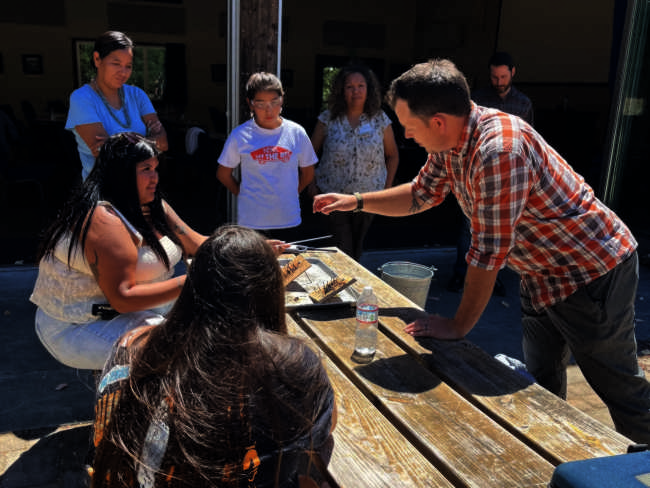
Laura Garza, UCCE water resources management advisor, teaches tribal youth participants about surface-groundwater interactions. Photo by Ally Sung-Jereczek.

Young people enjoy hands-on activities, connections with UC scientists 

On the first day, after a prayer from Suzanne Romero, a tribal leader of the Hopland Band, keynote speaker Peter Nelson shared his personal journey as a member of the Federated Indians of Graton Rancheria who became an assistant professor at UC Berkeley. 

Then a variety of UCCE advisors discussed their work and research. Garza, for example, introduced the participants to the fundamentals of groundwater hydrology, using an interactive model to explain the movement of water.

“Sitting in the back, I could see light bulbs going off for the young people,” said Sung-Jereczek. “They could see the connections of different waterways, and how contaminants can impact different riparian areas and culturally significant species like willows or tule that rely on those waterways.”

Alvarez said the water demonstration left an impression on her, as it rekindled her interest in botany and the natural world.

“I really like plant identification and everything about plants – especially native plants – and I like learning about how the whole ecosystem plays a role in plant life,” said Alvarez, who added she is contemplating taking additional college courses in environmental sciences.

Franklin’s 19-year-old son was especially impressed by the work of Christopher Chen, UCCE viticulture advisor, who led a grape juice tasting during his presentation and had the students compare flavors and characteristics.

Inspired by Chen’s career path, Franklin’s son is now taking a botany course at Mendocino College. Franklin said that she and her husband have 11 children and that the youngest son could encourage his older siblings to pursue further education as well.

“I feel like a lot of our Native youth don’t get the opportunity to visit somewhere where they can see so many successful people and just be inspired and know that they can do it too,” Franklin said. “And they can see that there are resources available that will help them do that.” 

Michelle Villegas-Frazier from the UC Davis Native American Academic Student Success Center highlighted the variety of programs and resources for Native students at UC Davis and other institutions.

“One of the goals was for students to know that they’re not alone in their adventure for higher ed,” Sung-Jereczek said, “because it can sometimes be daunting for a lot of Native students and they don’t feel comfortable or safe or like they necessarily belong in that space.”

Hands-on experiences were another focus of the day. Sung-Jereczek had the students simulate, through a miniature fire demonstration, how changing factors like topography, vegetation cover and weather conditions affect fire behavior.

Clebson Gonçalves, UCCE diversified agriculture advisor, brought live plants for the young people to identify common agricultural weeds. Helaine Berris, UCCE water and soil advisor, discussed surface water interactions and led a hands-on exploration along Parsons Creek.

Mike Jones, UCCE forestry advisor, guided the students on a hike through Hopland REC’s oak woodlands and showed participants how to identify insects such as the acorn weevil (Curculio glandium). As acorns are a culturally significant food source for local Native communities, learning more about acorn weevil infestations is a priority for several tribes in the region.

Mike Jones, UCCE forestry advisor, teaches young people about fire behavior using a hands-on fire board demonstration, as Nasbah Ben, Scotts Valley tribal disaster services coordinator (left), Michelle Villegas-Frazier of UC Davis (center-right), and Peter Nelson, UC Berkeley assistant professor and tribal citizen of the Federated Indians of Graton Rancheria (right) look on. Photo by Ally Sung-Jereczek.

Program facilitated sharing across generations, different ways of knowing

Exploring how the interests and knowledge of UC scientists and tribal members intersect was a major goal of the program. Franklin said she appreciated that the UCCE advisors were eager to have the tribe lead and guide the program’s development.

“A lot of times when we go into these partnership programs, we have to educate people about our tribal beliefs and we have to fight for our perspective to be acknowledged,” Franklin said. “But in this case, we didn’t have to do all that – they came in with that respect and were like, ‘We’re going to get this program together, but you guys will be the ones to decide what you really want.’”

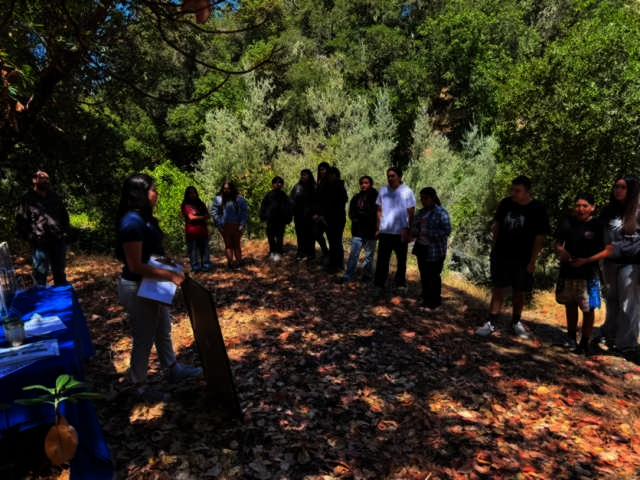
Franklin is a board member of the Tribal EcoRestoration Alliance, or TERA, a collaborative that aims to revitalize ecology, economy and culture through Indigenous-led stewardship. Seeking to center traditional ecological knowledge during the Hopland REC program, Franklin began Day 2 with an opening prayer and capped it by discussing the importance of Pomo basket weaving and the land that supports that traditional practice.

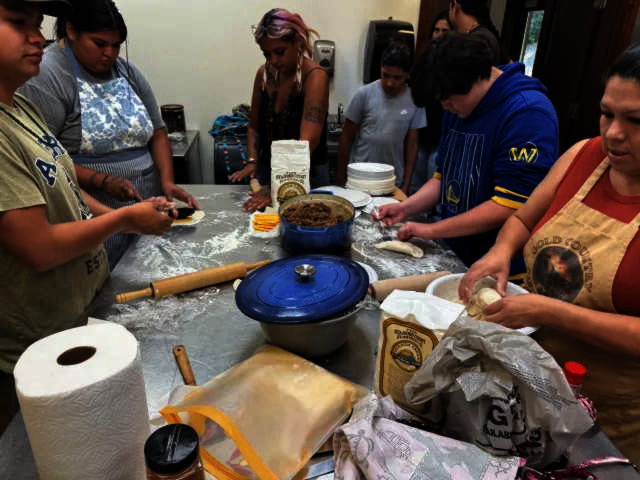
In between, local Native leaders led a cultural foods demonstration over lunch, and TERA representatives highlighted their workforce development and research programs that combine cultural burning with environmental stewardship.

Organizers also introduced the Institute for Tribal Environmental Professionals (ITEP) program. Two ITEP interns discussed how the program has supported their projects – alongside UC scientists – that incorporate science, art and Native values. 

Laylalanai Gocobachi, a member of the Pascua Yaqui Tribe and a freshman at the University of Arizona, talked about her internship experience with Garza. Together, they worked with the Middletown Rancheria of Pomo Indians to develop a climate change and natural resources needs assessment.

“The project not only built capacity for the tribe to plan for climate impacts, but also strengthened collaborations between Lake County, UCCE and the tribe to ensure that traditional knowledge and community voices are included in future resilience efforts,” Garza explained.

Tribal youth participants, including Marie Alvarez (center), engage in a cultural foods demonstration for lunch. Photo by Ally Sung-Jereczek.

Camila Buitrago, an ITEP intern who is a graduate student at the Yale School of the Environment, shared some of her artwork alongside Sung-Jereczek and UC Davis professor Emily Schlickman exploring fire through different mediums of art such as ceramics, painting, and weaving.

Sung-Jereczek and Garza both observed that the braiding of intergenerational, intercultural knowledge benefited everyone involved during the two days – not just the youth participants. As a scholar who is not Native and not from California, Garza said she learned a lot from the young people.

“They were sharing with us a lot of their culture, so I felt really lucky to be there,” Garza explained. “The program is for them, but I was also on the sidelines learning a lot, which was wonderful.”

Sung-Jereczek emphasized that the two days clearly left an impact for her and many of the participants – and she hopes to continue cultivating partnerships and programs with tribes in the region.

“Just having the opportunity to laugh and share and be in those spaces was just really great for the young people,” she explained. “That type of programming is not always available for them.”

Alvarez wholeheartedly agreed, calling her two days at Hopland REC “beautiful days.”

“I think it’s important for young people to get out of their bubble and see that life is not just everything that they’re used to, day to day,” she said. “There are other things out there for them.”

Michael Hsu writes for the University of California Cooperative Extension.


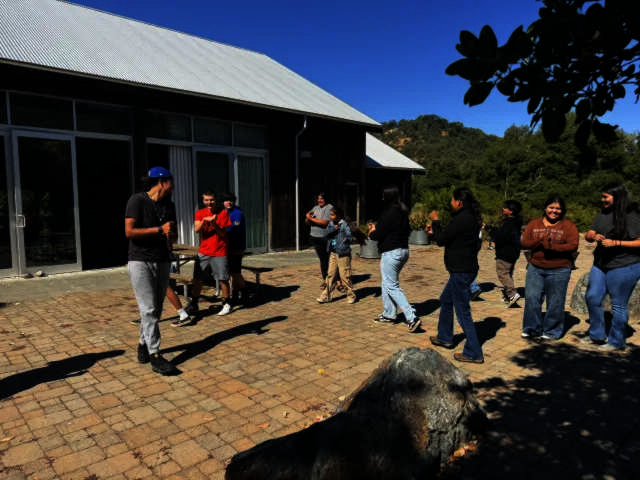
Tribal youth participate in a traditional hand game, led by Layla Gocobachi, an ITEP intern working with UCCE and a member of the Pascua Yaqui Tribe. Photo by Ally Sung-Jereczek.


  1. National Native American Heritage Month has long tradition
  2. Thompson appointed to Democrats' Litigation Task Force
  3. How the Plymouth Pilgrims took over Thanksgiving – and who history left behind
  • 82
  • 83
  • 84
  • 85
  • 86
  • 87
  • 88
  • 89
  • 90
  • 91
How to resolve AdBlock issue?
Refresh this page