How to resolve AdBlock issue?
Refresh this page
How to resolve AdBlock issue?
Refresh this page
Lake County News,California
  • Home
    • Registration Form
  • News
    • Education
    • Veterans
    • Community
      • Obituaries
      • Letters
      • Commentary
    • Police Logs
    • Business
    • Recreation
    • Health
    • Religion
    • Legals
    • Arts & Life
    • Regional
  • Calendar
  • Contact us
    • FAQs
    • Phones, E-Mail
    • Subscribe
  • Advertise Here
  • Login
How to resolve AdBlock issue?
Refresh this page

News

Attorneys general support law to help combat MMIP crisis

Details
Written by: LAKE COUNTY NEWS REPORTS
Published: 29 November 2025

California Attorney General Rob Bonta has joined a bipartisan coalition of 39 attorneys general in a letter to Congress supporting the Tribal Warrant Fairness Act, which would level the public safety playing field by empowering tribes to work with the U.S. Marshals Service to combat the Missing and Murdered Indigenous Peoples, or MMIP, crisis.

Indigenous communities are disproportionately at risk of violence, murder and going missing.

To combat this unacceptable crisis, officials said it is critical to quickly deploy law enforcement resources where they are most needed.

In the letter, the attorneys general support the aim of the Tribal Warrant Fairness Act, or TWFA, to further tackle this crisis by providing the assistance of the U.S. Marshals Service to tribal partners to protect children and increase public safety and offer suggestions on how to further strengthen TWFA.

“For too long, tribal nations have borne the brunt of violence, historical harms, and ongoing barriers when seeking answers, justice, and safety,” said Attorney General Bonta. “In order to alleviate this crisis, we need to not only listen, but to push forward meaningful structural change. I’m proud to join a bipartisan coalition of attorneys general in support of the Tribal Warrant Fairness Act, which is an important step to removing barriers to public safety for tribal communities. We're at our best when we work together, when we listen, and when we co-create solutions. At the California Department of Justice, we will continue to stand with our tribal and law enforcement partners to protect the safety and well-being of our tribal communities.” 

Should the act be enacted, the TWFA would allow federal law enforcement to be deployed at the request of tribal law enforcement to find missing children. This would increase the likelihood of a swift and safe recovery, especially within those vital first 48 hours after someone goes missing. 

Additionally, the TWFA would allow, at a tribe’s request, tribal law enforcement officers to join the U.S. Marshals Service elite Fugitive Apprehension Task Force, a multi-jurisdictional team that works together on the federal, state, and local level to find and arrest dangerous fugitives.

In the comment letter, the attorneys general:

• Strongly support the proposed legislation, which will facilitate both the search of missing children and the apprehension of dangerous fugitives.
• Provide suggestions to expand the criminalization of interstate flight with the intent of avoiding prosecution, testifying, or complying with lawful investigative processes to apply tribal proceedings.
• Applaud Congress’s efforts to increase tribal law enforcement agencies’ full access to federal public safety resources.  

In filing the letter, Attorney General Bonta joins the attorneys general of American Samoa, Arizona, Arkansas, Colorado, Connecticut, Delaware, District of Columbia, Georgia, Hawaii, Illinois, Indiana, Kansas, Kentucky, Louisiana, Maine, Maryland, Massachusetts, Michigan, Minnesota, Nebraska, Nevada, New Hampshire, New Mexico, New York, North Carolina, North Dakota, Ohio, Oklahoma, Oregon, Pennsylvania, Rhode Island, South Carolina, South Dakota, Tennessee, Utah, Washington, West Virginia and Wisconsin.

Off-label use of COVID-19 vaccines was once discouraged but has become common amid new guidelines

Details
Written by: Shannon Fyfe, Washington and Lee University and Elizabeth Lanphier, University of Cincinnati
Published: 29 November 2025

Getting a COVID-19 vaccine is trickier now than in years past, but still possible. d3sign/Moment via Getty Images

Following the federal government’s changes to COVID-19 vaccine eligibility and recommendations in 2025, many people are wondering whether they can get COVID-19 vaccines for themselves or their children.

In May 2025, the U.S. Food and Drug Administration limited eligibility for updated COVID-19 vaccines to people ages 65 years and up and to those under 65 with a “high-risk” condition. In September, the Centers for Disease Control and Prevention adopted an “individualized decision-making” approach to COVID-19 vaccination instead of broadly recommending the vaccines.

It’s not just the public that is confused. Many physicians and pharmacists also have questions about whether and how they can administer COVID-19 vaccines.

As philosophers with expertise in bioethics and legal philosophy, we have been following the ethical and regulatory landscape for COVID-19 vaccines since they first became available in late 2020.

In the fall of 2025 that landscape looks a bit different in light of the new guidelines. While it is causing understandable confusion, most people who want to get a COVID-19 vaccine can do so. Broad access is possible, in part, through what in health care is called “off-label use.”

“Off-label” refers to using an FDA-approved product for a different purpose, or with a different population, than that for which it received approval. Off-label prescriptions are common in health care, particularly in pediatrics.

COVID-19 vaccines from 2020-2025

People likely recall that COVID-19 vaccines were developed faster than any vaccine had been previously, thanks to efforts such as the U.S. government’s Operation Warp Speed. Initially limited in supply, the vaccines first became available through “emergency use authorization” in December 2020, with health care workers among the first prioritized by the government to receive them.

In August 2021, the FDA fully approved the first COVID-19 vaccine for people ages 16 and up. Following this, younger children started to become eligible for COVID-19 vaccines. From 2022 through summer 2025, COVID-19 vaccines were available to everyone 6 months and older in doctors’ offices or pharmacies, mostly free of charge, albeit with disparities in access due to an individual’s age, geographic location or vaccine costs.

But in May 2025, the new FDA and CDC leadership appointed by the Trump administration started to change their agencies’ positions on COVID-19 vaccines. Such regulatory changes affect who is considered eligible for the vaccines and whether public and private insurers must provide coverage. Meanwhile, state laws influence the ability of pharmacists, who frequently provide routine vaccinations, to administer COVID-19 vaccines.

Understanding the role of federal agencies such as the FDA and the CDC, as well as medical professional organizations and guidelines, can help untangle the complicated picture for access to COVID-19 vaccines.

Critics of the changes note that when a vaccine is available but not recommended, fewer may choose to be vaccinated and more disease may circulate unchecked in the general population.

2025 changes to FDA and CDC guidance

It’s helpful to understand the process through which vaccines become approved and endorsed by government agencies in the U.S.

First, the FDA approves drugs and other biologic products such as vaccines for specific uses, in specific age groups – in this case, to prevent people from getting COVID-19 or, if they do get it, to reduce the severity of their symptoms.

Next, the CDC recommends products that the FDA has approved or authorized. These recommendations have a different regulatory function than the initial FDA decisions. The CDC issues public health guidelines for which vaccines people should receive and which ones public and private insurance must cover. In some states, the CDC’s recommendations also affect whether pharmacies can administer vaccines.

Until September 2025, when the CDC shifted its stance, the agency broadly recommended COVID-19 vaccines for everyone 6 months of age and older, regardless of their underlying conditions. These recommendations supported public health and ensured that public and private insurance covered 100% of the cost of these vaccines as preventive health care.

Medical and CDC recommendations

Despite the FDA’s updated eligibility criteria and the CDC’s revised guidance, medical professional organizations have continued to broadly recommend COVID-19 vaccines.

In August, the American Academy of Pediatrics issued its own vaccine schedule. In addition to kids who meet FDA eligibility due to heightened risk, the organization recommends that all children between 6 months and 2 years old be vaccinated against COVID-19, as well as any child whose parent or guardian wants them to be vaccinated.

When the Advisory Committee on Immunization Practices, or ACIP – the committee that advises the CDC on vaccine policy – met in mid-September, it voted to recommend that anyone 6 months and older can get a COVID-19 vaccine according to “individual-based decision-making.” The committee also voted to require continued funding of COVID-19 vaccines through private and public health insurance and the Vaccines for Children program that provides free vaccines to children who are Medicaid eligible, uninsured or underinsured. In October, the interim CDC director adopted the ACIP recommendations as the formal guidance from the CDC for the 2025-2026 COVID-19 vaccines.

These recommendations from the CDC and medical professional organizations are difficult to square with the FDA labeling changes for COVID-19 vaccines. The CDC is recommending that people make individual decisions with their medical providers about COVID-19 vaccination, regardless of their eligibility through FDA approval.

This is possible because anyone who doesn’t meet FDA eligibility can get a COVID-19 vaccine through off-label use.

Pregnant woman holding her abdomen, getting vaccine injection in her arm from doctor syringe.
The American College of Obstetricians and Gynecologists still recommends that people who are pregnant get the COVID-19 vaccine. Olga Rolenko/Moment via Getty Images

Off-label use of COVID-19 vaccines

Using COVID-19 vaccines off-label means administering them for the same purpose but to a wider population than those who are FDA-eligible. In 2021 the CDC prohibited the off-label use of COVID-19 vaccines purchased by the federal government. This was an unusual move and is no longer the case.

While uncommon, off-label vaccination is sometimes recommended. One example is off-label vaccination against measles, mumps and rubella, or MMR, for children under 12 months old who plan to travel to areas where measles is not eradicated, or are exposed to a disease outbreak.

Moreover, the CDC’s 2025-2026 COVID-19 vaccine recommendations remove certain barriers that typically accompany off-label use.

For example, products used off-label are not always covered by insurance. Many private insurers already committed to covering COVID-19 vaccines as preventive care for the 2025-2026 vaccine season. The recommendations from ACIP and the CDC subsequently guaranteed that private and public health insurance plans would continue to cover COVID-19 vaccines in full. This includes COVID-19 vaccines under the Vaccines for Children program that purchases vaccines for approximately half of U.S. children.

Off-label use of a product is ethically and legally permissible if a physician believes its benefits outweigh its risks for their patient. But the CDC’s recommendation for individual decision-making may also lessen clinicians’ worries about liability. So might the guidance from the American Academy of Pediatrics, as well as the American College of Obstetricians and Gynecologists’ vaccine recommendations that anyone who is pregnant should get an updated COVID-19 vaccine during pregnancy.

Off-label use is typically done via a doctor’s prescription. Yet many COVID-19 vaccines are administered in pharmacies. Getting vaccinated in a pharmacy is especially helpful for people without primary care doctors or the time or money for a clinic visit. Many states have taken steps to remove barriers to obtaining off-label COVID-19 vaccines at pharmacies. The CDC’s October 2025 recommendations for individual decision-making also enable COVID-19 vaccination by pharmacists.

For people who would like to be vaccinated against COVID-19, knowing how off-label use fits into current regulations may be helpful for understanding their access to vaccines this respiratory virus season, and medical treatment in general.The Conversation

Shannon Fyfe, Assistant Professor of Law and Assistant Professor of Philosophy, Washington and Lee University and Elizabeth Lanphier, Assistant Professor of Pediatrics, University of Cincinnati

This article is republished from The Conversation under a Creative Commons license. Read the original article.
Space News: When darkness shines: How dark stars could illuminate the early universe

Details
Written by: Alexey A. Petrov, University of South Carolina
Published: 29 November 2025

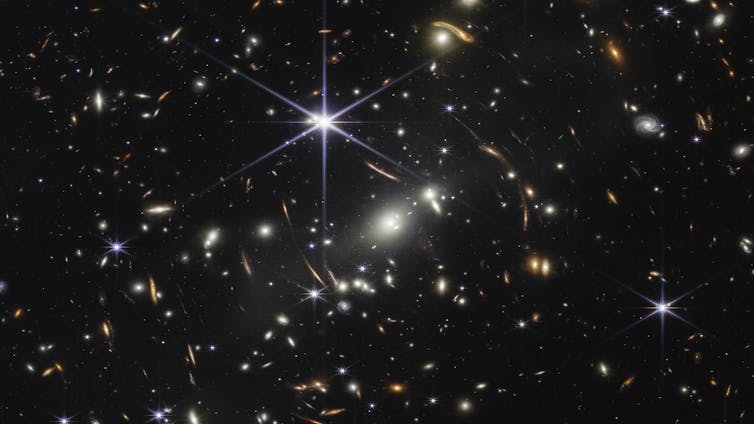
NASA’s James Webb Space Telescope has spotted some potential dark star candidates. NASA, ESA, CSA, and STScI

Scientists working with the James Webb Space Telescope discovered three unusual astronomical objects in early 2025, which may be examples of dark stars. The concept of dark stars has existed for some time and could alter scientists’ understanding of how ordinary stars form. However, their name is somewhat misleading.

“Dark stars” is one of those unfortunate names that, on the surface, does not accurately describe the objects it represents. Dark stars are not exactly stars, and they are certainly not dark.

Still, the name captures the essence of this phenomenon. The “dark” in the name refers not to how bright these objects are, but to the process that makes them shine — driven by a mysterious substance called dark matter. The sheer size of these objects makes it difficult to classify them as stars.

As a physicist, I’ve been fascinated by dark matter, and I’ve been trying to find a way to see its traces using particle accelerators. I’m curious whether dark stars could provide an alternative method to find dark matter.

What makes dark matter dark?

Dark matter, which makes up approximately 27% of the universe but cannot be directly observed, is a key idea behind the phenomenon of dark stars. Astrophysicists have studied this mysterious substance for nearly a century, yet we haven’t seen any direct evidence of it besides its gravitational effects. So, what makes dark matter dark?

A pie chart showing the composition of the universe. The largest proportion is 'dark energy,' at 68%, while dark matter makes up 27% and normal matter 5%. The rest is neutrinos, free hydrogen and helium and heavy elements.
Despite physicists not knowing much about it, dark matter makes up around 27% of the universe. Visual Capitalist/Science Photo Library via Getty Images

Humans primarily observe the universe by detecting electromagnetic waves emitted by or reflected off various objects. For instance, the Moon is visible to the naked eye because it reflects sunlight. Atoms on the Moon’s surface absorb photons – the particles of light – sent from the Sun, causing electrons within atoms to move and send some of that light toward us.

More advanced telescopes detect electromagnetic waves beyond the visible spectrum, such as ultraviolet, infrared or radio waves. They use the same principle: Electrically charged components of atoms react to these electromagnetic waves. But how can they detect a substance – dark matter – that not only has no electric charge but also has no electrically charged components?

Although scientists don’t know the exact nature of dark matter, many models suggest that it is made up of electrically neutral particles – those without an electric charge. This trait makes it impossible to observe dark matter in the same way that we observe ordinary matter.

Dark matter is thought to be made of particles that are their own antiparticles. Antiparticles are the “mirror” versions of particles. They have the same mass but opposite electric charge and other properties. When a particle encounters its antiparticle, the two annihilate each other in a burst of energy.

If dark matter particles are their own antiparticles, they would annihilate upon colliding with each other, potentially releasing large amounts of energy. Scientists predict that this process plays a key role in the formation of dark stars, as long as the density of dark matter particles inside these stars is sufficiently high. The dark matter density determines how often dark matter particles encounter, and annihilate, each other. If the dark matter density inside dark stars is high, they would annihilate frequently.

What makes a dark star shine?

The concept of dark stars stems from a fundamental yet unresolved question in astrophysics: How do stars form? In the widely accepted view, clouds of primordial hydrogen and helium — the chemical elements formed in the first minutes after the Big Bang, approximately 13.8 billion years ago — collapsed under gravity. They heated up and initiated nuclear fusion, which formed heavier elements from the hydrogen and helium. This process led to the formation of the first generation of stars.

Two bright clouds of gas condensing around a small central region
Stars form when clouds of dust collapse inward and condense around a small, bright, dense core. NASA, ESA, CSA, and STScI, J. DePasquale (STScI), CC BY-ND

In the standard view of star formation, dark matter is seen as a passive element that merely exerts a gravitational pull on everything around it, including primordial hydrogen and helium. But what if dark matter had a more active role in the process? That’s exactly the question a group of astrophysicists raised in 2008.

In the dense environment of the early universe, dark matter particles would collide with, and annihilate, each other, releasing energy in the process. This energy could heat the hydrogen and helium gas, preventing it from further collapse and delaying, or even preventing, the typical ignition of nuclear fusion.

The outcome would be a starlike object — but one powered by dark matter heating instead of fusion. Unlike regular stars, these dark stars might live much longer because they would continue to shine as long as they attracted dark matter. This trait would make them distinct from ordinary stars, as their cooler temperature would result in lower emissions of various particles.

Can we observe dark stars?

Several unique characteristics help astronomers identify potential dark stars. First, these objects must be very old. As the universe expands, the frequency of light coming from objects far away from Earth decreases, shifting toward the infrared end of the electromagnetic spectrum, meaning it gets “redshifted.” The oldest objects appear the most redshifted to observers.

Since dark stars form from primordial hydrogen and helium, they are expected to contain little to no heavier elements, such as oxygen. They would be very large and cooler on the surface, yet highly luminous because their size — and the surface area emitting light — compensates for their lower surface brightness.

They are also expected to be enormous, with radii of about tens of astronomical units — a cosmic distance measurement equal to the average distance between Earth and the Sun. Some supermassive dark stars are theorized to reach masses of roughly 10,000 to 10 million times that of the Sun, depending on how much dark matter and hydrogen or helium gas they can accumulate during their growth.

So, have astronomers observed dark stars? Possibly. Data from the James Webb Space Telescope has revealed some very high-redshift objects that seem brighter — and possibly more massive — than what scientists expect of typical early galaxies or stars. These results have led some researchers to propose that dark stars might explain these objects.

Artist's impression of the James Webb telescope, which has a hexagonal mirror made up of smaller hexagons, and sits on a rhombus-shaped spacecraft.
The James Webb Space Telescope, shown in this illustration, detects light coming from objects in the universe. Northrup Grumman/NASA

In particular, a recent study analyzing James Webb Space Telescope data identified three candidates consistent with supermassive dark star models. Researchers looked at how much helium these objects contained to identify them. Since it is dark matter annihilation that heats up those dark stars, rather than nuclear fusion turning helium into heavier elements, dark stars should have more helium.

The researchers highlight that one of these objects indeed exhibited a potential “smoking gun” helium absorption signature: a far higher helium abundance than one would expect in typical early galaxies.

Dark stars may explain early black holes

What happens when a dark star runs out of dark matter? It depends on the size of the dark star. For the lightest dark stars, the depletion of dark matter would mean gravity compresses the remaining hydrogen, igniting nuclear fusion. In this case, the dark star would eventually become an ordinary star, so some stars may have begun as dark stars.

Supermassive dark stars are even more intriguing. At the end of their lifespan, a dead supermassive dark star would collapse directly into a black hole. This black hole could start the formation of a supermassive black hole, like the kind astronomers observe at the centers of galaxies, including our own Milky Way.

Dark stars might also explain how supermassive black holes formed in the early universe. They could shed light on some unique black holes observed by astronomers. For example, a black hole in the galaxy UHZ-1 has a mass approaching 10 million solar masses, and is very old – it formed just 500 million years after the Big Bang. Traditional models struggle to explain how such massive black holes could form so quickly.

The idea of dark stars is not universally accepted. These dark star candidates might still turn out just to be unusual galaxies. Some astrophysicists argue that matter accretion — a process in which massive objects pull in surrounding matter — alone can produce massive stars, and that studies using observations from the James Webb telescope cannot distinguish between massive ordinary stars and less dense, cooler dark stars.

Researchers emphasize that they will need more observational data and theoretical advancements to solve this mystery.The Conversation

Alexey A. Petrov, Professor of physics and astronomy, University of South Carolina

This article is republished from The Conversation under a Creative Commons license. Read the original article.

Authorities seek missing Plumas County woman last seen near Upper Lake 

Details
Written by: LAKE COUNTY NEWS REPORTS
Published: 28 November 2025
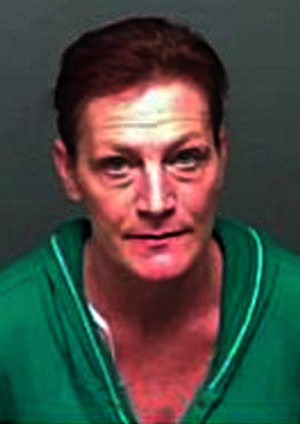
Cheryl Taddei. Courtesy photo.


LAKE COUNTY, Calif. — Authorities are attempting to locate a missing Plumas County woman last seen near Upper Lake last week.

Cheryl Taddei, 52, was last seen at 1:30 p.m. Wednesday, Nov. 19, near the roundabout intersection of Highway 20 and Highway 29 in Upper Lake.

There, she exited a vehicle during an argument and did not return, according to the Plumas County Sheriff’s Office.

At that point, Taddei was reportedly wearing a t-shirt, blue denim skirt and black slip-on shoes, and was carrying a duffel bag, a backpack, several plastic grocery bags, and accompanied by her tan Chihuahua. 

She is described as a white female, standing 5 feet 6 inches tall and weighing 125 pounds, with green eyes and brown hair. 

Authorities said Taddei has distinctive tattoos, including a tiger on her right shoulder and a spider, fairy and the name “Johnny” on her right arm. 

Taddei has family and recent ties to Greenville and Crescent Mills in Plumas County. 

“Her family and our office are concerned for her safety due to the time that has passed without contact,” the Plumas County Sheriff’s Office said in a social media statement.

If you have seen Taddei, recognize her tattoos or dog, or have any information about her possible location, please contact Plumas County Sheriff’s Office Dispatch at 530-283-6300 or in an emergency call 911.

  1. Police arrest drunk driver, bystander after Wednesday DUI crash
  2. Clearlake Animal Control: ‘Onyx’ and the dogs
  3. Trump’s proposed cuts to work study threaten to upend a widely supported program that helps students offset college costs
  • 81
  • 82
  • 83
  • 84
  • 85
  • 86
  • 87
  • 88
  • 89
  • 90
How to resolve AdBlock issue?
Refresh this page