How to resolve AdBlock issue?
Refresh this page
How to resolve AdBlock issue?
Refresh this page
Lake County News,California
  • Home
    • Registration Form
  • News
    • Education
    • Veterans
    • Community
      • Obituaries
      • Letters
      • Commentary
    • Police Logs
    • Business
    • Recreation
    • Health
    • Religion
    • Legals
    • Arts & Life
    • Regional
  • Calendar
  • Contact us
    • FAQs
    • Phones, E-Mail
    • Subscribe
  • Advertise Here
  • Login
How to resolve AdBlock issue?
Refresh this page

News

Habitat for Humanity accepting Homeownership Program applications

Details
Written by: Lake County News reports
Published: 20 June 2024
LAKE COUNTY, Calif. — Is renting getting you down? Are you dreaming of owning your own home?

Habitat for Humanity Lake County is actively accepting applications for its Homeownership Program.

The stability and security of homeownership is one of the greatest gifts a family can have. The pride in one’s home and the benefits it offers to the family unit are a boon to the community, helping to make Lake County a better place for all of us, Habitat said.

Habitat for Humanity Lake County said it is here to help make that happen for qualifying, deserving families in our communities.

Applicants must have lived in Lake County for at least one year, be willing to partner with Habitat in the construction of their home, present a positive attitude towards the process and be income-qualified.

If you, or someone you know, are interested and might qualify, please contact the Habitat office at 707-994-1100 for more information or come into the office at 15312 Lakeshore Drive Clearlake to receive a pre-application. For assistance in Spanish dial extension 108.

EPA has lowered the screening level for lead in soil – here’s what that could mean for households across the US

Details
Written by: Gabriel Filippelli, Indiana University
Published: 20 June 2024


A lot of lead from gasoline, house paint and industrial emissions has ended up in soil, and it poses serious health risks. Jamie Grill, Tetra Images via Getty Images

Children can be exposed to lead by swallowing or inhaling soil while they are playing. Young children often put their hands in their mouths and may have dirt on their hands. Kids and pets also can track lead dust from soil indoors. And anyone who eats fruit or vegetables grown in contaminated soil can ingest lead.

Early in 2024, the U.S. Environmental Protection Agency lowered the screening level for lead in residential soils from 400 parts per million – a standard that was more than 30 years old – to 200 parts per million. This more protective lower number reflects current understanding of soil as a significance source of lead exposure for children.

EPA officials said that at homes exposed to lead from multiple sources, the agency will generally use a more conservative 100 parts per million screening level.

This new level is not a cleanup standard; it’s a threshold at which the EPA will make site-specific decisions about how to protect people there. Actions may include providing information about soil lead, recommending ways to reduce exposure, or removing the leaded soil and replacing it with clean soil.

The standard is designed to guide EPA assessments of residential soils around polluted sites under two federal laws. The Superfund law addresses hazardous wastes that were improperly created or disposed of before 1976, while the 1976 Resource Conservation and Recovery Act governs hazardous waste generation and disposal from that year forward. More than 4,000 sites across the nation are currently being cleaned up under those two laws.

I study urban lead poisoning in children from soil and other sources, and I have worked with colleagues to analyze tens of thousands of soil samples collected from typical homes by research scientists and by citizens across the U.S.. This work is ongoing, but our newly published findings show that under the new EPA standard, potentially harmful lead exposure from soil is far more widespread than many people – including public officials – realize. Reducing this risk will be a very long-term effort.

Soil lead levels are a concern in private yards and public parks, and on school playgrounds.

A toxic legacy

Lead exposure has blighted communities across the U.S., particularly lower-income communities of color. Many factors have contributed, including lead in gasoline, water pipes and paint. In addition, redlining and other policies have trapped vulnerable families in substandard housing that often contains lead paint and is located in areas heavily polluted by traffic and industrial sources.

Lead affects many parts of the body, including the brain and central nervous system. Exposure to high levels of lead in childhood can lead to lower educational outcomes and lower earning potential.

Since the federal government started severely limiting the production and use of lead in the 1970s, the share of children in the U.S. who are considered lead-affected, based on current standards, has fallen dramatically. This means that for tens of millions of U.S. children, the risk of being cognitively impaired by lead exposure is greatly reduced. In the 1970s, this figure was near 100%; today it is about 1%, which equates to some 500,000 children.

But many urban children are still exposed to lead at unsafe levels, and soil exposure isn’t addressed by laws that have reduced other lead sources. Lead in soil is the residue of degraded lead-based paint, pollution deposited by cars that burned leaded gasoline for decades, and emissions from factories and industrial facilities.


Lead in soil is a widespread risk

Our national analysis of samples collected from 16 cities found that out of 15,595 household soil samples, 12.3% – one in every eight – exceeded the old federal screening level of 400 parts per million. When the standard is adjusted down to the proposed level of 200 parts per million, 23.7% of households – nearly 1 in 4 – contain a lead hazard.

These samples were typically collected in sets, with one sample near the exterior walls of a home, where highest soil lead values are expected; another from the yard; and a third from near the street, which can also record elevated lead levels.

If our findings are extrapolated across the nation, they indicate that up to roughly 29 million households out of the 123.6 million that were recorded in the 2020 census could be exposed to soil lead hazards and should take steps to mitigate them. Applying the EPA’s aspirational goal of 100 parts per million, our analysis indicates that some 40.2% of households could be affected – equivalent to nearly 50 million households nationwide.

Not all communities in our research have similar risk profiles. In Chicago, for example, 52.8% of household soils that we tested contained more than 200 parts per million of lead. Samples from parts of several medium-sized cities, including Springfield, Massachusetts, and Chattanooga and Memphis, Tennessee, had comparable percentages.

It is difficult to fully assess city-specific soil lead burdens, for several reasons. First, the citizen science dataset that we used in our analysis was collected by private citizens using certain guidelines, not under the strict scientific protocols that the EPA would follow. Second, there is no other systematic, comprehensive measurement of household soil lead values across the U.S. that could be used to assess the accuracy of the community science samples.

Capping soil as a first step

Because so little data on lead soil values exists, it’s not yet possible to determine which particular households have the greatest potential risk. Without that information, the real cost of mitigating this problem is also unknown.

Full remediation, which involves removing contaminated soils and replacing them with clean soils, can cost from US$10,000 to $30,000 per household. Typically, the cost of this type of voluntary cleanup is borne by the homeowner, although some states may have assistance programs.

At this rate, the price tag for mitigating all households nationwide that we project to have soil above the new EPA standard would range from $290 billion to over $1.1 trillion. Household soil remediation involves many steps, including soil testing and monitoring dust levels. If it is done poorly, it can actually scatter lead-contaminated soils and dust beyond the mitigation site.

An industrial facility with a towering smokestack
The Doe Run smelter in Herculaneum, Mo., processed lead from 1892 through 2013. In 2001, the EPA found lead concentrations up to 33,100 parts per million in local yard soils. The smelter closed after the EPA tightened limits on air emissions from lead smelters. Kbh3rd/Wikimedia, CC BY-SA

Given this projected price tag, my colleagues and I do not expect such a program to be proposed any time soon. However, there’s a faster and much cheaper strategy: capping existing soils with clean soil or mulch. This is an imperfect solution, but it solves the immediate lead exposure problem for children living in these settings.

Capping isn’t a permanent answer, since land cover can be disturbed, which would make lead-enriched soils an active risk once again. But even covering a contaminated site with clean soils will permanently dilute the site’s total lead concentration. Nearly all lead deposited from human activities is captured in the upper 10 inches of soils. Adding another 10 inches of clean soil on top would cut the soil lead concentration by half.

It’s a cliche but nonetheless true that the solution for pollution often is dilution. I see this simple strategy as an immediate way for cities to start addressing their new lead challenge.The Conversation

Gabriel Filippelli, Professor of Earth Sciences and Executive Director, Environmental Resilience Institute, Indiana University

This article is republished from The Conversation under a Creative Commons license. Read the original article.

As spring phases into summer across the U.S., kids are spending more time outdoors. Playing outside is healthy in all kinds of ways, but it also poses some risks. One that many families may not be aware of is exposure to lead in soil, which is still a serious problem, mainly in cities.

U.S. foreclosure activity increases in May; rate down from last year

Details
Written by: Lake County News reports
Published: 20 June 2024
Foreclosures across the United States went up slightly in May, but are still improved from a year ago.

ATTOM, a leading curator of land, property, and real estate data, has released its May 2024 U.S. Foreclosure Market Report, which shows there were a total of 32,621 U.S. properties with foreclosure filings — default notices, scheduled auctions or bank repossessions — up 3% from a month ago but down 7% from a year ago.

"May's foreclosure activity highlights nuanced shifts in the housing market," said Rob Barber, CEO at ATTOM. "While we observed a slight increase in foreclosure starts, the decline in completed foreclosures indicates resilience in certain areas. Monitoring these evolving patterns remains crucial to understanding the full impact on the real estate sector."

Nationwide one in every 4,320 housing units had a foreclosure filing in May 2024. States with the highest foreclosure rates were New Jersey (one in every 1,939 housing units with a foreclosure filing); Illinois (one in every 2,362 housing units); Delaware (one in every 2,595 housing units); Connecticut (one in every 2,600 housing units); and Florida (one in every 2,638 housing units).

Among the 224 metropolitan statistical areas with a population of at least 200,000, those with the highest foreclosure rates in May 2024 were Longview, Texas (one in every 1,162 housing units with a foreclosure filing); Trenton, New Jersey (one in every 1,471 housing units); Atlantic City, New Jersey (one in every 1,569 housing units); Lakeland, Florida (one in every 1,584 housing units); and Bakersfield, California (one in every 1,685 housing units).

Those metropolitan areas with a population greater than one million with the worst foreclosure rates in May 20244 were: Chicago (one in every 2,015 housing units); Philadelphia (one in every 2,143 housing units); Riverside, California (one in every 2,216 housing units); Jacksonville, Florida (one in every 2,267 housing units); and Las Vegas (one in every 2,361 housing units).

Greatest numbers of foreclosure starts in Florida, Texas and California

Lenders started the foreclosure process on 22,385 U.S. properties in May 2024, up 3% from last month but down 4% from a year ago.

States that had the greatest number of foreclosure starts in May 2024 included: Florida (2,750 foreclosure starts); Texas (2,560 foreclosure starts); California (2,370 foreclosure starts); Illinois (1,427 foreclosure starts); and New Jersey (1,219 foreclosure starts).

Those major metropolitan areas with a population greater than one million that had the greatest number of foreclosure starts in May 2024 included: New York (1,447 foreclosure starts); Chicago (1,272 foreclosure starts); Houston (915 foreclosure starts); Miami (750 foreclosure starts); and Philadelphia (713 foreclosure starts).

Foreclosure completion numbers decrease slightly from last month

Lenders repossessed 2,879 U.S. properties through completed foreclosures, or REOs, in May 2024, down 1% from last month and down 28% from last year.

States that had the greatest number of REOs in May 2024 included: California (254 REOs); Illinois (254 REOs); Pennsylvania (238 REOs); Ohio (177 REOs); and Texas (167 REOs).

Those major metropolitan statistical areas with a population greater than one million that saw the greatest number of REOs in May 2024 included: Chicago (179 REOs); New York (124 REOs); Baltimore (84 REOs); Pittsburgh (80 REOs); and Washington, DC (69 REOs).

Sheriff’s office issues evacuation order for fire in Nice

Details
Written by: Elizabeth Larson
Published: 19 June 2024
A fire on Hammond Avenue in Nice, California, on Wednesday, June 19, 2024. Photo by Chris McSorley.

LAKE COUNTY, Calif. — A Wednesday afternoon wildfire has prompted evacuations in Nice.

The fire in the 6800 block of Hammond Avenue was first reported just before 3 p.m.

As of 15 minutes after dispatch, the fire was reported to be an acre in size and starting to burn a structure.

Firefighting resources were stretched thin at that point as firefighters had been called to a fire on Wilkinson Road in Kelseyville and then a barn and vegetation fire in Scotts Valley, requiring engines and other units to respond from the south county, based on radio traffic.

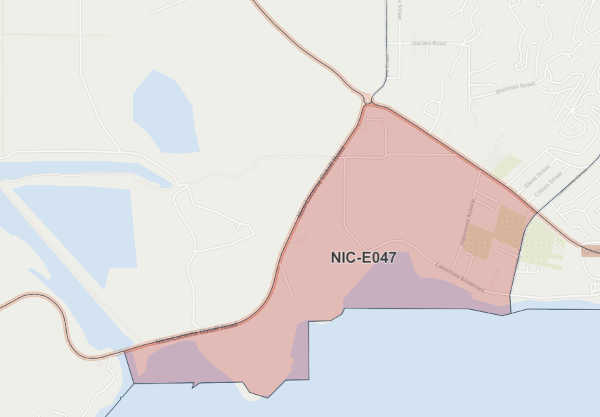
At 3:20 p.m., the Lake County Sheriff’s Office issued an evacuation order for zone NIC-E047 due to the fire in Nice.

“There is an IMMEDIATE threat to life and property to anyone in the impacted zones. Gather household members, pets and essential items (including medication), lock your home and leave now. Dial 9-1-1 if you have a life-threatening emergency ONLY; not for information,” the alert said.

The sheriff’s office said the evacuation area is north of Lakeshore Boulevard, south of Highway 20 at Point Lands Farm Road, east of the Nice-Lucerne Cutoff and west of Collier Avenue.

Shortly before 5 p.m., the sheriff’s office updated the evacuation areas, reporting that NIC-047B, a split zone of NIC-047, was for the area west of Hammond Avenue and was for a warning, while the area east of Hammond Avenue remained under an evacuation order. More about zone numbers can be found at https://protect.genasys.com.

Authorities also have established a temporary evacuation point at Upper Lake High School’s gymnasium at 675 Clover Valley Road for those evacuated due to the wildland fire.

At 6:20 p.m., the fire was reported to be contained, with two hours of mop up. The fire burned 1.2 acres.

Updates will be published as they become available.

Email Elizabeth Larson at This email address is being protected from spambots. You need JavaScript enabled to view it.. Follow her on Twitter, @ERLarson, or Lake County News, @LakeCoNews.This email address is being protected from spambots. You need JavaScript enabled to view it..


Evacuation zone NIC-E047 in Nice, California. Image courtesy of Genasys.
  1. Sites fire continues rapid growth
  2. Supervisors to hold 2024-25 fiscal year budget hearings
  3. Clearlake City Council to consider 2024-25 fiscal year budget
  • 642
  • 643
  • 644
  • 645
  • 646
  • 647
  • 648
  • 649
  • 650
  • 651
How to resolve AdBlock issue?
Refresh this page