How to resolve AdBlock issue?
Refresh this page
How to resolve AdBlock issue?

Refresh this page
Lake County News,California
  • Home
    • Registration Form
  • News
    • Education
    • Veterans
    • Community
      • Obituaries
      • Letters
      • Commentary
    • Police Logs
    • Business
    • Recreation
    • Health
    • Religion
    • Legals
    • Arts & Life
    • Regional
  • Calendar
  • Contact us
    • FAQs
    • Phones, E-Mail
    • Subscribe
  • Advertise Here
  • Login
How to resolve AdBlock issue?

Refresh this page

News

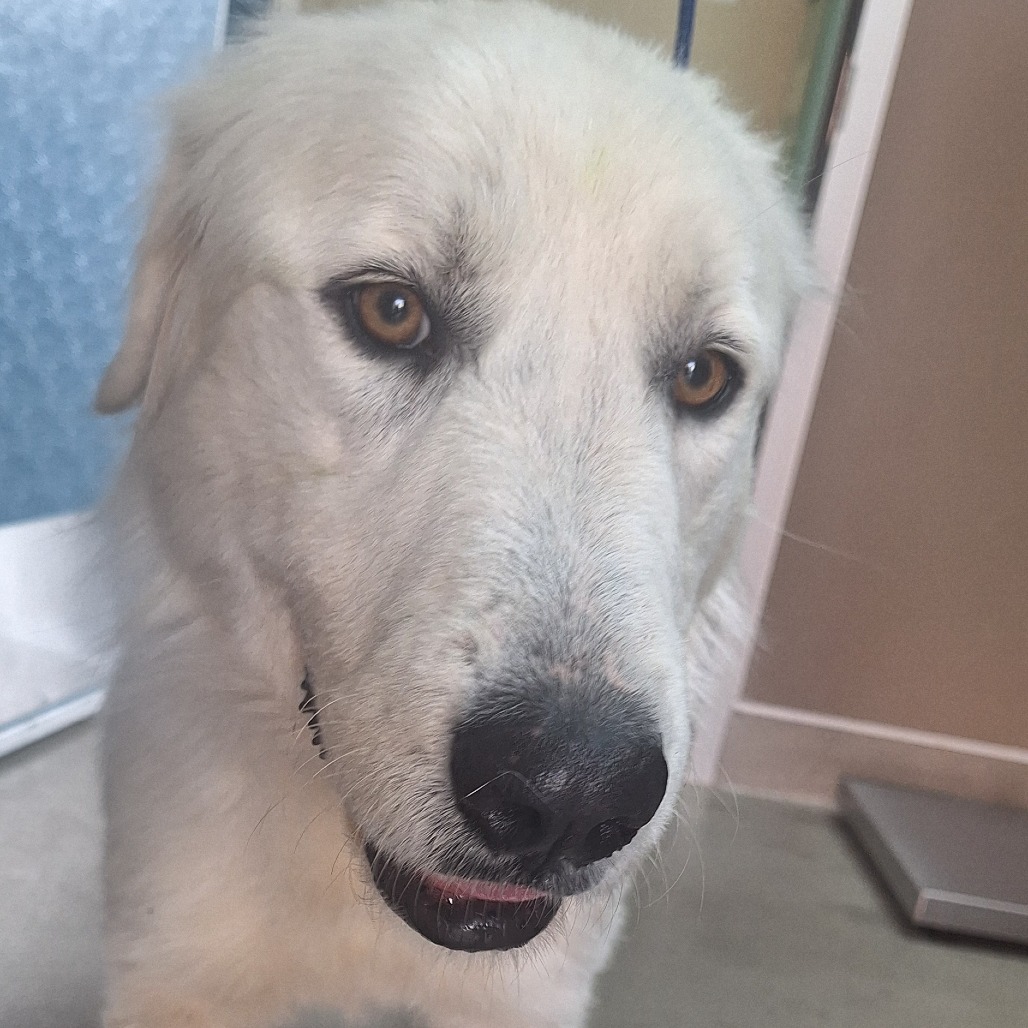
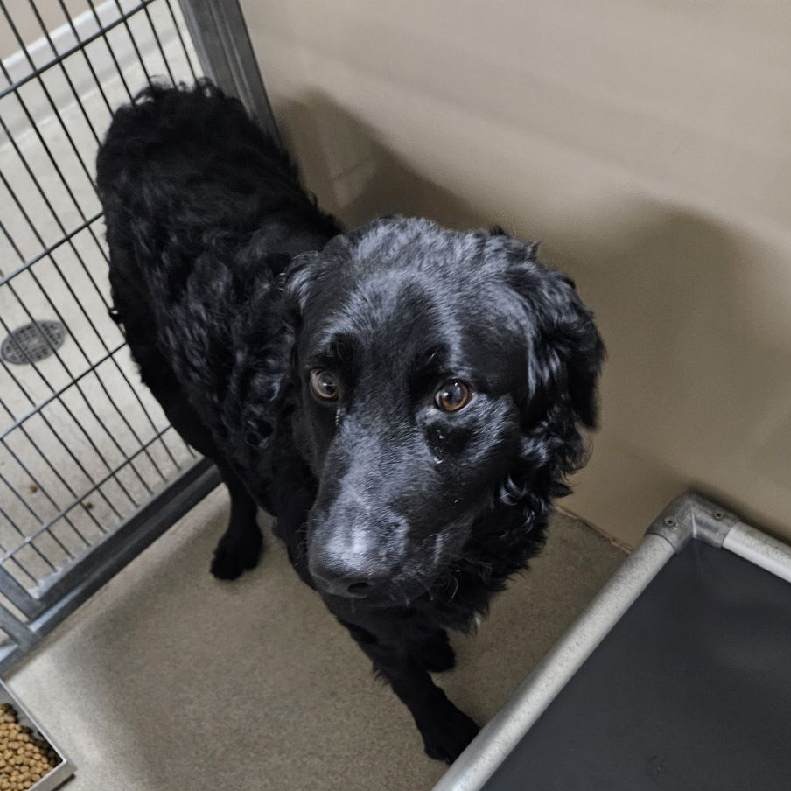
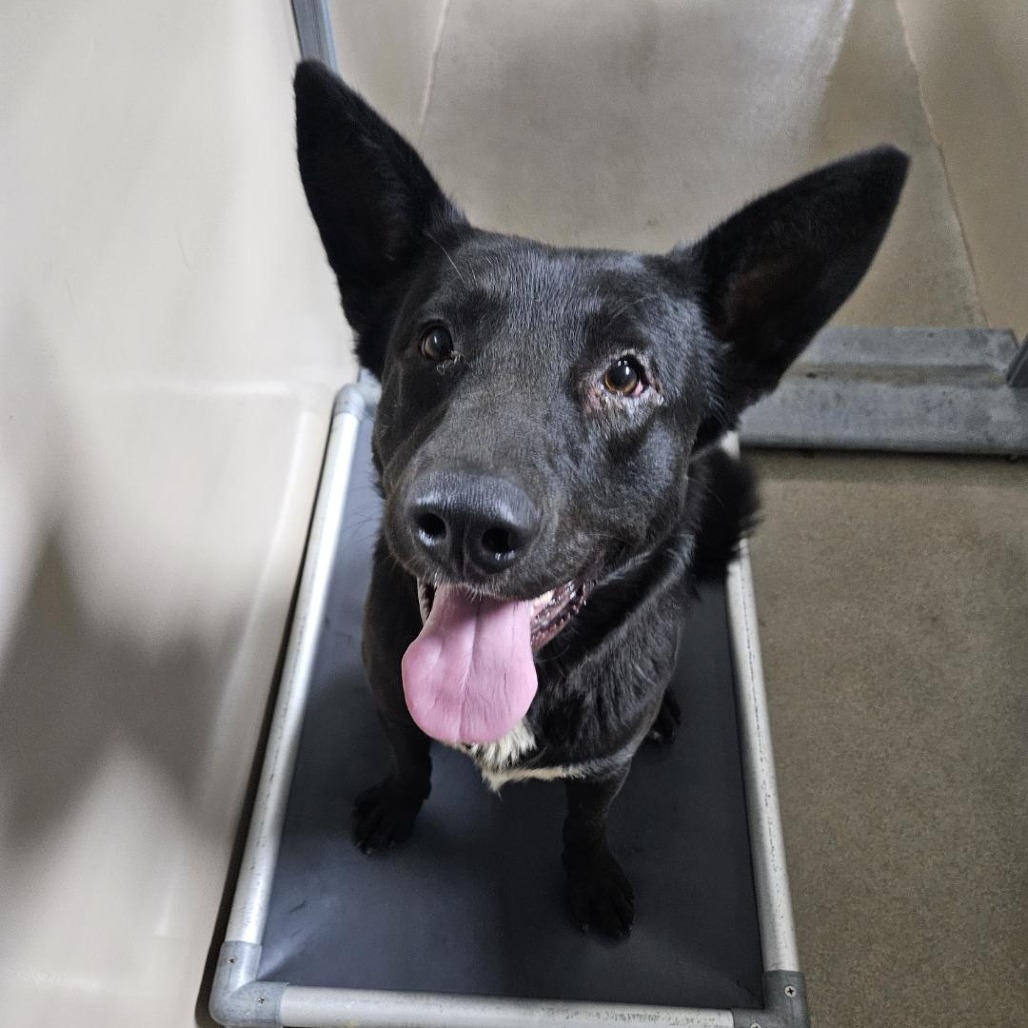
Helping Paws: Many new dogs and puppies

Details
Written by: Elizabeth Larson
Published: 27 December 2025

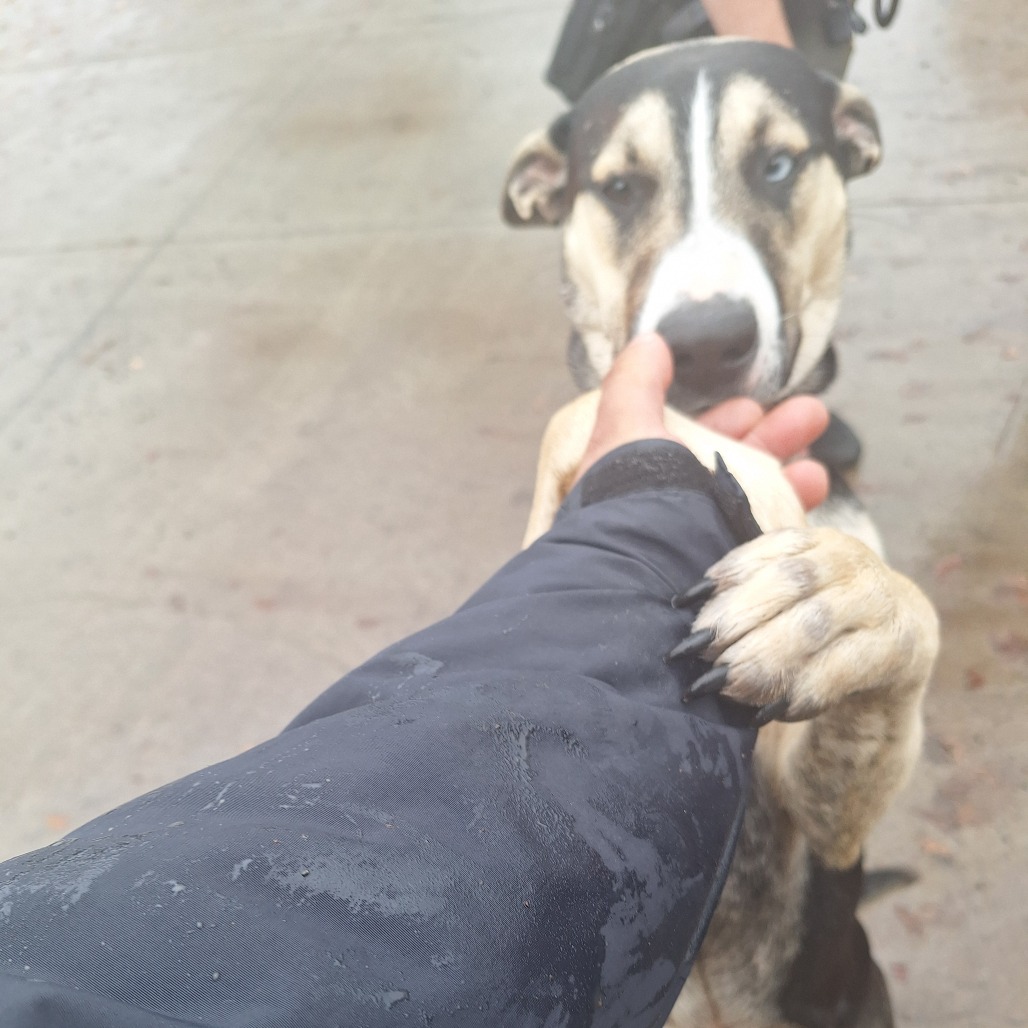
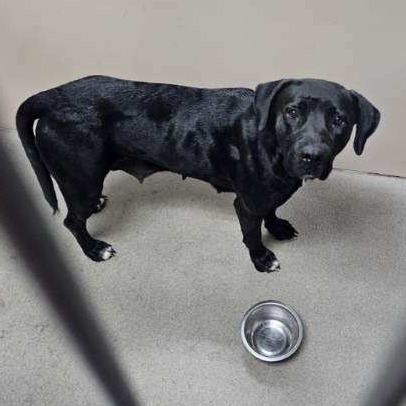
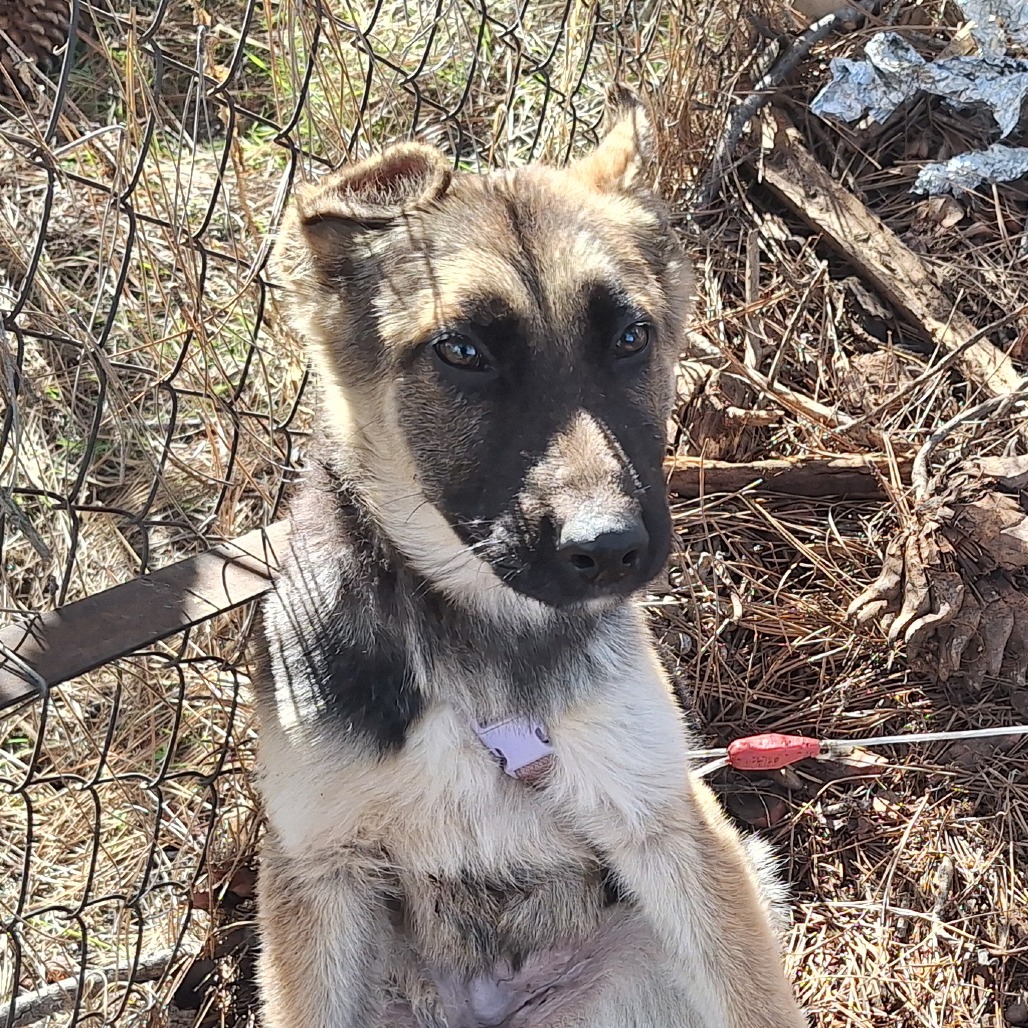
LAKE COUNTY, Calif. — There are many dogs waiting for new homes at Lake County Animal Care and Control.

The dogs available for adoption this week include mixes of border collie, bulldog, cattle dog, Chihuahua, Doberman Pinscher, German shepherd, Great Pyrenees, husky, Labrador Retriever, pit bull terrier, shepherd and Yorkshire terrier.

Dogs that are adopted from Lake County Animal Care and Control are either neutered or spayed, microchipped and, if old enough, given a rabies shot and county license before being released to their new owner. License fees do not apply to residents of the cities of Lakeport or Clearlake.

Those animals shown on this page at the Lake County Animal Care and Control shelter have been cleared for adoption.

Call Lake County Animal Care and Control at 707-263-0278 or visit the shelter online for information on visiting or adopting.

The shelter is located at 4949 Helbush in Lakeport.

Email Elizabeth Larson at This email address is being protected from spambots. You need JavaScript enabled to view it.. Follow her on Twitter, @ERLarson, and on Bluesky, @erlarson.bsky.social. Find Lake County News on the following platforms: Facebook, @LakeCoNews; X, @LakeCoNews; Threads, @lakeconews, and on Bluesky, @lakeconews.bsky.social. 


Kennel#17 Sugar's preview photo

Kennel#17 Sugar

Kennel#14 Chief's preview photo
Kennel#14 Chief

Kennel#32 Feather's preview photo
Kennel#32 Feather

Kennel#12 Shylah's preview photo
Kennel#12 Shylah

Kennel#28 Mitzy's preview photo
Kennel#28 Mitzy

 Kennel#20 Gracie's preview photo
Kennel#20 Gracie

Kennel #29 Star's preview photo
Kennel #29 Star

Kennel#27 Lola's preview photo
Kennel#27 Lola

Kennel#9 Amore's preview photo
Kennel#9 Amore

Kennel#25a Charlie's preview photo
Kennel#25a Charlie

Kennel#25b Bear's preview photo
Kennel#25b Bear

Kennel#31a(Cleo)'s preview photo
Kennel#31a(Cleo)

Kennel#31b Baxter's preview photo
Kennel#31b Baxter

Kennel#24 Nelly's preview photo
Kennel#24 Nelly

Kennel#30 Rosa's preview photo
Kennel#30 Rosa

Kennel#8(Brut)'s preview photo
Kennel#8(Brut)

 
Kennel#15a Mufasa's preview photo
Kennel#15a Mufasa

Kennel#15b Terrance's preview photo
Kennel#15b Terrance

Kennel#3(Buddy)'s preview photo
Kennel#3(Buddy)

Kennel#4(Chance)'s preview photo
Kennel#4(Chance)

Kennel#26 Theo's preview photo
Kennel#26 Theo

Kennel#26 Ivy's preview photo
Kennel#26 Ivy
Kennel#13 Roland's preview photo
Kennel#13 Roland

Kennel#10 Tyler's preview photo
Kennel#10 Tyler

Kennel#11a Sprinkles's preview photo
Kennel#11a Sprinkles

Kennel#11b Sparkles's preview photo
Kennel#11b Sparkles
Kennel#7 Tara's preview photo
Kennel#7 Tara

Kennel#6 Tommy's preview photo
Kennel#6 Tommy

 Kennel#22a's preview photo
Kennel#22a

 Kennel#22b's preview photo
Kennel#22b

 Kennel#22c 's preview photo
Kennel#22c

Kennel#34a Hunter's preview photo
Kennel#34a Hunter

Kennel#34b Bebe's preview photo
Kennel#34b Bebe

B#54 Little Lady's preview photo
B#54 Little Lady

Kennel#5(Willow)'s preview photo
Kennel#5(Willow)

A#11(Brutus)'s preview photo
A#11(Brutus)

Kennel#19a Stella's preview photo
Kennel#19a Stella

Kennel#19b Aurora's preview photo
Kennel#19b Aurora

Kennel#19c Celeste's preview photo
Kennel#19c Celeste

Kennel#16 Polar's preview photo
Kennel#16 Polar

Kennel#33 Princess's preview photo
Kennel#33 Princess


From record warming to rusting rivers, 2025 Arctic Report Card shows a region transforming faster than expected

Details
Written by: Matthew L. Druckenmiller, University of Colorado Boulder; Rick Thoman, University of Alaska Fairbanks, and Twila A. Moon, University of Colorado Boulder
Published: 27 December 2025

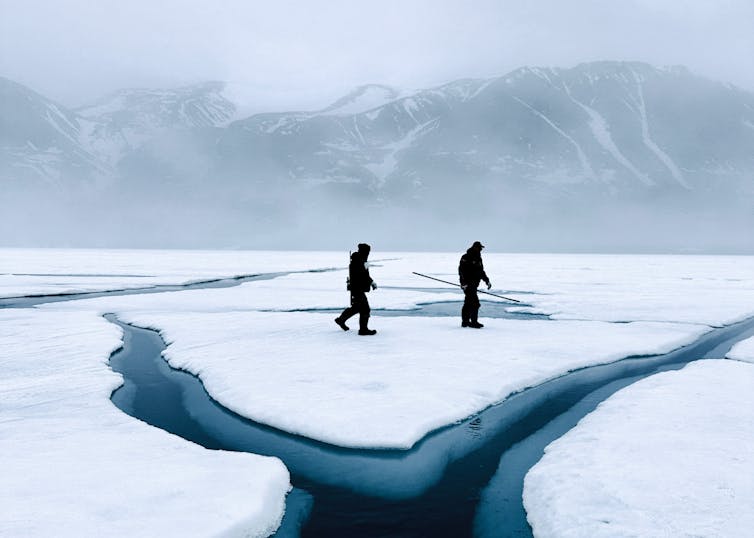
As temperatures rise, the timing of the ice thaw changes. Vincent Denarie via Arctic Report Card

The Arctic is transforming faster and with more far-reaching consequences than scientists expected just 20 years ago, when the first Arctic Report Card assessed the state of Earth’s far northern environment.

The snow season is dramatically shorter today, sea ice is thinning and melting earlier, and wildfire seasons are getting worse. Increasing ocean heat is reshaping ecosystems as non-Arctic marine species move northward. Thawing permafrost is releasing iron and other minerals into rivers, which degrades drinking water. And extreme storms fueled by warming seas are putting communities at risk.

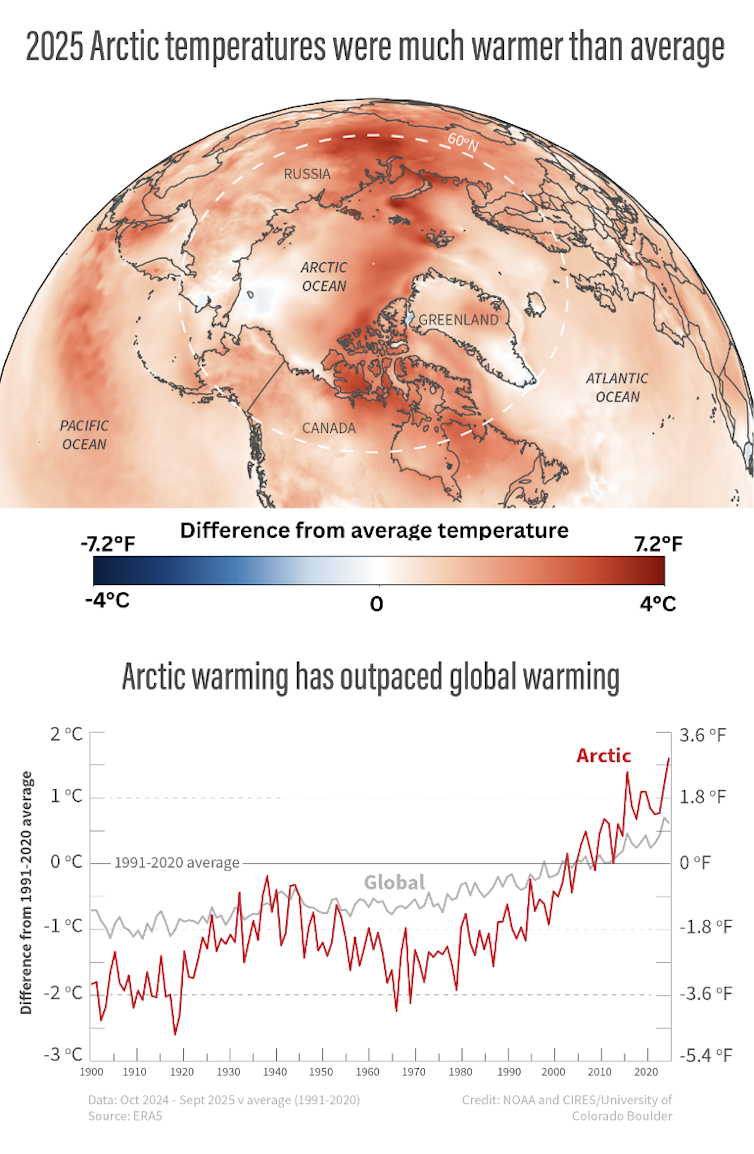
The past water year, October 2024 through September 2025, brought the highest Arctic air temperatures since records began 125 years ago, including the warmest autumn ever measured and a winter and a summer that were among the warmest on record. Overall, the Arctic is warming more than twice as fast as the Earth as a whole.

Highlights from the National Oceanic and Atmospheric Administration’s 2025 Arctic Report Card.

For the 20th Arctic Report Card, we worked with the National Oceanic and Atmospheric Administration, an international team of scientists and Indigenous partners from across the Arctic to track environmental changes in the North – from air and ocean temperatures to sea ice, snow, glaciers and ecosystems – and the impacts on communities.

Together, these vital signs reveal a striking and interconnected transformation underway that’s amplifying risks for people who live there.

A wetter Arctic with more extreme precipitation

Arctic warming is intensifying the region’s water cycle.

A warmer atmosphere increases evaporation, precipitation and meltwater from snow and ice, adding and moving more water through the climate system. That leads to more extreme rainstorms and snowstorms, changing river flows and altering ecosystems.

Charts show how the Arctic has warmed faster than the global average.
Arctic surface air temperatures are warming much faster than the global average. NOAA and CIRES/University of Colorado Boulder.

The Arctic region saw record-high precipitation for the entire 2025 water year and for spring, with the other seasons each among the top-five wettest since at least 1950. Extreme weather – particularly atmospheric rivers, which are long narrow “rivers in the sky” that transport large amounts of water vapor – played an outsized role.

These wetter conditions are reshaping snow cover across the region.

Snow and ice losses accelerate warming, hazards

Snow blankets the Arctic throughout much of the year, but that snow cover isn’t lasting as long. In 2025, snowpack was above average in the cold winter months, yet rapid spring melting left the area covered by snow far smaller than normal by June, continuing a six-decade decline. June snow cover in recent years has been half of what it was in the 1960s.

Losing late spring snow cover means losing a bright, reflective surface that helps keep the Arctic cool, allowing the land instead to be directly warmed by the sun, which raises the temperature.

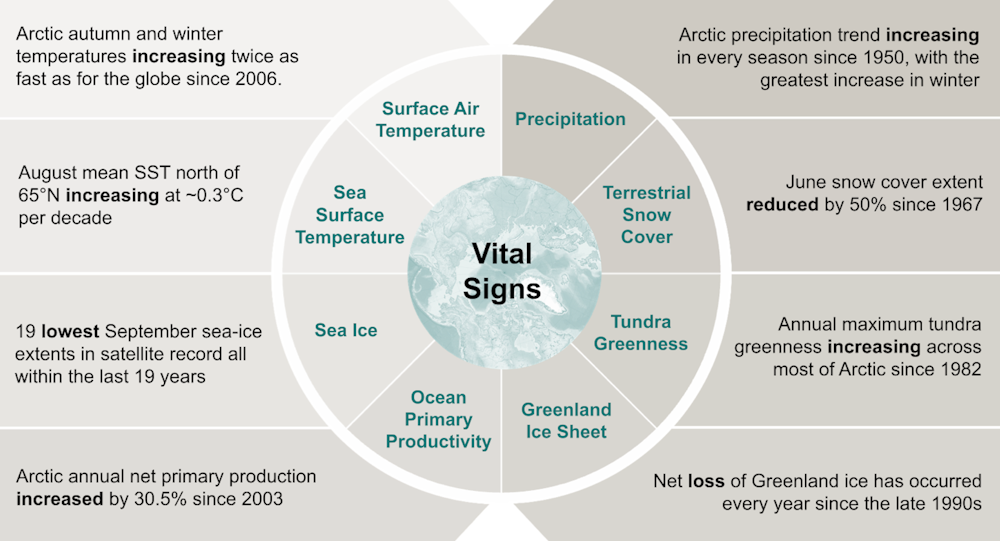
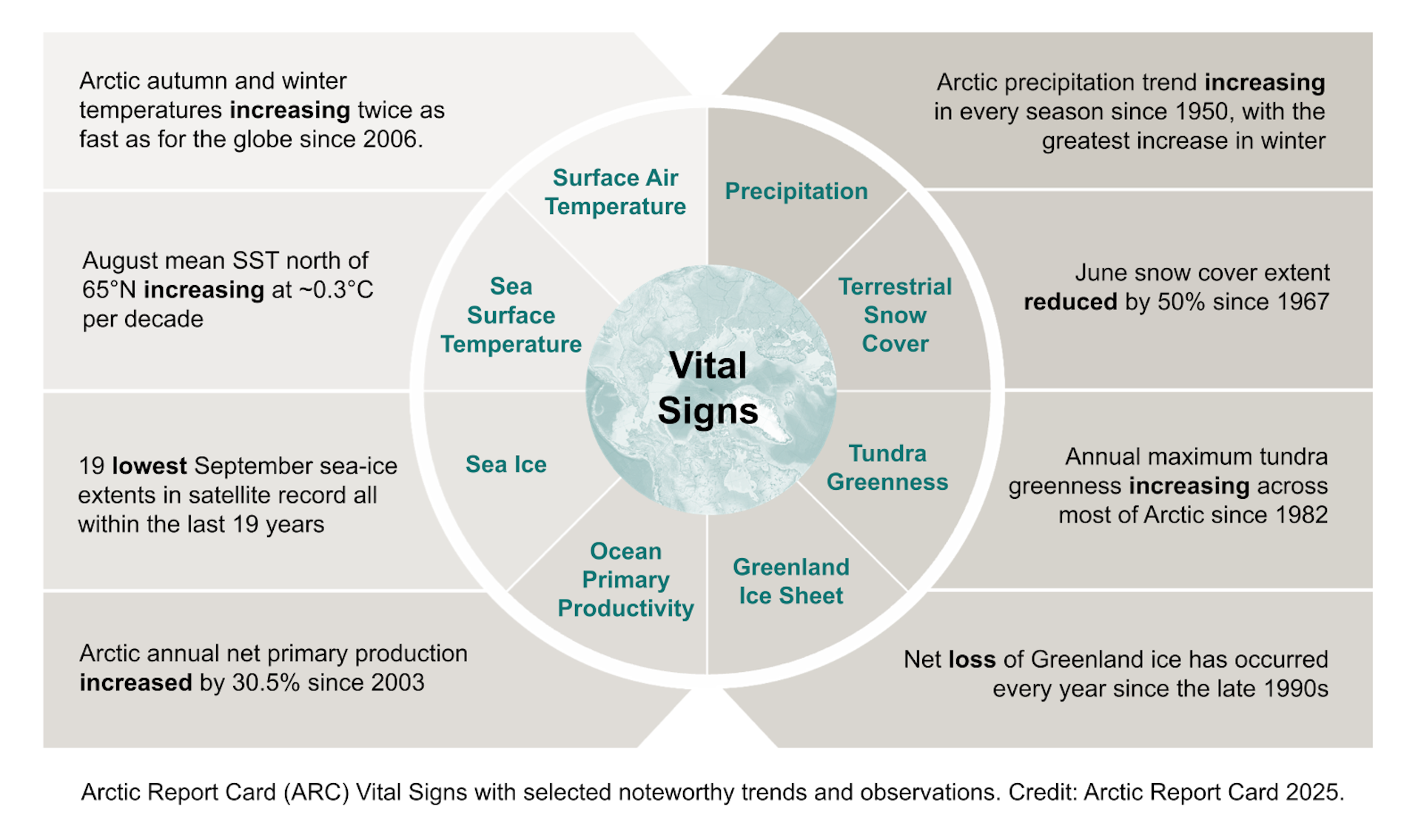
An illustration shows changes in sea level rise, temperature, precipitation, sea ice and other vital areas.
Eight vital signs and observations in 2025 from the 20th edition of the Arctic Report Card. Arctic Report Card 2025

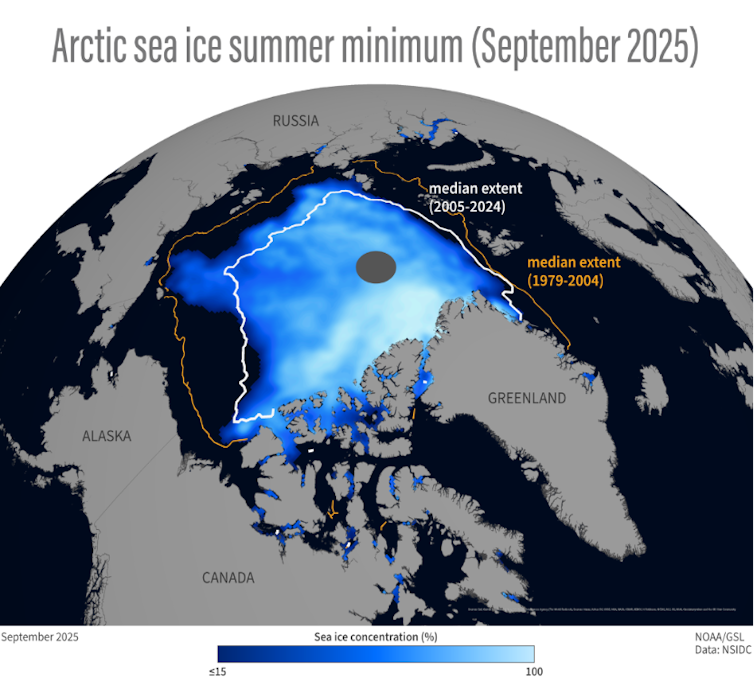
Sea ice tells a similar story. The year’s maximum sea ice coverage, reached in March, was the lowest in the 47-year satellite record. The minimum sea ice coverage, in September, was the 10th lowest.

Since the 1980s, the summer sea ice extent has shrunk by about 50%, while the area covered by the oldest, thickest sea ice – ice that has existed for longer than four years – has declined by more than 95%.

The thinner sea ice cover is more influenced by winds and currents, and less resilient against warming waters. This means greater variability in sea ice conditions, causing new risks for people living and working in the Arctic.

Map shows sea ice extent in 2025 and the 2005-2024 median is much smaller than the 1979-2004 median extent.
Arctic sea ice concentration in September 2025, during its annual minimum extent at the end of summer, was much smaller than the 1979-2004 median extent. The shades of blue reflect the concentration of sea ice. NOAA and CIRES/University of Colorado Boulder.

The Greenland Ice Sheet continued to lose mass in 2025, as it has every year since the late 1990s. As the ice sheet melts and calves more icebergs into the surrounding seas, it adds to global sea-level rise.

Mountain glaciers are also losing ice at an extraordinary rate – the annual rate of glacier ice loss across the Arctic has tripled since the 1990s.

This poses immediate local hazards. Glacial lake outburst floods – when water that is dammed up by a glacier is suddenly released – are becoming more frequent. In Juneau, Alaska, recent outburst floods from Mendenhall Glacier have inundated homes and displaced residents with record-setting levels of floodwater.

A mountain view shows where the retreating glacier and possible permafrost thaw influenced valley walls exposed above open water.
An aerial photo shows the result of an Aug. 10, 2025, landslide at South Sawyer Glacier in Alaska. The light-colored area of the mountainside is where the slide occurred. USGS

Glacier retreat can also contribute to catastrophic landslide impacts. Following the retreat of South Sawyer Glacier, a landslide in southeast Alaska’s Tracy Arm in August 2025 generated a tsunami that swept across the narrow fjord and ran nearly 1,600 feet (nearly 490 meters) up the other side. Fortunately, the fjord was empty of the cruise ships that regularly visit.

Record-warm oceans drive storms, ecosystem shifts

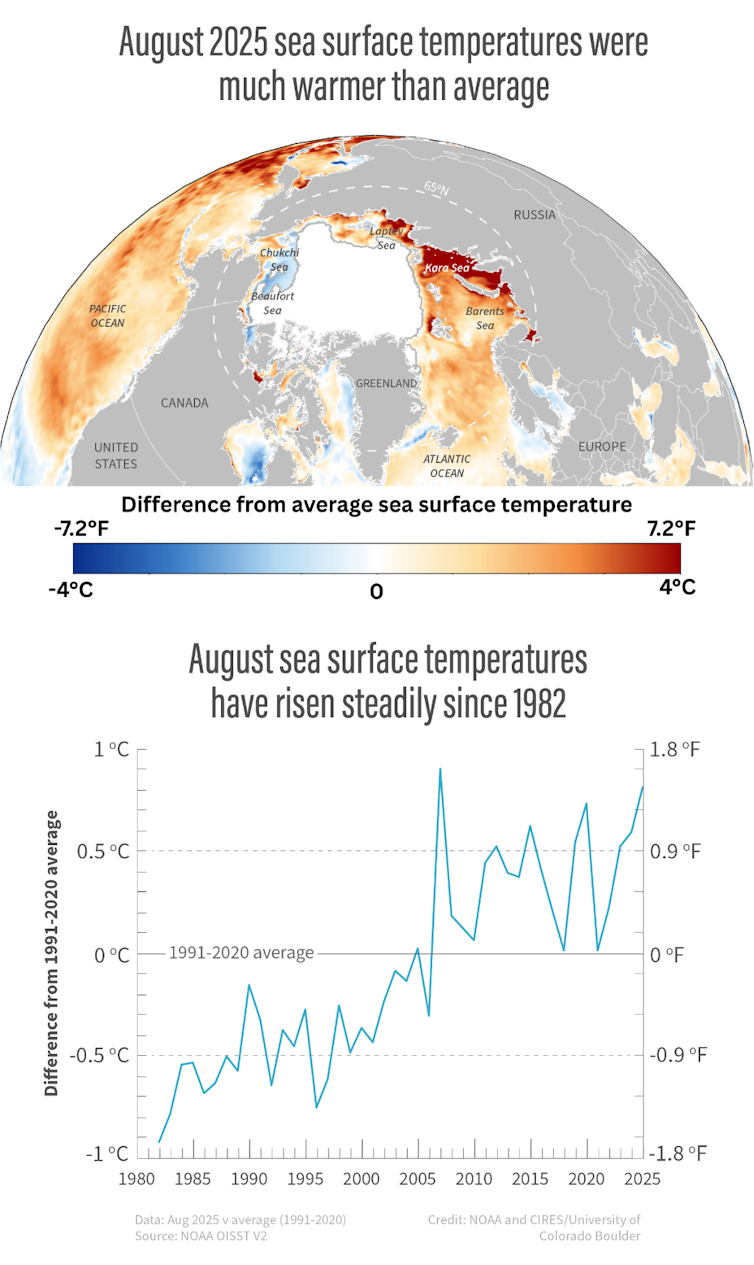
Arctic Ocean surface waters are steadily warming, with August 2025 temperatures among the highest ever measured. In some Atlantic-sector regions, sea surface temperatures were as much as 13 degrees Fahrenheit (7.2 Celsius) above the 1991-2020 average. Some parts of the Chukchi and Beaufort seas were cooler than normal.

A map and chart show temperatures rising.
Arctic sea surface temperatures are much warmer today than in past decades, as this map and chart of August 2025 sea surface temperatures shows. NOAA and CIRES/University of Colorado Boulder.

Warm water in the Bering Sea set the stage for one of the year’s most devastating events: Ex-Typhoon Halong, which fed on unusually warm ocean temperatures before slamming into western Alaska with hurricane-force winds and catastrophic flooding. Some villages, including Kipnuk and Kwigillingok, were heavily damaged.

As seas warm, powerful Pacific cyclones, which draw energy from warm water, are reaching higher latitudes and maintaining strength longer. Alaska’s Arctic has seen four ex-typhoons since 1970, and three of them arrived in the past four years.

A town with homes surrounded by water.
The village of Kipnuk, shown on Oct. 12, 2025, was devastated by ex-Typhoon Halong. The storm displaced at least 1,500 people from across western Alaska. Alaska National Guard

The Arctic is also seeing warmer, saltier Atlantic Ocean water intrude northward into the Arctic Ocean. This process, known as Atlantification, weakens the natural layering of water that once shielded sea ice from deeper ocean heat. It is already increasing sea ice loss and reshaping habitat for marine life, such as by changing the timing of phytoplankton production, which provides the base of the ocean food web, and increasing the likelihood of harmful algal blooms.

From ocean ‘borealization’ to tundra greening

Warming seas and declining sea ice are enabling southern, or boreal, marine species to move northward. In the northern Bering and Chukchi seas, Arctic species have declined sharply – by two-thirds and one-half, respectively – while the populations of boreal species expand.

On land, a similar “borealization” is underway. Satellite data shows that tundra vegetation productivity – known as tundra greenness – hit its third-highest level in the 26-year record in 2025, part of a trend driven by longer growing seasons and warmer temperatures. Yet greening is not universal – browning events caused by wildfires and extreme weather are also increasing.

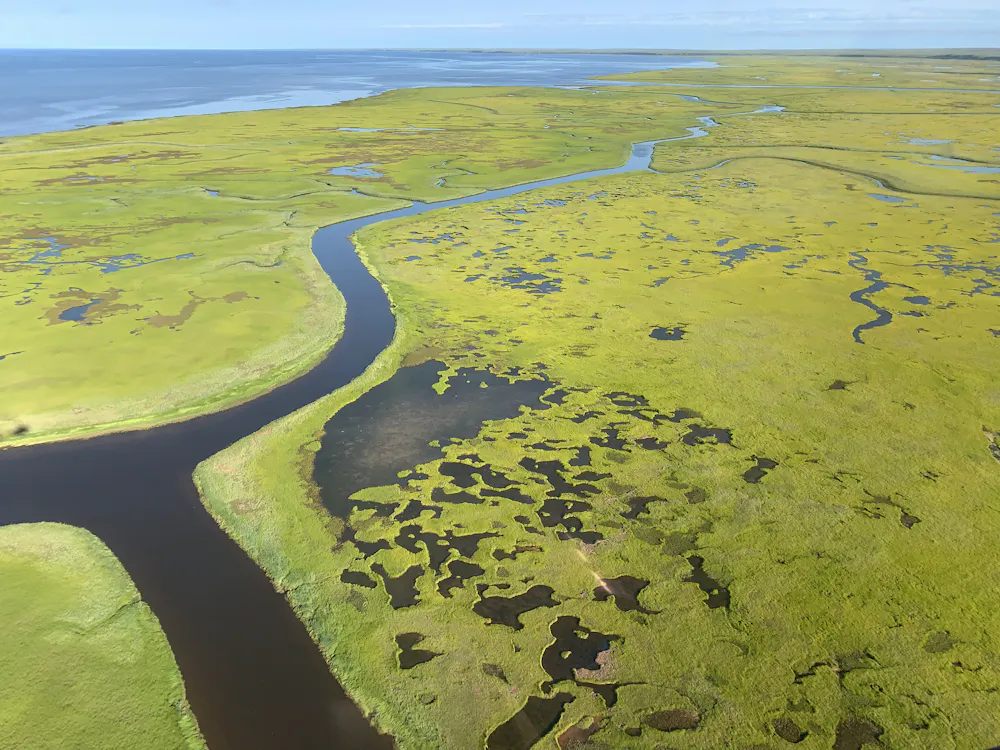
An aerial view of green land dotted with lakes and a river.
Coastal tundra vegetation on the Baldwin Peninsula of Alaska. The tundra is seeing longer growing seasons with warmer temperatures, leading to the overall ‘greening’ of the region. G. V. Frost

Summer 2025 marked the fourth consecutive year with above-median wildfire area across northern North America. Nearly 1,600 square miles (over 4,000 square kilometers) burned in Alaska and over 5,000 square miles (over 13,600 square kilometers) burned in Canada’s Northwest Territories.

Permafrost thaw is turning rivers orange

As permafrost – the frozen ground that underlies much of the Arctic – continues its long-term warming and thaw, one emerging consequence is the spread of rusting rivers.

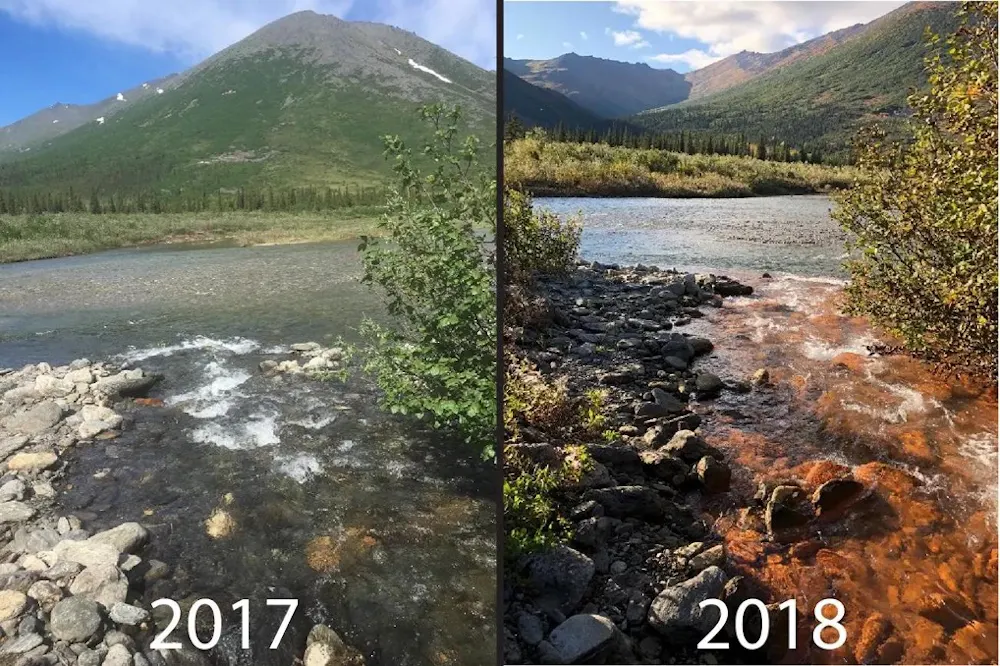
As thawing soils release iron and other minerals, more than 200 watersheds across Arctic Alaska now show orange discoloration. These waters exhibit higher acidity and elevated levels of toxic metals, which can contaminate fish habitat and drinking water and impact subsistence livelihoods.

In Kobuk Valley National Park in Alaska, a tributary to the Akillik River lost all its juvenile Dolly Varden and slimy sculpin fish after an abrupt increase in stream acidity when the stream turned orange.

Side-by-side images show the same stream a year apart, one with rust-colored water.
Rust-colored water in a tributary of the Akillik River in Kobuk Valley National Park reflects permafrost thaw releasing metals into the water. National Park Service/Jon O’Donnell

Arctic communities lead new monitoring efforts

The rapid pace of change underscores the need for strong Arctic monitoring systems. Yet many government-funded observing networks face funding shortfalls and other vulnerabilities.

At the same time, Indigenous communities are leading new efforts.

The Arctic Report Card details how the people of St. Paul Island, in the Bering Sea, have spent over 20 years building and operating their own observation system, drawing on research partnerships with outside scientists while retaining control over monitoring, data and sharing of results. The Indigenous Sentinels Network tracks environmental conditions ranging from mercury in traditional foods to coastal erosion and fish habitat and is building local climate resilience in one of the most rapidly changing environments on the planet.

A group of people with binoculars watch the water.
Observers with the Indigenous Sentinel Network, together with National Oceanic and Atmospheric Administration scientists, monitor the population and health of northern fur seals on St. Paul Island. Hannah-Marie Ladd, CC BY

The Arctic is facing threats from more than the changing climate; it’s also a region where concerns of ecosystem health and pollutants come sharply into view. In this sense, the Arctic provides a vantage point for addressing the triple planetary crisis of climate change, biodiversity loss and pollution.

The next 20 years will continue to reshape the Arctic, with changes felt by communities and economies across the planet.The Conversation

Matthew L. Druckenmiller, Senior Scientist, National Snow and Ice Data Center (NSIDC), Cooperative Institute for Research in Environmental Sciences (CIRES), University of Colorado Boulder; Rick Thoman, Alaska Climate Specialist, University of Alaska Fairbanks, and Twila A. Moon, Deputy Lead Scientist, National Snow and Ice Data Center (NSIDC), Cooperative Institute for Research in Environmental Sciences (CIRES), University of Colorado Boulder

This article is republished from The Conversation under a Creative Commons license. Read the original article.

Space News: Astronomers see fireworks from violent collisions around nearby star

Details
Written by: Robert Sanders
Published: 27 December 2025
An artist's rendition of a collision between two planetesimals in the debris disk around a young star. Collisions like these occur over hundreds of millions of years as gas and dust slowly coalesces into planets and moons. (Image credit: Thomas Müller, MPIA/HdA)


BERKELEY, Calif. — Young star systems are a place of violent collisions. Rocks, comets, asteroids and larger objects carom off one another and coalesce, gradually turning the primordial dust and ice of a stellar nebula into planets and moons. 

The largest of these collisions, however, are expected to be rare over the hundreds of millions of years it takes to form a planetary system — perhaps one every 100,000 years.

Now, astronomers have seen the aftermath of two powerful collisions within a 20-year period around a nearby star called Fomalhaut. These are either lucky observations or a sign that collisions are more frequent than predicted during planet formation.

The events — the first was detected in 2004 and the second in 2023 — are the first collisions between large objects directly imaged in any solar system outside our own.

"We just witnessed the collision of two planetesimals and the dust cloud that gets spewed out of that violent event, which begins reflecting light from the host star," said Paul Kalas, adjunct professor of astronomy at the University of California, Berkeley, and first author of the report. "We do not directly see the two objects that crashed into each other, but we can spot the aftermath of this enormous impact."

Over tens of thousands of years, he said, the dust around Fomalhaut would be "sparkling with these collisions" — like twinkling holiday lights.

Kalas first started searching for a dusty disk around Fomalhaut in 1993, hoping to see for the first time the debris left over after planet formation. Only 25 light-years from Earth, the star is young — about 440 million years old — and a proxy for what our solar system looked like in its formative years. 

Thanks to NASA's Hubble Space Telescope, or HST, he eventually found such a disk around the star and, in 2008, reported finding a bright spot near the disk that was likely a planet, the first to be imaged directly at visible wavelengths. He called it Fomalhaut b, per the naming convention for exoplanets.

That planet discovery has now turned to dust. What he thought was a planet was likely the dust cloud kicked up by the collision of planetesimals.

"This is a new phenomenon, a point source that appears in a planetary system and then over 10 years or more slowly disappears," he said. "It's masquerading as a planet because planets also look like tiny dots orbiting nearby stars."

Based on the brightness of both the 2004 and 2023 events, the colliding objects are at least 60 kilometers (37 miles) across — at least four times larger than the object that collided with Earth 66 million years ago and killed off the dinosaurs. Objects of this size are referred to as planetesimals — objects similar in size to many of the asteroids and comets in our solar system but much smaller than a dwarf planet like Pluto.

"Fomalhaut is much younger than the solar system, but when our solar system was 440 million years old, it was littered with planetesimals crashing into each other," Kalas said. "That's the time period that we are seeing, when small worlds are being cratered with these violent collisions or even being destroyed and reassembled into different objects. It's like looking back in time in a sense, to that violent period of our solar system when it was less than a billion years old."

The 2023 Fomalhaut observations are discussed in a paper posted online Dec. 18 in the journal Science.

"The Fomalhaut system is a natural laboratory to probe how planetesimals behave when undergoing collisions, which in turn tells us about what they are made of and how they formed," said Kalas's colleague, Mark Wyatt, a theorist and professor of astronomy at the University of Cambridge in the United Kingdom. "The exciting aspect of this observation is that it allows us to estimate both the size of the colliding bodies and how many of them there are in the disk, information which it is almost impossible to get by any other means."

He estimates that there are about 300 million objects around Fomalhaut the size of the ones that collided to generate these bright clouds of dust. Previous observations of the star detected the presence of carbon monoxide gas, which indicates that these planetesimals are volatile-rich and therefore very similar in composition to the icy comets in our solar system, he said.

Dust clouds masquerading as exoplanets

Fomalhaut, located within the southern constellation Piscis Austrinus, is 16 times more luminous than our sun and one of the brightest stars in the sky. After Kalas began observing it with HST in 2004, he discovered a large belt of dusty debris at a distance of 133 astronomical units, or AU, from the star, more than three times the distance from the star as the Kuiper Belt is from the sun in our solar system. 

An AU is the average distance between the Earth and the sun, or 93 million miles.

To Kalas, the belt's sharp inner edge suggested that it had been sculpted by planets. After a second observation in 2006, he concluded that a bright spot in the outer belt visible in both the 2004 and 2006 images was, in fact, a planet. He acknowledged at the time that it could be a very bright dust cloud caused by a collision in the disk, but the likelihood of that seemed very low.

Kalas was able to schedule four follow-up HST observations of Fomalhaut, in 2010, 2012, 2013 and 2014. In the last, however, Fomalhaut b was nowhere to be seen. Nine years later, after three failed attempts to image Fomalhaut with HST, he obtained a new image that revealed another bright spot not far from the first, which is now referred to as Fomalhaut cs1, for circumstellar source 1. 

Based on its location, however, the new spot, dubbed Fomalhaut cs2, could not be a reappearance of Fomalhaut cs1. Because of the nine-year hiatus between the observations in 2014 and 2023, it's unclear when Fomalhaut cs2 appeared.

In the new paper, Kalas and an international team of astronomers analyzed the 2023 image of Fomalhaut and a subsequent, though poor image obtained in 2024, and concluded that it could only be light reflected from a dust cloud produced by the collision of two planetesimals.

Kalas noted that at first, Fomalhaut cs1 moved like an exoplanet, but by 2013 its path had curved away from the star. This type of motion would be possible for very small particles being pushed outward by the radiation pressure of starlight. The appearance of cs2 supports the idea that cs1 was in fact a dust cloud.

Kalas compares these events to the dust cloud generated in 2022 when NASA's DART (Double Asteroid Redirection Test) mission slammed into the moonlet Dimorphos, which was orbiting the asteroid Didemos. The cloud around Fomalhaut is about a billion times larger, the team estimated.

Kalas has been awarded time over the next three years to use the James Webb Space Telescope's Near-Infrared Camera, or NIRCam, and the HST to observe Fomalhaut and track the evolution of the cloud to see if it expands in size and determine its orbit. It is already 30% brighter than Fomalhaut cs1. Additional observations in August 2025 confirmed that cs2 is still visible.

In anticipation of future space missions to directly image exoplanets, Kalas cautioned astronomers to be on the lookout for dust clouds masquerading as planets.

"These collisions that produce dust clouds happen in every planetary system," he said. "Once we start probing stars with sensitive future telescopes such as the Habitable Worlds Observatory, which aims to directly image an Earth-like exoplanet, we have to be cautious because these faint points of light orbiting a star may not be planets."

Other co-authors of the paper are UC Berkeley research astronomer Thomas Esposito; former UC Berkeley graduate students Jason Wang, now at Northwestern University in Illinois, and Michael Fitzgerald, now at UCLA; former UC Berkeley postdoctoral fellow Robert De Rosa, now at the European Southern Observatory in Chile; Maxwell Millar-Blanchaer of UC Santa Barbara; Bin Ren of Xiamen University in China; Maximilian Sommer of the University of Cambridge; and Grant Kennedy of the University of Warwick in the UK. The work was supported by NASA (NAS5-26555, GO-HST-17139).

Robert Sanders writes for the UC Berkeley News Center. 

New Year, new laws: CHP highlights public safety laws taking effect in 2026

Details
Written by: Lake County News reports
Published: 27 December 2025

As part of its commitment to keeping the public informed so they can make the safest choices for themselves and their families, the California Highway Patrol is highlighting new public safety laws passed during this year’s legislative session and signed by Gov. Gavin Newsom.

Unless otherwise noted, these laws take effect Jan. 1, 2026. 

CRIMES

Crimes: Burglary Tools (AB 486, Lackey)

Assembly Bill 486 makes it a misdemeanor to possess a key programming device, a key duplicating device, or a signal extender with the intent to commit burglary. The offense can result in up to six months in county jail, a fine of up to $1,000, or both.

This bill expands existing law by adding those three tools to the list of tools illegal to possess with the intent to commit burglary. 

ELECTRIC BICYCLE SAFETY

Electric Bicycles: Required Equipment (AB 544, Davies)

Assembly Bill 544 mandates that electric bicycles must have a red reflector or a solid or flashing red light with a built-in reflector on the rear during all hours of operation, not just during darkness as the law previously required.

The bill also allows the CHP-developed online electric bicycle safety and training program to fulfill the safety course requirement for minors who receive a helmet violation involving electric bicycles.

Off-highway Electric Motorcycles (SB 586, Jones)

Senate Bill 586 defines an “off-highway electric motorcycle” or “eMoto” as a vehicle that:

• Is designed primarily for off-highway use;
• Is powered by an electric motor that does not require a motor number;
• Has handlebars for steering, a manufacturer-provided straddle seat, and two wheels;
• Is not equipped with manufacturer-provided pedals.

This bill also classifies an off-highway electric motorcycle as an off-highway motor vehicle, or OHV, subject to the same rules and regulations. This includes a requirement that a person operating an OHV wear a safety helmet and that every OHV not registered under the Vehicle Code display an identification plate or device issued by the Department of Motor Vehicles.

PEDESTRIAN SAFETY

Pedestrian Safety: School Zones: Speed Limits (AB 382, Berman)

Assembly Bill 382 allows local authorities to lower the school zone speed limit from 25 to 20 miles per hour by ordinance or resolution through Jan. 1, 2031. After this date, the speed limit will automatically decrease from 25 to 20 miles per hour in school zones when proper signage is posted.

SPEED ENFORCEMENT

State Highway Work Zone Speed Safety Program (AB 289, Haney)

Assembly Bill 289 authorizes the Department of Transportation to establish a work zone speed safety system pilot program. The program will utilize a fixed or mobile radar or laser systems to detect speeding violations and capture a clear photograph of a vehicle's license plate. Citations will be issued to the vehicle's registered owner with specified requirements and procedures for program implementation, citation issuance, review, and appeal.

Vehicles: Highway Safety (AB 390, Wilson)

Assembly Bill 390 expands the “slow down and move over” law to include any highway maintenance vehicle or stationary vehicle using flashing hazard lights or warning devices such as cones and road flares. Drivers approaching such a vehicle must move into a lane that is not next to the stopped vehicle or slow down to a safe speed if changing lanes is not possible.

Traffic Safety: Speed Limits (AB 1014, Rogers)

Assembly Bill 1014 authorizes the Department of Transportation to reduce a speed limit by five miles per hour on a highway, and mandates warning citations during the initial 30 days after a speed limit is lowered.

VEHICLE STORAGE

Vehicle Removal (AB 875, Muratsuchi)

Assembly Bill 875 authorizes a peace officer to impound a vehicle for at least 48 hours if the vehicle has fewer than four wheels but does not meet the definition of an electric bicycle,  is powered by an electric motor capable of exclusively propelling the vehicle over 20 MPH on a highway and the operator is not licensed to operate the vehicle or is a class three electric bicycle being operated by a person under 16. A safety course may be required as a condition of release if the impoundment involves a child under 16 years old operating a class three electric bike as described in Section 312.5 of the Vehicle Code.

2024 LEGISLATIVE SESSION

The following public safety laws were passed during the 2024 legislative session and will go into effect in 2026.

Electric Bicycles, Powered Mobility Devices and Storage Batteries (SB 1271, Min)

Beginning Jan. 1, 2026, Senate Bill 1271 focuses on improving the safety standards for electric bicycles, powered mobility devices, and related lithium-ion batteries. It requires these devices and their components, such as batteries and charging systems, to be tested by accredited laboratories to meet specific safety standards. 

The bill also mandates labeling these products to show compliance with safety regulations, ensuring consumers are informed.

Furthermore, it prohibits distributing, selling, or leasing e-bikes and related equipment unless they meet these standards, aiming to reduce risks like fire hazards and electrical malfunctions. 

Beginning Jan. 1, 2028, the bill would prohibit a person from renting or offering for rental an electric bicycle, powered mobility device, charging system, or storage battery unless it has been tested to the specified safety standard.

Autonomous Vehicles (AB 1777, Ting)

Upon the Department of Motor Vehicles (DMV) adoption of necessary regulations, AB 1777 creates new authority for a law enforcement officer to issue a “notice of autonomous vehicle, or AV, noncompliance” to an AV manufacturer for an alleged traffic violation committed by one of their vehicles. 

Beginning July 1, 2026, AB 1777 establishes additional requirements for how AVs that operate without a human operator in the vehicle interact with first responders, including a requirement for manufacturers to provide a two-way device in the vehicles to communicate with first responders.

  1. Medieval peasants probably enjoyed their holiday festivities more than you do
  2. Estate Planning: The return of Medi-Cal gifting provisions
  3. Space News: How are dark matter and antimatter different?
  • 51
  • 52
  • 53
  • 54
  • 55
  • 56
  • 57
  • 58
  • 59
  • 60
How to resolve AdBlock issue?

Refresh this page