How to resolve AdBlock issue?
Refresh this page
How to resolve AdBlock issue?
Refresh this page
Lake County News,California
  • Home
    • Registration Form
  • News
    • Education
    • Veterans
    • Community
      • Obituaries
      • Letters
      • Commentary
    • Police Logs
    • Business
    • Recreation
    • Health
    • Religion
    • Legals
    • Arts & Life
    • Regional
  • Calendar
  • Contact us
    • FAQs
    • Phones, E-Mail
    • Subscribe
  • Advertise Here
  • Login
How to resolve AdBlock issue?
Refresh this page

News

Fed slashes rates by a half-point – what that means for the economy and the presidential election

Details
Written by: Michael Walden, North Carolina State University
Published: 19 September 2024


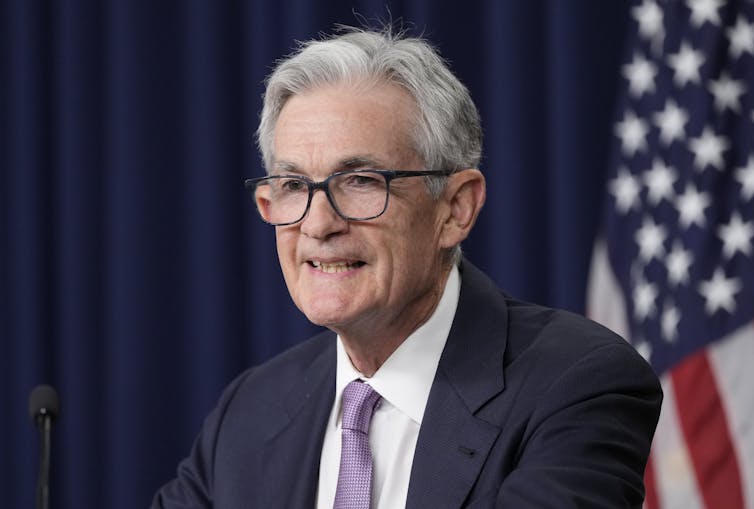
All smiles as Fed Chair Jay Powell signals he’s confident he’s winning the inflation fight. AP Photo/Ben Curtis

In a widely anticipated move, the Federal Reserve announced on Sept. 18, 2024, that it was cutting its benchmark interest rate by half a percentage point to a range of 4.75% to 5% – the first time the cost of borrowing has been lowered in four years.

The move marks an important pivot point, signaling that central bankers believe they have finally won their battle against inflation. It is also significant in timing, coming just months before the U.S. heads to the polls in a tight election that could turn on how Americans feel the economy is going.

The Conversation U.S. spoke with Mike Walden, distinguished professor emeritus at North Carolina State University, about what the rate cut means for the U.S. economy – and possibly the presidential campaign.

What does the Fed rate cut suggest about the state of the economy?

The Federal Reserve has two mandates: to pin inflation to around its target of 2% and to keep unemployment low. And the central bank balances that twin mandate when looking at whether to raise or lower base rates, or keep them the same.

For some time now, policymakers have concentrated on trying to get inflation under control through a series of interest rate hikes that took the Fed’s benchmark or base rate from a range of 0% to 0.25% in early 2022 to 5.25% to 5.5% in September 2024.

I believe what motivated them to drop the rate by a half-point now – rather than the quarter-point that some were expecting – is the labor market. The labor market is not exactly shaky – unemployment is currently at 4.2% – but it isn’t as robust as it was.

The latest job numbers were a little below expectations. And some economists are saying that there is a recession ahead. Indeed, there are some that are saying the U.S. is already in a recession.

So my guess is the majority of the Fed’s rate-setting board were convinced more by the latest unemployment data than inflation. In terms of the dual mandate, the Fed clearly feels it’s got the inflation fight in the bag, so it has turned to its second concern of keeping unemployment low.
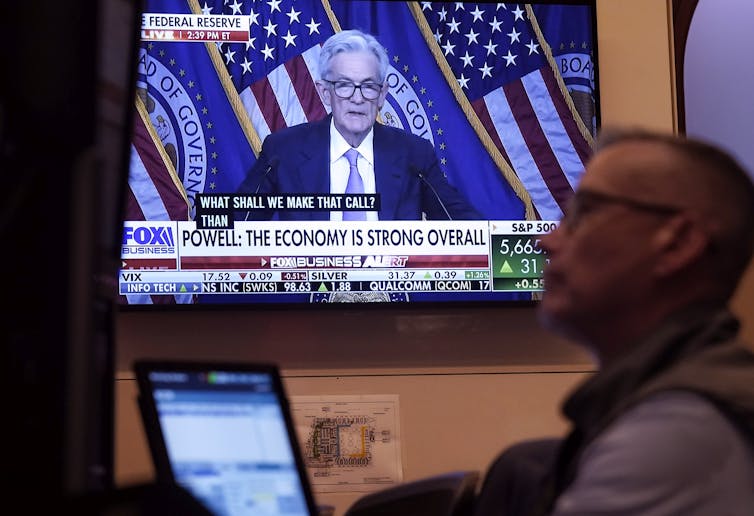
A trader sits at desk watching something as TV displays a fed news conference in background
Traders were following the Fed announcement carefully. AP Photo/Richard Drew

So is this the soft landing the Fed was hoping for?

I would say so, yes. We are now in a soft landing – and I forecast the U.S. economy to slow but avoid a recession.

If I am right, then that is an achievement of Fed policy. A soft landing is very unusual – I can think of only one other occasion when it has occurred since the end of World War II. That was in mid-1995. And the story goes that then-Fed chair Alan Greenspan, during his daily soak in a tub for a bad back, became worried about the prospect of significantly higher prices. He proceeded to convince the Fed board to raise rates, which it did – a move that headed off a potential recession.

What impact will the rate cut have?

The first thing to note is that this will not mean we are returning back to 2019 prices – that would take wage cuts and deflation. This will merely slow inflation, or the rate at which prices rise.

But it will have an impact. In the first hour after the decision was made, stock markets jumped on the news – so investors were clearly happy – though the major indices ended the day lower.

Investment markets tend to anticipate any expected change, so we have already seen some lowering of mortgage rates – which have been trending down in the run-up to the Fed decision. Credit card interest rates have been trending down, too.

So the markets were clearly expecting a Fed rate cut. But we should see further drops in mortgage rates because the Fed has hinted at more interest rate cuts to come.

Is there a danger that some observers will see this as a political move?

I’m sure a lot of people will read this as Fed Chair Jay Powell helping the Democrats by cutting rates before the election.

But this is an economic-driven decision. There is no evidence that this has anything to do with the election.

What does history tell us about rate cuts and elections?

I think most serious observers know that the Fed is independent and makes decisions based purely on what is best for the economy. In fact, over the past 50 years, you will only find one period when eyebrows were raised. That was during the Nixon administration.

Under Fed Chair Arthur Burns, the central bank was accused of pumping money in the the system and cutting rates to make things look prosperous in advance of the 1972 election. But it later all blew up when the U.S. headed into a period of double-digit inflation.

Aside from that, you will be hard-pressed to find real evidence of interference. In fact, since then, presidential candidates from both parties have complained about the Fed.

Nonetheless, could the rate cut play into the election campaign?

In terms of how Americans feel about the economy? Not really. I don’t think mortgage rates will drop much more. And although the news is encouraging for borrowers, there is another side of rate cuts: They are negative for some types of investors. Money market investors, for example, will not look upon the Fed move so fondly.

But that doesn’t mean the two presidential tickets won’t try to turn the news to their benefit.

Democrats will happily take any credit for getting inflation back down on their watch and will point out how it will help Americans with home loans – avoiding the fact that they don’t actually have any role in the rate decisions themselves.

Meanwhile, Republicans might well say: “Hey, the Fed dropped rates because the economy is worse than we thought. And a half-point cut means they are desperate, the economy is horrible and we are heading for recession because of the Biden administrations’s policies.”The Conversation

Michael Walden, Professor and Extension Economist, North Carolina State University

This article is republished from The Conversation under a Creative Commons license. Read the original article.


Legislative session on gas price spikes gets underway

Details
Written by: Lake County News reports
Published: 19 September 2024
The first hearings of the legislature’s special session considering the governor’s proposal to prevent gas price spikes got underway on Wednesday.

Last year’s special session allowed the state to uncover new evidence that when Big Oil lets supplies run low, they can charge higher prices and earn windfall profits, all while California consumers are left to face the brunt of price spikes at the pump.

When refineries go offline for maintenance but fail to maintain back-up supply, gas prices spike. Last year alone it cost Californians upwards of $2 billion while refiners netted $50 billion in profits.

The state’s new petroleum watchdog issued a consumer advisory last week, warning that refinery maintenance, low inventories and spot market volatility are driving up California gas prices once again, even as crude oil prices and national gas prices are declining.

These are the same market conditions that drove retail gas price spikes in 2022 and 2023.

The governor’s proposal, ABx2-1, authored by Assemblymembers Cecilia Aguiar-Curry and Gregg Hart, allows the state to require oil refiners to manage a minimum inventory of fuel to avoid supply shortages that create higher gas prices for consumers — and higher profits for the industry. It would also authorize the CEC to require refiners to plan for resupply during scheduled refiner maintenance.

Gov. Gavin Newsom’s office released a response to debunk what he said is Big Oil’s top lies.

California’s gas tax and fees are the reason for high gas prices.

FALSE: State taxes and fees are fixed and don’t change when gas prices spike.

At the peak of the 2022 and 2023 gas price spikes, Californians were being charged a record $2.61 and $2.25 more per gallon, respectively, than people in other states. California’s gas tax and fees added up to less than half of that difference and didn’t change during those spikes. Industry couldn’t explain where the additional charge came from.

Suspending California's gas tax is the best way to bring prices down.

FALSE: Suspending the gas tax would give oil companies a huge tax break and more profits. There’s no guarantee they’d pass down the savings to people at the pump. Instead, it would amount to a $7 billion annual cut in essential services like schools and health care.

Look at what happened in Florida — they had a gas tax “holiday” (25.3 cents/gallon), and it was reported that “most of the Florida gas tax holiday savings were pocketed by fuel companies.”

Phasing out gas-powered cars and accelerating the clean energy transition is causing price spikes.

FALSE: The relationship between refinery outages and price spikes dates back to at least 2000 – long before California’s most significant climate policies accelerating our transition were in effect.

Big Oil claims this transition is difficult yet they make more money than ever – billions of dollars just in California. Last year the state's oil refining companies made more than $50 billion in net profit. California is creating a regulatory environment to incentivize new technologies and Big Oil has the opportunity to be part of the future.

This will further restrict supply and potentially lead to gas shortages.

FALSE: Right now, Big Oil can and does let supply dip, artificially creating higher prices at the pump and letting oil companies reap the profits. This proposal ensures the opposite – it would require companies to keep supply on hand so they can draw it down during outages, to avoid shortages.

Thanks to new transparency measures, we know the real story. Refiners let supplies dwindle over the summer, restrain output through maintenance, and sell at inflated prices.

This proposal requires oil companies to responsibly manage their fuel inventory and backfill supply when refineries are offline – just as many countries already do. This will help prevent gas price spikes.

Building new storage tanks is costly and will only drive more refineries out of the state and increase prices more.

FALSE: This proposal does not require the oil industry to build new storage tanks. There is already enough storage.

The oil industry regularly stores more gasoline in the winter months, so they can maintain extra supply without building new storage tanks.

Clearlake Animal Control: ‘Goofy’ and the dogs

Details
Written by: Elizabeth Larson
Published: 19 September 2024
“Goofy.” Photo courtesy of Clearlake Animal Control.

CLEARLAKE, Calif. — Clearlake Animal Control has a group of dogs patiently waiting for new homes.

The shelter has 34 adoptable dogs listed on its website.

This week’s dogs include “Goofy,” a 1-year-old pit bull terrier mix with a short beige and white coat. He has been neutered.

Shelter staff said Goofy is full of love and just wants to cuddle. “He's very good on a leash if you want to take him on hikes to the creek or just a trip to the park,” staff reported.

The shelter is located at 6820 Old Highway 53. It’s open from 9 a.m. to 6 p.m. Tuesday through Saturday.

For more information, call the shelter at 707-762-6227, email This email address is being protected from spambots. You need JavaScript enabled to view it., visit Clearlake Animal Control on Facebook or on the city’s website.

This week’s adoptable dogs are featured below.

Email Elizabeth Larson at This email address is being protected from spambots. You need JavaScript enabled to view it.. Follow her on Twitter, @ERLarson, or Lake County News, @LakeCoNews.

City of Lakeport completes sidewalk project, paving work set to begin in October

Details
Written by: Lake County News reports
Published: 18 September 2024
The South Main Street Sidewalk Project. Photo courtesy of the Lakeport Public Works Department.

LAKEPORT, Calif. — The city of Lakeport reported on two key public works projects, one that’s now completed and another that’s set to start next month.

The Lakeport Public Works Department said it has completed the South Main Street Sidewalk Project.

This initiative focused on filling in missing sidewalk gaps and included significant Americans with Disabilities Act upgrades to enhance pedestrian accessibility along the corridor.

These improvements aim to provide safer and more convenient pathways for all users, the city reported.

Following the completion of the sidewalk project, the South Main Street Paving Project is scheduled to commence in mid-October.

The paving project will cover the stretch from First Street to Lakeport Boulevard and will not only resurface the roadway but also introduce several pedestrian enhancements, including the installation of rectangular rapid flashing beacons, improved pavement markings and new striping.

City officials reported the paving work is anticipated to be completed by late November, weather permitting.

Together, these projects are designed to enhance both road conditions and pedestrian safety, contributing to improved traffic flow and walkability for the Lakeport community, the city said.

Please contact the Public Works office at 707-263-3578 or This email address is being protected from spambots. You need JavaScript enabled to view it. with questions.


The South Main Street Sidewalk Project. Photo courtesy of the Lakeport Public Works Department.
  1. Clearlake City Council to discuss Boyles fire, water service
  2. High School Voter Education Weeks offer registration opportunities
  3. Get ready to kick off the Big Read
  • 542
  • 543
  • 544
  • 545
  • 546
  • 547
  • 548
  • 549
  • 550
  • 551
How to resolve AdBlock issue?
Refresh this page