How to resolve AdBlock issue?
Refresh this page
How to resolve AdBlock issue?
Refresh this page
Lake County News,California
  • Home
    • Registration Form
  • News
    • Education
    • Veterans
    • Community
      • Obituaries
      • Letters
      • Commentary
    • Police Logs
    • Business
    • Recreation
    • Health
    • Religion
    • Legals
    • Arts & Life
    • Regional
  • Calendar
  • Contact us
    • FAQs
    • Phones, E-Mail
    • Subscribe
  • Advertise Here
  • Login
How to resolve AdBlock issue?
Refresh this page

News

Stay up to date on vaccines for fewer sick days as we head into colder months

Details
Written by: Lake County News reports
Published: 21 September 2024
Limiting the spread of respiratory viruses helps everyone, especially vulnerable members of our community like children, older adults and those who are immunocompromised.

The California Department of Public Health, or CDPH, is encouraging all Californians to get vaccinated this season to protect themselves and their loved ones from respiratory viruses.

Respiratory infections like flu, COVID-19, and RSV are common during the fall and winter seasons, and getting immunized against these diseases has been proven safe and effective in preventing serious illness and death in children and adults.

“It’s time to start preparing for the fall and winter virus season, and that means getting immunized against flu, COVID-19, and RSV,” said Dr. Tomás J. Aragón, CDPH director and state Public Health officer. “Taking this step means fewer sick days and more time with your loved ones. We are stronger when we are all protected against respiratory diseases."

RECOMMENDED VACCINES: Updated 2024-2025 flu and COVID-19 vaccines are recommended for everyone 6 months and older. RSV immunizations are recommended for eligible pregnant people, older adults, infants and toddlers. As always, talk to your healthcare provider about which vaccines are right for you and your family.

• Flu: Everyone 6 months and older should get vaccinated against the flu annually, ideally before the end of October.
• COVID-19: The updated 2024-2025 COVID-19 vaccine will be increasingly available throughout California beginning in September for everyone 6 months and older. The updated vaccine is expected to protect against circulating variants throughout the winter.
• RSV: RSV most often spreads between October through March. The following groups should get immunized: Adults aged 75 and older; and adults aged 60-74 at increased risk; Pregnant people who are 32-36 weeks pregnant from September through January; Babies younger than 8 months and children ages 8-19 months who are at high risk for severe RSV.
• The RSV vaccine is not currently an annual vaccine, so adults who have already received a dose do not need another dose.

SCHEDULING: Flu, COVID-19, and RSV vaccines can all be administered during the same visit. Schedule a vaccine appointment by visiting MyTurn.ca.gov, or contacting your local pharmacy or health care provider.

COST: Flu, COVID-19, and RSV vaccines will be covered for most people through their health insurance plans, including Medi-Cal and regular health care providers. Those having difficulty obtaining vaccines can contact their health care provider or local health department for help finding a place to get immunized.

Vaccines For Children (VFC) program is a federally funded program that provides vaccines at no cost to children (18 and younger) who might not otherwise be vaccinated because of an inability to pay. Contact your doctor to learn if they are enrolled in VFC or visit MyTurn to find a location based on your eligibility.

ADDITIONAL LAYERS OF VIRUS PREVENTION: In addition to vaccines, people can follow simple actions to prevent viruses from spreading:

• Stay home when sick: Staying home when you’re sick prevents the spread of flu, COVID-19, RSV and even the common cold.
• Test and treat: Test for COVID-19 and flu if you have symptoms (like fever, chills, runny nose, cough, sore throat, loss of taste or smell, stomach issues). If you test positive, contact your health care provider, and ask about prescription medications, which work best when started right after symptoms begin. Learn more about treatments for both COVID-19 and flu.
• Wear a high-quality mask in indoor public places: Wearing a high-quality mask (N95, KN95) significantly reduces the spread of respiratory viruses, especially in crowded or poorly ventilated spaces.
• Wash hands: Wash hands throughout the day with soap and warm water for at least 20 seconds. If soap and water are not available, use a hand sanitizer with at least 60% alcohol.
• Cover coughs and sneezes: Remember to cough or sneeze into your elbow, your arm, or a disposable tissue to help prevent the spread of viruses. Wash or sanitize your hands and dispose of your tissue after.
• Ventilate indoor spaces: Good ventilation helps reduce the spread of viruses. If it is safe to do so, open doors and windows as much as possible to bring in fresh outdoor air. This can help keep virus particles from building up indoors.

Get more information about respiratory virus prevention by visiting CDPH’s Respiratory Viruses webpage.

Governor signs bill to protect children from social media addiction

Details
Written by: Lake County News reports
Published: 21 September 2024
Moving to protect the health and well-being of youth on digital platforms, Gov. Gavin Newsom on Friday signed SB 976 by Senator Nancy Skinner (D-Berkeley), which prohibits online platforms from knowingly providing an addictive feed to a minor without parental consent.

The bill also prohibits social media platforms from sending notifications to minors during school hours and late at night.

“Every parent knows the harm social media addiction can inflict on their children – isolation from human contact, stress and anxiety, and endless hours wasted late into the night. With this bill, California is helping protect children and teenagers from purposely designed features that feed these destructive habits. I thank Senator Skinner for advancing this important legislation that puts children’s well-being first,” said Gov. Newsom.

Friday’s action builds on the enactment of bipartisan legislation in 2022 to require that online platforms consider the best interest of child users and to default to privacy and safety settings that protect children’s mental and physical health and well-being.

The state continues to defend the California Age-Appropriate Design Code Act from a lawsuit challenging the first-in-the-nation law.

“As a mother, I’m proud of California’s continued leadership in holding technology companies accountable for their products and ensuring those products are not harmful to children. Thank you to the governor and Senator Skinner for taking a critical step in protecting children and ensuring their safety is prioritized over companies’ profits,” said First Partner Jennifer Siebel Newsom.

Space News: Astronomers are getting better at detecting asteroids before they hit Earth – and it could save us from catastrophe

Details
Written by: Daniel Brown, Nottingham Trent University
Published: 21 September 2024


Nasa/JPL-Caltech

On September 4 2024, astronomers discovered an asteroid, one metre in diameter, heading towards Earth. The space rock would burn up harmlessly in the atmosphere near the Philippines later that day, officials announced. Nevertheless, it produced a spectacular fireball that was shared in videos posted on social media.

The object, known as RW1, was only the ninth asteroid to be spotted before impact. But what of much bigger, more dangerous asteroids? Would our warning systems be able to detect all the asteroids that are capable of threatening us on the ground?

Asteroid impacts have influenced every large body in the solar system. They shape their appearance, alter their chemical abundance and – in the case of our own planet at the very least – they helped kickstart the formation of life. But these same events can also disrupt ecosystems, wiping out life, as they did 66 million years ago when a 10km space rock contributed to the extinction of the dinosaurs (excluding birds).

Asteroids are the material left over from the formation of our solar system, that was not incorporated into planets and moons. They come in all shapes and sizes. Their paths are determined by gravity and can, to some extent, be predicted. Of particular interest are the objects that are close to Earth’s orbit – called near-Earth objects (NEOs). As of Sep 2024, we know of approximately 36,000 such objects, ranging in size from several metres to a few kilometres.

But statistical models predict nearly 1 billion such objects should exist and we only know of very few of them.

We have been monitoring these asteroids since the 1980s and setting up more detailed surveys of them since the 1990s. The surveys use telescopes to make observations of the entire sky every night and then compare images of the same region on different dates.

Astronomers are interested in whether, in the same area of the sky, something has moved with respect to the stars from one night to another. Anything that has moved could be an asteroid. Observing its positions over a longer period allows team members to determine its exact path. This in turn enables them to predict where it will be in future, though such data collection and analysis is a time consuming process that requires patience.

It is made even more challenging by the fact that there are many more smaller objects out there than bigger ones. Some of these smaller objects are nevertheless of sufficient size to cause damage on Earth, so we still need to monitor them. They are also reasonable faint and therefore harder to see with telescopes.

It can be difficult to predict the paths of smaller objects long into the future. This is because they have gravitational interactions with all the other objects in the solar system. Even a small gravitational pull on a smaller object can, over time, alter its future orbit in unpredictable ways.
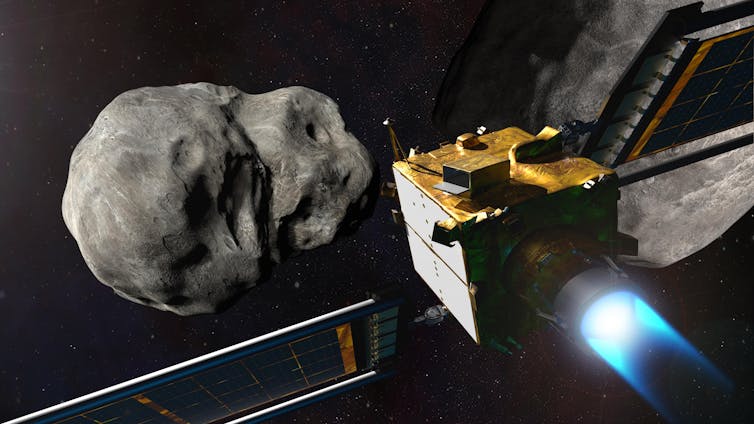
Dart artwork
The Dart asteroid mission tested whether crashing a spacecraft into an asteroid was an effective way to change its course. NASA/Johns Hopkins APL/Steve Gribben

Funding is crucial in this effort to detect dangerous asteroids and predict their paths. In 2023, Nasa allocated US$90 million (£69 million) to hunt for near Earth objects (NEOs). There are several missions being developed to detect hazardous objects from space, for example the Sutter Ultra project and Nasa’s NEOsurveyor infrared telescope mission.

There are even space missions to explore realistic scenarios for altering the paths of asteroids such as the Dart mission. Dart crashed into an asteroid’s moon so that scientists could measure the changes in its path. It showed that it was indeed possible in principle to alter the course of an asteroid by crashing a spacecraft into it. But we’re still far from a concrete solution that could be used in the event of a large asteroid that was really threatening Earth.

Detection programmes create a huge amount of image data every day, which is challenging for astronomers to work through quickly. However, AI could help: advanced algorithms could automate the process to a greater degree. Citizen science projects can also open up the task of sorting through the data to the public.

Our current efforts are working, as demonstrated by the detection of the relatively small asteroid RW1. It was only discovered briefly before it struck Earth, but gives us hope that we are on the right track.

Asteroids less than 25m in diameter generally burn up before they can cause any damage. But objects of 25-1,000 metres in diameter are large enough to get through our atmosphere and cause localised damage. The extent of this damage depends upon the properties of the object and the area where it will hit. But an asteroid of 140 metres in size could cause widespread destruction if it hit a city.

Luckily, collisions with asteroids in this size range are less frequent than for smaller objects. A 140 metre diameter object should hit Earth every 2,000 years.

As of 2023, statistical models suggest that we know of 38% of all existing near earth objects with a size of 140 metres or larger. With the new US Vera Rubin 8.5m telescope, we hope to increase this fraction to roughly 60% by 2025. Nasa’s NEOsurveyor infrared telescope could identify 76% of asteroids 140 metres in size or bigger by 2027.

Asteroids larger than 1 kilometre in size have the ability to cause damage on a global scale, similar to the one that helped to wipe out the dinosaurs. These asteroids are much rarer but easier to spot. Since 2011, we think we have detected 98% of these objects.

Less comforting is the fact that we have no current realistic proposal for diverting its path – though missions like Dart are a start. We might eventually be able to compile a near-complete list of all possible asteroids that could cause global impacts on Earth.

It’s much less likely that we will ever detect every object that could cause localised damage on Earth – such as destroying a city. We can only continue to monitor what’s out there, creating a warning system that will allow us to prepare and react.The Conversation

Daniel Brown, Lecturer in Astronomy, Nottingham Trent University

This article is republished from The Conversation under a Creative Commons license. Read the original article.
Onorato, longtime congressional aide, dies after cancer battle

Details
Written by: Elizabeth Larson
Published: 20 September 2024
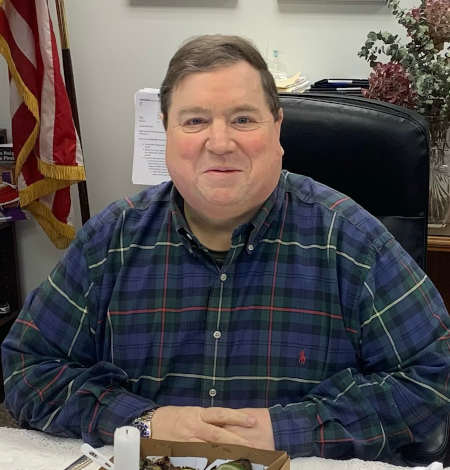
Brad Onorato. Photo courtesy of Congressman Mike Thompson.

LAKE COUNTY, Calif. — A longtime public servant who worked hard to bring the resources of the federal government to benefit the residents of Lake County has died.

Paul Bradford Onorato, known as “Brad” to colleagues, friends and community members alike, died Thursday.

Onorato’s passing was announced Thursday night by the office of Congressman Mike Thompson, for whom he had worked for more than three decades as a district representative and deputy chief of staff.

“It’s my heartfelt sorrow to share that after a long battle with cancer, our dear friend, colleague, and public servant Brad Onorato passed away today,” Thompson said. “Brad was an incredible public servant to our community and a vital member of Team Thompson for the last 34 years. Brad was a valuable asset and incredibly important member of our team, serving the people of the Fourth District with dedication and care. But more important, Brad was family. Brad loved our district and public service as much as we loved him. He will be dearly missed, and he leaves behind a void that will be impossible to fill.”

Community leaders across Lake County recalled Onorato with gratitude for his friendship, kindness and dedication to Lake County.

“Brad was truly one of a kind. What a heartbreaking loss to the community. He will never be replaced. I can’t even imagine a better conduit between the community and our Congressman,” said Clearlake City Manager Alan Flora. “He was worried about every detail of what Clearlake needed, in fact in the period where Congressman Thompson didn’t represent Clearlake, Brad still regularly checked in with me to see what he and Mike could do to help.”

“I’m so sorry to hear about the passing of Brad Onorato,” said Lakeport Mayor Michael Froio. “He was such a kind man and a very good listener. My heart goes out to his family, friends and the people that he served so well. He will be missed.”

“Lake County lost a friend and one of our strongest advocates,” said Clearlake Mayor David Claffey. “Brad was a true partner for the city, but his impact went far beyond helping us navigate the Federal playing field. He was committed to lifting up our communities and being a ready resource when we faced our toughest challenges. His determination and kindness shined through in every meeting and every call. Brad’s work will resonate in Clearlake for decades.”

Onorato’s work with Thompson went back even before Thompson’s election to Congress.

Retired District 5 Lake County Supervisor Rob Brown said he had met Onorato in the 1990s when he was working for Thompson when he was a state senator, and the first Vietnam veteran elected to the California Legislature.

“We became fast friends and that continued until he passed,” Brown said of Onorato. “I always admired his commitment to Lake County and he was always available to help with any issue at all. He was a great friend to all of us and will be greatly missed.”

Onorato was a faithful and seemingly tireless presence in Thompson’s office, working hard to help district constituents solve problems and connect people to solutions.

He was a shrewd judge of people and situations, which was a matter not just of his education but his personal connections.

Onorato came from a large, well-connected San Francisco political family and so he had a keen understanding of politics, the workings of government and how both could be used for good.

He was one of five children born to Carole and Fred Onorato. His mother was part of the Newsom family; his cousin is Gov. Gavin Newsom.

Up until her death in 2007, Carole Onorato was a dedicated community leader and activist in Placer County, having served decades on the Placer County Board of Education, and also been a member of numerous other bodies, such as the California Transportation Commission, the Water Resources Control Board, the Placer County Library Commission and the Tahoe Regional Planning Agency.

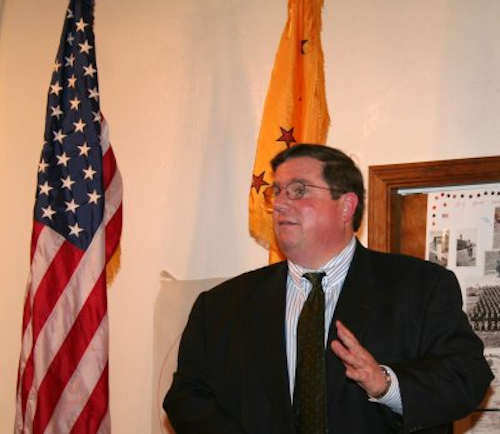
Brad Onorato, district representative for Congressman Mike Thompson, presented flags and certificates to women veterans at a December 2007 meeting in Lake County. Lake County News archive/photo by Ginny Craven.

A longtime Napa County resident who worked from Thompson’s Napa office, Brad Onorato frequently came to Lake County to attend events, present awards, listen to constituent issues and offer support to local government, sometimes with Thompson or occasionally in his place when Thompson was busy with his duties in Washington.

Thompson honored Onorato in past years with his office’s “Casework Hero” award for his efforts to help community members throughout the district resolve problems with federal agencies.

While members of Congress have serious and important responsibilities, Onorato liked to moderate the seriousness with an ever-present sense of humor.

A man with a quick wit and a sense of fun, Onorato took a great deal of pride in his ability to playfully needle Thompson about anything.

When Thompson came home from Congress during legislative breaks, Onorato would often drive the congressman and other staffers around to meetings, tours and other events throughout the district.

Their district road trips could be hilarious affairs. During one such daylong trip of driving punctuated by frequent stops to speak to community members and officials, they invited along this reporter.

Throughout the day, as Onorato sped along over Lake County’s mountainous roads in a large black SUV, he and Thompson carried on nonstop but good-hearted bickering as only good friends can do without hurt feelings.

For several years Onorato had battled health challenges. For a time, he had appeared to have beaten them back, as he continued to travel around the world and to enjoy skiing, one of his favorite pastimes.

“In these last months I suspected he was struggling more than he let on, but his spirit and determination to persevere were so strong,” said Flora. “In fact just last week while he was sitting in a chair hooked up to chemo, he repeatedly checked in with me to see what he could do to help with the Boyles Fire and was instructing me to get more sleep.”

Throughout his battles with cancer, Onorato had continued to be an active presence in Thompson’s office and the community.

That was the same this time around, too. In addition to checking on Flora and others, over the final days of his life Onorato was continuing to post updates on his personal Facebook page about the Boyles fire — including evacuation updates — as well as general news about the district.

Hundreds of people — including community leaders, among them, Assembly Majority Leader Cecilia Aguiar-Curry and retired Lake County Sheriff Brian Martin — responded to Thompson’s Thursday evening Facebook post about Onorato’s death, offering their condolences and their gratitude for his hard work on behalf of the community. Some shared that they had only just been in contact with him in recent days.

Remarkable in the outpouring was that the laurels offered for Onorato came from across the political spectrum — an unusual situation in today’s divisive atmosphere but one in which Onorato would have been pleased, as his goal had been to serve everyone equally, no matter their political persuasion.

“We lost a good soul today, a warrior for our community, a man of inspiration, and a friend. Our thoughts and prayers are with Brad’s family, Mike and Jan the rest of the team,” Flora told Lake County News.

Thompson’s office said details for a service will be shared at a later date.

Email Elizabeth Larson at This email address is being protected from spambots. You need JavaScript enabled to view it.. Follow her on Twitter, @ERLarson, or Lake County News, @LakeCoNews.
  1. Lakeport City Council candidates to be featured at Sept. 23 forum
  2. McGuire legislation to help solve California’s tribal housing crisis signed by governor
  3. Senate passes bipartisan legislation to help find missing persons on federal land
  • 540
  • 541
  • 542
  • 543
  • 544
  • 545
  • 546
  • 547
  • 548
  • 549
How to resolve AdBlock issue?
Refresh this page
