How to resolve AdBlock issue?
Refresh this page
How to resolve AdBlock issue?
Refresh this page
Lake County News,California
  • Home
    • Registration Form
  • News
    • Education
    • Veterans
    • Community
      • Obituaries
      • Letters
      • Commentary
    • Police Logs
    • Business
    • Recreation
    • Health
    • Religion
    • Legals
    • Arts & Life
    • Regional
  • Calendar
  • Contact us
    • FAQs
    • Phones, E-Mail
    • Subscribe
  • Advertise Here
  • Login
How to resolve AdBlock issue?
Refresh this page

News

Clearlake Animal Control: ‘Shadow’ and the dogs

Details
Written by: Elizabeth Larson
Published: 17 January 2025
“Shadow.” Photo courtesy of Clearlake Animal Control.

CLEARLAKE, Calif. — Clearlake Animal Control has friendly dogs waiting for new homes this week.

The shelter has 45 adoptable dogs listed on its website.

This week’s dogs include “Shadow,” a 2-year-old male border collie mix with a black and white coat.

Shelter staff said he wouldn't mind another dog friend in his new home. He loves to play with toys and he likes playing with water.

The shelter is located at 6820 Old Highway 53. It’s open from 9 a.m. to 6 p.m. Tuesday through Saturday.

For more information, call the shelter at 707-762-6227, email This email address is being protected from spambots. You need JavaScript enabled to view it., visit Clearlake Animal Control on Facebook or on the city’s website.

This week’s adoptable dogs are featured below.

Email Elizabeth Larson at This email address is being protected from spambots. You need JavaScript enabled to view it.. Follow her on Twitter, @ERLarson, and on Bluesky, @erlarson.bsky.social. Find Lake County News on the following platforms: Facebook, @LakeCoNews; X, @LakeCoNews; Threads, @lakeconews, and on Bluesky, @lakeconews.bsky.social.


3 myths about rural education that are holding students back

Details
Written by: Sheneka Williams, Michigan State University; Darren Dubose, Michigan State University, and Kimberly Clarida, Michigan State University
Published: 17 January 2025


Students in rural areas achieve just as much as their peers elsewhere. skynesher/E+ via Getty Images

Little of the discussion that we’ve seen has focused on the impact on rural schools, which often depend more than urban ones on federal funding.

In fact, rural education often can seem like an afterthought to policymakers and scholars, who tend to design reforms aimed at urban and suburban areas, even though 20% of the nation’s students are educated in rural schools.

This lack of rural research and focus has perpetuated many myths and misconceptions about rural education that overlook the strengths and opportunities for students who attend rural schools.

As scholars who study rural education, we compiled a list of three facts about rural education accompanied by the myths that would help policymakers better design programs to support rural students.

1. Rural communities are becoming more diverse

There’s a myth that rural communities are overwhelmingly white. While it’s true that most rural counties are majority white, these communities are becoming increasingly diverse.

The share of people of color in rural communities climbed from 20% in 2010 to 24% in 2020, according to U.S. Census data. In addition, people of color make up a majority of residents in 10% of rural counties.

This is because while white people are leaving, people of color are moving in. From 2010 to 2020, over 2 million white people left rural communities, while more than 2 million people of color took their place. The number of rural people who identified as multiracial doubled to nearly 4 million over the same period, and all rural communities except those in Arizona saw an increase in their Latino population.

While the Black population in rural America shrank somewhat during the 2010s, it remains the case that the largest concentration of Black people outside of cities is in the rural South. In fact, 81% of Black people who don’t live in cities live in the South, a legacy of slavery and how generations of Africans were forcefully taken to work the land as free labor.

Without truly understanding who resides in these communities, educators and policymakers cannot adequately address students’ needs. Failure to do so widens opportunity gaps for rural students, particularly those who reside in the South.
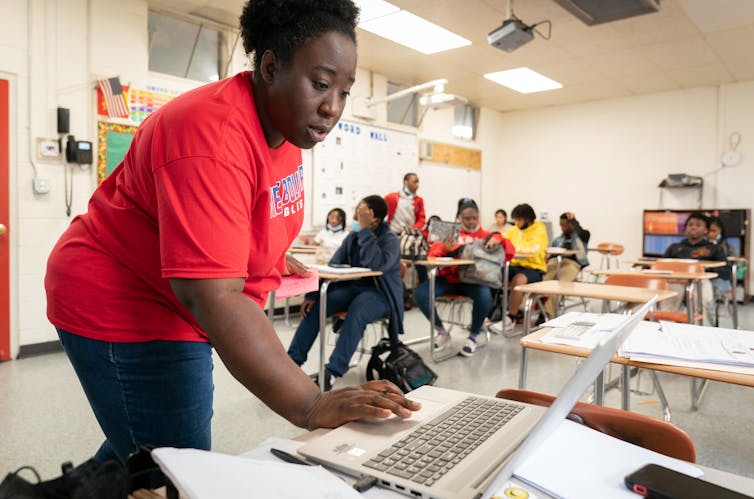
a Black woman stands while typing at a computer in a classroom with other students at desks in background
Rural schools, like this one in Rosedale, Miss., are a lot more diverse than many people think. Rory Doyle for The Washington Post via Getty Images

2. Rural educators know how to succeed

Another myth is that rural communities lack the knowledge or resources to succeed in educating their youth.

As such, policymakers often fail to include rural communities’ cultural capital when they develop textbooks, teacher training plans and education policies. By cultural capital, we mean the knowledge, skills, education and advantages that people inherit and use to achieve success in society.

One glaring example is that rural communities are rarely represented in teaching materials and curricula, which frequently ignore their local knowledge, traditions and values. This creates a gap in students’ ability to see themselves in jobs and positions outside of their personal contexts. And it hampers teachers’ ability to leverage student strengths when teachers are unprepared to connect with their backgrounds.

State and federal education funding is another example of rural students’ cultural capital being overlooked. Too often, funding policies penalize rural schools for their smaller sizes by supporting the closure and consolidation of schools and overlooking their need for more money to account for lower revenue from local and property taxes. This results in a disruption of rural communities’ strong social cohesion and abandoned buildings that reduce economic opportunities.

Community initiatives and local programs provide important resources that larger urban districts might take for granted.

A new grant initiative at Michigan State University that all three of us are involved with aims to help change this. Focused on helping teachers better engage high school physics and chemistry students, the program is collaborating with two historically Black colleges and univerities in the rural South to provide rural students with access to more advanced science courses. By working with Alabama A&M University and Winston-Salem State University, it helps ensure local communities’ cultural capital are part of the program. It also seeks to pull together community partnerships to advance science access and learning in the South.

By redesigning policies to take advantage of rural cultural capital, communities and policymakers could unlock untapped potential within rural schools and enhance educational outcomes for all students regardless of where they live. We believe such policies could foster stronger connections between rural K-12 public schools and their surrounding communities, creating more relevant and engaging learning experiences for students.

3. Rural students are high achievers

A third myth is that rural students underachieve. As a result, their academic success is too often overlooked by researchers and educators.

In reality, students in rural areas meet the same measures of success as in urban ones – especially in the early years. For example, math and reading scores are higher in rural than nonrural schools before the third grade, according to the Center for School and Student Progress. After that, the higher scores begin to fade due to summer learning loss. After schools close over the summer, rural students are generally left with few formal summer learning opportunities, compared with those in more urban areas. There is a strong need for more state and federal money to increase access to summer learning opportunities.

Despite this widespread learning loss, graduation rates among rural students are higher than those of nonrural students.

But once again, policymakers fail these students, who have college-going rates that are lower than in urban areas.

Some of the most common factors contributing to this trend include limited access to transportation, the distance between students’ hometowns and colleges and universities, and lower awareness of financial aid opportunities. In addition, students in the rural South have less access than other students to advanced science courses like physics and chemistry, which can block postsecondary opportunities.

We believe debunking these and other myths and recognizing the diverse strengths of rural communities would help ensure that all students across the nation, including those in rural areas, can attain long-term educational and economic success.The Conversation

Sheneka Williams, Professor and Department Chair of Educational Administration, Michigan State University; Darren Dubose, PhD Student in Education Administration, Michigan State University, and Kimberly Clarida, Postdoctoral Researcher in Educational Administration, Michigan State University

This article is republished from The Conversation under a Creative Commons license. Read the original article.

Much has been written about the potential consequences of getting rid of the Department of Education, one of President-elect Donald Trump’s campaign promises.
Federal agency proposes protection of Clear Lake hitch

Details
Written by: LINGZI CHEN
Published: 16 January 2025
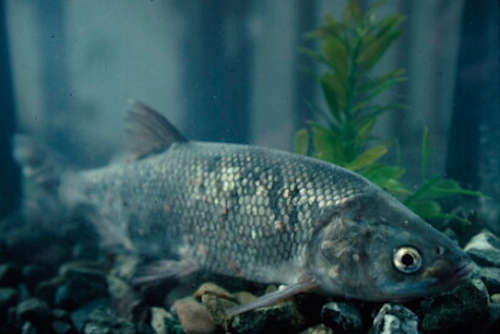
Clear Lake hitch. Photo by Richard Macedo/California Department of Fish and Wildlife.

LAKE COUNTY, Calif. — The U.S. Fish and Wildlife Services is proposing to list the Clear Lake hitch as a threatened species under the federal Endangered Species Act, after 13 years of an ongoing petition led by the nonprofit Center of Biological Diversity.

“After a review of the best available scientific and commercial information, we find that listing the Clear Lake hitch is warranted,” the proposal states.

This marks a step toward securing federal protection — for the first time — of the hitch, a large minnow that only exists in the Clear Lake watershed in Lake County and which holds ecological and cultural significance.

Known as “chi” to the county's Pomo tribes, the hitch used to be abundant and had long served as the primary food source for the tribes.

However, the hitch population has been declining with its habitat degrading.

“The survey data in Clear Lake has shown a decline in the hitch population over an extended period, but there’s a lot of variability in the population numbers year-to-year due to changes in environmental conditions,” said Michael Fris, field supervisor of the Service’s Sacramento Fish and Wildlife Office on a Wednesday press release by the U.S. Fish and Wildlife Services, or the USFWS.

“We will continue to look at all potential factors that could be contributing to the decline of this culturally important species and invest in projects that support the recovery of the hitch,” he added.

For hitch advocates, the federal help should have come earlier.

“It should have happened a decade ago,” said Jeff Miller, senior advocate at the Center for Biological Diversity, in a phone call with Lake County News. “But better late than never.”

“I’m relieved that strong protections are on the way for these iconic fish,” said Miller in the center’s press release. “The hitch need immediate emergency actions if they’re going to survive. Endangered Species Act protections can help ensure that happens.”

Yet, it is still just a proposal at this point, Miller said.

It could take up to a year for the USFWS to finalize the listing and start providing protection, he explained.

The proposal now enters a 60-day window to take public comments from all interested parties until March 17, according to the USFWS.

The proposal and information on how to submit comments can be found on www.regulations.gov by searching under docket number FWS–R8–ES–2024–0161.

The long fight

In 2012, the Center for Biological Diversity petitioned to protect the hitch under both the federal and California Endangered Species Act, stating that this large minnow native to Clear Lake was “vanishing.”

In August 2014, the California listed the Clear Lake hitch as a threatened species under the California Endangered Species Act, making it the first aquatic listed species in the Clear Lake Basin, as Lake County News has reported.

However, it has never been successful on the federal level.

In December of 2020, the Trump administration denied protection to 11 species, including the hitch — a decision that the USFWS said was “based on the best available science. However, Miller said at that time that it was based on “misinformation.”

In August 2021, the center sued USFWS in federal court over their decision to deny hitch protection, which was the last of their three lawsuits against the federal agency over the years, Miller told Lake County News.

In April 2022, a settlement was reached with the USFWS agreeing to reconsider protecting the hitch by January of 2025.

In November of that year, the California Fish and Game Commission wrote to the USFWS to request emergency listing of the hitch under the Endangered Species Act.

Later in December of 2022, Big Valley along with three other local tribes joined the advocacy effort, signing a letter to the leadership at the Department of the Interior and the USFWS, requesting emergency listing.

In February 2023, the Lake County Board of Supervisors proclaimed a local emergency for the hitch.

Despite local and state efforts, the USFWS declined the request in May 2023.

The current proposal is pending final approval, and with the upcoming Trump Administration — which in their first term denied the protection, Miller expressed his concerns while hoping “it will go through.”

“There’s potential that the Trump Administration could try to derail this,” said Miller. “I hope it doesn’t rise to the top of their agenda.”

“Everyone who’s involved, who lives in the Clear Lake basin and all the tribal folks and state biologies and anyone who's involved in trying to protect this fish know how close it is to disappearing.” He continued. “It’s pretty obvious to everyone that it deserves these protections.”

What federal protection may entail?

Once the proposal is finalized and Clear Lake hitch added to the List of Endangered and Threatened Wildlife, USFWS will extend the protections to the hitch under the Endangered Species Act.

The act protects the species against harmful conducts such as harassing, killing and capturing, and attempts to do so.

There are some exemptions to the prohibitions such as tribal harvest under a conservation plan, Miller noted.

Also exempted are some fish rescue activities carried out by state and tribal biologists in recent years. “Because they’re basically helping the conservation of the hitch,” Miller said.

The USFWS will also designate the species’ “critical habit” which Miller sees as a crucial tool that adds “another layer of federal protection.”

“It protects not just the individual fish, but the actual habitat they rely on,” he explained.

It is designed to make sure that “the federal agencies not only don’t destroy or damage the habitat that’s essential for the survival of endangered species but also help promote the recovery of those species.”

Email staff reporter Lingzi Chen at This email address is being protected from spambots. You need JavaScript enabled to view it..

Hopland teen selected for United States Senate Youth Program

Details
Written by: LAKE COUNTY NEWS REPORTS
Published: 16 January 2025
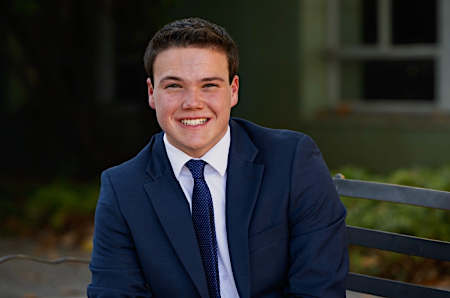
Bode Gower. Courtesy photo.

NORTH COAST, Calif. — The United States Senate Youth Program, or USSYP, has selected high school students Sarah Rumei Gao and Bode Emet Gower to join senators Alex Padilla and Adam Schiff in representing California during the 63rd annual USSYP Washington Week.

The event will be held March 1 to 8.

Gao of San Diego and Gower of Hopland were selected from among the state’s top student leaders to be part of the 104 national student delegation that will attend meetings and briefings with senators, the president, a justice of the Supreme Court, leaders of cabinet agencies, and other officials throughout the week.

Each delegate will also receive a $10,000 college scholarship for undergraduate study.

“I am humbled and grateful for the opportunity to represent California in the U.S. Senate Youth Program,” said Gower. “As an advocate for youth in rural communities, I am excited to use this platform to elevate their voices and highlight the unique challenges that many rural communities in Northern California experience.”

Gower is a senior at Ukiah High School, where he serves as the president of the Associated Student Body. As the founder and chair of the Northern California Youth Policy Coalition, he supports rural youth by advocating for youth-related legislation at both state and federal levels, spotlighting the perspectives of rural youth and communities across Northern California.

He also serves as a member of the Board of Governors for the Young Leaders PAC and the K-12 director of policy for GenerationUp, California’s largest youth-led advocacy organization. He has been a member of Sen. Laphonza Butler’s Youth Advisory Council, where he regularly met with the senator, ensuring that the voices of rural communities are represented.

Gower also is a commissioner on the Mendocino County Juvenile Justice and Delinquency Prevention Commission and founded the first-ever Mendocino County Youth Advisory Council
which works with the Mendocino County Board of Supervisors to engage the county youth on issues that come before the board.

He has been recognized as outstanding prosecution attorney during the 2024 California State Mock Trial Competition and as best attorney from the UCLA Mock Trial Institute, as well as having received the Congressional Award. He has worked on multiple political campaigns at both state and local levels.

He plans to major in public policy and pre-law studies, attend law school, and pursue a career in public service.

The USSYP was founded in 1962 by the sons of William Randolph Hearst and the senate leadership of the day — Senators Kuchel, Mansfield, Dirksen and Humphrey — in response to the deep divisiveness and national anxiety following the McCarthy era.

They outlined a plan to encourage America’s most talented young people to consider public service as an important, life-long, and noble pursuit, sponsoring Senate Resolution 324, which passed unanimously.

As stated in founding testimony, the program strives “to increase young Americans’ understanding of the interrelationships of the three branches of government, learn the caliber and responsibilities of federally elected and appointed officials, and emphasize the vital importance of democratic decision making not only for America but for people around the world.”

Chosen as alternates to the 2025 program were Mr. James Miller, a resident of Oxnard, who attends Westlake High School and Ms. Sriya Srinivasan, a resident of Fairfield, who attends Rodriguez High School.

Delegates and alternates are selected by the state departments of education nationwide and the District of Columbia and Department of Defense Education Activity, after nomination by teachers and principals. The chief state school officer for each jurisdiction confirms the final selection.

This year’s California delegates and alternates were designated by Tony Thurmond, State Superintendent of Public Instruction.

Each year this extremely competitive merit-based program provides two outstanding high school students from each state, the District of Columbia and the Department of Defense Education Activity with an intensive week-long study of the federal government and the people who lead it.

Each student will also receive a $10,000 undergraduate college scholarship with encouragement to continue coursework in government, history and public affairs. The Hearst Foundations have fully funded the program since inception; as stipulated, no government funds are utilized.

In addition to outstanding leadership abilities and a strong commitment to volunteer work, the student delegates rank academically in the top 1% of their states among high school juniors and
seniors. Now more than 6,200 strong, alumni of the program continue to excel and develop impressive qualities that are often directed toward public service.

Among the many distinguished alumni are: Sen. Susan Collins, the first alumnus to be elected U.S. senator; Secretary of Transportation and former Mayor of South Bend Indiana Pete Buttigieg, the first alumnus to be appointed as a cabinet secretary; Rep. Sarah McBride, the second alumnus to be elected to the U.S. House of Representatives; former Senator Cory Gardner, the second alumnus to be elected U.S. senator and the first to be elected to the U.S. House of Representatives, and former New Jersey Governor Chris Christie, the first alumnus to be elected governor.

Members of the U. S. Senate Youth Program 2025 annual Senate Advisory Committee are Sen. Thom Tillis of North Carolina, the 2025 USSYP Republican co-chair, and Senator Jeanne Shaheen of New Hampshire, the 2025 USSYP Democratic co-chair.

The full USSYP Senate Advisory Committee includes the vice president of the United States and the Senate majority and minority leaders, and four senators from each party who lend their names in support.

Serving on the 2025 Advisory Committee: Sen. Susan M. Collins of Maine, Sen. John Cornyn of Texas, Sen. Jerry Moran of Kansas, Sen. Pete Ricketts of Nebraska, Sen. Richard Blumenthal of Connecticut, Sen. Catherine Cortez Masto of Nevada, Sen. Tina Smith of Minnesota and Sen. Peter Welch of Vermont.
  1. Mendocino County officials investigate death of man rescued from the ocean
  2. Insurance for natural disasters is failing homeowners − I don’t have the answers, but I do know the right questions to ask
  3. Lakeport Police logs: Friday, Dec. 27
  • 414
  • 415
  • 416
  • 417
  • 418
  • 419
  • 420
  • 421
  • 422
  • 423
How to resolve AdBlock issue?
Refresh this page