How to resolve AdBlock issue?
Refresh this page
How to resolve AdBlock issue?
Refresh this page
Lake County News,California
  • Home
    • Registration Form
  • News
    • Education
    • Veterans
    • Community
      • Obituaries
      • Letters
      • Commentary
    • Police Logs
    • Business
    • Recreation
    • Health
    • Religion
    • Legals
    • Arts & Life
    • Regional
  • Calendar
  • Contact us
    • FAQs
    • Phones, E-Mail
    • Subscribe
  • Advertise Here
  • Login
How to resolve AdBlock issue?
Refresh this page

News

Bipartisan bill introduced to promote wildfire mitigation through wildlife grazing

Details
Written by: LAKE COUNTY NEWS REPORTS
Published: 17 February 2025
U.S. Senators Alex Padilla (D-Calif.), Jerry Moran (R-Kan.), Mazie Hirono (D-Hawaii), and James Lankford (R-Okla.) introduced bipartisan legislation to promote research on how grazing can support wildfire mitigation, fuels reduction and post-fire recovery.

Several states have implemented pilot programs in which animals like goats and cattle, called “ungulates,” have grazed on prescribed areas of land containing highly flammable grasses and shrubs to mitigate fire risk.

These pilot efforts have successfully reduced vegetation that can fuel rapid fire growth. However, limited scientific research has been conducted on optimal grazing land management techniques that also protect against other environmental harms.

To address this critical research gap, the Wildfire Resilience Through Grazing Research Act would add the “Grazing for Wildfire Mitigation Initiative” to the National Institute of Food and Agriculture’s High-Priority Research List.

“As devastating wildfires pose increasingly severe threats to our communities, we need to explore out-of-the-box approaches to blunt these disasters,” said Sen. Padilla. “Grazing animals like goats and cattle have been successfully used to reduce the hazardous brush that fuels wildfires. Expanding our understanding of novel grazing strategies can make it a cost-effective tool to save lives and protect homes.”

“Using grazing as a way to reduce wildfires is both beneficial to our ranchers and important to eliminating the grasses that accelerate fires on the prairie,” said Sen. Moran. “Kansans have faced devastating wildfires in recent years and understand the importance of proactively working to keep our land healthy and free of undergrowth that can make these fires worse.”

“As the people of Lahaina continue to recover from the devastating wildfires in 2023, we recognize just how necessary it is to pre-emptively reduce wildfire risk,” said Sen. Hirono. “As wildfires occur with increasing frequency across the country, this legislation is a crucial step to help strengthen community resilience by studying the implementation of grazing as a strategy for reducing vegetation that can fuel wildfires. I’m glad to join my colleagues in introducing this important bill to help prevent wildfires and protect our communities.”

“The Nature Conservancy welcomes this bill as a jump start for the utilization of grazing as a tool for wildfire risk reduction,” said Whitney Forman-Cook, senior policy advisor for Forests and Fire at The Nature Conservancy. “In our Roadmap for Wildfire Resilience, we recommend federal land management agencies research and implement new strategies for forest and rangeland fuels reduction treatments at landscape scales. Targeted grazing satisfies that call for a new, cost-effective approach to promoting both drought and wildfire resilience while maintaining rangeland health.”

“Wildfires are growing more intense, destructive and frequent—demanding bold, science-driven solutions. The Wildfire Resilience Through Grazing Research Act invests in the critical research needed to unlock the full potential of sustainable grazing as a wildfire mitigation tool. By equipping land managers, farmers and foresters with data-backed strategies, Congress can ensure grazing reduces fire risk while enhancing soil health, biodiversity and long-term ecosystem resilience,” said Eric Holst, AVP, Wildfire Resilience at Environmental Defense Fund.

Specifically, the Wildfire Resilience Through Grazing Research Act would:

Support research and development of grazing land management techniques for wildfire mitigation and recovery by driving research at land-grant colleges and universities like the University of California system, Kansas State University, University of Hawaiʻi at Mānoa, and Oklahoma State University.

Promote the dissemination of information on these wildlife grazing land management techniques to public and private landowners, land managers, and livestock owners, including land management activities that protect against negative environmental impacts and improve soil health.

The bill is endorsed by the Environmental Defense Fund and The Nature Conservancy.

Salato named ACSA Region 4 Superintendent of the Year

Details
Written by: LAKE COUNTY NEWS REPORTS
Published: 16 February 2025
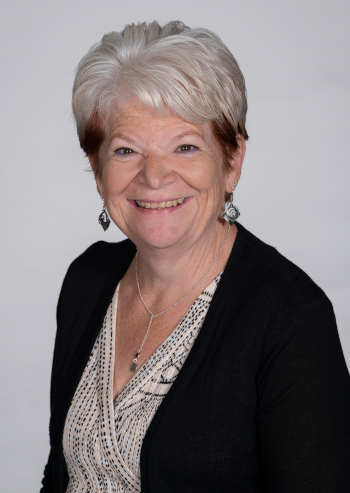
Dr. Becky Salato. Courtesy photo.

LAKE COUNTY, Calif. — Konocti Unified School District Superintendent Becky Salato, Ed.D., is a “five-foot-nothing powerhouse” who takes on the hardest, messiest challenges so she can help students thrive, according to those who work with her.

In recognition of her efforts, the Association of California School Administrators, or ACSA, named Salato the 2024 Region 4 Superintendent of the Year.

Five years ago, Konocti Unified was looking for a new superintendent. The district had been struggling for years. It was under state scrutiny for budget shortfalls and program deficiencies. School board members worried they would not be able to find a qualified superintendent given the district’s challenges.

At that time, Salato was a successful educational coach and consultant. However, she had been considering how she could make a deeper impact — the kind that is only possible with a long-term commitment. When she saw the Konocti Unified job opening, she applied.

Since then, she has taken the approach of “getting better at getting better” to make notable improvements in Lake County’s biggest school district. She is proud of the district’s accomplishments in recent years and says her work is far from over.

“When I arrived, I saw a district full of potential but faced with some significant challenges. Working with the team, we created a five-year plan to improve our academic standing. We became laser-focused on implementing new curriculum, investing in our teachers, and holding ourselves to a higher standard. Now, we’re seeing real progress. In education, there is no finish line. There is only continuous improvement,” she said.

Lake County Superintendent of Schools Brock Falkenberg lauded Salato for her dedication to students in Lake County.

“Becky Salato is a dedicated educational leader committed to improving student outcomes through strategic, data-driven decision-making,” Falkenberg said. “With a focus on growth and access, she fosters a culture of continuous improvement, empowering educators to create engaging learning environments that support the success of every student. Through her leadership, Becky drives meaningful change, ensuring all students have access to the resources, support, and opportunities needed to thrive.”

Deputy Superintendent Becky Walker agreed, adding, “She’s a champion ready to do battle all the time. She knows her stuff and she looks for ways to make real and lasting change. I first met her years ago when I was the principal of Fort Bragg High School in Mendocino County and she was an Action Learning coach. Our work together made me a better principal.”

Salato is a systems thinker who plays the long game. She values collaboration and builds relationships with those who can help her support students and their families, from education colleagues to policy makers and local leaders.

“Becky has been an instrumental leader in our county and someone I turn to often for advice as a new superintendent,” said fellow Lake County school district Superintendent Dr. Nicki Thomas of Kelseyville Unified. “She is fiercely driven to do what is best for kids, and that type of leader is what is needed in today's world.”

“Becky is thinking about how to do things today, so they bring about the changes she wants to see ten years from now. She’s like an orchestra conductor, pulling all the musicians together so we can play our part at the perfect time,” said Konocti Unified Director of Instructional Support Services Dr. Shellie Perry.

Salato said that change takes time and believes that as long as Konocti Unified maintains a system that works for students of all skill levels, it can’t go wrong.

She noted that high-performing districts often preserve their focus over time, while low-performing districts bounce from program to program looking for quick fixes.

“We are staying the course. We see progress so we know our approach is working,” Salato said.

The ACSA is the largest umbrella organization for school leaders in the United States, serving more than 17,000 California educators.

Region 4 covers Lake County, Mendocino County, Sonoma County, Napa County, Marin County, Solano County and Vallejo City.

Konocti Unified School District serves more than 3,600 students in grades TK-12 with public schools located in the cities of Clearlake, Clearlake Oaks and Lower Lake. The Konocti Unified mission is to provide students with an engaging curriculum, high-quality staff, and learning experiences which prepare them to succeed in a diverse and ever-changing society.

Thompson blasts Musk for firing all federal agriculture smoke exposure researchers in California

Details
Written by: LAKE COUNTY NEWS REPORTS
Published: 16 February 2025
On Saturday, Rep. Mike Thompson (CA-04) blasted unelected billionaire Elon Musk for ordering the Department of Agriculture to waste a decade of research by abruptly firing two smoke exposure researchers at UC Davis, leaving the largest wine producing region without anyone to continue this important research.

“When wildfires rip through our communities, smoke exposure can destroy millions of dollars of grapes. That’s why I lead a bipartisan group of members every year to secure federal research funds at the USDA’s Agricultural Research Service to fund smoke exposure research,” said Thompson. “A better understanding and faster detection process for identifying grapes exposed to smoke is critical for growers’ ability to limit their losses after a fire.

Thompson added, “In firing the only two smoke exposure researchers in our region, Elon Musk and his Republican enablers are not only throwing out a decade of research progress, they are making it harder for our agriculture producers to recover after wildfires strike. The only waste, fraud, and abuse here is that losing this research is a waste, Musk is a government efficiency fraud, and our growers are being abused by this non-transparent process to cripple critical federal services.”

In the Fiscal Year 24 appropriations bill, Congressman Thompson secured $5 million in funding for ongoing work in the Mitigating the Adverse Consequences of Wildfire Smoke of Wine Grapes program, which is administered by the U.S. Department of Agriculture.

However, this research is now halted by these firings. It would allow industry representatives to collaborate with land grant university researchers in West Coast states to research what causes the grapes to be damaged by smoke and how to best mitigate this damage. This research would provide for better testing and prediction of risk, thereby reducing the uncertainty for producers in fire-prone areas.

In addition, in 2023, Congressman Thompson helped secure $1.2 million for the University of California, Davis, to conduct smoke exposure research.

The funding was to purchase two pieces of equipment that are essential for grape smoke exposure research. Congressman Thompson secured this funding in the 2023 appropriations government funding bill.

In an executive order entitled “Implementing The President’s ‘Department of Government Efficiency’ Workforce Optimization Initiative,” President Trump directed agencies to significantly reduce the number of federal workers.

Elon Musk’s Department of Government Efficiency is working with government departments and agencies to remove staff and cut federal services.

Thompson represents California’s Fourth Congressional District, which includes all or part of Lake, Napa, Solano, Sonoma and Yolo counties.

Rural Americans don’t live as long as those in cities − new research

Details
Written by: Elizabeth Currid-Halkett, University of Southern California; Bryan Tysinger, University of Southern California, and Jack Chapel, University of Southern California
Published: 16 February 2025


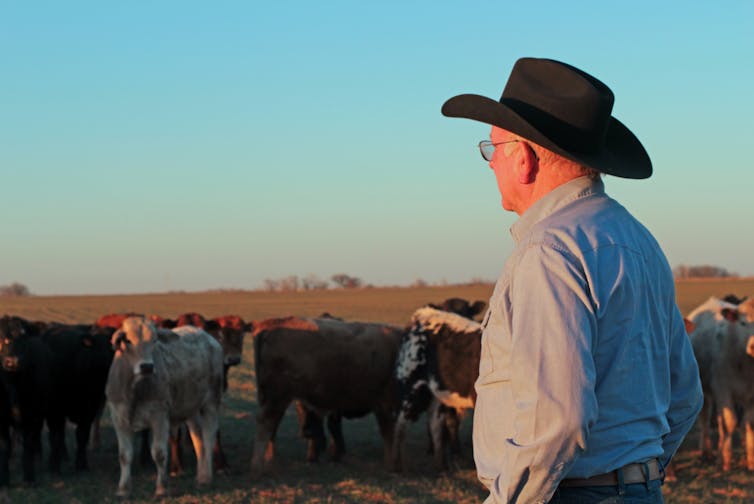
Part of the problem is that people living in rural areas don’t always have easy access to health care. cstar55/iStock via Getty Images

Rural Americans – particularly men – are expected to live significantly shorter, less healthy lives than their urban counterparts, according to our research, recently published in the Journal of Rural Health.

We found that a 60-year-old man living in a rural area is expected on average to live two fewer years than an urban man. For women, the rural-urban gap is six months.

A key reason is worse rates among rural people for smoking, obesity and chronic conditions such as high blood pressure and heart disease. These conditions are condemning millions to disability and shortened lives.

What’s more, these same people live in areas where medical care is evaporating. Living in rural areas, with their relatively sparse populations, often means a shortage of doctors, longer travel distances for medical care and inadequate investments in public health, driven partly by declines in economic opportunities.

Our team arrived at these findings by using a simulation called the Future Elderly Model. With that, we were able to simulate the future life course of Americans currently age 60 living in either an urban or rural area.

The model is based on relationships observed in 20 years of data from the Health and Retirement Study, an ongoing survey that follows people from age 51 through the rest of their lives. Specifically, the model showed how long these Americans might live, the expected quality of their future years, and how certain changes in lifestyle would affect the results.

We describe the conditions that drive our results as “diseases of despair,” building off the landmark work of pioneering researchers who coined the now widely used term “deaths of despair.” They documented rising mortality among Americans without a college degree and related these deaths to declines in social and economic prospects.

The main causes of deaths of despair – drug overdoses, liver disease and suicide – have also been called “diseases of despair.” But the conditions we study, such as heart disease, could similarly be influenced by social and economic prospects. And they can profoundly reduce quality of life.

We also found that if rural education levels were as high as in urban areas, this would eliminate almost half of the rural-urban life-expectancy gap. Our data shows 65% of urban 60-year-olds were educated beyond high school, compared with 53% of rural residents the same age.

One possible reason for the difference is that getting a bachelor’s degree may make a person more able or willing to follow scientific recommendations – and more likely to work out for 150 minutes a week or eat their veggies as their doctor advises them to.

Rural communities are increasingly hampered by their lack of access to health care.

Why it matters

The gap between urban and rural health outcomes has widened over recent decades. Yet the problem goes beyond disparities between urban and rural health: It also splits down some of the party lines and social divides that separate U.S. citizens, such as education and lifestyle.

Scholarship on the decline of rural America suggests that people living outside larger cities are resentful of the economic forces that may have eroded their economic power. The interplay between these forces and the health conditions we study are less appreciated.

Economic circumstances can contribute to health outcomes. For example, increased stress and sedentary lifestyle due to joblessness can contribute to chronic health issues such as cardiovascular disease. Declines in economic prospects due to automation and trade liberalization are linked to increases in mortality.

But health can also have a strong influence on economic outcomes. Hospitalizations cause high medical costs, loss of work and earnings, and increases in bankruptcy. The onset of chronic disease and disability can lead to long-lasting declines in income. Even health events experienced early in childhood can have economic consequences decades later.

In tandem, these health and economic trends might reinforce each other and help fuel inequality between rural and urban areas that produces a profoundly different quality of life.

What still isn’t known

It should be noted that our results, like many studies, are describing outcomes on average; the rural population is not a monolith. In fact, some of the most physically active and healthy people we know live in rural areas.

Just how much your location affects your health is an ongoing area of research. But as researchers begin to understand more, we can come up with strategies to promote health among all Americans, regardless of where they live.

The Research Brief is a short take on interesting academic work.The Conversation

Elizabeth Currid-Halkett, James Irvine Chair in Urban and Regional Planning and Professor of Public Policy, University of Southern California; Bryan Tysinger, Assistant Professor of Health Policy and Management, University of Southern California, and Jack Chapel, Postdoctoral Scholar in Economics, University of Southern California

This article is republished from The Conversation under a Creative Commons license. Read the original article.


  1. Helping Paws: Terriers, shepherds and Rhodesian ridgebacks
  2. Space News: En route to Jupiter, NASA’s Europa Clipper captures images of stars
  3. Sheriff’s office works to identify human remains found in National Forest
  • 380
  • 381
  • 382
  • 383
  • 384
  • 385
  • 386
  • 387
  • 388
  • 389
How to resolve AdBlock issue?
Refresh this page