How to resolve AdBlock issue?
Refresh this page
How to resolve AdBlock issue?
Refresh this page
Lake County News,California
  • Home
    • Registration Form
  • News
    • Education
    • Veterans
    • Community
      • Obituaries
      • Letters
      • Commentary
    • Police Logs
    • Business
    • Recreation
    • Health
    • Religion
    • Legals
    • Arts & Life
    • Regional
  • Calendar
  • Contact us
    • FAQs
    • Phones, E-Mail
    • Subscribe
  • Advertise Here
  • Login
How to resolve AdBlock issue?
Refresh this page

News

Final Klaus Park concept site design to be featured in May 22 meeting

Details
Written by: Elizabeth Larson
Published: 15 May 2025
CLEARLAKE OAKS, Calif. — The county of Lake is inviting community members to check out the latest stage in the work to design a new park on the Northshore.

The John T. Klaus Park, located on donated land east of Clearlake Oaks, will be the focus of a special drop-in meeting on Thursday, May 22, from 3 to 6 p.m.

It will be held in the Nylander Building, located at 12586 Acorn Str. next to the playground at Nylander Park and behind the Red & White grocery store in Clearlake Oaks.

The 570-acre park which will be located near the roundabout at Highway 20 and Highway 53.

In November 2022, the Board of Supervisors accepted the donation of the property, as well as funds to develop the park, from the John T. Klaus Trust.

The park design is now in the final concept site design phase, Public Services reported.

Community members will get an informal look at the designs, which so far includes trails, dog parks, native garden, cultural center, frisbee golf and more.

Public Services Director Lars Ewing, along with the landscape architect and environmental lead consultant, will be present to answer questions and take community members’ comments.

For more information call the Lake County Public Services Department at 707-262-1618 from 8 a.m. to 5 p.m. Monday through Friday or email This email address is being protected from spambots. You need JavaScript enabled to view it..

Email Elizabeth Larson at This email address is being protected from spambots. You need JavaScript enabled to view it.. Follow her on Twitter, @ERLarson, and on Bluesky, @erlarson.bsky.social. Find Lake County News on the following platforms: Facebook, @LakeCoNews; X, @LakeCoNews; Threads, @lakeconews, and on Bluesky, @lakeconews.bsky.social.

Thompson takes part in lengthy Ways and Means markup of tax bill

Details
Written by: LAKE COUNTY NEWS REPORTS
Published: 15 May 2025
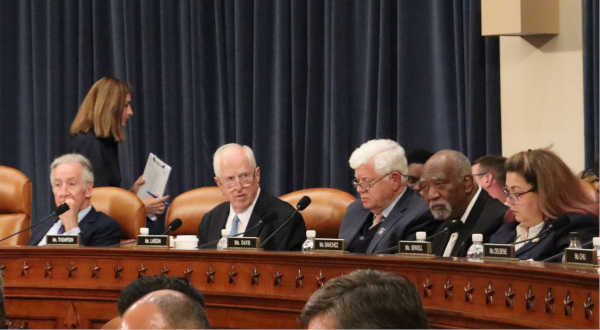
vRep. Mike Thompson behind the dais in the Ways & Means Committee room. Photo courtesy of Thompson’s office.

On Wednesday, Ways & Means Tax Subcommittee Ranking Member Mike Thompson (CA-04) concluded an over 17-hour markup of the Congressional Republicans’ tax bill, which extends the President’s 2017 tax breaks for billionaires, adds $5 trillion more to our national debt, and leaves working families behind.

Thompson said Republicans will combine these tax breaks for their billionaire donors with their bills to slash health care and nutrition funding in order to pay for it.

“Congressional Republicans have been clear since the beginning: They intend to hand tax breaks to their billionaire donors like Elon Musk and they are slashing everyday Americans’ health care and nutrition support to pay for it,” said Thompson.

“Our tax code should be focused on supporting hardworking Americans, not running up our debt by trillions to give tax breaks to people who don’t need the help,” he said.

“My colleagues and I fought to reinstate the State and Local Tax Deduction, prevent cuts to 13.7 million Americans’ health care, revive the Child Tax credit, prevent handouts to the super wealthy who don’t need the help, and protect my green energy tax credits which are creating jobs and lowering energy prices for Americans. It’s a shame that our colleagues on the other side of the dais voted against all of these sensible measures,” Thompson said.

He added, “The fight isn’t over. Until Congressional Republicans work with us to develop a bill that reins in our national debt and helps put hardworking Americans ahead, we will continue to fight their extreme policies every step of the way.”

House Republicans’ tax bill passed out of the Ways & Means Committee. Every Ways & Means Democrat voted no.

Next, the bill will be packaged with Republicans’ bills slashing health care and nutrition services for Americans and brought to the House floor before the full Congress.

Thompson represents California’s Fourth Congressional District, which includes all or part of Lake, Napa, Solano, Sonoma and Yolo counties.

Celebrate National Safe Boating Week May 17 to 23

Details
Written by: CALIFORNIA STATE PARKS
Published: 15 May 2025
Life jackets, appropriate for each passenger, are essential equipment on watercraft. Photo from California State Parks.

California State Parks’ Division of Boating and Waterways, or DBW, invites all boating enthusiasts to observe National Safe Boating Week from May 17 to 23.

This annual event emphasizes the importance of responsible boating practices and water safety awareness as Californians prepare for the summer boating season.

This year also marks the full implementation of the California Boater Card requirement for all motorized vessel operators.

“National Safe Boating Week is a timely reminder that safety on the water starts with preparation and knowledge,” said DBW’s Deputy Director Ramona Fernandez. “With the California Boater Card now required for all motorized vessel operators, we encourage everyone to complete a boating safety course, get their California Boater Card, and ensure they are equipped for a safe and enjoyable experience on our waterways.”

Here are the essential tips when heading out on the water:

• Wear a life jacket: Life jackets help save lives. Make sure you and all passengers have a properly fitted S. Coast Guard-approved life jacket onboard and always wear it while on the water. Remember, life jackets are the most effective means of preventing drowning in the event of an emergency. According to the U.S. Coast Guard recreational boating statistics, in 2023, 87% of drowning victims were not wearing life jackets, which are required to be worn for those under 13 years old while on a moving vessel.

• Boat sober: Operating a boat under the influence of alcohol or drugs is illegal and significantly impairs judgment and reaction times. Avoid alcohol consumption while boating to ensure the safety of all on board. Alcohol is dangerous for passengers, too. Intoxication can cause slips, falls overboard and other dangerous accidents.

• Take a safe boating course and get your California Boater Card: Effective January 1, 2025, all operators of motorized vessels on California waterways, regardless of age, are required by law to possess a California Boater Card. This card demonstrates that the holder has successfully completed an approved boating safety course. The requirement aims to enhance safety on the water by ensuring that all operators are educated in boating laws, navigation rules and emergency procedures. More information is available at com.

• Have proper safety equipment: Ensure you have all the required equipment onboard and verify it is in good working condition for a safe and fun day on the water. Review the ABCs of California Boating for more details.

• Know before you go: Always check the weather forecast and remain alert to changing conditions. Sudden storms or rough waters can pose significant dangers. Always have a reliable means of communication onboard to receive weather updates. Before heading out, verify that the water body is open and not affected by any temporary closures or restrictions, including those involving the newly discovered golden mussel.

• File a float plan: Let someone know your boating plans before you depart. File a float plan with a friend or family member detailing your itinerary, expected return time, and contact information. In the event of an emergency, this information can be crucial for search and rescue efforts.

• Implement clean and green practices: Use oil absorbents and fuel bibs to prevent spills and dispose of them properly. Never throw garbage into waterways; instead, use shoreside facilities to recycle and dispose of waste responsibly, including plastic, glass, metal and paper. Used fishing line can be deposited at fishing-line recycling stations.

During National Safe Boating Week and throughout the boating season, DBW encourages boaters to prioritize safety, stay informed and always be prepared. Whether you're sailing, cruising, fishing or paddling, safe and environmentally responsible boating practices benefit everyone on the water.

Join the fun on Friday, May 16, by participating in "Wear Your Life Jacket at Work Day." This event promotes boating safety awareness and encourages everyone to wear their life jackets, snap a photo, and share it on social media with the hashtag #WearYourLifeJacketAtWorkDay.

For more information on National Safe Boating Week, visit SafeBoatingCampaign.com.

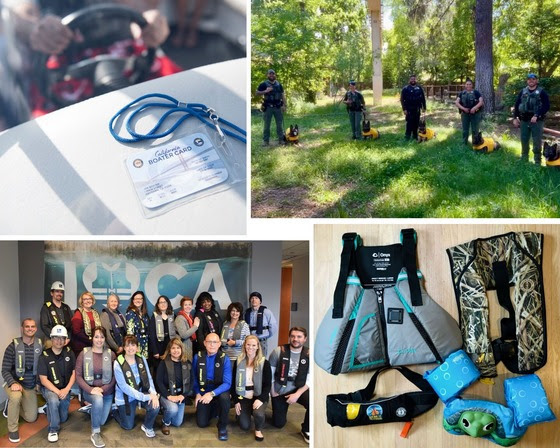
Clockwise from top left: As of Jan. 1, 2025, all operators of motorized vessels on California waterways, regardless of age, are required to have a valid California Boater Card. Life jackets aren’t just for people – dogs should also be safe around the water. Various types of life jackets can provide a measure of safety on the water. Don’t forget to celebrate “Wear Your Life Jacket at Work Day” on May 16. Photos from California State Parks.

Why do cuts to Medicaid matter for Americans over 65? 2 experts on aging explain why lives are at stake

Details
Written by: Jane Tavares, UMass Boston and Marc Cohen, UMass Boston
Published: 15 May 2025


Medicaid provides health insurance coverage for more than 82 million Americans. FatCamera/E+ via Getty Images

Republicans in Congress intend to cut about US$880 billion in federal health care spending.

One of their primary targets is Medicaid. That government program covers 82 million Americans with health insurance. Most of the people enrolled in the program are low income, have disabilities, or both.

Medicaid, jointly funded by the federal government and the states, is also the biggest funder in the U.S. of long-term care services, whether they are delivered in the patient’s home, another location where they spend part of their day or a nursing home. That makes it particularly important for older adults and those with disabilities. All states must meet the basic federal guidelines for Medicaid coverage. But 41 states have opted to take advantage of the Affordable Care Act provision that expanded eligibility to cover more people under the program.

We are gerontology researchers who study health and financial well-being in later life. We’ve been analyzing what the potential impacts of Medicaid cuts might be.

While the debate about how to reduce the budget focuses largely on dollars and cents, we believe that cutting federal spending on Medicaid would harm the health and well-being of millions of Americans by reducing their access to care. In our view, it’s also likely that any savings achieved in the short term would be smaller than the long-term increase in health care costs born by the federal government, the states and patients – including for many Americans who are 65 and older.

Republican lawmakers are weighing different strategies that could cut federal Medicaid spending.

Weak track record

Wary of backlash from their constituents, Republicans have agreed on a strategy that would largely cut Medicaid spending in a roundabout way.

Previous efforts by the GOP in some states, such as imposing work requirements for some people to get Medicaid benefits, have not greatly reduced costs. That’s largely because there are relatively few people enrolled in the Medicaid program who are physically able to be employed and aren’t already in the workforce. Nor have past efforts to reduce fraud, waste and abuse led to significant savings.

According to widespread media reports, Republicans are considering changes that would cut the amount of money that the federal government reimburses states for what they spend on Medicaid.

In May 2025, the nonpartisan Congressional Budget Office estimated that 8.6 million Americans would lose their health insurance coverage should the GOP proposal become law.

Historically, states have dealt with budget cuts by reducing their payments to health care providers, limiting eligibility or restricting benefits. These reductions all particularly affected home- and community-based services that many disabled and older adults rely on.

About 3 in 4 of the people with Medicaid coverage who receive long-term care through the program get that care at home, in their communities or both, rather than residing in a nursing home. States save an estimated 26 cents for every dollar spent on those services delivered outside nursing homes.

Losing coverage can be harmful for your health

We recently analyzed data from a nationally representative study of approximately 6,000 people who had Medicaid coverage but lost it when they turned age 65 because their income exceeded 100% of the federal poverty level. In 2025, that cutoff is about $15,560 for a single person and $21,150 for a couple.

Medicaid income eligibility generally drops from 138% to 100% of the federal poverty level at age 65 once Medicare becomes a person’s primary health insurer.

The people who participated in the study had lost their Medicaid coverage upon turning 65 between 1998 and 2020. Our team followed the experiences of these participants over a 10-year period starting at age 65 to see how they fared compared with people who continue to be enrolled in Medicaid after their 65th birthday.

What we found was both surprising and disturbing.

Fewer activities of daily living

Over the decade following that milestone, the people who lost their Medicaid coverage had more chronic conditions and could perform fewer activities of daily living, such as bathing and getting dressed, without any assistance as compared with those who still had Medicaid coverage. In addition, they were twice as likely to experience depression and be in fair or poor health.

As people’s health worsened, they also went to the hospital more often and stayed there longer. They also used outpatient surgery services more frequently.

These services are particularly expensive for the health care system. Depending on the service, it may also be costly for patients. Unlike the comprehensive coverage of Medicaid, the Medicare program fully covers only inpatient hospitalizations, short-term nursing facility care, hospice, some short-term home care, annual wellness visits, vaccines and some basic preventive care. Beyond that, Medicare requires the payment of premiums to help with uncovered services that can also include deductibles and copays.

This arrangement can lead to significant out-of-pocket costs that make health care hard for low-income older adults to afford unless they have both Medicare and Medicaid coverage.

We also found that older people who lost Medicaid coverage were less likely to see their primary care physician for routine and follow-up care, despite being enrolled in Medicare. This explains in part why they are going to the hospital more often, likely avoiding routine health care that may incur out-of-pocket costs and eventually utilizing Medicare-covered hospital care when needed.

In short, we found that exiting the Medicaid program upon turning 65 actually leads to an increase in the use of some of the most expensive health care services, such as inpatient hospitalization and outpatient surgery. So although Medicaid may no longer pay for these costs, the rest of the health care system does.

Just under 90% of older adults enrolled in Medicare have some kind of supplemental coverage that helps them pay for services that the program doesn’t cover. For 16% of the people with Medicare coverage, Medicaid covers those additional health care costs. The rest of that nearly 90% obtain supplemental coverage from private insurance companies or are enrolled in a Medicare Advantage plan that’s run by a private company instead of the government.

However, 11% of Americans covered by Medicare don’t have any additional coverage. It is likely that those who lost Medicaid benefits at age 65 may not be able to afford any other supplemental coverage options and fall into this group.

People who lose Medicaid coverage may die sooner

One of our more troubling findings was that people who lost Medicaid coverage at age 65 were 14% more likely to die within the next 10 years than were those who kept their coverage in addition to gaining Medicare coverage. This was true even though the people who lost their Medicaid access tended to start out in better health.

Roughly 12 million Americans are enrolled in both Medicare and Medicaid today. Much is at stake for them and other low-income people as Congress considers making major changes to the program to cut federal spending on it.

For some Americans, it’s a matter of life and death. For others, it’s a matter of healthy versus unhealthy aging that leads to costlier health care not just for themselves but for the U.S. as a whole.The Conversation

Jane Tavares, Senior Research Fellow and Lecturer of Gerontology, UMass Boston and Marc Cohen, Professor of Gerontology, UMass Boston

This article is republished from The Conversation under a Creative Commons license. Read the original article.

  1. County to study special sales tax to fund roads
  2. Woodland Community College’s Lake County Campus hosts commencement ceremony May 16
  3. City of Lakeport announces water pipeline replacement project on Lakeshore Boulevard
  • 289
  • 290
  • 291
  • 292
  • 293
  • 294
  • 295
  • 296
  • 297
  • 298
How to resolve AdBlock issue?
Refresh this page