How to resolve AdBlock issue?
Refresh this page
How to resolve AdBlock issue?
Refresh this page
Lake County News,California
  • Home
    • Registration Form
  • News
    • Education
    • Veterans
    • Community
      • Obituaries
      • Letters
      • Commentary
    • Police Logs
    • Business
    • Recreation
    • Health
    • Religion
    • Legals
    • Arts & Life
    • Regional
  • Calendar
  • Contact us
    • FAQs
    • Phones, E-Mail
    • Subscribe
  • Advertise Here
  • Login
How to resolve AdBlock issue?
Refresh this page

News

Carter named Giles Honor Scholar, set to become youngest Pepperdine law school grad

Details
Written by: LAKE COUNTY NEWS REPORTS
Published: 13 May 2025
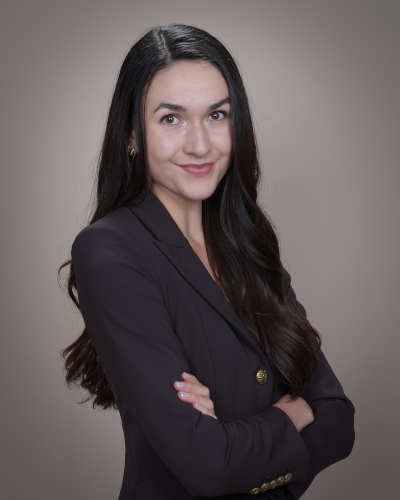
Julianne Carter. Courtesy photo.

MALIBU, Calif. — Julianne Carter, a lifelong Lake County resident currently attending Pepperdine University School of Law in Malibu, has been named the school’s 2025 Terry M. Giles Honor Scholar.

The Giles Honor Scholar is a student in their third and final year of law school who is selected on the basis of scholastic achievement, co-curricular and extracurricular activities, personality, and character.

The scholarship is the namesake of its donor, Terry Giles is a Pepperdine Law alum who established one of the largest and most successful criminal law firms on the West Coast, and is also an award-winning author and law professor. Giles personally interviewed the applicants and selected Carter.

Carter, 22, will graduate from Pepperdine Law this month as the youngest student to ever receive a Juris Doctor law degree from the institution.

Prior to law school, she graduated from Pepperdine University with honors at age 19, receiving a bachelor's degree in philosophy.

While in law school, she was an advocate on the Honors Trial Team, where she competed in state and national trial competitions.

She was also a member of the Trial Team Executive Board and the Criminal Law Society; clerked at Legal Aid in downtown Los Angeles; worked at the Ventura County District Attorney’s Office; and spent two years appearing in criminal court in Lake County as a certified law student supervised by her mother, local attorney Angela Carter.

"I'm incredibly proud of Julianne," Angela Carter said. "It has been amazing to get to work with her. My clients and our local judges have been so kind to her. She is already a fantastic advocate with extreme intelligence and a kind heart. I am one lucky mom to have her as my daughter and one lucky lawyer to have her as my partner. She had her choice of jobs all over California, and she chose to come back and help her local community."

Following her graduation, Julianne Carter will join Angela Carter at her private criminal defense practice in Lakeport, which will be renamed Carter Law.

"I'm excited to return home to Lake County and practice law there," Julianne Carter said. "Our county is incredibly important to me, and I'm so grateful to have had everyone's support during my legal education."

Clearlake City Council to hold hearing for fire hazard severity zone map

Details
Written by: Elizabeth Larson
Published: 13 May 2025
CLEARLAKE, Calif. — The Clearlake City Council is set this week to consider approving a new Cal Fire map that rates thousands more acres within the city as being in the highest fire hazard severity zone.

The council will meet at 6 p.m. Thursday, May 15, in the council chambers at Clearlake City Hall, 14050 Olympic Drive.

The agenda can be found here.

The meeting will be broadcast live on the city's YouTube channel or the Lake County PEGTV YouTube Channel.

Community members also can participate via Zoom. The webinar ID is 899 0339 3920, the pass code is 024684. One tap mobile is available at +16694449171,,82771053751#, or join by phone at 669-444-9171 or 646-931-3860.

The council meeting will start with a presentation on May’s adoptable dogs, a proclamation declaring May 18 to 24 as Public Works Week and a presentation by Police Chief Tim Hobbs, who will give an update on Proposition 36, an initiative passed by voters last year to increase the penalties for drug and theft offenses.

On Thursday, the council will hold three public hearings.

The first is to discuss and consider Ordinance 281-2025, which will designate fire hazard severity zones in the Local Responsibility area as required by state law.

The zones are shown in a new map released to the public in February.

That new map adds a total of 14,000 acres of Lake County land to the “very high” fire hazard severity zone, marking an 878% increase in acreage designated the highest severity category, as Lake County News https://www.lakeconews.com/news/81111-cal-fire-s-new-fire-hazard-map-expands-very-high-zones-across-lake-county-local-officials-express-concernhas reported.

In Clearlake, the acreage rated as “very high” increases from 1,583 to 4,054 acres.

So far, city officials said they have had little to no public comment on the map, which officials are concerned could have a negative impact on the county, especially when it comes to fire insurance ratings, which the map isn’t supposed to be used to set.

If the first reading of the ordinance passes, a second reading and adoption will be set. The cities and the county have until July 1 to approve the map.

The council’s second public hearing involves the closeout of the Community Development Block Grant Covid 2/3 Funds for the Senior Community Center Upgrades, with the third being to consider adoption of fees related to Ordinance No. 280-2025, which authorizes bingo games for charitable purposes only.

Under business, the council will consider letters of opposition to SB 226 (Cabaldon) regarding community college territory transfers, and also will discuss a presentation regarding Safe Routes to Schools plans for Burns Valley and Pomo Elementary schools.

On the meeting's consent agenda — items that are considered routine in nature and usually adopted on a single vote — are warrants and council minutes; continuation of the emergency declarations for the winter storms and Boyles Fire; adoption of the update to Resolution 2024-15, HOME Application to increase the requested not-to-exceed amount to $10,200,000; and an update to the City Council meeting calendar to include June 19 as a regular City Council
meeting date.

The council also will hold a closed session for a performance evaluation of City Manager Alan Flora and discuss litigation with Highlands Mutual Water Co.

Email Elizabeth Larson at This email address is being protected from spambots. You need JavaScript enabled to view it.. Follow her on Twitter, @ERLarson, and on Bluesky, @erlarson.bsky.social. Find Lake County News on the following platforms: Facebook, @LakeCoNews; X, @LakeCoNews; Threads, @lakeconews, and on Bluesky, @lakeconews.bsky.social.

Little Hoover Commission to hold business meeting on governor’s reorganization plan

Details
Written by: Little Hoover Commission
Published: 13 May 2025
The Little Hoover Commission will meet to discuss the Governor’s proposed reorganization plan, which would create a Housing and Homelessness Agency and a Business and Consumer Services Agency.

The commission will meet at 10 a.m. Tuesday, May 13.

The meeting will be held principally via Zoom. Members of the public are free to attend the publicly noticed physical location – the Auditorium of the California Department of Food and Agriculture at 1220 N St. – but no commissioners are expected to attend in person. Commission staff will be present at that site.

The Zoom login details and the full information packet for the meeting may be accessed here.

In addition to the reorganization plan, the Commission may also take up a draft report on public-philanthropic partnerships.

By law, the Governor’s Reorganization Plan was submitted to the commission for “study and recommendation,” and the commission recently held two days of hearings on the proposal.

At the Tuesday meeting, commissioners are expected to discuss the plan, and provide guidance to staff about the eventual contents of the report. The background memo provided to commissioners can be accessed here.

The commission may also take up a draft report on the state’s role in public-philanthropic partnerships, a topic on which the Commission recently held hearings. The draft report can be accessed here.

Visit the 2025 reorganization study page to read about the commission’s review process and access all background memos.

If you really want to close the US trade deficit, try boosting innovation in rural manufacturing

Details
Written by: Amitrajeet A. Batabyal, Rochester Institute of Technology
Published: 13 May 2025


President Donald Trump has long been preoccupied by the trade deficit — the gap between what the U.S. sells to the rest of the world and what it buys from it. He recently declared the issue a national emergency and used trade deficit data to calculate so-called “reciprocal tariffs” targeting nearly 100 countries. Although those specific tariffs are now on pause, Trump’s concern with the trade deficit persists.

As an economist, I know there are two basic ways for a country to reduce a trade deficit: import less or export more. While Trump has focused on the former strategy, a more productive path may lie in the latter – especially by looking at untapped opportunities in rural America.

Economists have long studied the differences between rural and urban regions. But while research shows that urban areas tend to be more technologically advanced, fast-growing and economically dynamic, economists have historically paid less attention to how regional differences affect export performance.

New research is starting to fill that gap. Economists recently found that urban businesses export significantly more than rural ones – a difference with significant implications for national trade.

The urban-rural export gap

Looking at data from the Census Bureau’s Annual Business Survey as well as trade statistics from 2017 to 2020, researchers used econometric techniques to measure the urban-rural export gap. They also examined two categories of potential causes – “explained” and “unexplained.”

The first is due to differences in what economists call “endowments” – for example, a region’s digital infrastructure, its access to renewable energy and its opportunities for high-tech employment. These endowments can be observed and therefore explained.

The second is due to what economists call “structural advantage.” This refers to attributes of a region that matter for export performance but can’t be observed and, as a result, remain unexplained.

They found that most of the urban-rural export gap is due to explained differences. That means rural businesses could close the export gap if they were provided with similar endowments – meaning comparable access to renewable energy, similar digital infrastructure and analogous opportunities for high-tech employment – to their urban counterparts.

Even more strikingly, the unexplained component was negative – which means rural businesses outperform expectations given their characteristics. That suggests rural regions have significant untapped export potential.

Several factors collectively account for the urban export advantage. First, urban regions have a greater concentration of highly educated science and technology workers. Urban businesses also tend to be larger and more tech-savvy, and because they have better access to broadband, they use cloud technology more frequently. Urban areas also have more foreign-born business owners who may leverage their international networks.

However, many of these differences suggest possible policy solutions. For instance, since cloud adoption depends on broadband availability, it follows that investing in digital infrastructure could boost rural exports. Also, rural manufacturers, especially in sectors like metals manufacturing, show comparable or higher export intensity per worker than their urban counterparts. So encouraging rural manufacturing would be one way to reduce the urban-rural export gap.

Rethinking trade and rural development

I think this research has important policy implications.

First, it shifts some of the focus away from other countries as the root cause of the trade deficit. And second, it bolsters the case for what economists call “place-based policies” targeting specific geographic areas – as opposed to “people-based policies,” which provide support directly to individuals.

Even though many economists dislike place-based policies, they are increasingly attracting both academic and governmental attention.

The 2022 CHIPS and Science Act had special significance to rural areas.

During the Biden administration, three major laws – the Inflation Reduction Act, the CHIPS and Science Act and the Infrastructure Investment and Jobs Act – directed significant federal funds to rural areas. About 43% of funds from those laws – or US$440 billion – was designated as either “rural relevant” or as “rural stipulated,” meaning the funds were either geographically targeted or designed to address disproportionately rural challenges.

Such massive investments in rural regions have led researchers and policymakers to question whether rural export underperformance stems from differences in observable endowments – in other words, things like access to broadband – or from inherent disadvantages that are much harder to deal with.

In my view, this research provides compelling evidence that much of the urban-rural export gap is due to unequal distribution of productive assets, rather than inherent rural disadvantages. With appropriate investments in digital infrastructure, human capital and support for export-capable industries, America’s rural regions could play a much larger role in global trade. These findings also suggest the value of continued federal support for rural development efforts.

In other words, if the U.S. wants to shrink its trade deficit, one answer could be more innovation in rural manufacturing.The Conversation

Amitrajeet A. Batabyal, Distinguished Professor, Arthur J. Gosnell Professor of Economics, & Interim Head, Department of Sustainability, Rochester Institute of Technology

This article is republished from The Conversation under a Creative Commons license. Read the original article.

  1. Sheriff’s office makes arrests in Friday Northshore shooting
  2. Board of Supervisors to consider legislative updates, proposed election office investment
  3. Lakeport Planning Commission to meet May 14
  • 291
  • 292
  • 293
  • 294
  • 295
  • 296
  • 297
  • 298
  • 299
  • 300
How to resolve AdBlock issue?
Refresh this page