How to resolve AdBlock issue?
Refresh this page
How to resolve AdBlock issue?
Refresh this page
Lake County News,California
  • Home
    • Registration Form
  • News
    • Education
    • Veterans
    • Community
      • Obituaries
      • Letters
      • Commentary
    • Police Logs
    • Business
    • Recreation
    • Health
    • Religion
    • Legals
    • Arts & Life
    • Regional
  • Calendar
  • Contact us
    • FAQs
    • Phones, E-Mail
    • Subscribe
  • Advertise Here
  • Login
How to resolve AdBlock issue?
Refresh this page

News

Science requires ethical oversight – without federal dollars, society’s health and safety are at risk

Details
Written by: Christine Coughlin, Wake Forest University and Nancy M. P. King, Wake Forest University
Published: 12 May 2025


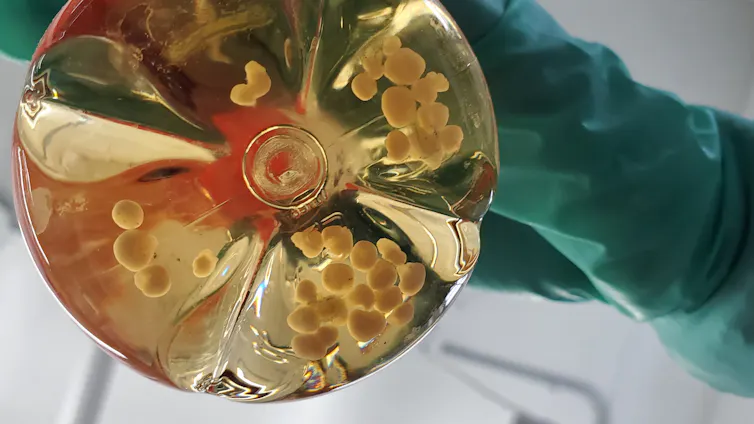
Brain organoids, pictured here, raise both many medical possibilities and ethical questions. NIAID/Flickr, CC BY-SA


The National Institutes of Health has been the world’s largest public funder of biomedical research. Its support helps translate basic science into biomedical therapies and technologies, providing funding for nearly all treatments approved by the Food and Drug Administration from 2010 to 2019. This enables the U.S. to lead global research while maintaining transparency and preventing research misconduct.

While the legality of directives to shrink the NIH is unclear, the Trump administration’s actions have already led to suspended clinical trials, institutional hiring freezes and layoffs, rescinded graduate student admissions, and canceled federal grant review meetings. Researchers at affected universities say that funding will delay or possibly eliminate ongoing studies on critical conditions like cancer and Alzheimer’s.

The Trump administration has deeply culled U.S. science across agencies and institutions.

It is clear to us, as legal and bioethics scholars whose research often focuses on the ethical, legal and social implications of emerging biotechnologies, that these directives will have profoundly negative consequences for medical research and human health, with ripple effects that will last decades. Our scholarship demonstrates that in order to contribute to knowledge and, ultimately, to biomedical treatments, medical research at every stage depends on significant infrastructure support and ethical oversight.

Our recent focus on brain organoid research – 3D lab models grown from human stem cells that simulate brain structure and function – shows how federal support for research is key to not only promote innovation, but to protect participants and future patients.

History of NIH and research ethics

The National Institutes of Health began as a one-room laboratory within the Marine Hospital Service in 1887. After World War I, chemists involved in the war effort sought to apply their knowledge to medicine. They partnered with Louisiana Sen. Joseph E. Ransdell who, motivated by the devastation of malaria, yellow fever and the 1928 influenza pandemic, introduced federal legislation to support basic research and fund fellowships focusing on solving medical problems.

By World War II, biomedical advances like surgical techniques and antibiotics had proved vital on the battlefield. Survival rates increased from 4% during World War I to 50% in World War II. Congress passed the 1944 Public Health Services Act to expand NIH’s authority to fund biomedical research at public and private institutions. President Franklin D. Roosevelt called it “as sound an investment as any Government can make; the dividends are payable in human life and health.”

As science advanced, so did the need for guardrails. After World War II, among the top Nazi leaders prosecuted for war crimes were physicians who conducted experiments on people without consent, such as exposure to hypothermia and infectious disease. The verdicts of these Doctors’ Trials included 10 points about ethical human research that became the Nuremberg Code, emphasizing voluntary consent to participation, societal benefit as the goal of human research, and significant limitations on permissible risks of harm. The World Medical Association established complementary international guidelines for physician-researchers in the 1964 Declaration of Helsinki.

White researcher injecting a Black participant in the Tuskegee Study with a syringe
At least 100 participants died in the Tuskegee Untreated Syphilis Study. National Archives

In the 1970s, information about the Tuskegee study – a deceptive and unethical 40-year study of untreated syphilis in Black men – came to light. The researchers told study participants they would be given treatment but did not give them medication. They also prevented participants from accessing a cure when it became available in order to study the disease as it progressed. The men enrolled in the study experienced significant health problems, including blindness, mental impairment and death.

The public outrage that followed starkly demonstrated that the U.S. couldn’t simply rely on international guidelines but needed federal standards on research ethics. As a result, the National Research Act of 1974 led to the Belmont Report, which identified ethical principles essential to human research: respect for persons, beneficence and justice.

Federal regulations reinforced these principles by requiring all federally funded research to comply with rigorous ethical standards for human research. By prohibiting financial conflicts of interest and by implementing an independent ethics review process, new policies helped ensure that federally supported research has scientific and social value, is scientifically valid, fairly selects and adequately protects participants.

These standards and recommendations guide both federally and nonfederally funded research today. The breadth of NIH’s mandate and budget has provided not only the essential structure for research oversight, but also key resources for ethics consultation and advice.

Brain organoids and the need for ethical inquiry

Biomedical research on cell and animal models requires extensive ethics oversight systems that complement those for human research. Our research on the ethical and policy issues of human brain organoid research provides a good example of the complexities of biomedical research and the infrastructure and oversight mechanisms necessary to support it.

Organoid research is increasing in importance, as the FDA wants to expand its use as an alternative to using animals to test new drugs before administering them to humans. Because these models can simulate brain structure and function, brain organoid research is integral to developing and testing potential treatments for brain diseases and conditions like Alzheimer’s, Parkinson’s and cancer. Brain organoids are also useful for personalized and regenerative medicine, artificial intelligence, brain-computer interfaces and other biotechnologies.

Brain organoids are built on knowledge about the fundamentals of biology that was developed primarily in universities receiving federal funding. Organoid technology began in 1907 with research on sponge cells, and continued in the 1980s with advances in stem cell research. Since researchers generated the first human organoid in 2009, the field has rapidly expanded.
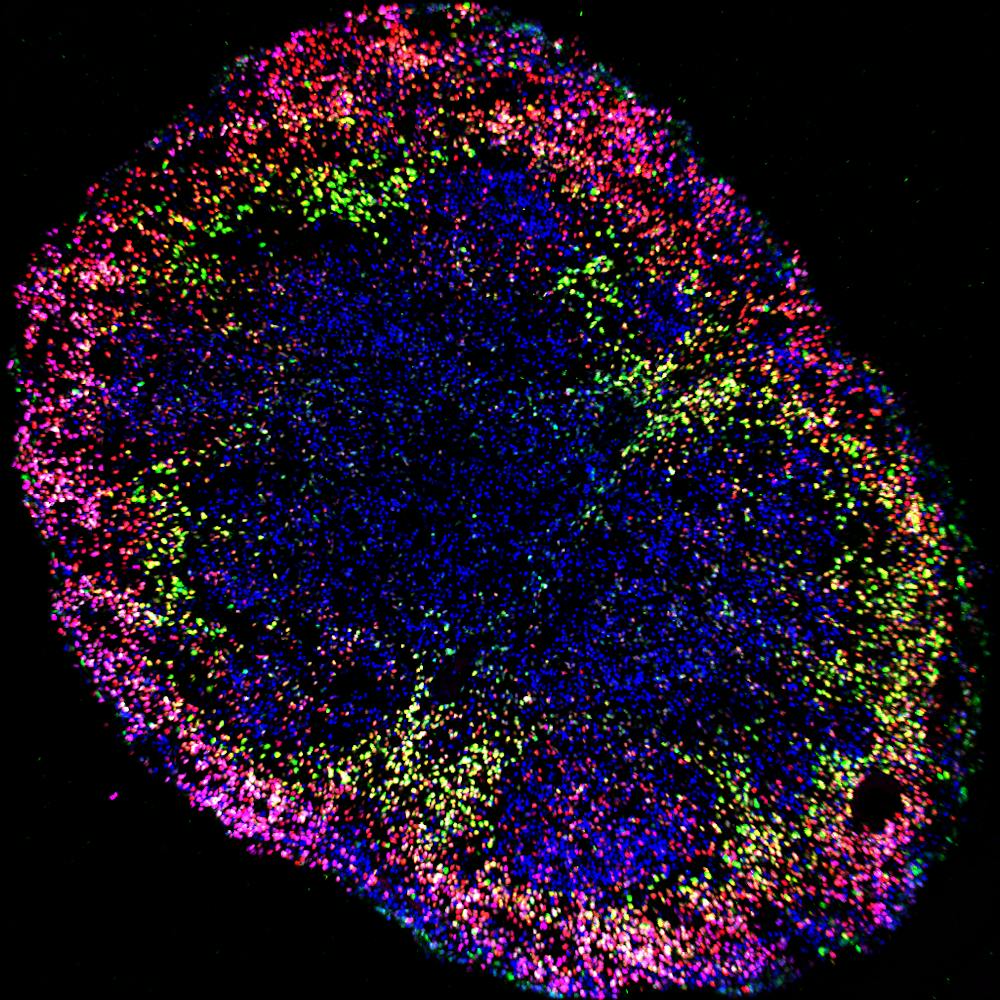
Fluorescent dots forming the outline of a sphere
Brain organoids have come a long way since their beginnings over a century ago. Madeline Andrews, Arnold Kriegstein's lab, UCSF, CC BY-ND

These advances were only possible through federally supported research infrastructure, which helps ensure the quality of all biomedical research. Indirect costs cover operational expenses necessary to maintain research safety and ethics, including utilities, administrative support, biohazard handling and regulatory compliance. In these ways, federally supported research infrastructure protects and promotes the scientific and ethical value of biotechnologies like brain organoids.

Brain organoid research requires significant scientific and ethical inquiry to safely reach its future potential. It raises potential moral and legal questions about donor consent, the extent to which organoids should be grown and how they should be disposed, and consciousness and personhood. As science progresses, infrastructure for oversight can help ensure these ethical and societal issues are addressed.

New frontiers in scientific research

Since World War II, there has been bipartisan support for scientific innovation, in part because it is an economic and national security imperative. As Harvard University President Alan Garber recently wrote, “[n]ew frontiers beckon us with the prospect of life-changing advances. … For the government to retreat from these partnerships now risks not only the health and well-being of millions of individuals but also the economic security and vitality of our nation.”

Cuts to research overhead may seem like easy savings, but it fails to account for the infrastructure that provides essential support for scientific innovation. The investment the NIH has put into academic research is significantly paid forward, adding nearly US$95 billion to local economies in fiscal year 2024, or $2.46 for every $1 of grant funding. NIH funding had also supported over 407,700 jobs that year.

President Donald Trump pledged to “unleash the power of American innovation” to battle brain-based diseases when he accepted his second Republican nomination for president. Around 6.7 million Americans live with Alzheimer’s, and over a million more suffer from Parkinson’s. Hundreds of thousands of Americans are diagnosed with aggressive brain cancers each year, and 20% of the population experiences varying forms of mental illness at any one time. These numbers are expected to grow considerably, possibly doubling by 2050.

Organoid research is just one of the essential components in the process of learning about the brain and using that knowledge to find better treatment for diseases affecting the brain.

Science benefits society only if it is rigorous, ethically conducted and fairly funded. Current NIH policy directives and steep cuts to the agency’s size and budget, along with attacks on universities, undermine globally shared goals of increasing understanding and improving human health.

The federal system of overseeing and funding biomedical science may need a scalpel, but to defund efforts based on “efficiency” is to wield a chainsaw.The Conversation

Christine Coughlin, Professor of Law, Wake Forest University and Nancy M. P. King, Emeritus Professor of Social Sciences and Health Policy, Wake Forest University

This article is republished from The Conversation under a Creative Commons license. Read the original article.

As the Trump administration continues to make significant cuts to NIH budgets and personnel and to freeze billions of dollars of funding to major research universities – citing ideological concerns – there’s more being threatened than just progress in science and medicine. Something valuable but often overlooked is also being hit hard: preventing research abuse.

Zeni named Lake County Teacher Of The Year

Details
Written by: LAKE COUNTY OFFICE OF EDUCATION
Published: 11 May 2025
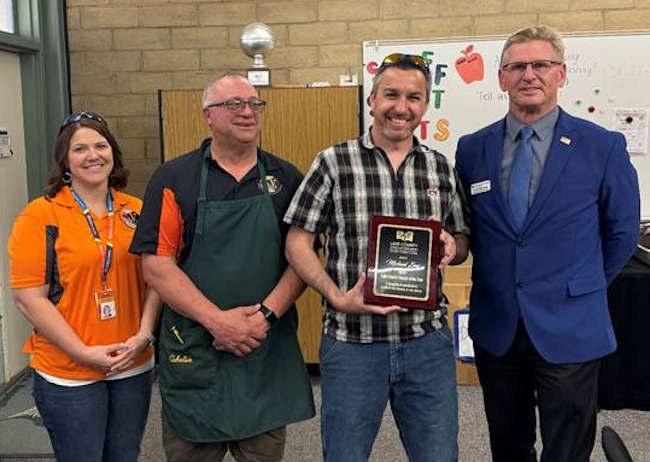
From left, Kelseyville Unified School District Superintendent Dr. Nicki Thomas, Kelseyville High School Principal Mr. Mike Jones, Agricultural Mechanics Teacher for Kelseyville High School Mr. Michael Zeni and Lake County Superintendent of Schools Brock Falkenberg during the district celebration for Lake County Teacher of the Year.

LAKE COUNTY, Calif. — Michael Zeni, the agricultural mechanics teacher at Kelseyville High School, has been named the 2025 Lake County Teacher of the Year.

“Michael Zeni has transformed the student experience by blending academic rigor with real-world skills. His work-based learning program is not only innovative, it’s life-changing,” said Mike Jones, Principal of Kelseyville High School. “He has built powerful community partnerships that give students access to long-term professional success.”

Zeni received the honor on Friday, May 9, during Teacher Appreciation Week.

Surrounded by colleagues at Kelseyville High School, he was presented with the Teacher of the Year plaque and flowers in a surprise ceremony.

Zeni was selected as the Kelseyville Unified School District Teacher of the Year earlier this spring.

In April, he interviewed at the Lake County Office of Education alongside five other District Teachers of the Year.

Following this process, he was selected to represent Lake County in the California Teacher of the Year competition this fall.

Lake County Superintendent of Schools Brock Falkenberg acknowledged the fantastic work of each Lake County teacher.

“Every teacher in Lake County plays a vital role in creating learning environments where students feel supported, challenged, and inspired. Their dedication, compassion, and perseverance make a lasting difference in the lives of young people,” Falkenberg said.

Other district teachers of the year include:

• Gena Obaza: Konocti Unified School District;
• Glenn “Milo” Meyer: Lakeport Unified School District;
• Heather Werner: Lucerne Elementary School District;
• Stepheny Johnson: Middletown Unified School District;
• Erin Wurm: Upper Lake Unified School District.

Michael Zeni has taught for 12 years, all of them with the Kelseyville Unified School District.

Zeni’s path to teaching was shaped by his own experiences in agricultural education and Future Farmers of America, where supportive mentors helped him build confidence and discover his purpose.

A pivotal moment during student teaching, when a comic book helped a student learn to read, solidified his understanding of how transformative education can be.

"What truly influenced me to be a teacher is being able to coach from the sidelines while my students become the awesome people that they thought they could never be," Zeni said.

His daily instruction blends technical training with creativity, purpose, and humor — whether through student-led shop projects, Lego welding safety demonstrations, or real-world simulations. Zeni fosters a classroom culture built on curiosity, relevance, and support, where students feel empowered to take ownership of their learning.

"Michael Zeni exemplifies what it means to be an outstanding educator. His dedication to student success goes far beyond the classroom. Whether he's staying after school to coach students in welding, mentoring new teachers, or connecting kids to real-world career opportunities, Mr. Zeni brings passion, precision, and heart to everything he does. We’re incredibly proud to have him represent Kelseyville High School as Lake County’s Teacher of the Year,” Jones said.

Members of the interview panel included: Jamie Buckner-Bridges, director of Teach Lake County; Jeni Ingram, Lake County Teacher of the Year 2024; Jan Peterson, retired teacher of 53 years; Jennifer Kelly, former Lake County and California Teacher of the Year; Alan Siegel, former Lake County and California Teacher of the Year; and Lake County Superintendent of Schools Brock Falkenberg.

Lake County has had three California Teachers of the Year in the last 18 years. Erica Boomer from Upper Lake Unified School District was named a California Teacher of the Year 2019. Jennifer Kelly from the Middletown Unified School District received the honor in 2011, and Alan Siegel from Konocti Unified School District received the honor in 2005.

The Lake County Teacher of the Year program is administered through the Lake County Office of Education and the California Department of Education.

For more information about Michael Zeni and the Lake County District Teachers of the Year, please visit lakecoe.org/TOY.

May is CalFresh Awareness Month

Details
Written by: LAKE COUNTY NEWS REPORTS
Published: 11 May 2025
LAKE COUNTY, Calif. — May is “CalFresh Awareness Month,” A month of public outreach to increase awareness and enrollment in the CalFresh program.

CalFresh, known federally as the Supplemental Nutrition Assistance Program or SNAP, provides monthly food benefits to individuals and families with low-income and provides economic benefits to communities.

EBT is the automated system that allows CalFresh recipients to use a card, much like a debit card, to access their food benefits for purchases at grocers.

In Lake County there are 16,789 individuals currently receiving CalFresh benefits totaling $3.00 million per month, $36.94 million in benefits over the course of the last year.

Every $1 in CalFresh generates $1.79 in local economic activity.

Spending benefits locally helps our local economy. Through the Market Match program, you can double your CalFresh spending power at our local farmers markets, that’s like shopping for 50% off at farmers markets.

See the farmers market host for additional details, or visit www.marketmatch.org. 

The application process is confidential. Your county has 30 days to decide if you are eligible. Households with very low income and resources may get benefits within three days.

Get help putting healthy, nutritious food on the table. Go to www.benefitscal.com to apply now, or call 707-995-4200 (TTY 711) Monday through Friday, 8 a.m. to 5 p.m., for information on other ways to apply.

Humans are killing helpful insects in hundreds of ways − simple steps can reduce the harm

Details
Written by: Christopher Halsch, Binghamton University, State University of New York and Eliza Grames, Binghamton University, State University of New York
Published: 11 May 2025


Dragonflies, just like bees and butterflies, face threats that humans can help prevent. Christopher Halsch


Despite how much humans rely on insects, our actions are reducing their populations in many parts of the world. A recent study found that the United States lost more than 20% of its butterflies over the past two decades. Sadly, this rate of decline is not unusual. Many studies have found that insect populations are declining at 1% to 2% per year.

To understand why this is happening, Status of Insects, an international research group we are part of, reviewed 175 recent studies on the causes of insect decline. We found hundreds of potential causes that are all highly connected, almost all of which stem directly or indirectly from human activities.

The drivers of insect decline are connected

The causes of insect decline are led by a few major sources: intensive agriculture, climate change, pollution, invasive species and habitat loss. Some drivers are bigger threats than others, but all of them play a role in causing insect declines.

Importantly, many insects experience more than one of these stressors at the same time.

A brown butterfly with prominent spots on its wings sits on a leaf.
The Mitchell’s satyr butterfly relies on prairie wetlands, many of which have been drained or altered, and is now critically endangered. Its greatest threats are habitat loss and insecticides from agricultural areas. This one was spotted in Michigan. U.S. Fish and Wildlife Service

Urban risks

Picture a moth in a city park. It is threatened by habitat loss as the city grows, but its habitat may also be threatened by invasive plants that escape from gardens. At the same time, it is suffering from the effects of pollution – light, air and noise pollution are common in urban areas.

Light pollution is especially important for moths because they are attracted to artificial lights at night, and so are their predators. Spiders, for example, have learned to hunt in lit areas. When moth species that fly at night spend a lot of time around lights, they can expend a lot of energy, leaving less for other activities, such as pollinating plants.

In addition to being pollinators, moths also control plant growth by eating leaves during their caterpillar stage. And they provide food for many species of birds and bats, which play their own important roles in ecosystems.

Risks on farmland and orchards

Intensive agriculture is one of the most commonly discussed drivers of insect decline. It is also heavily connected to other causes.

Consider native bees in agricultural areas. As agriculture expands, their native habitat is reduced. Agricultural landscapes also tend to have high levels of chemical pollution – especially insecticides, fungicides, herbicides and fertilizers. Insecticides are designed to disrupt insect physiology and can directly harm bees, while herbicides indirectly disrupt bees by removing plants that provide food.

A bee hovers near a sunflower in a field.
Flowers, and the insects that rely on them, can fall victim to chemicals used on farms. Dixit Motiwala/Unsplash, CC BY

Often, U.S. farms also use honeybees, native to Europe, for pollination. These introduced bees are easier to manage but can spread diseases and parasites into native bee populations.

Native bees may be able to survive one of these threats, but all three together present a much bigger challenge.

Polluted water can also harm insects

Humans often focus on insects such as bees and butterflies because they are more visible, but many insects spend much of their life underwater, where they face another set of threats.

For instance, dragonflies are aquatic when they are juveniles. The threats at this stage of life are no less severe but are entirely different from those facing adults.

When water levels in streams or ponds decrease, that reduces young dragonflies’ habitat. These insects can also be threatened by water pollution from runoff and increases in water temperature with climate change.

Successful conservation considers all the risks

These connections mean humans must be thoughtful about conservation.

Well-meaning actions such as reducing pollution or controlling invasive species can help, but they will have little effect if there is no habitat for insects to return to. Restoring habitat can have widespread benefits and potentially help insects respond to other threats.

Green caterpillars on a yellow flower.
Many insects play important roles in humans’ lives. Caterpillars, for example, help keep plant growth under control. Christopher Halsch

There are more insect species on Earth than species in any other plant or animal group. They can be found almost everywhere you look.

Yet public attention is mostly focused on pollinators. That can leave other insects facing unaddressed human threats.

Preserving and restoring water resources such as wetlands, lakes and streams is vital for aquatic insects like dragonflies. Many other insects spend much of their lives underground. Soil-dwelling insects, such as some beetles and flies, serve important functions, like decomposing dead plant material.

Successful conservation also considers species throughout their life cycles. For instance, planting pollinator gardens provides nectar for adult hoverflies – an important but often overlooked pollinator. But a garden alone would not necessarily provide food for their larval stage, when many hoverflies decompose plant and animal matter.

How to help insects

The simplest way to help insects is by providing high-quality habitats.

This includes supporting a variety of native plants that can provide both nectar and leaves, which are food for many herbivorous insects throughout their lives.

A good habitat also provides places for insects to nest, such as bare ground or leaf litter. Bigger patches are better, but even small gardens can be helpful.

A garden with wildflowers in several areas and a bench.
Wildflower gardens can help insects thrive. California Native Plant Society/Flickr, CC BY

At the same time, limiting exposure to other threats is important. Actions such as dimming artificial lights at night and reducing the use of pesticides can help.

There are many reasons for insect decline, making population recovery an imposing challenge. But there are also many ways – large and small – that people, cities and companies can reduce the harm and help these valuable critters thrive.The Conversation

Christopher Halsch, Ecologist, Binghamton University, State University of New York and Eliza Grames, Assistant Professor of Biological Sciences, Binghamton University, State University of New York

This article is republished from The Conversation under a Creative Commons license. Read the original article.

Insects are all around us – an ant on the sidewalk, a bee buzzing by, a butterfly floating on the breeze – and they shape the world we experience. They pollinate flowering plants, decompose waste, control pests, and are critical links in food chains.
  1. Helping Paws: This week’s waiting dogs
  2. Space News: Ancient Mars may have had a carbon cycle − a new study suggests the red planet may have once been warmer, wetter and more favorable for life
  3. Friday evening shooting injures one
  • 293
  • 294
  • 295
  • 296
  • 297
  • 298
  • 299
  • 300
  • 301
  • 302
How to resolve AdBlock issue?
Refresh this page