 How to resolve AdBlock issue?
Health
- Details
- Written by: MCHC Health Centers
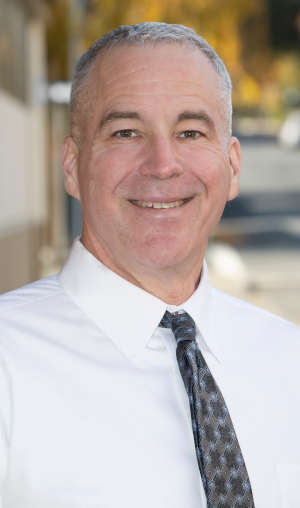
NORTH COAST, Calif. — MCHC Health Centers is pleased to announce the arrival of Dr. Matthew Swain as the new chief medical officer.
Dr. Swain, who began his new role in November, oversees MCHC’s clinical practices, including mental, dental and behavioral health.
In addition to being a member of the executive team, Dr. Swain continues to see patients, as is the case for all clinical leaders at MCHC.
Dr. Swain comes to Mendocino County from Alaska, where he spent the last two and a half years practicing family medicine on the Kenai Peninsula in the small coastal town of Homer.
Prior to that, Dr. Swain spent three years as the chief of primary care for Alaska’s Veterans Administration Healthcare System, where his duties included clinical and administrative supervision of 30 providers spread across six clinics.
Before moving to Alaska, Dr. Swain, a veteran of both the Navy and Marines, practiced medicine and held a number of leadership roles at Camp Lejeune in North Carolina.
While he is accustomed to small-town living, he admits that Northern California and Southern Alaska are very different — and that by comparison, Ukiah feels pretty big.
“In Alaska, it sometimes seemed like we had just as many moose as people,” Dr. Swain said. “I think the most we ever had in our yard at one time was six.” Then he asked, “Do you know why the stores in Homer don’t have automatic sliding doors? Because they don’t want the moose walking in. I’m not kidding.”
Although he speaks highly of his time in Alaska, he explained that he and his wife, a nurse leader, were ready for a new adventure, and after a nationwide search, they chose MCHC.
In addition to the small-town atmosphere and beautiful natural setting, Dr. Swain chose the area because the MCHC team was so dedicated to its mission of providing the highest quality healthcare for everyone in the community.
“When I first visited, everyone was smiling, engaged, and clearly invested in their jobs; people weren’t just punching timecards,” he said.
He was also drawn in by MCHC’s team-based approach to care. “Team-based care means having a small group of dedicated providers and support staff who know you and your health history,” Dr. Swain explained.
As a family physician, he has always held a holistic view of wellness, one that integrates a person’s physical and emotional health, so the way MCHC’s structure encourages collaboration was another good fit for Dr. Swain.
“Being able to walk down the hall and consult with providers across different disciplines is so much better than reading notes and going back and forth over the phone. Multiple perspectives improve care. No one person has all the answers all the time,” he said.
To be a good physician and leader, Dr. Swain’s philosophy is that you have to be genuinely interested in patients and what is going on with them — even outside of medicine. A lot of factors affect health, and lab tests rarely tell the whole story. Mood, family, and work all play a role, too.
Dr. Swain explained, “You have to be willing to get into all the little details, because the little details are often what make the difference between living a healthy, comfortable life or not. When a patient knows you care about what they care about, they’re a lot more likely to work with you to maximize their quality of life.”
As a leader, Dr. Swain says he is responsible for clearing obstacles and providing support to employees. “It’s my responsibility to take care of everyone who takes care of patients, whether they’re providers or the staff who support, whether they are answering phones or cleaning treatment rooms,” he explained.
MCHC CEO Rod Grainger said, “It is not often you find a leader that fits so well into your existing team. With his leadership philosophies, his skills and experience, as well as his personality, Matt is winning over the team and already having a positive influence on the culture of our organization. His personal mission aligns with our mission for both our employees and our patients. I am thrilled to have him on board.”
Regardless of what he is doing at any given moment, Dr. Swain says his ultimate focus is providing excellent, value-based healthcare to the local community. Sometimes that means treating patients directly; other times that means caring for the providers who care for the patients so they are free to do their jobs.
“MCHC employees are mission-driven and committed to meeting the emerging needs of patients in the wake of the COVID-19 pandemic. It’s an honor to be the chief medical officer here and I look forward to helping providers and staff grow and succeed every single day,” he said.
MCHC Health Centers includes Hillside Health Center and Dora Street Health Center in Ukiah, Little Lake Health Center in Willits, and Lakeview Health Center in Lakeport. It is a community-based and patient-directed organization that provides comprehensive primary healthcare services as well as supportive services such as education and translation that promote access to healthcare.
- Details
- Written by: Department of Insurance
The suit alleged Essilor provided kickbacks and other unlawful incentives to eye care providers that ultimately hurt consumers by unfairly driving them toward more expensive services.
Essilor manufactures, markets, and distributes optical lenses and equipment used to produce optical lenses throughout California and the nation.
“This settlement is an important victory for consumers and patients who were the targets of corporate greed,” said Commissioner Lara. “Health insurance fraud causes billions of dollars of premium losses annually, resulting in increased cost to Californians. This settlement sends a strong signal that fraudulent practices that hurt California consumers will not be tolerated and will be prosecuted to the full extent of the law. It also will restore key protections for eyecare patients so they receive care and recommendations that are in their best interest.”
This settlement brings to a close a 2016 whistleblower lawsuit brought against Essilor. After investigating the allegations, the Commissioner filed a complaint in intervention in 2021.
The lawsuit alleged that Essilor provided unlawful kickbacks to eye care providers, with an up-front payment of tens of thousands of dollars, or sometimes hundreds of thousands of dollars, in exchange for these providers’ promises to send business to Essilor for a period of anywhere between three to five years.
The providers were free to use the up-front payment from Essilor in any manner that they chose so long as they hit the volume requirements pursuant to the agreement.
Additionally, the lawsuit alleged Essilor further provided kickbacks to California eye care providers through a program called “PracticeBuilder” where providers were given cash payments for using Essilor lenses and laboratory services.
The cash payments through the PracticeBuilder program were done to reward the eye care providers who prescribed and dispensed Essilor’s more expensive lenses and coatings and to use its laboratory services.
Unlawful incentives, like those alleged in the lawsuit, are prohibited under the Insurance Frauds Prevention Act as these illegal acts can, and do, influence medical decision making. California laws are in place to protect patients and encourage medical decision makers to act solely in the best interest of their patient.
The lawsuit further alleges Essilor knowingly submitted false claims to California private payors, including insurance companies, health care savings plans, and vision benefit organizations.
The resolution is the result of a collaborative prosecution between the Commissioner and the whistleblower’s counsel, Baron & Budd, P.C., The Weiser Law Firm, and Keller Grover, LLP.
- Details
- Written by: OFFICE OF SEN. MIKE MCGUIRE

NORTH COAST, Calif. — Senate Majority Leader Mike McGuire, along with Cal Poly Humboldt President Tom Jackson Jr., College of the Redwoods President Keith Flamer and local health care and elected leaders gathered Wednesday to announce a $10 million investment in the creation of a healthcare education hub that will become the epicenter of healthcare career training on the North Coast.
McGuire secured the $10 million in this year’s state budget. The funding will transform a 30,000 square foot dusty warehouse in Arcata into a state-of-the-art learning lab focused on the development of a healthcare workforce in Northern California.
This is a historic investment that will help grow healthcare career programs at both Cal Poly Humboldt and College of the Redwoods.
“We’ve made so much progress over the last four years thanks to this innovative partnership with the College of the Redwoods and Cal Poly Humboldt. We restarted Cal Poly Humboldt’s Bachelor of Science in Nursing program, we expanded the College of the Redwoods nursing program and now we’re launching the Healthcare Education Hub, which will become the epicenter of healthcare career training for our region,” McGuire said. “This $10 million will help buildout the most modern healthcare learning lab between the Golden Gate Bridge and the Oregon border and will train thousands of healthcare professionals, from multiple career tracks, in the years to come.”
The Healthcare Education Hub will be used to train health professionals such as nurses, psychiatric technicians, EMTs, scrub technicians, respiratory therapists, radiology technicians, and more.
College of the Redwoods President Keith Flamer said, “We are very aware that our future depends on a strong partnership between College of the Redwoods, Cal Poly Humboldt, Senator McGuire and our community partners. We clearly understand that we can better help all students on the North Coast by working together rather than separately. This Healthcare Education Hub is another example of what we can do if we dream and work together.”
“We’re grateful to Sen. McGuire for his commitment to deliver on the health care needs of the North Coast. We’re looking forward to collaborating with College of the Redwoods to transform this building into a center where the next generation of health care professionals will be educated,” Cal Poly Humboldt President Tom Jackson, Jr. said. “This investment in CR is also an investment in our region – one that will help our entire healthcare system become more resilient while providing new opportunities for students and professionals.”
- Details
- Written by: California Department of Public Health
These products look similar to common candies and baked goods, like gummies, lollipops, and brownies.
As a result, these products can be attractive to children, and when consumed, can cause adverse reactions such as becoming ill, or in extreme cases, result in death. These products should not be eaten by children.
Children exposed to hemp-derived manufactured food products, such as cannabidiol, or CBD, candies, has increased and parents should be aware of the dangers.
These products may be mislabeled as hemp-derived and contain varying amounts of intoxicating cannabinoids (for example, unknown levels of THC).
The number of children who are eating these products is increasing, with higher frequencies of incidents in states where the use of these products is legal.
Children who eat these products may exhibit the following symptoms:
• Sleepiness;
• Fatigue;
• Diarrhea;
• Seizures in toddlers;
• Uncoordinated movements and decreased psychomotor activity;
• Slurred speech;
• Vomiting;
• Low blood pressure;
• Difficulty breathing;
• Sedation; and
• Coma.
Measures people can take to keep these products out of the hands of children include:
• storing products out of reach and/or in locked locations, similar to medications;
• not using these products in front of children; and
• checking your children’s candies, especially as Halloween approaches, and if anything looks suspicious, throw them out.
Additional resources on the dangers to children caused by unintentional consumption of these products and recommendations for prevention are provided by the U.S. Food and Drug Administration, the National Capital Poison Center and the American Academy of Pediatrics.
If you suspect or know that a child has consumed one of these products, immediately dial 9-1-1, or call your physician or the Poison Control Hotline (1-800-222-1222).