 How to resolve AdBlock issue?
Health
- Details
- Written by: Elizabeth Larson
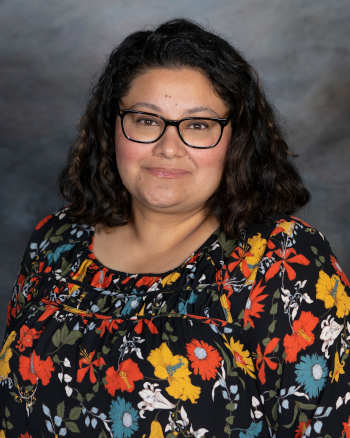
NORTH COAST, Calif. — MCHC Health Centers is pleased to expand access to care with the arrival of its newest telehealth therapist: Jani Benitez, a bilingual licensed clinical social worker.
Benitez will provide telehealth to patients in both Lake and Mendocino counties while continuing to reside in her home state of Maryland.
Having grown up as part of an immigrant family from El Salvador, Benitez understands the cultural barriers people face when seeking treatment for mental health challenges.
Not only does social stigma prevent people from reaching out for support, but the idea of trying to explain complicated, emotional issues in a second language can be daunting for many.
About a quarter of Lake and Mendocino County residents identify as Hispanic or Latino, and many of them speak Spanish as their primary language.
Benitez explained how challenging it is to have a limited vocabulary when trying to explain thoughts and feelings that would be difficult enough to discuss in one’s primary language.
“When patients know they can express complex feelings in their own language, it is so powerful,” she said.
Benitez has provided case management and advocacy as well as direct counseling and therapy.
She worked for an emergency shelter helping victims of domestic violence and in a primary care setting helping patients learn to manage their depression, anxiety, post-traumatic stress disorder, insomnia, and other behavioral health challenges.
When the pandemic hit, she was working as a behavioral health advocate rather than a therapist. She noted an enormous increase in the need for therapy and a significant lack of services in Spanish, so she began looking for an opportunity to get back into direct care. This is when she discovered the opportunity at MCHC Health Centers.
Working in a setting where she can work as part of a care team appeals to Benitez. She explained that working with a clinical team can provide a more complete picture of what is affecting a patient’s health and more tools to help the patient improve.
“If someone is having trouble sleeping because of their anxiety, this can make their diabetes symptoms worse, for example. So, the medical team can monitor a patient’s physical health and educate them on nutritional needs, while I focus on helping the patient with healthy sleep habits. There is definitely a mind-body connection. Medical and behavioral health go hand-in-hand,” she explained. She also noted the importance of working in partnership with a staff psychiatrist for patients who need psychiatric medication.
When she read about the job opportunity at MCHC, MCHC’s approach to care sounded familiar and welcome. Once she met the Behavioral Health team, and Department Director Ben Anderson, she knew she had found a good match.
She said she likes the fact that many of the providers have worked together for years, and that she will be part of a team committed to providing excellent care. She also wants to continually grow her own skills and believes she can learn from Anderson and others.
Benitez encourages anyone struggling with mental health issues to reach out for help if the issues are interfering with daily life.
“I’ve had plenty of calls where a patient says, ‘I’ve been sad. I’m not myself.’ or ‘I’m so irritable.’ or ‘I’m not well. This isn’t who I am.’ Those are all good reasons to consider therapy,” she said.
As a telehealth provider, Benitez will be able to provide care remotely. Appointments can occur via video chat or phone, which can lower barriers to care for those who cannot travel to a health center.
“This is your time to say whatever you want to say. I am here to support you, never to judge,” Benitez said. “I remind people, ‘You have survived. You are capable.’ I show them they can do this. They have been able to overcome adversities. We focus on strengths, and build good coping skills. I tell them, ‘You are more than your trauma. You deserve to live a healthy, happy life.”
- Details
- Written by: ANY POSITIVE CHANGE
Any Positive Change, a syringe exchange program that operates in Lake County, said the group wants to change the narrative and highlight the lives saved by the real first responders and the different roles played by all our intersecting community members.
Overdose deaths continue to rise and the gaps in health equity are not getting any smaller.
There is an overwhelming increase of anti-bodily autonomy legislation, criminalization, harassment, violence, and overall “not in my backyard” attitude across the state.
There has been an expressed need to heal, celebrate the lives of loved ones and, uplift and acknowledge the lives that have been saved by the community.
Syringe service programs, or SSPs, from across the state will host gatherings and memorials Thursday to bring together those who have survived overdose, those who have been affected, and those who are the most frequent first responders to overdose — community members and
peers.
Events will include memorials of those who have passed, celebration of lives saved, and recognition of how the community steps up for and saves one another.
Many look at people who use drugs, people who are experiencing being houseless, people who engage in sex work, and people who have been previously incarcerated as “non-contributing members of society.”
The groups aim to change that tired, stigmatizing narrative and shine light on how most of the time, it is the individuals being looked at in this way who are taking care of one another and truly healing the community.
Recent funding made it possible for the above mentioned “sheroes”/”theyroes”/heroes to reverse nearly 40,000 overdoses over the past three years alone.
Over 22,000 people were trained to reverse overdoses and keep people alive, with 95% of people using life-saving naloxone provided by the programs organizing the day's events.
Funding harm reduction programs has measurable, tangible public health benefits. An evaluation by National Harm Reduction Coalition, or NHRC, found that CHRI grantees offered services at over 1,500 locations across 42 counties serving approximately 75,000 Californians 10% increase since the pilot’s launch.
About harm reduction and addressing racism and other barriers: Racial and ethnic disparities in overdose were rising in California before the pandemic, but COVID-19 exacerbated these disparities leading to a doubling of overdose death among Black Californians and the largest relative increases in overdose death among Latino/x and Indigenous communities (over 60% each).
According to the Centers for Disease Control and Prevention, or CDC, unequal access to substance use disorder, or SUD, treatment and stigma contribute to the disproportionate increase in overdose death rates among Black, American Indian, and Alaskan Native people.
To read more about this, visit this CDC link.
Any Positive Change Inc. has been serving in Lake County since 1995.
Any Positive Change was authorized as a state authorized SSP on Aug. 3, 2023, after many years of existence as a county authorized program.
For additional information call 707-480-7319.
- Details
- Written by: Elizabeth Larson
Sutter Lakeside Hospital is also the only critical access hospital in the state to receive a five-star rating this year.
Introduced in 2016 to give consumers a summary of hospital performance, the CMS overall hospital star ratings are widely considered the gold standard for measuring quality and safety.
“We are so proud to be among the fraction of organizations that rank this highly for patient safety, patient experience and outcomes,” said Tim Stephens, chief administrative officer for Sutter Lakeside Hospital. “Only about 10% of hospitals received a five-star rating this year. This achievement underscores our relentless commitment to delivering exceptional health care services for the benefit of our patients and communities. This further motivates us to continue striving for excellence in all aspects of our organization.”
In 2022, Sutter Lakeside Hospital received four stars from CMS, which is higher than the national average of three stars. The CMS star rating is based on hospital performance across five categories: mortality, safety of care, readmission, patient experience and timely and effective care.
Five stars in staff responsiveness
Patients can use hospital ratings to help decide where to receive planned care, such as a surgery or birth. Patients also have a role in influencing how well a hospital is rated.
CMS uses a standardized survey to collect experience ratings from patients after they are discharged from a hospital. The survey, known as HCAHPS, stands for Hospital Consumer Assessment of Healthcare Providers and Systems, and it is designed to score topics that are most relevant to patients.
Two questions on this survey focus on staff responsiveness and here again, Sutter Lakeside Hospital earned a perfect five stars. Only 16 other hospitals in the state received the same.
“We thank our remarkable team members for their excellent work and congratulate them on this achievement,” said Pauline Orr, chief nursing executive, Sutter Lakeside Hospital. “These ratings are a direct result of their dedication to quality, responsiveness to patient feedback and embodiment of Sutter’s values of integrity, compassion and excellence.”
Staff responsiveness star ratings are based on surveys completed between October 2021 and September 2022.
The overall star rating is a composite of 46 measures that reflect a hospital’s performance between April 2018 and March 2022, depending on the measure.
Additional accolades
Sutter Lakeside Hospital proudly adds the CMS five-star accolade to an already impressive list of awards and achievements earned to-date in 2023:
• Labor and delivery: In June, Sutter Lakeside Hospital was applauded for performing C-sections only when medically necessary. Sutter Lakeside Hospital has maintained a C-section rate that is at or below the state’s goal for the past seven consecutive years, earning the hospital a Quality & Sustainability Award from the California Maternal Quality Care Collaborative.
• Healthcare-associated Infections: In May, Sutter Lakeside Hospital was recognized for its prudent use of antimicrobials (including antibiotics) to treat patients while still reducing microbial resistance and decreasing the spread of infections in healthcare settings. Sutter Lakeside Hospital reached silver level status on the Antimicrobial Stewardship Honor Roll, published by the California Department of Public Health.
• Patient safety: In March, Sutter Lakeside Hospital was included on the Patient Safety Honor Roll published by Cal Hospital Compare. Only 24% of California’s acute care hospitals had a high enough safety profile, which considers safety events, sepsis management and more, to make the list this year.
• Reputation: In February, Sutter Lakeside Hospital earned gold for Best Hospital and Best Emergency Care from Bicoastal Media readers in the annual Best of Lake & Mendocino 2023 survey. Sutter Lakeside Hospital’s clinics also earned silver in the Physical Therapy and Walk-In Clinic / Urgent Care categories.
• Critical care: In January it was announced that Sutter Lakeside Hospital had earned five stars from Healthgrades in the treatment of heart failure, sepsis and respiratory failure. This five-star rating places Sutter Lakeside among the top 15% of hospitals nationwide for the quality of care provided when treating these critical conditions.
Sutter Lakeside Hospital has also been named a Blue Distinction Center for maternity care from the Blue Cross Blue Shield Association and a LGBTQ+ Healthcare Equality Leader from the Human Rights Campaign. These multi-year recognitions must be reapplied for — and earned — on a regular basis.
Exceptional emergency care
As the only trauma center and certified stroke center in Lake County, Sutter Lakeside excels in emergency medical services. CMS data revealed that 76% of patients who came to Sutter Lakeside’s emergency department with stroke symptoms received brain scan results within 45 minutes of their arrival. This is better than the state average of 72% and the national average of 69%.
“Beyond the numbers are lives that have been impacted by our team. This team serves with an unparalleled standard of excellence and a mission to enhance the well-being of each person we care for because each life matters,” said Dr. Christina Lasich, chief medical executive for Sutter Lakeside Hospital.
Sutter Lakeside Hospital is a member of the Sutter Health integrated, not-for-profit system. Founded in 1945, the hospital is located at 5176 Hill Rd E, Lakeport, California. To provide patients with greater access to physicians, Sutter Lakeside Hospital also operates two outpatient care centers: Sutter Lakeside Medical Practice (967 Parallel Drive, Suite C, Lakeport) and Sutter Lakeside Community Clinic (5196 Hill Road East, Lakeport).
- Details
- Written by: Elizabeth Larson
The bill is meant to ensure tax-status parity between the National Health Service Corps, or NHSC, and Nurse Corps programs by amending the Internal Revenue Code to create parity in tax treatment for these two scholarship and loan repayment systems.
Senators Jeff Merkley (OR), Roger Wicker (MS), Patty Murray (WA) and John Boozman (AR) have introduced companion legislation in the Senate.
“Nurses are the front line of our health care system. We should do everything we can to encourage people to pursue a career in this indispensable field — a field currently facing severe shortage,” said Congressman Thompson. “This commonsense bill eliminates a totally unnecessary tax penalty on people entering the nursing profession, and I look forward to working with my colleagues to advance the bill this Congress.”
“Nurses are dedicated, diligent caretakers in our communities, and we owe it to them to prioritize their ability to obtain financial benefits promised to them by Health Resources Services Administration (HRSA) programs,” said Congressman Fitzpatrick. “Our bipartisan, bicameral Nurse Corps Tax Parity Act fixes an unnecessary disparity between two widely-utilized scholarship and loan repayment programs, and I am proud to lead this effort to support nurses alongside my colleagues.”
“Nurse Corps members working in underserved communities provide life-saving care to people experiencing some of the greatest health disparities. They deserve the same benefits offered to the National Health Service Corps members they work alongside each day,” said Congressman Higgins. “I am proud to join my colleagues in introducing this bipartisan legislation expanding income tax exemptions to Nurse Corps scholarship and loan repayment programs. It is a commonsense bill that will create greater income equity among the frontline workers serving our most vulnerable communities.
“It’s our duty to explore every avenue to address the healthcare workforce shortage facing our nation,” said Congresswoman Kiggans, vice chair of the Congressional Nursing Caucus. “As a geriatric nurse practitioner, I’m well aware of the level of dedication it takes to work in healthcare. Discouraging aspiring professionals who are willing to step up and serve their communities as healthcare providers is the last thing we should do. I’m proud to join my colleagues to introduce this bipartisan, bicameral bill which will tackle these barriers and improve patient care across the country!”
“As the husband of a nurse, I know frontline nurses are the backbone of communities, helping patients and families through both joyous and challenging times,” said Sen. Merkley. “Nurse Corps members build healthier communities in the areas of greatest need, and it is terrible public policy and frankly offensive that nurses are singled out for extra taxation as compared to other health professionals — it’s long past time to put an end to this.”
The bill is endorsed by the American Nurses Association (ANA), the American Federation of Teachers (AFT), the American Association of Colleges of Nursing (AACN), the American Association of Nurse Anesthesiology (AANA), the American Association of Nurse Practitioners (AANP), the Association of Public Health Nurses (APHN), the Association of Rehabilitation Nurses (ARN), American Federation of State, County and Municipal Employees (AFSCME), the Commissioned Officers Association of the USPHS (COA), Friends of the National Institute of Nursing Research (FNINR), and the Oncology Nursing Society (ONS).
Read the text of the bill here.
Thompson represents California’s Fourth Congressional District, which includes all or part of Lake, Napa, Solano, Sonoma and Yolo counties.