 How to resolve AdBlock issue?
Health
- Details
- Written by: Elizabeth Larson
E Center WIC believes that good nutrition is the foundation for good health and strives to provide families with the inspiration and skills needed to succeed at being healthy, active, and creating positive habits.
WIC offers nutrition education and counseling, provides nutritious foods, and makes referrals to healthcare and other community resources as needed.
“Throughout the process of becoming an approved Blue Zones Worksite we have found opportunities to focus efforts inward to our staff,” says Kim Schott, program director. “We recognize that in order to invest in others, we must invest in ourselves. By implementing small changes on a daily basis, we are noticing improved morale. We know this can only lead to improved service to our community.”
To become Blue Zones Project Approved, the organization worked with the local Blue Zones Project team to identify best practices for health and well-being they were already implementing.
Additionally, they identified new practices to embrace, such as mapping two different walking routes for staff to utilize during work breaks, creating a health brand to support staff and clients, and forming a Well Being Committee to discuss Blue Zones Project progress at each staff meeting.
On March 29, the local Blue Zones Project team and Nick Buettner, vice president of community engagement for Blue Zones, celebrated the approval process with the E Center WIC team.
“E Center WIC is a true community leader. They’ve built off the good work they are already doing for our community to ensure that they make healthy choices easier and more accessible for their staff, too. As the first approved Blue Zones Project – Lake County Worksite, they are leading the way for our county to become a fully certified Blue Zones Project in July 2026,” said Blue Zones Project – Lake County Executive Director Jamey Gill.
Brought to Lake County through an innovative sponsorship by Adventist Health and Blue Zones, LLC, Blue Zones Project is a community-by-community well-being improvement initiative designed to enable community members to live longer, happier lives with lower rates of chronic diseases and a higher quality of life.
To learn more about becoming a Blue Zones Project Approved™ restaurant, organization, or worksite, contact the Blue Zones Project team in Lake County at
- Details
- Written by: Elizabeth Larson
The group will meet from 1 to 3 p.m. at the Middletown Library, 21256 Washington St.
As we age, we may need to adjust to changes in our eyesight.
Vision Rehabilitation Educator Patricia Jefferson of the Earle Baum Center of the Blind will give group members tools to help with these changes.
Attendees will have a chance to share their concerns.
This event is funded through a Lake County Behavioral Health MHSA Mini Grant Program.
- Details
- Written by: Elizabeth Larson
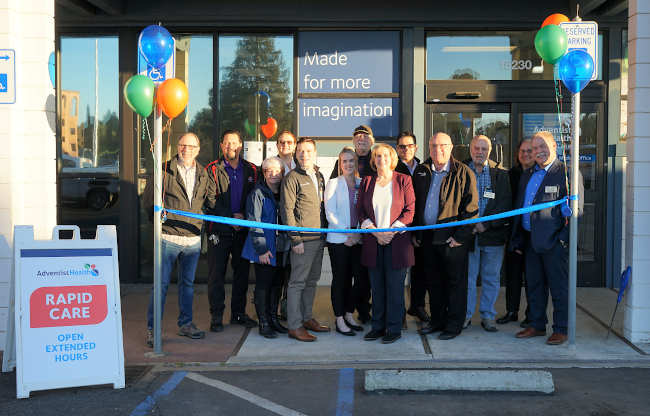
CLEARLAKE, Calif. — Adventist Health Clear Lake Hospital announced the opening of its new Rapid Care clinic on Jan. 9.
Located at 15230 Lakeshore Drive, Suite 101 in Clearlake, hours of operation are 7:30 a.m. to 6:30 p.m. on weekdays.
Rapid Care will provide walk-in care for minor illnesses and injuries, treating patients 60 days and older.
Services include treatment for:
• Allergic reactions;
• Animal and bug bites;
• Body and muscle aches;
• Bronchitis, sore throat, respiratory infections;
• Cold and flu symptoms;
• Coughing and wheezing;
• Cuts and lacerations;
• Diarrhea;
• Ear/Eye infections;
• Fever;
• Falls and sprains;
• Headaches;
• Minor cuts and burns;
• Minor trauma;
• Pain and swelling in extremities;
• Rashes and itching;
• Sinus infections;
• Urinary tract infections;
• Onsite testing for strep, pregnancy, blood sugar, urinalysis.
“Adventist Health is excited and proud to be the first to establish Rapid Care services for our community,” said Colleen Assavapisitkul, president of Adventist Health Clear Lake. “We heard the voices of our neighbors asking for timely access to care when needed most.”
Patients requiring immediate medical care can visit the Rapid Care clinic without an appointment.
Staffed with quality healthcare providers with extensive experience, the Adventist Health Clear Lake Rapid Care team can assess and treat minor illnesses, injuries, and emergencies.
With the addition of Rapid Care services in Lake County, immediate medical care has never been more convenient.
Whatever the medical need, patients have direct access to exceptional care through Adventist Health Clear Lake’s emergency department, clinics, and rapid care services.
For more information about Adventist Health Clear Lake’s Rapid Care, visit www.AdventistHealthClearLake.org/ClearLakeRapidCare.
- Details
- Written by: Covered California
Coverage provides access to quality care and protection from unforeseen medical costs, and Covered California is where people can get financial help to lower the cost of their health insurance.
Californians need to sign up before the end of the year in order to have their coverage be effective on Jan. 1.
“Everyone deserves the protection and peace of mind that come with having high-quality, affordable health insurance, and Covered California is urging everyone who needs coverage to check out their options and sign up before the end of the year,” said Jessica Altman, executive director of Covered California. “Once again — whether it is COVID, the flu, RSV or other illnesses — access to health care coverage is essential for every Californian to stay healthy and safe.”
What you need to know
Since the start of the pandemic, California’s health officials have been concerned that COVID-19 and influenza cases may peak at the same time. In addition to those two illnesses, California is also seeing a rise in the number of Respiratory Syncytial Virus (RSV) cases, which can hit younger children especially hard.
“We have seen dramatic increases in COVID-19, the flu and RSV, reminding us once again of the importance of our health and wellbeing,” said Dr. Mark Ghaly, California Health and Human Services secretary and Covered California board chair. “Californians have just a few days left to sign up for a comprehensive health care coverage plan through Covered California that will protect themselves and their family starting on Jan. 1.”
Californians who sign up by Dec. 31 and pay their first bill will have their health insurance take effect on Jan. 1. Covered California’s open-enrollment period runs through Jan. 31, but coverage will not begin until Feb. 1 if a consumer signs up in January.
Significant savings for more than one million uninsured Californians
An estimated one million Californians do not have health insurance and are eligible for financial help to bring the cost of coverage within reach. Of that group, at least 55 percent — or about 568,000 people — could get quality coverage through Covered California or Medi-Cal at no cost.
Right now, 90% of Covered California’s enrollees qualify for the increased financial help available through the Inflation Reduction Act. As a result, two-thirds of Covered California’s consumers are eligible for comprehensive health insurance at a cost of $10 or less per month.
“Regardless of your income, if you need health insurance or even if you’re covered directly through a health insurance company, come to Covered California to see if you can get financial help to make your coverage more affordable,” Altman said.
Under the expanded financial help now available, a 21-year-old in Los Angeles who earns $27,000 a year could get a quality Silver 87 plan — which features low copays and deductibles — for $36 a month. Or they could get a Bronze plan at no cost.
A couple in Oakland earning $45,775 a year could save nearly $700 a month off the cost of their Silver 73 plan, or get a comprehensive Bronze plan at no cost.
Finally, a Sacramento couple earning $83,250 a year could save more than $16,000 a year on quality coverage for themselves and their two children, or they could get a Bronze plan for $67 per month.
New opportunity for 400,000 Californians to enroll in more-affordable coverage
A new rule that went into effect just this month will help 391,000 Californians get access to more-affordable coverage if they have a family member with an offer of employer-sponsored insurance, or ESI.
Previously, these families were ineligible for federal subsidies, and they were forced to either spend a significant amount of their income on health insurance premiums or go uninsured. Now they are eligible for financial help through Covered California that will lower the cost of their coverage.
The example below depicts a family of four with an annual household income of $50,000 who pays $800 a month for their coverage, or nearly 20 percent of their income.
The new rule takes the affordability threshold (9.12 percent in 2023), which had previously been applied only to the employee, and now extends it to the entire family. In this case, while the cost of the employee’s coverage is below the threshold, the cost to cover the family is no longer considered affordable. As a result, the employee’s spouse and children are now eligible for financial help and would save $425 a month — or $5,100 a year — by enrolling in a Covered California plan.
“The new rule means that families that were either forced to spend a significant amount of their income to be a part of their loved one’s health plan, or go uninsured, can now get more-affordable coverage through Covered California,” Altman said.
In order to determine whether Californians can benefit from the new rule, Covered California unveiled a new affordability tool and worksheet earlier this month, which can help people see if they or their family members qualify for financial help. The affordability tool and worksheet are also available in Spanish.
In addition to the tool, consumers can also contact an agent or certified enroller, visit our support page or use Covered California’s Help on Demand service to have an enroller contact them within 15 minutes.