 How to resolve AdBlock issue?
News
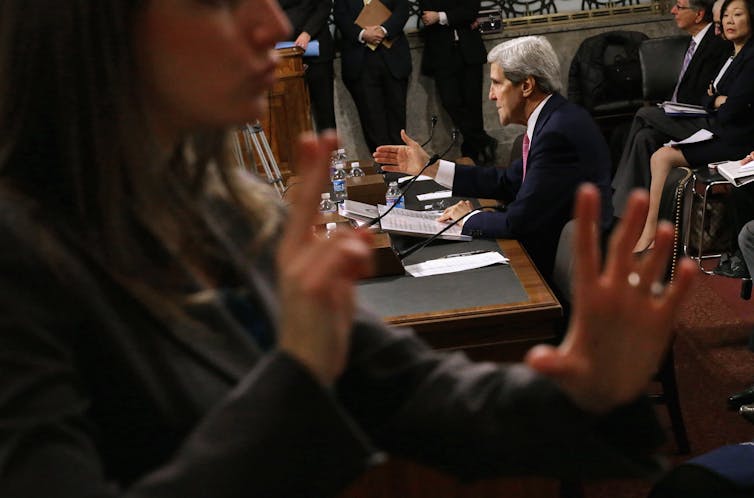
The Americans with Disabilities Act is 30 years old.
For young people who have grown up with the ADA, the results of this landmark legislation are part of everyday life – sometimes in ways they may not even realize.
I was there at the beginning. As a young deaf man in 1990, I attended the Rose Garden ADA signing ceremony. I clearly recall the sun was shining brilliantly and the joy among leaders in the disability community who had long worked to bring about this civil rights legislation.
In the decades since, I have witnessed the ADA’s profound impact as an educator of deaf and hard-of-hearing students for this population and the U.S. as a whole.
A decades-long journey
Four senators who were major supporters of the ADA in the 1980s had personal connections to the issue. Edward Kennedy of Massachusetts had an intellectually disabled sister. Iowa’s Tom Harkin had a brother who was deaf. Bob Dole of Kansas had been disabled in World War II. Connecticut’s Lowell Weicker had a son with Down syndrome. A seminal moment at the passage of the ADA was Harkin’s address to Congress in sign language – the first time the body had been addressed this way.
The ADA prohibits discrimination against persons with disabilities in employment, state and local government services, businesses that are public accommodations or commercial facilities and in transportation.
In many ways, I feel the most important changes brought about by the legislation relate to making it easier for deaf people to communicate. In his book “A Phone of Our Own: The Deaf Insurrection Against Ma Bell,” historian Harry Lang described the long struggle in the deaf community to gain access to the telephone. The ADA provided a huge leap forward by requiring the establishment of nationwide telecommunications relay services. This system provided telephone access 24/7 to deaf citizens who previously had relied on volunteer services with limited hours. No longer would deaf individuals be excluded from employment opportunities requiring the use of the phone. And it enabled deaf people to participate in the mainstream of the American life by being free to call for pizza or to wish a loved one happy birthday.
A more entertaining life
Title III of the ADA required that public facilities, such as hospitals, bars, shopping centers and museums – but, importantly, not movie theaters – provide access to verbal information on televisions, films or slide shows.
Stiff opposition from the motion picture and cable industry prevented the ADA from including a requirement for closed captioning in films and on cable television. However, as a concession, Congress did include a requirement for all federally funded public service announcements to be captioned.
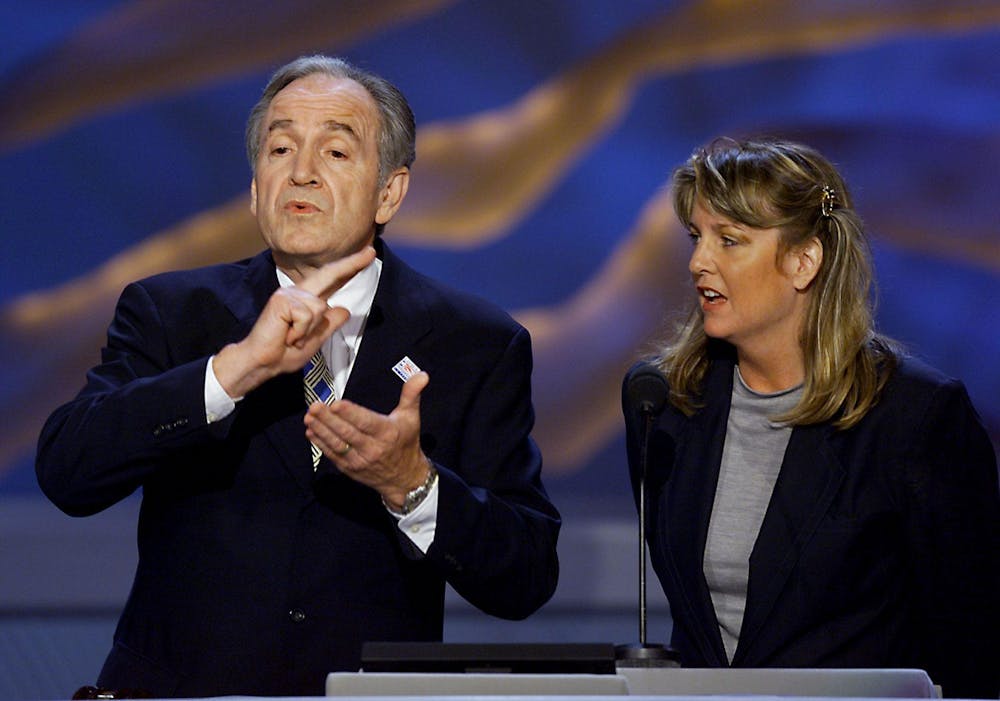
The historian Lang examines the history of access to films and television through captioning. He describes how the ADA was a milestone greatly affecting efforts to make educational and entertainment films accessible to deaf persons.
Creating a ‘deaf middle class’
ADA and Section 504, which guarantees accessibility and accommodations in public schools, provided educational opportunities for many deaf and hard-of-hearing students to attend college. This helped create, as educators and authors Carol Padden and Tom Humphries referred to it, a deaf middle class of community leaders and an ever-increasing number of deaf lawyers, doctors and PhDs.
While great strides have been made, people with disabilities still are twice as likely to be unemployed as those without disabilities. The employment gap between deaf and hearing people in the United States is significant. Only 53.3% of deaf people ages 25-64 were employed in 2017, compared to 75.8% of hearing people an employment gap of 22.5 percent. In round numbers, nearly 10 million Americans are hard of hearing and close to 1 million are functionally deaf.
Deaf college graduates fare much better. The college I lead, Rochester Institute of Technology’s National Technical Institute for the Deaf, puts a high emphasis on building relationships with employers. Historically, 95% of our graduates find employment.
New pandemic challenges
As the world navigates the COVID-19 pandemic, new challenges are arising. Masks make communication difficult for those who rely on speechreading, endless Zoom meetings bring more fatigue for those who rely on visual communication, and access to health care and emergency information can be spotty.
But there are bright spots when one considers progress since passage of the ADA. Recognition of American Sign Language and the importance of ASL interpreters for access has grown tremendously over the past 30 years as deaf and hard-of-hearing citizens have sought greater inclusion in the mainsteam of American society. Captioning is used by more than 60% of students with disabilities, and 50% of those with no reported disabilities. Prior to the current employment crisis, the Bureau of Labor Statistics predicted increased demand for sign language interpreters. Automatic speech recognition apps allow for increased interaction between deaf and hearing colleagues, classmates and friends. These advancements benefit not only the students on my campus, but at other campuses with deaf populations such as Gallaudet University and California State University, Northridge.
[Deep knowledge, daily. Sign up for The Conversation’s newsletter.]
The ADA proclaimed accessibility as a civil right. Just as ADA-sanctioned accommodations such as sidewalk ramps originally designed to benefit those with mobility issues was a positive for families with strollers and bicycles, closed captioning designed as a service for deaf and hard-of-hearing individuals now is ubiquitous on televisions, computers and smart phones in hearing households as well.
The deaf community has historically been able to work around challenges and find solutions to communication barriers. This time in our history is no different. Innovative thinkers continually find ways to advocate, modify and make current and emerging technologies work for everyone.
Gerard Buckley, President of the National Technical Institute for the Deaf, Rochester Institute of Technology
This article is republished from The Conversation under a Creative Commons license. Read the original article.
Dogs available for adoption this week include mixes of Anatolian Shepherd, Belgian Malinois, chow chow, pit bull and shepherd.
Dogs that are adopted from Lake County Animal Care and Control are either neutered or spayed, microchipped and, if old enough, given a rabies shot and county license before being released to their new owner. License fees do not apply to residents of the cities of Lakeport or Clearlake.
The following dogs at the Lake County Animal Care and Control shelter have been cleared for adoption (additional dogs on the animal control Web site not listed are still “on hold”).
Call Lake County Animal Care and Control at 707-263-0278 or visit the shelter online at http://www.co.lake.ca.us/Government/Directory/Animal_Care_And_Control.htm for information on visiting or adopting.

Male Anatolian Shepherd
This male Anatolian Shepherd has a medium-length black coat with white markings.
He has been neutered.
He is in kennel No. 13, ID No. 13803.

Male pit bull terrier
This male pit bull terrier has a black coat.
He is in kennel No. 18, ID No. 13772.

Shepherd mix
This female shepherd mix has a brindle and white coat.
She is in kennel No. 22, ID No. 13776.

‘Mugsy’
“Mugsy” is a male pit bull terrier with a short tan and white coat.
He is in kennel No. 26, ID No. 13797.

Female Belgian Malinois
This female Belgian Malinois Shepherd has a short black and tan coat.
She is in kennel No. 31, ID No. 13793.

Male chow chow
This male chow chow has a medium-length black coat.
He is in kennel No. 33, ID No. 13795.
Email Elizabeth Larson at
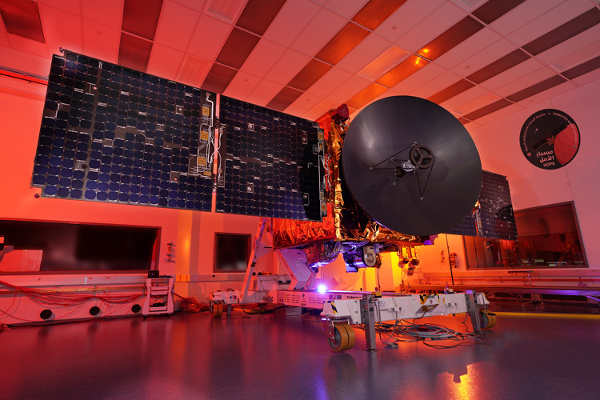
At 2:58 p.m. PDT July 19, the United Arab Emirates successfully launched an interplanetary probe — the first by any country in the Arab world — thanks, in part, to science collaboration, training and instrument components provided by the University of California, Berkeley’s Space Sciences Laboratory.
The Emirates Mars Mission’s Hope Probe is scheduled to arrive at Mars in February 2021 and spend two years orbiting the “red planet,” providing an unprecedented global view of the Martian atmosphere. It will also give scientists greater insight into how our Earth may have evolved and enable greatly improved weather forecasting to help support future human missions to Mars.
The mission is led by Emirati engineers and scientists, with significant sharing of expertise and technical knowledge by colleagues at UC Berkeley and three other U.S. institutions — the University of Colorado at Boulder, Arizona State University and Northern Arizona University — jump-starting an interplanetary space program in a nation that, until now, had produced only Earth observation satellites. The Hope Probe was launched from a site on Tanegashima, an island in Japan, aboard a Japanese H-IIA rocket.
An hour and a half after launch, the solar panels deployed and the probe was officially on its way to Mars. “The launch has been a success,” said a relieved Robert Lillis, SSL associate director for planetary science and the UC Berkeley lead for the Mars mission, who monitored the launch from California.
In the five years before launch, the Space Sciences Laboratory, or SSL, hosted 10 undergraduate students — five women and five men — for a summer research experience in space science in which they analyzed data and simulations of the Martian upper atmosphere.
The SSL also provided mentorship in master’s degree-level research via weekly Skype meetings with Emirati engineers as part of the mission’s Science Apprentices Program.
The SSL scientists also visited United Arab Emirates, or UAE, universities and girls’ and boys’ schools, many in rural/desert regions, to encourage interest in science.
“With the Mars mission, the Emirates is trying to inspire young people to go into technical fields, as part of a larger vision for a post-oil world,” said Lillis. “The government has invested heavily in education, especially women's education, to lay the groundwork for a future in which entrepreneurs, inventors and ideas — not oil — are funding their economy.”
Overall, about one-third of the 150 Emirati scientists and engineers on the mission team are women, while women make up about 80 percent of the science team, according to a recent article in the New York Times. The team’s average age is 27.
“Working on this unique international partnership has been such a rewarding experience,” Lillis said. “I’ve witnessed firsthand the drive, professionalism, curiosity and ambition of the UAE team; not only their excellent engineers, but the several science apprentices and summer undergraduate interns we have had the privilege of working with at Berkeley these last five summers.”
An eye-opening experience
One of the students Lillis and his SSL team worked with was Maryam Al Hosani, now a senior majoring in computer engineering in the UAE at the American University of Sharjah, in Abu Dhabi.
"My experience as part of the REU program at UC Berkeley was insightful, educational and, most importantly, memorable,” she wrote in an email. “I learnt so much about the many tools and databases used in studying the Martian atmosphere and the data collection techniques used in planetary science. One of the many things I enjoyed in California were the conversations I had with the people I met there. The diversity in culture, beliefs and ideologies was truly eye-opening."
Al Hosani’s work at SSL contributed to the Emirates Mars Ultraviolet Spectrometer, or EMUS, one of three instruments aboard the Hope Probe. It was a collaboration between SSL and the Laboratory for Atmospheric and Space Physics at the University of Colorado.
"The UAE team set out to inspire Emirati youth,” said Sasha Courtade, an SSL systems engineer. “In doing so, they’ve also inspired those of us who had the pleasure of collaborating with them. The team started with an ambitious goal and aggressive timeline to launch and remained optimistic and dedicated every step of the way."
During Khalid Al Awar’s summer as a student doing research at SSL, he analyzed data from two instruments onboard the MAVEN space probe currently orbiting Mars with instruments built at SSL. The MAVEN, like the Hope Probe, is helping scientists understand the evolution of the thin atmosphere of Mars, which may once have had a thicker atmosphere and perhaps flowing water.
“The efforts serve a more holistic purpose of understanding why gas is escaping the Mars atmosphere and how this has affected its climate evolution,” Al Awar wrote in an email. “Beyond desk work, I got to observe how space is a collaborative journey between scientists and engineers from different cultures and backgrounds, all aimed towards the betterment of mankind and unlocking new possibilities. It became very clear to me that space agencies from all over the world collaborate with each other and share more openly than any other field I have seen.”
Al Awar, who graduated in 2017 from Khalifa University, is currently working as business development lead at Astrolabs, a capability building academy and network of collaborative coworking communities in the UAE and Saudi Arabia. Other summer interns came from United Arab Emirates University; American University of Sharjah; Khalifa University in Abu Dhabi; and the Abu Dhabi campuses of both Paris-Sorbonne University and New York University (NYU).
‘Hope’ for Arab world
The spacecraft, which is about the size of a small car with two solar panels, was built and tested at the Laboratory for Atmospheric and Space Physics at the University of Colorado, Boulder, in collaboration with Mohammed bin Rashid Space Centre, or MBRSC, in Dubai, one of the UAE’s seven emirates.
The mission, which cost several hundred million dollars, was named Hope (“al amal” in Arabic) to send a message of optimism to millions of young Arabs, according to Sheikh Mohammed bin Rashid Al Maktoum, the ruler of the Emirate of Dubai for whom MBRSC is named.
The EMUS instrument (codeveloped by SSL) will provide a unique view of the upper layers of the Martian atmosphere, Lillis said. These upper layers are known as the thermosphere — the region between 100 and 200 kilometers’ altitude, where particles still collide frequently with each other — and the exosphere, a region above 200 kilometers where collisions are rare and particles can escape Mars’ gravity.
The EMUS will track how matter and energy move within and between these regions, monitoring key gases like oxygen, hydrogen and carbon monoxide.
Such data are necessary to understand how the connections within and between the upper and lower atmospheres drive atmospheric escape. This escape has helped to shape Mars’ evolution from a warm, episodically wet world in the ancient past to the cold, dry planet we see today. Unique to Hope is its orbit, which enables near-complete daily and geographic coverage, providing a weather-satellite style view of all layers of the Martian atmosphere from the surface to space.
In addition to EMUS, the Hope orbiter includes a multi-band camera, the Emirates eXploration Imager, or EXI, and an infrared spectrometer, the Emirates Mars Infrared Spectrometer (EMIRS).
The EXI is capable of taking high resolution images and will measure properties of water, ice, dust, aerosols and ozone in Mars’ atmosphere. It was developed at the University of Colorado, Boulder, in collaboration with MBRSC.
The EMIRS will provide a unique view of the lower and middle atmosphere of the planet, measuring the distribution of dust particles and ice clouds, while tracking the movement of water vapor and heat through the atmosphere. It was developed at Arizona State University, in collaboration with MBRSC.
Robert Sanders writes for the UC Berkeley News Center.
Just last week alone, the California Employment Development Department paid $4.1 billion in benefits, about $3.5 billion more than the highest week of the Great Recession – $542 million in February 2010.
In addition, the EDD has processed a total of 8.7 million claims in the last four and a half months between the regular Unemployment Insurance program, extensions, and the separate Pandemic Unemployment Assistance, or PUA, program – more than the entire highest year of the recession (8.1 million in 2010).
Status of unemployment benefits as $600 federal stimulus payments end
The extra $600 federal stimulus payments are known as Pandemic Additional Compensation, or PAC, in California.
Unless the federal government takes action to extend the PAC payments that the EDD automatically adds to regular Unemployment Insurance, or UI, plus extension and PUA benefits, the extra boost on benefits will no longer be available for any weeks of unemployment or reduced hours for weeks from July 26 on.
Weeks of unemployment up through July 25 will still be eligible for the extra $600, even if the associated UI, extension or PUA benefits for weeks between March 29 and July 25 are processed later.
• Maximum weekly benefit amounts: Claimants certifying for benefits for next week and beyond will only receive the maximum weekly benefit amount they qualify for on their regular UI, extension, or PUA claim. Those weekly amounts range from $40 - $450 a week for regular UI and from $167 - $450 for PUA, depending on income earned previously.
• Extension benefits for regular UI: If an individual runs out of their up to 26 weeks of benefits available on their regular UI claim, another up to 13 weeks of benefits is available on the Pandemic Emergency Unemployment Compensation, or PEUC, extension provided by the federal government until the end of the year. If an individual runs out of PEUC benefits, up to another 20 weeks of benefits are available on a FED-ED extension if the individual meets eligibility requirements. The EDD is sweeping the system daily to identify these individuals and proactively file an extension claim where possible. Claimants will be sent notices in the mail as well as provided updates on their UI Online accounts. See Top FAQs of the Week for more information on the extensions and how EDD is proactively assisting claimants.
• Text message alerts: To help keep customers informed on when either a PEUC extension or a FED-ED extension has been filed on their behalf, the EDD is also sending them SMS text messages. Since mid-May, the EDD has sent more than 6 million text messages to our customers. Texts are also sent for other developments including when a claim is processed in our system, when a first benefit payment is issued, when documents are required to verify a
claimant’s identity, and when an identity has been verified.
• Extended Pandemic Unemployment Assistance benefits: State legislation (AB 103) helped maximize federal unemployment support available through this pandemic, allowing another seven weeks of benefits to be added to PUA for eligible self-employed individuals and others who don’t qualify for a regular UI claim. The EDD is working to complete programming needed to increase the maximum PUA benefits available from 39 weeks to up to 46 weeks until the PUA program sunsets at the end of the year. Since May 20, the EDD has been increasing an initial minimum PUA benefit amount of $167 if there is enough in reported 2019 income to support that increase. Some claims take more time because they require complex recomputations, and the EDD has redirected additional staff to help complete these re-computations required to increase the PUA benefit amounts as quickly as possible.
School closures and eligibility for UI benefits
Working parents or guardians may be eligible for unemployment benefits if their child’s school is shut down or offering distance learning only and parents have to miss work to care for their child.
These individuals can apply for UI benefits through UI Online and our EDD representatives will determine eligibility on a case-by-case basis by potentially scheduling a phone interview for more information if needed.
• If a parent or guardian quits a job, the EDD is required by law to determine if the individual had “good cause” for doing so before determining potential eligibility for UI benefits. Generally, an individual must continue to remain able and available to work in order to be eligible for benefit payments. But individuals could qualify for benefits if, for example, there are no other options for child care available.
• If an employer has temporarily allowed a parent or guardian to work less than full-time hours due to a child care situation, those individuals could be considered eligible for reduced unemployment benefits. That would all depend on the amount of the individual’s weekly earnings and whether he or she meets all other eligibility requirements.
The first $25 or 25 percent of wages, whichever is the greater amount, is not counted as wages earned and will not be reduced from a UI weekly benefit amount. For example, if the individual earned $100 in a week, the Department would not count $25 as wages and would only deduct $75 from the weekly benefit amount. For someone who has a weekly benefit amount of $450, the individual would be paid a reduced amount of $375.
• In the event that an individual is not eligible for regular UI benefits and they have primary caregiving responsibility for a child who is unable to attend school as a direct result of COVID-19, Pandemic Unemployment Assistance benefits may be available.
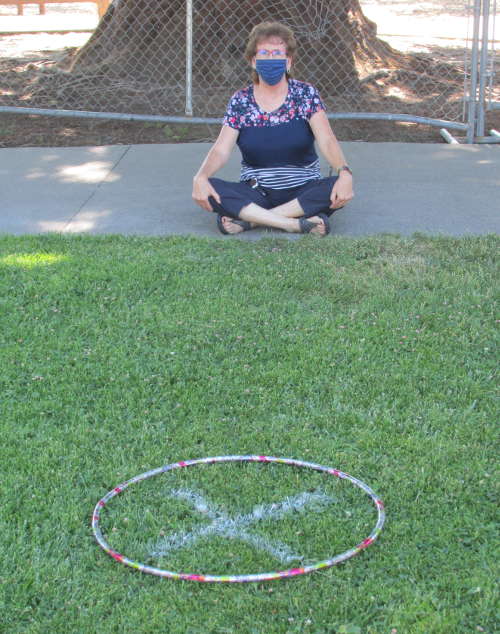
LAKEPORT, Calif. – The Lakeport Library has moved its popular storytimes for children to Library Park.
Barbara Green presents Lake County Library Storytime in the Park in Lakeport’s Library Park every summer.
Due to the coronavirus, this year the program will look a little different. Instead of crafts and games, storytime participants will sit 6 feet apart outside with masks on while listening to a few stories and participating in gentle movement exercises.
The following rules and procedures have been established to make storytime as safe as possible.
Something new for this year is that registration is required for storytime programs Wednesday through Friday morning. You must register and receive a confirmation before being allowed to attend storytime.
Registration is open on the library website. Just click “Events” and then “Storytime” for the link to the registration form. Contact Barbara at the Lakeport Library for more information about how to register. Her number is 707-263-8817 extension 17102.
Only 10 participant families are allowed at each program. Those showing up without registration will not be allowed to participate. Registration is first-come, first-served.
After registration participants will be assigned to one of three groups for the rest of the summer. Participants cannot switch groups later to avoid mixing.
In accordance with the California Department of Health guidance for the use of face coverings, masks are required for all adults and children over the age of 2. Parental guardians and caregivers must remain with their children during the program.
Any family member or child that is experiencing symptoms of illness or COVID-19 should not participate in storytime and is not allowed to attend. All participants are asked to perform a symptoms self-check before attending.
Families will be asked to practice social distancing of six feet at all times while at storytime. Seating will be marked and assigned. The library is asking families to bring their own blankets or towels to sit on the grass.
When arriving and leaving storytime participants will be required to remain in the designated area, while social distancing, before being directed to their assigned seating area or leaving.
While there will be no crafts at storytime, Grab & Go crafts to be used at home may be provided at the conclusion of the program.
The library is taking these precautions to make the program as safe as possible. At this point, the best way to prevent infection is to minimize potential exposure to the virus that causes it. Everyone is susceptible to contracting COVID-19 upon exposure. There is currently no vaccine or cure. The safest course of action is to remain sheltered in place at home.
Bringing your children to storytime is the perfect way to introduce them to the magic of books and to help them develop a love of reading. Children who love reading and develop strong literacy skills by grade three are ready to learn for the rest of their lives. If you can’t make it to Storytime in the Park, there are also recorded video Storytimes available on the library website and Grab & Go crafts available at your local branch.
Jan Cook is a library technician for the Lake County Library.
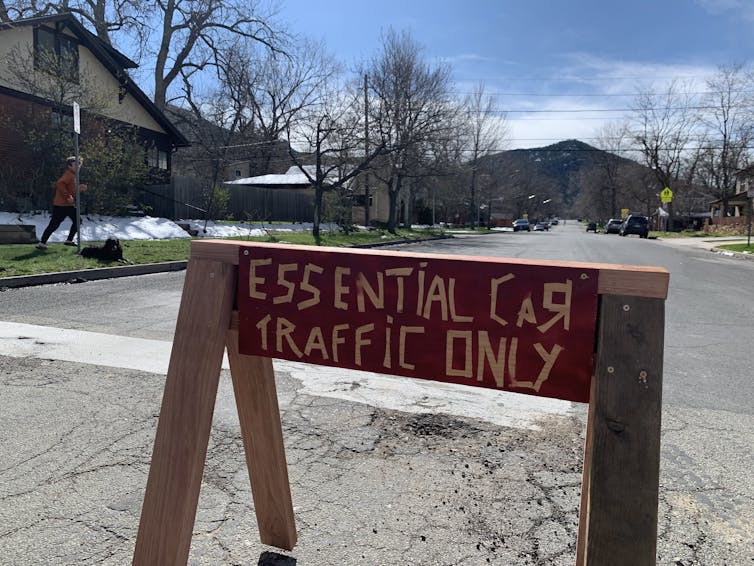
Sticking closer to home because of COVID-19 has shown many people what cities can be like with less traffic, noise, congestion and pollution. Roads and parking lots devoted to cars take up a lot of land. For example, in Phoenix, Los Angeles and New York City these spaces account for over one-third of each city’s total area.
When stay-at-home orders went into effect in many parts of the U.S. in March, streets and parking lots went dormant seemingly overnight. Within days, municipalities across the U.S. started shifting these spaces to other uses that better suit people.
As a professor of environmental design and transport, I’ve worked for decades to unravel the many factors that keep people reliant on cars, SUVs and trucks. Weather, time constraints, children – there are many reasons that prevent people from using transportation modes like bicycles. Yet with a simple first step – starting to reconfigure city streets – meaningful change can begin to break down traditional transportation barriers and usher in a new culture of getting around town by means other than cars.
The dangerous, expensive automobile
In large U.S. cities, nearly half of all car trips are less than four miles. Using cars to travel such short distances has many costs.
For example, consider traffic fatalities. Two pedestrians or cyclists die every hour on U.S. city streets, a national trend that’s been worsening in recent years, even though cycling and walking rates are steady or declining. Pollution from cars contributes to climate change and worsens air quality. Designing cities around cars marginalizes individuals who don’t have them.
In my view, this is the time to move beyond the “grab the keys” mentality on the way out the door, as millennials and GenXers already are doing. New visions for streets, where cars use less space and are replaced by smaller vehicles built for individual riders, are gaining currency.
These modes of transport might be new forms of e-bikes, e-scooters or hoverboards. These novel vehicles, which were already attracting attention before COVID-19, complement conventional bicycles, whose sales have boomed during the pandemic.
New thinking, different results
Increasingly, thinking about the future of cities suggests that chiefly relying on cars as a form of transport has run its course. By minimally modifying the existing infrastructure, it is possible for city leaders to repurpose roads and parking spaces while ensuring the same ease of being able to reach daily services.
Emerging forms of mobility and changing mindsets can help deliver these opportunities. Bicycles and bicycle-like vehicles provide a catalyst to shift how city streets are used.
Research demonstrates that people will adopt new ways of getting around town when they are confident that an entire route, including intersections and parking lots, is safe for travel. Some COVID-19-induced street changes that have emerged recently, such as reducing the number of traffic lanes and closing streets to traffic, are a good first step. But they lack the network component.
Networks quickly develop the more people use them. The quickest way to build one that is scaled and purposed for people begins by identifying streets used to make short trips. These are places near neighborhood retail districts, schools and other activity centers.
Informed by local data, leaders can make decisions about which streets should give priority to vehicles such as bicycles, not cars. Changes might include physically demarcated lanes and signs making statements like “Cars are guests.” Initially, these changes might require waivers to exempt them from adhering to current engineering guidelines and standards – restrictions that stifle innovation.
Now large and small U.S. cities are experimenting with different strategies and contending with long-standing equity concerns about which streets to change. For example, Minneapolis has closed a number of parkways to cars, reserving them exclusively for cyclists and walkers.
Pioneering cities like Portland, Oregon, Seattle and Oakland are using this time to test ways of sharing a broader array of streets among cyclists, walkers and car users. Researchers are providing tools to identify the most promising places to reallocate space for pop-up cycle ways.
Enacting change now – in a strategic manner and while travel levels are down – may be an opportunity to reap quick gains with high impact. I believe that a better transport future is within reach by taking advantage of the space dominated by automobiles. This is the time to leverage current low-traffic conditions so that streets and roads can be converted to accommodate new technology and transport.
Kevin J. Krizek, Professor of Environmental Design, University of Colorado Boulder
This article is republished from The Conversation under a Creative Commons license. Read the original article.