 How to resolve AdBlock issue?
News
Dr. Gary Pace said that the county’s confirmed cases are up to 195, an increase of 12 cases over Thursday and an increase of 29 since Pace’s last report on July 23.
Of the 195 cases reported on Friday, 21 are active and currently being monitored by Public Health staff; two currently are hospitalized, one locally and one out of county; and 173 have recovered, Pace said. At the start of this month Public Health said one patient had died.
The Public Health COVID-19 dashboard shows that 6,983 tests have been conducted in Lake County, with a 3.4 percent positivity rate for the last 14 days.
“COVID-19 activity remains manageable in Lake County at this time,” said Pace.
A Friday afternoon report from the California Department of Public Health said that California has 493,588 confirmed COVID-19 cases and 9,005 deaths attributed to it.
Pace said a “high level of vigilance” has kept Lake County’s numbers relatively low, and that needs to be maintained “for the long haul.”
Statewide delays in testing results have recently affected the reliability of “active cases,” as a meaningful indicator of how COVID-19 is affecting Lake County communities, Pace said.
“Additionally, with many residents regularly leaving Lake County to work and shop, the probability of coming into contact with COVID-19 may be markedly greater, at times, than our local numbers, alone, would suggest,” he explained.
Pace said that vigilant local monitoring by Public Health officials and staff, Sheriff Brian Martin, Captain Norm Taylor, and County Deputy Sheriffs and staff serving in the Lake County Jail, and leadership and staff at skilled nursing and other congregate living facilities has kept Lake County’s virus numbers low and outbreaks at bay.
“That vigilance must be the norm for the foreseeable future, and will require ongoing community support to sustain,” Pace said.
That’s especially key now that all of Lake’s six neighboring counties have been placed on the state’s watch list, Pace said.
As of Friday, 37 counties – representing 93 percent of Californians – have been placed on that monitoring list in accordance with the California Department of Public Health’s County Data Monitoring protocol.
Pace added that Public Health greatly appreciates that many people have stepped up to help the agency of late. Any others interested in volunteering to support Lake County’s COVID-19 response effort can write to
Email Elizabeth Larson at
This is the first death in California of a teenager, and this young person had underlying health conditions, officials said.
Due to patient confidentiality, CDPH will not provide any additional information about this death.
CDPH said there have been no reported deaths in younger age categories, including children 5 and under.
“Our hearts go out to the family and loved ones of this young person whose death is a tragic and powerful reminder of how serious COVID-19 can be,” said Dr. Sonia Angell, state Public Health officer and director of the California Department of Public Health.
Officials said California has 493,588 confirmed cases to date and 9,005 deaths since the start of the pandemic.
As of July 29, local health departments have reported 23,513 confirmed positive cases in health care workers and 127 deaths statewide, CDPH said.
CDPH said Friday that the seven-day average number of new cases is 8,322 per day. The seven-day average from the week prior was 9,881.
In addition, there have been 7,811,041 tests conducted in California. CDPH said this represents an increase of 177,201 over the prior 24-hour reporting period.
CDPH also has been giving weekly updates on the number of cases of multisystem inflammatory syndrome in children, or MIS-C, reported in the state.
As of July 28, 25 cases of MIS-C have been reported statewide. To protect patient confidentiality in counties with fewer than 11 cases, the state is not providing total counts at this time.
MIS-C is a rare inflammatory condition associated with COVID-19 that can damage multiple organ systems. MIS-C can require hospitalization and be life-threatening.
Health officials said parents should be aware of the signs and symptoms of MIS-C including fever that does not go away, abdominal pain, vomiting, diarrhea, neck pain, rash, bloodshot eyes or feeling tired. Contact your child’s doctor immediately if your child has these symptoms. Early diagnosis and treatment of patients are critical to preventing long-term complications.
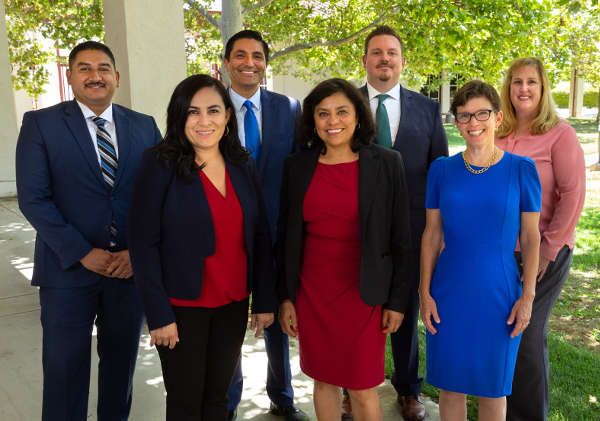
NORTHERN CALIFORNIA – After an extensive search to fill key management positions that were left vacant last year, Woodland Community College announced it will begin the new academic year with a complete management team that is fully prepared to serve students across three counties.
WCC President Dr. Art Pimentel and the college community welcomed Dr. Cirilo Cortez, dean of the Lake County Campus in Clearlake; Adela Esquivel-Swinson, vice president of student services; Sandra Fowler, dean of career education; and Dr. Shannon Reed, dean of arts and sciences.
They join vice president of instruction, Kasey Gardner, who has been with WCC since November of 2019.
Dr. Cirilo Cortez comes to the college from the University of California Davis where he served as founding director of the Center of Chicanx and Latinx Academic Success Center.
With degrees from Sonoma State and UC Davis and more than 10 years in higher education, across community college, CSU and UC systems, and close ties to the area having grown up in Lake County, Dr. Cortez noted he is “passionate for serving rural communities and for inspiring students to consider higher education as a vehicle for social mobility.”
Dr. Cortez will oversee a diverse student population and will return to Lake County where he grew up.
Adela Esquivel-Swinson will serve as the college’s new vice president of student services. She has more than 20 years of experience in higher education. Her career includes serving diverse community colleges in various capacities across California. Throughout her career, she has championed access and student success.
Prior to joining Woodland Community College, she served as vice president of student affairs at Evergreen Valley College in San Jose. She holds a master’s degree in education with an emphasis in educational leadership and social justice from Antioch University in Santa Barbara and a human services degree with an emphasis in counseling from Notre Dame de Namuir University.
When asked what she is most excited about in this new role, she said, “the opportunity to work with a group of dynamic leaders and in an institution that is student and community-centered.”
Dr. Shannon Reed, a native of Northern California, is returning to the Golden State after working on the East Coast and most recently Regis University in Colorado. She joins the college as its new dean of arts and sciences.
“I grew up in the Central Valley and it feels really good to be coming home. I am excited about joining Woodland Community College because everyone here is so deeply committed to our students,” Reed said.
An alumna of Earlham College, CSU Sacramento and the University of Alabama, Dr. Reed brings years of experience working in higher education both in the classroom and in administration.
With degrees in agribusiness from California Polytechnic State University, a Master’s of Business Administration from Capella University and currently working on her doctorate degree in educational leadership from CSU Sacramento, Sandra Fowler is the new dean of career education.
Fowler has 15 years of experience working in the private industry and served as director of the career and technical education at Yuba Community College. She oversees WCC’s Dual Enrollment Program, which offers college-level courses to high school students in the college’s service area.
Dual Enrollment’s most notable accomplishment because of her continued investment and forward-thinking approach on dual enrollment and helping students achieve their educational and career goals, which includes reinforcing partnerships with community and industry representatives.
Completing the team is the college’s vice president of instruction, Kasey Gardner. Gardner earned his bachelor’s degree in political science from Western Kentucky University, a master’s in communication from the University of the Pacific and a Master’s of Business Administration from Saint Mary’s College.
With his work as a professor of communication and director of forensics at Los Medanos College and serving as dean of behavioral and social sciences at Sacramento City College, he brings vast knowledge and understanding of faculty and administrative needs to the college. Evidence of his work ethic and optimism, he has led numerous workgroups and participated in committees at college and district levels to address COVID 19 effects on higher education.
“COVID-19 was a challenge we had not planned for in the past, but it has given us a great chance to collaborate with our community leadership. In the next academic year, I am looking forward to seeing how our new management team and the creativity of our staff combine to deliver great instruction, new services, and enhanced programs for our students,” Gardner said.
With this new leadership team and committed staff, faculty and students, Woodland Community College will start the fall semester on Monday, Aug. 17.
Conducted every 10 years, the US Census will help to determine how many seats a state has in the U.S. House of Representatives and how legislative districts are drawn.
It also plays a critical role in the allocation of federal funding to states and local communities.
The population count it provides every decade informs how funds for housing, transportation, health care, education and emergency response are dispersed, officials said.
An estimated $675 billion in federal funds annually, and trillions of dollars over the next decade, will be distributed based on the Census, the bureau reported.
Due to COVID-19, the deadline for responses to be submitted has extended to Oct. 31.
In Lake County, the latest Census Bureau data shows the county remains well below the state and national average for its response rate.
Lake’s overall response rate is 44.9 percent compared to the state rate of 64 percent and the national rate of 62.8 percent.
Lake County’s final overall response rate in 2010 was 42.6 percent.
For Internet-only responses, Lake’s 2020 rate is even lower, at 27.9 percent, compared to California’s 53.4 percent Internet rate and the national self-response rate on the Internet of 50.1 percent.
Within the county, the city of Clearlake’s response rate is 38 percent and Lakeport’s is 64.1 percent.
Lake’s overall 44.9 percent rate ranks it among the counties in California with the lowest response. Only Sierra (38.9%), Plumas (36.1%), Trinity (27.4%), Alpine (24.5%) and Mono (19.9%) are lower.
The state’s top five counties for response are San Mateo, 73.9 percent; Contra Costa, 72.2 percent; Santa Clara, 72.1 percent; Marin and Ventura, 71.7 percent.
The Census Bureau said 92.8 million households have so far completed the Census. Of those, 9.7 million are in California.
California’s final 2010 response rate was 68.2 percent.
The top 10 states for response rate so far are Minnesota, 72.1 percent; Wisconsin, 69.4 percent; Nebraska, 68.8 percent; Michigan, 68.7 percent; Iowa, 68.7 percent; Washington, 68.1 percent; Virginia and Illinois, tied at 67.5 percent; Utah and Ohio, tied at 67.1 percent.
On Thursday, the US Census Bureau said the majority of its offices across the country will begin follow-up work on Aug. 11 with households that so far haven’t responded.
Households can still respond now by completing and mailing back the paper questionnaire they received, by responding online at www.2020census.gov or by phone at 844-330-2020.
The bureau said households can also respond online or by phone in one of 13 languages and find assistance in many more. Those that respond will not need to be visited to obtain their census response.
The Census Bureau said its window for field data collection and self-response, which ends Oct. 31, which will allow for apportionment counts to be delivered to the president by April 30, 2021, and redistricting data to be delivered to the states no later than July 31, 2021.
Email Elizabeth Larson at
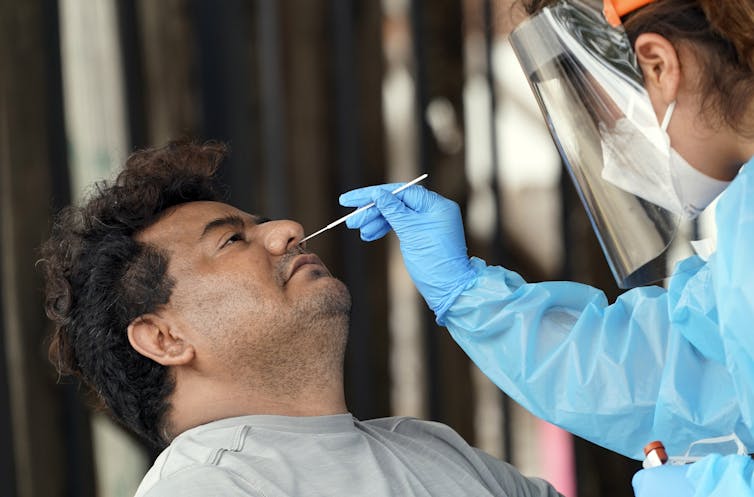
The U.S. has performed more coronavirus tests than any other country in the world. Yet, at the same time, the U.S. is notably underperforming in terms of suppressing COVID-19. Confirmed cases – as well as deaths – are surging in many parts of the country. Some people have argued that the increase in cases is solely due to increased testing.
I am a statistician who studies how mathematics and statistics can be used to track diseases. The claim that the increase in cases is only caused by increases in testing is just not true. But how do public health officials know this?
Testing, confirmed cases and total cases
COVID-19 testing has two purposes. The first is to confirm a diagnosis so that medical treatment can be appropriately rendered. The second is to do surveillance for tracking and disease suppression – including finding those who may be asymptomatic or only have mild symptoms – so that individuals and public health officials can take actions to slow the spread of the virus.
At a White House briefing on July 13, the president said, “When you test, you create cases.”
The problem with this statement is that anyone who is infected with the coronavirus is, by definition, a case. Since taking a COVID-19 test does not cause a person to get coronavirus, just like taking a pregnancy test does not cause one to become pregnant, the president’s claim is false. Testing does not create cases.
However, because many COVID-19 cases are asymptomatic, many people are infected and don’t know it. What COVID-19 testing does do is identify unknown cases. And thus it does increase the number of cases that are known, or otherwise called the confirmed case count.
Finding unknown cases is good, not bad, because identifying those who are COVID-19-positive allows individuals and public health officials to take actions that slow the spread of the disease. When public health officials find cases, they can begin contract tracing. When a person finds out they are infected, they will know to quarantine.
Since the beginning of the pandemic, the U.S. has performed more total tests and more tests per capita than any other country, though as of late July the U.K., Russia and Qatar were performing more tests per capita per day. But counting the total number of tests or the tests per capita is not the right way to judge success of a testing program.
As it says on the Johns Hopkins testing comparison page, a country’s “testing program should be scaled to the size of their epidemic, not the size of the population.” Sure, the U.S. might have a big testing program, but it has a massive epidemic. The U.S. needs an equally massive testing program if health officials want to have an accurate picture of what’s really going on.
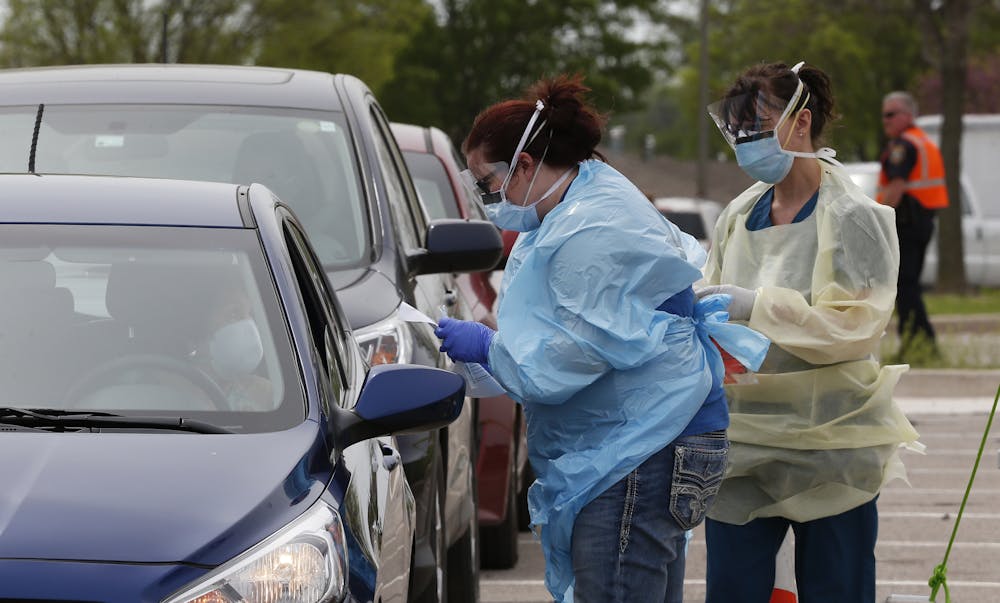
Test positivity rate
So how do public health officials know if they are doing enough testing?
Better than simply counting total number of tests, the test positivity rate is a useful measure of whether enough tests are being done. The test positivity rate is simply the fraction of tests that come back positive. It is calculated by dividing the number of positive tests by the total number of tests. Generally, a lower test positivity rate is good.
A good way to think about test positivity is to think about fishing with a net. If you catch a fish almost every time you send the net down – high test positivity - that tells you there are probably a lot of fish around that you haven’t caught – there are a lot of undetected cases. On the other hand, if you use a huge net – more testing – and only catch a fish every once in a while – low test positivity – you can be pretty sure that you’ve caught most of the fish in the area.
According to the World Health Organization, before a region can relax restrictions or begin reopening, the test positivity rate from a comprehensive testing program should be at or below 5% for at least 14 days.
There are two ways to lower a test positivity rate: either by decreasing the number of positive tests or by increasing the total number of tests. A comprehensive testing program does both. By conducting a large number of tests, most cases in the community are detected. Then, individual and government actions can be taken that contain the virus. This results in a declining number of positive tests.
[Deep knowledge, daily. Sign up for The Conversation’s newsletter.]
Returning to the fishing metaphor, the goal of a comprehensive testing program is to use a huge net to overfish in the coronavirus lake until there are very few COVID-19 cases left. Using the test positivity rate as a measure of success helps ensure that a testing program is appropriately scaled to the size of an epidemic.
As of July 27, the U.S. as a whole had a test positivity rate of 10%. States where testing programs are robust and the virus is fairly well controlled have test positivity rates well below 5%, like Massachusetts at 2.68% and New York at 1.09%. In places like Mississippi and Arizona that are experiencing large outbreaks, test positivity rates are above 20%.
The right amount of testing
The increases in confirmed cases aren’t occurring just because there is more testing. The high test positivity rates in some locations show that the virus is in fact spreading and growing so testing needs to grow with it. I believe that if the U.S. wants to beat back this virus, one of the first things that needs to happen is to increase testing. We need to deploy larger nets to catch more fish. Yes, we’ll find more cases, but that’s the point.
Ronald D. Fricker, Jr., Professor of Statistics and Associate Dean for Faculty Affairs and Administration, Virginia Tech
This article is republished from The Conversation under a Creative Commons license. Read the original article.
The report, the first of its kind, says that around 1 in 3 children – up to 800 million globally – have blood lead levels at or above 5 micrograms per deciliter, or µg/dL, the level at which the United States Centers for Disease Control and Prevention has stated requires intervention, and a level at which the World Health Organization says may be associated with decreased intelligence in children, behavioral problems and learning difficulties. Nearly half of these children live in South Asia.
Blood lead levels at or above 5 µg/dL is the level at which the United States Centers for Disease Control and Prevention has stated requires intervention, and a level at which the World Health Organization says may be associated with decreased intelligence in children, behavioral problems and learning difficulties.
In the United States, children exposed to 5 µg/dL total 1,220,000, while another 160,000 children have been exposed to levels for 10 5 µg/dL and above. Premature deaths due to lead poisoning total 20,800, according to a data visualization showing average blood lead levels globally that can be seen here.
“With few early symptoms, lead silently wreaks havoc on children’s health and development, with possibly fatal consequences,” said Henrietta Fore, UNICEF Executive Director. “Knowing how widespread lead pollution is – and understanding the destruction it causes to individual lives and communities – must inspire urgent action to protect children once and for all.”
The report, “The Toxic Truth: Children’s exposure to lead pollution undermines a generation of potential,” is an analysis of childhood lead exposure undertaken by the Institute for Health Metrics Evaluation and verified with a study approved for publication in Environmental Health Perspectives.
It notes that lead is a potent neurotoxin which causes irreparable harm to children’s brains. It is particularly destructive to babies and children under the age of five as it damages their brains before they have had the opportunity to fully develop, causing them lifelong neurological, cognitive and physical impairment.
Childhood lead exposure has also been linked to mental health and behavioural problems, and to an increase of crime and violence. Older children suffer severe consequences including increased risk of kidney damage and cardiovascular diseases in later life, the report says.
Childhood lead exposure is estimated to cost lower- and middle-income countries almost $1 trillion in United States dollars due to lost economic potential of these children over their lifetime.
The report notes that informal and substandard recycling of lead-acid batteries is a leading contributor to lead poisoning in children living in low and middle-income countries, which have experienced a three-fold increase in the number of vehicles since 2000.
The increase in vehicle ownership, combined with the lack of vehicle battery recycling regulation and infrastructure, has resulted in up to 50 percent of lead-acid batteries being unsafely recycled in the informal economy.
Workers in dangerous and often illegal recycling operations break open battery cases, spill acid and lead dust in the soil, and smelt the recovered lead in crude, open-air furnaces that emit toxic fumes poisoning the surrounding community. Often, the workers and the exposed community are not aware that lead is a potent neurotoxin.
Other sources of childhood lead exposure include lead in water from the use of leaded pipes; lead from active industry, such as mining and battery recycling; lead-based paint and pigments; leaded gasoline, which has declined considerably in recent decades, but was a major historical source; lead solder in food cans; and lead in spices, cosmetics, ayurvedic medicines, toys and other consumer products.
Parents whose occupations involve working with lead often bring contaminated dust home on their clothes, hair, hands and shoes, thus inadvertently exposing their children to the toxic element.
“The good news is that lead can be recycled safely without exposing workers, their children, and surrounding neighborhoods. Lead-contaminated sites can be remediated and restored,” said Richard Fuller, President of Pure Earth. “People can be educated about the dangers of lead and empowered to protect themselves and their children. The return on the investment is enormous: improved health, increased productivity, higher IQs, less violence, and brighter futures for millions of children across the planet.”
While blood lead levels have declined dramatically in most high-income countries since the phase-out of leaded gasoline and most lead-based paints, blood lead levels for children in low and middle-income countries have remained elevated and, in many cases, dangerously high even a decade after the global phase-out of leaded gasolines.
The report features five country case studies where lead pollution and other toxic heavy metal waste have affected children. These are Kathgora, Bangladesh; Tbilisi, Georgia; Agbogbloshie, Ghana; Pesarean, Indonesia; and Morelos State, Mexico.
The report notes that governments in affected countries can address lead pollution and exposure among children using a coordinated and concerted approach across the following areas:
– Monitoring and reporting systems including building capacity for blood lead level testing.
– Prevention and control measures including preventing children’s exposure to high risk sites and products that contain lead, such as certain ceramics, paints, toys and spices.
– Management, treatment and remediation including strengthening health systems so that they are equipped to detect, monitor and treat lead exposure among children; and providing children with enhanced educational interventions and cognitive behavioral therapy to better manage the negative effects of lead exposure.
– Public awareness and behaviour change including creating continual public education campaigns about the dangers and sources of lead exposure with direct appeals to parents, schools, community leaders and healthcare workers.
– Legislation and policy including developing, implementing and enforcing environmental, health and safety standards for manufacturing and recycling of lead acid batteries and e-waste, and enforcing environmental and air-quality regulations for smelting operations.
– Global and regional action including creating global standard units of measure to verify the results of pollution intervention on public health, the environment and local economies; building an international registry of anonymized results of blood lead level studies; and creating international standards and norms around recycling and transportation of used lead acid batteries.