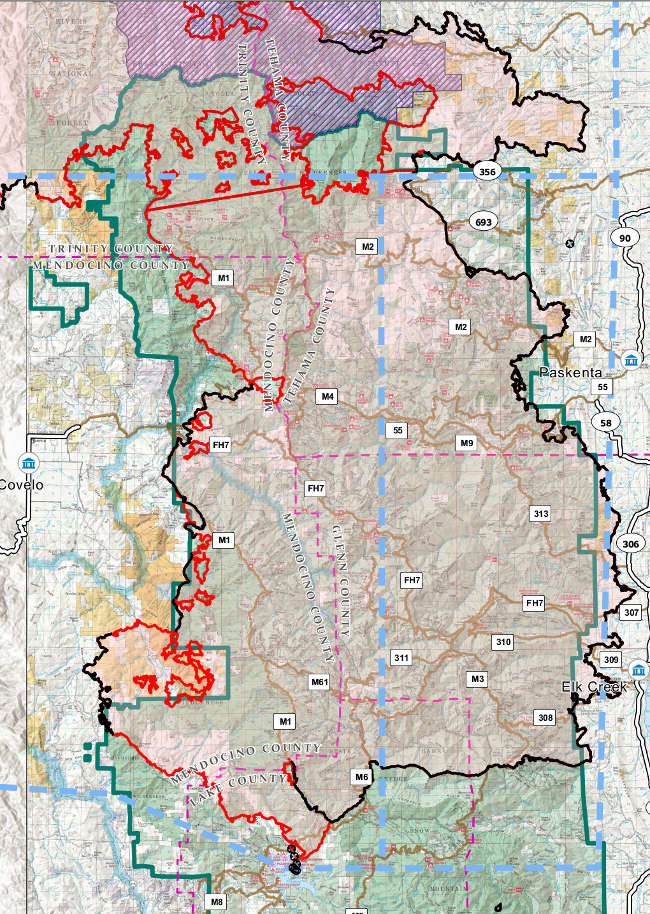
NORTHERN CALIFORNIA – As the August Complex burns deeper into public lands, officials are planning an online meeting this week to update the community on their efforts to contain the fires.
The US Forest Service said the August Complex added another 13,000 acres from Tuesday to Wednesday, with containment up by 1 percent to 39 percent.
The complex, which began on Aug. 17, is burning on the Mendocino, Shasta-Trinity and Six Rivers National Forests, where it’s destroyed 35 structures and continues to threaten nearly 1,600 more. It’s expected to be fully contained on Nov. 15.
The team managing the August Complex-South Zone will hold a virtual public meeting at 7 p.m. Thursday to provide a fire overview and to allow the public to ask questions. The meeting will be live-streamed on the Mendocino National Forest Facebook page.
Officials said firefighters completed burning operations to the north of Lake Pillsbury on Tuesday, finishing firing activities that have been occurring over the past several days.
Evacuation orders in Lake County remain in effect in the Pillsbury Ranch and Lake Pillsbury basin areas.
Crews will now complete holding and mopping up actions along the control lines used in these efforts. This includes looking for and extinguishing areas of remaining heat near these lines. Once the area has cooled over the next few days, additional containment in this area is expected, officials said.
The Forest Service said helicopters have been assisting in cooling the fire and holding control lines through water drops near Mill Creek and areas to the northwest of Pillsbury Ranch.
Fire crews and dozers from Cal Fire continue suppression efforts near the main edge of the fire to the northwest, including constructing line where possible, officials said.
Meanwhile, the Forest Service said firefighters continue structure protection in the Pillsbury Basin and along control lines to the west. This includes installing and testing hose lays and sprinklers for use in holding operations.
In the complex’s South Zone, in addition to the evacuation orders for Lake County, there also are active orders for Mendocino County, officials said.
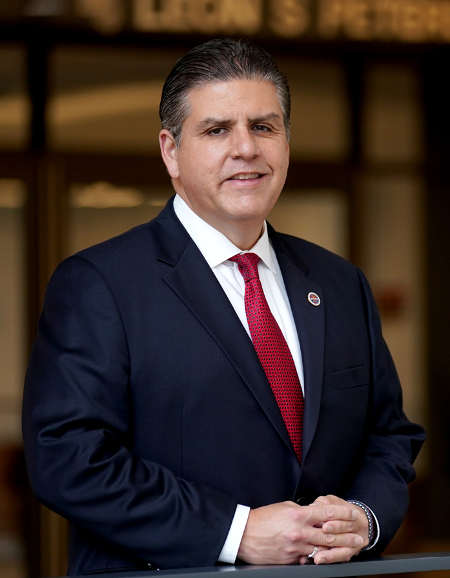
New California State University Chancellor Joseph I. Castro. Photo courtesy of the California State University Office of the Chancellor. The California State University Board of Trustees has appointed Joseph I. Castro, Ph.D., to serve as the eighth chancellor of the California State University.
Castro has served as the eighth president of California State University, Fresno since 2013.
He is the first California native and first Mexican American to be appointed to oversee the 23-campus university.
Castro will succeed Timothy P. White who is retiring after leading the university since late 2012.
“The California State University provides unprecedented and transformational opportunities for students from all backgrounds to earn a high-quality college degree and to better their families, their communities and the industries in which they become leaders. There is no other institution that makes this great of an impact on the entire state – the CSU is key to a growing and thriving California," said Castro. “I am truly grateful for and excited about this unique and wonderful opportunity, and I look forward to working with the talented faculty, staff and presidents of the 23 campuses as well the Board of Trustees and executives and staff at the Chancellor's Office to further increase achievement for our 482,000 students."
As president of Fresno State, Castro led the university to become a national leader in recruiting, supporting and graduating students from diverse backgrounds. Fresno State is routinely among the top public colleges in rankings issued by Washington Monthly, U.S. News and World Report and Money Magazine for its efforts to enhance student achievement as measured by graduation rates and social mobility.
Castro is a respected scholar in the fields of higher education leadership and public policy and has mentored many other university presidents and other senior officers across the nation over the course of his career.
“Dr. Castro is a passionate and effective advocate for his students, his campus and the CSU – in his local community, in Sacramento and in Washington, DC.," said Lillian Kimbell, chair of the CSU Board of Trustees. “Above all, he is a leader who inspires greatness in students, faculty and in the broader community. He is the right leader for the California State University in our current circumstance and for our future."
Prior to joining Fresno State, Castro served for 23 years in the University of California system, holding a variety of leadership positions culminating in roles of vice chancellor of student academic affairs and professor of family and community medicine at the University of California, San Francisco.
Castro was born in Hanford in California's San Joaquin Valley. He is the grandson of immigrants from Mexico, son of a single mother and the first in his family to graduate from a university.
He received his bachelor's in political science and a master's in public policy from the University of California, Berkeley and a Ph.D. in higher education policy and leadership from Stanford University. Castro has been recognized with alumni excellence awards from the University of California, Berkeley and Stanford University.
Castro and his wife, Mary, have three children (Isaac, Lauren and Jess). He will begin his duties as chancellor on January 4, 2021.
Following consultation with stakeholders at Fresno State and with the board chair, Chancellor White will soon announce an interim appointment who will serve as campus president beginning early next year. The Board of Trustees anticipates launching a national search in the new year for Castro's successor.
Gov. Gavin Newsom on Wednesday announced that he will aggressively move the state further away from its reliance on climate change-causing fossil fuels while retaining and creating jobs and spurring economic growth.
Newsom issued an executive order requiring sales of all new passenger vehicles to be zero-emission by 2035 and additional measures to eliminate harmful emissions from the transportation sector.
The transportation sector is responsible for more than half of all of California’s carbon pollution, 80 percent of smog-forming pollution and 95 percent of toxic diesel emissions – all while communities in the Los Angeles Basin and Central Valley see some of the dirtiest and most toxic air in the country, Newsom’s office said.
“This is the most impactful step our state can take to fight climate change,” said Newsom. “For too many decades, we have allowed cars to pollute the air that our children and families breathe. Californians shouldn’t have to worry if our cars are giving our kids asthma. Our cars shouldn’t make wildfires worse – and create more days filled with smoky air. Cars shouldn’t melt glaciers or raise sea levels threatening our cherished beaches and coastlines.”
NextGen California said Newsom’s executive order “puts us on the right track.”
“Burning gasoline and diesel for transportation is by far the biggest source of air pollution and is what drives California's contributions to the climate crisis,” said NextGen California Senior Policy Advisor David Weiskopf. “This order lays down an important marker that we need to tackle this problem in a just and systematic way – from the wellhead where oil is produced to the vehicles we drive.”
Weiskopf added, “We can achieve carbon neutrality by 2045, but it will take ambitious actions like these across the whole economy – including burning gas in buildings, heavy industry, agriculture, and improving how we manage lands and waters in the state. We will also need to create more and better clean housing and transportation options across the state, and start making smart infrastructure decisions that begin to undo the toxic legacy of environmental racism that continues to harm low-income and communities of color. This order takes important steps in that direction by including transit, walking, biking, and other clean transportation infrastructure components.”
While eliminating greenhouse gases in California will not be enough to solve the climate crisis, Weiskopf said, “If we do this well, our state can be the pivot point that turns both the national and global economies towards a more just and sustainable model.”
Pushback on Newsom’s plan began immediately on Wednesday, with the California Fuels & Convenience Alliance calling Newsom’s plan to unilaterally enact the policy “both troubling and a cause of great distress for millions of Californians.”
The group added, “This order not only represents an egregious transgression of the legislative process, but also an outright disregard for the millions of Californians struggling to just get by in today's most taxing of circumstances.”
It also said the state’s power grid does not have the capacity to bear the weight of carrying one of the largest personal transportation sectors in the world. “California already cannot meet its own energy demand without widespread EV adoption,” the group said, adding that EV’s remain out of reach for many working Californians.
"California's transportation industries continue to make strides in greener and environmentally responsible solutions from renewable fuels, to vehicles with unfathomable efficiency, and this order is a blatant affront to these great advancements. The path to a greener tomorrow cannot be a one-size-fits-all 'solution' forced down by a one-party regime,” the group said.
The California Chamber of Commerce said it agreed with Newsom that California has been a leader in mitigating greenhouse gas emissions, especially by adopting a market-based cap-and-trade program, and phasing in a greater share of renewable electricity generation.
"To develop a comprehensive and effective approach to climate change policy, California needs to have standards that other states and nations can follow. We can’t do it alone,” CalChamber said in a Wednesday statement. "Banning vehicles with internal combustion engines in just 14 years is unrealistic, since it presumes that consumer demand will not create a viable ZEV market by 2035.”
Unless California, along with other states and countries, supports a market for ZEVs that ensures vehicle performance, range, safety, functionality, price, and choice for automobile consumers, then California residents alone will be left with higher energy and transportation costs without a material effect on global GHG emissions, the group said.
“Eliminating the infrastructure for fueling internal combustion engines will only further exacerbate this cost increase for low-income Californians and will wipe out major elements of local government and schools’ property tax base,” CalChamber asid.
State agencies, Legislature, private sector to be involved in process
Following the order, the California Air Resources Board will develop regulations to mandate that 100 percent of in-state sales of new passenger cars and trucks are zero-emission by 2035 – a target which would achieve more than a 35 percent reduction in greenhouse gas emissions and an 80 percent improvement in oxides of nitrogen emissions from cars statewide.
In addition, the Air Resources Board will develop regulations to mandate that all operations of medium- and heavy-duty vehicles shall be 100 percent zero emission by 2045 where feasible, with the mandate going into effect by 2035 for drayage trucks.
To ensure needed infrastructure to support zero-emission vehicles, the order requires state agencies, in partnership with the private sector, to accelerate deployment of affordable fueling and charging options. It also requires support of new and used zero-emission vehicle markets to provide broad accessibility to zero-emission vehicles for all Californians.
The executive order will not prevent Californians from owning gasoline-powered cars or selling them on the used car market.
Newsom’s office said California will be leading the nation in this effort – joining 15 countries that have already committed to phase out gasoline-powered cars and using our market power to push zero-emission vehicle innovation and drive down costs for everyone.
By the time the new rule goes into effect, zero-emission vehicles will almost certainly be cheaper and better than the traditional fossil fuel-powered cars. Newsom’s office said the upfront cost of electric vehicles are projected to reach parity with conventional vehicles in just a matter of years, and the cost of owning the car – both in maintenance and how much it costs to power the car mile for mile – is far less than a fossil fuel burning vehicle.
Newsom’s office said the executive order sets clear deliverables for new health and safety regulations that protect workers and communities from the impacts of oil extraction. It supports companies that transition their upstream and downstream oil production operations to cleaner alternatives. It also directs the state to make sure taxpayers are not stuck with the bill to safely close and remediate former oil fields.
To protect the health and safety of our communities and workers, the governor is also asking the Legislature to end the issuance of new hydraulic fracturing permits by 2024.
The executive order directs state agencies to develop strategies for an integrated, statewide rail and transit network, and incorporate safe and accessible infrastructure into projects to support bicycle and pedestrian options, particularly in low-income and disadvantaged communities.
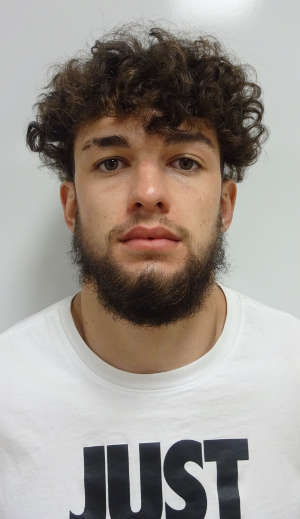
Michael Anthony Dore, 18, of Lucerne, California, is facing numerous weapons charges for a drive-by shooting at Highland Springs Reservoir near Lakeport, California, on Saturday, September 19, 2020. Lake County Jail photo. LAKE COUNTY, Calif. – The Lake County Sheriff’s Office this week took a Lucerne man into custody on multiple felony charges after a witness identified him as the gunman in a noninjury drive-by shooting on Saturday at Highland Springs Reservoir.
Michael Anthony Dore, 18, was arrested on Monday following a traffic stop, according to Lt. Corey Paulich.
The investigation that led to Dore’s arrest began on Sunday. At 5 p.m. that day, Paulich said the sheriff’s office was contacted by a male subject who reported that his residence in Lakeport had been burglarized sometime between Sept. 18 and 20, and several firearms were taken.
Paulich said the burglary victim believed Dore was responsible for the theft as he had recently been at the residence.
Deputies contacted Dore at his residence in Lucerne and questioned him about the burglary. Paulich said Dore denied any involvement with the theft of the firearms and consented to a search of his residence. Deputies located several types of ammunition but did not locate any firearms.
Then, at approximately 9:30 p.m. on Sunday, the burglary victim contacted deputies telling them Dore had recently shot at a male subject at Highland Springs Reservoir. The burglary victim was able to provide information related to the identity of the person Dore shot at, Paulich said.
Paulich said deputies were able to contact the shooting victim, who told them that at 11 p.m. Saturday he was attending a party at Highland Springs Reservoir. A vehicle drove towards him and he saw Dore was a passenger. Dore pointed a handgun at him, fired three shots at his feet and then left the area.
At 1:10 a.m. Monday, a sheriff’s deputy conducted a traffic stop on a vehicle for traffic violations on Highway 20 near 16th Avenue in Lucerne. Paulich said the driver of the vehicle was Dore. Paulich said the deputy questioned Dore regarding the shooting at Highland Springs Reservoir. Dore admitted to being at the reservoir but denied shooting at anyone.
Dore was arrested and booked at the Lake County Jail on charges related to the shooting, Paulich said.
At 7:30 a.m. Monday, employees from the Lake County Public Services Department reported finding a loaded firearm near the Lucerne Community Garden, which was near the location where Dore had been stopped in his vehicle, Paulich said.
Paulich said a sheriff’s deputy recovered the Glock handgun and discovered it had been reported stolen almost a year ago from a residence in Lucerne.
The deputy contacted Dore at the jail and questioned him about the gun. Paulich said Dore admitted throwing the gun out of his vehicle just prior to being stopped by the deputy.
Dore told the deputy he had found the gun in an old marijuana grow in Upper Lake approximately a year ago, Paulich said.
Dore remains in custody at the Lake County Jail on charges of carrying a loaded firearm in public, possession of a stolen firearm, shooting from a vehicle, assault with a deadly weapon, carrying a concealed firearm, and removing serial numbers from a firearm. His bail is currently set at $250,000.
Anyone who has information about the shooting at Highland Springs Reservoir is asked to contact Det. Richard Kreutzer at 707-262-4233.
LAKE COUNTY, Calif. – The Board of Supervisors on Tuesday voted to direct the Registrar of Voters Office to move forward with verifying more than 2,000 signatures submitted as a referendum challenge to an ordinance passed last month to enforce state and local Public Health orders.
The Tuesday morning vote was unanimous, with Rob Brown and Bruno Sabatier – who had voted against the ordinance last month – joining the rest of the board, explaining that they wanted to follow the normal verification process, which would ultimately determine whether or not the board needs to take action.
The other option was for the board to vote to rescind the ordinance, passed on Aug. 18. It was to have gone into effect 30 days from approval but it is now suspended because of the referendum petition’s submission, said County Counsel Anita Grant.
The ordinance, set to sunset on Oct. 1, 2021, unless the board extended it, would enforce state and local Public Health orders related to COVID-19, including masking, social distancing, mandated hygiene requirements and failure to close specific business sectors when required.
A combination of education and training is to be the first approach for compliance before using an administrative fine process of up to $100 for a first violation, up to $200 for a second violation of the same ordinance within one year of the first violation and not more than $500 for each additional violation of the same ordinance within one year of the first violation.
The ordinance only applies to the unincorporated county, Grant pointed out Tuesday.
“There are existing administrative fine ordinances in both the city of Lakeport and the city of Clearlake, which have been in effect for some time,” said Grant. “Those are unaffected.”
The board’s discussion of the matter came on the same day that Public Health Officer Dr. Gary Pace released a video in which he said that Lake County’s recent increase in COVID-19 cases has landed it in the state’s most restrictive tier in its recovery blueprint, and so could see new restrictions implemented if numbers don’t improve over the next two weeks.
Over the past week, the county’s COVID-19 caseload grew by nearly 100 to a total of 516 on Tuesday, with four deaths reported for the week, for an overall total of 11.
County Administrative Officer Carol Huchingson said her office received the referendum petition on Sept. 16. Approximately 2,507 signatures were submitted.
During the meeting, Frank Dollosso, who filed the petition, said he collected more than 400 additional signatures to make sure there were enough.
Huchingson told the board that it would likely want to have the Registrar of Voters Office verify the signatures. The registrar has 30 working days from the petition’s submission to determine if it’s sufficient.
If there were enough qualified signatures, Registrar of Voters Maria Valadez would then certify the results to the board, at which time the board could rescind the ordinance in its entirety or present it to the county’s voters.
If there aren’t enough signatures, Huchingson said the board would need to take no action and the ordinance would take effect.
Board supports following the established process
During public comment, several members of the audience, both those speaking in person in the board chambers and those taking part virtually, wanted to return to the debate over the effectiveness of masking and other measures that have been directed at the state level to protect against COVID-19, and which Lake County has adopted in its own health orders.
The supervisors also heard from concerned residents that the enforcement ordinance is pitting businesses and people against each other, with businesses reporting some customers becoming violent and threatening when told they need to comply with masking requirements.
Grant, however, repeatedly reminded the board and public that comments needed to be limited to the agenda item – whether or not to rescind the ordinance or direct signature verification. She said the board didn’t have the ability to change state law.
Bryan Dobrowski, representing a group calling itself the Konocti Patriots, told the board it had a choice, to respect the voice of its constituents and rescind “this ridiculous ordinance” or ignore them.
He followed up by telling Supervisor Tina Scott that they only needed to collect 1,900 signatures to start a recall against her and that they only needed 450 to begin a recall against Board Chair Moke Simon.
Dollosso told the board he filed the referendum because of his issues with the vague language regarding who is responsible for enforcement. He said the ordinance isn’t limited to just masks but any order by local and state health officials.
He said the board had good intentions but went about it the wrong way.
Scott said she was concerned that the petitioners didn’t want the signatures verified, and she and Sabatier both said they wanted to have the Registrar of Voters Office move forward with the verification process.
“The referendum is not complete until the signatures are counted. Right now it’s just a piece of paper that’s unverified,” said Sabatier.
In reference to an unnamed commenter on Zoom who misquoted numbers on tuberculosis deaths as a way of arguing against masking, Sabatier said, “We really need to stop pulling numbers out of our butts that make no sense at all,” offering accurate numbers and asking people to do proper research and reading.
Sabatier also wanted to talk to Valadez about whether or not she would need extra help, as he didn’t want the signature verification process to impede her preparations for the presidential election on Nov. 3.
Pointing out that prior boards have taken similar action with having referendum petition signatures verified, Brown said, “It’s just part of the process.”
In response to Sabatier’s concerns about Valadez needing help, Brown said she could come to the board if she wanted a conversation and needed help.
Brown said that, whether he agreed with the ordinance or not, he joined with the rest of the board in supporting signature verification, saying that simply rescinding it without that step is not how the process works.
“Out of respect for the process, we have to run its course,” he said.
Supervisor EJ Crandell agreed and moved to direct the registrar of voters to conduct the signature verification, which Scott seconded and the board approved 5-0.
The Board of Supervisors last had an ordinance challenged by the referendum process in early 2014 when a petition was filed against Ordinance No. 2997, which the board passed in December 2013 to regulate and restrict the cultivation of medicinal marijuana.
The board voted in February 2014 to put that ordinance on the ballot that June, when voters passed it as Measure N.
Measure N was the third referendum the county faced over a nearly three-year period – from the fall of 2011 to the summer of 2014 – with all of them related to marijuana.
Email Elizabeth Larson at This email address is being protected from spambots. You need JavaScript enabled to view it.. Follow her on Twitter, @ERLarson, or Lake County News, @LakeCoNews.
LAKE COUNTY, Calif. – With Lake County seeing a rise in cases in recent weeks, the Public Health officer said Tuesday that the community could face increased restrictions due to moving into a higher tier on the state’s COVID-19 blueprint.
“Recently we have been seeing an upsurge in cases,” Dr. Gary Pace said in a Tuesday video, which can be seen above.
On Tuesday, Lake County’s case total had risen to 516, an increase of 98 – or 23 percent – over the previous Tuesday.
Of those total cases, 97 are active, one is hospitalized and 408 are recovered.
To date, there have been 11 deaths, four in the last week alone and three of those from an outbreak at the Lakeport Post Acute skilled nursing facility.
Pace said Lake County’s case rate as of Tuesday was 8.8 percent, which puts it in the purple tier – the most restrictive – on the state’s Blueprint for a Safer Economy, while the county’s 5.7-percent positivity rate puts in the red tier, the second most restrictive.
While case numbers around the region and state have been improving in recent weeks, Pace said Lake County’s cases have been rising. Those cases include the outbreak at Lakeport Post Acute.
While that outbreak now appears to be slowing down, it has led to a total of seven deaths, Pace said. The facility has a COVID-19 ward and is “following all of the protocols recommended,” he said.
Pace said Public Health currently is analyzing the data to see how much of Lake County’s rate increase is due to the skilled nursing facility outbreak and how much is due to community spread.
He said the outbreak appears to have started with community spread with a worker contracting it outside of the facility and then bringing it to work.
Pace said another facility also has an outbreak. The state identified that second facility – which has both patients and staff with the virus – as Rocky Point Care Center in Lakeport.
For many weeks, Lake County has been in the red tier, the second-most restrictive tier in the Blueprint for a Safer Economy, Pace said.
However, on Tuesday, Pace said the state notified Lake County that its case data has landed it for the first time in the purple tier, the most restrictive.
If Lake County’s case outlook doesn’t improve in two weeks, it will be forced entirely into the purple tier, Pace said.
If that happens, Pace said indoor dining at restaurants and indoor movie theaters must stop, places of worship will have to go to outdoor-only services, with gyms and fitness centers also required to move activities outdoors. Museums also would be closed and retail would only be open at 25-percent capacity, with the exception of essential businesses.
“This could happen as early as next week,” Pace said.
He said the county is talking to the state to see if there might be an exception in its tier ranking due to the skilled nursing facility outbreak. As part of those discussions, the county is seeking another week to prepare in order to bring case numbers down.
“Once we would get on the purple tier, we would have to stay on it for a minimum of three weeks,” he said.
All of Lake County’s six school districts are now open for school, with two districts – Lucerne Elementary and Upper Lake Unified – having in-person classes while the rest are conducting classes online, as Lake County News has reported.
If the state moves Lake County into the purple tier, the schools that are open could remain so, but any other districts would have to wait to open their doors until the county moves back into the red tier, Pace said.
He said the majority of Lake County’s cases continue to happen in households or in social gatherings where people don’t use the proper precautions.
The pandemic and the lockdown have been impacting Lake County for six months and Pace said it’s understandable that people are getting tired of it.
However, he said more is now known about controlling the virus.
Pace said the best way to prevent contracting the virus is to increase precautions, including masking, social distancing and staying away from group settings, including indoor ones.
Email Elizabeth Larson at This email address is being protected from spambots. You need JavaScript enabled to view it.. Follow her on Twitter, @ERLarson, or Lake County News, @LakeCoNews.
 How to resolve AdBlock issue?