How to resolve AdBlock issue?
Refresh this page
How to resolve AdBlock issue?
Refresh this page
Lake County News,California
  • Home
    • Registration Form
  • News
    • Education
    • Veterans
    • Community
      • Obituaries
      • Letters
      • Commentary
    • Police Logs
    • Business
    • Recreation
    • Health
    • Religion
    • Legals
    • Arts & Life
    • Regional
  • Calendar
  • Contact us
    • FAQs
    • Phones, E-Mail
    • Subscribe
  • Advertise Here
  • Login

News

Solving Long COVID: How decades of HIV research paved the way

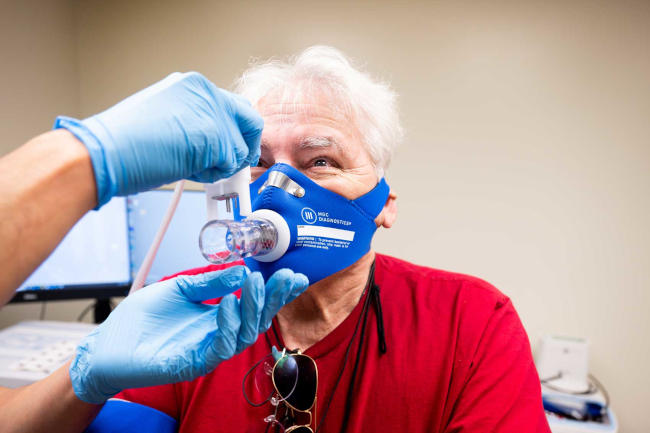
Long COVID patient Michael Dahl does a test as part of UCSF’s Long-term Impact of Infection with Novel Coronavirus (LIINC) project at Zuckerberg San Francisco General Hospital. Photo by Noah Berger.


UCSF’s rapid shift to uncover the virus’s hidden effects and seemingly unconnected symptoms put its researchers at the forefront of the field.

In the early months of the COVID-19 pandemic, UC San Francisco researchers were already seeing signs of lingering symptoms in some who had been infected. Importantly, this was when experts still viewed the illness as a transient respiratory virus and before long COVID even had a name, let alone a diagnosis.

Clinicians were hearing young, previously healthy people with no other medical problems talk about how they couldn’t shake the virus. They had bone-crushing fatigue, respiratory issues that wouldn’t go away, difficulty thinking, dizziness, and other problems that persisted well after the acute phase of the disease was over.

Many were in the prime of life but could no longer perform their jobs or function normally. Some had incapacitating symptoms and couldn’t sit upright for long periods of time or needed assistive devices to help them get around. A significant number faced skepticism from health care providers, and even their families and friends. Their symptoms were dismissed as anxiety or otherwise not taken seriously. But, at UCSF, clinicians and researchers took action and did so at a speed unmatched by any other institution.

They were able to quickly tap into decades of expertise and infrastructure built to study another complex virus, HIV. They used that advantage to pivot to COVID-19, the disease caused by the SARS-CoV-2 virus, and what eventually came to be known as long COVID.

“HIV taught us how chronic viral infections can affect the body long after the initial illness, and how important it is to involve patients in that research,” said Michael Peluso, MD, MHS, an infectious disease researcher and assistant professor of medicine at UCSF. “Applying those lessons to long COVID has helped us accelerate discovery and move closer to answers and treatments.”

In March 2020, UCSF established a program that allowed them to follow patients over years. As part of the Long-term Impact of Infection with Novel Coronavirus program, or LIINC, researchers recruited more than 1,700 participants, collected over 100,000 biospecimens, and produced many of the first and most consequential studies about the mechanisms of the disease. Within LIINC, which is directed by Peluso, researchers also built one of the premier clinical trial programs for long COVID in the world.

“By following individuals over time and studying them deeply, we began to uncover the biological drivers of long COVID, identify who was most at risk, and use that knowledge to inform better diagnostics, treatments, and prevention strategies,” Peluso said.

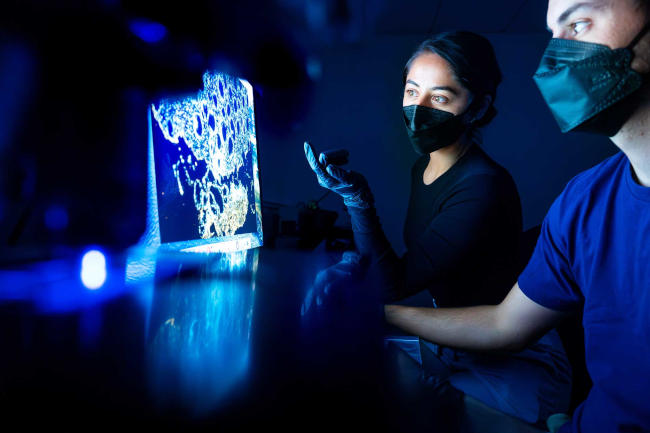
UCSF staff research associates work on UCSF’s Long-term Impact of Infection with Novel Coronavirus (LIINC) project. Photo by Noah Berger.

How HIV paved the way

Today, more than 20 million Americans have been diagnosed with long COVID. Yet still no diagnostic tests or therapeutics have been approved specifically for the debilitating condition, which is defined as persistent symptoms that include everything from shortness of breath to cognitive issues and cardiac problems that last more than three months after a COVID infection.

LIINC co-founder Steven Deeks, MD, started his career in the early 1990s at what is now the Priscilla Chan and Mark Zuckerberg San Francisco General Hospital and Trauma Center (ZSFG). That was just as AIDS was becoming the leading cause of death for American men between the ages of 25 and 44, but treatments were limited to single-drug therapies.

By 1996, combinations of anti-HIV drugs were introduced that suppressed the virus and dramatically improved the outlook for people living with HIV. “In the early era of HIV, we tried single-drug therapies, but nothing worked. Two drugs, that didn’t really work. Three drugs – boom,” Deeks said. “That’s the way it worked for HIV, and that may be the way it works for long COVID. We’re certainly setting up our program to begin to look at these combinations.”

At the heart of the collaboration between ZSFG and UCSF on AIDS research was what became known as the San Francisco “model of care.” This is the integrated, team-based approach to working with public health and community organizations that led to HIV testing, clinical trials to evaluate treatments, and compassionate care. This included academic institutions, public health, community advocates, political leaders, and the biotechnology industry.

The same has been true of long COVID, where partnerships are starting to produce answers that researchers have been searching for.

About a year after opening, LIINC launched the world’s first long COVID tissue bank and discovered that pieces of the virus can linger in the tissue of patients for up to two years. LIINC shares blood and tissues with researchers around the world, is involved in dozens of collaborations to identify the abnormal biology driving the disease, and has conducted seven clinical trials to correct that biology.

“Our approach to clinical trials in long COVID is quite similar to our approach to cure HIV,” Peluso explained. “We identify the pathways that we think are driving the problem. Then we take an experimental medicine approach where we use novel therapeutics to really target those pathways to see if we can alter that biology that we think is at the core of this disease.”

The LIINC team was one of the few groups worldwide capable of shifting to study long COVID so quickly, according to Amy Proal, PhD, president of the PolyBio Research Foundation, a Massachusetts-based nonprofit that supports research into the root causes of chronic disease. Which is why PolyBio is LIINC’s primary funder, she said.

“They already knew that the SARS-CoV-2 virus might persist because of their history with HIV,” Proal said of UCSF’s researchers. “The things that they chose to do right from the beginning, like collect tissue and do certain kinds of imaging, could be targeted and very specific to what a virus does in a chronic capacity.”

That foresight allowed UCSF to immediately track long COVID patients overtime and led to a number of breakthrough findings.

No longer a mystery

While the biological mechanisms behind long COVID are still not fully understood, researchers say they’ve come a long way and are getting closer to finding treatments.

They’ve been able to detect immunologic differences between people with long COVID and without. They’ve discovered abnormal physiologic responses in cardiopulmonary and vascular function tests. They’ve also found inflammation in the tissues, as well as viral persistence in the gut, bone marrow, brain, and other deeper tissues.

“I don’t think that it is fair in 2026 to say that this disease is a mystery,” Peluso said. “I think we’ve made a lot of progress in understanding objectively what might be happening.”

Still, much of the difficulty in understanding long COVID is because it’s a complex syndrome with more than 200 documented symptoms affecting the respiratory, immune, nervous, cardiovascular, gastrointestinal, and other systems.

Timothy Henrich, MD, a professor of medicine in UCSF’s Department of Experimental Medicine and a lead researcher at LIINC, runs a lab that expanded its focus from HIV to study the mechanisms by which viral infections lead to conditions like long COVID.  Not only did Henrich’s lab find viral persistence in the gut, bone marrow, brain, and other deeper tissues, they saw profound changes in immune responses and inflammation in these tissues at levels they didn’t see in standard blood tests.

One of the main things we learned is that SARS-CoV-2 is able to persist for a long period of time in various tissues across the body,” Henrich said. “This is really unusual and changed the paradigm of thinking about this as a chronic viral infection versus a transient, acute respiratory viral infection.”

To get a clearer understanding, researchers used noninvasive PET scans and revealed that T-cells, part of the immune system, were remaining active for prolonged periods of time, likely contributing to ongoing inflammation, which the immune system uses to fight illness, and other symptoms.

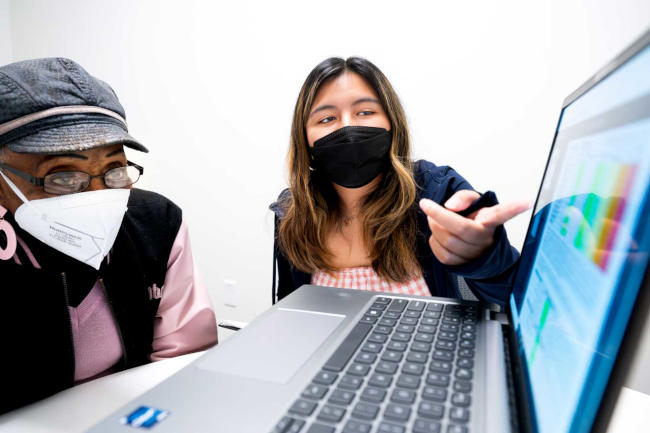
UCSF Clinical Research Coordinator Kathleen Bellon Pizarro (right) speaks with long COVID patient Hulda Brown (left) while working on UCSF’s Long-term Impact of Infection with Novel Coronavirus (LIINC) project. Photo by Noah Berger.

A commitment to finding answers

These discoveries get scientists closer to solutions, but researchers say the work needs more federal funding and investments from the pharmaceutical industry and private donors.

At a roundtable with long COVID experts convened last fall by U.S. Health and Human Services Secretary Robert F. Kennedy Jr., Peluso stressed the need to scale up the number of clinical trials and to implement a diagnostics program to identify who is most likely to benefit from the interventions. He emphasized that this would require investment on a faster timeline than is typical of federal programs.

“We saw for HIV how important it was in the ’90s to have pharmaceutical partners on board with developing drugs and investing tremendously ... in figuring out which treatments would work,” Peluso told the panel. “We need that level of commitment for long COVID.”

Peluso also emphasized the continued need to involve patients with the research. Hannah Davis, co-founder of the advocacy group, Patient-Led Research Collaborative, said UCSF’s researchers not only had the ability to immediately recognize that SARS-CoV-2 was causing this disorder, but they listened to patients and sought their participation in finding answers.

Davis believes LIINC’s work could eventually advance the understanding of other infection-associated chronic conditions, including myalgic encephalomyelitis/chronic fatigue syndrome (ME/CFS), and persistent Lyme disease.

“One day soon, we’ll look back on LIINC as part of the groundswell that forever changed the understanding of conditions like long COVID,” Davis said. “The competence and credibility they have brought to the field has been rivaled by very few, and I’m forever grateful to the prescience, humility, and bold dedication they have shown in approaching this condition.”

Victoria Colliver writes for UCSF.

Clearlake Animal Control: ‘Chubbiana’ and the dogs

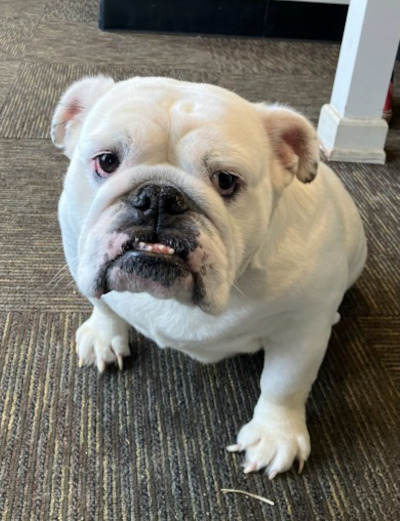
“Chubbiana.” Photo courtesy of Clearlake Animal Control.

CLEARLAKE, Calif. — There are many dogs at Clearlake Animal Control — new ones and those that are still waiting — ready to go to their new homes.

The shelter has 56 adoptable dogs and puppies listed on its website.

This week’s dogs include “Chubbiana,” a female English bulldog mix. She has been spayed.

The shelter is located at 6820 Old Highway 53. It’s open from 9 a.m. to 6 p.m. Tuesday through Saturday. 

For more information, call the shelter at 707-762-6227, email This email address is being protected from spambots. You need JavaScript enabled to view it. or visit Clearlake’s adoptable dogs here.

This week’s adoptable dogs are featured below.

Email Elizabeth Larson at This email address is being protected from spambots. You need JavaScript enabled to view it.. Follow her on Twitter, @ERLarson, and on Bluesky, @erlarson.bsky.social. Find Lake County News on the following platforms: Facebook, @LakeCoNews; X, @LakeCoNews; Threads, @lakeconews, and on Bluesky, @lakeconews.bsky.social. 


Americans want heat pumps – but high electricity prices may get in the way

Workers install an air-source heat pump at a home in Charlotte, Vt. Robert Nickelsberg/Getty Images

Heat pumps can reduce carbon emissions associated with heating buildings, and many states have set aggressive targets to increase their use in the coming decades. But while heat pumps are often cheaper choices for new buildings, getting homeowners to install them in existing homes isn’t so easy.

Current energy prices, including the rising cost of electricity, mean that homeowners may experience higher heating bills by replacing their current heating systems with heat pumps – at least in some regions of the country.

Heat pumps, which use electricity to move heat from the outside in, are used in only 14% of U.S. households. They are common primarily in warm southern states such as Florida where winter heating needs are relatively low. In the Northeast, where winters are colder and longer, only about 5% of households use a heat pump.

In our new study, my co-author Dan Schrag and I examined how heat pump adoption would change annual heating bills for the average-size household in each county across the U.S. We wanted to understand where heat pumps may already be cost-effective and where other factors may be preventing households from making the switch.

Wide variation in home heating

Across the U.S., people heat their homes with a range of fuels, mainly because of differences in climate, pricing and infrastructure. In colder regions – northern states and states across the Rocky Mountains – most people use natural gas or propane to provide reliable winter heating. In California, most households also use natural gas for heating.

In warmer, southern states, including Florida and Texas, where electricity prices are cheaper, most households use electricity for heating – either in electric furnaces, baseboard resistance heating or to run heat pumps. In the Pacific northwest, where electricity prices are low due to abundant hydropower, electricity is also a dominant heating fuel.

The type of community also affects homes’ fuel choices. Homes in cities are more likely to use natural gas relative to rural areas, where natural gas distribution networks are not as well developed. In rural areas, homes are more likely to use heating oil and propane, which can be stored on property in tanks. Oil is also more commonly used in the Northeast, where properties are older – particularly in New England, where a third of households still rely on oil for heating.

Why heat pumps?

Instead of generating heat by burning fuels such as natural gas that directly emit carbon, heat pumps use electricity to move heat from one place to another. Air-source heat pumps extract the heat of outside air, and ground-source heat pumps, sometimes called geothermal heat pumps, extract heat stored in the ground.

Heat pump efficiency depends on the local climate: A heat pump operated in Florida will provide more heat per unit of electricity used than one in colder northern states such as Minnesota or Massachusetts.

But they are highly efficient: An air-source heat pump can reduce household heating energy use by roughly 30% to 50% relative to existing fossil-based systems and up to 75% relative to inefficient electric systems such as baseboard heaters.

Heat pumps can also reduce emissions of greenhouse gases, although that depends on how their electricity is generated – whether from fossil fuels or cleaner energy, such as wind and solar.

Heat pumps can lower heating bills

We found that for households currently using oil, propane or non-heat pump forms of electric heating – such as electric furnaces or baseboard resistive heaters – installing a heat pump would reduce heating bills across all parts of the country.

The amount a household can save on energy costs with a heat pump depends on region and heating type, averaging between $200 and $500 a year for the average-size household currently using propane or oil.

However, savings can be significantly greater: We found the greatest opportunity for savings in households using inefficient forms of electric heating in northern regions. High electricity prices in the Northeast, for example, mean that heat pumps can save consumers up to $3,000 a year over what they would pay to heat with an electric furnace or to use baseboard heating.

A challenge in converting homes using natural gas

Unfortunately for the households that use natural gas in colder, northern regions – making up around half of the country’s annual heating needs – installing a heat pump could raise their annual heating bills. Our analysis shows that bills could increase by as much as $1,200 per year in northern regions, where electricity costs are as much as five times greater than natural gas per kilowatt-hour.

Even households that install ground-source heat pumps, the most efficient type of heat pump, would still see bill increases in regions with the highest electricity prices relative to natural gas.

Installation costs

In parts of the country where households would see their energy costs drop after installing a heat pump, the savings would eventually offset the upfront costs. But those costs can be significant and discourage people from buying.

On average, it costs $17,000 to install an air-source heat pump and typically at least $30,000 to install a ground-source heat pump.

Some homes may also need upgrades to their electrical systems, which can increase the total installation price even more, by tens of thousands of dollars in some cases, if costly service upgrades are required.

In places where air conditioning is typical, homes may be able to offset some costs by using heat pumps to replace their air conditioning units as well as their heating systems. For instance, a new program in California aims to encourage homeowners who are installing central air conditioning or replacing broken AC systems to get energy-efficient heat pumps that provide both heating and cooling.

Rising costs of electricity

A main finding of our analysis was that the cost of electricity is key to encouraging people to install heat pumps.

Electricity prices have risen sharply across the U.S. in recent years, driven by factors such as extreme weather, aging infrastructure and increasing demand for electric power. New data center demand has added further pressure and raised questions about who bears these costs.

Heat pump installations will also increase electricity demand on the grid: The full electrification of home heating across the country would increase peak electricity demand by about 70%. But heat pumps – when used in concert with other technologies such as hot-water storage – can provide opportunities for grid balancing and be paired with discounted or time-of-use rate structures to reduce overall operating costs. In some states, regulators have ordered utilities to discount electricity costs for homes that use heat pumps.

But ultimately, encouraging households to embrace heat pumps and broader economy-wide electrification, including electric vehicles, will require more than just technological fixes and a lot more electricity – it will require lower power prices.The Conversation

Roxana Shafiee, Environmental Fellow, Center for the Environment, Harvard University; Harvard Kennedy School

This article is republished from The Conversation under a Creative Commons license. Read the original article.
New sewer spill incident command team reports on plans, progress

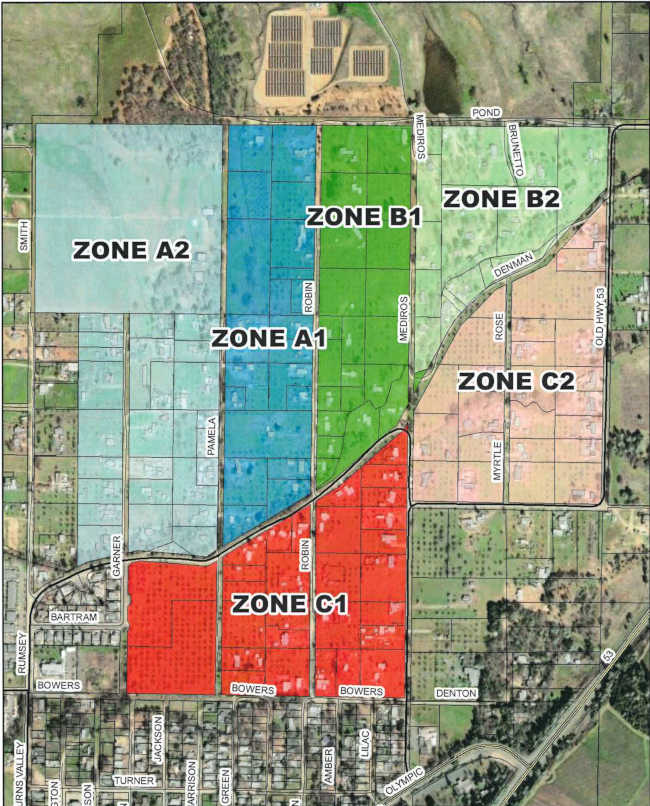
A map of the 2026 Robin Lane Sewer Spill area divided into zones. The map was released at the third sewer spill town hall on Wednesday, Jan. 28, 2026. 


CLEARLAKE, Calif. – County and city of Clearlake officials on Wednesday held a town hall at Clearlake City Hall to update residents on recovery progress and next steps following the Robin Lane sewage spill two and a half weeks ago.

The two-hour meeting was the third weekly town hall-style session with officials and residents since Jan. 11, when a force main on Robin Lane ruptured.

The failure released an estimated 2.9 million gallons of raw sewage from a sewer system owned and operated by the Lake County Sanitation District, which is overseen by Lake County Special Districts.

More than 200 properties relying on private water wells across an area of about 297 acres have been impacted and remain under a public health advisory not to use well water.

Wednesday marked the 18th day residents had been without clean running water.

The immediate response to the spill was led by Lake County Special Districts. Command was transferred Monday to a joint command between the city of Clearlake and the Lake County Office of Emergency Services. 

County officials including Environmental Health Director Craig Wetherbee, Special Districts Administrator Robin Borre, Health Services Director Anthony Arton, Public Health Officer Dr. Bob Bernstein and Social Services Director Rachael Dillman Parson were in attendance.

Also on hand were city staff and officials, including City Council members Dirk Slooten, Mary Wilson and Russ Cremer. Cremer lives in the spill area and whose well has been impacted.

City-led assessments at affected properties began Tuesday.

Officials at the meeting say they are actively collecting information from impacted residents and will make “data-driven” decisions regarding resources and solutions toward recovery.

“It’s continuing to take way longer than I want it to and I can only imagine what you guys are feeling,” said District 2 Supervisor Bruno Sabatier.

Undersheriff Corey Paulich, who also is the deputy director for the Office of Emergency Services, said the city and his agency established the incident command team on Monday and began making plans.

“Our role is recovery,” and trying to get everyone back to their homes,” Paulich said.

Beginning on Monday, the incident command sent out assessment teams working across the spill area, which has been mapped out in six zones.

The area directly impacted by the sewage flow was mapped out as “Zone A1” which encompasses south of Pond Road, north of Rumsey, west of Robin Lane and east of Pamela Lane.

Within that area, everyone who “needed a tank will have a tank,” said Paulich.

Paulich said the assessment teams were able to test the majority of houses in every zone with the exception of a couple, which will be done on Thursday. The test results will take about 24 hours.

The estimated cost of that testing is $300 per well per day, costs that are expected to be covered by a $750,000 appropriation approved by the Board of Supervisors last week. Those funds also will cover water tanks meant to be a temporary solution for the residents needing a backup water source.

City Manager Alan Flora said they wouldn’t be able to do the work without the new team in place.

He said the goal for this incident command team is very simple – to get people back in their homes as quickly as possible. 

The assessment teams covered 60 to 70 percent of the parcels on Tuesday; the remainder should have been contacted on Wednesday. Those spill area residents who didn’t receive outreach are asked to contact the city.

Flora said the team hopes to start reducing the incident’s scope and they expect to move to an updated advisory for water use as soon as Thursday. 

Well sanitization has been ongoing in the spill area. When a well is tested and gets two negative tests in a row – 24 hours apart – for E. coli and coliform, the property owner will get a notification with test results and information on how to treat their wells going forward, Flora said.

After two clean tests, residents will get the all clear to use their wells, he said.

Flora also reported that a hydrologist has been hired to assist with studying the aquifer and helping to understand the spill’s impact on it.

Community members seek answers

The nearly 100 people in attendance spent about an hour and a half asking questions about numerous topics – in particular, who will get the backup water tanks, soil testing and safety, how the money approved by the Board of Supervisors will be spent, how much longer it might take to solve the water quality program and why some properties where wells are testing positive for contaminants aren’t on the map.

Cassandra Hulbert, who lives in the spill area, is immunocompromised and has two disabled children. Her well continues to have “hot” tests showing high levels of E. coli and coliform, but she said she’s yet to get a water tank, while she’s watched them go in at nearby properties.

In response to questions about tank distribution and prioritization, Sgt. Ben Moore said it was location based, and the new data and test results will help guide where tanks go.

Stephanie Piseno, who along with husband Juan runs a day care at their home on Robin Lane, said she made claims on her homeowners and day care insurance and is going to lose them as a result. She’s also losing children who previously attended her day care, and she is concerned about her children being able to play outside.

“I don’t even know what to do,” she said, adding that she’s never going to feel comfortable or safe on her property.

Flora said they are working on possible long-term plans and outside funding sources to connect to public water and the sewer system itself.

When asked by a spill area resident about who is going to oversee Lake County Special Districts to ensure they are doing property maintenance, Flora said the Board of Supervisors and the State Water Board have oversight. 

He added that there have been issues in the sewer system “for a significant period of time.” The Clearlake City Council is very concerned about the situation, and they want to have a role in the governance of Special Districts. 

Asked about when residents could expect a return to normalcy, Paulich responded, “I don’t know that we can give you a date.”

The incident team isn’t yet committing to another town hall, however, daily communication to the community about the incident will resume on Thursday, Flora said.

Flora said the city of Clearlake’s website will be the main source of information, with a webpage dedicated to the incident. 

“All of the resources that we have available will be posted there,” he said.

Additional information requests about the incident can be directed to Administrative Services Director/City Clerk Melissa Swanson, who also is acting as the incident’s public information officer, at 707-994-8201, Extension 106.

Staff reporter Lingzi Chen contributed to this report.

Email Elizabeth Larson at This email address is being protected from spambots. You need JavaScript enabled to view it.. Follow her on Twitter, @ERLarson, and on Bluesky, @erlarson.bsky.social. Find Lake County News on the following platforms: Facebook, @LakeCoNews; X, @LakeCoNews; Threads, @lakeconews, and on Bluesky, @lakeconews.bsky.social. 

Thompson, Masui call for Noem impeachment, ICE funding cuts after Minneapolis killings

Congressman Mike Thompson and Congresswoman Doris Matsui are calling for urgent oversight, transparency and accountability of the Department of Homeland Security and Immigration and Customs Enforcement in the wake of two killings in Minneapolis this month.

Thompson (CA-04) and Matsui (CA-07) on Tuesday held a press conference outside the John E. Moss Federal Building, which houses ICE personnel in Sacramento, warning that unchecked federal enforcement is putting lives at risk in California and across the country.

Following the killings of Renee Good and Alex Pretti in Minneapolis, Thompson, Matsui and their Democratic colleagues are demanding a stop to ICE funding and DHS Secretary Kristi Noem’s removal from office.

They said the chaos in Minneapolis is the latest escalation in Americans’ concerns about federal agencies operating without sufficient oversight.

“Like so many Americans, I am sickened by ICE’s killings of Renee Good and Alex Pretti in Minneapolis,” said Congressman Thompson. “This is just the latest in ICE’s abuses across our country, including in Sacramento. Enough is enough. There is nothing legal, moral, ethical, nor humane with what’s going on in Minnesota and our Republican colleagues in Congress need to grow some courage and join us to impeach Kristi Noem, cut ICE funding, and stop the chaos.”

“From Sacramento to Minneapolis, we are seeing the same dangerous pattern: more force, less transparency, and no accountability from DHS and ICE,” said Congresswoman Matsui. “This is the fifth time I have stood outside this building demanding answers from a rogue agency. The fact that we are here again shows how persistent and unchecked this abuse of power has become. Secretary Kristi Noem must be held accountable, ICE needs to get out of our communities, and Congress must stop funding abuse disguised as enforcement. We will not stop fighting until there is real and independent accountability.” 

“NorCal Resist affirms our commitment to our immigrant community and to defending fundamental democratic and human rights values this administration seeks to ignore through immigration enforcement,” said Giselle Garcia, program director, NorCal Resist. “May all representatives in Congress oust each transgressor and hold them accountable for their crimes against humanity. May the people continue to resist in the face of repression and fight for the world we deserve.” 

Congressman Thompson and Congresswoman Matsui were among the first members of Congress to co-sponsor articles of impeachment against Noem, citing systemic failures in leadership and oversight. 

Last week, Thompson and Matsui also voted no on legislation to provide funding to DHS, arguing that Congress must not continue to expand the power and resources of agencies that have demonstrated a pattern of terrorizing communities and trampling constitutional rights.

In addition to voting against funding for ICE last week, Congressman Thompson has introduced legislation to require ICE agents to wear body cameras and prohibit them from wearing masks or police insignia. 

Thompson also has hosted numerous “Know Your Rights” workshops for local businesses and community members to help people learn their rights when interacting with federal agents.

The legislative fight for DHS funding now moves to the U.S. Senate, where lawmakers face a critical decision: approve DHS funding or hold the line. 

With lives at stake, Congressman Thompson and Congresswoman Matsui reiterated that Congress cannot continue to fund DHS.

Thompson represents California’s Fourth Congressional District, which includes all or part of Lake, Napa, Solano, Sonoma and Yolo counties. 

Little Hoover Commission holds hearing on California’s developmental disabilities system

SACRAMENTO — California families that rely on the state’s system for developmental disabilities continue to struggle with barriers to service, lengthy delays, and inconsistent implementation across regions, according to testimony received by the Little Hoover Commission.

Witnesses described long waits for critical services and the heavy burden placed on families to navigate gaps in the system. 

The Jan. 22 hearing reviewed implementation of the commission’s past recommendations for reforms to the system.

Michelle Del Rosario said that even when her son’s needs were formally identified, services were not implemented. 

“Services exist, but there is no consistent process to ensure they are implemented,” she told commissioners. 

Her son, William Del Rosario, underscored the impact of those delays, noting he has waited six years for communication-trained support staff. “Six years is far too long to wait for access to education, employment, and community life.”

Judy Mark, co-founder and president of Disability Voices United, told commissioners that access to services still depends too heavily on a family’s ability to fight the system. 

“We have spent decades building supports that should be there by default,” she said, warning that uneven implementation continues to leave many families behind.

Pete Cervinka, who became director of the California Department of Developmental Services slightly more than a year ago, said the department has issued new guidance and oversight measures aimed at improving consistency across regional centers, while acknowledging that translating policy changes into timely, on-the-ground results remains an ongoing challenge.

Amy Westling, executive director of the Association of Regional Center Agencies, testified that regional centers have worked to reduce disparities in spending levels for Latino and non-Latino clients, though she was pressed by commissioners about the need for greater consistency, greater independence of regional center boards, and more use of the state's self-determination program.

The hearing was part of the commission’s review of its recommendations from its past report “A System in Distress: Caring for Californians with Developmental Disabilities.”

The commission anticipates releasing a report later this year regarding the implementation of that report's recommendations.

  • 10
  • 11
  • 12
  • 13
  • 14
  • 15
  • 16
  • 17
  • 18
  • 19

Community

  • Lake County Wine Alliance offers sponsor update; beneficiary applications open 

  • Mendocino National Forest announces seasonal hiring for upcoming field season

Public Safety

  • Lakeport Police logs: Thursday, Jan. 15

  • Lakeport Police logs: Wednesday, Jan. 14

Education

  • Woodland Community College receives maximum eight-year reaffirmation of accreditation from ACCJC

  • SNHU announces Fall 2025 President's List

Health

  • California ranks 24th in America’s Health Rankings Annual Report from United Health Foundation

  • Healthy blood donors especially vital during active flu season

Business

  • Two Lake County Mediacom employees earn company’s top service awards

  • Redwood Credit Union launches holiday gift and porch-to-pantry food drives

Obituaries

  • Rufino ‘Ray’ Pato

  • Patty Lee Smith

Opinion & Letters

  • The benefits of music for students

  • How to ease the burden of high electric bills

Veterans

  • CalVet and CSU Long Beach team up to improve data collection related to veteran suicides

  • A ‘Big Step Forward’ for Gulf War Veterans

Recreation

  • Wet weather trail closure in effect on Upper Lake Ranger District

  • Mendocino National Forest seeking public input on OHV grant applications

  • State Parks announces 2026 Anderson Marsh nature walk schedule 

  • BLM lifts seasonal fire restrictions in central California

Religion

  • Kelseyville Presbyterian to host Ash Wednesday service and Lenten dinner Feb. 18

  • Kelseyville Presbyterian Church to hold ‘Longest Night’ service Dec. 21

Arts & Life

  • Auditions announced for original musical ‘Even In Shadow’ set for March 21 and 28

  • ‘The Rip’ action heist; ‘Steal’ grounded in a crime thriller

Government & Politics

  • Lake County Democrats issue endorsements in local races for the June California Primary

  • County negotiates money-saving power purchase agreement

Legals

  • March 3 hearing on ordinance amending code for commercial cannabis uses

  • Feb. 12 public hearing on resolution to establish standards for agricultural roads

How to resolve AdBlock issue?
Refresh this page