How to resolve AdBlock issue?
Refresh this page
How to resolve AdBlock issue?
Refresh this page
Lake County News,California
  • Home
    • Registration Form
  • News
    • Education
    • Veterans
    • Community
      • Obituaries
      • Letters
      • Commentary
    • Police Logs
    • Business
    • Recreation
    • Health
    • Religion
    • Legals
    • Arts & Life
    • Regional
  • Calendar
  • Contact us
    • FAQs
    • Phones, E-Mail
    • Subscribe
  • Advertise Here
  • Login

News

Law that built the internet turns 30 – a legal expert explains what would happen if efforts to repeal Section 230 succeed

Sens. Lindsey Graham, R-S.C., and Dick Durbin, D-Ill., are vocal critics of Section 230. AP Photo/J. Scott Applewhite

Section 230 of the Communications Decency Act has become a political lightning rod in recent years. The law, part of the Telecommunications Act of 1996 signed into law on Feb. 8, 1996, shields online platforms from liability for user-generated content while allowing moderation done in good faith.

A group of bipartisan lawmakers led by Sens. Lindsey Graham, R-S.C., and Dick Durbin, D-Ill., has filed a bill to sunset Section 230 by 2027 in order to spur a renegotiation of its provisions. The bill would start a timer on reforming or replacing Section 230. If no agreement is reached by the deadline, Section 230 would cease to be law.

The debate over the law centers on balancing accountability for harmful content with the risks of censorship and stifled innovation. As a legal scholar, I see dramatic potential effects if Section 230 were to be repealed, with some platforms and websites blocking any potentially controversial content. Imagine Reddit with no critical comments or TikTok stripped of political satire.

The law that built the internet

Section 230, often described as “the 26 words that created the internet,” arose in response to a 1995 ruling penalizing platforms for moderating content. The key provision of the law, (c)(1), states that “no provider or user of an interactive computer service shall be treated as the publisher or speaker of any information provided by another information content provider.” This immunizes platforms such as Facebook and Yelp from liability for content posted by users.

Importantly, Section 230 does not offer blanket immunity. It does not shield platforms from liability related to federal criminal law, intellectual property infringement, sex trafficking or where platforms codevelop unlawful content. At the same time, Section 230 allows platform companies to moderate content as they see fit, letting them block harmful or offensive content that is permitted by the First Amendment.

Some critics argue that the algorithms social media platforms use to feed content to users are a form of content creation and should be outside the scope of Section 230 immunity. In addition, Federal Communications Commission Chairman Brendan Carr has signaled a more aggressive stance toward Big Tech, advocating for a rollback of Section 230’s protections to address what he perceives as biased content moderation and censorship.

What Section 230 does and how it came about.

Censorship and the moderation dilemma

Opponents warn that repealing Section 230 could lead to increased censorship, a flood of litigation and a chilling effect on innovation and free expression.

Section 230 grants complete immunity to platforms for third-party activities regardless of whether the challenged speech is unlawful, according to a February 2024 report from the Congressional Research Service. In contrast, immunity via the First Amendment requires an inquiry into whether the challenged speech is constitutionally protected.

Without immunity, platforms could be treated as publishers and held liable for defamatory, harmful or illegal content their users post. Platforms could adopt a more cautious approach, removing legally questionable material to avoid litigation. They could also block potentially controversial content, which could leave less space for voices of marginalized people.

MIT management professor Sinan Aral warned, “If you repeal Section 230, one of two things will happen. Either platforms will decide they don’t want to moderate anything, or platforms will moderate everything.” The overcautious approach, sometimes called “collateral censorship,” could lead platforms to remove a broader swath of speech, including lawful but controversial content, to protect against potential lawsuits. Yelp’s general counsel noted that without Section 230, platforms may feel forced to remove legitimate negative reviews, depriving users of critical information.

Corbin Barthold, a lawyer with the nonprofit advocacy organization TechFreedom, warned that some platforms might abandon content moderation to avoid liability for selective enforcement. This would result in more online spaces for misinformation and hate speech, he wrote. However, large platforms would likely not choose this route to avoid backlash from users and advertisers.

A legal minefield

Section 230(e) currently preempts most state laws that would hold platforms liable for user content. This preemption maintains a uniform legal standard at the federal level. Without it, the balance of power would shift, allowing states to regulate online platforms more aggressively.

Some states could pass laws imposing stricter content moderation standards, requiring platforms to remove certain types of content within defined time frames or mandating transparency in content moderation decisions. Conversely, some states may seek to limit moderation efforts to preserve free speech, creating conflicting obligations for platforms that operate nationally. Litigation outcomes could also become inconsistent as courts across different jurisdictions apply varying standards to determine platform liability.

The lack of uniformity would make it difficult for platforms to establish consistent content moderation practices, further complicating compliance efforts. The chilling effect on expression and innovation would be especially pronounced for new market entrants.

While major players such as Facebook and YouTube might be able to absorb the legal pressure, smaller competitors could be forced out of the market or rendered ineffective. Small or midsize businesses with a website could be targeted by frivolous lawsuits. The high cost of compliance could deter many from entering the market.

Reform without ruin

The nonprofit advocacy group Electronic Frontier Foundation warned, “The free and open internet as we know it couldn’t exist without Section 230.” The law has been instrumental in fostering the growth of the internet by enabling platforms to operate without the constant threat of lawsuits over user-generated content. Section 230 also lets platforms organize and tailor user-generated content.

The potential repeal of Section 230 would fundamentally alter this legal landscape, reshaping how platforms operate, increasing their exposure to litigation and redefining the relationship between the government and online intermediaries.

This story was updated on Feb. 4, 2026, to include the 30th anniversary of the Communications Decency Act and recent efforts to repeal Section 230.The Conversation

Daryl Lim, Professor of Law and Associate Dean for Research and Innovation, Penn State

This article is republished from The Conversation under a Creative Commons license. Read the original article.

Man charged with killing wife with hammer set for preliminary hearing

LAKE COUNTY, Calif. – A preliminary hearing has been scheduled for a Kelseyville man charged with killing his wife last month with a hammer.

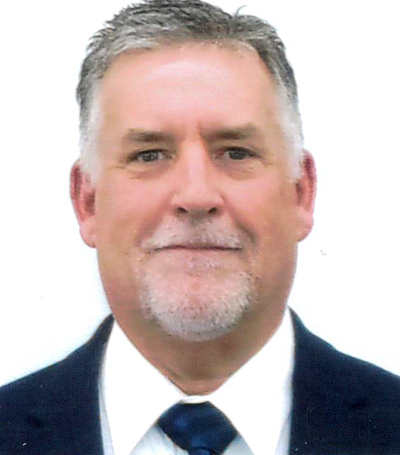
Travis Ryan Bonson, 46, has been charged with first-degree murder for the death of 44-year-old Ayano Bonson, his wife of 22 years.

Lake County Sheriff’s deputies arrested Travis Bonson on the morning of Jan. 16 after receiving a call from him at his Single Spring Drive home. Bonson told authorities he had physically assaulted Ayano Bonson.

Deputies found Ayano Bonson in critical condition. She was transported to an out-of-county hospital for medical treatment. She died four days after the attack.

Senior Deputy District Attorney Nicholas Rotow, who is the prosecutor handling the case, confirmed to Lake County News that Travis Bonson used a hammer to kill his wife while she was in bed.

Based on the evidence, “I think it’s a reasonable conclusion, probably the only conclusion,” that Ayano Bonson was assaulted when she was asleep, Rotow said.

Bonson is a registered sex offender as the result of a 2012 felony conviction for committing lewd or lascivious acts on a child under age 14. Rotow said Bonson has not had any Lake County cases since completing his prior sex-related prison sentence. 

On Tuesday morning, Bonson was in Lake County Superior Court, where he entered a not guilty plea in the case before Judge J. David Markham.

He is scheduled to return to court for a preliminary hearing and bail review on March 19.

Bonson remains in custody in the Lake County Jail. He’s being held without bail.

Email Elizabeth Larson at This email address is being protected from spambots. You need JavaScript enabled to view it.. Follow her on Twitter, @ERLarson, and on Bluesky, @erlarson.bsky.social. Find Lake County News on the following platforms: Facebook, @LakeCoNews; X, @LakeCoNews; Threads, @lakeconews, and on Bluesky, @lakeconews.bsky.social. 

Water tank installation slows as well testing continues after Robin Lane sewer spill

CLEARLAKE, Calif. — Water tank installation has slowed while well testing continues for residents impacted by the Robin Lane sewer spill, according to a new city update.

Two additional water tanks were installed on Tuesday, including one through Lake County Social Services. The other was installed by the incident management team and funded by the $750,000 approved by the Board of Supervisors on Jan. 21.

Four water tanks were installed on Monday. 

As of Tuesday, a total of 31 water tanks had been hooked up for residents who rely on private wells and were impacted by the sewage spill caused by the rupture of a county-owned and operated 16-inch force main on Robin Lane.

But that represents only a fraction of the total homes relying on potentially contaminated private wells.

The spill began more than three weeks ago, on Sunday, Jan. 11, releasing nearly three million gallons of sewage over a roughly 38-hour period.

On Jan. 26, when the city of Clearlake and the Lake County Office of Emergency Services announced joint command to lead the recovery, the city reported that the number of impacted properties had grown from an initial estimate of 58 to “over 200.”

Clearlake City Manager Alan Flora told Lake County News on Tuesday that the most updated estimate is 164 houses, following a closer review that excluded vacant properties and parcels without residences.

All residents within the 550-acre impact zone remain under the public health advisory to avoid using water from their wells amid ongoing well testing and sanitization efforts. 

On Tuesday, an additional 21 water samples were collected, bringing the total to 462, up from 441 the previous day. These samples have been drawn from 151 sites, a figure that has remained unchanged since Jan. 29. 

The total number of wells sanitized remained unchanged from Monday at 65.

At last Wednesday’s town hall, officials said a well is deemed safe for use once it receives two negative test results — taken 24 hours apart — for E. coli and coliform following sanitization. 

That approach has been abandoned.

A third test could still return positive after two negative results, Flora said in a brief interview Tuesday. 

Following discussions with the hydrologist hired to study the aquifer and the spill’s impacts, the incident management team decided to revise its testing protocol, according to Flora.

Flora confirmed that the hydrologist will attend the fourth town hall in the series on the spill, scheduled for 6 p.m. Wednesday, Feb. 4, at Clearlake City Hall, 14050 Olympic Drive.

Email staff reporter Lingzi Chen at This email address is being protected from spambots. You need JavaScript enabled to view it..

Center for Biological Diversity sues U.S. Fish and Wildlife Service to secure protection for Clear Lake hitch

Clear Lake hitch. Photo by Richard Macedo/California Department of Fish and Game. 

LAKEPORT, Calif. – The Center for Biological Diversity notified the U.S. Fish and Wildlife Service Tuesday that it intends to sue the agency for failing to finalize Endangered Species Act protection for the Clear Lake hitch – a rare fish found only in Lake County.

“It’s appalling that the Trump administration is sitting on its hands, leaving these iconic fish stranded in bureaucratic limbo,” said Meg Townsend, a freshwater attorney at the center. “Clear Lake hitch are vital to the health of their namesake lake and to the cultural legacy of the Pomo people. Only Endangered Species Act protections will keep these irreplaceable fish swimming safely into the future.”

Each spring, adult Clear Lake hitch migrate into tributary streams to spawn before returning to the lake. 

Millions once surged through these waterways in spectacular spawning runs, sustaining the lake’s ecosystem and providing a critical food source for birds, fish and other wildlife.

Those abundant runs also made hitch a staple food and cultural cornerstone for the region’s original Pomo inhabitants. Today just a few thousand adult hitch spawn in a good year, with numbers plunging far lower in recent years.

The main threat to the hitch is a lack of water flowing in spawning tributaries, driven by chronic over-withdrawal, both legal and illegal, and worsening climate-driven drought.

The hitch are also threatened by fish-passage barriers, habitat degradation, pollution and predation, and competition from invasive species like carp and bass. 

To survive the species urgently needs emergency measures, including captive rearing, enforcement against illegal water withdrawals, invasive fish control and adequate stream flows.

The hitch’s closest relative, the Clear Lake splittail, was driven to extinction by the 1970s after habitat alterations dried out spawning streams and blocked migration routes.

“If these fish are left without the strong protections of the Endangered Species Act they could vanish just like the lake’s splittail,” said Townsend. “We can’t let that happen.”

Clear Lake hitch are adapted to an increasingly narrow window of suitable stream conditions for their annual spawning runs, as streams dry earlier each year. With an estimated six-year life span, the species cannot withstand multiple consecutive years of failed spawning.

Habitat loss has been severe, including an 85% loss of wetlands critical for juvenile rearing, a 92% loss of historical spawning and rearing streams, and declining lake water quality.

Clear Lake tribes have led efforts to restore the hitch and protect spawning habitat. The California Department of Fish and Wildlife and the U.S. Geological Survey now conduct regular hitch surveys. 

Fish passage projects have been completed, invasive carp are being removed and tribal advocacy has prompted state review of excessive water pumping. Tribal and state biologists continue rescuing adult and juvenile hitch stranded in drying streams.

In 2012 the Center petitioned California and the U.S. Fish and Wildlife Service to protect the Clear Lake hitch under state and federal law. California listed the hitch as threatened in 2014, but the service delayed action until 2020, when the Trump administration ignored the science and declined to protect the species. 

The center challenged that decision in a 2021 lawsuit and as a result the service proposed listing the hitch as threatened with extinction in January 2025. 

The agency’s overdue final rule forms the basis of the center’s current legal action.

Thompson introduces bill to prevent president from profiting off lawsuits against the U.S. government

On Tuesday, Rep. Mike Thompson (CA-04), Ranking Member of the House Ways and Means Subcommittee on Tax, announced legislation to prevent a sitting president from profiting from lawsuits against the United States government.
 
“President Trump continues to use the office of the presidency for personal gain, including by suing the federal government to line his own pockets. That's unacceptable,” said Thompson. “That is why I am introducing legislation that ensures if a sitting president sues our government while in office, they get taxed 100 percent on any money paid to them through a trial or settlement.”

Thompson added, “The president holds immense responsibility and influence. It is unacceptable for a president to use that position to financially benefit from the very government they were elected to lead." 

This legislation would add a new provision to the Internal Revenue Code imposing a 100 percent tax on any civil judgment or settlement paid by the United States to a sitting president or the president’s immediate family, if the legal action was filed while the president was in office. 

It will be formally introduced to the House of Representatives this week. 

Thompson represents California’s Fourth Congressional District, which includes all or part of Lake, Napa, Solano, Sonoma and Yolo counties. 

Governor appoints Langan as new Lake County Superior Court judge

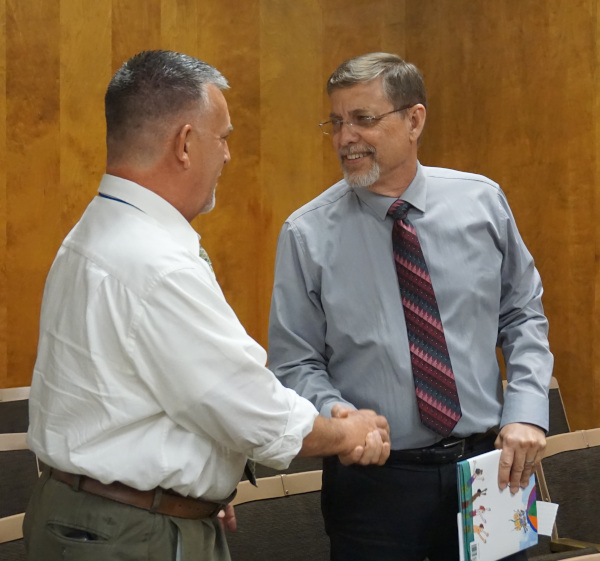
Newly appointed Lake County Superior Court Judge John Langan.

LAKE COUNTY, Calif. — The governor announced that Lake County will have a new judge for the new year.

On Monday, Gov. Gavin Newsom’s office said John Langan will be the newest member of the Lake County Superior Court bench.

Langan has a lengthy record of service in the legal profession in Lake County. Most recently, he has served as a commissioner at the Lake County Superior Court since 2019.

In that position, Langan has handled cases involving the Department of Child Support Services, traffic, small claims and unlawful detainers. 

The court commissioner job is a good preparation for a judicial appointment — while not a judge, it has similar powers and the ability to carry out judicial functions as directed by the court.

Langan received his Juris Doctor degree from the University of San Francisco School of Law. 

He went on to serve as deputy public defender at the Sonoma County Public Defender’s Office from 1999 to 2001. 

From there, he came to Lake County, where he’s spent the majority of his career.

Langan served in several roles in the Lake County District Attorney’s Office, beginning as a deputy district attorney from 2001 to 2004. 

From 2004 to 2019, he served as a senior deputy district attorney in Lake County before he was selected to be the Superior Court commissioner in January of 2019.

The newly appointed Judge Langan succeeds Judge Andrew Blum, who retired before the end of his term. Blum’s last day on the bench as a full-time judge was July 3. In the months since, Blum has begun hearing cases as a retired judge, a common practice at a time when judges are needed not just locally — as Lake County has a high case rate — but throughout the state.

The last time a Lake County Superior Court judicial vacancy was filled by a gubernatorial appointment was when Judge J. David Markham was appointed to succeed Judge Richard Martin by then-Gov. Jerry Brown in December 2017. 

Langan’s appointment was among 10 new Superior Court judges Newsom’s office announced on Monday.

The other new judges appointed this week — all Democrats like Langan — include Alameda Superior Court judges Novella Coleman and Kathleen Vermazen Radez; Fresno Superior Court Judge David Chiappetta; Los Angeles Superior Court Judge Alma D. Puente; Orange Superior Court Judge Allison Chan; San Francisco Superior Court judges Christopher Hu and Dane Reinstedt; San Mateo Superior Court Judge Jennifer M. Frost; and Shasta Superior Court Judge Ryan Birss.

Email Elizabeth Larson at This email address is being protected from spambots. You need JavaScript enabled to view it.. Follow her on Twitter, @ERLarson, and on Bluesky, @erlarson.bsky.social. Find Lake County News on the following platforms: Facebook, @LakeCoNews; X, @LakeCoNews; Threads, @lakeconews, and on Bluesky, @lakeconews.bsky.social. 

John Langan with retiring Judge Andrew Blum at Blum’s retirement party on Friday, July 3, 2025. Langan has been appointed by Gov. Gavin Newsom to succeed Blum on the Lake County Superior Court bench. Photo by Elizabeth Larson/Lake County News.

  • 6
  • 7
  • 8
  • 9
  • 10
  • 11
  • 12
  • 13
  • 14
  • 15

Community

  • Lake County Wine Alliance offers sponsor update; beneficiary applications open 

  • Mendocino National Forest announces seasonal hiring for upcoming field season

Public Safety

  • Lakeport Police logs: Thursday, Jan. 15

  • Lakeport Police logs: Wednesday, Jan. 14

Education

  • Woodland Community College receives maximum eight-year reaffirmation of accreditation from ACCJC

  • SNHU announces Fall 2025 President's List

Health

  • California ranks 24th in America’s Health Rankings Annual Report from United Health Foundation

  • Healthy blood donors especially vital during active flu season

Business

  • Two Lake County Mediacom employees earn company’s top service awards

  • Redwood Credit Union launches holiday gift and porch-to-pantry food drives

Obituaries

  • Rufino ‘Ray’ Pato

  • Patty Lee Smith

Opinion & Letters

  • The benefits of music for students

  • How to ease the burden of high electric bills

Veterans

  • CalVet and CSU Long Beach team up to improve data collection related to veteran suicides

  • A ‘Big Step Forward’ for Gulf War Veterans

Recreation

  • Wet weather trail closure in effect on Upper Lake Ranger District

  • Mendocino National Forest seeking public input on OHV grant applications

  • State Parks announces 2026 Anderson Marsh nature walk schedule 

  • BLM lifts seasonal fire restrictions in central California

Religion

  • Kelseyville Presbyterian to host Ash Wednesday service and Lenten dinner Feb. 18

  • Kelseyville Presbyterian Church to hold ‘Longest Night’ service Dec. 21

Arts & Life

  • Auditions announced for original musical ‘Even In Shadow’ set for March 21 and 28

  • ‘The Rip’ action heist; ‘Steal’ grounded in a crime thriller

Government & Politics

  • Lake County Democrats issue endorsements in local races for the June California Primary

  • County negotiates money-saving power purchase agreement

Legals

  • March 3 hearing on ordinance amending code for commercial cannabis uses

  • Feb. 12 public hearing on resolution to establish standards for agricultural roads

How to resolve AdBlock issue?
Refresh this page