How to resolve AdBlock issue?
Refresh this page
How to resolve AdBlock issue?
Refresh this page
Lake County News,California
  • Home
    • Registration Form
  • News
    • Education
    • Veterans
    • Community
      • Obituaries
      • Letters
      • Commentary
    • Police Logs
    • Business
    • Recreation
    • Health
    • Religion
    • Legals
    • Arts & Life
    • Regional
  • Calendar
  • Contact us
    • FAQs
    • Phones, E-Mail
    • Subscribe
  • Advertise Here
  • Login

News

Firefighters working to contain vegetation fire in Clearlake

LAKE COUNTY, Calif. — Firefighters are on the scene of a fast-moving wildland fire in Clearlake.

The North fire was first reported at about 2:10 p.m. Friday on Sulphur Bank Drive about a mile south of North Drive, according to reports from the scene.

Within minutes, Cal Fire’s St. Helena Dispatch Center sent a full wildland dispatch of ground and air resources to join Lake County Fire Protection District units.

The fire, as of 2:15 p.m., was estimated to be between 10 and 15 acres and moving north toward the ridgeline to Clearlake Oaks. No structures were believed to be threatened at that time. 

A portion of Country Club Drive at Bush Street in Clearlake is being temporarily closed and air resources are inbound, officials said over the radio.

At 2:20 p.m., the Clearlake Police Department issued a Nixle alert asking people to avoid the fire area. 

By 2:30 p.m., air attack estimated the fire to be 20 acres in grass, with the head of fire hitting a ridgetop road. Air attack estimated the fire has the potential to reach 50 acres.

Tankers are reported to be dropping retardant on the two flanks of the fire, and the fire is being held on the ridge.

At about 2:40 p.m. there was a report of another fire on Huron Avenue at Crawford Avenue, which burned a spot estimated at 50 feet by 100 feet. 

It was contained by locals in about five minutes and unit, according to radio traffic. 

At 2:56 p.m., incident command said the main fire was still between 15 to 20 acres, with forward progress stopped and containment estimated at 20%.

The firefighting effort remains active, with fire activity still active on the lines and a helicopter continuing to make water drops, based on radio reports.

Email Elizabeth Larson at This email address is being protected from spambots. You need JavaScript enabled to view it.. Follow her on Twitter, @ERLarson, and on Bluesky, @erlarson.bsky.social. Find Lake County News on the following platforms: Facebook, @LakeCoNews; X, @LakeCoNews; Threads, @lakeconews, and on Bluesky, @lakeconews.bsky.social. 

Environmental groups reach habitat protection agreement with Guenoc Valley resort developers

LAKE COUNTY, Calif. — Two environmental groups that have been the staunchest opponents of a proposed south county luxury resort said Thursday they have reached an agreement with the developers to protect habitat and reduce greenhouse gas emissions.

The Center for Biological Diversity and the California Native Plant Society reached the agreement with the developers of the Guenoc Valley Mixed Use Planned Development Project.

The agreement calls for the conservation of more than 3,700 acres of the 16,000 acres that’s part of the overall Guenoc property, as well as implementation of measures to reduce greenhouse gas emissions, with an $2 million secured for additional off-site conservation.

The announcement of the agreement comes as the Lake County Planning Commission is set to continue its hearing on Friday morning regarding the new environmental impact report for the Guenoc Valley project.

“A large swath of open space will be permanently protected with this agreement, allowing wildlife to roam and benefiting the entire community,” said Peter Broderick, a senior attorney at the Center for Biological Diversity. “As temperatures rise and wildfires become more destructive, developers need to focus on projects that minimize climate risks and keep communities safe. The common-sense measures in this agreement are a big improvement from what was proposed five years ago.”

The agreement will permanently preserve 3,717 acres of the project site, which includes oak woodlands habitat for golden eagles, foothill yellow-legged frogs and western pond turtles and serves as an important wildlife corridor for the region. 

Other terms of the agreement include funding for local projects to reduce greenhouse gas emissions, groundwater monitoring, increased development setback for perennial streams and wetlands, and additional protections for sensitive plants.

“In addition to permanently protecting a large area of sensitive serpentine habitat, today’s settlement also ensures better monitoring of rare plant mitigation efforts and adds more buffer zones to protect riparian and aquatic habitats from development,” said Nick Jensen, California Native Plant Society conservation director. “These changes mark major improvements to the project, made possible by years of advocacy and negotiation.”

These terms in the agreement are in addition to others previously reached between the developer and California’s attorney general. Those include measures to reduce wildfire ignition risks and reduce the number of dead-end roads originally planned for the project. The separate agreement also calls for solar panels and electric vehicle charging equipment in all residential and commercial buildings.

The Board of Supervisors approved the project’s first EIR in July 2020, and the Center for Biological Diversity and the California Native Plant Society sued the county in September of that year for approving the development in violation of the California Environmental Quality Act. The California attorney general later filed his own legal challenge. 

A 2021 trial in Lake County Superior Court led to a January 2022 ruling in which Judge J. David Markham found that the county’s EIR on the project was insufficient due to its conclusions that community fire evacuation routes were “less than significant.” Markham’s ruling led to a new EIR.

Late last year, the California First District Appellate Court ruled in the matter, also ordering a new EIR and determining that the county failed to assess how the project would worsen existing wildfire risks.

The revised project now being considered by the county expects a multiple-phase development of up to 400 hotel rooms, 450 resort residential units, 1,400 residential estates, 500 workforce co-housing units, a community clubhouse and associated infrastructure, a proposed water supply well on an off-site parcel and pipeline located adjacent to and within Butts Canyon Road, and intersection and electrical transmission line improvements.

As part of the newly announced agreement, the Center for Biological Diversity and the California Native Plant Society agreed to not challenge this revised version of the development currently pending before the Lake County Planning Commission.
 
The Center for Biological Diversity is a national, nonprofit conservation organization with more than 1.8 million members and online activists dedicated to the protection of endangered species and wild places.

The California Native Plant Society is a statewide nonprofit organization that protects California’s native plants and their natural habitats through science, education, stewardship, gardening and advocacy. 

Email Elizabeth Larson at This email address is being protected from spambots. You need JavaScript enabled to view it.. Follow her on Twitter, @ERLarson, and on Bluesky, @erlarson.bsky.social. Find Lake County News on the following platforms: Facebook, @LakeCoNews; X, @LakeCoNews; Threads, @lakeconews, and on Bluesky, @lakeconews.bsky.social. 

Lake County Sheriff’s Office to give annual report on military equipment

LAKE COUNTY, Calif. — The Lake County Sheriff’s Office said it will provide its annual report on military equipment later this month.

On Aug. 6, the sheriff’s office completed a military equipment annual report and posted the report to the agency’s website.  

On Monday, Aug. 18, at noon, the sheriff’s office will hold a public meeting to present the report to the community and answer questions or address concerns as it pertains to the report, use, and possession of equipment deemed “military equipment” by California Government Code 7070.

The meeting will take place in the Board of Supervisors Chambers, 255 N. Forbes St., Lakeport.

Join the meeting at this link.

The webinar ID is 891 3022 0726; the passcode is 793324.

To join by one-tap by phone: +16694449171,,89130220726#,,,,*793324# US or 
+16699006833,,89130220726#,,,,*793324# US.

In accordance with Section 7072 of the California Government Code, the Lake County Sheriff’s Office is required to submit an annual military equipment report to the Board of Supervisors and make it available to the public.   

Pursuant to 7071 California Government Code, the Lake County Board of Supervisors shall annually review any ordinance adopted pursuant to this section and vote to either approve or disapprove the renewal of ordinance No. 3123.

Clearlake Animal Control: ‘Happy’ and the dogs

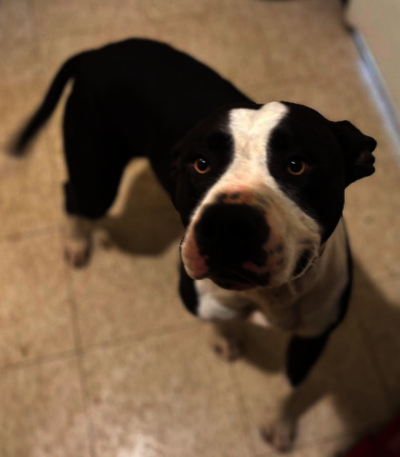
“Happy.” Photo courtesy of Clearlake Animal Control.


CLEARLAKE, Calif. — Clearlake Animal Control has dozens of dogs needing new homes.

The shelter has 48 adoptable dogs listed on its website.

This week’s dogs include “Happy,” a male pit bull terrier mix with a short black and white coat.

The shelter is located at 6820 Old Highway 53. It’s open from 9 a.m. to 6 p.m. Tuesday through Saturday. 

For more information, call the shelter at 707-762-6227, email This email address is being protected from spambots. You need JavaScript enabled to view it., visit Clearlake Animal Control on Facebook or on the city’s website.

This week’s adoptable dogs are featured below.

Email Elizabeth Larson at This email address is being protected from spambots. You need JavaScript enabled to view it.. Follow her on Twitter, @ERLarson, and on Bluesky, @erlarson.bsky.social. Find Lake County News on the following platforms: Facebook, @LakeCoNews; X, @LakeCoNews; Threads, @lakeconews, and on Bluesky, @lakeconews.bsky.social. 

Vaccines hold tantalizing promise in the fight against dementia

Researchers are in the earliest phase of piecing together how the shingles vaccine could play a role in lowering the risk of dementia. PM Images/DigitalVision via Getty Images

Over the past two centuries, vaccines have been critical for preventing infectious diseases. The World Health Organization estimates that vaccination prevents between 3 million and 5 million deaths annually from diseases like diphtheria, tetanus, influenza, measles and, more recently, COVID-19.

While there has long been broad scientific consensus that vaccines prevent or mitigate the spread of infections, there is new research suggesting that the therapeutic impact might go beyond the benefit of preventing infectious diseases.

An April 2025 study published in the prominent journal Nature found tantalizing evidence that the herpes zoster – or shingles – vaccine could lower the risk of dementia in the general population by as much as 20%.

We are a team of physician scientists with expertise in the clinical and basic science of neurodegenerative disorders and dementia.

We believe that this study potentially opens the door to other breakthroughs in understanding and treating dementia and other degenerative disorders of the brain.

A role for vaccines in reducing dementia risk?

One of the major challenges researchers face when trying to study the effects of vaccines is finding an unvaccinated “control group” for comparison – a group that is similar to the vaccine group in all respects, save for the fact that they haven’t received the active vaccine. That’s because it’s unethical to assign some patients to the control group and deprive them of vaccine protection against a disease such as shingles.

The Nature study took advantage of a policy change in Wales that went into effect in 2013, stating that people born on or after September 2, 1933, were eligible for the herpes zoster vaccination for at least a year, while those born before that cutoff date were not. The vaccine was administered to prevent shingles, a painful condition caused by the same virus that causes chickenpox, which can lie dormant in the body and be reactivated later in life.

The researchers used the policy change as a natural laboratory of sorts to study the effect of shingles vaccination on long-term health outcomes. In a statistically sophisticated analysis of health records, the team found that the vaccine reduced the probability of getting dementia by one-fifth over a seven-year period. This means that people who received the shingles vaccine were less likely to develop clinical dementia over the seven-year follow-up period, and women benefited more than men.

The study design allowed researchers to compare two groups without actively depriving any one group of access to vaccination. The two groups were also of comparable age and had similar medical comorbidities – meaning similar rates of other medical conditions such as diabetes or high blood pressure.

Results from this and other related studies raise the possibility that vaccines may have a broader role in experimental therapeutics outside the realm of infectious diseases.

These studies also raise provocative questions about how vaccines work and how our immune system can potentially prevent dementia.

How vaccines might be protective

One scientific explanation for the reduction of dementia by the herpes zoster vaccine could be the direct protection against the shingles virus, which may play a role in exacerbating dementia.

However, there is also the possibility that the vaccine may have conferred protection by activating the immune system and providing “trained immunity,” in which the immune system is strengthened by repeated exposure to vaccines or viruses.

The study did not differentiate between different types of dementia, such as dementia due to Alzheimer’s disease or dementia due to stroke. Additionally, researchers cannot draw any definitive conclusions about possible mechanisms for how the vaccines could be protective from an analysis of health records alone.

The next step would be a prospective, randomized, double-blind, placebo-controlled study – the “gold standard” for clinical trials in medicine – to directly examine how the herpes zoster vaccine compares with a placebo in their ability to reduce the risk of dementia over time. Such studies are necessary before any vaccines, as well as other potential therapies, can be recommended for routine clinical use in the prevention of dementia.

Brain image of early Alzheimer's disease
Randomized, placebo-controlled trials are needed in order to determine how the shingles vaccine compares with a placebo over time in protecting against dementia. Peter Dazeley/Getty Images News

The challenges of untangling dementia

Dementia is a major noncommunicable disease that is a leading cause of death around the world.

A January 2025 study provided updated figures on lifetime dementia risk across different subsets of the U.S. population. The researchers estimate that the lifetime risk of dementia after age 55 is 42% – more than double earlier estimates. The dementia risk was 4% by age 75, and 20% by age 85, with the majority of risk occurring after 85. The researchers projected that the number of new cases of dementia in the U.S. would double over the next four decades from approximately 514,000 cases in 2020 to 1 million in 2060.

Once considered a disease largely confined to the developed world, the deleterious effects of dementia are now apparent throughout the globe, as life expectancy increases in many formerly developing countries. While there are different forms of dementia with varying clinical manifestations and underlying neurobiology, Alzheimer’s disease is the most common.

Prospective studies that specifically test how giving a vaccine changes the risk for future dementia may benefit from studying patient populations with specific types of dementia because each version of dementia might require distinct treatments.

Unfortunately, for the past two to three decades, the amyloid hypothesis of Alzheimer’s disease – which posits that accumulation of a protein called amyloid in the brain contributes to the disorder – dominated the scientific conversation. As a result, most of the efforts in the experimental therapeutics of Alzheimer’s disease have focused on drugs that lower the levels of amyloid in the brain.

However, results to date have been modest and disappointing. The two recently approved amyloid-lowering therapies have only a minimal impact on slowing the decline, are expensive and have potentially serious side effects. And no drug currently approved by the Food and Drug Administration for clinical use reverses the cognitive decline.

Studies based on health records suggest that past exposure to viruses increase the risk of dementia, while routine vaccines, including those against tetanus, diphtheria, pertussis, pneumonia, shingles and others, reduce the risk.

Innovation and an open mind

There is sometimes a tendency among scientists to cling to older, familiar models of disease and a reluctance to move in more unconventional directions.

Yet the process of doing science has a way of teaching researchers like us humility, opening our minds to new information, learning from our mistakes and going where that data takes us in our quest for effective, lifesaving therapies.

Vaccines may be one of those paths less traveled. It is an exciting possibility that may open the door to other breakthroughs in understanding and treating degenerative disorders of the brain.The Conversation

Anand Kumar, Professor and Department Head of Psychiatry, University of Illinois Chicago and Jalees Rehman, Department Chair and Professor of Biochemistry and Molecular Genetics, University of Illinois Chicago

This article is republished from The Conversation under a Creative Commons license. Read the original article.

Middletown man receives mental health diversion in violent assault, break-in case

LAKEPORT, Calif. — A year after he assaulted the mother of his children and was shot during a struggle with her husband, a Middletown man has been given mental health diversion, with the judge laying out strict guidelines and warning that he will be prosecuted if he drops out of the program.

Judge Shanda Harry approved the mental health diversion request for Justin Simon Lord, 42, during a Wednesday afternoon hearing.

Late on the night of Aug. 8, 2024, authorities said Lord’s former girlfriend and the mother of his three children awoke to find him standing over her bed in her Kelseyville home.

The victim, known in court proceedings as “C.V.,” said an intoxicated Lord grabbed her by her hair, pulled a blade off the ceiling fan and hit her with it, and pinned her against the bed before shoving her into a metal clothes rack.

He then broke a metal bar off the clothes rack, used it to break the bedroom television and then hit C.V. in the head with it, before chasing her and their 9-year-old daughter down a hallway and into the living room, breaking a closet door and another television in the living room as he went. 

During the struggle, the child called 911 — it was her call that alerted authorities — and Lord took the phone and threw it out of her reach. 

Lord left the home, C.V. and the girl hid in the bathroom and then Lord was involved in a struggle with C.V.’s husband. Lord was shot in the leg and also was found to have a broken leg after the struggle, authorities said.

He was taken to an out-of-county hospital, treated and released. It was not until the end of August 2024 that he was arrested, and he’s remained in custody since then.

Last year, the District Attorney’s Office charged Lord with 11 felonies, one misdemeanor and a special allegation.

The felonies include burglary; inflicting corporal injury on the mother of his children, with a previous conviction for that crime in December 2020; two counts of stalking, with a February 2022 conviction for violating a restraining order; assault with a deadly weapon, in this case, the metal rod from the clothes rack; assault with force likely to cause great bodily injury; vandalism; two counts of making criminal threats, one for C.V. and one for her husband and the neighbor who fought with Lord; and assault with a deadly weapon, a knife, on the man who shot Lord during the struggle.

The misdemeanor charge was for damaging a communications device to prevent help, specifically, when he took the phone from his daughter. The special allegation is based on the violence of the crime, the fact that Lord was armed with a knife, the victims’ vulnerability, his threats, previous convictions and unsatisfactory probation performance.

Despite the violence of the crime and his criminal record, last year Lord’s attorney, Justin Petersen of Ukiah, filed for his case to be handled through mental health diversion, which would completely dismiss the criminal case against Lord.

Enacted in 2018, mental health diversion allows for defendants to be diverted from criminal prosecution into mental health treatment if they meet two key criteria — they have been diagnosed with a mental disorder and if that mental disorder “was a significant factor in the commission of the charged offense.”

If those criteria are met, four other criteria must be met: A qualified mental health expert’s opinion is that the criminal behavior would respond to mental health treatment; the defendant consents to diversion and waives their right to a speedy trial, unless they’ve been found to be an appropriate candidate for diversion in lieu of commitment; the defendant agrees to comply with treatment as a condition of diversion, unless the defendant has been found to be an appropriate candidate for diversion in lieu of commitment for restoration of competency treatment; and the defendant will not pose an unreasonable risk of danger to public safety.

Whether Lord met the suitability requirements for mental health diversion was an ongoing question. It resulted in his preliminary hearing — which was held on Sept. 5 — being repeatedly continued for a determination on his suitability.

In all, there were 13 continued hearings for that preliminary hearing from September through June before Harry ordered him to be held to answer to the case in June. From there, another four arraignment hearings were scheduled, with three of them continued and the final one taking place on Wednesday. 

Attorneys, judge hold closed door discussions

Ahead of the Wednesday afternoon hearing being called, Judge Harry, Petersen, Senior Deputy District Attorney Rachel Abelson and C.V.’s attorney Angela Carter spent nearly an hour in Harry’s chambers discussing her decision and the order she planned to give. 

Harry, once she emerged and took the bench, acknowledged, “We have had many hearings,” noting the preliminary hearing had been combined with the motion for mental health diversion.

Petersen called to the stand Jennifer Nauert, a Lake County Tribal Health employee who spoke about the mental health assessments done for Lord and the recommendation that he attend a live-in program at Inter Tribal Long Term Recovery Foundation in San Diego which handles both alcoholism and mental health, and which offers culturally sensitive treatment approaches.

“I think this is a suitable program considering the extent of this case,” Abelson said during the court hearing, adding she hopes Lord will take it seriously and there will be benefit for everyone in the community, as well as Lord’s family and victims.

Petersen said he also hoped Lord will take the opportunity to earn a way back into the community and the lives of his children. “This is your chance.”

He added that he believed Lord had never had the chance to address his underlying mental health issues. “I hope you don’t expect to get another chance like this,” said Petersen, noting that if Lord fails, the next step is to go to prison.

Lord nodded as he attorney spoke.

C.V. was then called forward to sit with Abelson at the prosecution table. Asked if she wanted to say anything, she said she wanted to play the four-minute recording from Lord’s phone that he had inadvertently done during the August 2024 break-in and assault. 

“He should have to hear what he did to us,” C.V. said.

Petersen objected, Judge Harry initially denied the request and Abelson took C.V. out to speak in the hallway. When they returned, Abelson said C.V. still wished to play the recording and Harry granted it. 

In the recording, C.V. could be heard screaming, and directing her daughter to call 911. In the background, Lord’s voice could be heard, as well as what sounded like breaking items.

When the recording ended, C.V. rose from the prosecution table, turned and walked out of the courtroom, not to return.

Harry would note repeatedly in her comments that followed that she was sad C.V. had left, because she wanted to speak to her about her decision. “I want her to feel as comfortable as possible with what’s going on here.”

She also spoke to Lord, explaining, “There’s a lot of findings that the court has to make before one can be granted mental health diversion.”

The judge said that had Lord gone to trial and been convicted, he would have likely received a four to six year state prison sentence. With time served and credits, Lord would most likely have served about a year and a half in state prison.

“There’s a lot of considerations that go into this,” said Harry, telling Lord if he failed to comply with the terms of mental health diversion, he would go back to criminal court. When she asked him if he understood, he said yes.

Harry said the District Attorney’s Office objected to Lord’s suitability for mental health diversion. One factor is dangerousness, and Harry said she had to make a finding that Lord will not pose an unreasonable risk to public safety and that, in the future, he would not commit a “super strike.” Super strikes are crimes that are sexually violent, use weapons, involve weapons of mass destruction, and murder punishable by life without the possibility of parole.

“It is a very high standard,” Harry said.

Harry said Lord has a mental health diagnosis that qualifies him for mental health diversion, specifically, substance use disorder involving alcohol and cocaine; schizoaffective disorder, a condition that includes symptoms of schizophrenia, delusions, mania and depression; and childhood onset post traumatic stress disorder.

The treatment program Lord is being assigned to will deal with his substance abuse and mental health issues, with treatment tailored to his needs, which Harry said is appropriate and necessary for her to allow for mental health diversion.

Harry ordered Lord into two years of mental health diversion, starting on Wednesday. She said he must enter the program in San Diego and complete it, then must go into a sober living environment. Afterward, he must continue treatment as designed for him by Lake County Behavioral Health and pursue lifelong treatment of some sort for substance abuse.

C.V. will be protected by a 10-year civil restraining order and there also are restraining orders protecting her and the children and restitution, said Harry. 

Lord is not allowed to drink alcohol and is prohibited from being in Lake County for the coming year.

Harry’s order included having Lake County Probation report to the jail on Thursday morning to fit Lord with an ankle monitor. He will then be released to his sister, who will drive him to the San Diego treatment center.

The judge emphasized that she did not want them stopping anywhere in Lake County — not even for gas or coffee — but to continue south and make their stops after they pass Sacramento. He is then ordered to attend court via Zoom on a regular basis. 

“I really wanted to talk to her about all this and I’m sad she left, but I understand her concerns and her stress,” Harry said of C.V.

C.V.’s attorney, Angela Carter, wished Lord well, saying that everyone wants him to succeed. She added of his children, "They're beautiful, amazing people, and they need dad.”

“We all want you to succeed,” said Harry, adding that it’s better for Lord, his children, C.V. and society at large.

Email Elizabeth Larson at This email address is being protected from spambots. You need JavaScript enabled to view it.. Follow her on Twitter, @ERLarson, and on Bluesky, @erlarson.bsky.social. Find Lake County News on the following platforms: Facebook, @LakeCoNews; X, @LakeCoNews; Threads, @lakeconews, and on Bluesky, @lakeconews.bsky.social. 

  • 132
  • 133
  • 134
  • 135
  • 136
  • 137
  • 138
  • 139
  • 140
  • 141

Community

  • Lake County Wine Alliance offers sponsor update; beneficiary applications open 

  • Mendocino National Forest announces seasonal hiring for upcoming field season

Public Safety

  • Lakeport Police logs: Thursday, Jan. 15

  • Lakeport Police logs: Wednesday, Jan. 14

Education

  • Woodland Community College receives maximum eight-year reaffirmation of accreditation from ACCJC

  • SNHU announces Fall 2025 President's List

Health

  • California ranks 24th in America’s Health Rankings Annual Report from United Health Foundation

  • Healthy blood donors especially vital during active flu season

Business

  • Two Lake County Mediacom employees earn company’s top service awards

  • Redwood Credit Union launches holiday gift and porch-to-pantry food drives

Obituaries

  • Rufino ‘Ray’ Pato

  • Patty Lee Smith

Opinion & Letters

  • The benefits of music for students

  • How to ease the burden of high electric bills

Veterans

  • CalVet and CSU Long Beach team up to improve data collection related to veteran suicides

  • A ‘Big Step Forward’ for Gulf War Veterans

Recreation

  • Wet weather trail closure in effect on Upper Lake Ranger District

  • Mendocino National Forest seeking public input on OHV grant applications

  • State Parks announces 2026 Anderson Marsh nature walk schedule 

  • BLM lifts seasonal fire restrictions in central California

Religion

  • Kelseyville Presbyterian to host Ash Wednesday service and Lenten dinner Feb. 18

  • Kelseyville Presbyterian Church to hold ‘Longest Night’ service Dec. 21

Arts & Life

  • Auditions announced for original musical ‘Even In Shadow’ set for March 21 and 28

  • ‘The Rip’ action heist; ‘Steal’ grounded in a crime thriller

Government & Politics

  • Lake County Democrats issue endorsements in local races for the June California Primary

  • County negotiates money-saving power purchase agreement

Legals

  • March 3 hearing on ordinance amending code for commercial cannabis uses

  • Feb. 12 public hearing on resolution to establish standards for agricultural roads

How to resolve AdBlock issue?
Refresh this page