How to resolve AdBlock issue?
Refresh this page
How to resolve AdBlock issue?
Refresh this page
Lake County News,California
  • Home
    • Registration Form
  • News
    • Education
    • Veterans
    • Community
      • Obituaries
      • Letters
      • Commentary
    • Police Logs
    • Business
    • Recreation
    • Health
    • Religion
    • Legals
    • Arts & Life
    • Regional
  • Calendar
  • Contact us
    • FAQs
    • Phones, E-Mail
    • Subscribe
  • Advertise Here
  • Login

News

EPA removal of vehicle emissions limits won’t stop the shift to electric vehicles, but will make it harder, slower and more expensive

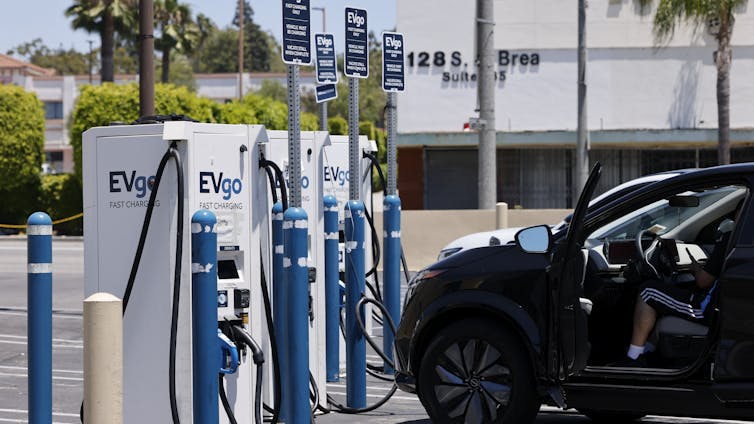
Customers have embraced electric vehicles; policy changes may decrease that interest but will not eliminate it. Carlin Stiehl/Los Angeles Times via Getty Images

The U.S. government is in full retreat from its efforts to make vehicles more fuel-efficient, which it has been waging, along with state governments, since the 1970s.

The latest move came on July 29, 2025, when the Environmental Protection Agency said it planned to rescind its landmark 2009 decision, known as the “endangerment finding,” that greenhouse gases pose a threat to public health and welfare. If that stands up in court and is not overruled by Congress, it would undo a key part of the long-standing effort to limit greenhouse gas emissions from vehicles.

As a scholar of how vehicle emissions contribute to climate change, I know that the science behind the endangerment finding hasn’t changed. If anything, the evidence has grown that greenhouse gas emissions are warming the planet and threatening people’s health and safety. Heat waves, flooding, sea-level rise and wildfires have only worsened in the decade and a half since the EPA’s ruling.

Regulations over the years have cut emissions from power generation, leaving transportation as the largest source of greenhouse gas emissions in the U.S.

The scientific community agrees that vehicle emissions are harmful and should be regulated. The public also agrees, and has indicated strong preferences for cars that pollute less, including both more efficient gas-burning vehicles and electric-powered ones. Consumers have also been drawn to electric vehicles thanks to other benefits such as performance, operation cost and innovative technologies.

That is why I believe the EPA’s move will not stop the public and commercial transition to electric vehicles, but it will make that shift harder, slower and more expensive for everyone.

A multilane highway is packed with cars and trucks.
Transportation is the largest source of greenhouse gas emissions in the U.S. Brandon Bell/Getty Images

Putting carmakers in a bind

The most recent EPA rule about vehicle emissions was finalized in 2024. It set emissions limits that can realistically only be met by a large-scale shift to electric vehicles.

Over the past decade and a half, automakers have been building up their capability to produce electric vehicles to meet these fleet requirements, and a combination of regulations such as California’s zero-emission-vehicle requirements have worked together to ensure customers can get their hands on EVs. The zero-emission-vehicle rules require automakers to produce EVs for the California market, which in turn make it easier for the companies to meet their efficiency and emissions targets from the federal government. These collectively pressure automakers to provide a steady supply of electric vehicles to consumers.

The new EPA move would undo the 2024 EPA vehicle-emissions rule and other federal regulations that also limit emissions from vehicles, such as the heavy-duty vehicle emissions rule.

The possibility of a regulatory reversal puts automakers into a state of uncertainty. Legal challenges to the EPA’s shift are all but guaranteed, and the court process could take years.

For companies making decade-long investment decisions, regulatory stability matters more than short-term politics. Disrupting that stability undermines business planning, erodes investor confidence and sends conflicting signals to consumers and suppliers alike.

An aerial view shows a very large building with an even larger parking lot outside, filled with cars.
Car manufacturers in the U.S. have invested large sums of money to produce electric vehicles. Elijah Nouvelage/Getty Images

A slower roll

The Trump administration has taken other steps to make electric vehicles less attractive to carmakers and consumers.

The White House has already suspended key provisions of the Inflation Reduction Act that provided tax credits for purchasing EVs and halted a US$5 billion investment in a nationwide network of charging stations. And Congress has retracted the federal waiver that allowed California to set its own, stricter emissions limits. In combination, these policies make it hard to buy and drive electric vehicles: Fewer, or no, financial incentives for consumers make the purchases more expensive, and fewer charging stations make travel planning more challenging.

Overturning the EPA’s 2009 endangerment finding would remove the legal basis for regulating climate pollution from vehicles altogether.

But U.S. consumer interest in electric vehicles has been growing, and automakers have already made massive investments to produce electric vehicles and their associated components in the U.S. – such as Hyundai’s EV factory in Georgia and Volkswagen’s Battery Engineering Lab in Tennessee.

Global markets, especially in Europe and China, are also moving decisively toward electrifying large proportions of the vehicles on the road. This move is helped in no small part due to aggressive regulation by their respective governments. The results speak for themselves: Sales of EVs in both the European Union and China have been growing rapidly.

But the pace of change matters. A slower rollout of clean vehicles means more cumulative emissions, more climate damage and more harm to public health.

The EPA’s proposal seeks to slow the shift to electric vehicles, removing incentives and raising costs – even though the market has shown that cleaner vehicles are viable, the public has shown interest, and the science has never been clearer. But even such a major policy change can’t stop the momentum of those trends.The Conversation

Alan Jenn, Associate Professor of Civil and Environmental Engineering, University of California, Davis

This article is republished from The Conversation under a Creative Commons license. Read the original article.

Lake fire acreage and containment rise; one injury reported

LAKE COUNTY, Calif. — Firefighters are making progress in the work of fully containing a fire that began on Sunday and destroyed half a dozen structures in Clearlake.

The Lake fire broke out on Sunday afternoon at Nacimiento Lake Drive and Oak Street, south of Borax Lake in Clearlake.

By Sunday night, the fire was at 340 acres with 5% containment.

On Monday evening, Cal Fire’s size estimate for the incident had risen to 401 acres, with containment up to 50%.

Cal Fire also reported on Monday that one firefighter had been injured.

Fire officials said the damage inspection process on Monday revealed that six outbuildings were destroyed in the fire and three additional structures were damaged — including two outbuildings and one single-family residence.

Firefighters will continue working the area for the next couple of days in the effort to fully contain the fire, Cal Fire reported.

Cal Fire’s Monday evening report said 150 personnel remain assigned to the incident, along with one engine, one dozer, three water tenders and six crews.

Email Elizabeth Larson at This email address is being protected from spambots. You need JavaScript enabled to view it.. Follow her on Twitter, @ERLarson, and on Bluesky, @erlarson.bsky.social. Find Lake County News on the following platforms: Facebook, @LakeCoNews; X, @LakeCoNews; Threads, @lakeconews, and on Bluesky, @lakeconews.bsky.social. 

Clearlake City Council to hold special meeting Aug. 6

CLEARLAKE, Calif. — The Clearlake City Council will meet this week in a special planning session.

The council will meet at 9 a.m. Wednesday, Aug. 6, at Adventist Health Clear Lake Hospital, 15630 18th Ave., Building F.

The agenda can be found here.

There will be no Zoom component to the meeting.

The only item of business on the agenda is a strategic planning workshop.

The public is welcome to attend.

Email Elizabeth Larson at This email address is being protected from spambots. You need JavaScript enabled to view it.. Follow her on Twitter, @ERLarson, and on Bluesky, @erlarson.bsky.social. Find Lake County News on the following platforms: Facebook, @LakeCoNews; X, @LakeCoNews; Threads, @lakeconews, and on Bluesky, @lakeconews.bsky.social. 

Officials: California’s legal challenges have restored at least $168 billion in federal funding

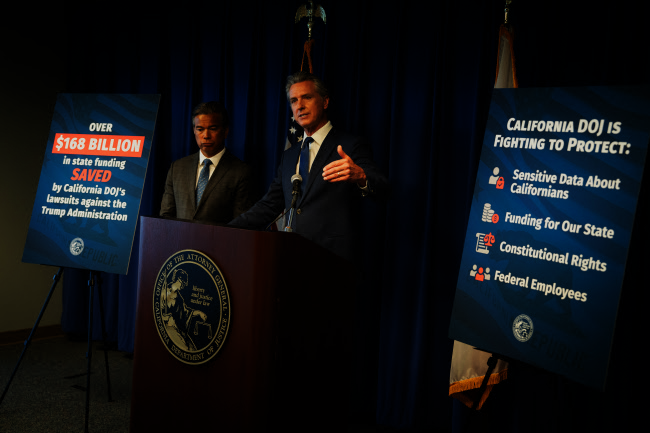
Gov. Gavin Newsom and Attorney General Rob Bonta at a press conference on Monday, Aug. 4, 2025. Photo courtesy of the Governor’s Office.


Gov. Gavin Newsom and Attorney General Rob Bonta said Monday that their legal challenges to the Trump administration have protected more than $168 billion in federal funding coming into California. 

“California’s early, proactive, and defensive actions have helped California maintain its values in the face of wholesale attacks against our families and communities, while also serving as a backstop against tyrannical actions by President Trump and those who aim to ignore the rule of law,” said Newsom. “As the federal government continues to attack our state, California will keep defending itself, its values, and its people.”

In coordination with Attorney General Bonta, California has filed 37 lawsuits, leading or co-leading 23 of them, and separately filed more than 40 amicus briefs in support of other litigation against the Trump administration in just six months. 

In the 19 cases where California has sought and a district court has ruled on early relief, the state has succeeded in 17 of them with 13 orders blocking President Trump’s actions — which the state contends are illegal — currently in effect. 

These actions have ensured that an estimated $168 billion continued to flow to the state through a single early lawsuit challenging what Newsom’s office said was the president’s “illegal and sweeping freeze of federal funding.”

California’s continued court actions have also protected an estimated $11.1 billion in federal grant funding from successive targeted efforts by the Trump administration to defend California’s values. 

California has also secured concessions and reversals outside of court, including the Department of Education’s recent decision to restore funding it had illegally frozen just days after California filed a lawsuit.

“In his first week in office, President Trump went after a full-third of California’s budget — and we went to court less than 24 hours later and stopped him in his tracks. When the administration’s first effort to freeze all federal funding to California failed, it changed course, flooding the zone with near-constant attempts to cut off funding like a dangerous and unruly game of whack-a-mole,” said Bonta.

“But this is not a game,” Bonta continued. “We’re talking about people’s livelihoods, their health, their education, and in some cases even their lives. That’s why every time the president breaks the law, my office stands ready to take him to court. For every dollar we’ve been given by the Governor and the Legislature in Special Session funding, we’ve returned more than $33,600.”

Bonta said his team has been working around the clock to protect California’s people, values and resources in the face of relentless attacks. 

“We know that this work is just the beginning, but we are not backing down. Too much is at stake, whether it be school programs for our kids, research for our future, medical care for our sick, or infrastructure that keeps our cars driving and planes in the air. California will continue to fight at every turn to hold the President and his Administration accountable to the Constitution they swore to uphold,” Bonta said.

A significant return on investment

In late 2024, Gov. Newsom convened a special session to set aside state money to pay for legal costs to combat then President-elect Trump’s administration.

With support from the Legislature, the state dedicated $25 million for the California Department of Justice and other state agencies to challenge and defend against actions by the Trump administration and another $25 million to support legal aid for vulnerable Californians in civil proceedings. 

Newsom v. Trump: the unlawful federalization of the National Guard

In this emergency litigation, California challenged orders by President Trump to federalize the California National Guard. The federal government’s orders came without authorization from the governor and against the wishes of local law enforcement.

Nearly two months after the unlawful federalization of the California National Guard, and deployment of almost 5,000 soldiers in the Los Angeles area, all but 300 National Guard members are expected to go home soon. So far, 4,700 soldiers have demobilized or begun demobilizing. 

Newsom’s office said Trump should allow the remaining soldiers to go back to their families, communities, and civilian professions as doctors, law enforcement and teachers. This case is going to trial, led by California Department of Justice attorneys, to establish that the military efforts on the ground violate federal law.

California’s early wins in court

Through litigation brought on by the California Department of Justice, the state has rejected the successive targeted efforts by the Trump administration to terminate, impound or condition specific funding for education, health care, transportation and more; defended constitutional rights like birthright citizenship and the right to vote; and stopped the dismantling of federal agencies like U.S. Health and Human Services and AmeriCorps, among other relief to the states. 

One-third of the state’s budget: After the Office of Management and Budget issued a directive that purported to freeze nearly $3 trillion in federal funding, California led a multistate coalition in filing a lawsuit challenging the directive. The California Department of Justice secured an immediate temporary restraining order and subsequent preliminary injunction, preserving roughly $168 billion in federal funding for California, representing about one-third of the State’s budget. These are tax dollars coming back into California, which contributes to the federal budget as a net-donor state.

Transportation funding: California receives approximately $7 billion in grant funding from the U.S. Department of Transportation each year to support and maintain the roads, highways, railways, airways, and bridges that connect our communities and carry our residents to their workplaces and their homes. In June, the California Department of Justice secured a court order blocking the Department of Transportation from imposing unlawful immigration enforcement conditions on this grant funding.

Education funding: The California Department of Justice protected $939 million for California schools last week when the U.S. Department of Education reversed its decision to withhold vital education funding just weeks before the school year was set to start in the face of a multistate lawsuit. This funding supports key programs for after school and summer learning, teacher preparation, and to support students learning English.

Public health funding: The state also protected approximately $11 billion in critical public health funding nationwide, including roughly $972 million for California, through litigation challenging and subsequent court orders blocking the abrupt termination of federal funding for grants that provide essential support for a wide range of urgent public health needs, including identifying, tracking, and addressing infectious diseases; ensuring access to immunizations; and modernizing critical public health infrastructure.

Electric vehicle infrastructure funding: After the Trump Administration sought to withhold billions of dollars in funding approved by bipartisan majorities in Congress for electric vehicle charging infrastructure, California filed a lawsuit and secured a court order restoring more than $300 million in funding previously awarded to California.

Continuing to protect California values 

Stopping the dismantling of our democracy: From his first days in office, President Trump has made clear his desire to eliminate many federal agencies and has sought to do so by dismantling the federal government from within. The California Department of Justice has fought to halt these efforts, securing court orders restoring AmeriCorps programs and funding; blocking the mass firing and restructuring of US HHS; and reversing the dismantling of several smaller agencies including the Institute of Museum and Library Services.

Defending birthright citizenship: In the state attorney general’s first case against the second Trump administration, just one day after President Trump took office, the California Department of Justice filed a lawsuit challenging the President’s unconstitutional executive order seeking to end birthright citizenship. At stake are an estimated 24,500 children born in California each year who would be denied the citizenship they are entitled to under the U.S. Constitution. The California Department of Justice, with a coalition of attorneys general from across the country, has won multiple court orders barring implementation of this order nationwide as litigation continues. 

Safeguarding California’s sensitive private data: The state has filed multiple lawsuits to protect Californians’ personal and private data from misuse by the federal government. The California Department of Justice secured a court order blocking the Department of Government Efficiency’s efforts to access Americans’ financial data; sued the Trump administration for illegally sharing Medicaid data with ICE; and challenged the U.S. Department of Agriculture’s illegal demands that states turn over the sensitive and personal data of SNAP recipients. 

Purrfect Pals: Many new cats and kittens

LAKE COUNTY, Calif. — Lake County Animal Care and Control has many cats and kittens waiting for new homes.

The kittens and cats at the shelter that are shown on this page have been cleared for adoption.

Call Lake County Animal Care and Control at 707-263-0278 or visit the shelter online for information on visiting or adopting.

The shelter is located at 4949 Helbush in Lakeport.

Email Elizabeth Larson at This email address is being protected from spambots. You need JavaScript enabled to view it.. Follow her on Twitter, @ERLarson, and on Bluesky, @erlarson.bsky.social. Find Lake County News on the following platforms: Facebook, @LakeCoNews; X, @LakeCoNews; Threads, @lakeconews, and on Bluesky, @lakeconews.bsky.social. 


A#117a's preview photo
A#117a

A#117b's preview photo
A#117b

A#117c's preview photo
A#117c

A#117d's preview photo
A#117d

 
A#92's preview photo
A#92

C#49(Toffee)'s preview photo
C#49(Toffee)

A#43a's preview photo
A#43a

A#43B(Red) “Benedict”'s preview photo
A#43B(Red) “Benedict”

A#43c(Yellow)'s preview photo
A#43c(Yellow)

A#46E(pink) “Guinevere”'s preview photo
A#46E(pink) “Guinevere”

A#46f(Green)'s preview photo
A#46f(Green)

A#46g(Blue)'s preview photo
A#46g(Blue)
 

Helen
A#123's preview photo
A#123

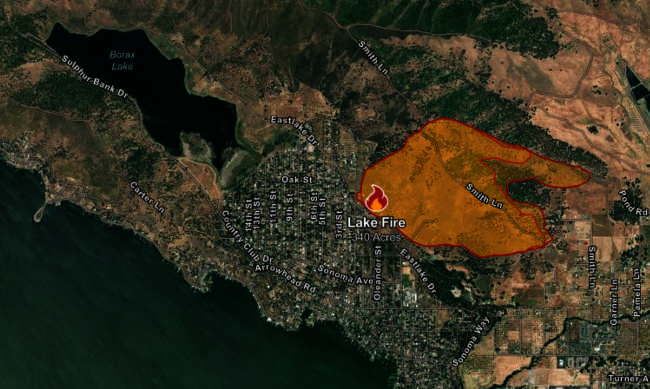
Firefighters hold lines on Lake fire; resources to remain on scene this week

The Lake fire area. Image courtesy of Cal Fire.

LAKE COUNTY, Calif. — Firefighters continued to hold and strengthen the lines around a fire that broke out in Clearlake on Sunday, leading to short-term evacuations.

The Lake fire began at around 2:20 p.m. Sunday at Nacimiento Lake Drive and Oak Street, south of Borax Lake in Clearlake.

By Sunday evening, it was 340 acres and 25% contained, figures that held throughout Sunday night and early Monday morning, according to Cal fire.

The Sunday evening report from Cal Fire said the fire had exhibited “moderate to erratic fire behavior with short-range spotting,” but crews made progress.

The fire threatened multiple structures and fire engines were assigned to structure protection, officials said.

Cal Fire said air tankers concentrated at the head of the fire and put down a fire retardant line that tied into the dozer and hand lines established on the left flank and left shoulder near Pond Road. The right — or eastern most — flank of the fire was looking good Sunday evening.

The fast-moving fire prompted authorities to call for mandatory evacuations in four evacuation zones and advisory evacuations in two others.

The four evacuation orders covered areas that included 3,386 residents, Cal Fire said.

Cal Fire said forward progress on the fire was stopped at 6:15 p.m. and all evacuation warnings were lifted by 6:55 p.m.

Crews are to remain on site for the next couple of days, working on fortifying control lines and mopping up the interior of the fire, Cal Fire said.

In the meantime, officials said the assessment into any structures destroyed or damaged during the Lake fire is ongoing.

Resources assigned to the incident include 225 personnel, two helicopters, 25 engines, six dozers, three water tenders and six crews, according to the Sunday evening Cal Fire report.

The cause of the fire remains under investigation, Cal Fire said.

Email Elizabeth Larson at This email address is being protected from spambots. You need JavaScript enabled to view it.. Follow her on Twitter, @ERLarson, and on Bluesky, @erlarson.bsky.social. Find Lake County News on the following platforms: Facebook, @LakeCoNews; X, @LakeCoNews; Threads, @lakeconews, and on Bluesky, @lakeconews.bsky.social. 

  • 134
  • 135
  • 136
  • 137
  • 138
  • 139
  • 140
  • 141
  • 142
  • 143

Community

  • Lake County Wine Alliance offers sponsor update; beneficiary applications open 

  • Mendocino National Forest announces seasonal hiring for upcoming field season

Public Safety

  • Lakeport Police logs: Thursday, Jan. 15

  • Lakeport Police logs: Wednesday, Jan. 14

Education

  • Woodland Community College receives maximum eight-year reaffirmation of accreditation from ACCJC

  • SNHU announces Fall 2025 President's List

Health

  • California ranks 24th in America’s Health Rankings Annual Report from United Health Foundation

  • Healthy blood donors especially vital during active flu season

Business

  • Two Lake County Mediacom employees earn company’s top service awards

  • Redwood Credit Union launches holiday gift and porch-to-pantry food drives

Obituaries

  • Rufino ‘Ray’ Pato

  • Patty Lee Smith

Opinion & Letters

  • The benefits of music for students

  • How to ease the burden of high electric bills

Veterans

  • CalVet and CSU Long Beach team up to improve data collection related to veteran suicides

  • A ‘Big Step Forward’ for Gulf War Veterans

Recreation

  • Wet weather trail closure in effect on Upper Lake Ranger District

  • Mendocino National Forest seeking public input on OHV grant applications

  • State Parks announces 2026 Anderson Marsh nature walk schedule 

  • BLM lifts seasonal fire restrictions in central California

Religion

  • Kelseyville Presbyterian to host Ash Wednesday service and Lenten dinner Feb. 18

  • Kelseyville Presbyterian Church to hold ‘Longest Night’ service Dec. 21

Arts & Life

  • Auditions announced for original musical ‘Even In Shadow’ set for March 21 and 28

  • ‘The Rip’ action heist; ‘Steal’ grounded in a crime thriller

Government & Politics

  • Lake County Democrats issue endorsements in local races for the June California Primary

  • County negotiates money-saving power purchase agreement

Legals

  • March 3 hearing on ordinance amending code for commercial cannabis uses

  • Feb. 12 public hearing on resolution to establish standards for agricultural roads

How to resolve AdBlock issue?
Refresh this page