 How to resolve AdBlock issue?
News
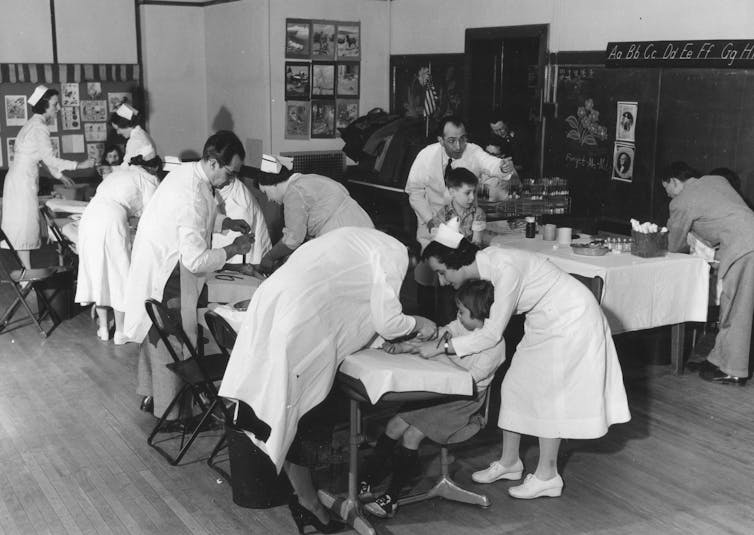
I nervously fell into a long line of fellow first graders in the gymnasium of St. Louis’ Hamilton Elementary School in the spring of 1955. We were waiting for our first injection of the new polio vaccine.
The National Foundation for Infantile Paralysis – with money raised through its annual March of Dimes campaign – had sponsored field tests for a vaccine developed by Jonas Salk. The not-for-profit had acquired sufficient doses to inoculate all the nation’s first and second graders through simultaneous rollouts administered at their elementary schools. The goal was to give 30 million shots over three months.
Now, more than six decades later, attention focuses on the rollout of two COVID-19 vaccines, following their emergency use authorization by the U.S. Food and Drug Administration. States have begun to administer them in a rocky and frustratingly slow delivery process – while hundreds of thousands of new cases continue to be diagnosed daily in the U.S.
While not necessarily comforting, it is useful to recognize that the early days and weeks of mass distribution of a new medication, particularly one that is intended to address a fearful epidemic, are bound to be frustrating. Only after examining the complex polio vaccine distribution process as documented in papers collected in the Dwight D. Eisenhower Presidential Library did I come to understand how partial my childhood memories actually were.
Vaccine distribution, 65 years ago
After I received my polio shot, I remember my parents’ relief.
The polio virus causes flu-like symptoms in most people who catch it. But in a minority of those infected, the brain and spinal cord are affected; polio can cause paralysis and even death. With the distribution of Salk’s vaccine, the much-feared stalker of children and young adults had seemingly been tamed. Within days, however, the initial mass inoculation program went off the rails.

Immediately following the government’s licensing of the Salk vaccine, the National Foundation for Infantile Paralysis contracted with private drug companies for US$9 million worth of vaccine (around $87 million today) – about 90% of the stock. They planned to provide it free to the country’s first and second graders. But just two weeks after the first doses were administered, the Public Health Service reported that six inoculated children had come down with polio.
As the number of such incidents grew, it became clear that some of the shots were causing the disease they were meant to prevent. A single lab had inadvertently released adulterated doses.
After considerable fumbling and outright denial, Surgeon General Leonard Steele first pulled all tainted vaccine off the market. Then, less than a month after the initial inoculations, the U.S. shut down distribution entirely. It wasn’t until the introduction of a new polio vaccine in 1960, created by Albert Sabin, that public trust returned.
History’s lessons for 2021
This story offers several lessons relevant to the COVID-19 vaccine distribution just now getting rolling.
First, federal coordination of an emergent lifesaving medical product is critical.
The federal government had declined to play an active oversight and coordination role for the polio vaccine, but still wanted the credit. The federal Department of Health, Education and Welfare (now Health and Human Services) offered no plan for distribution beyond the privately funded school-based program.
The department waited a full month after the vaccine was first administered before bringing together a permanent scientific clearance panel. That delay had less to do with formal procedures than with the ideological opposition of Health, Education and Welfare Secretary Oveta Culp Hobby.
Hobby was a political appointee who had taken office just months before the vaccine was approved. Her reluctance to involve the federal government in matters that she believed were best left in private hands – and her oft-stated fear of “socialized medicine” – meant that safety checks would be left to the private labs producing the vaccine. The results immediately caused dire problems and even avoidable deaths.
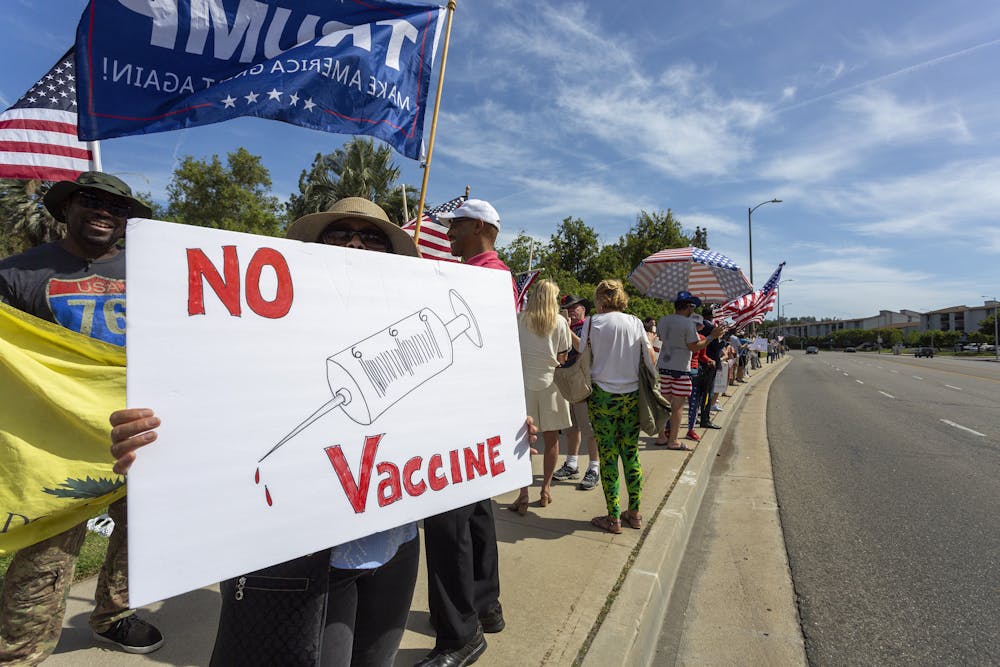
Second, the polio vaccine distribution process demonstrated how vital it is for the federal government to act in ways deserving of public trust.
In those hopeful first few weeks of the polio vaccine distribution, those of us lining up for shots had little to fear beyond the sting of an injection. That changed quickly.
Once some children had in fact been harmed by the shot, obfuscation by government officials, clumsy explanations and delayed responses engulfed the entire production and distribution process in confusion and suspicion. Trust in the government and the vaccine eroded accordingly. Gallup polls found that by June 1955, almost half of the parents who responded said they would not take any further vaccine shots – and the full regimen of polio inoculation required three doses. In 1958, some drug companies halted production, citing “public apathy.” It wasn’t surprising to see a startling upsurge in polio in 1959, doubling cases from the previous year.
Today, with COVID-19 already highly politicized – polls suggest that a minority of Americans will decline to take any vaccine – it is critical to administer an effective vaccine delivery program in a manner that builds trust rather than undermines it.
Scattered reports of allergic reactions to the COVID-19 vaccine have generated not the denials of the Eisenhower administration but rather honest and realistic responses from the Centers for Disease Control and Prevention. Particularly for vaccines that require multiple inoculations – both Pfizer and Moderna vaccines require two shots administered with a 21- or 28-day gap – mass inoculations will require not just an initial willingness to get the first dose but the maintenance of trust sufficient to get people back for the followup.
There are significant differences in the social-political contexts of the era in which the polio vaccine was distributed and today, including the nature and threat of the two diseases and the technologies of the vaccines. But time and again, the COVID-19 pandemic has revealed disconcerting parallels with mistakes made in the past. The good news is vaccination works – no case of polio has originated in the U.S. since 1979.
[Research into coronavirus and other news from science Subscribe to The Conversation’s new science newsletter.]
Bert Spector, Associate Professor of International Business and Strategy at the D'Amore-McKim School of Business, Northeastern University
This article is republished from The Conversation under a Creative Commons license. Read the original article.
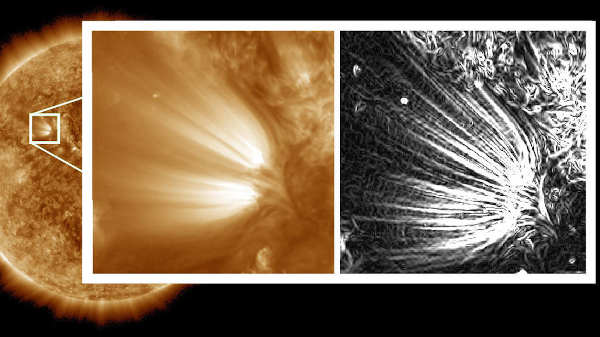
Scientists have combined NASA data and cutting-edge image processing to gain new insight into the solar structures that create the sun’s flow of high-speed solar wind, detailed in new research published in The Astrophysical Journal.
This first look at relatively small features, dubbed “plumelets,” could help scientists understand how and why disturbances form in the solar wind.
The sun’s magnetic influence stretches billions of miles, far past the orbit of Pluto and the planets, defined by a driving force: the solar wind.
This constant outflow of solar material carries the sun’s magnetic field out into space, where it shapes the environments around Earth, other worlds, and in the reaches of deep space.
Changes in the solar wind can create space weather effects that influence not only the planets, but also human and robotic explorers throughout the solar system — and this work suggests that relatively small, previously-unexplored features close to the Sun’s surface could play a crucial role in the solar wind’s characteristics.
“This shows the importance of small-scale structures and processes on the sun for understanding the large-scale solar wind and space weather system,” said Vadim Uritsky, a solar scientist at the Catholic University of America and NASA’s Goddard Space Flight Center, who led the study.
Like all solar material, which is made up of a type of ionized gas called plasma, the solar wind is controlled by magnetic forces. And the magnetic forces in the sun’s atmosphere are particularly complex: The solar surface is threaded through with a constantly-changing combination of closed loops of magnetic field and open magnetic field lines that stretch out into the solar system.
It’s along these open magnetic field lines that the solar wind escapes from the sun into space. Areas of open magnetic field on the sun can create coronal holes, patches of relatively low density that appear as dark splotches in certain ultraviolet views of the sun.
Often, embedded within these coronal holes are geysers of solar material that stream outward from the sun for days at a time, called plumes. These solar plumes appear bright in extreme ultraviolet views of the sun, making them easily visible to observatories like NASA’s Solar Dynamics Observatory satellite and other spacecraft and instruments.
As regions of particularly dense solar material in open magnetic field, plumes play a large role in creating the high-speed solar wind — meaning that their attributes can shape the characteristics of the solar wind itself.
Using high-resolution observations from NASA’s Solar Dynamics Observatory satellite, or SDO, along with an image processing technique developed for this work, Uritsky and collaborators found that these plumes are actually made up of much smaller strands of material, which they call plumelets.
While the entirety of the plume stretches out across about 70,000 miles in SDO’s images, the width of each plumelet strand is only a few thousand miles across, ranging from around 2,300 miles at the smallest to around 4,500 miles in width for the widest plumelets observed.
Though earlier work has hinted at structure within solar plumes, this is the first time scientists have observed plumelets in sharp focus. The techniques used to process the images reduced the “noise” in the solar images, creating a sharper view that revealed the plumelets and their subtle changes in clear detail.
Their work, focused on a solar plume observed on July 2-3, 2016, shows that the plume’s brightness comes almost entirely from the individual plumelets, without much additional fuzz between structures. This suggests that plumelets are more than just a feature within the larger system of a plume, but rather the building blocks of which plumes are made.
“People have seen structure in and at the base of plumes for a while,” said Judy Karpen, one of the authors of the study and chief of the Space Weather Laboratory in the Heliophysics Science Division at NASA Goddard. “But we’ve found that the plume itself is a bundle of these denser, flowing plumelets, which is very different from the picture of plumes we had before.”
They also found that the plumelets move individually, each oscillating on its own — suggesting that the small-scale behavior of these structures could be a major driver behind disruptions in the solar wind, in addition to their collective, large-scale behavior.
Searching for plumelet signatures
The processes that create the solar wind often leave signatures in the solar wind itself — changes in the wind’s speed, composition, temperature, and magnetic field that can provide clues about the underlying physics on the sun.
Solar plumelets may also leave such fingerprints, revealing more about their exact role in the solar wind’s creation, even though finding and interpreting them can be its own complex challenge.
One key source of data will be NASA’s Parker Solar Probe, which has flown closer to the sun than any other spacecraft — reaching distances as close as 4 million miles from the solar surface by the end of its mission — captures high-resolution measurements of the solar wind as it swings by the sun every few months. Its observations, closer to the sun and more detailed than those from prior missions, could reveal plumelet signatures.
In fact, one of Parker Solar Probe’s early and unexpected findings might be connected to plumelets.
During its first solar flyby in November 2018, Parker Solar Probe observed sudden reversals in the magnetic field direction of the solar wind, nicknamed “switchbacks.”
The cause and the exact nature of the switchbacks is still a mystery to scientists, but small-scale structures like plumelets could produce similar signatures.
Finding signatures of the plumelets within the solar wind itself also depends on how well these fingerprints survive their journey away from the sun — or whether they would be smudged out somewhere along the millions of miles they travel from the sun to our observatories in space.
Evaluating that question will rely on remote observatories, like ESA and NASA’s Solar Orbiter, which has already taken the closest-ever images of the sun, including a detailed view of the solar surface — images that will only improve as the spacecraft gets closer to the sun.
NASA’s upcoming PUNCH mission — led by Craig DeForest, one of the authors on the plumelets study — will study how the sun’s atmosphere transitions to the solar wind and could also provide answers to this question.
“PUNCH will directly observe how the sun’s atmosphere transitions to the solar wind,” said Uritsky. “This will help us understand if the plumelets can survive as they propagate away from the sun — if can they actually be injected into the solar wind.”
Sarah Frazier works for NASA's Goddard Space Flight Center in Greenbelt, Md.
Clearlake City Council approves expanding Automated License Plate Recognition Program camera network
Clearlake Police Chief Andrew White went to the council to request adding more cameras this year – not to exceed $65,000 in total – to the Automated License Plate Recognition Program, which the police department began rolling out in September.
His written report said the technology allows for cameras placed at locations around the city to detect vehicle license plates.
While it’s used for identifying stolen vehicles, it’s also helpful in identifying wanted and missing persons, and has helped with investigative leads in crimes including a drug-related shooting. It even assisted police in locating and arresting an individual wanted on an out-of-state kidnapping warrant, White reported.
He quoted a study from the International Association of Chiefs of Police that estimated that 70 percent of all crimes involve the use of a motor vehicle. Based on his experience, White said he believes that number is actually higher.
White said the Clearlake Police Department became the first local agency to deploy the technology; the California Highway Patrol has had a system in place for quite some time.
Clearlake Police started rolling out its program in September with two cameras. By year’s end, it had a total of 14 cameras, four of them sponsored by local businesses, he said.
White called the technology “a force multiplier,” allowing his officers to cover more ground even with limited staffing. The agency has two police officers and a sergeant on duty at any given time, trying to patrol 10 square miles and responding to more than 20,000 calls for service annually.
When they deployed the program, police saw immediate results in recovering stolen vehicles. White said the cameras are placed primarily in a hotpot area for criminal activity in the Clearlake Park area.
So far, they have recovered 20 stolen vehicles, as well as some additional vehicles whose owners didn’t go forward with filing formal reports with police. In some cases, White said the vehicles were found so quickly that they hadn’t even yet been placed on the “hotlist” of stolen vehicles that police monitor and which is updated every four hours.
White said they want to deploy a mix of solar, self-contained cameras plus agency owned cameras attached to signaled intersections and to a towable platform. The goal is to expand coverage focusing on major thoroughfares and access to neighborhoods.
He said Clearlake’s theft rate is disproportionately high for its size. In explaining that, White noted that people who commit crimes elsewhere have been caught after coming to the city.
White said that among the stolen vehicles recovered was one that was stolen by a man from a woman who had stopped to get gas in Los Angeles. The suspect immediately drove to Clearlake, where the vehicle was recovered.
The message that’s being sent to these individuals, said White, is that Clearlake is not a safe haven to commit crimes or victimize the community.
“I think it’s been a very effective tool,” with very strong results for a very short period of time, said White.
White said his agency has been in communication with other agencies, including the Lake County Sheriff’s Office, about further deployment around the county.
He said they are looking at retention periods for the collected data, which he said is a big discussion regarding the technology.
Councilman David Claffey had questions about the cloud storage that holds the information. Pointing out that the police department is collecting a lot of sensitive data, he noted the concern for the potential for a breach and wanted to know if the department has appropriately protected the data.
White said the city’s contract covers properly storing data and issues about sharing data. “I’m confident that it’s protected.”
He said the cameras don’t pick up faces or other information about individuals.
Councilwoman Joyce Overton asked about how the technology is paid for, with White explaining that it comes from police department funds and the general fund, along with salary savings. It is not grant-funded.
During public comment, city resident Pattie Duke asked if the platform supports the addition of residential cameras like hers. White said it doesn’t, but added that there is an opportunity for businesses to do it.
“I love what has been happening with the police department and this is a huge addition,” said Supervisor Bruno Sabatier.
He asked if the cameras could be used for tracking illegal dumping. White said it could potentially be used for that, and would tie in with remote cameras that they’ve also deployed in areas where they’ve had dumping.
City Manager Alan Flora said he and White had a conversation with county Public Services Director Lars Ewing, who is interested in discussing with the Solid Waste Task Force the use of the program to address illegal dumping. Flora added that there’s more to come on that item.
Claffey said he appreciated White bringing new technologies to the table and had read his data retention policy, concluding it's on par with other communities’ policies and that the department is handling the program professionally.
“I think at some point the determination was made by a prior city council that the benefits to the community brought by this passive surveillance technology outweighs potential infringement on privacy and civil liberties,” Claffey said. “I feel like that balance needs to be reexamined a little bit.”
Claffey said he thinks the policy for data retention is too broad and that regulation has lagged. He pointed to a bill in the legislature that would reduce the retention window to 24 hours, while the city’s policy allows for up to 60 days.
He said the council needs to have an in-depth policy conversation about collecting data about its residents and how they’re using it.
Councilman Russell Perdock asked how the data comes in and is reported to officers.
White said it comes in through encrypted cellular and fiberoptics connections. It goes first to dispatch, which then sends it out to officers in the field.
He said advocacy groups have raised issues with data and its use. White said a very small percentage of the data is searched, and when it is, the reason for accessing it must be audited.
Perdock said he thinks it’s a fantastic program. “I see this as an officer safety tool.”
Overton moved to accept the resolution to add cameras to the program. The council approved it 4-1, with Claffey voting no.
Council approves ad hoc committee, gets concealed weapons process update
In other news, the council met Toby, a friendly adoptable senior dog at Clearlake Animal Control.
Council members also approved creating an ad hoc committee to review the creation of a youth sports complex on a portion of a 31-acre property behind Safeway the city recently purchased, and approved submitting the recognized obligations payment schedules for both periods of fiscal year 2021-22.
In other business, White updated the council on the procedure for issuing concealed weapon permits, which the city currently engages with the sheriff’s office to do as the police department has limited staffing to carry out the program. Perdock had asked for the matter to be brought forward for discussion.
It appears that Clearlake’s arrangement with the sheriff’s office will continue after the city’s insurer, the Public Agency Risk sharing Authority of California, or PARSAC, sent a letter to Flora noting that due to increased liability exposure to it and its other members, it couldn’t support a proposal for the city to provide concealed weapon permit services.
During the discussion, however, it was agreed that the police department could take applications and perform Live Scan functions to help city residents not have to make a trip to Lakeport to submit the required materials to the sheriff’s office.
Email Elizabeth Larson at
The National Weather Service issued an alert early Friday morning warning of hazardous weather conditions over the next seven days.
The forecast calls for chances of rain overnight and throughout Friday, with less than a tenth of an inch of rain expected to fall.
Saturday is expected to have patchy fog and light winds before another weather system arrives on Sunday, bringing rain and snow to the region.
Snow levels are forecast to be generally over 2,500 to 3,000 feet. Additional rain and snow is expected next week, with low snow levels possible, the National Weather Service reported.
Up to a quarter of an inch of rain is forecast for Sunday. Conditions are expected to clear during the day on Monday, with chances of rain and snow in the higher elevations on Monday night and early Tuesday.
More showers are anticipated on Wednesday and Thursday, the National Weather Service said.
Over the coming week, nighttime temperatures are forecast to drop into the low 30s, with daytime conditions in the high 40s.
Email Elizabeth Larson at
California State Epidemiologist Dr. Erica Pan said Sunday that there had been “a higher-than-usual number of possible allergic reactions” reported with Moderna Lot 041L20A, which was administered at one community vaccination clinic.
Pan said fewer than 10 individuals required medical attention over the span of 24 hours.
“Out of an extreme abundance of caution and also recognizing the extremely limited supply of vaccine, we are recommending that providers use other available vaccine inventory and pause the administration of vaccines from Moderna Lot 041L20A until the investigation by the CDC, FDA, Moderna and the state is complete,” Pan said.
Those impacted had appeared to be experiencing a possible severe allergic reaction during the standard observation period, Pan said.
Pan’s office said that while no vaccine or medical procedure is without risk, the risk of a serious adverse reaction is very small.
While less data exists on adverse reactions related to the Moderna vaccine, officials said a similar vaccine shows that the expected rate of anaphylaxis is approximately 1 in 100,000.
On Tuesday, Lake County Public Health Officer Dr. Gary Pace told the Board of Supervisors that the county had received a shipment of 400 doses of the Moderna vaccine, but that before they could open it to administer it, the state notified them not to use the doses due to the concerns about allergic reactions.
On Wednesday night, Pan followed up with a statement that cleared the immediate use of the Moderna Lot 041L20A vaccination doses.
Pand said that on Tuesday the state convened the Western States Scientific Safety Review Workgroup and additional allergy and immunology specialists to examine the evidence collected, and had further discussions with the County of San Diego Department of Public Health, the Federal Drug Administration, the Centers for Disease Control and Prevention and Moderna.
She said they found no scientific basis to continue the pause on administering the doses.
“These findings should continue to give Californians confidence that vaccines are safe and effective, and that the systems put in place to ensure vaccine safety are rigorous and science-based,” Pan said. “Members of my family who have qualified to receive the vaccine as health care workers or because of their age have already received the COVID-19 vaccine, and I encourage every Californian to get the vaccine when it’s their turn.”
Pace did not respond to a request from Lake County News about the update from the state or the locally held Moderna doses.
The California Department of Public Health said that more than 330,000 doses from this lot were distributed to 287 providers across the state between Jan. 5 and 12. The state has not been notified of any other cluster or individual events related to this lot.
The agency could not confirm to Lake County News the number of doses received locally that were in Moderna Lot 041L20.
However, on Thursday night, during the Clearlake City Council meeting, City Manager Alan Flora reported to the council that locally held doses of Moderna Lot 041L20A were cleared for release.
Lake County Public Health is now rolling out stand up vaccination clinics in Clearlake and Lakeport for seniors and teachers. However, members of the public can’t simply show up to be vaccinated as appointments are required for the limited number of doses the county has available.
In the case of seniors, they must make appointments either through their local senior center or medical provider. Vaccinations for teachers are being arranged through their respective school districts.
Flora told the council that a larger shipment of vaccine doses – as many as 800 – is expected to arrive in Lake County next week.
Email Elizabeth Larson at
The following dogs are ready for adoption or foster.
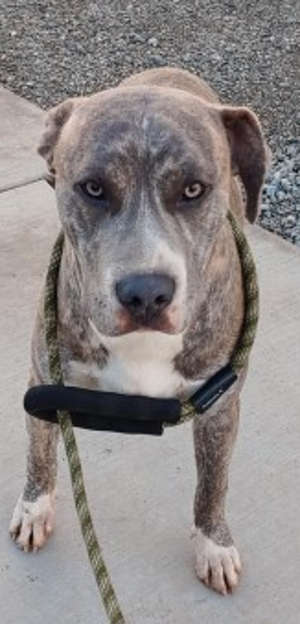
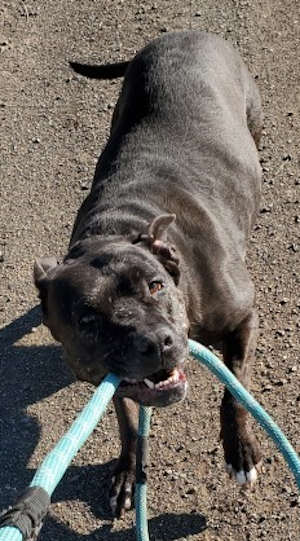
‘Ben’
“Ben” is a male American Pit Bull terrier mix.
He has a short brindle coat.
He is dog No. 4454.
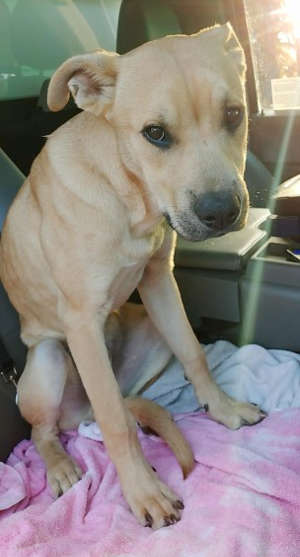
‘Breeze’
“Breeze” is a female American Pit Bull Terrier mix.
She has been spayed.
She is dog No. 4445.
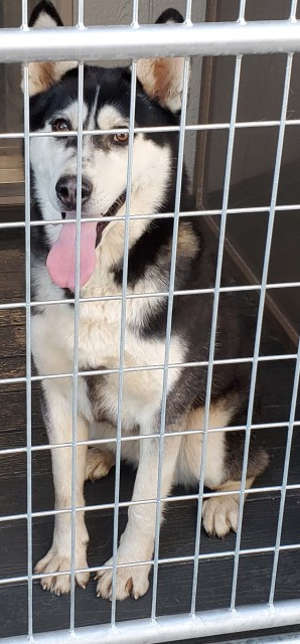
‘Bruce’
“Bruce” is a male American Staffordshire Terrier mix with a short yellow coat.
He is dog No. 4383.
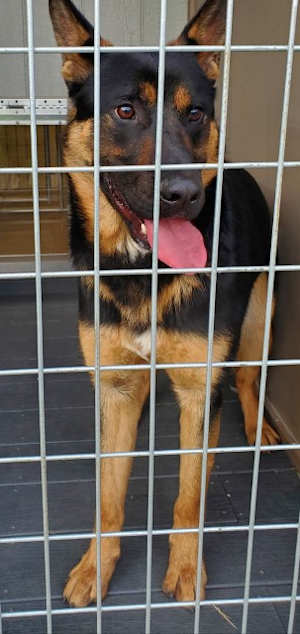
‘Bumble’
“Bumble” is a male Siberian Husky with a gray and black coat.
He is dog No. 4452.
‘Cappie’
“Cappie” is a male German Shepherd mix with a medium-length black and tan coat.
He is dog No. 4575.
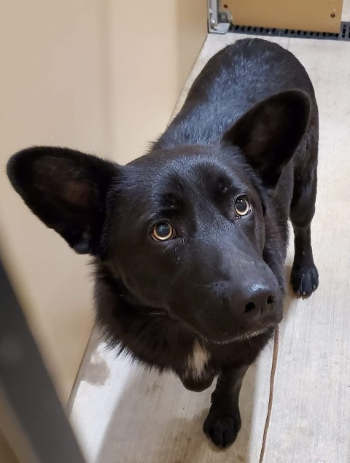
‘Inky’
“Inky” is a male German Shepherd mix with a long black coat.
He has been neutered.
He is dog No. 4324.
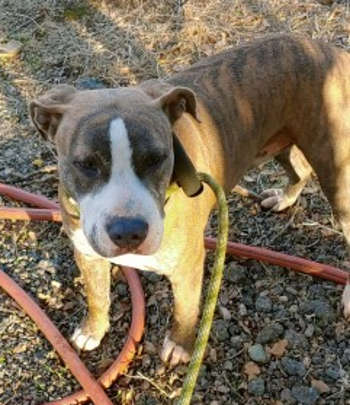
‘Jerry’
“Jerry” is a male American Pit Bull terrier with a short brindle coat.
He is dog No. 4455.
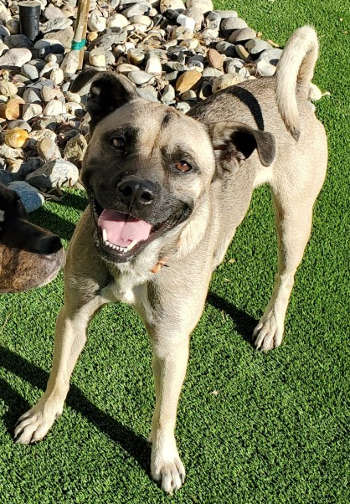
‘Rudolph’
“Rudolph” is a male shepherd mix.
He has a short tan and black coat.
He is dog No. 4436.
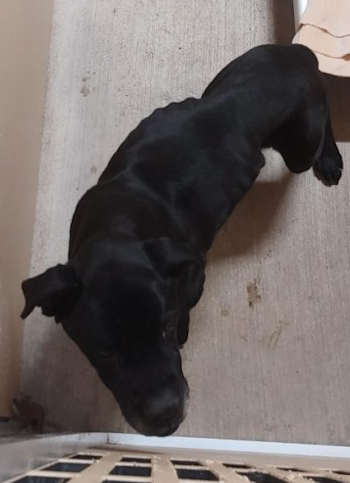
‘Rudy’
“Rudy” is a senior male American pit bull terrier mix.
He has a short black coat.
He is dog No. 4504.
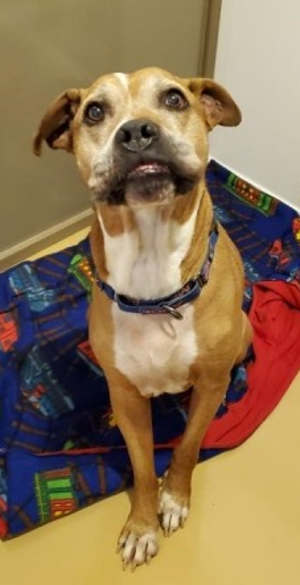
‘Toby’
“Toby” is a male boxer mix.
He has a short tan and white coat.
He is dog No. 4389.
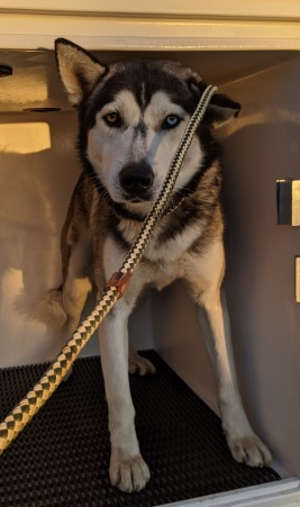
‘Yule’
“Yule” is a male husky with a black and white coat.
Yule is dog No. 4432.
Call the Clearlake Animal Control shelter at 707-273-9440, or email
Visit Clearlake Animal Control on Facebook or on the city’s website.
Email Elizabeth Larson at